One of my biggest questions regarding the MCU’s next big phase was wondering what they were going to do with Thor. Long before there were even thoughts of a sprawling lucrative cinematic universe, the God of Thunder was one of my favorite Marvel Comics creations. And while I actually liked the lighthearted bend of the earlier Thor movies, it was frustrating to see him suddenly turned into a punchline. So my biggest question going into Thor’s fourth solo movie centered around its treatment of the character. Would we get a better balance or would he remain a blonde beefy gag?
We’ve finally gotten our first look at the film through a brand-new teaser trailer and to be honest, I still don’t know what to think. Is it going to be the movie I hope it will be or the one I’m afraid it might be? I have no idea. We do get several shots of Thor and a handful of his supporting players while the weird choice of “Sweet Child O’ Mine” plays in the background. I’m not sure what they’re going for, but I’ll need to see more before getting too excited.
“Thor: Love and Thunder” hits theaters July 8th. Check out the trailer below and let me know if you’ll be seeing it or taking a pass.
In their heyday studio musicals brought with them an entirely new philosophy of moviemaking as colorful and vibrant music-driven set-pieces often trumped more dramatic storytelling. While these light and frothy concoctions did little to showcase what the burgeoning medium would soon become, they did offer audiences a much needed respite from the growing hardships of the real world. They was about transporting moviegoers; whisking them away with song and dance; providing a whimsical and sometimes dreamy escape from their troubles.
In the early 1930s, Depression-era audiences found their escape in the kaleidoscopic showgirl productions of film director and choreographer Busby Berkeley. A few years later, Fred Astaire and Ginger Rogers would begin their celebrated RKO Pictures run. And then there was MGM. Starting in earnest in 1939 and continuing for nearly two decades, MGM revolutionized the movie musical under the creative arm of producer Arthur Freed. Names like Judy Garland, Mickey Rooney, and Gene Kelly would drive the studio’s and the genre’s success.
In 1952, MGM would release what remains one of the most beloved movie musicals of all-time – “Singin’ in the Rain”. This year the movie turns 70 and to celebrate Warner Home Video is releasing a 70th Anniversary 4K Blu-ray edition on April 26th. It has been revisiting theaters across the country as part of TCM’s Big Screen Classics series, and if by some chance you’ve never seen this timeless classic, there’s no better time than now.
In 1951, MGM was coming off of a big hit with Gene Kelly’s “An American in Paris” which won six Oscars including Best Picture. It was a tough act for Freed, Kelly, and the studio to follow. Yet they did so with “Singin’ in the Rain”, a musical romantic comedy that most people (and history) agree is the better movie. Though initially met with positive reviews, its early reception was hardly that of a film many today regard as the greatest from its genre. But reassessments (beginning as early as the 1960s) quickly and rightly saw the true greatness in Gene Kelly’s singular vision.
Though he co-directed with Stanley Donen, “Singin’ in the Rain” was Gene Kelly’s show, both in front of and behind the camera. It was Kelly’s vision to fuse song and dance with storytelling, and he relied on Donen’s technical know-how to help bring that vision to the screen. For the script, screenwriters Betty Comden and Adolph Green penned the original draft with Kelly and Donen helping with re-writes. And of course, Kelly was intensely involved in the choreography which in turn produced some of the genre’s best dance numbers.
In front of the camera, Kelly gives one of his best performances playing Don Lockwood, a popular silent movie star who falls for young stage actress Kathy Selden, played by the delightful Debbie Reynolds. Only 19-years-old at the time, Reynolds was a gymnast rather than a dancer, and her lack of experience often frustrated her perfectionist teacher and co-star Kelly. “The two hardest things I ever did in my life are childbirth and “Singin’ in the Rain””, she once famously said. But the two became friends with Kelly later admitting, “I wasn’t very nice to Debbie. I’m surprised she still speaks to me.”
Equally vital to the movie is Donald O’Connor, an accomplished dancer and Vaudeville performer who was cast as Don’s best friend Cosmo. In addition to being a perfect on-screen sidekick for Kelly, O’Connor’s “Make ’Em Laugh” is one of the film’s most unforgettable (and physically demanding) numbers. And watching the remarkable duo of O’Connor and Kelly navigate the sublime high-energy tongue-twister “Moses Supposes” is still as hilarious and breathtaking as ever.
There’s also the fabulous Jean Hagen who played Don’s conniving, entitled and unimaginably shallow leading lady Lina Lamont. She quickly becomes the story’s villain as her studio manufactured romance with Don is threatened by Kathy. But she also gets some of the film’s funniest bits with Hagen conveying Lina’s high-pitched petulance for some big laughs.
While “Singin’ in the Rain” is known most for its song and dance, it also has a surprising satirical wit. It’s set in the late 1920s during a transitional period in Hollywood as silent films were slowly giving way to “talkies”. The story pulls back the curtain and has a lot of fun poking at the artifices of the big studio system. There’s actually a lot of truth in the film’s movie-within-a-movie conceit, and you could consider it a behind the scenes primer on how Tinseltown once functioned.
But let’s be honest, it’s the musical numbers that first come to mind when considering “Singin’ in the Rain”. And none are better than the film’s magical centerpiece, where a lovestruck Gene Kelly sings the title song while dancing along a studio street in his soggy tweed suit; twirling his umbrella in a man-made downpour; spinning around a lamppost with an effervescent grace and splashing in puddles with a childlike exuberance (the story goes Kelly was sick with a 103° fever while shooting the sequence, but you would never know it). It’s an iconic movie moment that still shines after 70 years. And you could say the same for the movie as a whole. It’s a cinematic slice of a bygone era, yet one that will forever stand the test of time.
One of the movies cemented on my personal list of ‘all-time favorites’ is Michael Mann’s stellar adaptation of James Fenimore Cooper’s 1826 novel “The Last of the Mohicans”. It’s hard to believe, but this year the film turns 30-years-old, yet in many ways it still feels overlooked and undervalued. And while it sits handsomely at 93% on Rotten Tomatoes, it’s a film that rarely finds its way into conversations about the best movies from that last three decades. Allow me to make a case for why it should.
There have been countless big screen adaptations of “The Last of the Mohicans” dating as far back as 1920. But in 1992, Michael Mann not only delivered what’s arguably the best film version of the well-traveled classic, but also one of the most finely crafted and purely cinematic period pieces of its day. You could call it an unflinching frontier action movie unfolding across a beautiful yet war-torn setting. But at the same time, there’s also a passionate love story at its core. It’s a romance of clashing cultures that is essential to the plot and never feels tacked on or disingenuous. In fact, it fuels and drives the narrative all the way to its powerful final 15 minutes.
The film stars Daniel Day-Lewis who gives what I believe is one of his more underrated performances. He plays Nathaniel, the adopted white son of Mohican chief Chingachgook (Russell Means). Joined by Uncas (Eric Schweig), Chingachgook’s only blood son, the three find themselves pulled into the festering politics and violence of the French and Indian War.
Image Courtesy of 20th Century Studios
The drama begins as the three trackers pick up the trail of a Huron war party on its way to ambush British soldiers. The troops are escorting Cora (Madeleine Stowe) and Alice (Joghi May), daughters of a British Colonel stationed at Fort William Henry. Nathaniel, Chingachgook, and Uncas rescue the two sisters while the Huron leader Magua (the ever terrific Wes Studi) escapes into the forest. Realizing more Huron are on the way, Nathaniel agrees to lead Cora, Alice, and Major Duncan Heyward (Steven Waddington) safely to the fort. From there relationships develop, jealousy and deception is revealed, and the horrors of a new kind of war take center stage.
The story is energized by a truly wonderful cast. Day-Lewis has a sparkling chemistry with Stowe, and their onscreen romance feels genuine despite feeling a little hurried. Lewis also excels in the action sequences along with Schweig and Means. The action is beautifully shot and framed with the natural setting playing a big role. Also fun to watch is Studi as Magua, a twisted Huron warrior who wants to kill as many “grey hairs” as possible. But what makes his character so compelling is the history that drives his rage. He’s a complex villain who doesn’t fit into your prototypical “bad guy” mold.
While not purely faithful to Cooper’s novel, Mann and co-writer Christopher Crowe put together a sweeping cinematic adaptation that still sticks to the heart of the classic tale. It shrewdly contrasts the rugged demanding frontier life with the haughty aristocratic attitudes of the English and French. Inevitably, that monarchist arrogance and sense of entitlement crashes against the harsh and violent reality of the frontier. It also doesn’t shy away from the gritty and sometimes brutal nature of frontier combat. Yet with the exception of one particular (yet memorable) scene, the violence never feels gratuitous or senseless.
Image Courtesy of 20th Century Studios
I’ve mentioned the wonderfully shot action sequences, but the same could be said for the picture as a whole. This is a gorgeous movie. Filmed in North Carolina’s Blue Ridge Mountains, the movie features countless scenes of natural beauty. Through DP Dante Spinotti’s lens, the breathtaking locations gives the setting an uncharted and untouched look. And whether it’s intense closeups or exquisite wide shots, the visuals impress at every turn.
And I have to mention the outstanding score by Trevor Jones and Randy Edelman. Of all the movie scores I’ve heard (and there is no shortage of great ones out there), few have impacted a film or affected me more than this one (fun fact: a couple of tracks even made their way into my wedding). From the percussion-driven orchestration during the battle at Fort William Henry to the emotionally rich string arrangement of the film’s unforgettable finale. Each note hits perfectly, and the score adds to the mood and tone of almost every scene.
After 30 years, “The Last of the Mohicans” still looks great, sounds great, and plays great. It’s an exhilarating action film, a sweeping romance and a historical drama all wrapped into one narrative and technical wonder. Yet despite all of its time-tested strengths and achievements, it still sits as a well liked movie, but one rarely (if ever) mentioned among the greats. Obviously all of this stuff is subjective, but I think “The Last of the Mohicans” deserves a spot in that conversation. If you haven’t seen it in a while, give it another look. If you’ve never seen it, what better time than now? It’s still as impressive as it was on opening day in 1992.
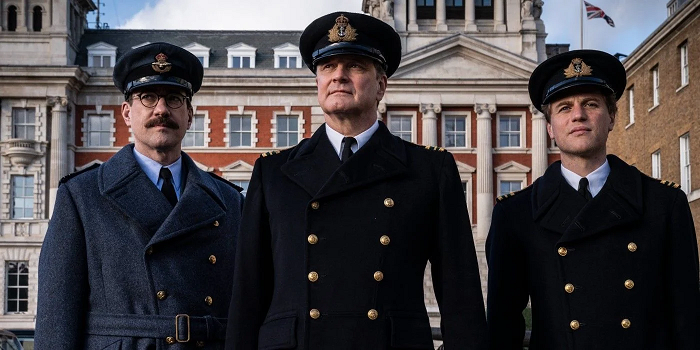
Don’t let its funky sounding title fool you. “Operation Mincemeat”, the new British war drama on its way to Netflix, is based on a story that would be impossible to believe if it weren’t true. Directed by John Madden (“Shakespeare in Love”, “The Best Exotic Marigold Hotel”) and written by Michelle Ashford, “Operation Mincemeat” puts together a sparkling cast for what could be a nice grab for Netflix.
Set in 1943, the movie depicts Britain’s attempt to disguise the upcoming Allied invasion of Sicily during World War II. To fool the Germans, the Brits took the corpse of a tramp who had died from ingesting rat poison, dressed him up as a military Captain, gave him fake and misleading documents, and covertly placed the body where the Germans would find it. Colin Firth, Matthew Macfadyen, Kelly Macdonald, Jason Isaacs, Penelope Wilton, Johnny Flynn, and Simon Russell Beale star in the crazy yet true war story that seems ripe and ready for the big screen treatment.
“Operation Mincemeat” releases in select theaters May 6th and streams on Netflix May 11th. Check out the trailer below and let me know if you’ll be seeing it or taking a pass.
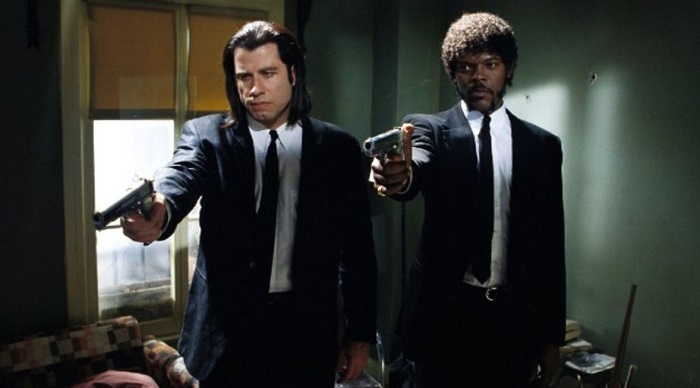
Considered by many to be Quentin Tarantino’s seminal classic, “Pulp Fiction” took the world by storm when it released in the early fall of 1994. And while it isn’t my favorite QT movie, it’s influence is hard to overstate. It also had one of the coolest and most recognized posters perhaps of all-time. It’s one many of you can probably picture in your mind without it needing to be described. But just as a reminder, take a look at this gem.
DIRECTOR – Quentin Tarantino
WRITER – Quentin Tarantino
STARRING – John Travolta, Samuel L. Jackson, Uma Thurman, Bruce Willis, Harvey Keitel, Tim Roth, Amanda Plummer, Rosanna Arquette, Ving Rhames, Eric Stoltz, Christopher Walken, Maria de Medeiros
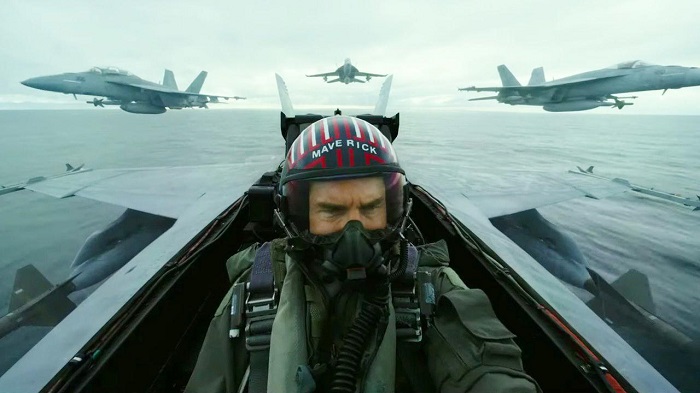
First we got a teaser. Then we got the first official trailer which featured more cool nostalgic shots than any hints at the story. Today Paramount has dropped a new trailer for “Top Gun: Maverick”, the long awaited and often delayed sequel to the 1986 box office smash “Top Gun”. This new look answers several questions that many of us have been asking and includes some new fighter jet footage that is nothing short of eye-popping.
“Top Gun: Maverick” sees Tom Cruise returning to one of his most memorable roles – Pete “Maverick” Mitchell. In the thirty-plus years since we last saw Maverick burning up the sky and ticking off his superiors, the talented but reckless pilot has avoided any and all promotions. But when he’s ordered to train a new group of Top Gun grads for a special mission, he’s brought back into a world filled with excitement but also pain. It’ll be interesting to see how a “Top Gun” sequel plays after all these years. As a kid from the 80’s, I’ll be grabbing my ticket.
“Top Gun: Maverick” premieres May 18th at the Cannes Film Festival before opening in theaters May 27th. Check out the trailer below and let me know if you’ll be seeing it or taking a pass.






 Keith & the Movies