Review: “The Avengers”

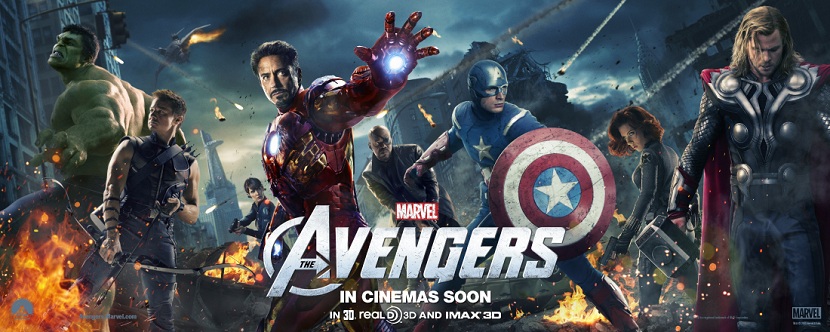
Marvel Studio’s “The Avengers” is the culmination of what may be the most ambitious project in film history. For those movie fans who have been living in a cave for the past several years, Marvel has been releasing several individual superhero movies that have all set the table for this huge event film. Two “Iron Man” pictures, “Captain America”, “Thor”, and “The Incredible Hulk” have all been linked together through brief reoccuring cameos and hidden after-credits scenes that refer to something called “The Avengers Initiative”. As any comic book geek could tell you, that’s a reference to the Marvel superhero team that first debuted in comics in 1963. On the surface, the idea for an Avengers film that’s directly tied into other individual superhero movies sounds great. On the flip side, even though the other films have been good, there are still plenty of areas where “The Avengers” could go off track. Well as a movie and comic book fan, I’m happy to say that “The Avengers” not only meets the challenges of it’s vision, but it’s an action packed adrenaline rush that offers some of the most fun I’ve had at the theater this year.

To handle this rather large undertaking, Marvel placed the project in the hands of Joss Whedon. Whedon was a good choice mainly due to his variety of experience. He’s found success in television, film, and comic books and he uses his knowledge of each combined with Disney’s deep pockets to create a movie that would appeal to the fanboy and the casual moviegoer alike. One thing that helps Whedon is that the film doesn’t require your traditional origin story. While we do see the generation of the team, we know all of the characters from the previous Marvel movies so Whedon is able to dive right into the story. That being said, don’t mistake this for a deep, engaging story that will challenge the audience. But I’ll also say that anyone going into “The Avengers” for that has already missed the point.
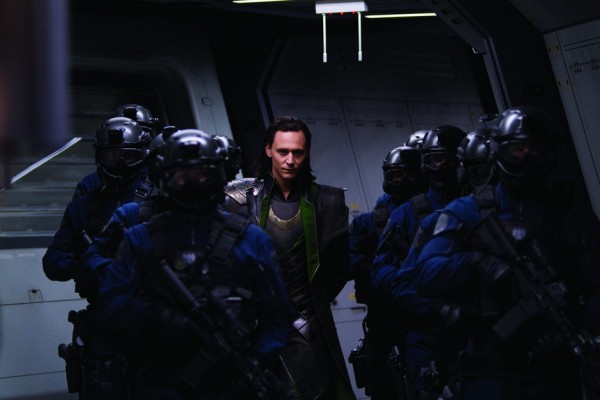
Throughout the other Marvel films, particularly “Captain America”, we learned about a cosmic energy source known as the cosmic cube. In “The Avengers”, S.H.E.I.L.D. head honcho Nick Fury (Samuel L. Jackson) has a team of scientists led by physicist Dr. Erik Selvig (Stellan Skarsgard) trying to harness the power of the cube, now known as the Tesseract. But suddenly the cube activates and opens a portal allowing the evil Loki (Tom Hiddleston) to entire the facility and steal it. Knowing the immense threat associated with the Tesseract being in the wrong hands, Fury activates the Avengers Initiative. But getting such a diverse group of superheroes to cooperate and coexist proves to be a lot harder than expected.

Fury starts by contacting Black Widow (Scarlett Johansson). He sends her to India to find Bruce Banner (Mark Ruffalo) while sending Agent Coulson (Clark Gregg) to Stark Tower to speak to Tony Stark (Robert Downey, Jr.). While the two are gone, he approaches Steve Rogers (Chris Evans) and sends him on a mission to retrieve the Tesseract. Upon hearing of Loki’s involvement, the thunder god Thor (Chris Hemsworth) also entires the mix as does the marksman and assassin known as Hawkeye (Jeremy Renner). Each of the heroes have their own baggage and their own personalities which often times clash to the point of dysfunction. But their disagreements give us some of the movie’s cooler and often times funnier moments. As you would expect the situation worsens and it’s up to the team to pull together or the world will be taken over starting with New York City.

It’s a pretty cut-and-dry story but it really works because Whedon understand his characters and he knows what kind of movie he’s trying to make. His familiarity with the Marvel comic book universe is clearly seen throughout the picture but nowhere more than in his treatment of the characters. As a comic book fan, I was really impressed with how they all felt right and it’s clear that the source material played a big role in shaping the on-screen versions. But Whedon never falls into the trap of taking things too seriously. The movie is filled with laugh out loud funny moments that are cleverly used and they never feel cheap or forced. They mix perfectly with the razor-sharp dialogue and the jaw-dropping action sequences. But the fantastic action and special effects shouldn’t surprise anyone. Afterall, “The Avengers” is a superhero action picture and Whedon knows it. The action comes at a furious pace and I can see where some may view it as relentless. Personally, I was completely wrapped up in it. The movie sells the superhero action through some of the most spectacular visuals and editing that you’ll see. I was blown away.
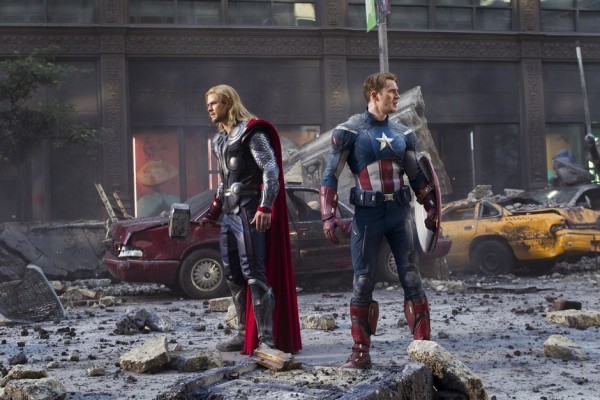
I can’t write a review of “The Avengers” without mentioning the incredible cast. One of the reasons the Marvel films and particularly “The Avengers” works so well is because of the amazing casting. Everyone is invested in their character and not one single performer phones it in. Downey, Jr. continues to be the perfect Tony Stark mainly due to his natural ability to use sarcasm and fire off funny quips without hesitation. Chris Evans, known more for his goofier roles,  is also quite good as the serious and straight-laced Captain America. I also really liked Mark Ruffalo as Bruce Banner. He’s the third actor to take on the role and he nails it. Much like Downey, Jr., Hemsworth is the perfect Thor and he shares some of the film’s best scenes with Hulk. Renner and Johannson also handle their roles very well. But I have to give special time to the wonderful Tom Hiddleston. He’s a remarkably diverse actor and he shows it here. His Loki is mysterious, mischievous, and evil and Hiddleston slithers through his scenes stealing many of them. There are also nice smaller performances from Gregg, Gwyneth Paltrow and Cobie Smulders that are just icing on the cake.

I can see where some people may not respond as positively as I did to “The Avengers”. The action is pretty much start-to-finish and if you’re not interested in the characters you’ll have a hard time embracing the story. There are also a few shortcuts taken with the story for the sake of convenience that could have been done a little better. For me, I have a connection to these characters through all my years of comic book reading and this film exceeded my expectations. But being a comic reader isn’t a prerequisite for enjoying this movie. If you’ve liked what Marvel has put out leading to it, you’re going to love “The Avengers”. Sure, it’s a loud, energetic summer popcorn flick, but it’s also a really good one. It’s honest and it never tries to be something it’s not. Featuring one of the better ensemble casts and some top-notch directing from Joss Whedon, “The Avengers” is a big budget blockbuster that actually deserves all the money it’s going to rake it. When’s the next showing? I’m ready to see it again.

VERDICT – 4 STARS

4-stars

REVIEW: “The Adjustment Bureau” (2011)

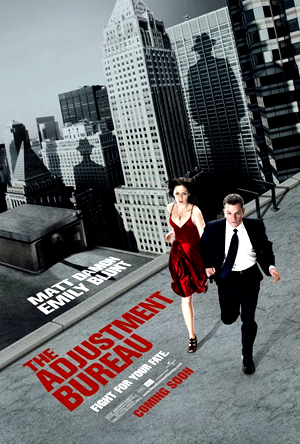
I think it would be fair to say that “The Adjustment Bureau” was a fairly big disappointment for me. The trailers and TV spots for the movie really sold it as something it’s not so I found myself expecting a little more than I actually got. I also felt the movie was going for an almost Hitchcockian feel. I mean look at the above movie poster that was released for it. Even it looks fresh out of Alfred Hitchcock’s creative mind. Unfortunately nothing in the film feels as creative as the poster and ultimately it’s a letdown.

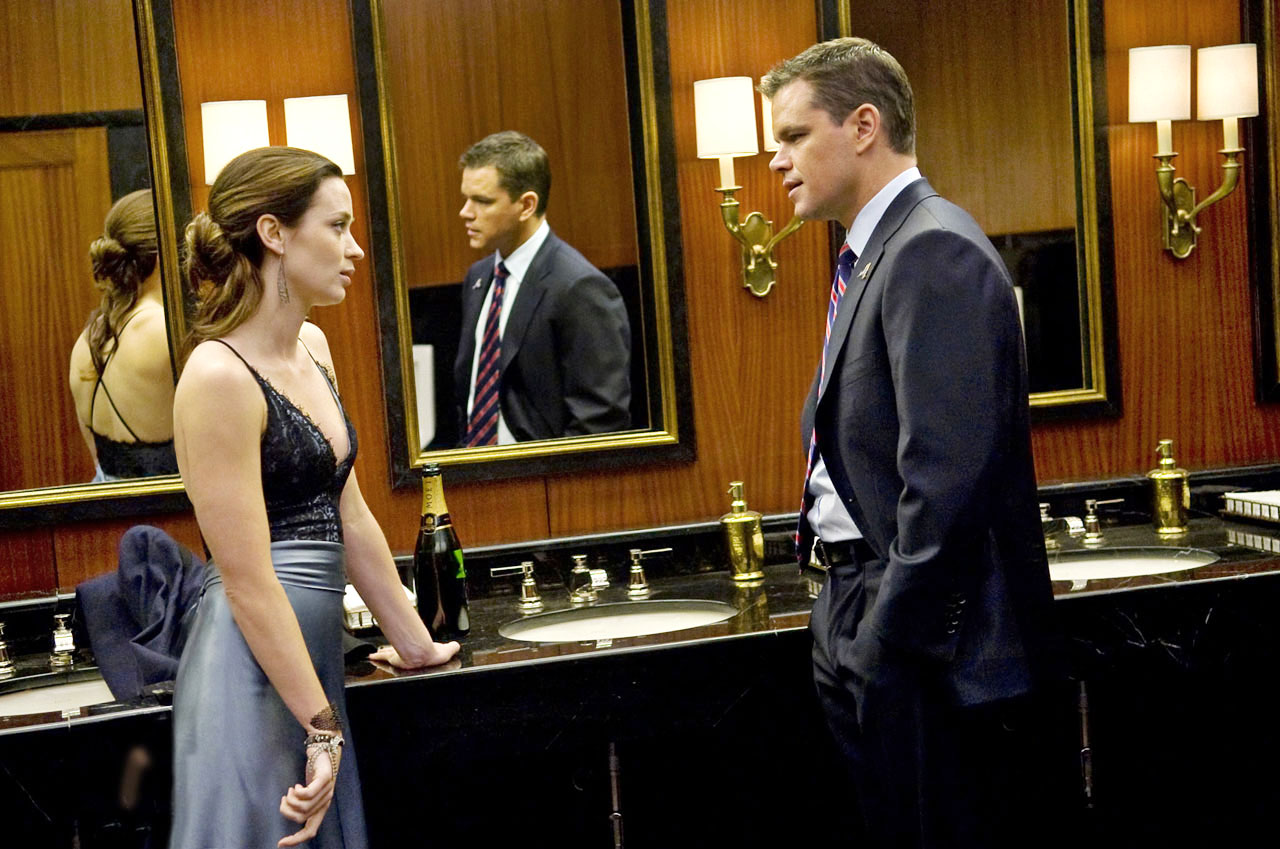
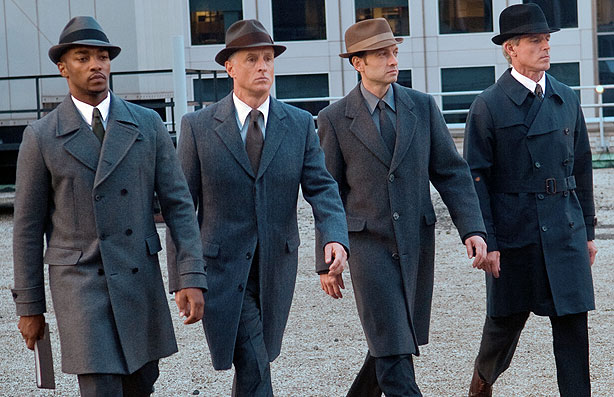
In “The Adjustment Bureau” Matt Damon plays David Norris, a young hotshot Democratic candidate for the U.S. Senate, who loses his bid for office due to his questionable maturity and impulsive behavior. While rehearsing his concession speech he bumps into and immediately is attracted to the mysterious but beautiful Elise (Emily Blunt). The problem is they aren’t meant to be together, at least according to “the plan”. Enter The Adjustment Bureau, a group of stiff, ominous men in hats who intervene to make sure this sprouting relationship never takes place and that “The Chairman’s” plan stays on course.

“The Adjustment Bureau” could be called a romantic sci-fi thriller. Sadly the film’s romance has no believable foundation. While Damon and Blunt have good on-screen chemistry, it was hard for me to believe in their romance. Director George Nolfi never allows the relationship to grow, instead choosing to springboard their undying love out of a few short hours together. I also felt the sci-fi element was pretty underwhelming.  There’s nothing that stands out about it. Instead we get doors that transport you from one part of the city to another (which is cool the first 10 times they are used) and magical hats that serve as keys (yes, I just actually said magical hats that serve as keys). The film also lacks any real sense of urgency that’s found in better thrillers. I never felt any intensity nor did I ever feel that there was a steady or consistent buildup.

Most of these problems are the results of a slow, lumbering script. The film spends too much time in the first act examining David’s political ambitions instead of developing the romance which is the supposed centerpiece of the entire picture. Then we get numerous scenes of tedious dialogue between David and Bureau members, meant to inform the audience but instead ends up deflating any momentum the film may gain. As more is revealed the sillier things get and by the time we get to the rather flat and uneventful ending, I wasn’t that interested.

As I mentioned, Damon and Blunt have good chemistry and both give earnest performances and could have pulled this film off with better material. I enjoyed seeing Anthony Mackie in a bigger role but he seems out-of-place in this picture. “Mad Men’s” John Slattery and  the great Terence Stamp also appear but neither are given the chance to do much that’s memorable, again a result of the sub-par material.

If you watched the trailer for “The Adjustment Bureau” you would be expecting an action-packed, intellectual thriller. Instead you get nothing close to that. This is supposed to be a film that promotes thoughts of free will versus fate but honestly, I was never engaged enough to be moved intellectually. The film is well made, uses some great Brooklyn locations, and has some nice performances especially from it’s two leads. But the inconsistent script, lackluster ending, and flat-out silliness brings down what could have been a fun movie.

VERDICT – 2 STARS

REVIEW: “The Adventures of Tintin” (2011)

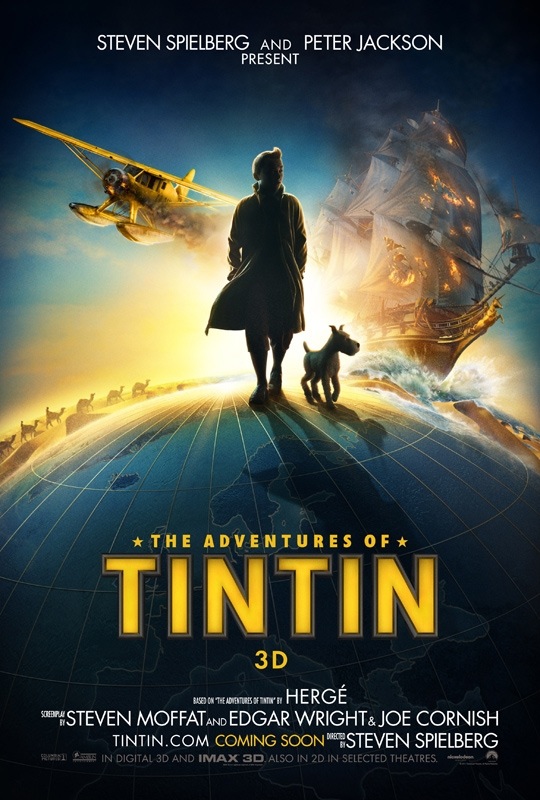
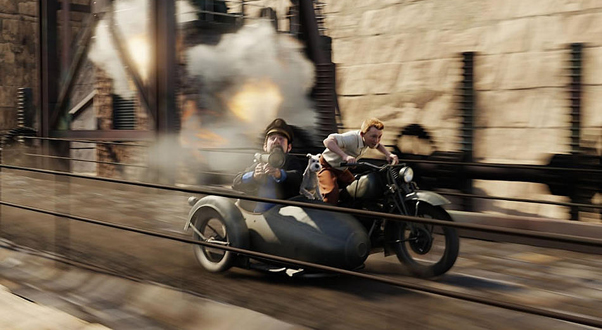
Steven Spielberg and Peter Jackson’s “The Adventures of Tintin” has been in the works for close to 30 years. Spielberg first purchased the rights in 1983 but the main filming didn’t actually begin until 2009. Jackson produced and Spielberg directed this animated motion capture film based on the immensely popular comic book series from Belgian artist Herge. While the Tintin character is most popular in Europe, Spielberg and Jackson hope the broader exposure will result in a least two more films. There’s certainly nothing in “The Adventures of Tintin” that should discourage a sequel. But there’s also several things in the film that keep it from being as good as it could have been.

In many ways “The Adventures of Tintin” is an old-fashioned adventure with a shiny modern coat of paint. It’s a classic style, simple and straightforward adventure yarn that at times feels like an Indiana Jones treasure hunt picture. But it’s the cutting-edge motion capture and CGI animation that instantly catches your eye. The character’s gorgeous three-dimensional renderings are incredibly realistic but with just a touch of cartoony style. The animation also features an incredible level of detail. It’s seen in everything from the various around-the-world locations to the fantastic period recreation. “Tintin” is a visual treat and there’s no doubt you’ll enjoy the steady barrage of eye candy found throughout the film.

I mentioned that “Tintin” is simple and straightforward and that’s not necessarily a bad thing. But I did have a few issues with the story. The movie starts with Tintin purchasing a model ship from a vender at an outdoor market. There is practically no introduction whatsoever and it seems like the movie expects you to already be familiar with the character. As someone unfamiliar with Tintin, all I learned is that he’s a journalist and adventurer and his best friend is his white dog Snowy. After buying the ship Tintin is immediately approached by two individuals who try to take it off of his hands. This leads to the discovery that the model ship may hold a clue to the whereabouts of a lost treasure. Upon seeing this, Tintin and Snowy head off on a globe-trotting adventure to find the treasure before a shady character named Sakharine does.

From there the movie launches into a frantic and almost hyperactive action romp. The film seems to move from one elaborate cinematic set piece to another, each filled with that signature well-choreographed Spielbergian action. There’s also just enough story to keep everything interesting. But I did feel the movie start to lag in the middle especially during a long series of flashback scenes intended to tell the history behind the treasure and it’s connection to two of the characters. Speaking of characters, Tintin teams up with Captain Haddock, a drunk who loses control of his ship to Sakharine. While Haddock has a few funny moments he’s also borderline annoying at times especially when he goes off on one of his ramblings. There are also a couple of instances where his attempts at humor seem to clash with the tone of the movie. While the movie hits a few speed bumps in the middle, it quickly picks back up on its way to a wide open ending that clearly points to a sequel.

Overall “The Adventures of Tintin” is a fun time that the entire family can enjoy together. From the start, the movie jumps right into the adventure but don’t expect much of an introduction to Tintin or even any character development to speak of. And while the story is about as basic as you can get, it really only stumbles in a few places. But it’s the movie’s presentation that is the most impressive. The film looks amazing and features some of the most eye-popping CGI and visually stunning action sequences. The John Williams score doesn’t hurt either. When it comes down to it, “The Adventures of Tintin” is like several of Spielberg’s other pictures – light on story but heavy on appearance. It’s not a perfect movie but there is still plenty to latch onto and once you get onboard it’s easy to stay with it all the way.

VERDICT – 3.5 STARS

REVIEW: “Act of Valor” (2012)

“Act of Valor” is a tough movie to judge. I’ve always taken into consideration what a movie is trying to be when reviewing it. I look at the intentions of the filmmakers and the target audience to better understand if they accomplished their goal. But there are also certain elements to a film that should be consistent in every good picture. “Act of Valor” is a straightforward and unashamed action picture. It’s one point of uniqueness is that it stars real-life active duty Navy SEALs. In fact, none of they SEAL’s real names were mentioned in the film or featured in the credits. At first I wondered if this was strictly a gimmick to draw action lovers to the film. But the very first action sequence showed me that they really brought something to the movie. Unfortunately there are other areas where the picture falls short and even the fantastic action scenes can’t totally overcome these flaws.

Mike McCoy and Scott Waugh produced and directed “Act of Valor”. They gained permission from the United States Navy to use real SEALs and received access to training areas and equipment to give the film a heightened sense of realism. The Navy’s involvement certainly is effective and the action scenes are brimming with grit and intensity. The SEALs legitimately give the military styled action an adrenaline shot that many of these films don’t have. Their familiarity with the missions and the process is evident and when they start speaking the special forces lingo I was completely involved. There is also a genuine sense of patriotism in these men that you can’t help but be impressed by.

McCoy and Waugh use several camera techniques to give the movie more grit and energy. Some work and some don’t. There are some scenes, especially earlier in the film, where we get shifts of focus that are really distracting. There are also some moments where the herky-jerky shots make deciphering the action almost impossible. But thankfully the erratic handheld technique is used sparingly. We also get several action shots from the first-person perspective that closer resembled a Call of Duty video game than a movie. But I grew to like those instances regardless of its obvious gimmickry.

While the action scenes clearly show the movie’s strengths, the attempts at drama and character development are definitely weaknesses. The biggest problem is with the acting. Look, I completely understand that these aren’t professional actors. But most of their non-action line-reading is cringe-worthy. They really give no life to these characters and the movie suffers for it. The character-driven moments seem false and the guys just don’t have the skills to sell them. The story also suffers from a fairly generic and painfully predictable script. There’s one key moment in the film that you see coming 10 clicks away.

“Act of Valor” is sure to get its share of criticism and it’s hard to argue for its shortcomings. But when the night vision popped on and the bullets began to fly, I found myself enthralled. This is a movie that at times feels like an obvious recruiting tool and at other times a hard-core military action movie. The filmmakers do get several things right. When the SEALs are in their element I was completely drawn in. But when it comes to simple everyday things like…well…carrying on a conversation, the movie goes limp. I think “Act of Valor” does enough of what it’s aiming for to offer some entertainment. I’m actually anxious to see the action scenes again. Too bad I’ll probably have to forward through everything else to get there.

VERDICT – 2.5 STARS

Review: “A Separation”

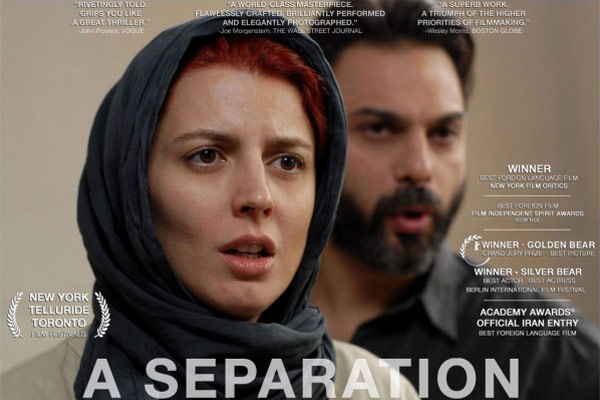
“A Separation” is the 2012 Oscar winner for Best Foreign Language Film and the first win for a movie from Iran. Written, produced, and directed by Asghar Fahadi, “A Separation” is a carefully structured and nuanced story that is at times painful and tragic but always mesmerizing. Set in modern-day Iran, the film is a devastating look at divorce through the cultural lens of a very complex country. Fahadi uses an almost methodical approach to storytelling yet his film is brimming with intensity and true human emotions. It touches on a reality of life that transcends any political or cultural barrier while also offering some thought-provoking insight into the religious laws and social structure of that part of the world.

“A Separation” opens with a well conceived scene that sets the stage for larger story. The scene shows Nader and Simin petitioning a judge for a divorce after 14 years of marriage. Simin is spearheading the separation because she wants to leave the country due to its current state of affairs. She is concerned with how it will effect the future of their 11-year-old daughter Termeh. Nader has no desire to leave mainly because he takes care of his father who is in the advance stages of Alzheimer’s. The judge rules their complaints to be petty and not warranting a divorce. With no divorce granted Simin still moves out leaving Nader to take care of his father and Termeh.

It’s here where we begin to see the many layers of Fahadi’s story. He examines a variety of social issues while offering a subtle but clear critique of Iranian culture. Yet nothing here feels forced or contrived. He looks at these things through the eyes of his characters in a true and organic way. Plus we learn more about the characters as they’re faced with things such as elderly care, school pressure, and rigid orthodoxy. But the biggest dissection of the characters comes through an intense court battle between Nader and a caretaker he hired to look after his father. It’s here that we see each character struggle with a variety of difficult choices and moral quandaries. It becomes a true character study that reveals a side of people that we can recognize as wrong while also understanding the root cause of their moral compromises. This is where the story could have evolved into a convoluted and self-indulgent mess. But Fahadi’s razor-sharp screenplay never misses a step and the film moves with a fluid yet painful grace.

While Fahadi takes his characters through various moral gray areas, he never labels one the hero and one the villain. There are no white or blacks hats in this story. In fact, one of the most compelling things about the film is trying to figure out who to sympathize with between Nader and Simin. I was constantly going back and both between them as things unfolded. But that’s just another reflection of the tremendous screenplay. Fahadi engages the audience and encourages them to make their own conclusions about his characters. And while his story does examine social and cultural issues, “A Separation” is a film about a divorce that’s happening right before our eyes. But as I was watching this husband and wife I realized that the heart of this story was young Termeh. Like a tennis ball she is bounced back and forth in the background of the film until everything reaches it’s breaking point. She’s simply heart-breaking.

Another reason the movie works so well are the performances. Everyone across the board is fantastic and no one buckles under the weighty material. The performances flow perfectly together with such ease. They nicely handle a script that can sometimes pack more intensity in an on-screen conversation than most action films. I remember several scenes that had me on the edge of my seat just by its searing dialogue. But while the story is very well written, there is one problem I had. There’s a pivotal moment close to the end of the film where key information is revealed in what feels like the most convenient way imaginable. It’s the only time in the entire film where something didn’t feel authentic.

“A Separation” is a fantastic movie that does more to prove the broad range of global talent in filmmaking. It’s a fascinating look at the cultural inner-workings of a complex society yet the main thrust of the story goes well beyond that. It examines the horrible effects of divorce by looking at it through a very clear lens. Fahadi doesn’t try to take sides even if it appears so at first. Instead he exposes what drives some people to end their marriage. It’s an honest and often times crushing picture but one that is incredibly well crafted. It does have a minor hiccup or two but these minor flaws do nothing to spoil what a fine accomplishment this is. “A Separation” should cause the serious viewer to think and to ask ourselves questions. For me, that’s just a reflection on how good this movie is.

VERDICT – 4.5 STARS

REVIEW: “The Artist”

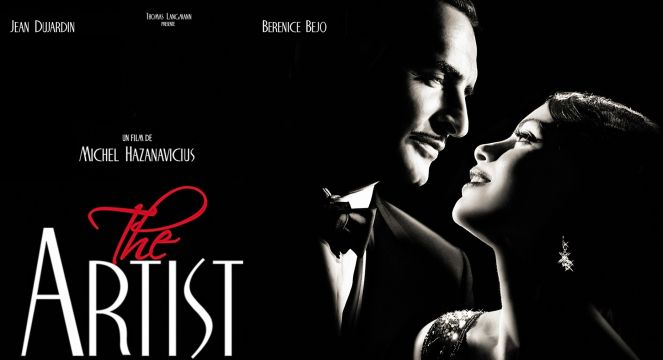
Many modern moviegoers may be tempted to skip a new black and white silent movie. That’s a shame because to do so would be to miss a near motion picture masterpiece that is one part celebration of cinema and another part exercise in masterful storytelling. Michel Hazanavicius wrote and directed this gorgeous film that exudes nostalgia and imagination in every scene. His willingness to tackle the handicaps that accompany a black and white silent picture is admirable but I must admit I was a little worried. Could Hazanavicius recreate a believable bygone era of filmmaking or would the results be a well-intended mess? A large grin spread across my face after seeing the classic-styled opening credits and I immediately knew I was in for something special.

“The Artist” reminds us of everything that is magical about movies. It reminds us of a time when creativity trumped huge elaborate effects and million dollar set pieces. It uses black and white to it’s advantage and even though there are times that you can tell it’s intentionally being nostalgic, I never doubted it’s sincerity or integrity. Making this a silent picture was a risky approach but it works perfectly here. From Harold Lloyd to Nosferatu, I’ve been a fan of silent cinema and “The Artist” could blend right in with the best of those films. It may be a flashback to an earlier style of filmmaking but this silent movie speaks louder and says more than most of what we see coming out of Hollywood.

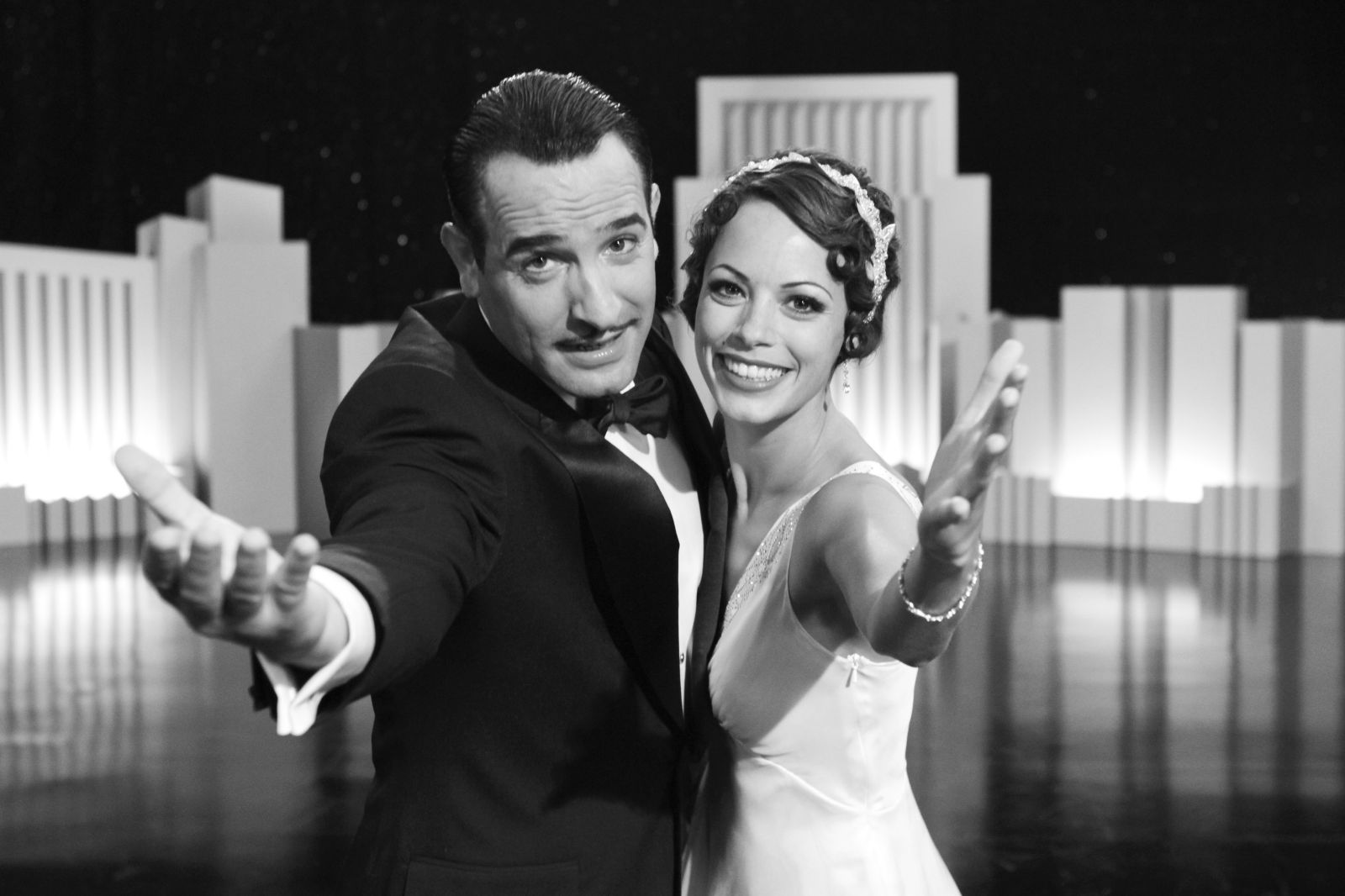
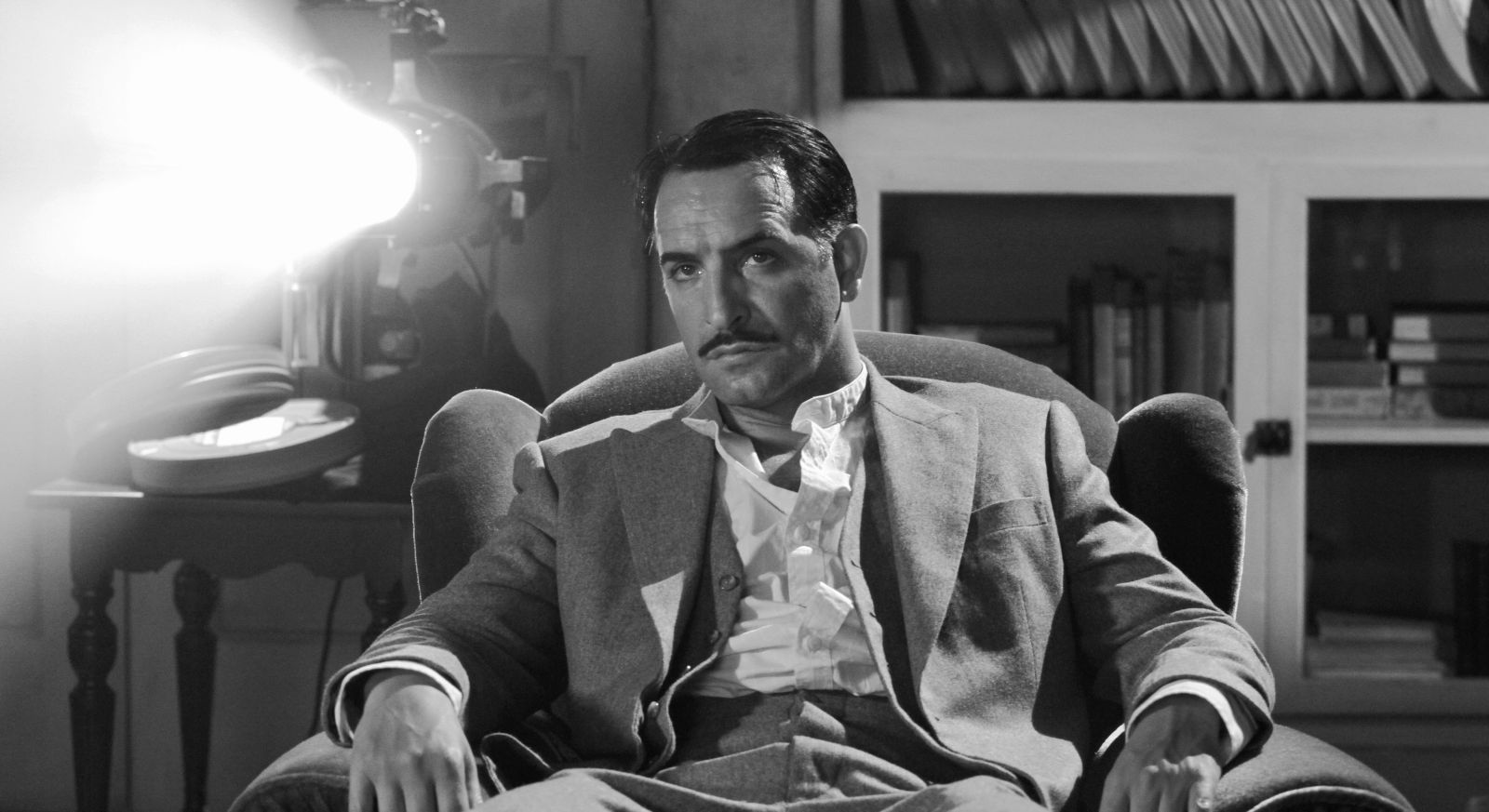
One of the key ingredients to the success of “The Artist” can be found in the brilliant performance of Jean Dujardin. He plays George Valentin, a popular silent movie star with the world in his hands. He revels in the attention and limelight that he gets from the starry-eyed public, an obsessed media, and the head of Kinograph Studios, Al Zimmer (John Goodman). But when the studio makes the shift from silent pictures to talkies, George finds himself pushed out and replaced by younger, fresher faces, most notably an energetic and beautiful actress named Peppy Miller (Berenice Bejo). George’s world crumbles around him but it’s his pride that may be his ultimate undoing. Dujardin loses himself in his character and captures the essence of a silent movie performance. But as the film progresses he draws you in with his crushing and deeply moving work. Expression is essential to his performance and Dujardin nails every grin, wink, head tilt, or mannerism. It’s beautifully expressive and his charm and command of every scene makes it unforgettable.

Bejo’s performance lives up to her character’s name. She’s spirited and lively and while it could be said that she over does it in a few scenes, she encapsulates what you would expect from a young aspiring actress from that era. And her chemistry with Dujardin is magnetic. It’s also fun to see such a wonderful supporting cast many of which have small roles. The great James Cromwell, Ed Lauter, and Malcolm McDowell each have small but entertaining roles in the film. Hazanavicius uses them perfectly. And how could I not mention one of the best animal performance in movie history from Uggie the dog?

“The Artist” is a phenomenal cinematic accomplishment and Hazanavicius’ vision is rendered brilliantly through sparkling black and white and sharp direction of his incredible cast. I genuinely felt that I had traveled back in time to a more authentic and purer period of movie making. But “The Artist” isn’t all about nostalgia. At it’s core it’s a simple but beautiful drama laced with humor and romance. “The Artist” is a wonderful package from it’s visual style to it’s perfect score, from it’s razor sharp direction to it’s captivating leading man. In a year of love letters to cinema, none are better than this and it’s certainly worth all of the awards it’s sure to get.

VERDICT – 5 STARS

5 STARSs

5STAR K&M