REVIEW: “Ballad of a Small Player” (2025)

Colin Farrell brings every bit of his charisma and charm to his latest film, “Ballad of a Small Player”, a perplexing psychological drama that has so much going for it starting with it’s fully committed star. It’s directed by Edward Berger who is coming off of back-to-back Best Picture Oscar nominations for “All Quiet on the Western Front” and “Conclave”. Those two names alone should be enough to pique any movie lover’s interest.

But Farrell’s wholehearted efforts and Berger’s sumptuous visual artistry can’t overcome the movie’s single biggest hurdle – its script. Adapting the 2014 Lawrence Osborne novel of the same name, screenwriter Rowan Joffé takes on the daunting challenge of untangling the already knotty original material. The film gets off to a good start, nicely setting the table both narratively and visually. But problems spring up alarmingly fast as the movie swings from stylishly intriguing to frustratingly convoluted.

Image Courtesy of Netflix

Farrell plays Lord Doyle, a high-rolling gambling addict who has made his way to Macau, “the gambling capital of the universe”. We learn rather quickly that Doyle is in trouble. For starters, he fled to Macau after swindling over $900,000 from a wealthy elderly widow. But he gambled it all away in a run of bad luck. To complicate matters, he has ran up a debt of 352,000 Hong Kong dollars with a swanky Macau hotel and they’ve given him three days to pay up or they’re calling the police.

Doyle’s flawed addict’s logic tells him statistical probability is on his side and he’ll start winning soon. He’s convinced that he played his way into this mess and he can play his way out, with the right financial backing of course. But he’s having a difficult time finding a casino that will extend him credit. He finds hope in the enigmatic Dao Ming (Fala Chen), a casino hostess and loan shack who is in a pickle of her own. Doyle tries to persuade her to fund him, insisting that one big win would solve both of their problems.

As if that wasn’t enough, hot on Doyle’s heels is Cynthia Blythe (Tilda Swinton), a pesky private investigator who gives him 24 hours to come up with the widow’s money or she’ll have him deported back to London. Cynthia adds an interesting layer, but the story is more about Doyle’s mysterious relationship with Dao Ming who disappears, suddenly reappears, and then disappears again. Her presence and absence both play crucial roles in understanding Doyle’s arc. But the hazy storytelling makes getting to any deeper meaning a chore.

Image Courtesy of Netflix

At its core, “Ballad of a Small Player” is a redemption story that offers an unorthodox representation of addiction. It boldly serves us its story with helpings of existentialism and tragedy. And its near purgatorial perspective keeps us questioning what we’re seeing. But all of those big ambitious lead to trappings that the movie can’t escape. Even worse, the lack of clarity leaves things murky to point that deciphering it all can be a headache.

“Ballad of a Small Player” is one of the most visually striking movies of the year. It’s also one of the year’s bigger disappointments. The movie is a visual feast, brimming with neon-bathed imagery and richly detailed compositions. And it’s anchored by a tremendous lead performance from Colin Farrell who deserved more fully realized material than he was given. But even with his eye-popping presentation, Berger can’t wrangle together the wealth of big ideas he clearly has. For that reason, his latest film falls well short of his previous two award winners.

VERDICT – 2.5 STARS

REVIEW: “Black Phone 2” (2025)

Scott Derrickson’s 2021 horror gem “The Black Phone” left a mark with its sinister tone and edge-of-your-seat suspense. But its ace in the hole was Ethan Hawke who took on a role unlike any other in his brilliant forty-year career. Hawke played The Grabber, a serial killer and child abductor who terrorized the residents of a Denver suburb. Hawke lost himself in the character and delivered a horror movie antagonist that was both chilling and fascinating.

Derrickson returns to direct and rejoins C. Robert Cargill in writing the script for “Black Phone 2”, a sequel set four years after the events of the first film. Even more exciting, Ethan Hawke returns as The Grabber who (and this may be a spoiler for series newcomers) was killed at the end of the first film. But Derrickson and Cargill have created a surprisingly compelling angle to bring their villain back, and they manage to extend the original story in a unique and effective way.

“The Black Phone” drew its inspiration from a 2005 short story by Joe Hill. It laid the groundwork for the unexpected narrative twists of “Black Phone 2”. Set in 1982, the sequel continues the stories of brother and sister Finney and Gwen Blake (played by the returning Mason Thames and Madeleine McGraw). Now 17-years-old, Finney has tried burying his trauma since grabbing headlines as the lone survivor of The Grabber’s murder spree.

Image Courtesy of Universal Pictures

But the movie is most interested in Finney’s kid sister Gwen, whose mysterious power (or curse) played a big part in the first movie. Gwen’s clairvoyance is manifested in dreams that she doesn’t fully understand. Lately they’ve been horrifying nightmares where she witnesses the brutal murders of three young boys. There is also the piercing rings of a black rotary phone – a potential connection to The Grabber. Each new nightmare gets more vivid and more disturbing. And each points to Alpine Lake Youth Camp high up in the Rocky Mountains.

Desperate for answers, Finney, Gwen, and her wannabe boyfriend Ernie (Miguel Mora) head to Alpine Lake to investigate. Posing as counselors in training, the trio arrive in the middle of a blizzard and are greeted by a limited staff including the owner, Armando Reyes (Demián Bichir). While there, Gwen’s terrifying dreams intensify. They begin with horrific encounters with the three mutilated little boys. But soon it’s The Grabber himself, now a raging vengeful spirit with an ax to grind with Finney and Gwen.

Derrickson really leans into the added supernatural spin, taking an already dark and unnerving story and making it even more unsettling. Along the way, we’re treated to several intriguing connections and unexpected reveals, some of which change our perspective on the first film in some surprisingly clever ways. They tell us more about The Grabber’s violent history as well as Finney and Gwen’s family struggles.

The performances from the young stars are generally good although the script trips them up on occasion. This is especially true with McGraw who is routinely forced to blurt out 80s-inspired insults which sound more hokey than authentic. Otherwise both she and Thames meet the many demands of their roles. We also get good supporting turns from Bichir and Jeremy Davies as Finney and Gwen’s father, Terrence.

Image Courtesy of Universal Pictures

As for Hawke, aside from a few glimpses in a handful of early flashbacks, it’s nearly an hour before we see him as The Grabber. And once he appears he is every bit as chilling as before, lurking in the shadows of Gwen’s dreams while grimly uttering his lines with an ethereal menace. He’s a haunting presence with powers inspired by Freddy Krueger, but whose vengeful rage and sadism is far more serious and focused.

The movie makes a number of impressive choices, but some of the most effective involve its bold visuals. Derrickson shoots Gwen’s dream sequences using Super 8mm and 16mm, giving them a grainy old home video quality. Together with the crackle of static in the audio, it creates an eerie and dread-soaked atmosphere. It’s a very specific and potent visual choice that’s more than just a gimmick. And it stands out even more once Derrickson begins integrating it with the digital photography of the ‘real world’.

“Black Phone 2” is a terrific sequel that many of us didn’t know we needed. From its well-developed character arcs to its sinister set pieces, the movie uses every facet of filmmaking to make us squirm in our seats but also empathize with its characters as they navigate such common yet weighty themes as processing trauma, facing fears, family bonds, and the testing of faith. Admittedly the rules of ‘dreams versus reality’ aren’t always clear, especially in the final act. But it’s easy to look past such small gripes after considering the keen vision and first-rate execution of this worthwhile sequel that’s full of proud callbacks and original twists all its own.

VERDICT – 4 STARS

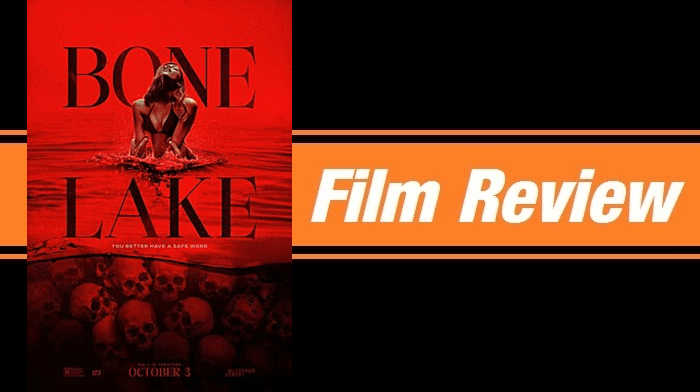
REVIEW: “Bone Lake” (2025)

In several ways, the first hour of “Bone Lake” plays like one of those steamy thrillers that frequented late-night cable television in the late 80s and early 90s. It works hard to be seductive, even veering towards trashy on occasions. And it attempts to give its story a sharp psychological edge. But neither the pseudo-eroticism or the overly familiar mind games can make this genre flick crackle the way it clearly wants and desperately needs to.

Directed by Mercedes Bryce Morgan, “Bone Lake” seems to have a clear vision of what it wants to be yet it never fully commits to it. Though never boring, much of it feels like reheated material from other features. It isn’t until the last fifteen minutes that the movie lets its proverbial hair down. Its big crazy finish wraps things up with a devilishly gory payoff that really doesn’t make much sense but is a lot of fun nonetheless.

Image Courtesy of Bleecker Street

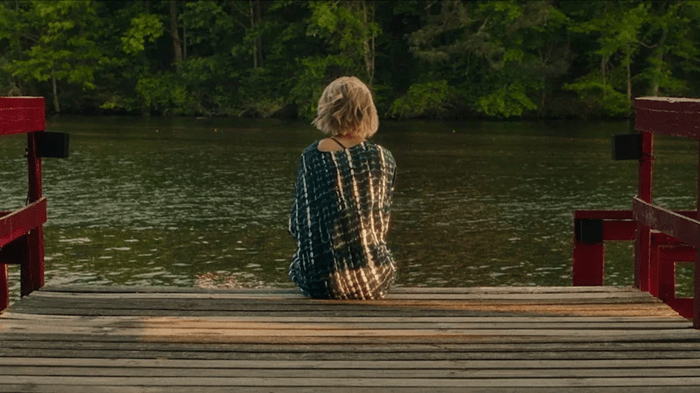
Diego (Marco Pigossi) and Sage (Maddie Hasson) are a seemingly happy couple who book a weekend getaway at a lavish lakeside estate. A nervous but excited Diego plans on asking Sage to marry him. But Sage clearly has some buried reservations about their relationship which comes more into play as the story moves forward. But things really get complicated with the sudden and unexpected arrival of a second couple.

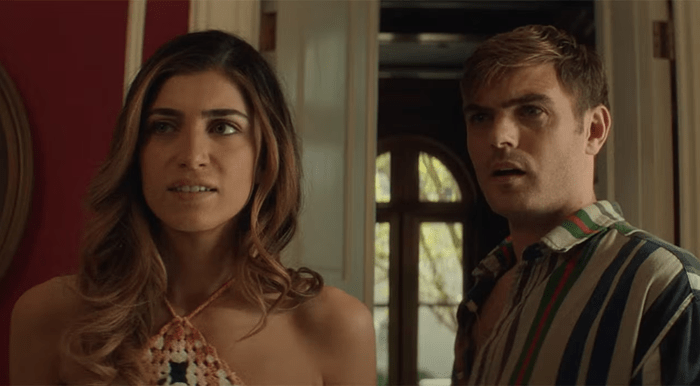
Diego and Sage are surprised by the arrival of Will (Alex Roe) and Cin (Andra Nechita). “It’s short for Cinnamon,” she’s quick to clarify. The latter couple reveal they too have booked the place for the weekend which leads to a table-setting conundrum. With both couples unable to reach the property owner and with the nearest hotel some 50-plus miles away, they make the ill-fated decision to share the place for the night. Bad idea.

From there it doesn’t take long for one of the movie’s more noticeable flaws to surface. “Bone Lake” makes the mistake of tipping its hand too early and openly. Simply put, Will and Cin are too transparent from the start. In no time they are openly flirting, planting lies, and manipulating Diego and Sage in ways that can be frustrating to watch. It’s one of those cases where most of the issues could easily be solved with the slightest bit of communication. Unfortunately…

Image Courtesy of Bleecker Street

Diego and Sage only make their situation worse through their maddening choices which move the plot to where it needs to go but leaves them looking like buffoons in the process. Such as Sage taking off and driving into town with the flirty Will while Diego stays behind in the house with the seductive Cin. What could possible go wrong? And when our protagonists finally have the conversations they should have had much earlier, it’s too late (of course).

Again, the movie does finish with an entertaining blood-drenched final 20 minutes that almost makes it worth the journey to get to it. But outside of that, “Bone Lake” tells an familiar story patched together with ideas from more recent films like “Barbarian” to earlier movies like Michael Haneke’s “Funny Games”. The performances are serviceable and the gore is a blast (minus a pointlessly graphic opening sequence). But the film never goes as bonkers as it needs to, leaving us with little more than a tame and trite time-passer. “Bone Lake” opens in theaters October 3rd.

VERDICT – 2.5 STARS

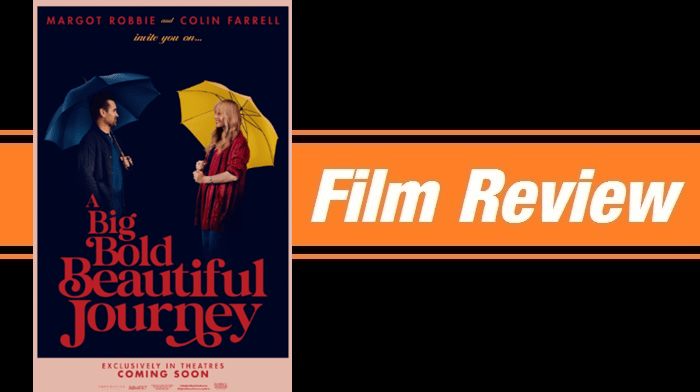
REVIEW: “A Big Bold Beautiful Journey” (2025)

Given the current cynical and hyper-polarized state of our society, a movie like “A Big Bold Beautiful Journey” runs the risk of facing two vastly different reactions. It could end up being too earnest and sentimental for the more calloused hearts. But it could also be just the kind of warm and touching movie some people are yearning for during this strangely turbulent moment in time. I tend to fall in with the latter group. If only the movie delivered on its potential.

“A Big Bold Beautiful Journey” is the third film from video essayist turned filmmaker Kogonada. His previous two indie features, “Columbus” (2017) and “After Yang” (2021), both left long-lasting impressions on me while vividly defining Kogonada’s keen visual craftsmanship and distinct approach to storytelling. His latest veers slightly more mainstream while maintaining a semblance of the quiet patient rhythm and introspective gaze from his earlier works.

Image Courtesy of Sony Pictures Releasing

The problem is Kogonada’s virtuosity can’t fully make up for the film’s biggest issue – the script. Rather than directing his own material as he did with “Columbus” and “After Yang”, this time Kogonada works from a screenplay written by Seth Reiss. To be fair, the script has its strengths. There are several pure moments of heart and humanity. And the characters are given more than enough space to develop. Even more, its themes of memory and reflection are the very ideas that Kogonada has shown to be interested in.

But “A Big Bold Beautiful Journey” can’t quite live up to its enticing title, mostly because its script is littered with shortcuts and slow patches. There are several times where the story jumps from one point to the next, skipping information and details it doesn’t seem interested in sharing. Even more, there are other instances where any momentum grinds to a halt. It can be maddeningly lethargic as it sluggishly navigates a tale with surprisingly little substance.

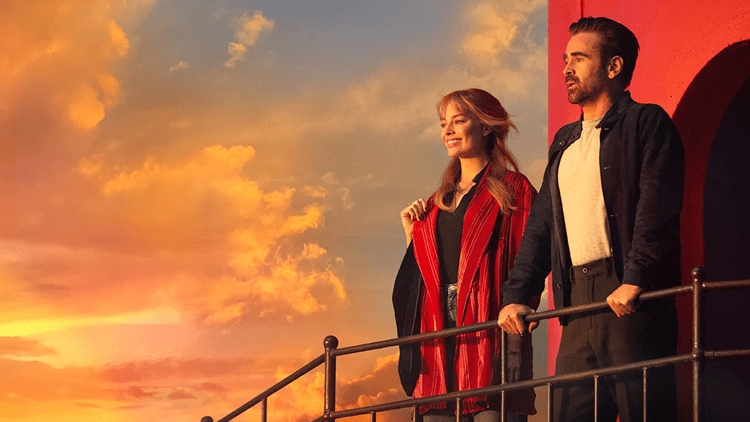
The movie certainly has the star power in Colin Farrell and Margot Robbie. But they’re somewhat of a mismatched pair, struggling to develop the kind of chemistry a story like this desperately needs but doesn’t provide. Farrell plays David, a lonely New Yorker on his way to a friend’s wedding. He stops at the generically named The Car Rental Agency where he’s greeted by two oddball attendants (Kevin Kline and Phoebe Waller-Bridge). They give him the keys to a 1994 Saturn, complete with a very unique GPS.

At the wedding David has an abrupt meet-cute with fellow lost soul, Sarah (Margot Robbie). She’s a straightforward free-spirit who does some playful flirting with him before going her own way. Later, as David is leaving, his now seemingly sentient GPS guides him to a Burger King where he unexpectedly bumps into Sarah. This kicks off an unexpected road trip of self-reflection as David and Sarah follow the GPS to a series of doors standing in remote locations, each transporting them to specific moments from their individual pasts.

Image Courtesy of Sony Pictures Releasing

Though their lives have followed dramatically different paths, David and Sarah possess a similar sense of emptiness. Learning who they are by revisiting their pasts is the story’s most interesting thread. Some doorway adventures work better than others by giving us some crisp insight into who these characters are. Others are either drawn out for too long or play out exactly how you would expect them to. But what slows things down the most are the conversations in between them. Farrell and Robbie do their very best to make the dialogue meaningful. But for every good exchange there are two that go nowhere.

As for the more obvious question of who or what brought David and Sarah together and who or what is guiding their journey? Well, who knows? Is it fate, destiny, or something else supernatural? We’re never told or shown. The film shows no real interest in explaining in detail or even lightly ruminating. Perhaps in a better movie it wouldn’t matter. But with “A Big Bold Beautiful Journey”, I found myself searching for something to grab my imagination. Kogonada’s striking visuals could only do it for so long. And my affection for Farrell and Robbie just left me wishing they had been given better material to work with.

VERDICT – 2 STARS

REVIEW: “Brick” (2025)

Tim (Matthias Schweighöfer) is a video game designer; his wife Olivia (Ruby O. Fee) is an architect. The relatively young couple have made good memories together. But their relationship hasn’t been the same since losing their child in a heart-shattering miscarriage. Since then, a grieving Tim has lost himself in his new game, prompting Olivia to propose a getaway to Paris for a much needed reset. But Tim resists, telling her he can’t leave work.

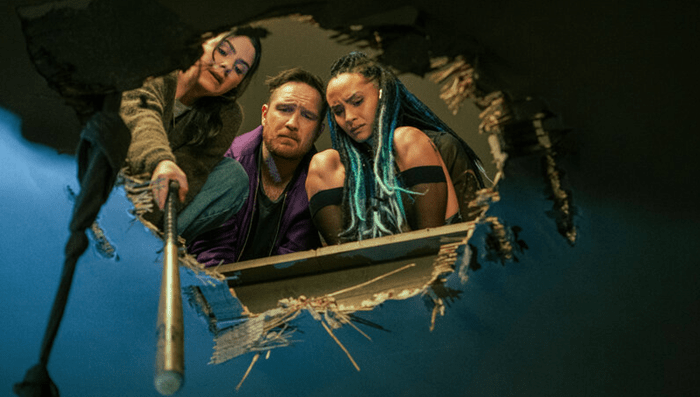
The next morning Olivia wakes Tim with news that she’s leaving him. As she attempts to walk out she makes an alarming discovery. She opens the door to find it walled in by a mysterious black brick-like material. They check the windows and even drill through the walls only to learn their apartment is completely encased in the impenetrable and indestructible matter. That’s the setup for “Brick”, a new German thriller from director Philip Koch.

Image Courtesy of Netflix

In many ways the movie stands out for its simplicity, but it’s not without something to say. “Brick” uses its high-concept premise to explore themes of isolation, survival, misinformation, and grief. Many of these themes play out in Tim and Olivia’s relationship which is helped by the solid performances from real-life couple Schweighöfer and Fee.

But the others take form with the introduction of other characters. With no cell phone signal, no wi-fi, and no water, a desperate Tim and Olivia discover that they can break through walls to other apartments. First they make contact with their next door neighbors, the whacked-out Marvin (Frederick Lau) and his more composed girlfriend Ana (Salber Lee Williams). Later they encounter the elderly Oswalt (Axel Werner) and his plucky granddaughter Lea (Sira-Anna Faal). Finally there’s the mysterious Russian named Yuri (Murathan Muslu), a cryptic former cop with some wild ideas about what’s happening.

Image Courtesy of Netflix

Each new character comes with their own strength and weakness. Some are considerably more impactful than others and certain fates are pretty easy to predict. The inevitable interpersonal conflicts manage to muster up some drama but nothing we haven’t seen before. Outside of Tim and Olivia, the characters simply aren’t given enough depth to stand out. And despite the good performances, they too often feel like plot devices rather than meaningful additions.

But Koch deserves credit for constantly keeping us guessing. He introduces a plethora of possibilities, each with the potential to explain what is going on. Are they unwilling players in some kind of twisted Squid Game? Is the wall somehow connected to the strange explosion one day earlier? Is it meant to protect them from a cataclysmic disaster? Is it alien in origin? Clues are dropped throughout and finally bring everything into focus. And while it’s not the most mind-blowing payoff, it satisfies enough to make the journey worth taking. “Brick” is now streaming on Netflix.

VERDICT – 3 STARS

REVIEW: “Ballerina” (2025)

Now here’s a movie with a lot to live up to. “Ballerina” (marketed with the tag “From the World of John Wick”) is a spin-off to one of the most heralded action movie franchises in recent years. That makes for some big shoes to fill. But to director Len Wiseman’s credit, he doesn’t necessarily try to fill them. He and screenwriter Shay Hatten (who helped pen “John Wick: Chapter 3” and “Chapter 4”) put their attention on a new character, and star Ana de Armas does the rest.

Without question Wiseman leans into the visual, visceral, and violent world of John Wick. Even the near mythical ‘Baba Yaga’ himself (Keanu Reeves) makes an appearance. Yet while the film is in harmony with the franchise’s established sense of style, unique world-building, and ferocious fight choreography, “Ballerina” is more than some cheap knockoff. And much like its revenge-fueled protagonist, the movie has enough of its own flavor to stand out within this well-defined world.

Image Courtesy of Lionsgate

De Armas plays Eve Macarro, a lethal assassin set on a path for vengeance. As a child she witnessed her father’s murder at the hands of a mysterious sect. As a result, Eve was taken to the Director (Anjelica Huston), a crime boss and head of the New York branch of the Ruska Roma. The Director raised Eve and over the years taught her how to channel her pain. Eve would eventually be trained as one of the Director’s ‘ballerinas’ who in reality are highly skilled assassins.

While fulfilling a contract, a memory is triggered after Eve encounters a group of killers bearing the same mark as the men who murdered her father. She approaches the Director for information and is sternly ordered to let it go. But Eve is determined and follows a body-littered trail that eventually leads to a mysterious off-the-grid leader known as the Chancellor (Gabriel Byrne). But their world is one of rules. And by breaking them Eve ends up as the hunter and the hunted.

Several new names enter the world including Norman Reedus as an assassin on the run and Byrne who makes for a worthy villain. But none are better than Ana de Armas who holds her own as an action star and John Wick protagonist. Then there are the welcomed familiar faces such as Ian McShane’s Winston, the enigmatic and charming owner of the New York Continental Hotel, Charon (the late Lance Reddick), the Continental’s concierge and a loyal friend to Winston, and of course John Wick himself.

Image Courtesy of Lionsgate

If you’re a fan of the John Wick movies you’ll be thrilled to know “Ballerina” fully embraces the franchise’s rich mythology. We get it all including the dynamic locations, the underworld codes, and the array of colorful characters. And of course you have the kinetic, pulse-pounding action sequences which have become a staple of the franchise. We see de Armas firing bullets, throwing axes, swinging ice skates, spraying fire – essentially using whatever she can grab as a weapon.

Filled with killer characters, callbacks and carnage, “Ballerina” earns its spot amid the ever-growing John Wick canon. And all while highlighting the budding star power of a terrific Ana de Armas. She brings a fitting yet fresh energy to the franchise, committing herself completely and giving us a character who we hope to see again. And I can’t think of a better compliment to give the movie than this – I want more Eve Macarro. “Ballerina” is in theaters now.

VERDICT – 4 STARS