REVIEW: “Bonnie and Clyde”

BONNIE poster

The 1967 crime drama/biopic “Bonnie and Clyde” wasn’t the easiest movie to get made. There were numerous squabbles between the film’s producer and star Warren Beatty and Warner Brothers over everything from budget and shooting locations to the size of the film’s release. Once it did hit theaters it faced a new wave of controversies mainly aimed at the films depiction of violence. “Bonnie and Clyde” is said to be one of the first mainstream American films to use graphic violence therefore opening the doors for the waves of cinematic bloodshed that would follow. At the time some critics railed on the film, but it would go on to be a box office hit and it’s now viewed as a true motion picture classic.

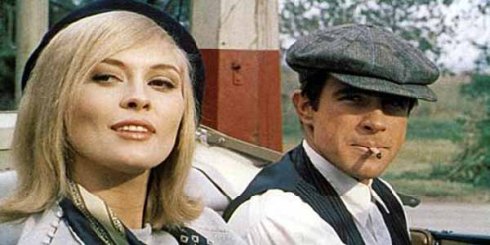
As with many movies like this several liberties were taken for dramatic reasons. A number of people contributed to the script but David Newman and Robert Benton did most of the heavy lifting. Their script strips down the true Bonnie and Clyde story while still creating a vivid and absorbing tale. There is no backstory at all. The film opens with Faye Dunaway’s Bonnie Parker sultrily moving about her upstairs room when she notices Warren Beatty’s Clyde Barrow attempting to steal her mother’s car. She confronts him but after a brief conversation they are on the road and story of Bonnie and Clyde has begun.
BONNIE1

Now could the story have gone deeper into their backgrounds and motivations? Probably so, but I think the film gives us what’s necessary for the type of story it’s telling. We learn that Bonnie is a waitress who is unhappy with the seemingly meaningless life she lives. She waits tables, she gets occasional dates from passing truckers, then she goes home – rinse and repeat. But you also get the sense that she is wooed by Clyde’s charms and visions of grandeur. Of the two characters, Bonnie is the most intriguing. Throughout the film you get glimpses that she does want more in life. She has visions of what happiness should be yet she has no one to cling to but Clyde.

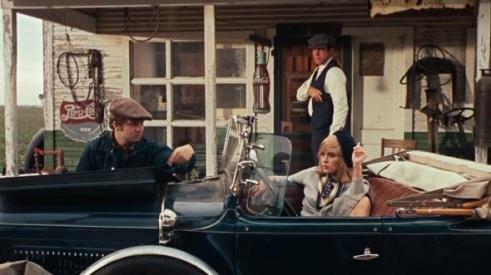
The two Depression-era outlaws take off on a crime spree that starts with a few smalltime holdups. They pickup a simpleton named C.W. Moss (Michael Pollard) and the three begin hitting banks. This is also when their crimes go from simple bank robberies to killing. Clyde’s brother Buck (Gene Hackman) and his shrill and reluctant wife Blanche (Estelle Parsons) joins up with them and the Barrow gang is formed. Amazingly every one of the cast members I’ve mentioned so far received Academy award nominations for their performances. Interestingly enough, Parsons (in what may be the lesser performance of the group) was the only one to win. It’s worth noting that, while he didn’t get an Oscar nomination, Gene Wilder shows up in what is his feature film debut.

“Bonnie and Clyde” toys around with several other interesting themes. There are several well-placed jabs focused on how the media manipulates news stories for their own interests. This goes hand-in-hand with law enforcement who began attributing bank robberies and killings to Bonnie and Clyde even though they had nothing to do with them. This interesting little twist asks the question of who is more responsible for the pair’s dubious rise to fame? As a result their mythos grew larger and larger from town to town and much of that is due to what was being put out in the papers and by law enforcement.
Bonnie2

When writing about the film, the great Roger Ebert noted a particular scene where an upset Bonnie is walking through a wheat field and Clyde is chasing after her. The camera pulls back and gives us a longshot of the field just as a cloud is passing over the sun. In an eerie moment of foreboding, the cloud covers Bonnie and Clyde hinting at what lies ahead for them. This is the pre-CGI era and chances are it was a freak act of nature. Still it’s a tremendous example of Burnett Guffey’s brilliant Oscar-winning cinematography. The film looks amazing and I wasn’t surprised to read that it was influenced by the French New Wave. In fact one of my favorite directors Francois Truffaut was originally asked to direct the film but declined. Arthur Penn got the job and he incorporated that slick and stylish French influence.

“Bonnie and Clyde” was a cultural phenomenon upon its release and it has earned its ‘classic movie’ title. While the supporting cast is great, the cinematography is amazing, and the bluegrass score sets a perfect tone, it’s the two leads who anchor the film. Dunaway is skittish, hopeful, and beautiful and Beatty, an actor I can generally take or leave, is charismatic and completely believable. We buy into them from the start and that is why the journey we take with them is thrilling and unforgettable.
VERDICT – 4.5 STARS

REVIEW: “Blue Caprice”

BLUE CAPRICE POSTER

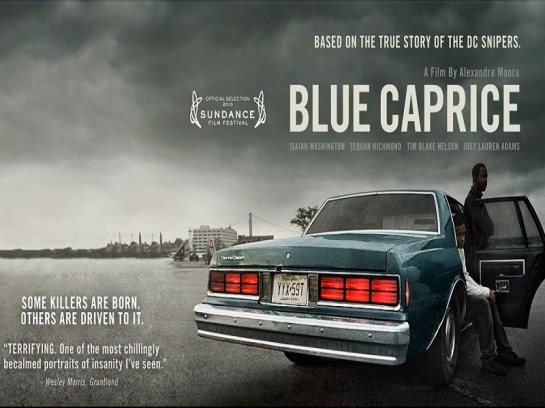
If you remember the Beltway sniper attacks in October of 2002 you remember the terror that it brought to the Virginia, Maryland, and Washington D.C. areas. The sheer random nature of the killings made them all the more unsettling. “Blue Caprice” is the directorial debut of Alexandre Moors and it gets its name from the 1990 Chevrolet Caprice that killers John Allen Mohammed and John Lee Malvo used throughout their killing spree. It’s an impressive debut for Moors as he veers away from so many of the usual trappings that we sometimes get with pictures like this.

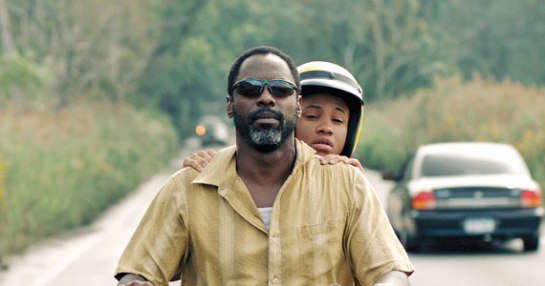
“Blue Caprice” puts its focus on the relationship between Mohammed and Malvo. It takes a few odd liberties with their stories, but it also effectively gets into their heads and tells things from their twisted points of view. It shows them first meeting in Antigua. Malvo is shown to be a lonely boy. Left alone by his mother, he is taken in by Mohammed who is first perceived to be a loving father of three. But we get hints that he is not what he seems. The film skips ahead to Mohammed and Malvo arriving in the Tacoma, Washington area. It’s here that the film peels back the layers of Mohammed’s insanity and Malvo’s emotionless violence.

Blue CAPRICE1

Moors does so much right with this film. It’s raw filmmaking which perfectly serves the story and the perspectives. It’s also undeniably atmospheric and the film maintains a cloud of chilling discomfort as we witness a slow mental collapse. Mohammed and Malvo are men fueled by hate and seeking to avenge their self-viewed victim status on the world around them. The entire film builds upon these two damaged psyches and the suspense burns hotter as we know exactly where their anger will end up taking them.

Another huge reason the film works so well are the two lead performances. Isaiah Washington is nothing short of brilliant in his depiction of Mohammed. He never goes too far or pushes the boundaries. He’s always in perfect sync with the film’s deliberate pace and steady tone. It’s a great performance. I also really liked Tequan Richmond as Malvo. It’s a more understated performance and it could be argued that he isn’t asked to do a lot. But Richmond tells so much of his character’s story in his silent moments. It also helps that he works extremely well with Washington.

“Blue Caprice” is a bit of a slow burn and that may turn off some people. Personally I think that works in the film’s favor. There are a couple of moments where I questioned the movie’s intention and I wanted more from the ending, but ultimately “Blue Caprice” succeeds because of its great direction, two strong central performances, and an atmosphere and tone that does the story justice. It grabbed me early on and never let me go.

VERDICT – 4 STARS

REVIEW: “Broken City”

Brokenposter

Lost in the corpulent backlot of 2013 movies is “Broken City”, a political/crime thriller that features a fine cast and a common but still interesting idea. The film marks the solo directorial debut of Allen Hughes who is known for his past works with his brother including “The Book of Eli” and “Menace II Society”. An underperformer at the box office and generally panned by critics, “Broken City” is looked at as a movie that squanders its potential. But is that a fair criticism? In a nutshell, yes it is.

For me, the biggest problem with “Broken City” reveals itself early and persists through the entire picture. There is practically no fire or energy shown in any facet of movie. In a story that should generate plenty of emotional spark, all we get are dry characters, dry scenarios, and a dry ending. There is rarely a charge of life anywhere to be found and the movie seems to wallow in lethargy. It’s hard to pinpoint the exact blame. Is it the direction from Hughes? Is it Brian Tucker’s script? Could it be the actors who seemingly have no interest in what they’re doing?

Broken1

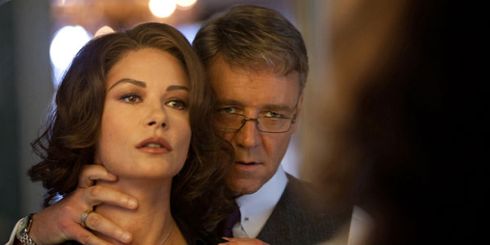
Mark Wahlberg stars as a former New York police detective named Billy Taggert. Seven years after being forced to leave the department following a controversy and PR nightmare, he works as a struggling private detective. Things get complicated when the New York City Mayor Nicholas Hostetler (Russell Crowe) hires him to find out who his wife (played by Catherine Zeta-Jones) is having an affair with. Little does Billy know that by taking the case he would be catapulted into a complex political web involving the mayor, his opponent for the upcoming elections (Barry Pepper), and the police commissioner (Jeffrey Wright).

There is a pretty familiar formula that the movie uses while still trying to do a few things of its own. Unfortunately a lot of time is wasted on superfluous side stories that are never fleshed out to the point of being interesting. The best example of that involves Billy’s aspiring actress girlfriend (played by Natalie Martinez). Her character and their struggling relationship seems shoehorned in to try and add some humanity to Billy. She is present for a short time and then completely drops off the map. It’s also one of those movies littered with lucky timing and all sorts of conveniences. Whether Billy is pulling up just as someone throws out a suspicious bag of garbage or whether he is never spotted while supposedly hiding in plain site.

Broken2

While the characters are mostly flat and dormant, there are moments where that approach really works. Crowe and Wright have some great back-and-forths generated from the internal rivalry of their characters. Their verbal jabs are stinging and these two great actors have a lot of fun with the animosity. Wahlberg doesn’t get those types of moments. He spends the entire movie stone-faced and rarely shows one ounce of emotion. I’m not sure if it is how he is written or how he was directed, but his character could have been so much better with just an ounce of charisma or personality. That toned down approach turns out to be a problem for every character.

“Broken City” does featuring some great cinematography that captures a variety of New York City flavors. And again, there are a few moments of good crisp dialogue particularly between Crowe and Wright. Unfortunately the lack of zest and the wasted time spent on half-cooked characters doesn’t elevate the film past its already formulaic structure. It’s really a shame because a movie with this strong of a cast could have been better. Instead it’s a forgettable, below-average thriller that deserves its spot in the backlot of the 2013 movies.

VERDICT – 2 STARS

REVIEW: “Butch Cassidy and the Sundance Kid”

BUTCH POSTER

After its release in 1969 “Butch Cassidy and the Sundance Kid” made a lot of money and garnered a lot of critical praise. It’s been called the ultimate buddy movie and some give it credit for reinventing the Western genre for a new generation. It received a total of seven Academy Award nominations, winning four of the golden statues and it has been lauded by many as a bonafide classic. But over the years there have been a few critics who have looked at the film through a more critical lens. Could it be that “Butch Cassidy and the Sundance Kid” hasn’t aged well or are there some legitimate issues that have always been there?

For me “Butch Cassidy and the Sundance Kid” is a terribly uneven film in several ways. It features several great and truly memorable moments but it also has stretches of redundancy which grinds things to a halt. Then there are lines of dialogue that are crisp and snappy but others that are glaringly lame or simply don’t feel like they belong in a western of its time. This movie rides a tonal roller coaster which made it feel a bit scattered and difficult to take seriously.

Butch1

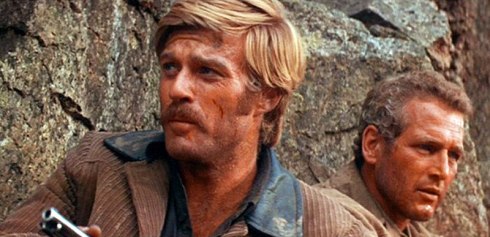
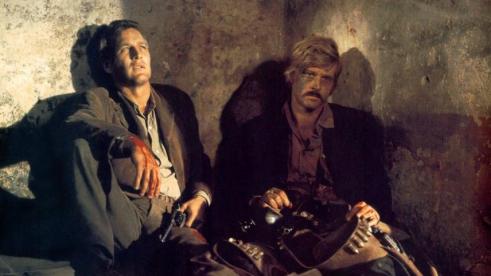
Paul Newman was a megastar at the time and he was intended to be the centerpiece playing Butch Cassidy. This annoyed Steve McQueen who was set to play Sundance. After a disagreement over who got top billing, McQueen said adios which opened the door for a young Robert Redford. This turned out to be Redford’s star-making role and his performance was the standout. Newman is obviously a fine actor but surprisingly I didn’t see the usual charisma he brings to a role. Newman certainly has his moments but I feel he could have offered more especially considering the substantial investment in him.

Things certainly start off on a high note. We get a great scene showing Sundance being accused of cheating at a card game (a scene which features Sam Elliot’s big screen debut). There’s also a fun bit where Butch and Sundance return to their gang’s hideout and face a small mutiny (In the movie they were called The Hole in the Wall Gang because Cassidy’s real gang name The Wild Bunch was the title of the Sam Peckinpah film also due out that year). After squelching the uprising, the gang takes to holding up trains. The first robbery goes well but after botching their second attempt in a hysterical sequence, Butch and Sundance find themselves being pursued by an über-posse put together by a wealthy railroad tycoon.

Up to this point everything is popping. The movie sets itself up well and with the exception of the well-known bicycle scene filmed to B.J. Thomas’ “Raindrops Keep Falling on My Head” (which I feel is overly long and oddly out of place), it’s impossible not to be taken in by the story. But then the movie hits a wall. We get a long, drawn out series of shots features the pair on the run from the posse of all posses. We see them riding across the Badlands, running up rocky cliffs, and then stopping to see if they have lost their pursuers. With a near mystical-like presence, the posse is always in the distance. We go through this cycle several times before finally moving in a new direction.

Butch2

Realizing the severity of their wanted status, Butch and Sundance round-up Etta (played by Katharine Ross), a young lady with an unusual relationship with the boys, and the three head to Bolivia. Once there the story follows almost the same blueprint as the first half – some really funny moments, some memorable scenes, and a dull stretch. And that is what makes “Butch Cassidy and the Sundance Kid” such a hard film to score. It has those times where it’s an absolute blast. It has its funny moments and the chemistry between Newman and Redford shines at certain points. Conrad Hall’s Oscar-winning cinematography is outstanding and it’s hard not to be smitten by the look of the film as a whole.

Unfortunately it’s hard for me to overlook the inconsistencies found in “Butch Cassidy and the Sundance Kid”. There are some obvious missteps which make me question how this film can be considered an all-time classic. But it certainly isn’t a terrible movie and I definitely recommend seeing it. Redford’s star launched from this flick and it still made a significant mark on movie history. It’s just not a movie that will find its way into my pantheon of all-time favorites.

VERDICT – 3 STARS

REVIEW: “Blue Jasmine”

BLUE poster

Each year has its share of certainties: we grow a year older, we have to pay our taxes, my sports teams disappoint me, and Woody Allen puts out a new movie. Now that doesn’t mean that every one of Allen’s films are masterpieces (ala “Midnight in Paris”). In fact some of them are just dreadful (ala last year’s “To Rome with Love”). But one thing about the bad ones, you always know the next film is only a year away. And maybe, just maybe, Allen will land one of the real gems he’s capable of making.

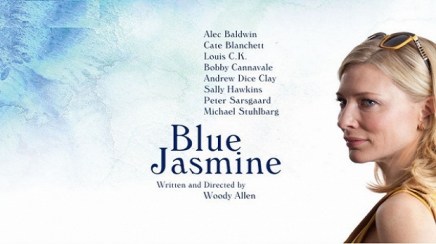
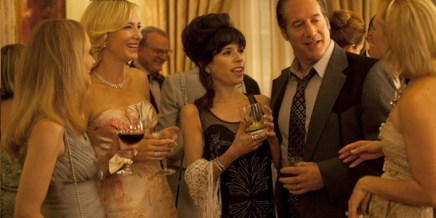
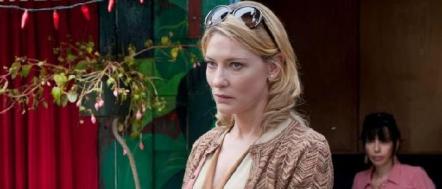
Here’s the good news – “Blue Jasmine” is one of the good ones. This character study touches on a number of subjects from business ethics to family troubles to rabid consumerism. At the center of it all is a captivating performance by Cate Blanchett. She plays Jasmine Francis, a New York socialite whose posh lifestyle collapses when her crooked husband is arrested and loses their fortune. Penniless and without a place to go, Jasmine flies to San Francisco and moves in with her estranged working-class sister Ginger (Sally Hawkins). It’s here that she must learn to start a new chapter of her life or drown in her despair of leaving the affluent upper crust.

BLUE1

To go further, Jasmine is a wreck. She’s coming off of a nervous breakdown, she pops anxiety pills like candy, and she has an affinity for heavy drinking. She still carries her spoiled and privileged attitude which clashes with her new destitute reality. And all of this is brought on by her lousy husband. We see the events leading to Jasmine’s fall from luxury through several cleverly incorporated flashbacks. We watch her husband Hal (Alec Bladwin) and his penchant for women and shady business deals while she lives in a diamond-studded state of naïveté. She’s content with living high on the hog while asking no questions whatsoever. That proves to be a costly mistake, both mentally and monetarily.

Jasmine’s snooty ego doesn’t fit well with the circle of people she is introduced to in San Francisco. This class clash is the prominent focus for most of the film. This is also where we meet the film’s fantastic assortment of side characters. Hawkins is great as Jasmine’s kindhearted sister and I really liked Bobby Cannavele as her blue-collar beau hunk boyfriend. We get Michael Stuhlbarg as a lovestruck dentist and Peter Sarsgaard pops up as a wealthy businessman with political aspirations. But the biggest treat was Andrew Dice Clay. Yes you heard me, Andrew Dice Clay. Gone is the loud obnoxious standup routine. Here he plays a humble, hard-working fellow that you can’t help but sympathize with. And it’s all because of the unbelievable turn from Dice Clay. He was completely natural and restrained. Brilliant work.

BLUE2

But the true star is Cate Blanchett who undoubtedly gives one of the year’s finest performances. There are bits of subtle humor that are sprinkled in throughout her story. But she’s more of a sad, self-destructive woman who has no sense of direction or belonging. Blanchett visualizes her struggles through every fidget, every bead of sweat, and every outburst. She’s not a likable character by any stretch but she’s simply mesmerizing. Blanchett gives a performance that is getting some Oscar hype. Personally I think it demands an Oscar nomination.

It’s clear that “Blue Jasmine” was influenced by other films. For example if you listen closely you can hear “A Streetcar Named Desire” passing in the distance. But Woody Allen has always been a filmmaker who treasures inspiration and when he is on his game he can truly deliver. This is really good material handled by an excellent cast including a surprise performance from Andrew Dice Clay and some of the best work of Cate Blanchett’s career. “Blue Jasmine” may not stay with you for a long time nor be considered among Allen’s very best by the bigger fans of his work. For me it really worked and it’s definitely good Woody Allen.

VERDICT – 4 STARS

REVIEW: “Blackfish”

Blackfish poster

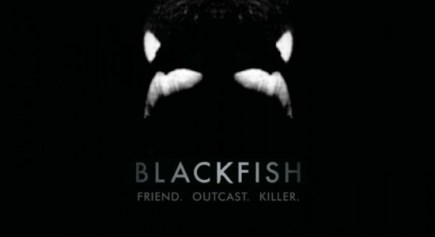
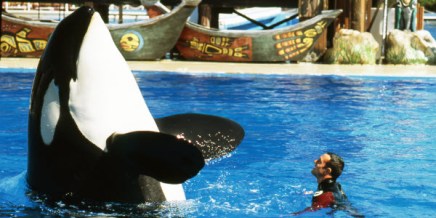
It’s good to see that documentaries are slowly becoming a recognizable force in the world of cinema. Each year an assortment of insightful and engaging docs that inform and challenge are made by visionary and passionate filmmakers. This year one of the films getting a lot is of press is “Blackfish”. This documentary focuses on Tilikum, a 12,000 pound orca who performs at SeaWorld in Orlando, Florida. It chronicles the events surrounding Tilikum, including his original capture in 1983, his life in captivity, and his involvement in the deaths of two trainers and a SeaWorld guest.

Let me start with the film’s strength. This is a brilliantly made documentary in terms of its structure and pacing. Director and co-writer Gabriela Cowperthwaite has an unquestionable knack for presentation. With practically no spoken narration, the film seamlessly moves from one interview bite to another mixing in home video footage, archived news reports, and courtroom testimonies. There is never a lull and I found myself glued to the screen even when some of what I was seeing wasn’t that convincing. It has a riveting cinematic flare to it that definitely hits on the emotional level. And clearly emotions were a central target that “Blackfish” had in mind.

Blackfish2

For me, good documentaries enlighten, challenge, inform, and expose. I like it when they take on a tough subject with passion and conviction. But I also appreciate balance, not in terms of equal time for a counterpoint, but in fact telling and representation. That’s a balance that I think is missing here. “Blackfish” is after all an advocacy film. It has a clear objective in mind and there is nothing wrong with that. But there reached a point where I felt chunks of information were being left out and the film was going for a more emotionally manipulative approach. I’m certainly not saying there aren’t moments that truly cut to the heart, but “Blackfish” wants the audience thinking solely with the heart and judging by many of the responses that seems to have worked.

Those interviewed for the doc are mainly a handful of ex-SeaWorld trainers, an OSHA representative, and an orca expert. It’s a single-minded group who offer some thought-provoking insight but also have a similar objective – spotlight the evils of orca captivity and put the crosshairs on SeaWorld. I thought the film’s case was the strongest when it was explaining facts about orcas in their natural habitats. It is also hard not to be effected when we see how some of these early parks operated. And I believe the doc raises some good questions about SeaWorld’s safety protocols.

Blackfish1

But the film falls short when it tries to land its bigger punches. For example the main argument of “Blackfish” is that Tilikum killed three people as a direct result of being held in captivity. Yet Tilikum’s culpability in two of the deaths is sketchy. The first death also involved two aggressive female orcas and the second death involved a man who hid in the park and climbed into the tank with Tilikum after hours. Cowperthwaite briefly touches on these details but then uses the deaths to further a point of view. There is also the goal of making SeaWord out to be nothing more than an evil money-grubbing corporation. While SeaWorld should answer some of the film’s piercing questions, this is a self-serving characterization that overlooks some key facts about the establishment.

“Blackfish” makes a few other missteps. It often gives definitive statements about ambiguous events and it does try to frame opinions as facts. But it also gave me a greater appreciation for these incredible animals and it challenged my past apathy towards their plight. “Blackfish” does ask some powerful questions and it does so through a near perfect presentation. I only wish it was as interested in appealing to the audience’s examination as it is to the their emotions. That type of manipulation just wasn’t needed. Then again, it seems to be a tactic that has really worked so far.

VERDICT – 3.5 STARS