“THE CABIN IN THE WOODS” – 3.5 STARS

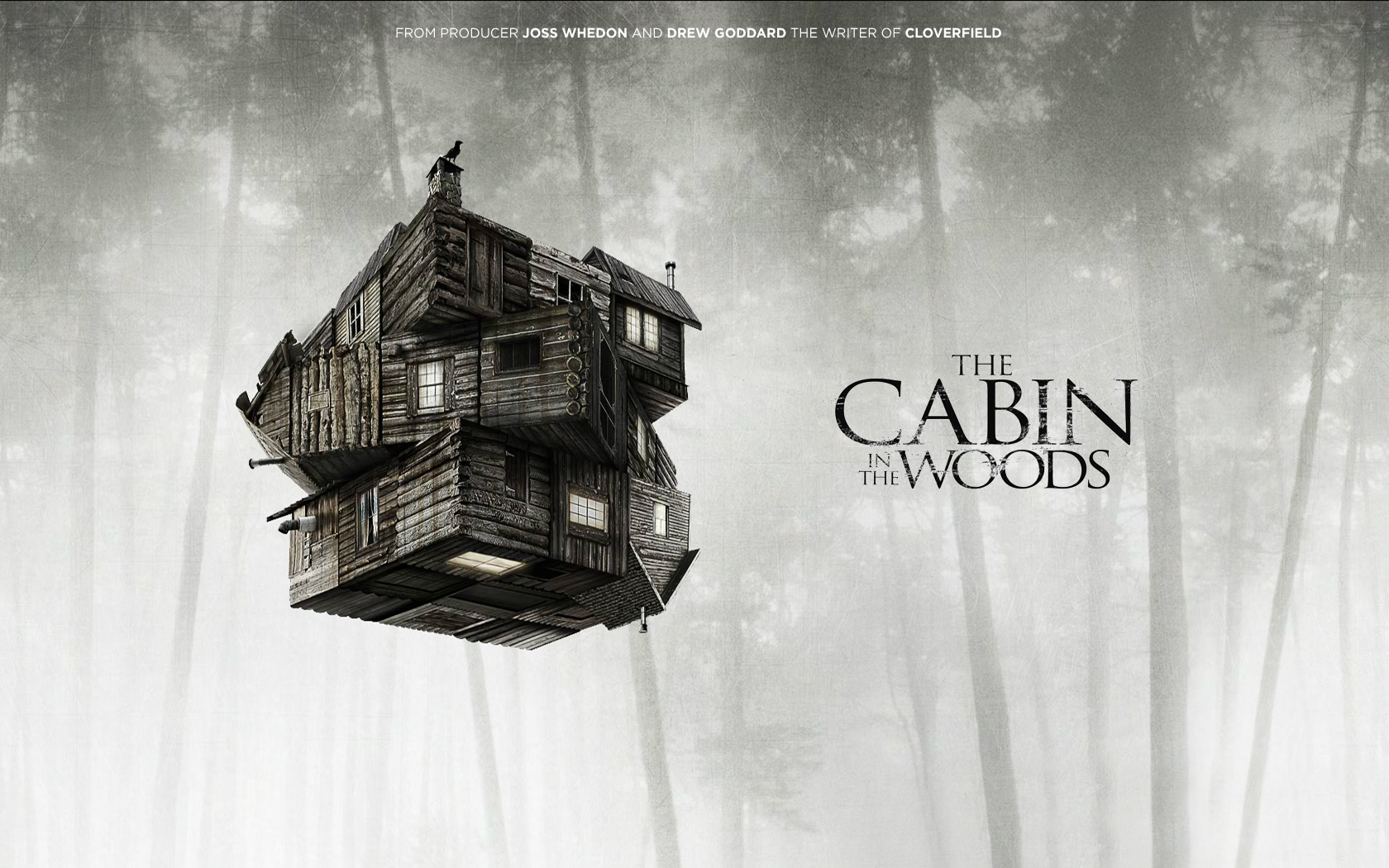
I love a good horror movie. But there’s no denying that the horror genre has been struggling and just isn’t as strong as it used to be. Well leave it to Joss Whedon and Drew Goddard to take the genre, turn it on its head, and give it a good shake. Their film “The Cabin in the Woods” is far from conventional even though it certainly starts that way. But the fact is Whedon and Goddard are setting up the audience for what turns out to be a horror comedy that ranges from satirical to a full-blown critique of what the horror genre has become. Goddard directs, Whedon produces, and both write this bit of welcomed freshness that isn’t a perfect film but it certainly works on many levels.

It’s impossible to watch “The Cabin in the Woods” without seeing tips of the hat to several horror movie classics. You’ll also quickly recognize many of the same tropes and devices used in the genre for years. Whedon and Goddard dabble in the familiar territory of slasher movies, zombie flicks, ghost stories, torture porn, and even creature features. But its simply impossible to go into much detail without spoiling the film. Let’s just say that all of these ingredients fit very well into what “The Cabin in the Woods” is trying to do. And trust me, you’ll start out in very familiar territory but things quickly change as the story progresses.

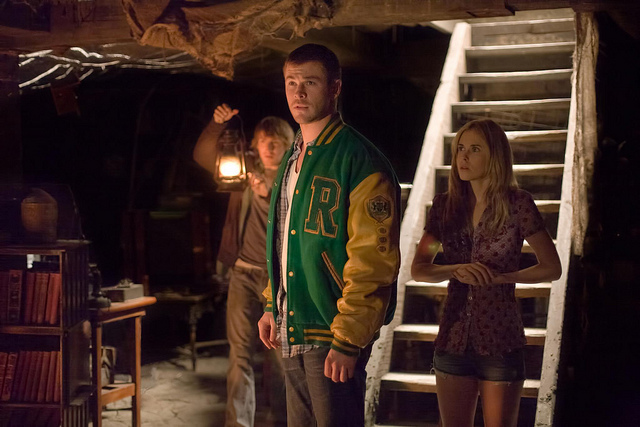
Tell me if you’ve heard this before: five college friends set out to a remote cabin in the woods for a weekend of partying and frolicking. We have the big jock (Chris Hemsworth), the sultry blonde (Anna Hutchison), the studious good guy (Jesse Williams), the dope head (Fran Kranz), and the straight-laced, level-headed heroine (Kristen Connolly). These are all characters we’ve seen over and over in horror films. But here they are used intentionally and with good reason. Obviously their little getaway isn’t going to end well and we get little hints of that along the way. As things begin to go bad, we see these characters making some of the same bone-headed decisions that they always make in these pictures. But the bigger difference here is with the consequences and more specifically who’s behind them. That’s as far as I’m willing to go in describing the story. It’s best to go into the film simply knowing that there is more to it than what you’re introduced to. Just know that things go nuts in the final act and the audience, especially horror fans, will find it an entertaining challenge to process all that we are given.

But the movie does have a few issues that keep it from being a great film. The most glaring issue for me was with the gaping plot holes scattered throughout the story. There were instances where the film changed course while leaving unfinished business behind . There are also a couple of times where certain characters drop off the map. I know I’m being incredibly vague here for fear of spoiling things, but let’s just say the story requires you to sometimes brush aside what seems like useful information. The ending also requires a very abrupt acceptance of what you’re seeing. Don’t get me wrong, it’s lots of fun and it will have you wanting to watch the movie again. But it’s so out-of-the-blue that when the credits start to roll you have to accept what you’ve seen and just go with it.

I didn’t mention one of “The Cabin in the Woods” strongest features – it’s humor. There are some really funny moments in this picture and I found myself laughing out loud on more than one occasion. On the flip side, the movie isn’t scary at all which I found to be a bit disappointing. But then I asked myself if Whedon and Goddard cared if it was scary or not. In the end, this is one part homage and one part critique of a genre that has seen better days. Looking at the movie from that perspective makes it a very satisfying horror experience. And even though it stumbles with its storytelling in a few places, the undeniable freshness, good humor, and blood-soaked final act make it all worthwhile.

REVISITING A CLASSIC: “Citizen Kane” (1941)

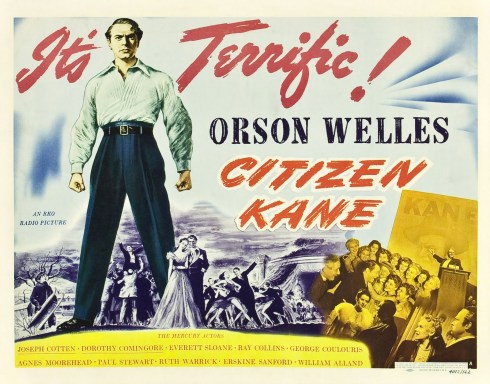
You may have heard by now that Sight & Sound Magazine recently announced the results of their The Greatest Films of All Time poll. If you’re unfamiliar with the poll, it’s a worldwide survey of critics that has been conducted every 10 years dating back to 1952. Since 1962 “Citizen Kane” has been at the top of this pretty prestigious list, at least until this year. Alfred Hitchcock’s “Vertigo” has dethroned “Citizen Kane” which has launched a ton of great discussions on both of these films. Personally, “Vertigo” isn’t the greatest film of all time. In fact, for me it isn’t even the best Hitchcock film. And for my money, even though I like “Vertigo” a great deal, it can’t beat “Citizen Kane”, a movie that is a lesson in quality filmmaking starring, directed, and co-written by Orson Welles.

Last night I had the opportunity to revisit this cinema classic and it’s amazing how it truly seems to get better with each viewing. “Citizen Kane” is a film that has aged like the finest wines and there are so many reasons for it. The more I watch the movie the more I can appreciate the skilled filmmaking and risks taken to bring the movie to life. The film certainly had its share of struggles particularly when trying to find an initial audience. William Randolph Hearst, the American newspaper giant who is the clear inspiration for the movie’s main character, was infuriated by the movie and took huge measures to keep “Citizen Kane” from reaching an audience. Fear of his power kept the film out of many newspapers and out of many theaters. But after all these years, it’s the movie that has come out with the better reputation.

While there has been some controversy over who was the driving force behind the movie’s screenplay, Orson Welles and Herman Mankiewicz are credited with its authorship. It tells the story Charles Foster Kane, an immensely wealthy newspaper mogul, who lies on his deathbed, alone within the closed isolation of his mammoth Florida estate known as Xanadu. We watch as Kane utters his final word “Rosebud” and then dies. This opening event catapults the entire story forward. In fact, the entire narrative is driven by one incredibly clever device – “Rosebud”. Kane’s final word becomes a huge topic of interest especially for investigative reporter Jerry Thompson (William Alland). Thompson is convinced that there is a deeper secret meaning to Kane’s final word and he sets out to uncover it by looking into Kane’s past and interviewing those closest to him.

This points to one of the things that makes this movie so special. There’s no straight-line, uninterrupted narrative. Instead the story is told through well placed flashbacks from the points of view of several different people. Through their eyes we learn about Kane’s impoverished childhood. We learn about his leap of faith into the newspaper business at a young age. We see his political ambitions. But we also see the story of a man whose motivations fester into those of power and self-promotion. We watch as his ego and self-indulgence destroys every nonmaterial thing in his life. He’s the epitome of gaining the whole world but losing all that’s important. It’s a fascinating study of a man who, regardless of his wealth, power, and influence, is unable to overcome the greatest obstacle to true happiness – himself. This all unfolds through the words of Kane’s guardian, ex-wife, business partner, butler, and best friend. Now as someone who isn’t always attracted to the use of flashbacks, I’m really impressed at just how well they work here. Welles is truly laying out a man’s life before us and I was enthralled not only in his story but also with the small question behind it all – just who or what is “Rosebud”?

While many love the story and the storytelling behind “Citizen Kane”, it is equally or maybe even better known for its ambitious visual presentation and stylistic techniques. Welles was given tons of liberties from RKO Pictures when it came to making the film and that’s all the more surprising considering that this was his first feature film. He took his creative control and mixed it with a young man’s enthusiasm that resulted in a visual style significantly different from anything else in Hollywood. I can still name numerous carefully framed shots and brilliantly conceived camera tricks. There’s also Welles’ penchant for placing his camera at ground level and shooting up at his characters. This is ever so effective particularly in one extended take featuring a crucial conversation between Kane and his long-time friend Jedediah Leland (played wonderfully by Joseph Cotton). There are several other cool camera techniques and special effects along with some impressive makeup work that still influences a host of modern filmmakers.

I worry that newcomers or even those who haven’t seen “Citizen Kane” in years will approach the film from the “So this is the greatest film of all time?” perspective. That’s a bad way to approach any film especially considering how subjective these lists are anyway. Instead, this movie should be approached as its own creation – enjoyed and measured within those bounds. Welles’ accomplishment with the film cannot be overstated. The direction is brilliant, the screenplay is fantastic, and he gives a thundering performance and all within what was his first feature film. “Citizen Kane” was a critical success at its time but struggled to gain a huge following. But as years have passed, the movie has risen to be appreciated as a monumental film in cinema history. I tend to agree. And while “Citizen Kane” wouldn’t be my personal “greatest movie of all time”, there’s no denying it’s inventiveness, it’s influence, and its overall excellence.

VERDICT – 5 STARS

5 STARSs

5STAR K&M

“CASA DE MI PADRE” – 2.5 STARS

“Casa de Mi Padre” is yet another potentially funny but underachieving comedy starring Will Ferrell.  This bizarre low-budget Spanish language movie spoofs everything from spaghetti westerns to Mexican telenovelas and plays it all with a straight face. Now while I don’t know if there is a big audience for spoofs of Mexican soap opera westerns, it is quirky enough that, when combined with the puzzling adoration for Ferrell, it will attract some curious movie fans. As someone who’s not a big Ferrell guy, I went in with very tepid expectations but hope that I would be surprised. It certainly has its moments and certain gags work well, but in the end it felt like a haphazard Saturday Night Live skit stretched out to feature film length.

This may come as a surprise to you but in “Casa de Mi Padre”, Ferrell plays a simple-minded dolt.  His name is Armando Álvarez (which he reminds us of throughout the picture) and he has grown up working on his father’s struggling ranch. Soon his brother and favorite son of his father Raúl (Diego Luna) returns from making a name for himself in the business community. He’s accompanied by his beautiful fiancée Sonia (Genesis Rodriguez) and their return marks what the family thinks will be the end of their financial woes. But it turns out that Raúl is actually a drug dealer who has pushed into the territory of a powerful drug lord known as Onza (García Bernal). As you can imagine, this throws the family in the middle of an all out drug war, something that is quite pleasing to a dirty DEA agent (Nick Offerman) watching from a distance.

Reading the synopsis of the story doesn’t make you automatically think comedy. And as I was writing the synopsis it was really hard relating it to the way this movie is presented. The telenovela style is almost immediately identified. The melodramatic and stilted dialogue along with the actor’s serious deliveries and exaggerated mannerisms give the movie a uniquely goofy tone. And regardless of how cleverly absurd the concept is, frankly I begin to grow tired of it at the halfway mark. I’m not completely discrediting it because there are some genuinely funny moments, but there aren’t enough funny lines and funny gags to keep the movie going. And then there’s the dialogue itself – sometimes funny, but most of the time consisting of dull, repetitive, and drawn out conversations that almost seem more like filler than substance. Then there are the injections of several wacky musical interludes intended to be outrageous but I could have done without them.

But the movie doesn’t just play around with Mexican soap operas. It also spoofs sloppy, cheap filmmaking and this was when the movie was at its funniest. There are several hysterical intentional “mistakes” scattered throughout the film such as a phone conversation where one party hangs up, we see the other party still talking in the next shot, then we see the first party talking on the phone as if they had never put the receiver down. Then you have a man clearly shot one time then we see him stagger around with two profound bullet wounds in his chest. There are little “goofs” like these hidden all through the movie and I laughed each time I found one. Then there was the glaring, deliberately cheap production design. Several scenes feature obvious mannequin body doubles. Then there are the poorly painted backgrounds, horrible tiger puppets, and a couple of clearly fake horseback riding sequences. There’s even a bigger intentional hiccup midway through the film but I’ll leave it to be discovered. These were hilarious moments that had me laughing whenever they popped up.

The movie also has its share of Tarantino-styled violence. There are numerous slow-motion action takes and bloody gun battles. You can also see the movie takes from spaghetti westerns through a couple of showdowns as well as some of the conversations between Armando and his compadres. But everything is done within the context of comedy. It’s just not done well enough to make “Casa de Mi Padre” anything more than a mediocre diversion. While it is a bit tamer that most of Ferrell’s other films, it still has enough of him and his humor to partially satisfy his fans. But even though it has a good concept and it does do some things really well, there’s just wasn’t enough material here to keep me interested.

“CORIOLANUS” – 4 1/2 STARS

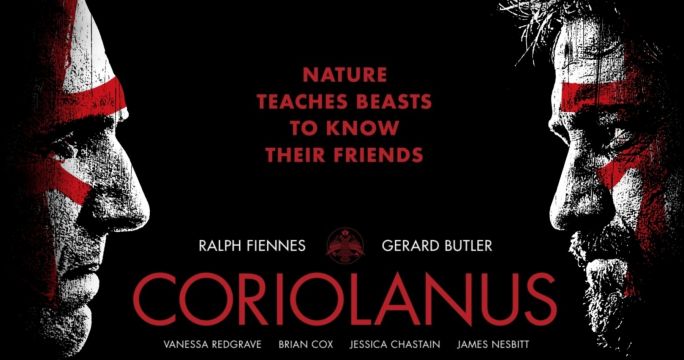
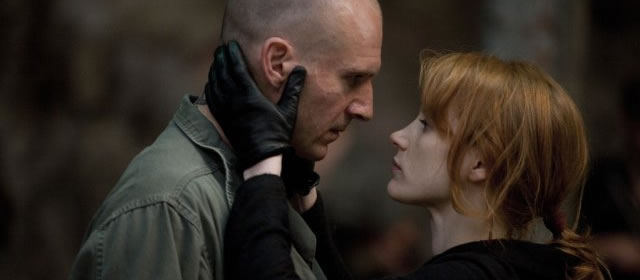
The wonderful actor Ralph Fiennes makes his directorial debut with “Coriolanus”, a modern-day version of Shakespeare’s 400 year old  play. It’s such an interesting and faithful take on the Shakespeare tragedy. While the film takes place in an entirely different time period than the one the play was written in, it’s still a wonderful examination of war and politics as well as an enthralling look at a truly mesmerizing character. It’s an incredibly unique movie and a challenging undertaking by Fiennes especially since he not only directed the picture but also starred in it.

Fiennes plays Caius Martius, an accomplished Roman general who finds himself at odds with the people of Rome after overseeing the government’s effort to hoard up all of the grain during a food shortage. Martius has no love for the people. He finds them contemptible  and he doesn’t trust them nor does he respect them. After Martius squelches a riot led by an anti-government protest group, two politicians Sicinius (James Nesbitt) and Brutus (Paul Jesson) seize the opportunity to gather support from the people by speaking out against him. It’s here that Fiennes the director gives us our first look at the political maneuvering and manipulation that plays such a big part of the story.

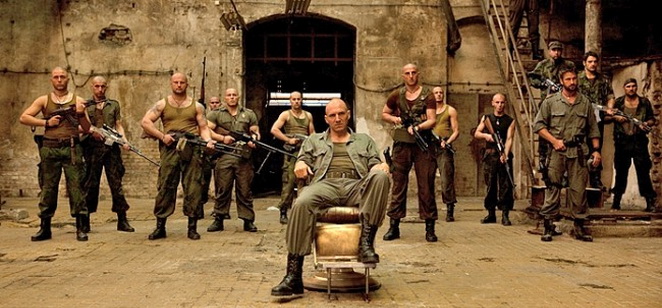
But after Rome’s bitter enemy the Volscians begin moving closer to the city, Martius and the army head out to meet them. The Volscians are led by Tullus Aufidius (Gerard Butler). Aufidius and Martius have met in battle several times and have developed a deep-rooted hatred for each other. The two bring their armies and engage in a bloody urban gun battle that results in the Volscians falling back. Martius is welcomed back to Rome as a wounded war hero. He’s awarded the name Coriolanus in honor of his service and is encouraged to run for Consul by his mother Volumnia (Vanessa Redgrave) and Menenius (Brian Cox), a Roman Senator sympathetic to Coriolanus and his family. But in the midst of his popularity, his pride and stubbornness combined with the ambitions of the self-seeking politicians put him at odds once more with the people of Rome. This time Sicinius and Brutus get what they want and Coriolanus is banished from Rome. Burning with anger and blood-thirsty for vengeance, Coriolanus forms the most unlikely of alliances to pay Rome back for what they’ve done to him.

Fiennes delivers a bold and vigorous performance. He shapes and develops Coriolanus through every scene and we quickly understand that he’s a very complex individual. He’s hampered by his unbriddled arrogance and refusal to compromise the smallest thing that he feels may question his authenticity. He’s also a soldier who loves Rome and a man who loves his family. But even when in the comfort of those people and things he loves, he finds it hard to function as he should. Fiennes perfectly sells all of this to us and I was completely enthralled in the character.

Fiennes is also helped by a phenomenal supporting cast. Gerard Butler gets back on track after a few subpar performances in some really subpar movies. Here he’s really good and I was immedietaly reminded that he can be a solid actor. Vanessa Redgrave was simply fabulous as Coriolanus’ mother. She shares several brilliant scenes with Fiennes that you just can’t take your eyes off of. I also loved Jessica Chastain who gives another understated and measured performance as Coriolanus’ wife. I couldn’t help but find similarities between this and her role in “Take Shelter” even though they are two very different films. Even Brian Cox, an actor that I haven’t always appreciated, is really good here.

One of the first things that you’ll notice when watching “Coriolanus” is that it uses the classic Shakespeare lines and language. At first I wasn’t 100% sure if I liked it or not. It was a little jarring at first seeing it used in such a modern setting. But before long I was perfectly sold on it and I was amazed at how fluid and seamless Fiennes made it feel. Now I admit, there were a few moments where I simply didn’t follow what was being said and a few that just didn’t fit with the current day setting. But these moments were rare and overall it was pretty remarkable what the movie was able to accomplish.

I also have to mention that “Coriolanus” is a really good looking picture. Fiennes doesn’t try to do too much with the camera but he clearly has a good eye for framing shots. The film also has a unique look to it and a lot of that has to do with the decision to shoot in Serbia. The locations have a gloomy almost war-torn look to them and not I’m not just talking about the action sequences. Speaking of that, the movie does feature some pretty gritty action that are made even more believable in large part due to the setting that resembles what Serbia may have been like just a few years earlier. Fiennes doesn’t exclude the blood but he doesn’t load these scenes down with them either. Instead he focuses on Coriolanus and his combat intensity as he leads his men through the streets. It works really well. He also tells a lot of the story through some clever usage of the Roman media, particularly a news channel called Fidelis TV. There’s some interesting commentary on the power and influence of the media and we see it through a host of really effective news clips and talk shows.

I was excited about “Coriolanus” but I was caught a little off guard. The Shakespearian dialogue took some adjusting to at first but as I mentioned, soon I was completely wrapped up in it. This was an extremely ambitious project for Ralph Fiennes especially for his first attempt at directing. But this is an impressive and auspicious debut from this already seasoned actor. On that note, his performance is simply fantastic and he brilliantly portrays one of the most intriguing characters I’ve seen on screen in a while. But he’s not alone. The film is also helped by a tremendous supporting cast. I really enjoyed “Coriolanus”. It’s not just a unique and daring movie. It’s also one of the best movies of the year so far.

“CARNAGE” – 3 1/2 STARS

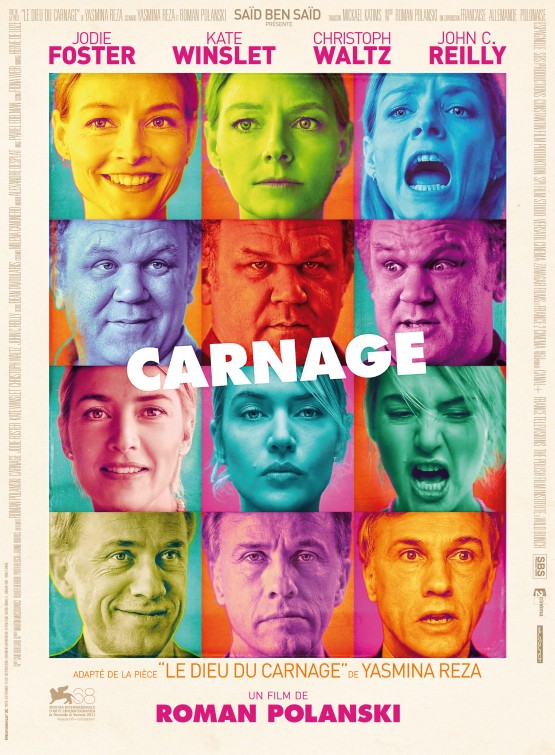
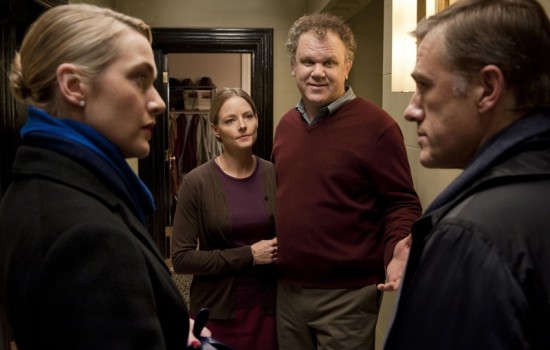
It’s not hard to see that “Carnage” is based on a play. It’s a very stagey and theatrical adaptation of Yazmina Reza’s “God of Carnage”. The play first appeared Paris and London and soon found its way to Broadway where it was a Tony Award winner. Now Roman Polanski brings this confined but energetic story to the big screen and anchors it with four fantastic performers: Jodie Foster, Kate Winslet, Christoph Waltz, and John C. Reilly. It’s a sharply written, often times laugh out loud funny, and occasionally repetitive performance-driven drama.

The movie starts with a wide shot of a playground where two boys are having a disagreement. Things escalate and ends with one striking the other in the face with a stick. The story then skips forward as Nancy and Alan Cowan (Winslet and Waltz), the parents of the boy who had the stick, arrive at the apartment of Penelope and Michael Longstreet (Foster and Reilly), the parents of the boy who was hit. The four are meeting to talk about the incident and find the easiest solution to put it all behind them. Everything starts fairly civil but soon things start to unravel. Small subtle jabs erupt into abrasive personal attacks and things are made even worse once they all get into the Longstreet’s vintage bottle of Scotch.

With the exception of the brief opening scene and the brief final scene, the entire movie takes place inside the Longstreet’s apartment building. But don’t let that scare you. The clever dialogue and the unfolding of these very flawed characters is more than enough to hold your attention. Each have their own peculiarity and shortcoming and before long we even see the spouses turning on one another. The slick dialogue is delivered at an almost frantic pace but it also has a grounded and natural feel to it. The acting is strong and exactly what you would expect from this cast. The actors bounce their lines off each other and for the most part feel authentic. Now there were instances where Reilly falls into his typical over-the-top doofus mode and I did think both Foster and Winslet were brought down a little by the material. It also felt at times the film was a little repetitive. It seemed like some of the arguments were repeated but with slightly different verbal dressing and that lagged things down in the second act.

“Carnage” is an interesting film that offers some genuine laughs and some moments of brilliance. The small cast provides some truly fine performances even though the material hits a few small speed bumps. “Carnage” is a very tight, compact picture that sticks close to its theatrical roots. But even at under 80 minutes it has a little trouble filling it’s time and it may lose some viewers along the way. Yet I think there was enough here and I was entertained throughout. Plus I loved the final shot and felt that it spoke volumes. “Carnage” probably isn’t a movie for everyone, but I found it to be a dark comedy that worked.

REVIEW: “Chronicle”

“Chronicle” is another one of those “look what I’ve captured on my hand-held video camera” movies but with a super-powered twist. It takes elements from a wide range of movies from “Hancock” to “Paranormal Activity” and everything in between then mixes them together to form a slightly unique but overall predictable 80 minute package. “Chronicle” does spark some interest early in the film as it takes a different look at the concept of superhuman powers. There are some genuine moments of humor and a wild ending filled with special effects that undoubtedly ate up most of the $15 million budget. But it doesn’t take long to figure most things out and the stereotypical, run-of-the-mill teenaged characters started to lose interest.

The story begins with Andrew (Dane DeHaan), a teenager who is somewhat of a closed off social pariah. He doesn’t have many friends, has a mother who is dying of cancer, and an abusive alcoholic for a father. He just randomly decides to start filming everything in his life with a newly purchased video camera. This develops the perspective that we the audience have throughout the picture. Andrew is convinced to go to a party by his “friend” and cousin Matt (Alex Russell). Matt has enough of a bond with Andrew to want to see him come out of his anti-social bubble, but he’s not enough of a friend to spend time with him at the party. Andrew is approached at the party by Steve (Michael B. Jordan), a popular jock and aspiring politician. Steve has been sent by Matt to find Andrew and bring him and his camera to a weird crater found in the woods. The three boys do some ill-advised exploring and stumble across something not of this planet which gives them super-powers.

The majority of the picture focuses on the three teens and their developing powers. They determine that their powers “works like a muscle” and they can tell they are getting stronger the more they use them. This leads to the obvious “we need a set of rules” (think Spider-man’s “with great power comes great responsibility”). They begin developing their own ideas about how to use their new abilities which leads to several disagreements and eventually bigger problems. You’ll see it all coming well before the ending, but that’s not to say there aren’t some good scenes in the build-up. There were some fun moments just watching the teens act like kids with a new super-powered toy. They responded exactly how you would expect them to – silly, playful, immature, and irresponsible. But they also fall into some of the overused and uninteresting teen movie stereotypes that I found disappointing.

The idea to show this from the perspective of a video camera worked for a time but after a while I was feeling that I had seen this all before. It wasn’t fresh or innovative. And in the third act of the film, the video camera perspective seems to just drop for a few shots then come back. Not sure if it was an oversight, but I found myself trying to figure out which camera perspective I was seeing before eventually saying “forget it”. But the ending action sequence is wild and quite impressive. Downtown Seattle is the location for  the massive explosions, flipping cars, and shattered skyscrapers. It’s so good that it almost makes up for the film’s earlier problems.

“Chronicle” was built off of a good idea, but its one thread of originality isn’t enough to support the entire film. First time director and co-writer Josh Trank does some interesting things with his camera, but it’s mostly lost by his decision to use the hand-held perspective and video documentary approach, an approach that’s been done many times before. There are some good lines in the picture and the final action sequence is fantastic. It’s just a shame that this “fresh” look at super-powers features so many things we’ve seen before.

VERDICT – 2 STARS