REVIEW: “Fright Night” (2011)

Hollywood is head-over-heels in love with remaking movies from the 80’s right now. So far we’ve had everything from “Footloose” to Total Recall” remade with a modernized story and gloss. Many more already have release dates or are in production. As someone who grew up in the 80’s watching the original pictures, I’m still waiting for one of these recent remakes to really blow me away and make it feel worthwhile.

So along comes “Fright Night”, a 2011 version of the 1985 vampire film that I truly loved. The original was a fun and occasionally creepy horror flick that played around with elements of vampire, werewolf, and haunted house movies. It had its share of old-school special effects and classic horror cheese while also maintaining a thoroughly compelling narrative. So I had a natural curiosity and concerns about the remake. Would the Hollywood modernization process be able to capture what made the original so entertaining? Well, not exactly.

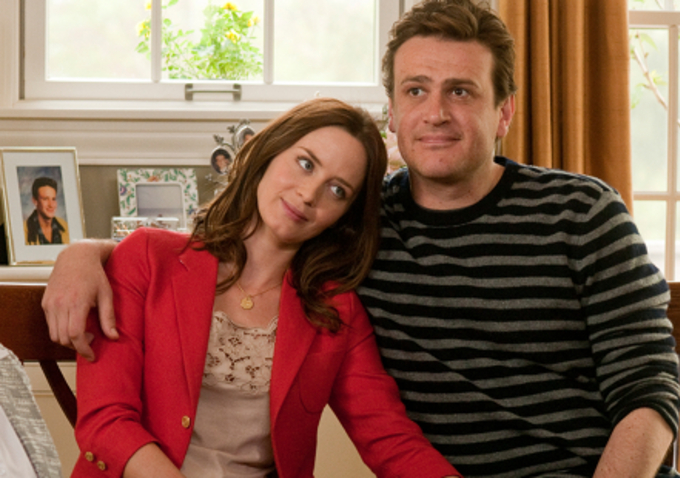
The remake’s story is built upon the clever premise of the original “Fright Night” film. Charley Brewster (Anton Yelchin) and his mother Jane (Toni Collette) live in a small suburb of Las Vegas. An attractive single man named Jerry Dandrige (Colin Farrell) moves into the house next door. Over time we find out that Dandrige is a vampire and Charley, his mother, and his girlfriend Amy (Imogen Poots) are right in his new neighbor’s crosshairs.

There aren’t many other significant ways that this “Fright Night” resembles the original. One of my biggest disappointments with this film was with how little effort went into building more tension between Charley and Dandrige. The original spent a lot of time with Charley trying to convince his mother, friends, and the police that his neighbor was a killer responsible for the disappearances of many area women. This made for several creepy confrontations between the two. This version gives us only a scene or two of this, choosing instead to jump headfirst into more action-based horror that seems specifically designed for 3D rather than deeper storytelling.

Charley’s predicament is so dire that he seeks the help a Las Vegas horror illusionist Peter Vincent (David Tennant). This Peter Vincent is a boozing, profane, and abusive jerk void of any of the sympathetic charm that made Roddy McDowall’s character so memorable. There was nothing at all in this character that was the least bit interesting. To be fair, it’s not that Tennant’s performance is bad. This is a writing issue that’s a direct result of a story direction choice. This is an instance of modernizing a great character from the original story with pretty poor results.

The movie is plagued by several fairly generic characters outside of Charley. Poots is good as Charley’s girlfriend but she isn’t given much to do. Charley’s mom is about as shallow as they come and then there are a couple of his friends that are just thrown in. Then you have one of the first film’s more memorable characters “Evil” Ed (this time played by Christopher Mintz-Plasse). Here he’s actually developed into a fairly sympathetic character before quickly being thrown aside. Farrell is fun and sometimes charismatic, but he’s only asked to talk in a creepy tone, wipe his mouth and lick his fingers after “feeding”.

The special effects were a big part of what made the first film such fun. It had some over-the-top gore but it fit in perfectly with the story. Here the effects are fine although in several places the CGI is clearly evident. And with the exception of a pretty spectacular car chase sequence, there isn’t much that has stuck with me. And this leads into the fact that this “Fright Night” just isn’t scary at all. There are a couple of loud jump scares but in terms of actual creepiness, nope.

I know it seems like I made a lot of comparisons between the original movie and this new version of “Fright Night”. I try not to do that. Maybe I’m just too big of a fan of the original to help myself. But I also think this film has flaws that keep it from being as good as it could be. The decision to spend far more time on horror-based action actually strips the picture of the spookiness that made the first picture so much fun. It’s not boring and there are a few good laughs scattered throughout. There’s also a fantastic cameo from Chris Sarandon (Dandrige from the first film) that really hit the spot. But in the end, I’m still waiting for an 80’s remake to blow me away.

VERDICT – 2.5 STARS

REVIEW: “THE FLOWERS OF WAR” (2011)

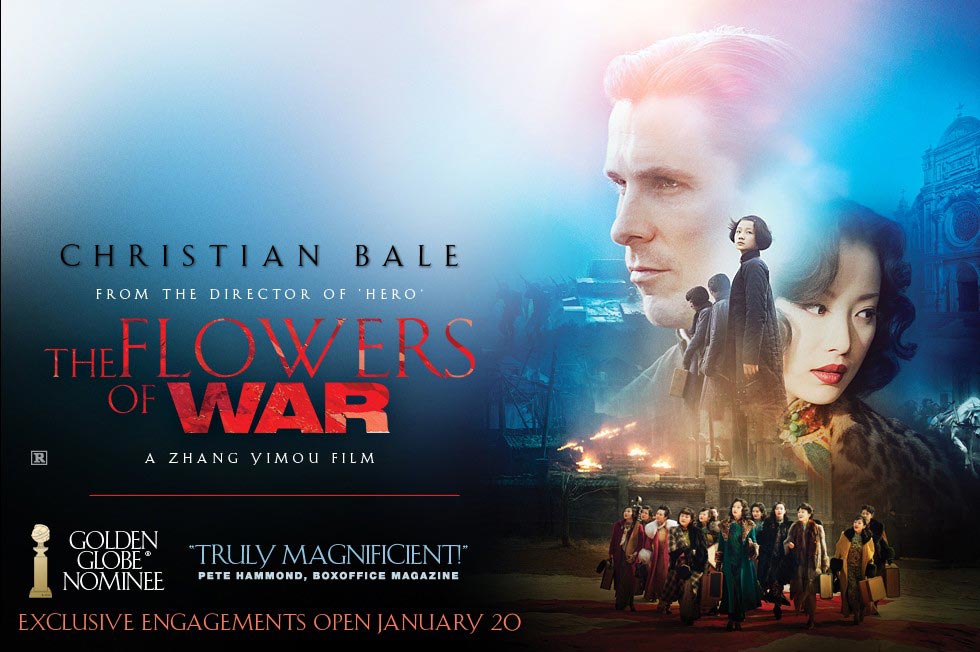
“The Flowers of War” is a Chinese war drama based on the Nanjing Massacre during the Second Sino-Japanese War. The stylish and sometimes brutal depiction of the scarring conflict and atrocities was made with a budget of almost $100 million making it the most expensive Chinese film ever made. Director Zhang Yimou’s respectful but straightforward approach to the story gives it quite a powerful punch even though it employs a few conventions that we’ve seen in several other films.

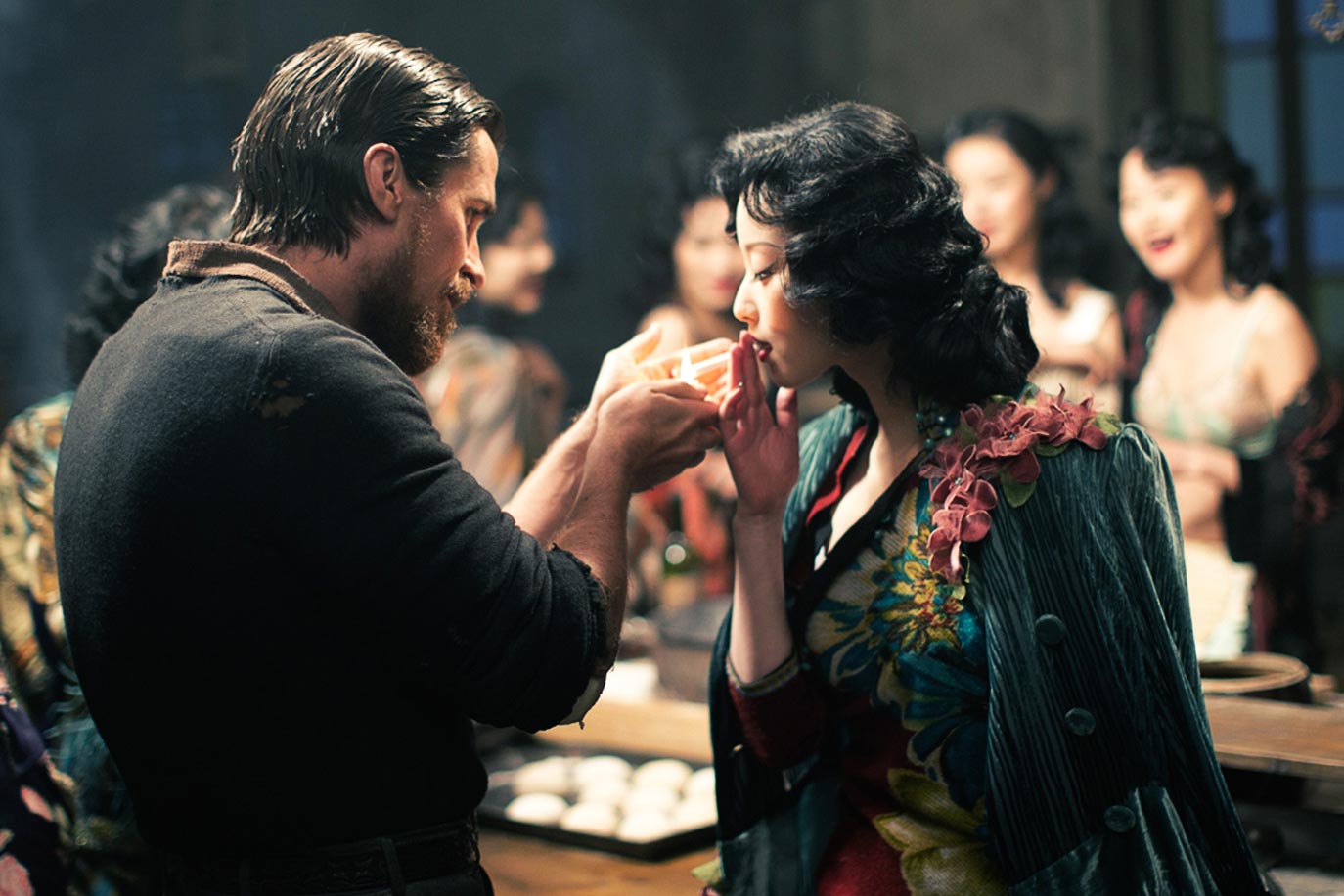
Christian Bale plays John Miller, a boozing American mortician who is hired to bury a priest at a convent in war-ravaged Nanjing. He arrives as the Japanese army is storming the streets catching and executing civilians and the small pockets of the Chinese forces struggling to survive. He narrowly makes it to the convent and performs his duties but we quickly find out that he’s a pretty despicable man. After being told they can’t pay him, he begins rummaging through the church in search of money and later gets drunk after finding the communion wine. But the horrors of the war outside the walls of the church find their way in which sets the table for John’s own personal salvation.  He’s faced with the choice of a self-seeking escape, leaving everyone else behind or staying and doing everything in his power to protect and save the young girls of the convent. 

John isn’t as shallow of a character as the material occasionally makes him look. Sure, he’s a drunken self-centered loser whose redemption is inevitable, but we later find out that there is more to him and his past. We understand his connection to the girls and why he feels the need to stay and protect them. He sees it as his chance to do something right for a change but it also touches on some deep inner feelings that are connected to his past. I really enjoyed watching Bale transform his character on-screen. Bale’s performance is strong, both as the obnoxious jerk and as the new man he becomes. I also bought into his relationship with the girls despite a few inexperienced performances from the young actresses.

Things grow more complicated at the convent when a group of colorful prostitutes bust into the church seeking shelter from the rape and murder going on throughout the city at the hands of the Japanese soldiers. John gives them refuge in the cellar. But the young girls from the convent don’t like them and the prostitutes are almost as self-seeking as John is at first. But we also see the relationship between the two groups go in several different directions which gives us some of the film’s more moving moments. Much like John, the prostitutes aren’t as shallow as they seem and in many ways they seek the same personal redemption that he does. Ni Ni gives a very good performance as Yu Mo, the leader of the prostitutes for lack of a better word. She’s a tough and confident woman who instantly catches John’s eye. One of the remarkable things about Ni Ni is that this is her first film role. Director Yimou wanted someone from Nanjing and Ni Ni won the part.

Yimou’s direction is so good and his visual style permeates every scene. Not only has he directed 20 films but he’s also been involved in cinematography and that certainly contributes to his cleverness with the camera and impressive staging of shots. He also creates a believable gritty and bloody war-torn environment. The shells of the city’s buildings,the debris and rubble, and the gruesome images of corpses lined along the streets all contribute to convey the magnitude of the carnage and destruction to the audience. Yimou also doesn’t shy away from showing the savagery of the Japanese soldiers. There is a brutal rape scene that is truly hard to watch and an attempted mass rape scene that is equally difficult. Yimou kept everything in bounds but it still left me unnerved and shaken. There are also several scenes of war violence that are very well served by his stylistic flare. Now I did feel there were a couple of scenes where the bloodshed was unquestionably gratuitous, but overall it felt perfectly in place.

While the war and the atrocities are a big part of this movie, it’s not the main focus. Yimou has said that love, salvation, and sacrifice were some of the key things he wanted audiences to take from the film. The war was the backdrop which simply revealed the evil side of humanity. But there is good and there is love and that’s what we get as the story unfolds.  The story runs us through an emotional wringer and there are some gut punches along the way. While I concede that there are moments that feel a little contrived and the dialogue sometimes seems artificial and strictly intended to evoke emotion from the viewer, I have to say that the movie worked for me. I recognize its flaws, but I was drawn into this rather unfamiliar territory for me and the interesting dynamics and high stakes kept me enthralled throughout. 

Roger Ebert’s biggest complaint about the movie seemed to be that the story revolved around a white American as the priest. He ends his review by asking “Can you think of any reason the character John Miller is needed to tell his story? Was any consideration given to the possibility of a Chinese priest? Would that be asking for too much?”. I found this to be one of the oddest criticisms hurled at a film in a while. First, the Chinese filmmaking team had a good grasp on the story they wanted to tell and their film was based on a novel which set many of the characters up for them. Second, the fact that John was an American gave him a limited immunity from the Japanese aggression. We see this play a big role in the film on several occasions. So Ebert’s criticism is either grounded in something else or he simply overlooked these key facts.

I can see where this film could be too gruesome for some and too depressing for others. I can see arguments against the movie’s occasional gratuitous violence, the few instances of sub-par acting particularly from the children, and some of the movie’s emotional moments that seem generated solely to get a response from the audience. But I have to admit, while these issues kept “The Flowers of War” from being a great, great movie, they didn’t hinder it from being a very good film that touched me on numerous occasions. The stylistic visuals, Bale’s strong lead performance, and the many heart-wrenching moments that I responded to help make this a very satisfying movie. It’s not easy to watch at times but it’s still good storytelling and one I would have no problem seeing again soon.

VERDICT – 4 STARS

REVIEW: “FLAGS OF OUR FATHERS” (2006)

If you looked at a list of movies made about World War 2 it would probably stun you. Hundreds of films have been made worldwide that have examined and portrayed the global conflict from a variety of different perspectives. Many have focused on the combat, particular battles, or even well-known officers. Others have looked at different aspects of the war including the horrors of the Holocaust and the resistance movements that rose against the Nazi aggression. In 2006 director Clint Eastwood released “Flags of our Fathers” and it’s sequel/companion piece “Letters from Iwo Jima”. It was an ambitious undertaking as both films attempted to look at the brutal and bloody battle of Iwo Jima, one through the eyes of the Americans and the other through the eyes of the Japanese.

“Flags of Our Fathers” was adapted from the James Bradley and Ron Powers book of the same name. It’s story centers around the six soldiers who raised the American flag on top of Mount Suribachi. The flag raising was captured on camera on February 23, 1945 by Pulitzer Prize winner Joe Rosenthal and is considered by many to be one of recognized photographs from the war. The story is told through a series of flashbacks that are at first tough to navigate though. Eastwood sets up the battle of Iwo Jima and introduces us to the main characters early on. We see the landing, scenes involving the intense and rugged fighting, and the eventual flag raising.

But it’s all being told through the flashbacks of three of the soldiers who raised the flag, Navy Corpsman John “Doc” Bradley (Ryan Phillipe), Private Rene Gagnon (Jesse Bradford), and Private Ira Hayes (Adam Beach).  After the photograph is released in the states, the three are called back to participate in a war bond tour to raise much-needed money for the war effort. But what’s being promoted isn’t exactly how things happened and the soldiers have a hard time reconciling the importance of the war bond campaign with their painful memories of the bloody battle they took part in.

Staying with Eastwood’s film can be a bit challenging and I found it at times be a little clunky in its transitions from the stateside scenes to the battlefield flashbacks. But that’s not saying the story is bad. It packs a lot of emotion and sincerity and Eastwood clearly wants to tell the stories of not just the soldiers at war but the people back home as well. He nicely portrays the battlefield camaraderie that goes well beyond the trenches and he also puts great effort and detail into presenting the United States and it’s mood during that pressing time. Everything looks and feels just right. The problem is that the attempt at clever storytelling does more to hurt the flow of the movie than to help it.

I was also a little mixed on Eastwood’s battle scenes. The visuals are at their best during the wide shots of the battlefield or the Naval fleet around the island. There are also a few really cool scenes involving airplanes attacking Japanese hillside fortifications. But the ground combat seemed to be missing something. There certainly are moments of intensity but as a whole things looked plain and with the exception of a few standout scenes, the combat feels a bit repetitive. I’ve thought that maybe I’ve seen too many war films and maybe the combat in movies doesn’t pack the same punch that it used to. But I don’t think that’s the case here. Eastwood is trying to create the same atmosphere that those soldiers faced back in 1945 but it’s the actors that relay that more than the visuals.

The performances are strong and the big cast of quality actors add a lot to the film. Phillippe is really good both on the battlefield and during that stateside scenes. I also enjoyed Beach’s performance as the Native American soldier who fighting more than just one war. There are several other good performances from the likes of John Slattery, Barry Pepper, and Neal McDonough.

“Flags of Our Fathers” ends with a poignant reminder of just how much this war effected our country and our people. In many ways it’s the final 15 or 20 minutes that helped bring everything together for me. I was really mixed during several parts of the film but after seeing it through, I get a better idea of what Eastwood is conveying. It’s a story of patriotism, sacrifice, and brotherhood. But it’s also a film about desperation, vulnerability, and exploitation. It does become a little melodramatic but never to the point of drowning us. Instead the bigger problems centered around the movie’s structure and it’s so-so combat scenes. But I still find “Flags of Our Fathers” as an easy movie to recommend and it certainly looks at the war with sincerity and care.

VERDICT – 3.5 STARS

REVIEW: “Fast Five”

I wasn’t expecting to say this but “Fast Five” was actually quite fun. I haven’t been the biggest fan of this series and it’s lack of appeal has caused me to skip some of the installments in what’s become a pretty popular franchise. But there was enough in the trailer to grab my attention and I came out pleasantly surprised. I think one reason this film worked for me is that it moves away from the street racing theme. At it’s core, “Fast Five” is a fuel-injected heist film and it makes no bones about it.

Thankfully it doesn’t take an in depth knowledge of the previous films to understand “Fast Five”. While being transported to prison, Dom (Vin Diesel) is sprung by Brian (Paul Walker) and his sister Mia (Jordana Brewster). They flee to Rio de Janeiro where they are offered a job swiping some cars from a train. They find out that the cars have been seized by the DEA and belonged to powerful crime boss Hernan Reyes (Joaquim de Almeida). Reyes has men in on the job who kill three DEA agents and turn on Dom, Brian, and Mia. But the three manage to escape with the one car Reyes has the most interest in. Dom is framed for the deaths of the agents and Special Agent Luke Hobbs (Dwayne “The Rock” Johnson) is called on to bring them in. So with both Hobbs and Reyes hunting them, Dom assembles a team for that “one last job” – stealing $100 million from Reyes and then disappearing for good.

Among the things I liked about “Fast Five” is that it never tries to be something it’s not. This is a high-octane action picture and it never veers too far off that path. Director Justin Lin goes for the outrageous and does things with cars that stretches the boundaries of belief. But it works because “Fast Five” aims for the spectacular and delivers it through several huge cinematic action sequences that I couldn’t take my eyes off of. There are plenty of RPMs, bullets, and flying fists injected throughout the rather simple but cohesive and entertaining narrative. There’s a particularly cool rooftop chase, a mano-a-mano throw-down between Dom and Hobbs, and a ending vehicle sequence that blew me away.

One thing that’s instantly noticable is how beautifully the film is shot. There are some gorgeous ariel shots of Rio that really helps set the atmosphere of the picture and the furious camera work during the action scenes give them such energy. The camera is imperative to Lin’s storytelling and it gives the film it’s biggest kick. The acting is steady and Diesel and Walker sell their characters pretty well. But it’s Johnson who seems to be having the most fun with his performance. Whether he’s hamming it up with the stereotypical tough guy oneliners or throwing haymakers, Johnson is a great fit.

I wasn’t expecting much from “Fast Five” but I really enjoyed what it offers.  There’s nothing challenging or contemplative here but there’s plenty of fun and excitement. If you watch the movie knowing what to expect there is a lot to like. Yes, there’s some corny dialogue and it’s sometimes overtly implausible, but it’s impossible not to be drawn in by sprawling action scenes and overall enjoyment. This is certainly one of the bigger surprises of 2011.

VERDICT – 4 STARS