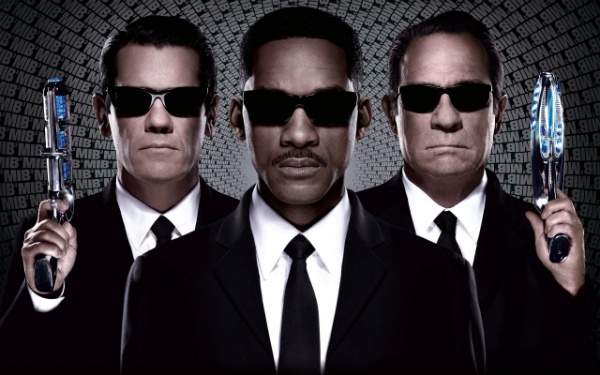
REVIEW: “Men in Black 3”

Let me preface this review by saying that I wasn’t the biggest fan of the previously two “Men in Black” movies. But I was certainly in the minority. The first “Men in Black” earned just under $600 million at the box office. The sequel brought in another $440 million. Obviously expectations are high for this third installment and it’s $300 million budget. Both Will Smith and Tommy Lee Jones are back as is director Barry Sonnenfeld and Steven Spielberg as Executive Producer.

It’s been almost 10 years since we last saw Agent K (Jones) and Agent J (Smith). K is still the stiff-as-a-board, emotionless, straight-shooter, J is still a rapid-fire wisecracker with attitude to spare, and aliens are still on earth masquerading as humans. They both still serve as operatives working for a secret agency commissioned to protect the Earth from alien threats. This time their main threat is an alien named Boris (Jemaine Clement). Agent K apprehended Boris back in 1969 and put him in a lunar prison designed specifically for him. But Boris escapes and travels back in time to kill Agent K before he is able to thwart his original plan. After noticing K’s absence and a difference in the timeline, J travels back to 1969 a few days prior to K’s death to protect him from Boris.
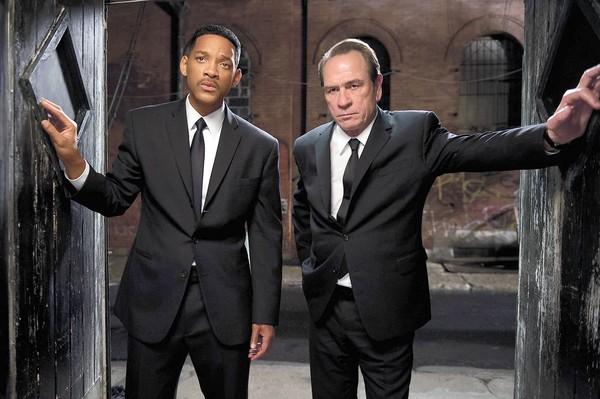
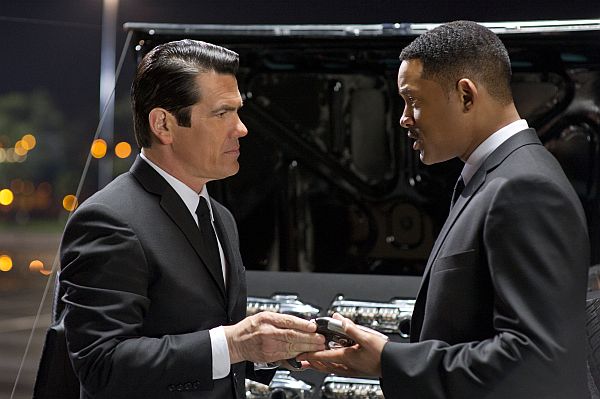
The movie starts off looking and feeling just like a “Men in Black” film. Funny exchanges between K and J and alien confrontations get the movie off on the right foot. There’s also a really cool time travel sequence as J heads back to 1969. It’s here that the movie both introduces it’s biggest asset as well as hit it’s biggest speed bumps. Josh Brolin plays the younger Agent K and he is fantastic. I swear there were times where I completely believed I was watching a younger Tommy Lee Jones instead of someone doing a Tommy Lee impersonation. Whether it’s his accent, his nicknames, or facial expressions, Brolin nails a 29-year old Agent K.

But while Brolin shines, the story really spins it’s wheels. There are a few back-in-time set pieces and late 60’s details that are fun but they get lost in the story that’s really pretty flat and lifeless. The humor loses it’s pop and seems to rely much too heavily on Will Smith’s quick wit. There’s great chemistry between Brolin and Smith but even it gets bogged down in the sometimes drab exposition. I have to admit, I found myself struggling to stay focused and interested in what was going on especially when an all-knowing alien named Griffin (Michael Stuhlbarg) enters the picture. I did enjoy Emma Thompson and Alice Eve as the older and younger Agent O and the movie is a visual delight. I just wish there was more energy and substance to go with the movie’s stronger points.
While I did have issues with the middle of the movie, it was almost made up for by a really good and surprisingly tender ending. There’s no way I can go any further without spoiling things, but I’ll just say that it makes you look at all three “Men in Black” movies from a different perspective. The ending is well conceived and even though there were a few questions that immediately came to mind, it really worked for me.

“Men in Black 3” most certainly isn’t a great movie but it’s definitely an upgrade over the almost unwatchable second film. Then again, that’s not really saying a much. MiB3 starts off strong and has a nice ending but it’s what’s in between that keeps it from being as good as it could be. Brolin is the highlight and he’s a lot of fun to watch. There are also some other pretty good performances. As I mentioned, the visuals are high quality, exactly what you would expect. But none of these pluses can outweigh the minuses. There’s just not enough substance or humor to make this anything more than an okay movie.
VERDICT – 2 STARS

REVIEW: “The Maltese Falcon” (1941)

Classic Movie SpotlightMALTESEA good argument could be made that The Maltese Falcon is Humphrey Bogart’s best film. It’s a movie that seems to get better each time I watch it and has earned its recognition as a film noir classic. It’s also a film featuring two notable firsts. This was Sydney Greenstreet’s first feature film and it was John Huston’s directorial debut. Huston also wrote the story which is based on Dashiell Hammett’s novel of the same name. It’s said that Huston extensively planned everything in the script, even to the most minute detail. It certainly shows. The movie is smart, well written, and deftly made.
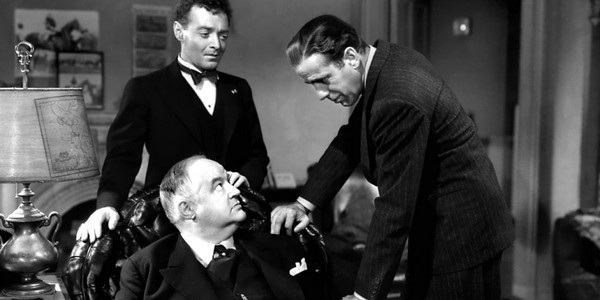
Bogart plays Sam Spade, a San Francisco private investigator. He and his partner Miles Archer (played by Jerome Cowan) meet with an attractive new client, Ruth Wonderly (Mary Astor), who hires them to help find her missing sister. Archer volunteers to follow her as she meets with Floyd Thursby, an acquaintance of her sister. Later that night Spade receives a call that Archer has been murdered. Spade weaves through a gnarly web of lies and an assortment of shady characters to find that it all revolves around a priceless statuette of a bird covered in jewels.

Bogart wasn’t Huston’s first choice to play Sam Spade, but after George Raft turned down the part Bogie was brought in. This was the beginning of a great friendship between Bogart and Huston that spawned many other wonderful films such as “The Treasure of the Sierra Madre”, “The African Queen”, and “Key Largo”. Bogart’s performance is simply brilliant and it’s hard to imagine anyone else in the role. Mary Astor gives a strong performance and sets the table for some of Bogart’s best lines in the film. Toss in the terrific Peter Lorre and Greenstreet, both of whom add their own flavors to the story. Also keep an eye out for a cool cameo from Walter Huston, John Huston’s father.

MALTESE1

The film’s is also helped by some fine cinematography. The movie features some crafty camera work, low-level lighting, and use of shadows which adds to the picture’s mood and tone. Cinematographer Arthur Edeson plays around with the angles and camera locations which give the movie a cool, sleek look.  It’s a technically sound and stylish movie and Huston’s accomplishment is really profound considering this was his first picture.

The Maltese Falcon epitomizes what high level filmmaking and storytelling is all about. Bogart’s performance became the model for other film noir detective roles and the supporting cast is nothing short of brilliant. The movie was nominated for three Academy Awards but it’s contribution to filmmaking  can’t be measured by that alone. This is a true cinema classic and it should be considered mandatory viewing for any fan of the art form. And despite being over 70-years-old, “The Maltese Falcon” still hits every beat.

VERDICT – 5 STARS

5 STARSs

5STAR K&M

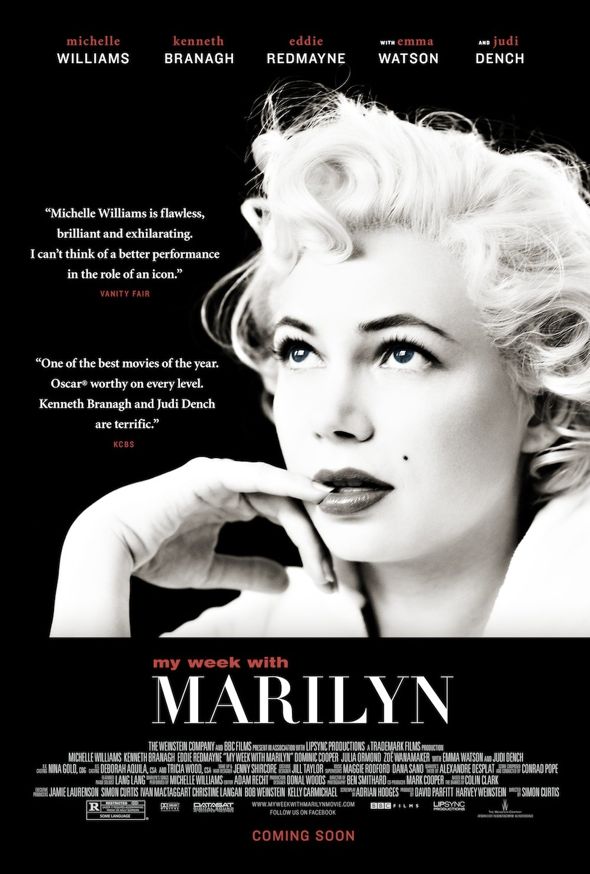
“MY WEEK WITH MARILYN” – 2 STARS

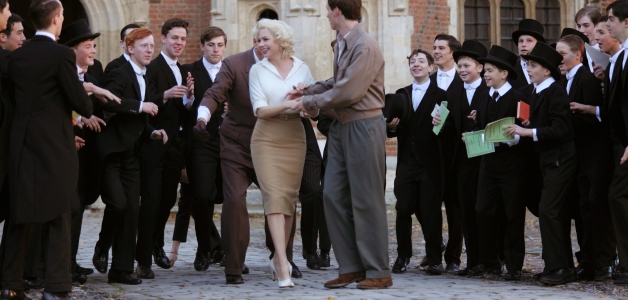
One thing that can be said for “My Week with Marilyn” is that it’s not your run-of-the-mill biopic. The movie is based on Colin Clark’s book about the making of “The Prince and the Showgirl”, a 1957 comedy starring Marilyn Monroe and Laurence Olivier. Said to have been a troubled set, “My Week with Marilyn” gives us an interesting glimpse at what it must have been like. But the movie mainly focuses on Colin Clark’s week-long relationship with Marilyn Monroe during the shoot. We spend a lot of time seeing the different sides of Marilyn through Adrian Hodges screenplay and the Oscar nominated performance of Michelle Williams. But while the film and especially Williams has received high praise, I found the movie lacking and in many ways missing the energy you would expect it to have.

The film starts with Colin Clark (Eddie Redmayne) leaving home in hopes of landing a job in the film industry. He ends up getting on with Laurence Olivier’s (Kenneth Branagh) new movie “The Prince and the Showgirl”. Marilyn Monroe (Williams) will be arriving to work on the picture and Colin’s first job is to find a home for her to stay in while she’s in London. Marilyn and Laurence get off on the wrong foot after she is late to the first script reading. This is a trend that continues throughout the filming of the movie and soon Laurence (who is also directing the picture) reaches his breaking point. Branagh is very good here and it’s quite obvious that he’s having a lot of fun with the role. He’s a likable character but very by-the-books when it’s time to work, something even his lovely but insecure wife Vivien Leigh (Julia Ormand) points out.

It’s during the stressful filming that we see Marilyn as extremely nervous and lacking any confidence in her acting abilities. In fact, she is almost always seen with her acting coach Paula Strasberg (Zoe Wanamaker) who actually serves more as a stabilizing mechanism to keep Marilyn from flying off the rails. Judi Dench plays Sybil Thorndike, a calm and soothing co-star who has sympathy for Marilyn and helps her build her confidence. But Marilyn doesn’t show up to the set one day and Colin is sent to check on her. A few days later Marilyn calls Colin to come over and see her. Colin is warned of Marilyn’s ways but his infatuation with her grows and grows. The relationship between the two is supposed to be unusual but I had a hard time finding any spark between them. Redmayne has the naive puppy dog thing working well but it was almost impossible to buy into their relationship.

I also thought the story, much like Colin and Marilyn’s fling, lacked any energy or vitality. I found my mind wandering during several scenes particularly when Marilyn is mumbling to Colin after taking to many pills. The movie just seems to hit an emotional flatline and I had a hard time staying interested. There were also times when Marilyn comes across as too childlike. I understand that the movie was trying to convey a type of childlike dependency in Marilyn but there were a couple of scenes where the script takes it too far.

But everything in this film comes back to the performance from Michelle Williams. She won a Golden Globe for the role but I have to say that I wasn’t as enamored with her work as most others have been. She certainly gives it everything she’s got and to be fair her biggest problem is that she’s let down by the material. But I never really felt like I was watching Marilyn Monroe. I always felt like I was watching someone play her. Now that may be expecting too much from Williams and it may be unfair. But this film hinges on the audience buying into Williams as Monroe and I only partially could.

When it comes down to it, “My Week with Marilyn” is pretty lightweight. It starts off strong but hits a rut at the midway point and spins its wheels for most of the second half of the film. Williams certainly isn’t bad here but she also isn’t Marilyn Monroe. I can see where if you buy into her performance completely, you’ll probably enjoy this film more than I did. But even with that, I would still have a hard time buying into this week-long lifeless fling. As I said at the beginning, this isn’t your run-of-the-mill biopic. But unfortunately it doesn’t use its uniqueness to create something special.

“THE MUPPETS” – 3 1/2 STARS

The Muppets have been missing in action for years now making them complete unknowns to a new generation of children. Now they are back in a feature film simply titled “The Muppets” and in many ways, it’s a fun and nostalgic step back in time. It’s based off “The Muppet Show”, a parody-driven variety program which ran from 1976 to 1981 and branched out into several full length movies. The whole cast is back and the result is a family-friendly experience that will bring back some fond memories for parents while introducing these wonderful characters to a new younger audience. And while the movie certainly retains that Muppet magic in places, it’s not without it’s problems.

Jason Segal wrote and stars as Gary, a human and brother to Walter who is a puppet. The two are incredibly close and as adults still live together. Throughout the years, Walter has become a huge Muppets fan. He watches all of their old shows, has a Kermit watch, and has a bedroom wall plastered with Muppet posters and stickers. Gary and his girlfriend Mary (Amy Adams) plan a romantic vacation to Los Angeles to celebrate their 10th anniversary. Walter ends up coming along and gets an opportunity to visit the old Muppet Theater. There he overhears the plot of an evil oil tycoon, appropriately named Tex Richman (Chris Cooper), to tear down the theater and drill for oil in it’s place. Walter makes it his mission to save the theater by convincing the Muppets, who have long since parted ways, to get back together for one last show to save the theater.

Both Gary and Mary are simple and sometimes cheesy characters and for the most part that’s ok. Segal and Adams make them both likeable even though their cluelessness is sometimes overplayed. Chris Cooper is a lot of fun as the stereotypical cold-hearted businessman and he hams it up without short-changing the character. But the Muppets are the real stars and while there are a few different voices, they all pretty much have the same personalities I remember from the show. They’re all here and I was surprised to see how much I remembered about them. Being this is a fairly concentrated movie, I was disappointed that some didn’t get as much screen time as I wanted but there’s not a lot you can do about that.

The story, while straightforward and predictable, does offer some pretty good laughs. There are several musical numbers throughout the film some of which are quite fun. Cooper’s bad guy rap is hilarious and works so well due to it’s absolute absurdity while others fall pretty flat and add little to the movie. But often times jokes are made at the song’s expense and they’re actually quite funny. “The Muppets” features several scenes that are like nostalgic flashbacks but it also has a few dull moments. The story drags in places and doesn’t maintain a steady pace. These lulls certainly don’t kill the picture but keep it from being as good as it could have been.

“The Muppets” may not be a great movie but it did leave me feeling like I had stepped back in time. I really enjoyed seeing these characters that I loved as a child back together again and there were several instances where I gave a hearty laugh at the genuinely funny jokes. There are also some fun cameo appearances by James Carville, Emily Blunt, Mickey Rooney, Selina Gomez and several more. While the movie hits a few speed bumps along the way, overall I did have fun and I guess that’s all that counts.

REVIEW: “Melancholia” (2011)


“Melancholia” is a solemn and unsettling examination of depression wrapped up in an end-of-the-world, sci-fi drama. It’s written and directed by the sometimes controversial Danish filmmaker Lars von Trier, and it’s been said that the picture was inspired by some of his own experiences with depression. In many ways it does feel deeply personal to the filmmaker and his treatment of the material is painfully real. But there are also a few instances where he forces his penchant for stylization and uniqueness onto the script. But even with the occasional lapse into self-indulgence, “Melancholia” is a lighter von Trier which for the most part really works. 

“Melancholia” has a very interesting structure. It starts with a brief prelude set to the beautifully haunting music of Richard Wagner. The prelude features a synoptic montage of stylistic imagery that we later find out is directly tied to events in the film. It’s a pretty no-nonsense, straight-forward approach by von Trier and it seems like an attempt to put the audience’s focus in the right place. On the other hand, it wasn’t until after I had finished the film that I really appreciated the prelude. It was then that I saw the brilliance of this clever device. 

The main story is broken into two parts and focuses on two sisters, Justine (Kirsten Dunst) and Claire (Charlotte Gainsbourg). The first half of the film is simply entitled “Justine”. It follows Justine and Michael (Alexander Skarsgard) and their lavish, high-priced wedding party thrown by Claire and her husband John (Kiefer Sutherland) at their luxurious home. Things start poorly when they arrive two hours late which clearly frustrates the cost-sensitive John. We’re then introduced to the sister’s immature and irresponsible father Dexter (John Hurt), their angry and cynical mother Gaby (Charlotte Rampling), and Justine’s self-absorbed boss Jack (Stellan Skarsgard). While at first everything seems perfect for her, we slowly see Justine swallowed up by her genuine inner struggles with frustration, uncertainty, and depression. We watch as her happy bride facade crumbles, and she becomes more and more detached. It’s painful and heart-breaking yet exquisite and utterly mesmerizing. 

The second half of the film, titled “Claire”,  jumps ahead in time and takes a drastic change of direction. Justine is brought back to live with Claire and John after succumbing to severe depression.  But we begin to see that Claire has struggles of her own. She is battling fear and anxiety brought on by the possible destruction of the earth by an approaching rogue planet called “Melancholia”. It’s hinted at in the first half of the film, but we learn that most scientists believe the planet will pass by earth. John, who is enthralled with the astrological phenomenon, tries to ease Claire’s mind, but differing internet theories fuel her despair. It’s sad to watch both sister’s fall victim to their own mental frailties and the planetary threat, while real, is a subtle but agonizing metaphor. 

“Melancholia” is a gripping, meditative film that’s delivered like an operatic mood piece. While sometimes slow and deliberate, the film moves at a measured pace that’s fairly effective even though the second half of the film does require some patience. The movie occasionally flirts with being ostentatious but von Trier manages to keep things reined in. But there are some exceptions. There are a few scenes that seemed forced upon the story and served no other purpose than to be provocative or erotic. These speed bumps pulled me out of the movie which hurts a picture that depends on our deep involvement in the story.  

Despite the movie’s few flaws, there is no denying the strength of Kirsten Dunst’s performance. You almost feel yourself being pulled into her collapsing world as she delivers what may be one of the most authentic portrayals of depression and it’s devastating effects. But to be honest, there isn’t a bad performance. Gainsbourg is fantastic as the complex Claire. Early in the film I was disgusted by her only to be completely sympathetic towards the character later. And it’s great to see Kiefer Sutherland once again in a role of substance. He nails ever scene he’s in and never sells his character short. 

“Melancholia” is sure to be heralded by many to be a great film and in many ways it is. For my money a more tempered Lars von Trier is better, and that’s what we get for most of the movie. He maintains a steady and solemn tone which doesn’t always make for happy viewing, but it works considering the subject matter. He also steps back and lets his really talented actors go. He uses some striking visuals but never overdoes them. They move poetically and almost hypnotically throughout the picture, and I couldn’t take my eyes off each strategically placed sequence.  But he did yank me out of his picture with a few self-indulgent scenes that should have been left on the cutting room floor. It’s here where von Trier seems to be putting style over substance, and the story suffers for it. But the movie is carried by the performances. I never doubted any of the characters or their individual plights.

VERDICT – 3.5 STARS

REVIEW: “MEEK’S CUTOFF” (2010)

To call “Meek’s Cutoff” a unique film would be an understatement. It’s a historical western of sorts from director Kelly Reichardt that follows three families and their guide as they travel on the Oregon Trail. Reichardt certainly doesn’t romanticize the American frontier life, instead creating one of the most genuine portrayals of the hardships and struggles that faced the settlers in the new territory. But while the movie draws you in with it’s visual beauty, nice performances, and high stakes, it ultimately falls victim to its unsatisfying ending..

The film takes place in 1845 as the Tetherow, Gately, and White families follow the lead of Stephen Meek, a shaggy and rugged mountain-man hired to guide them over the Cascade Mountains. He claims to know a shortcut, but as the trip grows longer and the water starts running out, the families begin to question Meek. After running across a Native American and uncertain of his motives, they capture him much to the dismay of Meek who would rather just kill him. Eventually they’re faced with a dilemma. Do they continue to follow Meek who by all indications seems lost or do the follow the Native American who they can’t communicate with but may be able to lead them to some much needed water?

“Meek’s Cutoff” is an incredibly slow developing picture which is sure to turn off some people. It does require a good deal of patience, but it wasn’t long until I was thoroughly involved in the story. Reichardt does an incredible job giving the story an authentic look and feel. The cinematography is wonderful, and there some truly beautiful shots scattered throughout. There are also some solid performances particularly from Michelle Williams, Will Patton, and Paul Greenwood who completely loses himself in the Meek character.

But while it flirts with greatness, it ends up falling short mainly due to an ending that left me feeling frustrated and shortchanged. Now I have no problem with ambiguity, leaving things open for interpretation, or allowing the audience to come up with their own conclusions. But this ending is terribly abrupt and features nothing that would cause me to come to my own conclusion about anything. To be honest, it felt unfinished and I couldn’t help but feel letdown.

It’s tough to watch a picture that does so many things right but fails to stick its finish. It’s easy to talk about what all Reichardt accomplishes in her film. It’s a brilliant and arresting movie that had me sold right up to the very end. This one glaring black eye took so much away from my experience. I understand this was a creative decision and many people have been satisfied with it. But for me, not only did “Meek’s Cutoff” not offer any real conclusion, but it gave me nothing to build mine upon. It felt a little cheap and ultimately made a potentially great film just a good one.

VERDICT – 3 STARS