REVIEW: “No Escape” (2015)

ESCAPE POSTER

No this isn’t Martin Campbell’s grungy 1994 sci-fi survival flick starring Ray Liotta. You remember, the one with the prison island and the two warring prisoner factions? Okay you probably don’t and it’s completely irrelevant anyway. This is the serious and stunningly intense “No Escape” starring (of all people) Owen Wilson and Lake Bell. I know, which idea sounds more outlandish, right?

Well actually this “No Escape” is quite the surprise – a tense and effective action thriller featuring two unexpectedly solid dramatic lead performances. It’s having to endure an almost fashionable smearing from some critics armed with absurd accusations of xenophobia and exploitation. But the movie is far from that. It doesn’t connect all of its dots and there are a couple of narrative hiccups, but to call this movie “xenophobic” is doing it a disservice.

ESCAPE2

Wilson and Bell play Jack and Annie Dwyer, a loving and committed couple (somewhat of a rarity in modern movie depictions) and parents of two lovely young daughters. Jack’s new corporate position has him moving his family to Southeast Asia. The move comes with its share of concern especially from Annie. But Jack remains optimistic, feeling this is the best way to provide for his family. The first person they meet is a crusty and scar-faced Pierce Brosnan. He plays Hammonds, a lush of the fellow who we immediately suspect isn’t who he says he is.

Things quickly go south when a violent coup erupts in the city. A Khmer Rouge-like army of rebels begin tearing the intentionally unnamed city apart killing innocent citizens and targeting foreigners. Jack sets out on a frantic and desperate attempt to keep his family safe and get them out of the bloody and chaotic political pressure cooker.

The film is written and directed by brothers John Erick and Drew Dowdle. John Erick is known for dabbling in the horror genre and we get subtle reflections of that in “No Escape”. He spends a lot of time playing with tension and finding ways to move his audience to the edges of their seats. And that’s essentially what this movie is – a terrified family moving from one harrowing situation to another. This linear approach does leave you wanting at times especially when the film tries to cram so much contextual and moral meaning into brief conversations. But in terms of exciting escapist entertainment, the approach works nicely.

ESCAPE

Now to the controversy. Labeling the Dowdle’s movie as “xenophobic”, “morally repugnant”, “reprehensible”, or any of the other similar adjectives I’ve read doesn’t accurately represent this film. Neither the Dowdle’s vision nor their approach is that simplistic. In fact, the film’s greater message touches on spoiled and privileged Western perspectives as well as Western political intervention. You could easily argue that the handling of this messaging is clunky, but at the same time the messages are there and they are very clear.

To go a bit further, the filmmakers took their inspirations from an actual uprising and the movie attempts to maintain a sensitivity to that. This isn’t a film about international meanness towards wholesome, white, middle-class Americans. The murder and brutality is mostly carried out against the people of the city. It’s true, none of citizens are fleshed-out, personal characters, but that doesn’t automatically relegate them to window dressing either and it doesn’t automatically equal exploitation. Instead they serve to highlight the indiscriminate brutality of the uprising while also clearly distinguishing the innocent victims from the perpetrators.

ESCAPE3

And I have to go back to Owen Wilson and Lake Bell, two solid performers who aren’t normally associated with this kind of emotionally and physically demanding material. They both give intensely committed performances and you never doubt their characters despite the situations they are in.  They each highlight a much greater range than I knew they possessed.

“No Escape” could have done a better job of giving context and defining the setting behind the violent turmoil that rages through most of the film. And it does spend more time showing Owen Wilson running than developing any character outside of the central family. But it sets its sights on being tightly focused thriller and it sticks to it. Thankfully it does what it does very well. It is a film loaded with thrilling moments and sequences sure to get your heart pounding and frazzle your nerves. “No Escape” makes it easy to overlook its shortcomings because you’ll be so fiercely absorbed in the next stressful encounter. That’s certainly how it was for me.

VERDICT – 4 STARS

4 Stars

REVIEW: “Nightcrawler”

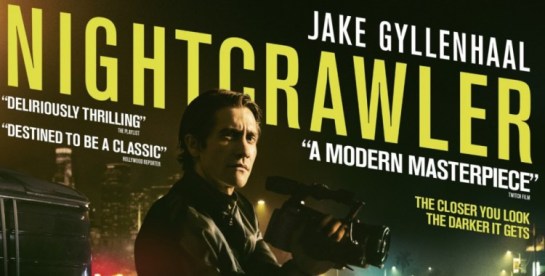
NIGHTCRAWLER POSTER

“Nightcrawler” is the directorial debut for Dan Gilroy and I have to say it’s a very compelling one. But it’s not like Gilroy is a stranger to the business. He has a handful of co-writing credits on his resume. His brother Tony has been writing screenplays since 1992 and his directorial debut was the Oscar nominated “Michael Clayton”. Also Dan has been married to actress (and one of the stars of this film) Rene Russo for 22 years. So Dan Gilroy has been around the movie business for a while.

“Nightcrawler” is all his. In addition to directing the picture he also wrote the story which takes a look at the sleazy underbelly of freelance crime scene videographers. Jake Gyllenhaal stars in the film and he continues to impress me. It has taken me a while to come around to him as an actor, but a string of really strong performances has convinced me of his talents. “Nightcrawler” may give us the best Gyllenhaal performance to date.

NIGHTCRAWLER1.0

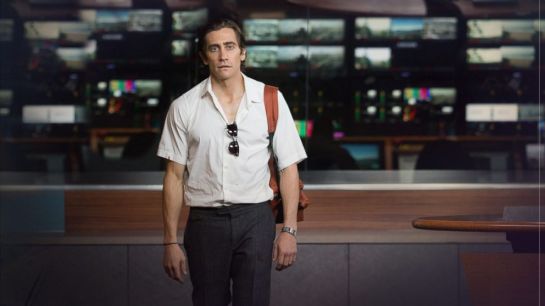
Gyllenhaal dropped thirty pounds for the part of the unassuming Lou Bloom, an out of work eccentric living in Los Angeles. The very first scene is telling and gives us a good introduction to this character. A security guard catches Lou stealing metal from a construction yard. Lou jumps him, steals his watch, and escapes. He sells the stolen metal to a scrap yard and asks for a job. The manager pointedly tells him “I’m not hiring a thief”. Within these first few minutes Gilroy gives us several nuggets of information about Lou to process.

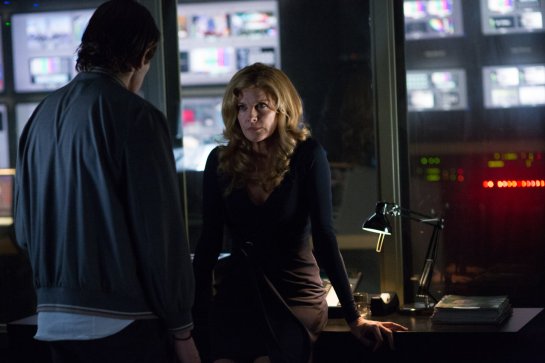
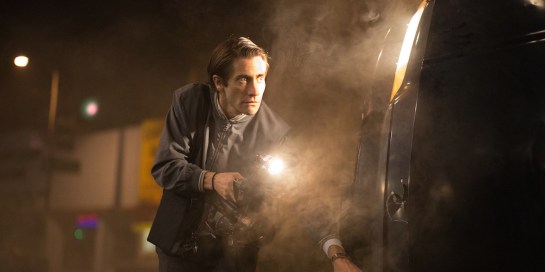
After coming up on a car crash Lou is inspired by videographer (Bill Paxton) who shoots footage of accident and crime scenes and then sells it to the highest paying news outlet. Lou steals a bicycle and pawns it for a cheap camcorder and a police scanner. After some rough early experiences, Lou captures some footage of a carjacking. He approaches Nina Romina (Russo), the news director of a struggling morning show, and she eagerly buys the footage. She encourages Lou to bring anything newsworthy to her first.

Nightcrawler2

As Lou’s ‘business’ picks up he gets a new car, new equipment, and a new assistant named Rick (Riz Ahmed). He also becomes egotistic, more ambitious, and addicted to his new-found success. He begins tampering with crime scenes in hopes of getting more dramatic footage and bigger paydays. But Lou ultimately lusts recognition. As the film progresses we see more unhinged and sociopathic behavior from him and we begin to wonder how far he will go down this dark and twisted path.

Gilroy gives us a veritable smorgasbord of dark humor, biting satire, and neo-noir perspectives. There are so many clever machinations that keep things fairly unpredictable and uncomfortable (and I mean that in a good way). Initially it is the subtlety of the evil that is unsettling. Sometimes it is camouflaged within Lou’s quirky and seemingly mild-mannered behavior. Later his actions cross a number of disturbing lines and we see in him a cold indifference to what he is doing.

K72A3451d.tif

Gilroy develops such a dark and twisted tone in large part thanks to Robert Elswit’s atmospheric cinematography and the moody score from James Newton Howard. But the brightest spotlight shines on Gyllenhaal and his sensational performance. He is truly terrifying but in an unorthodox sense. It’s Gyllenhaal’s appearance, his expressions, his postures. But it’s also his inconspicuousness. His character is someone that could gel into society without anyone noticing his existence. Russo is also very good and she gives us an entirely different form of evil. Television ratings at all costs, morals and ethics out the window. But I do think her character is a tad too broad and at times absurdly unethical.

“Nightcrawler” has been getting a lot of praise and I can see why. It’s such a creepy, tense, and efficient crime/psychological thriller. I certainly don’t think it’s the modern day “Taxi Driver” as some critics are calling it and it doesn’t strike all of the chords it wants to. For example its sleepy little jabs at the all-American way and the entrepreneurial spirit come off as a tad weak. But it is definitely effective in far more areas than not and it doesn’t follow any routine conventional path. Add a phenomenal Jake Gyllenhaal performance to that and it’s easy to see why this film works so well.

VERDICT – 4 STARS

REVIEW: “Night Train to Lisbon”

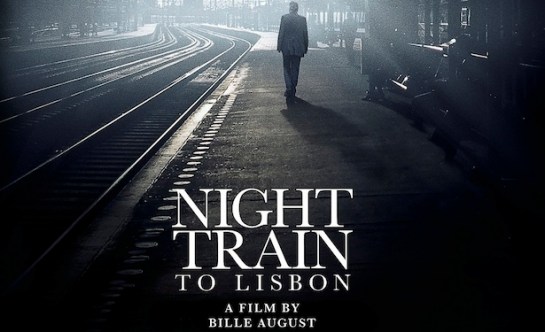
LISBON POSTER

It was considered a talky and drawn out bore by a handful of critics, but I found Bille August’s 2013 drama “Night Train to Lisbon” to be a soothing and almost cathartic film despite its occasional lapses. It’s a swirl of mystery, romance, self-examination, and character study that does at times trip over itself and its subtle but clumsy preachiness. But ultimately the film dives into themes and reflections that I found fulfilling.

The film is based on Pascal Mercier’s 2004 novel about a man lost in his loneliness and plagued by feelings of unfulfillment and unimportance. The great Jeremy Irons plays Raimund Gregorius, a language professor at a college in Bern, Switzerland. The film’s opening scene tells us scores about its main character. We see Raimund in a meager, dimly lit apartment. The walls are covered with books portraying what almost seems like an obsession. Raimund stirs around but there’s no one else there. No voices. No vibrancy. Nothing lively or colorful. It’s a portrayal of his loneliness.

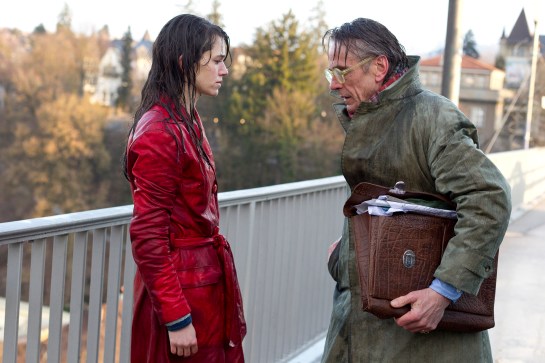
Later that rainy morning, while walking to school, he comes across a young woman standing on a bridge about to commit suicide. He’s able to grab her before she jumps and then takes her to his classroom to gather her thoughts. As he begins teaching his class she wanders off leaving behind her raincoat with a book in the pocket. Raimund immediately sets off to find the mysterious young woman using the book as a guide which leads him to Lisbon, Portugal.

NTTL_00403_1.jpg

The story quickly moves away from Raimund’s search for the young woman and to his fascination with the book. It was written by a man named Amadeu do Prado. Raimund is mesmerized by the life depicted in the memoirs and he ventures across Lisbon putting the story together through the people who knew Amadeu. Along this personal journey, Raimund finds some people who are eager to help him. He also finds some who are reluctant to revisit the painful and tumultuous past they shared with Amadeu.

Through Raimund’s conversations with people we get flashbacks to Amadeu (portrayed by Jack Huston) and his life. We see his difficult childhood and his complicated relationship with his family. We witness his venture into a left-wing resistance movement that went against the Salazar administration. We see scarred friendships and fragile romances. It’s a truly compelling life story even though it sputters at times and its historical account is clearly told from a strict and persuaded point of view. This occasionally strips the film of its genuineness and makes it the film a bit like a lecture.

Lisbon2

While I found Amadeu’s unfolding story interesting, it was Raimund who kept me enthralled in the movie. With every peeled back layer of Amadeu’s past Raimund realizes how unfulfilling his own life is. Through the book he tries to experience the life that he has never had. Jeremy Irons navigates this journey with such temperate and emotional precision. It’s not a loud or showy performance. Instead he uses a more reserved approach which serves the character and his state brilliantly. I truly felt for Raimund and completely bought into his plight.

These dual stories are also helped by a fascinating assortment of wonderful actors and actresses. There are so many rich supporting performances from Huston, French actress Mélanie Laurent (a favorite of mine), Charlotte Rampling, Christopher Lee, Martina Gedeck, Auguest Diehl, Bruno Ganz, Tom Courtenay, and several others. Each have their specific role in Raimund’s journey and Amadeu’s story and the strength of the acting brings both vividly to life.

There is also plenty of beautiful scenery, wonderful locations, and interesting camera work to talk about, but this really comes down to the story and your ability to latch onto it. I had no problem with this mainly because of the film’s centerpiece Jeremy Irons and the story he tells. There is the occasional rough patch and a few hints of odd one-sided lecturing. There is also an intriguing human drama that sucked me in and had me genuinely caring about the characters. That’s an essential piece of any good drama and “Night Train to Lisbon” has it.

VERDICT – 4 STARS

REVIEW: “Noah”

noah POSTER

Darren Aronofsky wasn’t the first person I would expect to make a serious Bible-based epic, but that’s exactly the task he has chosen. In fact he has been wanting to bring the story of Noah to the big screen for years. Now armed with a $150 million budget and a stellar cast Aronofsky has co-written and directed a large-scaled picture that has already been met with its share of controversy.

As a Christian myself there are certain things in the Bible where creative liberties have no place. That may not allow me to be the most objective critic of some Bible-based movies but it is a belief that is inseparable from who I am. On the other hand some stories from Scripture leave themselves open to interpretation while others may stir our imaginations by omitting many of the details. Such is the case with the story of Noah. The story of Noah and his ark takes up only a small portion of Scripture so there are definitely areas where our creative imaginations (in this case Aronofsky’s) may kick in. Yet you always look for respect of the spirit of the story and at least some type of adherence to the material.

NOAH2

Fans of popular novels or those passionate about a historical figure or account have always expected some degree of adherence to the source material from movie adaptations. That’s perfectly reasonable and why would the approach to this be any different? Instead Aronofsky has taken a well known Bible story and laced it with Tolkien-styled fantasy, weird mysticism, and one of the most heavy-handed environmental and animal rights messages you’ll ever see on screen. In essence he has chosen to tell a story about a man named Noah and definitely not THE story of Noah that many people may be expecting.

The main aim of Aronofsky’s version is recognized early in the film. Noah (Russell Crowe) shares with his three sons that the environment is the true apple of the Creator’s eye. He uses his son’s criminal offense of plucking a flower from the ground to show how callous men can disrupt the Creator’s beautiful and harmonious world. A situation then arises which allows Noah to tell of how animals are the Creator’s crowning achievement and how men endanger them, some going as far as actually eating them (which shocks his sons). All of this happens in one of the film’s opening sequences but it isn’t contained to it.

The main conflict throughout the movie is between the evils of mankind and the innocence of animals along with Noah and his family. In fact, Noah states that the entire purpose for building the ark is to save the animals and kill wicked mankind. Now the movie does throw a couple of bones to those who were hoping for a slightly accurate telling of the Bible story but the similarities between the movie and the Biblical account are strictly cosmetic. This is much more like a poor man’s Lord of the Rings installment filled with giant talking rock creatures, Methuselah (Anthony Hopkins) who is a strange hermit/wizard, and an huge CGI-heavy battle sequence. Spellcasting, odd relics, and bloody blades take center stage.

Noah1

The Creator is also in sharp contrast to what some people may expect. At no point in the film does Aronofsky use the name God. Clearly this was intentional. Was it an act of respect in order to not offend especially considering the massive liberties he takes? I don’t know but the God of the Bible and the movie’s “Creator” couldn’t be more different. In the film the Creator is a cold and distant deity who speaks with veiled visions and sometimes not at all. Aronofsky shows him as an iron-fisted tyrant at times who watches mankind wallow in uncertainty and turns deaf ears on their pleas for clarity. And sometimes it’s the Creator who is portrayed as the villain. While Aronofsky never calls him God, it wouldn’t be a stretch to consider this his view of him.

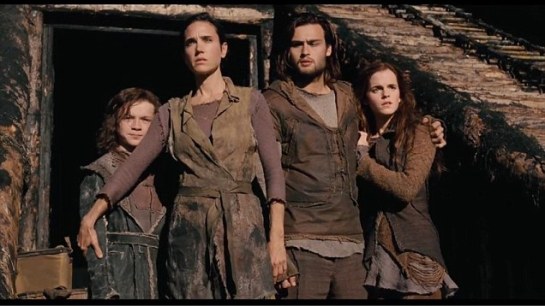
I could go on about strange and perplexing diversions from the original text, but how does “Noah” stand up as a movie? Is it good cinema and is it good storytelling? The film does have some strengths. Whether you like him or not, Aronofsky has a great visual style that separates his movies from others. There are some stunning shots that were really effective especially when the rain starts to come. There are also several phenomenal performances. Crowe is in top form and he is perfectly cast. We also get great performances from Emma Watson, Jennifer Connelly, and Logan Lerman. And I have to mention Ray Winestone. He’s fabulous as Tubal-cain, the king of the evil meat-eating men.

Noah3

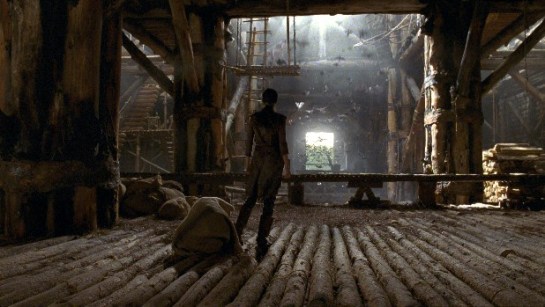
But the film has several glaring flaws (aside from my concerns mentioned above). First off, while some of the visuals may be amazing much of the CGI isn’t. The rock creatures look like something out of an early 1990s film and the big climactic battle looked as clunky visually as it felt narratively. Then there were a number of unintentionally goofy moments which were often direct results of Aronofsky’s diversions. The film also grinds to a halt in the third act as a trumped up family drama plays out among those confined to the floating ark. The family conflict angle had a lot of promise, but here it drags the movie down and I began to check my watch.

I’ll be honest, Aronofsky’s decision to divert so wildly from the source material is an issue for me mainly because there is plenty of good story to tell aside from what we are given. But even aside from that, “Noah” is a film plagued with its share of problems. It’s a movie that teases us with what it could have been but ultimately stumbles because of what it actually is. This isn’t the biblical story of God’s righteous judgement of evil and His mercy towards humanity through Noah. But that doesn’t mean this movie isn’t preachy. Its sermon is on the evils of mankind and how the earth has been in a state of physical decay and animals have been robbed of their innocence since we came onto the scene. Who knows, whichever story you care about the most may also determine how much you care about this film as a whole.

VERDICT – 2 STARS

REVIEW: “Non-Stop”

NON POSTER

Almost overnight Liam Neeson became today’s Stallone or Schwarzenegger. Whether he is tracking Albanian human traffickers across Europe or fighting Alaskan grey wolves with shards of glass attached to his fists, the 61 year old Neeson has not only embraced his action stardom but he’s really good at it. But this really shouldn’t surprise anyone. A brief scan of Neeson’s filmography shows that he is a versatile actor who has never been a stranger to action roles.

He shows it again by giving us another March action thriller called “Non-Stop”. The film is directed by Jaume Collet-Serra who also worked with Neeson on the 2011 film “Unknown”. This time around he is 30,000 feet above the Atlantic Ocean in a passenger plane and facing one Neeson-sized threat. “Non-Stop” is a huge step up from the star’s last action outing “Taken 2”. It’s a fun throwback picture that uses many of the same plot devices which service the story well despite the perfunctory impression they leave.

NON2

Neeson plays Bill Marks, a United States Federal Air Marshall who boards a non-stop flight from New York to London. We learn several things about him early on. He is an alcoholic who clearly has some emotional baggage. He also has a fear of flying (particularly takeoffs) which is a liability considering his occupation. The film also uses the familiar method of giving us brief glimpses of the major players in the film as they wait to board the aircraft – passengers, pilots, flight attendants. It’s cleverly executed here and it had me cautiously and suspiciously examining every face I was shown.

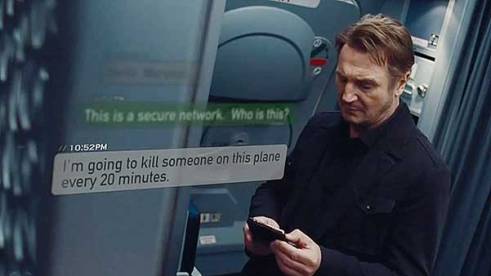
Once the plane is over the Atlantic Bill gets a phone text on his secure federal line threatening to kill someone onboard every 20 minutes unless $150 million is transferred to a bank account. At first he tries to decipher whether or not it’s a hoax, but he quickly finds out that the threat is real. With one person dead, 20 minutes until another person dies, and no way to quickly land while over the ocean, Bill has try and get control over the perilous and deadly situation.

As you can tell this is obviously pretty absurd stuff, but that doesn’t stop it from being a highly entertaining ride. Neeson gives his usual stout and sturdy performance but here he is also quite vulnerable. We do get those patented scenes where he breaks noses and snaps necks, but he also brings out the panic, perplexity, and brokenness which the story includes as part of the character. Julianne Moore plays a passenger he meets on the plane as does Corey Stoll in an entirely different role than his Hemingway from “Midnight in Paris”. Downton Abbey’s Michelle Dockery and recent Oscar winner Lupita Nyong’o play flight attendants although Nyong’o is relegated to a very small part.

NON1

“Non-Stop” throws a few jabs at a number of subjects including the news media’s over anxiousness to tell a story despite its inaccuracy and various post-911 attitudes about flying and people in general. Some work better than others. The movie does take a few preposterous turns and the final revelation, while satisfying for me, was a bit goofy and requires the audience to refrain from asking some very obvious questions. On the flipside it was always casting doubt on my suspicions and I never figured out what was going on until the final reveal.

Will “Non-Stop” make anyone’s Best of 2014 list? I highly doubt it. But it is an example of a very fun and entertaining action thriller that allows the audience to just sit back and play along. It helps to have such a strong anchor as Neeson. He is comfortable with these roles and when given good material he can provide us with a really good escape. While “Non-Stop” has some obvious flaws it is an easy movie to recommend and it’s one I wouldn’t mind seeing again. Now lets see what Neeson has in store for us next.

VERDICT – 3 STARS

REVIEW: “Nebraska”

NEB POSTER

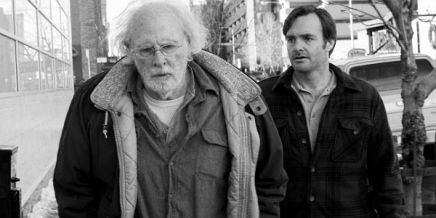
In the comedy/drama “Nebraska” Bruce Dern plays an elderly man named Woody Grant from Billings, Montana. Woody receives a marketing flyer in the mail that convinces him he has won $1 million. All he needs to do to collect is travel to Lincoln, Nebraska and claim his prize. The problem is his two sons and his cantankerous wife all know it’s a scam. But Woody is determined that he is going to Lincoln even if he has to go on foot. To appease Woody, David (Will Forte) agrees to drive him to Lincoln and hopefully have some bonding time with the father he barely knew.

That’s the main story, but this is an Alexander Payne film so you know there is a lot more under the surface. Payne has always been interested in characters and this is a character-driven picture. “Nebraska” touches on a variety of real life subjects including alcoholism, greed, family dysfunction, and declining health of the elderly among others. And while there’s nothing inherently funny about these things, Payne and writer Bob Nelson don’t allow the movie to drown in its seriousness. In fact at times it’s a very funny film – that near perfect mix of comedy and drama.

NEB1

One of my favorite things about “Nebraska” is its authenticity. This could easily have been a conventional comedy featuring a stereotypical old codger. Instead it’s a very real story featuring real characters and set around a very real depiction of small-town America. With a few small exceptions, “Nebraska” never hits a false note. The majority of the time the characters feel just right and the Nebraska locations seem yanked out of real life.

I also love the choice to shoot the film in black-and-white. While it wasn’t popular with the studio, Payne and cinematographer Phedon Papamichael saw it as an intricate part of their storytelling. I think it was a brilliant choice. It creates a very gloomy and bleak look that is perfectly in tune with much of Woody’s story. But it also works in the film’s portrayal of America’s dying small towns. There is a striking parallel between Woody and these rural locales that I found fascinating and the black-and-white made it all the more powerful. But at the same time there is a beauty to the look of this picture – a classic beauty that I don’t think color could provide.

That hints at another facet of the movie that really worked me. As someone born and raised in a place very similar to Woody’s hometown of Hawthorne, I was impressed with the film’s accuracy in capturing the essence of the small town. Payne, a Nebraska native, was able to show the sad side of what these places look like now while also painting a beautiful picture of how they once were.

NEB3

But once again it’s the characters that gives this film its life. Bruce Dern delivers one of the most earnest and committed performances of the year. Woody is a captivating character with more layers than you may think. He’s deeply flawed yet genuinely sympathetic. He can be unintentionally hilarious yet also sad and depressing. There is also a cloud of mystery that surrounds Woody. We get hints that he’s battling some form of dementia but it’s never clearly stated. Also, through the eyes of his wife and sons, we see Woody as a pretty bad husband, father, and man. Yet we learn new things about him from the people in his hometown that tell a slightly different story. There are numerous other nuances to this character that I loved.

The great film critic Leonard Maltin noted that “Payne has a Fellini-like eye for great faces”. I couldn’t have said it better. Much like a Coen brothers film, there are an assortment of memorable faces which add so much character and detail to the setting and the story itself. Everywhere you look there is one small character that feels a part of the fabric that makes up “Nebraska”.

NEB2

There are also an assortment of other great characters many of which are comic spark plugs. Perhaps the most talked about is June Squibb as Woody’s mean and degrading wife Kate. She undoubtedly has some of the movie’s funniest moments, but she also exposes one of the film’s only problems. Payne takes her snarky, belligerent, and sometimes foul attitude a bit too far. Don’t get me wrong, I laughed my butt off at some of her antics, but Payne overdoes it. Here’s an example. There’s a great scene where Kate, Woody, and David are visiting family grave sites at a small country cemetery. It’s a fantastic scene with the right mix of drama and humor. That is until the Kate character suddenly does a vulgar act clearly intended for a cheap laugh. It really hurts what could have been a brilliant scene.

While Payne does overplay his hand which hurts the movie a bit, I still found “Nebraska” to be one of the strongest films of the year. Not only is it a piercing examination of some very real issues, it’s also one of the funniest movies of 2013. And if Bruce Dern doesn’t get a Best Actor Oscar nomination for his phenomenal work, it will be hard to take the category seriously.  It is smart and fresh filmmaking that I really hope gets rewarded this awards season.

VERDICT – 4.5 STARS