REVIEW: “Play Time”

PLAYTIME POster

“Playtime” may be one of the most difficult movies to categorize or review and it may be a difficult movie for some people to process. French filmmaker Jacques Tati is known for focusing more on people and communities and allowing his stories to be told visually through their interactions. He was much more interested in visual comedy through observation than presenting a structured narrative. With “Playtime” he takes this unique style and amplifies it. But with this film he has a different intention and much bigger expectations that may be hard to appreciate at first glance.

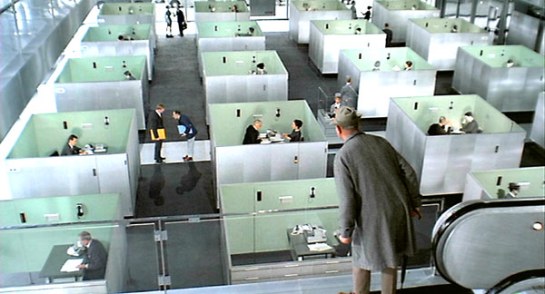
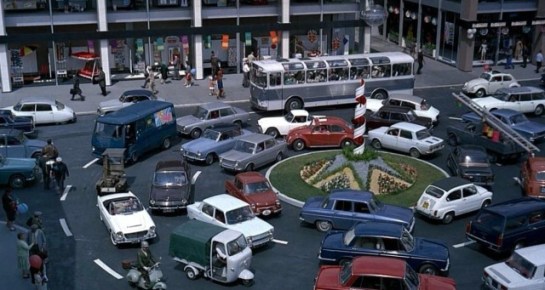
“Playtime” was Tati’s most ambitious project and at the time it was the most expensive movie in French history. It never made its money back at the box office and eventually drove Tati into bankruptcy. Much of the high cost went into the enormous set built by the filmmaker. Money issues made constructing the set drag out almost 4 years. But if you’ve seen the film it’s impossible to not be in awe of what Tati created. His set included an airport, skyscrapers, apartment buildings, office complexes, a downtown area, and several busy city streets. All of it represented the new futuristic Paris that Tati often spoke against in his films.
PLAYTIME1

This is also a movie intended to fade out Tati’s popular Mr. Hulot character. Tati was growing tired of him and used this as an opportunity to move on to something new. But some believe this is one reason the movie wasn’t as well received by the public as hoped. Mr. Hulot was incredibly popular with audiences and his limited appearances in this picture didn’t sit well with some viewers. But honestly, Mr. Hulot is only a cog in Tati’s big machine. This was never meant to be a Mr. Hulot picture in the same vein as “Mr. Hulot’s Holiday” or “Mon Oncle”.

“Playtime” does incorporate several of Tati’s signature techniques in filmmaking and comedy. The gags often hinge on timing and some of them require careful attention or you just might miss them. There is no meaningful dialogue in the picture. Instead the voices of people are simply part of the important background noise that we hear throughout the film. Sound has often played a significant part in Tati’s films and it’s no different here. Everything from the loud heels clicking on the cold, hard floors to the flatulent noises from the hip office chairs has a distinct and intentional sound.


The movie is broken down into sections. It begins in what resembles a hospital but we soon find it’s an airport. It’s here that we are first introduced to some of the film’s reoccurring characters including a tour group of women from the United States and of course Mr. Hulot. From there the movie moves into Tati’s vision of where Paris was heading – a city of long, congested, assembly-line like streets with matching skyscrapers made of steel and glass. The city’s traditional beauty and history is gone replaced by a cold and sterile modernist future. Tati does give us quick looks back at the city’s glory but they are cleverly shown reflections seen in glass doors. The reflections of the Eiffel Tower and of the Sacré-Cœur Basilica on Montmartre hill are visions of a Paris that Tati sees as disappearing in the real world.

PLAYTIME2

Mr. Hulot is lost in this new world. The second big section of the movie takes place in an office high-rise where Hulot is set to have a meeting. Tati makes the place incredibly impersonal and goes to great lengths to portray the building’s futuristic technology as silly and pointless. There is a great scene that illustrates this right after Hulot enters the office building. He’s met by a little old doorman who sits him down while he calls upstairs. To do so the old fella has to work an overly complex intercom system, all the time grumbling to himself as he carries out his perfunctory, everyday duties. He refuses to let Hulot leave his seat, making him wait and wait until the executive he’s there to meet finally arrives from upstairs. But the executive moves him into an office 10 feet away from where he’s been waiting and has him sit down and wait longer. The doorman, the intercom, and the long wait were for the most part pointless.

Hulot ends up getting lost and he stumbles upon a trade show happening in another part of the building. This is where the next section of the movie takes place. It’s followed by some time spent gazing into an apartment complex before heading to an evening at a nice restaurant. Most of the film’s second half takes place in the restaurant. Hulot ends up inside but we really see very little of him. Instead we’re introduced to the new series of characters including a loud and obnoxious American businessman, a clever doorman, an embarrassed waiter who has ripped his pants, the antsy owner, a drunk, the aforementioned tour group, and a number of other people.

The restaurant sequence is a pretty impressive thing to behold. We watch as the night starts slow but as the crowd increases and several mishaps occur, things liven up. There’s really nothing else to the scene. There isn’t a deeper story angle to latch onto nor is there one central character to follow. It’s pure observation as the camera steps back and moves from one section of the restaurant to another. We simply watch everything as if we were sitting on a stool in the corner of the room. It’s unlike anything I’ve seen. It’s a bold and inventive experiment but it’s also laced with some really funny gags. And it doesn’t stop there. There’s a really good drugstore sequence and some time spent on the congested city streets before zipping us back to the airport.
PLAYTIME3

You can’t watch “Play Time” and not be impressed with the skill and the craft of Jacques Tati. And while it certainly has some funny moments, it lacks the playfulness of the previous Mr. Hulot films and I have to admit I missed that. The shelving of Hulot is obvious as Tati intentionally loses him in the concrete, glass, and metal world he created. In fact, at times it seems that Tati is rubbing it in our faces by occasionally throwing out men who walk and dress like Hulot but we find out they are not. By shortening the screen time of his beloved character he forces us to look at the bigger picture that he’s painted on his personal canvas. He makes us look beyond what we’re familiar with and what we expect.

There is nothing conventional about “Play Time”. It’s an ambitious project that also has that signature Tati humor. But it’s nothing like the filmmaker’s previous work and that took some adjusting for me. And personally speaking, this film just didn’t resonate with me like his other work. Staying with the movie can be a bit of a challenge and the humor is spread out and more subtle. But the craftsmanship behind this film can’t be questioned and the sheer scope of the undertaking is incredible. There is so much going on throughout this picture and for a movie with no substantial plot or direction that’s a pretty amazing accomplishment.
VERDICT – 4 STARS

REVIEW: “Prince Avalanche”

PRINCE

Good luck trying to classify David Gordon Green’s “Prince Avalanche”. Green directed and wrote the screenplay for this odd little independent film that is part drama, part comedy, and part offbeat character study. It was inspired by an Icelandic picture titled “Either Way” only here it takes place in an isolated woodland area in Texas. It’s a 2013 film that didn’t get much press and brought in less than $200,000 during its very limited release. But now word of the film is starting to ease out and that’s a good thing.

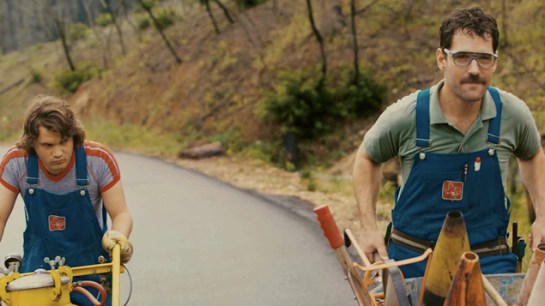
Paul Rudd plays the starched, tightly wound Alvin. He’s a highway worker who hires his girlfriend’s airheaded but well-intentioned brother Lance (Emile Hirsch) to help him paint yellow traffic lines on a long stretch of isolated roads. The roads wind through a forest area that has recently been ravaged by wildfires. This is the dreary, near apocalyptic landscape where the entire film takes place. We just follow along watching Alvin and Lance go through their workday. We sit with them at their camp enjoying a plate of grilled fish and coffee. The story is truly that simple but Green is quite clever in how he opens up these characters to his audience. It’s amazing what all we pick up just by listening to their many conversations.

AVALANCHE

There are a number of pleasant but telling scenes early in the film. It becomes clear that Alvin and Lance are distant. In many ways they’re very different people and they obviously don’t have a longstanding relationship. Watching the slow-moving male bonding is good fun and it tosses in several well-conceived laughs. But it also connects us to these characters so that we are invested once things get rough. And they do get rough. The two personalities clash and some humorous scenes follow. But these problems end up revealing a lot to each one about themselves. That’s when the true meaning of this film surfaces.

This is a slow and meditative story that spends a lot of time on simple observation. Just watching and listening. Both Rudd and Hirsch are fantastic They both unwrap these two characters exposing their charms and faults with great clarity. Alvin is a man who desperately needs to break out of this lonely world he has created for himself. In it he sees what he wants and ignores important elements to life. Lance needs to realize he is no longer a child. He has to grow up and take responsibility. These two very different men with very different problems are actually in a very similar boat.

“Prince Avalanche” is an independent film through and through. David Gordan Green adapts and directs this light but crafty picture that made me laugh often. But it also develops two really good lead characters who despite their eccentricities are very human in more regards than you may think. This is a tightly made film that has heart and humor. I really appreciate that.

VERDICT – 4 STARS

REVIEW: “The Place Beyond the Pines”

PLACE Poster

The title may make it sound like a high-minded ethereal exercise, but “The Place Beyond the Pines” is actually an ambitious movie that is one part cautionary tale and one part complex family drama. The film reunites its star Ryan Gosling with director and co-writer Derek Cianfrance who previously worked together on “Blue Valentine”. This is certainly a different kind of movie with many more layers and a much broader vision. That doesn’t always equal a better movie but in this case Cianfrance definitely takes a step up and his new film almost reaches the lofty heights it aims for.

“The Place Beyond the Pines” can basically be broken down into three parts. First we meet a motorcycle stunt performer named Luke Glanton (Gosling). He’s a tattooed, chain-smoking loner who goes town to town with a traveling carnival. During an annual stop in upstate New York Luke learns he has fathered a child with a local waitress named Romina (Eva Mendes). He decides to quit the carnival and stick around hoping to take care of son, but with no money or job that becomes difficult. He strikes up a friendship with Robin (Ben Mendelsohn) a local mechanic with an affection for robbing banks. A few bad choices later and Luke finds himself in a pretty tough spot.

PLACE BEYOND THE PINES

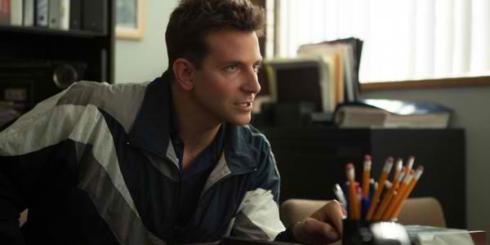
Luke’s story connects to that of a young local police officer named Avery Cross (Bradley Cooper). The second part of the film focuses on Avery after he is injured in the line of duty. He struggles with the actions that led to his injury and the “hero” tag that he has been given. As he recovers he fights to stay connected to his wife and young son. He also faces a battle between his moral conscious and some shady goings-on by his friends on the police force.

The third part of the film jumps ahead 15 years but to tell anything else about it would be doing a disservice to the viewer. Suffice it to say this is a film about two men, two families, two fathers, and two sons whose lives are veritably intertwined. The three segments each have their own unique tone and feel to them yet the connection between all three is always there. This was a bold approach to storytelling and I certainly can appreciate Cianfrance’s ambition. But the risk would only work if all three segments were equally good and unfortunately that’s not the case.

My favorite of the three “chapters” (for lack of a better word) was the first one which focused on Gosling’s character. This was a good surprise for me because unlike many people I’m not sold on him as an actor. We get a lot of his normal routine here – brooding, emotionless stares, and a lot of mumbling. But it actually fits a lot better with this character and Gosling does throw in a few variations that we rarely get from him. The story is compelling and features a gritty realism. I loved Mendelsohn here and Mendes is very good as well.

Place2

I also liked the second act which focused on Bradley Cooper’s character. It’s drastically different but deeply connected to what we’ve already seen. The contrasts in the lives of these two men are jarring yet there are similarities which I will let you sort out for yourselves. It’s during this chapter that the film does begin to slow down a bit but it still maintains a strong dramatic pull. But the final act tries to be a little too clever and the contrivances that are employed are all too obvious. There are parts of the final third that do work but as a whole the story becomes less interesting and it’s here that I began to feel the trudge of the movie’s 140 minute running time.

So what do I make of “The Place Beyond the Pines”? Ultimately it was a better movie than I anticipated but not one that fully meets its own high expectations. The camerawork is fantastic and the performances are solid across the board. Also, I never begrudge a filmmaker from making bold choices, but I don’t feel Cianfrance quite knew when to pull back the reins. In the end the film felt a little too cocky and indulgent for its own good. While that brought the movie down a bit it certainly didn’t undo the good qualities that we see particularly in the first two acts.

VERDICT – 3.5 STARS

REVIEW: “The Purge”

PUrge Poster

We all have traditions that we look forward to each year: Christmas, Mothers Day, birthdays, opening day of the baseball season, the Purge. Well, at least that’s how it is in 2022 America. What is the Purge you ask? It’s an annual 12 hour government sanctioned period where all crime (murder, rape, anything) is legal. This cathartic release of personal angst and pent up emotion is said to be the reason for the low poverty levels and crime rates. Perfectly reasonable thinking, right?

The yearly Purge is the centerpiece for this horror/thriller written and directed by James DeMonaco. Therefore your ability to buy into it will undoubtedly effect your perception of the film. Personally I found the central conceit to be absurd and while I tried to backburner it I never could quite get over the nuttiness of the idea. I’ll admit there was a slight draw to the concept and if DeMonaco had spent time developing a background it may have been intriguing. Instead it comes across as a gimmick for some typical bloody violence mixed with a sloppy and heavy-handed political statement.

PURGE2

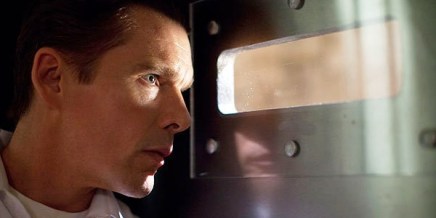
In terms of story, James Sandin (Ethan Hawke) and his family live in an upper class Los Angeles suburb. James made his fortune exploiting the Purge by selling high priced security systems. The film starts mere hours before the Purge is set to begin. Sandin arrives at his lavish home, wishes his neighbors a “safe night”, has dinner with his family, and prepares to lock down his fortress for the next 12 hours. But obviously they don’t spend a quite uneventful night in their home. A series of events, regardless of how random and illogical, turn their night upside down and they find out they aren’t as secure as they thought.

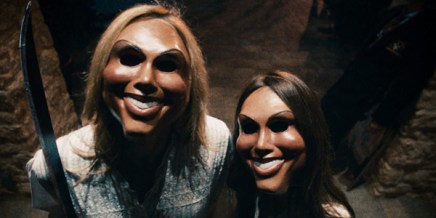
“The Purge” seems to be constantly straining to generate tension and scares. Most of its horror devices are taken from a number of different movies you’ve seen before. Now and then they turn out to be effective. For example later in the film a group of masked preppies show up and terrorize the Sandins. It’s something that will be very familiar to horror fans and the group plays into the tactless class warfare statement the film is preaching. Yet I’ll admit I found them to be very creepy at times.

PURGE - FILM REVIEW

But there are also moments where DeMonaco’s direction completely undermines the scene. There’s a sequence where James and his wife Mary (Lena Headey) are searching for a man in their darkened house. The scene features the routine shadowed hallways, flashlights, and sudden mysterious sounds. This might have been effective except for the fact that DeMonaco already revealed that the man is hiding in a closet. Therefore these designed scare scenes have absolutely no effect. There are several clumsy missed opportunities like this that pop up throughout the picture.

The film has other flaws including a fairly predictable outcome and random nonsensical behavior from some of the characters. But despite these gripes, “The Purge” is never boring and it does create some frights and intensity that works. It doesn’t do enough to cover the silliness of its main concept and there isn’t an ounce of subtlety with DeMonaco’s political preachiness. I think there is a pretty intriguing movie here somewhere, but the glaring problems restrict it to being a middle-of-the-road and ultimately forgettable experience.

VERDICT – 2.5 STARS

REVIEW: “Philomena”

PHILOMENA POSTER

When making a movie based on an emotionally-charged true story there are certain obstacles and temptations that filmmakers must avoid. Time after time we’ve seen movies succumb to dizzying melodrama and cheap emotional tugs. Actors and actresses sometimes go big which can drown out the true heart of their characters. But some films get it right. They balance grounded emotion with smart and crisp storytelling. For the most part “Philomena” is one of the films that gets it right.

“Philomena” tells the touching true story of Philomena Lee and her search to find her son after 50 years of separation. The unquenchable Judi Dench plays this mother who is haunted by thoughts and visions of her long-lost son which drives her to find him. Her daughter introduces her to a journalist named Martin Sixsmith (Steve Coogan) in hopes that he will investigate and tell her remarkable but heartbreaking story. But he’s not without baggage. He was recently unfairly fired from a government position and his journalism career is floundering. He thinks a human interest story is beneath him but he takes it and hoping of getting back on track.

PHILO-01

We learn Philomena’s story along with Martin. Through flashbacks we see that a young Philomena was left at a convent in Ireland by her father after she becomes pregnant. Later on the sisters force her to work seven days a week in a hot laundry room as some sort of twisted act of penance. They allow her and other mothers to see their children once a day but then, without the mother’s consent, they give the children up for adoption. This is what happened to her son. Philomena and Martin’s search begins at the convent and eventually takes them to the United States.

While this is a story of a mother searching for son, it’s also about two very different individuals who form an unlikely friendship. Along the way they have many fascinating conversations that pull the curtain back and reveal more about them. For example Martin is sour and cynical while Philomena is gentle and optimistic. There are also reoccurring discussions on faith. Martin sees faith and the belief in God as pointless. Philomena finds strength in her faith and it permeates every part of her being. Their discussions never fall into sermonizing. They feel natural and believable.

Steve Coogan is mostly known for his comedic work but this is unquestionably a serious role. There is some good humor in the film which works really well, but most of it comes at Philomena’s expense. Coogan mostly plays everything straight and he is fantastic. I’ve often overlooked and underappreciated Steve Coogan as an actor. This performance makes me a true believer. And as expected Dench is amazing. She is such a wonderful actress and she works with an effortless brilliance. In this film she tells more in a close-up expression than some can say with two pages of dialogue. Needless to say her Oscar nomination is well deserved.

PHILO 2

Unfortunately Philomena isn’t criticism proof. Despite all of its strengths, there are moments where the script stumbles or Stephen Frears’ direction undermines the great performances. Most of the film’s emotion is earned, but there are tearjerker moments that feel a bit staged. The script also tosses in some glaring ham-fisted political jabs. They come out of the blue without an ounce of smarts or subtlety behind them. These quibbles may not seem major but they are a distraction.

Still “Philomena” is quite the story. While several dramatic liberties were taken with the actual true account, most of them help make this a better film. There are a few missteps and personally there are several films I would rather see get a Best Picture Oscar nomination. But “Philomena” features two sparkling performances and enough humor and heart to win me over.

VERDICT – 3.5 STARS

REVIEW: “Pacific Rim”

PACIFIC RIM POSTER

Despite all of the giant creatures, mammoth sized robots, and city crushing showdowns seen in its trailers, I wouldn’t allow myself to get too excited about “Pacific Rim”. I mean even with the much beloved director Guillermo del Toro in charge I still found ample reasons to be skeptical. I mean we are talking about giant monsters versus giant robots right? Yet I knew I would be seeing it. My 11 year old son was all onboard and my deep affection for those great sci-fi creature features of the 1950’s kept the film in the back of my mind.

Lets be honest, “Pacific Rim” is based on a pretty absurd concept. It’s also loaded with all of the ingredients for a ridiculous and corny picture. But the big surprise is that Guillermo del Toro is completely aware of it from the start. He embraces it, mocks it, and plays with it. That’s a huge reason that “Pacific Rim” is such a fun ride.

Storywise there’s really nothing here that you haven’t seen before. The script pulls parts from everything from “Independence Day” to “Top Gun” and it employs a number of the summer popcorn movie cliches that we see every year. Many of the characters are carbon copied from other films and their stories play out exactly as you would expect. It’s big and loud and there isn’t an ounce of subtlety anywhere in the movie.

Pacific rim 1

But now that I have that stuff out of the way let me tell you why “Pacific Rim” is such a good film. I mentioned how del Torro plays with this familiar material. He makes this his own sandbox and builds a wildly entertaining experience regardless of it familiarity. His love for those wonderful big monster pictures is evident in this story of skyscraper sized creatures from beneath the Pacific Ocean. After major cities from around the globe fall to the devastating beasts known as Kaiju (a Japanese word meaning “strange creature”), the world comes together to create a line of defense. That defense is in the form of Jaegers, huge robots manned by two pilots connected via something akin to a Vulcan mind meld.

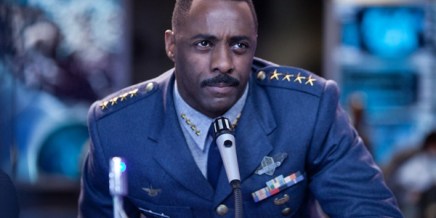
Idris Elba, an actor I really like, plays Stacker Pentecost (don’t you love that name?). He’s the commanding officer of the operation. Charlie Hunnan plays the risk-taking Raleigh who’s called back into service after a past tragedy. Rinko Kikuchi plays a very capable potential pilot whose shrouded in mystery. We even get Ron Perlman, a del Toro favorite, as a slimy black market seller of creature parts. Yes, it’s as strange as it sounds but Perlman has a blast with it. There are also several other good characters sprinkled throughout the story who are surprisingly well fleshed out and a lot of fun.

pacific rim 2

Contrary to what you may think, this isn’t just a constant barrage of beast versus machine combat. Del Toro spends a lot of time unwrapping these characters which was surprisingly effective. In fact the entire middle portion of the movie gets away from the action and spends its time setting up relationships and building its characters. Most of the time this worked but honestly the movie did spin its wheels a little here. I felt it took a tad to much time away from the Jaegers and I was pretty happy when they were back in the picture. But I don’t want to downplay what he does with the characters. They are so much more well-rounded that I would imagine.

Still, the real meat and potatoes of “Pacific Rim” are the robots, monsters, and the enormous action set pieces surrounding them. And let me just say they look spectacular. The geek boy in me was giddy with pleasure whenever del Toro’s creations took center stage. The near flawless CGI is really something to behold. Clearly there is a ton of it, sometimes with full sequences of nothing put computer generated effects. But it looks so amazing and del Toro’s imagination shown in his creations is loads of fun. And even as preposterous as the whole thing was, I had absolutely no problem buying into all.

So what can I say? “Pacific Rim” really surprised me. Just like many others, I feared this could be just another of those mind-numbing “Transformers” films. Boy was I wrong. It’s good science fiction and it’s good storytelling. More importantly to me it’s a wonderful hearken back to an old genre of movies that I’m still crazy about. The 1950’s sci-fi creature features are movies that many modern moviegoers aren’t familiar with. Personally I love them and “Pacific Rim” shows me del Toro does too. Hats off to him.

VERDICT – 3.5 STARS