REVIEW: “Red Dawn” (1984)

I’m not sure if there was any movie in the 80’s that I watched more than “Red Dawn”. How my VHS copy was able to withstand the multiple viewings during my teen years is beyond me. This 1984 war film from director John Milius is a unique, almost “what if” story anchored in 1980s world politics. With the trailer of the upcoming remake already released, I felt it was the perfect time revisit what was one of my favorite movies of its decade. “Red Dawn” was a popular movie that stirred lots of conversations particularly for those craving something political to harp on. It was also criticized for its violence which at that time was considered heavy. In fact, the movie has the distinction of being the first film to receive a PG-13 rating from the MPAA.

But how is the movie itself? Even more interesting, how does “Red Dawn” hold up after all these years? I thought a cool way to help me determine this would be to watch it with my son and see how he responded after his first viewing. It was pretty telling to see him have a similar reaction to the one I had over 25 years ago. For my son, it was an exciting action movie. For me, it’s still a really good film built around good characters that holds up exceptionally well. For those looking, there are certainly things to nitpick. But I find the film’s few weaknesses easy to overlook considering how well conceived and well structured the movie is. And even after all these years I found myself excited when I was supposed to be excited and emotional when I was supposed to be emotional. For me it still pulls the right strings.

“Red Dawn” begins with one of my personal favorite openings of any movie. It doesn’t waste time and gets right into the meat of the story. In the small town of Calumet, Colorado, Jed Eckert (Patrick Swayze) drops his younger brother Matt (a sane and stable Charlie Sheen) and friend Aardvark (Doug Toby) off at school. It’s just another normal September morning. But later during history class, their teacher notices a large group of paratroopers landing outside. He walks out to see what’s going on and is shot dead as the students watch from inside. The paratroopers then open fire on the school as kids scramble to get away. Jed drives up amid the chaos and picks up Matt and Aardvark along with Robert (C. Thomas Howell), Daryl (Darren Dalton), and Danny (Brad Savage). The boys tear through town and then head for the mountains to hide out.

One of the most compelling things about the story is that these are just kids. We’re constantly reminded that we aren’t dealing with trained soldiers but kids who are suffering through fear, panic, and eventually loss. In fact, after seeing the new trailer, one of my biggest concerns about the upcoming remake is that the kids come across as a cool special ops-like team. But a big part of what propels the original is their fear – fear of their circumstances, fear of losing their families, fear of death. But they are forced to overcome their fears and when the harsh reality of this new war-torn country shows itself to them, they’re forced to grow up fast.

As the movie unfolds, the kids have to fight back. There’s no deeply strategic military influence to their actions. It’s strictly guerilla warfare against what we find out are Russian and Cuban forces. They take on the moniker “Wolverines”, named after the school’s sports mascot, and begin complicating things for the enemy army by attacking caravans, freeing prisoners, and sabotaging strategic checkpoints. The action is very well done and it progresses from bows and arrows and hunting rifles to mounted machine guns and RPGs. But what’s really impressive is how the group progresses. The way it’s presented, I had no trouble believing that these kids had adapted as the stakes got higher. Sure, some of the shouts of “Wolverines” are cheesy, but the action is thrilling and it’s truly pertinent to the story.

The boys end up taking on the two granddaughters of a local rancher, Erica (Lea Thompson) and Toni (Jennifer Grey). At first there is some tension between the girls and the guys but soon they’re fighting right alongside of each other. They also are joined by a United States Air Force pilot (Powers Boothe) whose plane is shot down in their area. He gives them a better understanding of the gravity of the war as well as some much-needed experience that pushes their “operation” a little further. These characters mix in well and it doesn’t take long before you actually feel invested in them as well. They each have their place in the story and I still found myself caring for them especially when things begin to go bad for the group.

The entire idea behind “Red Dawn” can certainly be viewed as preposterous. But there is still a grounded and sincerely human element to the film that doesn’t feel a bit outlandish. Again, the politics of the 80’s and the international tensions of the time plays a key part in setting up the story and understanding them will definitely make the movie feel more real. But overall this is an action picture. It takes an intriguing story built around an interesting concept and some good chemistry and creates a movie that feels very 80’s-ish while also still holding up today. I’m still skeptical about the remake, but I have no qualm with calling the original “Red Dawn” a really good movie.

VERDICT – 4.5 STARS

4-5-stars

REVIEW: “The Red Balloon”

Classic Movie SpotlightRED BALLOON“The Red Balloon” is a 1956 short film written, produced, and directed by French filmmaker Albert Lamorisse. It was filmed in and takes place in the Belleville neighborhood in Paris and follows a little boy who discovers a bright red, helium filled balloon. The film is simple but it’s one of the most tender and enchanting pictures you’ll have the pleasure of watching. At only 34 minutes long, it manages to pack more heart and authenticity into it’s running time than most feature-length movies of today.

Young Pascal (played by Lamorisse’s son Pascal) discovers a beautiful red balloon on his way to school one morning. He proudly walks along the streets of Paris with his new balloon while encountering a wide assortment of people, some friendly and some not so friendly. But over time we begin to believe the balloon has a mind of its own and a wonderful relationship develops between it and Pascal. It’s hard to believe but Lamorisse manages to make the balloon a true character in the film and we have no problems investing in this little boy’s attraction to and love for his red balloon.

We the audience basically just sit back and watch this young boy. There is almost no dialogue throughout the film, only a beautiful and appropriate score used at just the right times. But dialogue isn’t needed. The visual narrative is perfectly structured and paced and there’s not one thing that more dialogue could add that would improve on what we’re given. Young Pascal’s expressions, the beauty of Paris – even in this working class area, the amazing handling of the balloon, and the incredible camera work all contribute to grabbing us and wrapping us up in the wonderfully visual story.

“The Red Balloon” has received a lot of praise and rightly so. In fact, it’s one of the few short films to ever win a major Academy Award category (Best Original Screenplay). I was completely engaged throughout this short picture. And even during the couple of times where I felt I was missing what Lamorisse was saying, I was still wrapped up. “The Red Balloon” is a magical meditation on the innocence of a child’s imagination meeting the harshness of reality. But there’s more to it than just that and for my money, it’s one of those rare movies that is impossible to dislike. If you haven’t seen it, take 34 minutes and experience it. It’s worth the time.
VERDICT – 4.5 STARS

“THE RAID: REDEMPTION” – 3.5 STARS

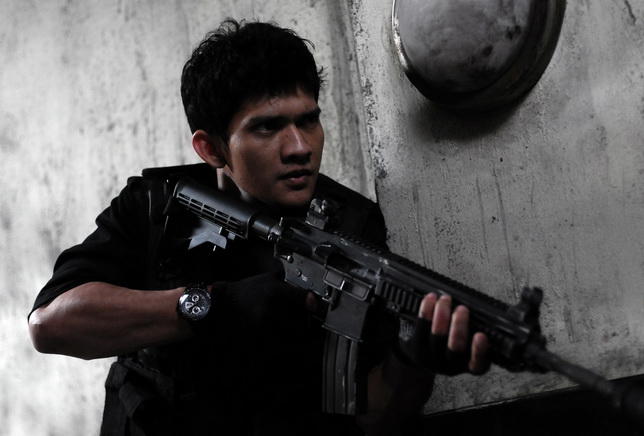
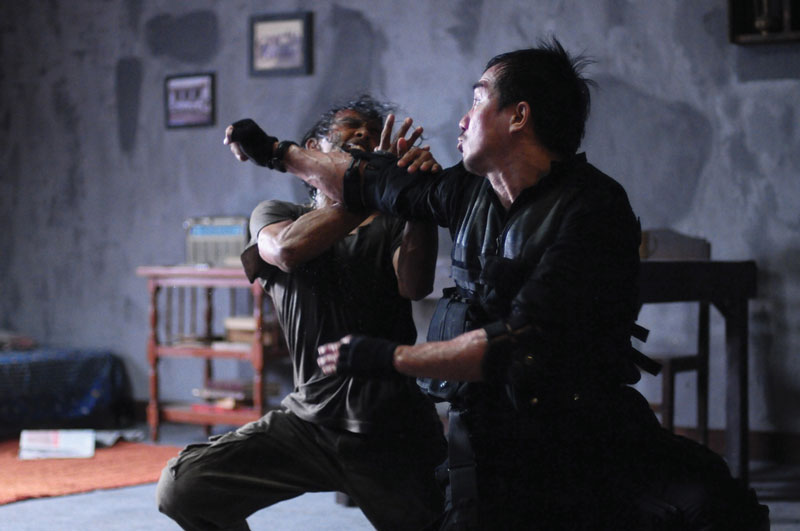
Relentless, brutal, and unapologetic. These are three words that perfectly describe writer and director Gareth Evans’ Indonesian action picture “The Raid: Redemption”. This isn’t a movie for the faint of heart. It’s a bloody ballet filled with kicks, punches, broken bones, blades, and bullets. The action is furious and non-stop and Evans makes no bones about the type of movie he’s making. It’s heart-pounding and occasionally thrilling, but don’t expect much in terms of plot or character development.

When it comes to its story, “The Raid: Redemption” is about as simple as it gets. An expectant father named Rama (Iko Uwais) is a rookie member of an elite SWAT team who are sent out on a deadly mission to capture an evil drug lord named Tama Riyadi (Ray Sahetapy). Tama operates out of the top floor of an old rundown apartment building. When the SWAT team infiltrates the building, they quickly discover they’re in over their heads. Sealed in from the outside and up against waves of Tami’s killers, the team has to fight their way from one floor to the next trying to make it out alive. I actually stretched the synopsis out longer than necessary. This is really just a concoction to set the stage for a series of intense and quite honestly impressive fight sequences. The story does throw a couple of curve balls to try to make the plot a little more interesting, but in the end it’s not the story that you’ll be talking about.

Now to be fair, Evans doesn’t intend to create a deep, thought-provoking, narrative. That is a straight-forward, in your face, action picture and the action doesn’t disappoint. In fact, I would go as far as to say that “The Raid: Redemption” features some of the most intense “WOW”-inducing fight scenes you’ll find. The movie is a steady mix of gritty gun play and 80’s-styled chopsocky kung fu. What separates the film from so many other action romps is the slick style in which it’s filmed. Evans uses some fantastic camera tricks to give the scenes a stimulating and unique look. I was also amazed at the way he was able to make the action so clear and vivid within the confined spaces of small rooms, narrow hallways, and congested stairwells.

But perhaps my biggest praise is with the way Evans stayed away from so many of the modern action movie conventions that we’ve seen over and over. I’m mainly speaking of the ridiculously overused herky-jerky handheld cameras and frantic editing that so many filmmakers employ to give their action scenes a feel of “chaos”. Here, Evans is much more about letting us clearly visualize the incredible stunt work, fight choreography, and special effects. That’s what gives this movie a more genuine sense of chaos and intensity than other films. It also helps that the movie features some amazing martial artists led by Iko Uwais. Often times the camera will just pull back and we’re allowed to watched these guys show off their skills. Gimmicks aren’t needed. These guys are truly amazing and when they start swinging and kicking you can’t take your eyes off of them.

As I’ve mentioned, “The Raid: Redemption” is a hyper-violent film and it doesn’t shy away from the blood. Throats are slit, necks are broken, and bullets rip through people throughout. But at the risk of sounding completely contradictory, the violence doesn’t come across as overly gratuitous. In many instances these are realistic depictions of violence and while the movie shows it, rarely does the camera linger on it. There are also several moments where the camera turns away at just the right time to make you cringe but without showing you what you know has happened. There’s plenty of blood but it’s presented in a way that makes it much more than a graphic gore-fest.

The idea behind “The Raid: Redemption” is a good one especially for those intrigued by fast-paced, video game styled action. The concept of a group of men trapped in huge apartment building filled with baddies is exciting and there is a genuine tension that flows throughout the film from the moment the SWAT team realizes they’re trapped until the final scene. Unfortunately at the end all I could reflect back on was the incredible action involving underdeveloped characters that I knew almost nothing about. The movie puts all it’s eggs in one basket and it works really well in that one area. But storywise it suffers. While the film does try to toss in a few bits of drama here and there, they do nothing to help this movie which is fun, kinetic, but ultimately brainless escapism. But is that a bad thing? Not necessarily.

“REAL STEEL” – 3.5 STARS

I think the most surprising statement I’ll make this entire year is this: I liked “Real Steel”. From my perspective, everything about this film’s trailer pointed to disaster. The all too familiar story of a crummy father grudgingly paired with the son he’s never been there for mixed with radio controlled robot boxing. Sound exciting? Well, actually it is. There’s no denying the silliness of the concept on the surface. There’s also no denying that the film uses several clichés and plot devices that we’ve seen before. Yet as predictable as it is, the story has heart and it manages to take a ridiculous idea and make it pure and simple fun.

Hugh Jackman plays Charlie Kenton, a failed father and ex-boxer who travels to county fairs and pool halls with his robot boxer in tow. Charlie loses an ill-advised bet that he doesn’t have the cash to back and he has his mechanical meal ticket destroyed in the process. After his ex-girlfriend dies, Charlie is summoned to a court hearing that will determine custody his son Max (Dakota Moya) who he hasn’t seen in years. His ex-girlfriend’s rich sister and brother-in-law want the boy so Charlie comes up with a plan to sign over custody for $100,000 but he’ll have to keep Max for the summer while the couple is away in Europe.

There’s absolutely no reason to like Charlie. He’s immature, irresponsible, and self-absorbed. But just like every other character Jackman has played, there is something genuinely attractive about Charlie. Jackman brings out an almost natural likability with his performances. Charlie has a certain charm and personality that Jackman nails. You’ll shake your head in disgust at how he flippantly disregards his son but cheer him on through every boxing match. The biggest problem with the character is that his immaturity is a bit overdone. There are a couple of scenes where 11 year-old Max is speaking to his father like I would to my 3 year-old who I caught pulling the cat’s tail. Speaking of Max, Moya does a really nice job selling this hurt and hardened kid to the audience. He does fall victim to a few cheesy lines of dialogue and his occasional potty mouth did nothing to endear the character to me. But for the most part he’s believable as is his relationship to Charlie.

The film takes an almost ‘sports underdog movie’ turn after they find a junked sparring robot. Max immediately adopts the robot and calls him Atom. It’s Atom that plays a key role in bringing father and son together. The pair begin entering Atom into small time fights and notice he’s a little tougher than Charlie gave him credit for. There’s also hints that he may be more than just a lot of metal parts and circuitry.

That brings me to the wonderful special effects presented through a solid mix of computer generated images and animatronic props. The robots look amazing and they perfectly meld into the real world environments around them. This is especially impressive in the numerous scenes with the robots and real human characters together in cramped areas. The fight scenes are loud and bone-jarring and I couldn’t help but smile watching my son take it all in. Believe it or not, this silly concept is so visually flawless that I couldn’t help but be drawn in.

“Real Steel” is a little hammy and it’s very predictable. But it never takes itself too seriously and it knows exactly what it wants to be. It’s a little contrived in some parts but as a dad, even I couldn’t help but get a little misty during a few scenes. Most importantly “Real Steel” is fun. The characters are fun. The robots are fun. The fight sequences are fun. And most importantly, sitting next to my son in the theater soaking all of this up was fun. That’s good enough for me.

REVIEW: “Rear Window”

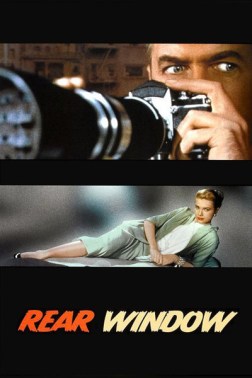
Classic Movie SpotlightREARAlfred Hitchcock’s suspense thriller “Rear Window” is revered by many as one of the director’s finest films. You would have a hard time getting me to disagree. “Rear Window” is a voyeuristic mystery picture that takes place in one single confined location and is all shown from the perspective of the main character. It’s an interesting approach to storytelling but one that’s very effective. There are many recognizable Hitchcockian touches throughout the picture yet it retains a uniqueness that separates it from most of his other films.
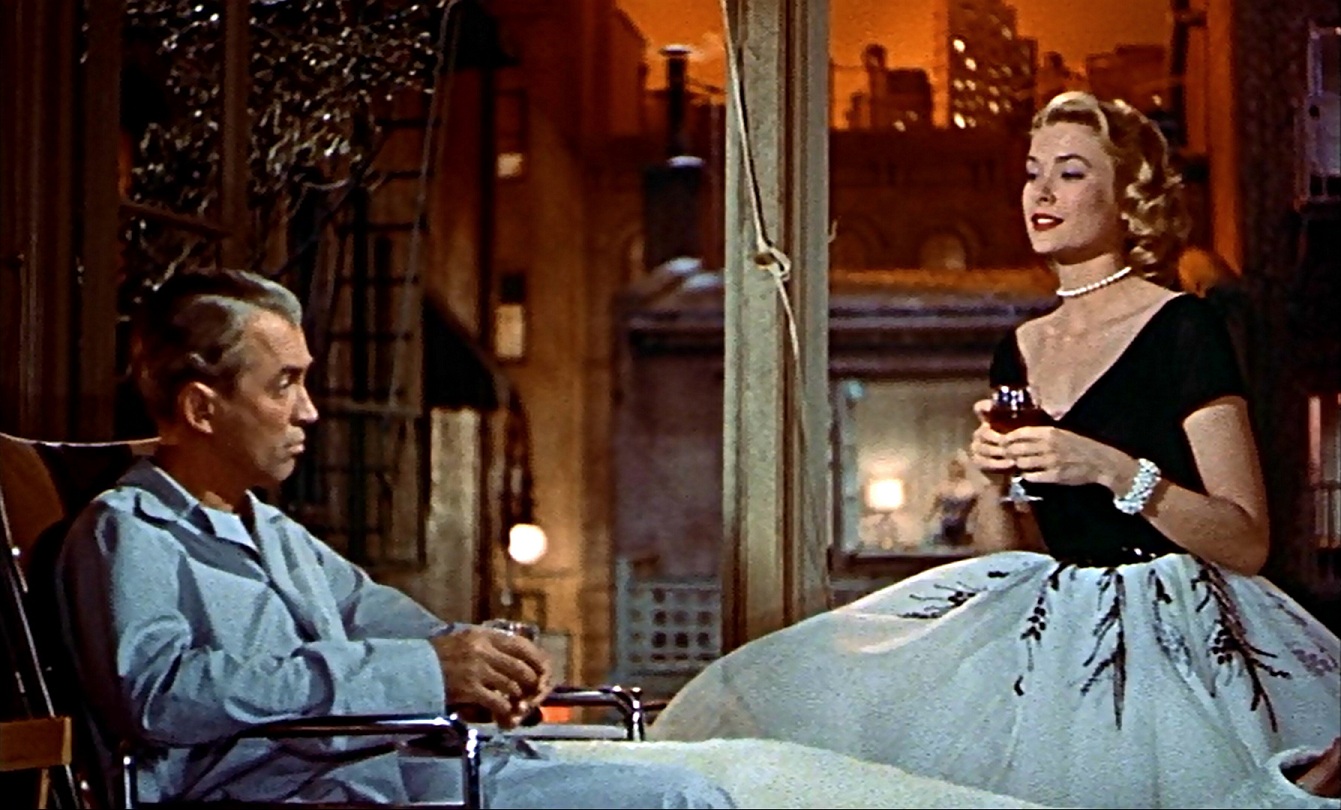

The story is seen through the eyes of L.B. “Jeff” Jeffries, an accomplished photographer who is confined to a wheelchair after breaking his leg while on assignment. He spends his time observing his neighbors through the window of his small Greenwich Village apartment. It grows into an obsession for him as he becomes infatuated with what he sees while peeping through their windows. Jeff is a man filled with insecurities and he seems more comfortable living out his life through the lens of his binoculars. In many ways he’s a sad individual who has so many good things within his grasp yet he lacks the confidence to reach out and take them. He begins to suspect a possible murder in one of the apartments and the second half of the film follows his attempt to either prove it or be disproved.

Hitchcock hits head-on the peeping tom mentality that certainly existed then but that’s even more prevalent in today’s reality tv-fueled society. Jeff crosses the boundaries of simple curiosity into full-blown voyeurism and we are right there with him. I found myself just as riveted by what’s on the other end of the binoculars as he was. Several people try to tell Jeff what he’s doing is wrong including his beautiful girlfriend Lisa (Grace Kelly) and his home nurse Stella (Thelma Ritter), but even they fall victim to this creepy temptation. Yet it’s hard to look down on these three characters. Hitchcock exposes some levels of the same voyeuristic compulsions within the audience as we watch things unfold with the same curiosity-driven intensity as Jeff, Lisa, and Stella. Hitchcock causes us to ask if we’re really that different from them?

REAR1

I was also intrigued with the way Hitchcock introduces and develops some of his characters. We get to know several people simply by watching them through Jeff’s window. There’s the beautiful Miss Torso, a dancer who occasionally practices in her undies and parties with several male suitors; Miss Lonelyhearts, a sad, depressed woman who has dinner dates with imaginary men; Mr. Thorvald and his bedridden wife; a struggling songwriter, a newlywed couple, and several others. What’s amazing is that we learn a lot about these characters simply by what we observe. It’s a beautiful method of storytelling that adds so much to the picture.

“Rear Window” was filmed on what was at the time the largest constructed set at Paramount. The entire picture takes place in this elaborate neighborhood and, with the exception of a small courtyard, it’s close-quartered construction gives it an almost claustrophobic feel. Hitchcock’s camera sleekly captures the characters as they move from window to window and down strategically placed hallways and alleys. Equally impressive is his skillful use of lighting combined with sound that’s centered around a natural ambiance. Simply put, “Rear Window” is a technically savvy picture that accomplishes a lot within a small compact environment.

For my money “Rear Window” is some of Hitchcock’s best work. It’s straightforward and mysterious at the same time and features characters that are more complex than they appear on the surface. It’s really a simple story that’s a little slow out of the gate but soon has you peeping over Jeff’s shoulder gazing into the living rooms of his neighbors. The intensity ratchets up in the final few scenes and the payoff is very satisfying. “Rear Window” is certainly near the top of Hitchcock’s resume and features a special brand of artistry that’s impossible to dislike.

VERDICT – 5 STARS

5 STARSs

5STAR K&M