Review: “Silent Night” (2021)

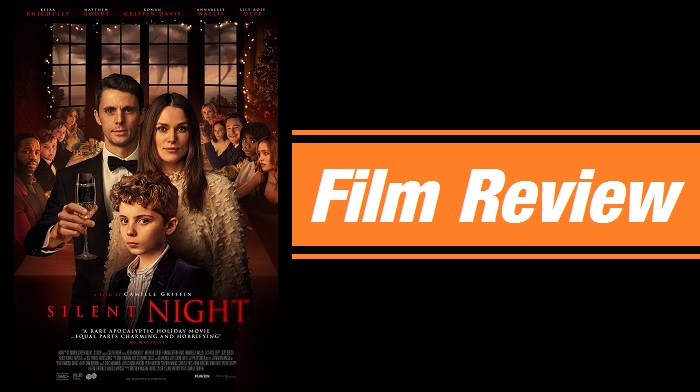
Camille Griffin’s “Silent Night” is a movie built around a compelling premise and with a great ensemble cast to see it through. Sadly, it’s a movie undone by some needless creative choices and a script that channels its ending well before the final act.

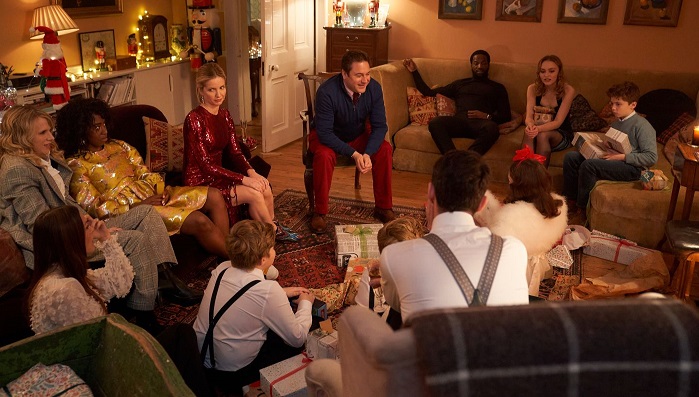
Griffin writes and directs this acidic dark comedy set predominantly at a remote country estate where a group of old boarding school friends come together for Christmas dinner. The weekend festivities are put on by Nell (Keira Knightley) and her husband Simon (Matthew Goode). They have three boys, the rude and dour Art (Roman Griffin Davis of “Jojo Rabbit”), and twins Thomas and Hardy (Gilby and Hardy Griffin Davis). Interestingly, the three boys are the director’s real-life sons.

Image Courtesy of RLJE Films

Within the first few minutes friends start to arrive. There’s the flirty and pointedly snobbish Sandra (a really good Annabelle Wallis) and her aggressively boring husband Tony (Rufus Jones). There’s James (Sope Dirisu) and his young American girlfriend Sophie (Lily-Rose Depp). And there’s the least interesting couple, Alex (Kirby Howell-Baptiste) and Bella (Lucy Punch). “Tonight is all about love and forgiveness,” Nell proclaims with both trepidation and uncertainty. Wishful thinking.

It doesn’t take long to realize that this gathering won’t be a joyous occasion. In fact, this is a dismal and toxic bunch whose friendly greetings quickly curdle into tactless insults and impudence. They would actually be fascinating to watch if Griffin’s writing didn’t handcuff them with her strange approach to dialogue. Every character (and I do mean every, including the children) spit profanity like they’re auditioning for a Tarantino movie. I’m not on a high horse, I just can’t figure out the point of it. The movie itself even makes an effort to reference its crude language more than once so it’s clearly an intentional decision. The problem is it feels intentional rather than natural and quickly becomes a distraction.

While the movie sets itself during Christmas, the holiday is nothing more than a plot device to get everyone together. A couple of ungainly gags and the strangely out of place Christmas music is really all the Yuletide allusions you can expect. Instead there’s something far more ominous behind their get-together. It turns out that they’ve gathered on the eve of the apocalypse. A noxious storm full of life-killing poison gas is sweeping across the globe. Scientists warn that inhalation is unavoidable and will lead to an excruciating death. As a result, the world’s governments have sanctioned a pill that will ensure a pain-free demise. It’s all part of their “Die With Dignity” campaign.

Image Courtesy of RLJE Films

As you can tell, the premise leaves plenty for Griffin to explore: moral questions, existential questions, sociopolitical questions, etc. Themes of mortality, government, science, and parenting just scratch the surface. It’s such fertile ground to dig into. Sadly, we have to wade through a lot of upper-crust bickering over petty nonsense to finally reach the point where the movie has something concrete to say. Yes there’s the occasional laughably one-the-nose conversation such as Simon talking to Art about immigration. But for the most part, it takes waiting for the final act to really get into the interesting stuff.

To the casts credit everyone gives it their all. Despite being handed mostly one-dimensional characters, there’s not a bad performance to be found. Knightley, Wallis, Dirisu, and Depp are especially good. But they can only carry so much of the load. While Griffin’s direction is savvy and efficient, her script is full of confounding choices that underserves the characters and squashes the film’s potential. It’s yet another example of a movie that left me wishing for what it could have been rather than enjoying what it actually is. “Silent Night” is set to release December 3rd.

VERDICT2 STARS

REVIEW: “Spencer” (2021)

(CLICK HERE to read my full review in the Arkansas Democrat-Gazette)

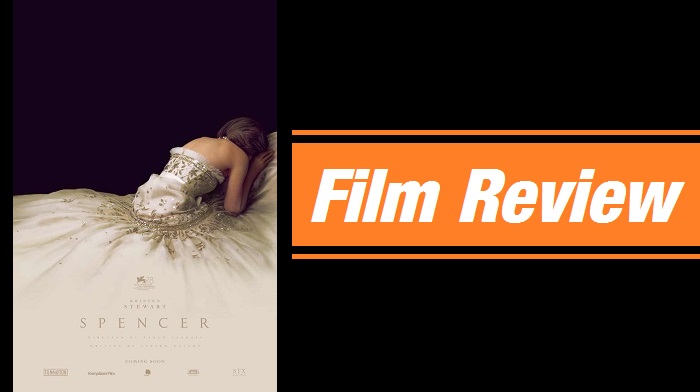
Kristen Stewart meets Diana, Princess of Wales in Pablo Larraín’s strange yet hypnotic “Spencer”, a hard to define psychological drama that describes itself as “A fable from a true tragedy.” In essence “Spencer” is a dark and sometimes gnarly fantasy taken as much from the imagination of a filmmaker as from the real-life history of one Britain’s most beloved yet troubled members of Royal Family.

With millions watching around the world, Diana Frances Spencer and Charles, Prince of Wales were married in 1981 at London’s St. Paul’s Cathedral. But after only a few short years the cracks in their marriage began to show largely due to the couple’s incompatibility along with their extramarital affairs. The press inevitably got wind of their strained relationship leading to them separating in 1992.

Larraín and screenwriter Steven Knight set their story in 1991, mere months before Charles and Diana’s highly publicized split. It’s Christmas time and the Royal Family are gathering at the Queen’s sprawling Sandringham House in Norfolk to celebrate the holiday in their own starchy and suffocatingly formal way. What Larraín gives us is a speculative imagining of what might have happened during that chilly three-day weekend.

Image Courtesy of NEON

Told almost entirely from Diana’s point-of-view, “Spencer” bucks the restraints of facts and uses its liberty to burrow into the murky psychology of the dispirited Princess. It has a lot in common with Larraín’s “Jackie” from 2016, another film about a prominent woman caught in the gears of a high-pressure machine. Here the storytelling uses everything from twisted dream sequences to blunt metaphors to the brooding and mannered Stewart in its efforts to get inside Diana’s head.

The movie opens with a series of spectacular shots of the Sandringham property, each bathed in a radiant dreamlike glow and accompanied by a cacophony of warped melodies from composer Jonny Greenwood. We watch as a convoy of military trucks loaded with what looks like weapons crates arrive on Christmas Eve. Soldiers march the crates to the kitchen where head chef Darren McGrady (Sean Harris) awaits. Inside them aren’t automatic rifles or explosives. Rather they’re full of exquisite edibles – iced-down lobster, fresh vegetables, exotic fruits. As the soldiers march out, McGrady’s brigade of cooks march in to begin preparations.

A short scene later, all the Royals have arrived with one exception. Diane zips along a country road in her black convertible, lost in an area that she should know well. It’s where she grew up as a child, only minutes away from Sandringham. She pulls into a small roadside cafe and steps out of the car. Her well-known face, stylish blonde bob and chic runway-ready wardrobe are dead giveaways. The Princess of Wales steps inside the meager establishment and casually asks the stunned patrons, “Where am I?”

The opening ten minutes give a good taste of the figurative language and dashes of absurdity sprinkled throughout “Spencer”. But it’s when Diane finally arrives at the Windsor estate that we get a better grip on what the movie is going for. Larraín’s camera stalks the unraveling Lady Di as she roams the long halls and shuffles from room to room (each adorned in stunning yet gaudy opulence by production designer Guy Hendrix Dyas). Diana skulks around to avoid the demanding first family, snapping at the unfortunate servants who come calling.

Image Courtesy of NEON

The stuffy unapproachable Royals are more story pieces than fleshed out characters. Charles (Jack Farthing) is portrayed as a leering unsupportive prig while Queen Elizabeth (Stella Gonet) is an imposing presence who speaks volumes with a look and a few words. But “Spencer” isn’t their story, it’s Diana’s. And the film takes aim at the Windsor’s haughty insulated existence every chance it gets. Only in the moments with her sons William (Jack Nielen) and Harry (Freddie Spry) do we see Diane happy, not as a princess but as a mother.

As the movie progresses it may seem like nothing’s going on, but eventually things come into focus. Larraín and Knight paint a vivid picture of a woman pushed to the brink by a smothering, oppressive aristocratic machine. Uncomfortable scenes revealing depression, self-harm, and bulimia highlight the depths of her decline. But then there’s a shift as Diana begins to take control of her life. And as the title suggests, she’ll need to look to her past before she can move forward.

The metaphors can get too obvious and not all of Larraín’s liberties work (most notably a peculiar and underdeveloped friendship between Diana and her fictional dresser played by Sally Hawkins). Yet it’s hard not to be sucked into this deliciously irreverent spin on British Royalty that won’t win any fans within the House of Windsor, but should win over any remaining Kristen Stewart skeptics. It’s the performance of her career and one that you’re going to hear a lot about this awards season. “Spencer” is out now in theaters.

VERDICT – 4 STARS

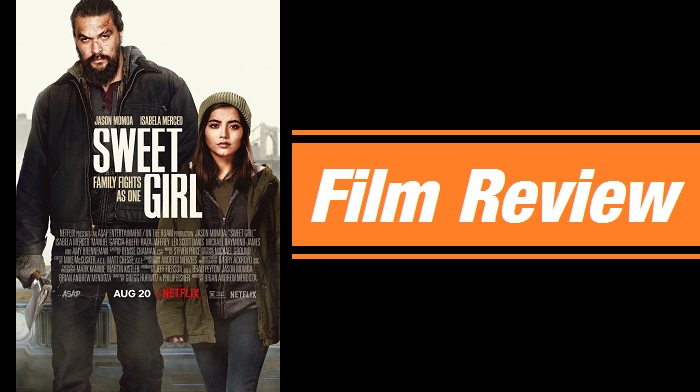
REVIEW: “Sweet Girl” (2021)

Netflix’s “Sweet Girl” starts with a bang. The very first scene sees none other than Aquaman himself Jason Momoa standing on the roof of PNC Park in Pittsburgh. The blinding spotlight from a police helicopter beams down on him while FBI agents quickly converge. “It wasn’t supposed to be like this”, he painfully utters before leaping off the ledge and plunging deep into the Allegheny River.

That harrowing opening will be revisited later in “Sweet Girl”, a fast-moving propulsive thriller from first time feature film director Brian Andrew Mendoza. The movie has a lot on its mind and is full of ambition which is something I always respect. But (of course) it’s possible to bite off more than you can chew and sometimes things look better on paper than they do on screen.

The story (co-written by Philip Eisner and Greg Hurwitz) follows its energetic opening by taking us back several years where a loving family of three unravels after the matriarch dies of cancer. To make matters worse, we learn that a generic version of a drug that could have extended her life was squashed by a wealthier and more powerful pharmaceutical company called BIOPRIME. These early scenes are some of the film’s best and they do a good job conveying the pain that drives her widow Ray (Momoa) and their daughter Rachel (Isabela Merced) through the rest of the movie.

Image Courtesy of Netflix

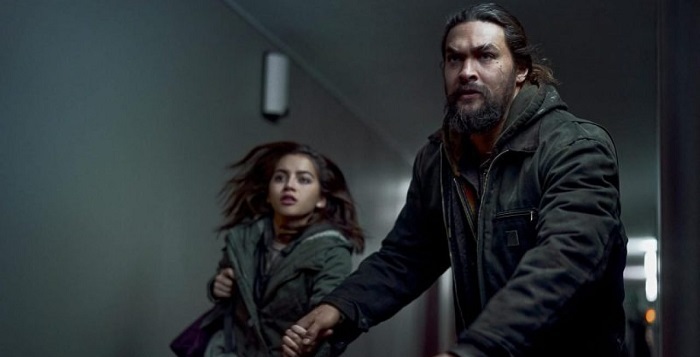
Six months pass and Ray is still mourning and hanging on by a string. He’s contacted by a spooked journalist with damning evidence linking the soulless and smarmy BIOPRIME CEO (Justin Bartha) to all sorts of nefarious shenanigans. Ray wants to hear more, but soon he finds himself and Rachel neck-deep in a conspiracy that very powerful people will do anything to keep quiet.

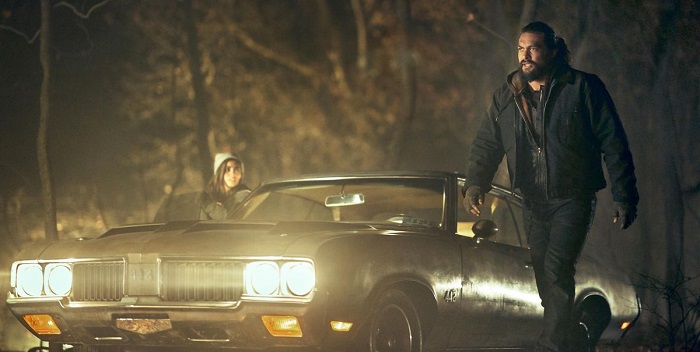
A dead body or two later and the daddy-daughter duo are on the run from the FBI, armed corporate goons, and one particularly psychopathic hitman (Manuel Garcia-Rulfo). Meanwhile big pharma and Congress buddy up and Ray learns the corruption goes a lot deep than one greedy company.

It goes without saying that “Sweet Girl” delves into a lot of relevant material worthy of exposure and critique. And does an admirable job pointing a finger at some very real issues. But that’s about all it does, and it’s surface treatment doesn’t really get to the heart of the problem much less how to fix it.

Image Courtesy of Netflix

But in the movie’s defense it’s not really going for anything like that. Instead Mendoza crafts what amounts to a throwback action thriller that allows the beefy Momoa to let loose in a number of intense and well-shot fight scenes. It’s a pretty solid performance from Momoa who’s only outdone by Merced who has a youthful innocence but also a grit and tenacity that really amps in the final act.

Aaaaand about that final act. It would be a dereliction of duty if I didn’t mention the ‘big twist’ that turns the entire movie on its head. In one sense I love the audacity and to be honest, I worked hard to try and make it work. But it’s such a wild and outrageous turn and making it fit with everything we’ve seen before is too much of a chore. A second viewing does make sense of a few things, but not enough to fully buy what the movie is trying to sell.

The film does have its share of good scenes (there’s a terrific diner scene yanked straight from Michael Mann’s “Heat”) and the action is exciting more often than not. There’s also a good father/daughter chemistry between Momoa and Merced that drives most of the story and legitimately makes us care. At least until the movie pulls the rug out from under us with a plot twist that’s far more gutsy than effective. Still, Mendoza kept me locked into his story, confused and frustrated at times, but entertained throughout. And sometimes that’s all I really need. “Sweet Girl” is now streaming on Netflix.

VERDICT – 3 STARS

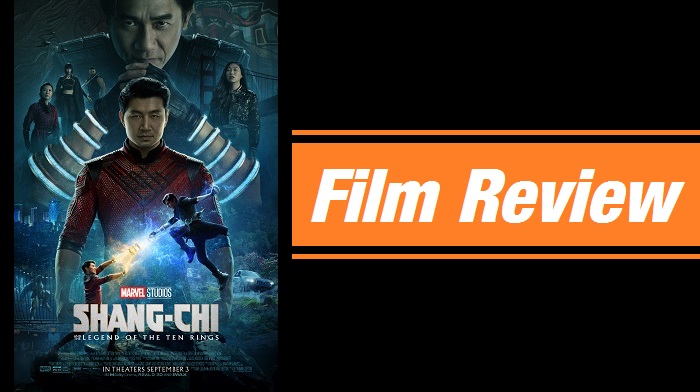
REVIEW: “Shang-Chi and the Legend of the Ten Rings” (2021)

And so begins a new era of the Marvel Cinematic Universe. Yes, I know some rebranding and retooling has already been underway via their Disney+ streaming shows. But this is the MCU’s first big screen endeavor that is untethered from the brand’s most iconic characters – the ones who launched the lucrative multi-pronged franchise into the cinema stratosphere. Gone is Iron Man, Steve Rogers, Black Widow and Hulk. Now enter a new wave of money-making superheroes.

To be totally honest, I find I’m not nearly as jazzed for the MCU now as I was during its previous twenty-some-odd movies. Much of it has to do with the absence of those iconic characters mentioned above. Then you have other factors such as the heart-wrenching loss of Chadwick Boseman, Thor being turned into a comedy act, the up-and-down quality of the streaming shows. And frankly, I’m just not sold that this new, freshly-picked band of superheroes can carry the same weight as their predecessors. Then again, everything Marvel Studios touches turns to gold and its loyal fan base will pretty much follow them wherever they go.

“Shang-Chi and the Legend of the Ten Rings” is the 25th big screen installment in the Marvel Cinematic Universe and the first to feature a predominately Asian cast. The film is directed by Destin Daniel Cretton and is a huge departure from his previous work that includes smaller and more intimate dramas like “Short Term 12”, “The Glass Castle” and “Just Mercy”. Here Cretton gets full access to Marvel/Disney’s wallet and puts it to good use.

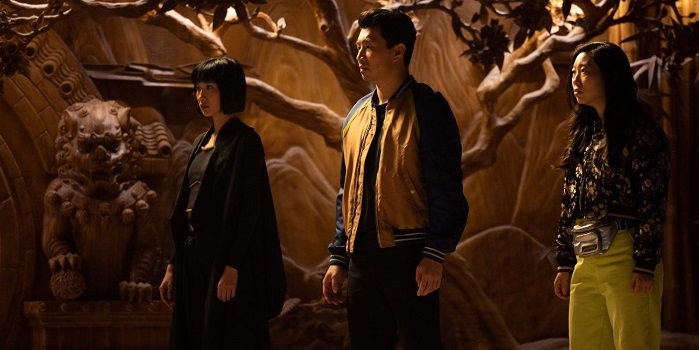
Image Courtesy of Marvel Studios

“Shang-Chi” wasn’t the easiest sell even with the MCU’s enormous clout. But Kevin Feige and his team of wizards once again show that good casting and a good story will often sell itself. That’s not to say there aren’t flaws. A few issues with the writing and the direction keep “Shang-Chi” from being top-tier MCU. But you’ll find that there is enough scattered throughout the film’s 132 minutes to keep you entertained.

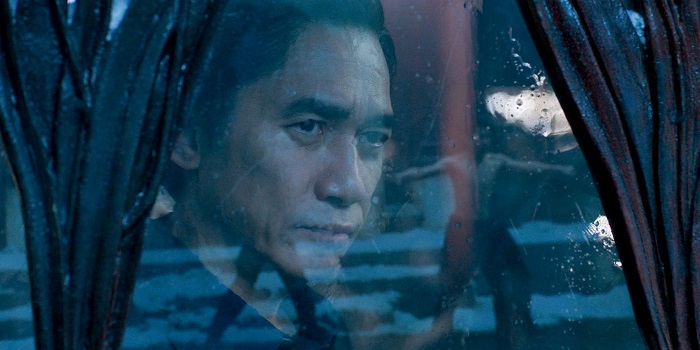
The titular character is played by Simu Liu, a relative newcomer to the big screen who quickly acclimates himself to blockbuster leading man status. His Shang-Chi character is someone who has done everything he could to bury his complicated past. At 7-years-old he was trained by his father Wenwu (Tony Leung) to be an assassin. At 14 he was assigned his first hit. But rather than carrying it out, Shang-Chi fled.

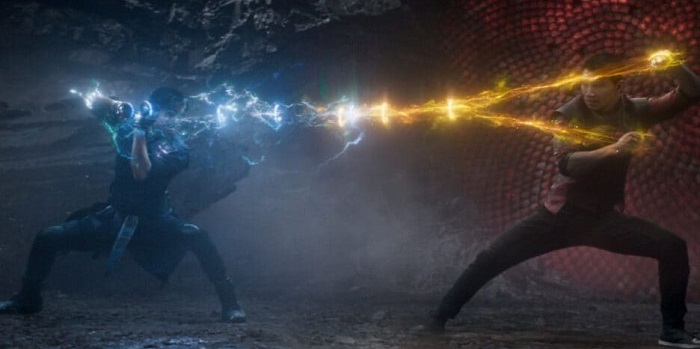
That was 10 years ago. Now Shang-Chi, hiding under the name of Shaun, is in San Francisco working as a hotel valet with his best friend Katy (Awkwafina). But you can only run from your past for so long, especially when your dad is the leader of the ruthless Ten Rings organization. Before long Shang-Chi is fighting off assassins, reconnecting with his estranged sister Xialing (Meng’er Zhang) and of course coming face-to-face with his father who is empowered by ten magical rings. It’s funny, we never get much of an explanation for the rings – their power, their origin, how they’re wielded, etc. It’s one of several places where the Cretton skimps on the details.

Image Courtesy of Marvel Studios

Simu Liu does well in the lead role, a little stiff at times, but surprisingly witty and lights-out during the fight sequences. The film’s two best action scenes come in the first thirty minutes, one on a bus ride and other along scaffolding attached to a skyscraper. Liu’s physicality is impressive and often breathtaking. Awkwafina gets the short end of the stick. She does the best she can with a script that pins her down as the overly chatty comic relief. The rare dramatic moments we get from her are really good. But far too often she’s reserved to being the jokey sidekick.

The great Tony Leung brings several layers of emotional complexity to the reworked Wenwu. He’s not just some nefarious powermonger who’s really mean to his children. We learn he is a man driven mad by grief. He and his family fell apart following the death of his wife and Shang-Chi’s mother Jiang Li (played by Fala Chen who gives what may be the movie’s best performance). Now he’s on a misguided quest that’s driven by a relatable pain but carried out with a sociopathic edge.

Several other great faces pop up along the way. The always terrific Michelle Yeoh plays Shang-Chi’s aunt and the guardian of a hidden mystical land called Ta Lo. There are a couple more appearances that I’ll let you discover for yourself, but both are fantastic for much different reasons. On the more frustrating side, the movie introduces us to Death-Dealer (Andy Le), a lethal assassin for the Ten Rings who has an interesting history in the comics. Here he is a captivating and menacing presence through most of the film only to end up wasted. It’s similar to the Taskmaster botch in “Black Widow”.

Image Courtesy of Marvel Studios

“Shang-Chi” starts strong and sets itself up well. But then we get to the much slower middle that gets bogged down sifting through all of the old family baggage. What makes it drag is the strange choice to explain the family history through exposition only to then show it visually through flashbacks (with a few extra details). It’s actually interesting and I applaud the writing team for taking the time to flesh out these relationships. But the pacing is too slow and it leaves us hungry for the next action bit.

Later on things move to the fantastical as we’re introduced to flying soul-suckers, water dragons and the mysterious Dark Gate. As before, none of them are explained particularly well. You’re supposed to just go with it. And in keeping with the standard MCU formula, it all leads to a big, loud, CGI-soaked finale – quite possibly the most CGI-heavy finish they’ve done yet (and that’s saying something). For the most part it looks good, but the visuals can get a little murky and it reaches a point where some of Cretton’s shots start to feel repetitive.

Still, “Shang-Chi and the Legend of the Ten Rings” is a nice new installment into the Marvel Cinematic Universe. The awesome fight choreography hearkens back to the heyday of classic Kung Fu cinema which goes nicely with the cool nods to everything from “Crouching Tiger, Hidden Dragon” to “Jurassic Park”. The deeper story of a young man wrestling with his past and eventually finding himself is a good one and the wonderful cast help bring that story to life. Unfortunately the nagging issues do bring it down a bit. But the movie still feels fresh and it ultimately delivers where it counts most. “Shang-Chi and the Legend of the Ten Rings” opens in theaters today.

VERDICT – 3.5 STARS

REVIEW: “The Suicide Squad” (2021)

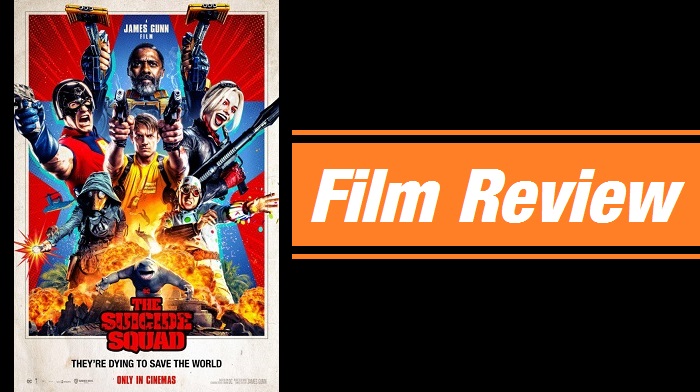
James Gunn’s road to “The Suicide Squad” was a bumpy one starting with his temporary firing by Disney in 2018 after some pretty vile and bone-headed tweets from years earlier resurfaced. Within three months after his dismissal from the House of Mouse he was hired by Warner Bros. to makes a DCEU movie. For some reason the studio wanted him to do a Superman movie, but he (thankfully) turned it down. When asked what DC property he would like to adapt, his choice was (obviously) Suicide Squad.

Warner Bros. had already taken a shot at a Suicide Squad film with their 2016 David Ayer and Will Smith debacle. The universally panned disaster really only got high marks for one thing – Margot Robbie’s delightfully psychotic portrayal of Harley Quinn. But now we get Gunn’s film, a brazenly R-rated big-budget do-over that seeks to set itself apart by going the “Deadpool” route. And if there’s one thing those oddly beloved Ryan Reynolds flicks have shown us, it’s that sometimes all you need is blood, boobs and a boatload of f-bombs to get an audience.

But there’s a little something more to James Gunn’s “The Suicide Squad” that the “Deadpool” movies didn’t have. Yes, it fully embraces the same delusion that soaking a superhero movie in profanity somehow makes it cooler and edgier. And yes, sometimes it uses its graphic violence as an attention-getting crutch. And Gunn (who serves as writer and director) turns too many of his characters into nothing more than walking punchlines. Yet among all the violence and laughs (and there are many) is and actual heart. It’s often dark and twisted and sometimes hard to find, but it’s heart nonetheless.

Image Courtesy of Warner Bros.

Gunn straddles a fine line with “The Suicide Squad”, not always perfectly but well enough to get by. Too often you can see him actively working for his R-rating. Other times he gets too caught up in the whole “from the horribly beautiful mind of James Gunn” persona. On the other hand, Gunn’s love for his large batch of characters is evident from the start and even the smallest villain-turned-antihero gets a cool action beat or funny gag all to themselves. And while the violence is graphic (heads blow up, limbs are sliced off, throats are slit, torsos are ripped in half), so much of it is over-the-top and played for laughs. And in a weird (but undeniably entertaining) way, the blood-n-gore helps define this wacky little pocket of the DCEU where a movie like this can exist.

The story is pretty basic – assemble a team of imprisoned supervillains and send them on an extremely dangerous yet critically important mission for the US government. It’s unlikely that the violent cons will survive, but if they do they get ten years knocked off their sentence. That’s the gist of it. There’s some international conspiracy mumbo-jumbo with some base-level foreign policy critique that pops up later. But mostly it’s Gunn letting his ragtag band of homicidal screw-ups off their leashes and then running them through the meat grinder.

Under the stone-faced supervision of the ever-grumpy government liaison Amanda Waller (Viola Davis), Task Force X (because the murderous yet sensitive team considers the name Suicide Squad “degrading”) is sent to the South American island nation of Corto Maltese. There, a violent military coup has overthrown one hostile government and replaced it with a more subtly megalomaniacal one led by President Silvio Luna (Juan Diego Botto). But the American government’s real target is the island’s scientific research facility named Jotunheim. It houses something known only as Project Starfish, a potentially cataclysmic weapon believed to be extraterrestrial in origin. The squad’s mission is to land undetected on the island, infiltrate the facility and destroy every trace of Project Starfish.

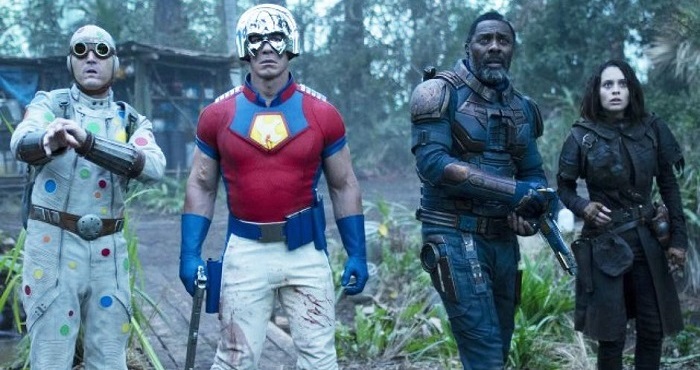
The movie opens with a jolt and instantly lets us know that no one in Gunn’s world is sacred. Colonel Rick Flagg (a returning Joel Kinnaman) is the poor sap assigned to lead Team One while Bloodsport (Idris Elba) heads Team Two. Filling out this unsavory lot is Harley Quinn (an also returning Margot Robbie), the freedom loving buffoon Peacemaker (John Cena), King Shark – a hulking talking shark in swim trunks wonderfully voiced by Sylvester Stallone, Ratcatcher II (an endearing Daniela Melchior) who can summon an army of rats (where they all come from and how they get there so fast are questions better left unasked), and the somber forlorn Polka-Dot Man (David Dastmalchian).

Image Courtesy of Warner Bros.

Numerous other recognizable faces liven up the squad including Jai Courtney returning as Boomerang, Nathan Fillion, Michael Rooker, Pete Davidson, Sean Gunn, and Flula Borg. It’s ultimately this collage of characters mixed with Gunn’s free-wheeling irreverence that drives the movie. The performances are top-to-bottom terrific with Elba, Robbie, Stallone, and Dastmalchian as the standouts. Kinnaman plays a good straight man while Gunn gives Cena a role that perfectly utilizes his limitations. Everyone seems to be in on the joke and (more importantly) onboard with Gunn’s gleefully scuzzy vision.

The movie also looks amazing and you can see every bit of the film’s $185 million budget on screen. This is especially true in the rousing final act that takes the genre’s traditional CGI blowout ending and goes nuts with it. Gunn, his DP Henry Braham, and an insanely talented digital effects team make sure the film finishes on a wildly absurd and visually glorious note. It’s a gonzo finale that will leave audiences laughing and in utter awe.

“The Suicide Squad”, warts and all, is one crazy concoction. In one sense it’s an overly indulgent exercise in style-over-substance. It’s hardly the most seamless story and some of its character bits are too flimsy to resonate (a prime example is a woefully undercooked side-story about Bloodsport and his teenage daughter). But even with its flaws, the film has this uniquely raucous and chaotic pulse and once you get in sync with it you can’t help but have a good time. It had me constantly thinking back to “The Dirty Dozen”, “The Wild Bunch”, “The Expendables” and even the Borg Cubes from “Star Trek”. And that’s the kind of movie James Gunn has made. Not some superhero reheat, but an original spin on the genre that calls back to numerous works while still being unlike anything we’ve seen before.

VERDICT – 3.5 STARS

REVIEW: “Stillwater” (2021)

Tom McCarthy’s new drama “Stillwater” turned several heads and caught many by surprise during its recent premiere at Cannes. On the surface the film looked and sounded like an action thriller about a father leaving his home and going abroad to save his daughter. But that tissue-thin reading misses what the movie is after. “Stillwater” is much more of a character piece and human study built around one of the best performances of Matt Damon’s career.

As an actor, Matt Damon‘s versatility is too often overlooked. From “Good Will Hunting” to the Bourne films; from “Oceans” to “The Martian”; from the grimy underworld of Scorsese’s “The Departed” to the offbeat zaniness of Soderbergh’s “The Informant!”. Damon has been in westerns, war movies, and biopics. And in just a couple of months we’ll see him as a medieval knight in Ridley Scott’s “The Last Duel”. That’s the kind of résumé he brings to “Stillwater” where he takes on the role of stoic Oklahoma roughneck Bill Baker.

Image Courtesy of Focus Features

Damon and McCarthy spent weeks imbedded with real Oklahoma oil drillers both at home and on the job in an effort to get Damon’s character right. Their research paid off and Bill Baker comes off as a real person rather than some bad Red State caricature. That’s crucial because the movie needs for us to believe in Bill but more importantly connect with him on a human level. It’s absolutely necessary.

McCarthy opens his story by giving the audience a snapshot not only of Bill‘s life, but of blue-collar living that will resonate with some and feel completely foreign to others. A shut-down oil rig leaves Bill unemployed and forced to take low paying construction jobs. In the opening scene he’s helping clean up debris in a tornado-ravaged trailer park. After getting paid he stops at a Sonic drive-in and orders a foot-long cheese coney with a large cherry limeade. He takes it home to his small wood-framed house, asks a blessing over his simple dinner and then eats. The evening ends with him sound asleep on the couch with nothing but the flickering glow of the television lighting the room.

That short but detail-rich opening gives us a good sense of the attention McCarthy and Damon give the character. And we get even more when Bill boards a plane and flies to Marseilles, France to visit his daughter Allison (Abigail Breslin) who’s in prison for a murder she says she didn’t commit. Allison has been behind bars for five years and her repeated claims of innocence falls on deaf ears. The local government has no interest in reopening or relitigating her case which is a position Bill just can’t accept. He gets nothing from Allison’s lawyers and he can’t afford the private detectives. So he sets out on his own following a trail that may or may not provide the answers he’s looking for.

There’s a fish-out-of-water element to “Stillwater” that’s essential to the story and rarely played for laughs. Back home Bill would effortlessly blend in, with the kind of average Joe appearance that people would pass and never take notice. But in Marseilles he sticks out like a sore thumb. His thick bushy goatee, a camo cap, his Carhartt button-up shirt tightly tucked into his dark blue Wrangler blue-jeans. And that’s just the physical barrier. There are also language and cultural walls that Bill runs into face-first. In many instances he tries to ram through them rather than look for a door. It’s a compelling part of the story, but it’s also where McCarthy’s scolding touch can get a little heavy.

Image Courtesy of Focus Features

Some of Bill’s enlightenment is predictable – an unsophisticated Okie goes to a foreign country and has his eyes opened – you know the story. And we get some good scenes involving both Bill’s stateside smugness and the local condescension he faces. But much more interesting than Bill’s culture clash or his quest to exonerate his daughter is the deeper and more personal journey Bill takes. Much of this comes after he meets a sympathetic single mother named Virginie (a terrific Camille Cottin) and her precocious young daughter Maya (Lilou Siauvaud). The relationship Bill develops with them brings out a side he didn’t know he had while offering him a chance at personal redemption.

Much like he did with his 2015 film “Spotlight”, Tom McCarthy gives his story all the time it needs to play out. At a hefty 140 minutes, “Stillwater” may stick around a little too long for some audiences. You could probably prune several scenes and the movie would still be fine. But I prefer McCarthy’s approach which keeps the characters front-and-center, giving them and their relationships room to grow even if it means running a little long. “Stillwater” is now showing in theaters everywhere.

VERDICT – 4 STARS