REVIEW: “Silver Linings Playbook”

SILVER POSTER

I can’t say I was all that excited to see “Silver Linings Playbook”. But since its release I’ve heard nothing but positive things about it. The reviews have been unanimously great, and it has popped up on one Top 10 list after another. And then along came awards season. “Silver Linings Playbook” made a huge splash with the Academy, nabbing eight nominations including one in every major category. Now it looks like The Little Engine That Could as it gains more and more momentum heading into Oscar’s big night. So what’s with my reluctance to see this film?

Well let me get this out of the way, “Silver Linings Playbook” is a good film. It’s a sharp romantic comedy that avoids the usual pitfalls associated with the genre today – that is right up until the end. It’s written and directed by David O. Russell which quite honestly was one reason I was in no hurry to see it. I’m not a big fan of Russell’s abrasive and sometimes crass style of storytelling. But I have to hand it to him, even though we do get some of that here, Russell manages to tell a good story and his personal connection to the material is evident.
SILVER2

While Russell wasn’t a draw for me, the cast certainly was. Bradley Cooper plays Pat, a man who, due to his bipolar disorder, has spent eight months in a sanitarium. We learn that after catching his wife having an affair, Pat flies into a rage and beats the man to a pulp. His court agreement says he must receive treatment hence his stay in a mental hospital. He’s eventually released into the care of his parents with hopes of starting a new life and convincing his wife that he is cured. But there’s one problem, she has a restraining order which doesn’t seem to deter him one bit.

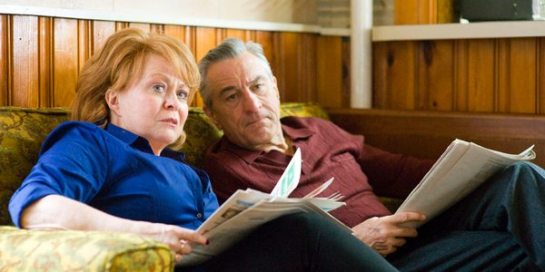
His parents are played by Robert De Niro and Jacki Weaver. Talk about perfect casting. Weaver is very good although most of her scenes put her in the background. It’s De Niro that really stands out, and this is the performance people have been waiting to see again. His character is honest and grounded. He has some hilarious moments, but he also gives us a look at where his son’s disorder may have originated. This was right up De Niro’s alley, and some of the film’s best moments are when he’s on screen, particularly when he’s hashing out his complicated relationship with Pat.

But it’s a troubled young woman named Tiffany (Jennifer Lawrence) who shakes Pat’s life up the most. Since the death of her husband, Tiffany has struggled to keep her life on track. At first the two have no idea how to react to one another. This leads to some really funny moments including conversations about medications and what constitutes a first date. Cooper and Lawrence have a nice chemistry and I was impressed with how well they played off each other. I can’t help but believe that improvisation played a role in their performances because much of their dialogue flows so naturally (especially their more heated discussions). They are two fractured souls and watching them struggle to manage their lives can be both funny and crushing.

Silver1

It would be hard to justify criticism of any of these performances. They are that good. But that doesn’t mean this is a flawless movie. There are a few issues and for me they can be traced back to Russell. There is so much that he does right in the movie, and I don’t want to downplay that. But I did feel it was a little longwinded early on and then there’s the ending. For most of the film things felt fresh, and I thought Russell was plowing new ground. Then things take a conventional and predictable turn. Obviously to keep from spoiling things I have to dance around the details, but you can see the ending coming from a mile away. I kept expecting Russell to steer away from the mainstream course he was on, but it never happened.

Now don’t misunderstand me, there’s nothing wrong with these types of endings. But here it did nothing to set the movie apart from the rest of these types of films. And since that seems to be what Russell was going for (and accomplished for most of the picture), it’s a real head-scratching choice. But enough with the negatives. “Silver Linings Playbook” is a fascinating look at mental illness and its effects on relationships, family, and social life. It’s also a master class in acting, showcasing some of the best performances of the year. Obviously I don’t find it as profound as many do, and I don’t see it as a Best Picture or Best Director Oscar winner. But it deserves praise for taking a difficult subject and nicely wrapping it in humor and emotion. That’s something many films have tried but failed to do.

VERDICT – 3.5 STARS

REVIEW: “Singin’ in the Rain”

SINGIN

They just don’t make movies like this anymore. That may sound like a very cliché and overused statement but when talking about the classic “Singin’ in the Rain” it most certainly fits. This is a film that overflows with the happiness and joy that once was prevalent in motion pictures. In fact, I would challenge any real movie fan to watch this picture and not notice an ever-present grin spread across your face. But this is more than just a happy little dance picture. It’s filled with romance, lots of good humor, and it’s set during one of the biggest transition periods in cinema.

SINGIN SMALL“Singin’ in the Rain” is first and foremost a musical and many call it the greatest motion picture musical of all time. While my personal preference is “An American in Paris”, it’s really hard to argue with them. Now I’m not a big fan of musicals so for a movie musical to get such a positive reaction from me says something. But this is simply a great film from start to finish and the musical numbers are some of the most memorable in movie history. Gene Kelly not only starred in the movie but he also co-directed it and handled the choreography. Kelly is amazing to watch and several of his numbers alongside the immensely talented Donald O’Connor cross classic dance with acrobatics. The results are playful and lighthearted yet display undeniable talents.

Kelly plays Don Lockwood, one half of a hugely popular silent movie couple. His partner is Lina Lamont (Jean Hagen), a beautiful blonde with the Hollywood good looks but with a screeching voice that seems made for the silent era. Their studio, Monumental Pictures, makes up a romance between the two. This was a real tactic that many studios would employ to increase the popularity of their performers with audiences. Don knows there is nothing between them but Lina didn’t get that memo. Her attraction to Don becomes a steady stumbling block for him throughout the picture.

While this is primarily a musical, it’s also a movie about making movies. As I mentioned elsewhere, I love it when a film takes us behind the scenes and shows us the creative process behind making motion pictures. “Singin’ in the Rain” is set during a pivotal time in cinema – the transition from silent films to “talkies”. It doesn’t dive deep into the history or process but it does use it honestly and effectively. Some silent stars made the transition fine. But others never made it because their voice work wasn’t good enough to be able to keep their audiences. Such was the problem Lina and Monumental Studios faced with her grinding voice.

Singin2Debbie Reynolds is one of the true delights of “Singin’ in the Rain”. Reynolds was only 19-years old when she made the film and this was her big break. She brings such a sprightly energy to every scene she’s in and she’s a perfect fit with Kelly and O’Connor. Reynolds would later say that “Singin’ in the Rain” was possibly her hardest shoot, but you would never know it by watching the picture. She’s a scene stealer and that’s high praise considering the heavyweights she shares the screen with. Her character Kathy Selden is a young aspiring performer who eventually becomes the romantic wedge between Don and Lina. This complicates the studio’s manufactured relationship between their two big stars but even they are won over by Kathy’s beautiful voice and amazing talent.

Another key ingredient is O’Connor whose dancing talents match Kelly’s step for step. He plays Cosmo Brown, Don’s longtime friend and proverbial sidekick. Cosmo’s quick wit and snappy one-liners provide the movie with some of its biggest laughs. But O’Connor may be most remembered for his spectacular dance number “Make ‘Em Laugh”. It’s a stunning display of physical comedy put to music where O’Connor throws his body around, runs up walls, and wrestles with a stage prop dummy. Words don’t do this dance sequence justice but you can’t watch it and not be wowed by O’Connor’s ability.

“Singin’ in the Rain” features a host of other memorable songs and dance numbers but interestingly enough only one, “Moses Supposes”, was an original song written for the movie. Every other song was pulled from MGM’s own music vault. But Gene Kelly, the true mastermind behind the production, was able to make these earlier tunes synonymous with this film. This was never more evident than with the title track. The lyrics and music of “Singin’ in the Rain” was written by Arthur Freed and Nacio Herb Brown all the way back 1929. But it’s Gene Kelly’s legendary dance number on a city street during a downpour that the song is instantly associated with. Kelly twirls his umbrella, stomps in puddles, and swings on light posts in what has come to be considered one of the greatest movie moments in history.

While I do love “Singin’ in the Rain’ immensely, there is still one gripe I have with it after all these years. Later in the film there is a huge production number that lasts a good 15 minutes. Now there’s nothing wrong with the number itself. It features the wonderful “Gotta Dance” song and it looks amazing. The problem is it yanks me out of the film’s story every time. Now it isn’t just a random dance number. Don is sharing his vision for his new movie with a studio executive and we basically watch what he’s envisioning. Again it’s a fine number but, just like in “An American in Paris”, it pulls me out of a story that I’m completely invested in.

SINGIN1

“Singin’ in the Rain” is a true motion picture classic and an absolute joy to watch even for tepid musical fans like me. Debbie Reynolds wins us over with her spunkiness and beauty. Donald O’Connor wows us with his feet and great humor. Jean Hagen pretty much becomes the antagonist of the film and gives us one hilarious classic line after another. But the glue that holds it all together is Gene Kelly. Both in front of and behind the camera, Kelly’s fingerprints are all over this film. His performance is pitch-perfect and his wonderful chemistry with O’Connor and especially Reynolds is key. But it’s his amazing dance numbers that still resonate through time. Kelly gave 110% to his dance and later in life his body would show the effects of that. But it’s that unwavering devotion and maximum effort that we see in every number he performs.

This is a movie of a bygone era – an era when an audience could be impressed by the sheer happiness of a story and moved by the footwork of a master. Perhaps I am being too cynical, but it’s hard to imagine a large modern movie audience sitting down and enjoying this picture if it were released today. But for many of us we still have “Singin’ in the Rain” and the reminders of the great history of filmmaking it brings with it during each viewing. Unlike today, it didn’t need a load of profanity and distasteful raunch to be funny. It didn’t need nudity or constant sexual references to be romantic. None of these modern movie crutches were needed to make this a truly timeless film. Like I said at the beginning, they just don’t make movies like this anymore!

VERDICT – 4.5 STARS

“Side Effects” – 3 STARS

SIDE EFFECTS Poster

Steven Soderbergh has always been a hit or miss filmmaker in my book. He has an impressive resume but the two movies of his that I truly love are more recent efforts, “The Informant” from 2009 and “Contagion” from 2011. His new film “Side Effects” looked like the new “Contagion”, that is if you went by the trailers and TV spots. But other than the small medical connection, these two films couldn’t be more different. At its core “Side Effects” is a straight up modern day thriller. It’s the first of two Soderbergh movies in 2013 which will lead into what the director is calling his filmmaking “sabbatical”.

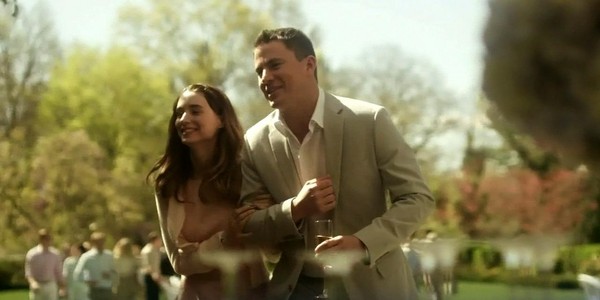
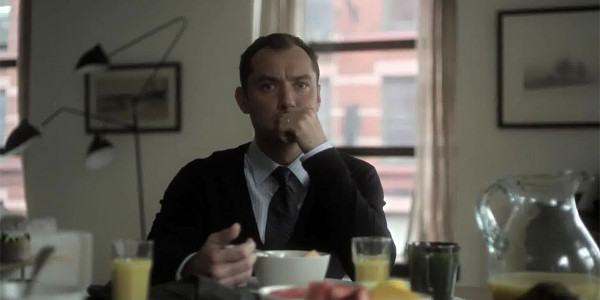
“Side Effects” is really broken into two halves. The first half of the movie focuses on a young woman named Emily (Rooney Mara). Her husband Martin (Channing Tatum) is released from prison after serving a 4-year sentence for insider trading. It seems like it would be a good time for the couple but Emily begins showing signs of depression. Martin tries to help her but things only seem to get worse leading to her attempting suicide by driving her speeding car into a wall. At the hospital she is examined by a psychiatrist named Jonathan Banks (Jude Law). She convinces him to let her go home as long as she agrees to regular counseling sessions with him.

Side Effects 2

The movie moves along like a clinical procedural throughout the first half. We watch Emily’s struggles with depression and we sit in on her meetings with Jonathan. We watch as he prescribes numerous medications, none of which work for her. We find out she has a history with depression and once saw another doctor named Victoria Siebert (Catherine Zeta-Jones). Jonathan meets with Victoria who recommends a drug called Ablixa. Jonathan finally agrees to give it a try and prescribes it for Emily. Things seem to get better for her except for the one side effect – sleepwalking. It’s during one of her sleepwalking episodes that she takes a knife and commits a shocking murder.

The second half of the film focuses more on Jonathan and the fallout from the murder and the court case that followed. It takes a heavy toll on Jonathan’s career and home life so he sets out to clear his name. It’s here where the movie finally starts to feel like a thriller. Soderbergh starts leading us in several different directions and causes us to question and reflect back on things we’ve already seen. At some point you’ll have suspicions of every character and their motivations. These are all things that you want and expect from a good thriller.

So considering all of these things, why didn’t I have a stronger response to “Side Effects”? It’s certainly not the acting. Everyone gives strong performances even the usually stone-faced Channing Tatum. Rooney Mara certainly answered my question of whether she could handle the lead role. But I thought it was Jude Law who was the real standout. He’s really, really good here. It’s also not the visual presentation that’s the problem. Soderbergh knows how to shoot a picture and his particular visual style of camera cuts and closeups works nicely here.

SIDEEFFECTS1

I think my problems lie in the way the story itself is structured. As I hinted at, this never feels like a thriller until well over halfway through the film. It’s only then that different threads of plot begin to branch out. But by that time the movie has but a little time to put all the pieces together. Soderbergh certainly manages to do this competently. I don’t remember there being any gaping plot holes or oversights. But I also don’t feel his ending is all that satisfying and the catalyst behind the big twist feels a little out-of-the-blue. For me the best thrillers are able to put the truth out there while causing the audience to look at it in a different and wrong way. At the end of “Side Effects” I didn’t feel it accomplished that at all.

I don’t want to be too hard on the movie because it’s a good watchable film that’s easy to digest. The performances are strong and Soderbergh has a visual style that perfectly fits this type of film. But underneath the veneer of clinical depression, pharmaceutical lingo, and legal proceedings lies a movie that never reaches its full potential. Its buildup is slow, its surprises feel arbitrary, and overall it’s underwhelming. It’s unfortunate and I still feel that somewhere offscreen lies an ending with more power and punch than the one we’re given – an ending that would give me the satisfaction I hoped for from “Side Effects”.

“Snow White and the Huntsman” – 4 STARS

Call me a sucker for fantasy pictures, but I really enjoyed “Snow White and the Huntsman”. In fact, I would go as far as to call this movie one of the biggest surprises of the year. In cinematic terms, this darker retelling of the classic Snow White fairy tale is pure fantasy through and through. We get trolls, dwarves, fairies, and magic but there is nothing lighthearted about it. Unlike the other Snow White movie of 2012 “Mirror Mirror”, “Snow White and the Huntsman” aims for a broader audience by creating a dark and often times creepy fantasy world that doesn’t shy away from cool horror elements and death. In the end, it was an effective approach that completely caught me by surprise.

One of my main concerns about the movie centered around Kristen Stewart in the lead role. After seeing her previous work I was never convinced she was a good actress. “Snow White and the Huntsman” does nothing to change that. But the writers seem aware of that and the script cleverly limits what Stewart is required to do. Much of her story unfolds through the words of other characters so Stewart isn’t asked to do much. It was a smart approach and I can’t help but think the movie benefits from it. For the most part Stewart is a good Snow White. She runs, rides horses, and innocently looks in wonder at the new world around her. It’s only when Stewart is asked to rouse the crowds in the third act that you’re reminded of her past work.

The movie takes the key ingredients from the popular fairy tale and mixes them with several unique twists. As a child Snow White witnesses the murder of her father the king at the hands of her wicked stepmother Ravenna (Chalize Theron). Queen Ravenna takes over the entire kingdom and throws Snow White into a tower prison cell. Ravenna is dependent on dark magic for her power thanks to a spell cast on her by her wicked mother. She maintains that power by draining the lifeforce of the young girls from the nearby villages. Years pass and Snow White has grown up yet is still confined to the tower. Queen Ravenna learns from her magic mirror that Snow White is destined to topple her so she figures it’s time to suck the life right out of her competition. Snow White escapes into a dark and marshy forest where the Queen’s powers can’t reach. The queen bribes a drunken widower (Chris Hemsworth) who has survived the forest to lead her forces in order to capture the princess.

While Hemsworth seems to be falling into the same type roles for each of his films, I still really like him. Once again he plays the tough and rugged sort and once again he’s very good. It’s a pretty simple role that fits the fantasy character model well. He has a decent chemistry with Stewart which is helped by the fact that the script doesn’t force anything on their character’s relationships. And what is Snow White without dwarves, right? Several fantastic actors played the dwarves, or at least had their faces placed on different, smaller bodies. It’s a remarkable bit of animation. Ian McShane, Ray Winstone, Bob Hoskins, and Toby Jones are a blast to watch in the roles. But it’s Theron who steals the show as the wicked queen. She sells each calculated expression and devious grin and she opens up a fairly layered character. Theron has a lot of fun and it shows.

Another standout component to the movie’s success are the wonderful special effects and cinematography. The fantasy environments are well done and often times stunning. There are several cool creatures, beautiful landscapes, and some really slick magical effects. As alluded to, “Snow White and the Huntsman” isn’t necessarily a kid’s movie and some of the effects attest to that. Maybe that’s one reason it worked so well for me. It helps make the movie more closely resemble “Lord of the Rings” than the Brothers Grimm classic fairy tale. And as a fantasy fan, that’s a really good ingredient to this incredibly surprising movie.

“SKYFALL” – 4.5 STARS

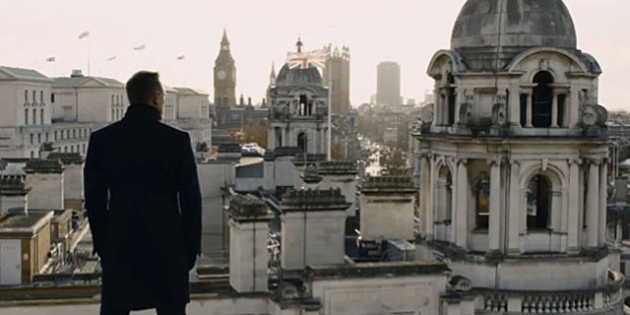
Skyfall” may be the best James Bond movie ever. Better yet, Daniel Craig may be the best James Bond ever. Now before the Bond diehards come at me with torches and pitchforks let me make something abundantly clear. I am not the biggest Bond guy. I haven’t seen even half of the Bond movies. So I certainly don’t consider myself a Bond expert. In fact I may not even qualify as a true Bond fan by some. I’m not well versed on Bond lore, the Bond girls, or the history that has surrounded this universally loved character for the last 50 years. So I don’t live under the false assumption that I’m an expert when it comes to the James Bond franchise. But I like to think that I know a good movie when I see one and “Skyfall” is a very good movie.

My Bond apathy changed in 2006 with the release of “Casino Royal”. It introduced a grittier, more grounded Bond in the form of Daniel Craig. He wasn’t as prim and polished and a sense of reality was brought to the character that I had never seen before. It was also a fantastic movie that I thoroughly enjoy. The Bond appeal grew for me in 2008 with the lesser but equally entertaining “Quantum of Solace”. And now he’s back with “Skyfall”, a 007 film that’s every bit as good as “Casino Royale” and for my money even a bit better. Sam Mendes directs the film, the 23rd installment of the franchise. Mendes tips his hat to several of the previous 007 films and has fun with many things that Bond fans should love. But he also maintains the emotional edge to Bond that has made Daniel Craig’s run so effective for me.

The film starts with a jaw-dropping opening chase sequence that uses cars, motorcycles, trains, and cranes. It moves through market streets, on rooftops, through tunnels, and finally on a huge bridge where Bond is inadvertently shot off of a speeding train by a fellow agent at M’s command. Believed dead, Bond goes off the grid and submerges himself in a life of anonymity and alcohol. Now the movie never gives a satisfying reason as to why Bond became a closed off boozer. We get a few hints of it later but it seemed pretty drastic and off-the-wall. But we wouldn’t have a Bond movie if 007 wasn’t spoiling evil plots with his well-pressed suits and assorted gadgetry. He makes his return after MI6 is devastated by terrorist attack with M seeming to be the main target. Judi Dench returns to the role that she first played in 1995’s “GoldenEye”. This time she’s not only a terrorist’s target but she’s facing heavy political pressure concerning her handling of MI6. As with each of her other performances in the series, Dench is marvelous and here we get to see a different side of her and her relationship to 007.

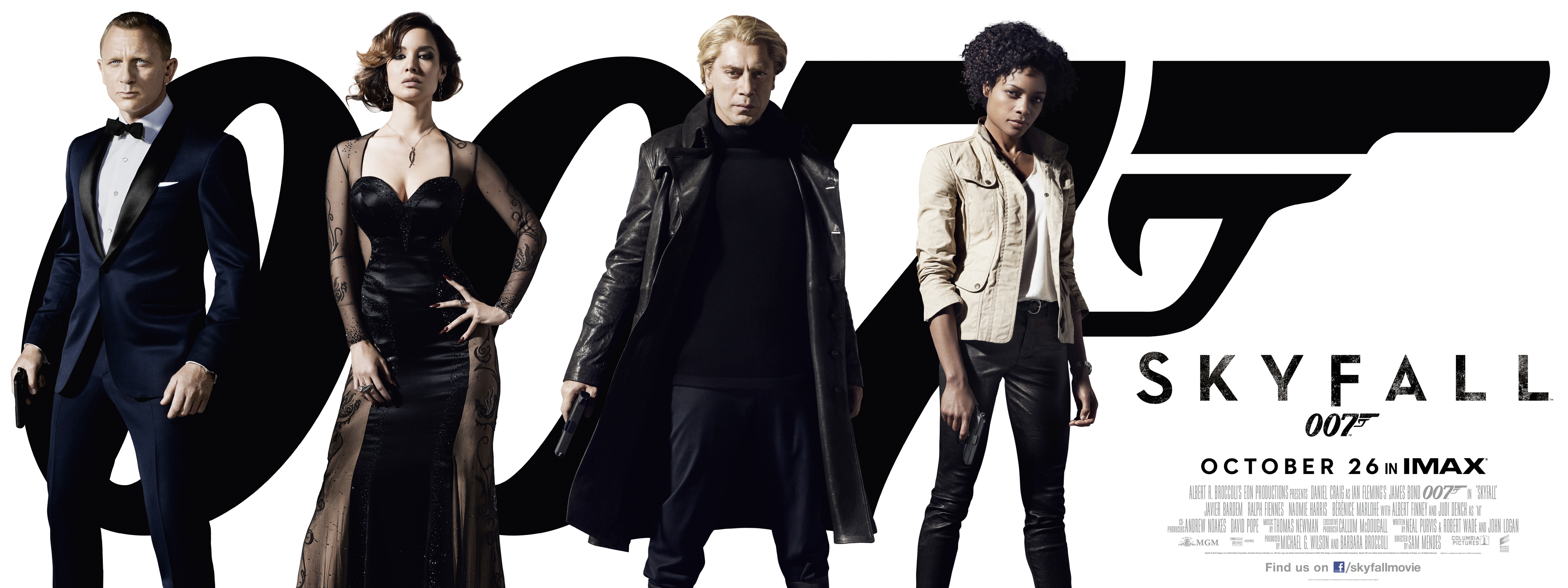
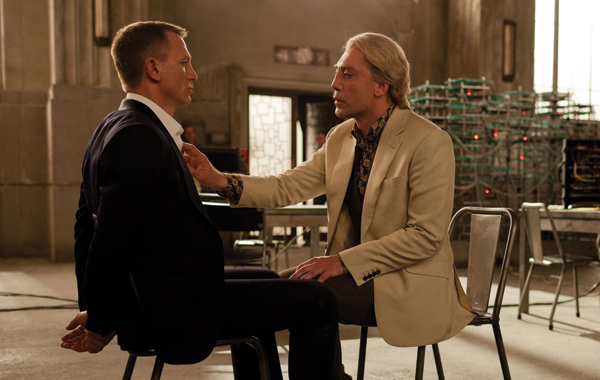
The big baddie this time is none other than Javier Bardem. He plays Raoul Silva, a psycho former MI6 agent with a rather large grudge against M. Bardem is deliciously villainous and once he makes his appearance the movie’s intensity amps up. Unfortunately he doesn’t show up until well into the film. Now that’s not a knock on the first part of the movie. But I wanted more of Bardem and I couldn’t help but feel that they could have built up the character and his motivations more in the early parts of the movie. Some of the movie’s best moments feature Bardem. There is a tense first meeting between Bond and Silva that you can’t take your eyes off of. There’s also a fantastic “Silence of the Lambs” styled exchange between Silva and M that sets the table for what’s to come later in the movie. It’s one of my favorite exchanges in cinema this year.

Another new addition to the cast is Ralph Fiennes. He places an ex-military man and current government intelligence official who regulates MI6. Fiennes is rock solid, as you would expect. Albert Finney also has a fun role as an old family friend of Bond’s and Ben Whishaw steals several scenes as Q, the gadget granting quartermaster. All the performances are good and this is probably the best overall cast in a Bond movie yet. They are helped by a crisp, intelligent, and perfectly paced script that pulls absolutely everything out of these characters. And the screenplay knows how to be respectful of the franchise while also having fun with it as well. There are several good laughs but for the most part this is the same serious, no-nonsense Bond that we got in the last two films and I’m thankful for that.

There are several other things that worked incredibly well that I could mention, most notably Roger Deakins brilliant camera work, the wonderful editing by Stuart and Kate Baird, and Thomas Newman’s perfect score. But not everything worked that well. The Bond girls have become almost as popular as 007 himself. But with the exception of the unconventional M, these Bond girls are bland and for the most part forgettable. Now Naomie Harris is fine as a fellow MI6 field agent who holds her own with 007. She has some really good scenes when working in the field, but she also has a couple of almost obligatory flirt scenes with Bond that didn’t work as well for me. Then you have Bérénice Marlohe who certainly looks the part but disappears almost as soon as she arrives. Also, I know Bond is a ladies man. But there are a couple of scenes featuring out-of-the-blue “romance” that are thrown in just because its expected from the character. Never mind that they clash with the tone and pacing of the story. Both are scenes that were poorly conceived and I could have done without them.

While these few flaws may keep “Skyfall” from being a perfect movie, they don’t stop it from being great movie. More importantly, the Daniel Craig era of 007 movies has won me over to the point that I’m anxiously awaiting the next installment. There has been a lot of internet buzz lately over who may be the next 007. But for my money Craig has earned the position for as long as he’s willing to take it. And as long as the studio is willing to surround him with a fine supporting cast, intelligent writers, and sharp directors, the possibilities are endless for this iconic character. One thing is for certain, I’m now officially a Bond fan and “Skyfall” only cemented that. Bring on oo7 #24!

“Silent House” – 3 STARS

“Silent House” is a challenging horror thriller. It isn’t challenging in terms of thematic meaning, narrative structure, or emotional punch. No, the challenge is in sticking with “Silent House” through its occasional lulls in order to appreciate what the filmmakers are trying to do. The movie was co-directed by Chris Kentis and Laura Lau. You may remember them from the 2003 psychological horror flick “Open Water”. With this film they go in an entirely different direction and they succeed even though they hit a few speed bumps along the way.

Narratively speaking “Simple House” is pretty simple stuff. In fact, the finished script was only 55 pages and there was concern as to whether or not they had the material for a full movie. They ended up with a compact 87 minute movie but it took some stretching to get that. On the other hand, they employed a clever technique to try to give the movie the illusion of being one long continuous take. Obviously that would’ve been impossible to do yet amazingly they did the entire film in twelve takes. It’s an interesting visual approach and I was surprised at just how well it worked.

“Silent House” has a whopping cast of four (Not counting the two brief visions that we see later in the film). Rising film star Elizabeth Olsen plays Sarah, a young woman who comes to help her father and uncle fix up an old Victorian home in order to resell it. The house is a wreck and the filmmakers take advantage of the poor condition to give us the perfect horror movie atmosphere. For example, all the windows were busted out by a group of mischievous kids so it’s completely boarded up. And there’s no electricity because of rats chewing through the wiring. Dark and closed off – sounds like the perfect horror movie house, doesn’t it?

Sarah’s uncle takes a break and heads into town after a spat with her father. That’s when she starts hearing strange noises upstairs. She convinces her unconcerned father to check it out. With lanterns in hand they search each upstairs room but find nothing. A short time later Sarah hears the sound of her father falling down. It’s here that we get the first of several scenes of Sarah moving room to room in the darkness. The long, fluid, continuous take does create a good sense of tension. But they go to this a few too many times and the sequences can feel long and drawn out. After a search she finds her father knocked out with a severe head wound and quickly realizes that they aren’t alone in the house. This sets up the questions that drive the rest of the movie.

Olsen continues to impress as a young actress. This performance is more about emotion, expression, and body language and the camera never leaves her through the entire film. In perfect Scream Queen fashion she sells her terror through tears, tremors, and some intense close-up shots. It’s really quite convincing. Even when the material drags, it’s fun watching Olsen handle her character and the situation that she’s in. In fact, the entire movie hinges on Olson’s performance. If she doesn’t convince us and persuade us to care about her and her predicament the movie falls apart. Add the difficulty of working in long takes and you can’t help but be impressed with what Olsen’s doing here.

Like many of these films today, “Silent House” tries to throw you a curveball later in the movie. While it’s not completely satisfying it does work reasonably well even though it’s nothing that will catch you completely off guard. Yet, as a whole, this was a movie that I appreciated more after watching it. I did occasionally feel bogged down watching Olsen deliberately creep throughout the house in the darkness. But there were also moments where I was completely wrapped up in the intensity of the scenes. I remember one instance of being so focused on the screen that I jumped out of my chair when my phone vibrated next to me. That’s good stuff.

“Silent House” isn’t a movie that will redefine the horror or psychological thriller genres. In fact, it’s a movie that probably won’t stay with you very long after you see. But I don’t want to overlook or downplay what the film does well. The filmmakers actually pull off their ambitious visual style of storytelling and I can appreciate the work that went into it. Plus we get to enjoy Elizabeth Olsen giving another strong performance. But more importantly the movie works – granted, in a minimal way – but it works.