REVIEW: “Thoroughbreds”

ThorBIG poster

Two teenaged friends reunite in Cory Finley’s intriguing debut feature “Thoroughbreds”. As many of us can attest to, even the closest childhood friendships are like a vapor with no guarantees to last. But sometimes, even unexpectedly, old friendships can be rekindled. Such is the case for the film’s two upper-class Connecticut teens Amanda and Lily.

Serving as both writer and director, Finley originally penned “Thoroughbreds” as a stageplay. You can see elements of those roots throughout the film – the emphasis on language, the framing of certain shots, holding them a few seconds longer that normal. It works well within the framework of this unusual thriller/black comedy which has drawn comparisons to “American Psycho” and the even the iciest Hitchcock.

Thor1

Olivia Cooke (“Me and Earl and the Dying Girl”, “Ready Player One”) plays the eccentric and seemingly emotionless Amanda. She’s been through the rounds with psychiatrists after an animal cruelty charge and now her mother feels she needs more interaction with her peers. Mom secretly hires Amanda’s one-time childhood friend Lily (Anya Taylor-Joy of “The Witch” and “Split”) to hang out and be her tutor. Lily is perceived to be the “normal one” of the two – smart and popular with the ‘in’ crowd at school.

Normally a social flower and a pariah aren’t the most compatible pair, but as Amanda and Lily spend more time together their psychological bond becomes more evident. A key turning point in their friendship centers around Lily’s cold, abrasive stepfather (Paul Sparks). Lily detests him, Amanda flippantly recommends killing him, Lily scoffs at the idea. But is Amanda really serious? What happens when Lily has second thoughts? From there the story moves forward in full blue-blooded psychological thriller mode

Thor2

While both Cooke and Taylor-Joy are interesting and expressive young actresses who truly nail down their characters, Anton Yelchin shines the brightest. It’s a small role but possibly the most genuine and sympathetic. He also gives us a breather from the film’s effective yet steadily acidic tone. Yelchin plays Tim, a low-level drug pusher with big aspirations. He’s as naive as he is pathetic which makes him the perfect stooge for the girl’s on again/off again master plan.

Despite dancing close the line of genre predictability, “Thoroughbreds” never crosses it and it has enough originality to feel uncomfortably fresh. The sound design, the visual style, its obvious noir roots – it all plays together nicely. The result is a half-batty movie that takes the problems of the young and privileged and gives them a violent shake. Where do all the pieces land? You’ll have to watch to find out.

VERDICT – 3.5 STARS

3-5-stars

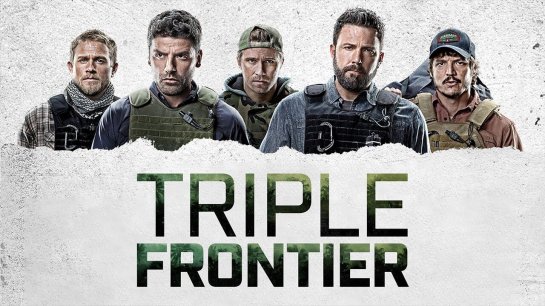
REVIEW: “Triple Frontier”

TRIPLEposter

There has been no shortage of heist films over the past few years and they have pretty much covered all the bases. We’ve seen widows, hillbillies, magicians, even the elderly all set out to for that one big score. The new Netflix Original “Triple Frontier” gives us a different type of heist movie yet one that doesn’t stray too far from its genre roots.

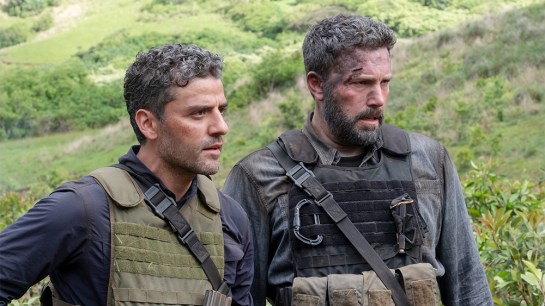
“Triple Frontier” had me at its cast. Oscar Isaac, Ben Affleck, Charlie Hunnam, and Garrett Hedlund are all actors I throughly enjoy. I wasn’t as familiar with Pedro Pascal but he’s a good addition to this group. The five play old special ops buddies who reunite to pull off a seemingly quick and easy heist. Of course it wouldn’t be much of a movie if the job was easy.

TRIPLE FRONTIER

J.C. Chandor directs and co-writes the script along with Mark Boal. They offer up characters who aren’t just out for a quick buck. They are real-world people struggling to make a living after their military service. Tom (Affleck) is a realtor who can’t afford to send his daughter to college. William (Hunnam) does low paying motivational speeches for troubled vets. Ben (Hedlund) makes what money he can in warehouse mixed martial arts fights. Francisco (Pascal) faces an upcoming court date for transporting drugs.

Santiago (Isaac) is only one still semi-working in the field. He’s a private military consultant assisting the Colombian government in their war against the drug gangs. He learns through an informant that a local kingpin is holed up in a remote safe house with millions of dollars in drug money. Santiago travels back to America to recruit his old squadmates to help him take out the kingpin and grab the money for themselves.

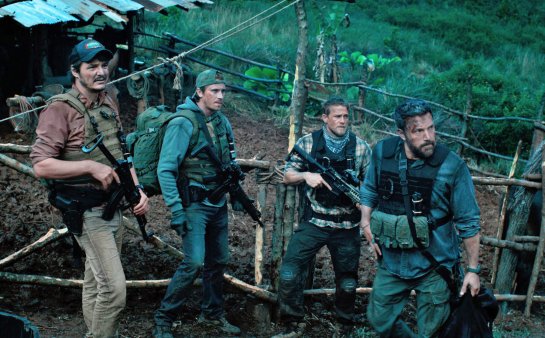
At first the band is reluctant to get back together, especially Tom. But Santiago knows the situations of his cash-strapped pals and his sales pitch is good. He convinces the team to get back together for the proverbial ‘one last mission’ but this one isn’t for their government or their country. This one of for them and their future. Or so it seems.

For me these characters are a real strength of the film and the motivations that drive them are compelling. I do wish Chandor and Boal would have spent a little more time on their individual stories, but once the five are together their chemistry is undeniable. So many big names have been attached to the movie – Tom Hanks, Johnny Depp, Tom Hardy, Mahershala Ali, Mark Wahlberg, Will Smith, among others. That’s a lot of talent but I still wouldn’t change a thing. The cast is spot-on top to bottom (keep an eye on Hunnam. I like him more with each performance).

TRIPLE1

Another strength is Roman Vasyanov’s cinematography. Hawaii and Columbia provide the beautiful and rugged vistas for him to capture and he shows a keen eye for shooting action sequences. They are tense and thrilling but also shot in a way that reflects conscience. What does that mean? This isn’t a full-throttle 80’s style action picture. There’s no thrill or enjoyment in the gunplay. But there is real conflict and consequence. In fact the violence is never gratuitous and Chandor’s camera often focuses on the shooter’s face instead of the bloody results.

It should be said that “Triple Frontier” doesn’t paint its characters out to be heroes. They’re flawed, damaged, and conflicted men wrestling with their own moral justifications for what they are doing. Some of their actions clearly originate from a deeper personal anguish, something I wish the film delved deeper into. Still, their chemistry is authentic and palpable, the story is full of tension, and just when you think you have it figured out it throws an unexpected but welcomed curveball.

VERDICT – 4 STARS

4-stars

REVIEW: “The 12th Man” (2018)

12poster

Some brief opening text lays out the setting for director Harald Zwart’s astounding “The 12th Man”. Nazi Germany occupied Norway on April 9, 1940. Three years later in Scotland British forces trained Norwegian soldiers to carry out sabotage missions in their homeland. On March 24, 1943 twelve Norwegian resistance fighters were sent to target German airfields in Operation Martin Red. Only one would come back alive.

This Norwegian historical thriller is based on the extraordinary true story of Jan Baalsrud, the lone survivor of that doomed operation. The film is based on a biography by Tore Haug and Astrid Karlsen Scott. It’s not the first movie based on a book of Baalsrud’s life. The 1957 drama “Nine Lives” received an Oscar nomination and remains a highly regarded picture.

12one

The grueling role of Baalsrud is played by Thomas Gullestad. Zwart starts quickly with Baalsrud and his team crawling out of the icy arctic waters onto the northern shores of Norway amid a hail of bullets. We learn that a costly mistake blew their cover and a German vessel attacks as they approach the mainland. Forced to scuttle their shot-up fishing boat, the twelve struggle ashore where German troops await them. Eleven are captured, Baalsrud escapes.

One of the first things I noticed was Zwart and cinematographer Geir Hartly Andreassen’s striking perspectives. Their camera placements and the fluidity of its movements offer one penetrating visual after another. Then you have the shots of the stunning Norwegian landscapes which in context are both beautiful and ominous. These images add a menacing dimension as the wounded and battered Baalsrud trudges through the frigid snow and ice.

“The 12th Man” spotlights Jan Baalsrud’s resilience as he makes his way towards neutral Sweden’s border, fighting treacherous terrain, excruciating cold and the doggedly determined Gestapo. But as he slowly succumbs to snowblindness, hypothermia, and gangrene the true crux of the story comes into focus. The film is just as much about the people he meets throughout his harrowing journey. Jan’s strength and heroism is matched, often exceeded, only by the Norwegian patriots helping him at every step – civilians routinely risking their lives to save his. In many ways they form the emotional core of the movie.

12two

Equally fascinating is when the movie shifts focus to that of a Gestapo officer named Kurt Stage (played by Jonathan Rhys Meyers). No one has ever escaped Stage’s pursuit and he takes Baalsrud’s flight personally. He persistently hunts Jan rejecting the skepticism and needling of an ambitious fellow officer (Martin Kiefer). Myers offers a charismatic antagonist pushed more by ego and obsession than duty.

Some may say the film’s biggest surprise is in Harald Zwart’s direction. Perhaps known more for his misfires (“Agent Cody Banks”, “The Pink Panther 2”, “The Karate Kid” remake), but don’t let that dissuade you for a second. His portrayal of this unbelievable true story is riveting both visually and narratively. Whether he is capturing Jan Baalsrud’s intense and sometimes brutal attempts at survival or creating genuine moments of levity with the men and women risking everything to aid him. It makes for truly inspirational cinema.

VERDICT – 4.5 STARS

4-5-stars

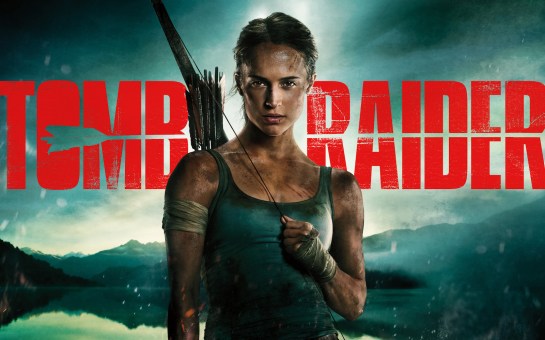
REVIEW: “Tomb Raider”

TOMB poster

As a younger video game enthusiast I remember being excited at the news of “Lara Croft: Tomb Raider”, a 2001 movie based on the “Tomb Raider” video game franchise. It seemed ripe for the big screen with potential to be an Indiana Jones styled action-adventure. While it certainly couldn’t hold a candle to the three true Indy pictures, it was a fun and successful adaptation. A sequel followed – not quite as good and not quite as successful.

The video game series started in 1996 and over the years has seen several sequels, remakes, and spin-offs. The most recent reboot was in 2013. The game from developer Crystal Dynamics was critically acclaimed and wildly successful. It would become the highest grossing game in the franchise. Players responded to the grittier tone and human element that was sometimes overlooked in past games.

tomb1

Now the movie series returns, freshly rebooted and based on the most recent incarnation of the “Tomb Raider” games. And like its inspiration, it seeks to be grittier and more focused on giving us a more human Lara Croft. For the most part the movie succeeds.

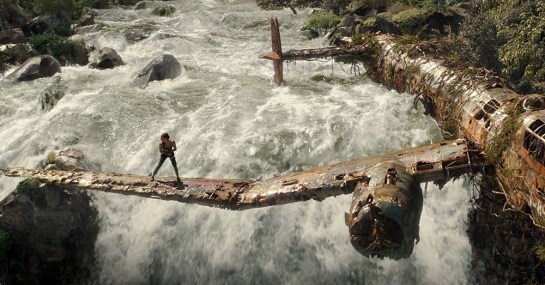
The first smart decision was casting Oscar-winner Alicia Vikander. She gives us a Lara who is considerably more grounded than Angelina Jolie’s version from the previous films. Vikander’s portrayal is anchored by heartbreak, vulnerability and uncertainty. She isn’t a swashbuckling tomb-rainding buttkicker by nature or desire. The story frames her as a heartbroken young woman at a loss following the disappearance of her father (played by Dominic West) some seven years earlier.

But Lara is also full of determination and bravery. An unexpected clue leads her to her father’s secret study at the family’s now abandoned estate. There she discovers her father last set off for a mysterious remote island outside of Hong Kong. Through a ‘if you’re watching this I must be dead’ recording he commands Lara to destroy all of his research regarding the island. Instead she uses it to find the location and heads there in hopes of discovering what happened to him.

This opens the rather obvious door to Lara’s adventure. She runs into Walton Goggins who plays Mathias Vogel, the film’s chief antagonist. Turns out he heads an expedition on the island to find the same ancient tomb Lara’s father was seeking. Goggins is an unexpectedly fun choice. He brings a subtle (and slightly humorous) wide-eyed madness to his character who is a bit stir-crazy from his years on the island. For Lara it becomes a journey of revelation and self-discovery as she finds herself at odds with Vogel and his band of mercenaries. Oh, and of course there is also the tomb and the potentially devastating power it may hold.

TOMB2

Director Roar Uthaug’s last film was the excellent 2015 Norwegian disaster picture “The Wave”. Here he is given a much different canvas but the sharp camera eye from his previous movie remains. The action scenes are shot with energy and clarity. No annoying rapid-fire quick cuts or shaky hand-held approach. He also wisely stops at certain points and sets his camera on Vikander allowing her to flesh out pieces of her character through her performance. That may sound a bit obvious, but far too often directors don’t give good performers that room. And again, Vikander is spot-on.

Does “Tomb Raider” break new ground or change the movie landscape? Not hardly. But is that a prerequisite for every film? Absolutely not. Will it be pigeonholed as just another video game movie? I think we’ve already seen some of that. But when you toss aside any preconceived notions or sky-high expectations, what you get is a fun and often times thrilling action-adventure with a strong, believable female protagonist . It’s a nice new foundation for a franchise. Unfortunately due to some iffy box office numbers that may not happen. What a shame.

VERDICT – 4 STARS

4-stars

REVIEW: “Three Billboards Outside Ebbing, Missouri”

BLLposter

Playwright turned screenwriter Martin McDonagh is three movies into his feature film career – “In Bruges”, “Seven Psychopaths” and his latest “Three Billboards Outside Ebbing, Missouri”. While each film has their differences they also also have their similarities. All three are black comedy crime pictures and each prominently feature McDonagh’s brash writing style. You can decide whether that last part is a good thing or not.

McDonagh’s inspiration for “Three Billboards” came as he was driving in southeastern United States and noticed some billboards speaking to an unsolved crime. He began filling in his own elements to the story and “Three Billboards” was born. As he began penning the script, two characters were written with specific performers in mind. The lead character of Mildred for Frances McDormand and the key supporting character Dixon for the always entertaining Sam Rockwell.

BILL1

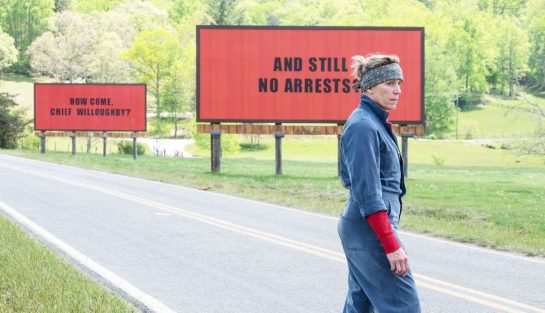
The story begins seven years after the brutal rape and murder of a teenaged girl around Ebbing, Missouri. The girl’s mother Mildred (McDormand), angered by the sheriff department’s lack of progress on the case, rents three abandoned billboards just outside of town and plasters messages calling out the local authorities. The billboards read “Raped while dying”, “And still no arrests?” and “How come, Chief Willoughby?”

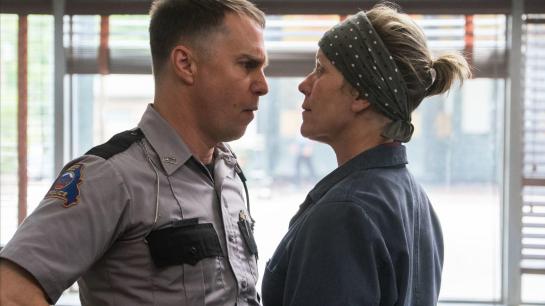
Mildred’s billboards spark the ire of the townsfolk including Sheriff Willoughby (Woody Harrelson), his dense and racist deputy Dixon (Rockwell), and even her depressed son Robbie (Lucas Hedges). But Mildred (a fitting reflection of McDonagh’s abrasive writing style) pushes forward which leads to a series of conflicts that make up a bulk of McDonagh’s problematic story.

BILL3

“Three Billboards” is such a mixed bag. McDonagh wildly swings from absurdly goofy to deeply emotional with no real gauge for tone. A scene of oddball humor can shift to a scene of startling violence on a whim. Often the characters are the biggest victims. One minute a man is brutally beating another man and punching a woman in the face. Only a few scenes later we are asked to buy into his moral transformation. Even Mildred suffers from McDonagh’s erratic treatment. She’s an inspirational crusader and a sympathetic mother. She’s also a verbally abusive, dysfunctional parent and can sometimes be needlessly hateful and vile. McDormand goes all in and her performance is solid, but her character (like most in the film) is all over the map.

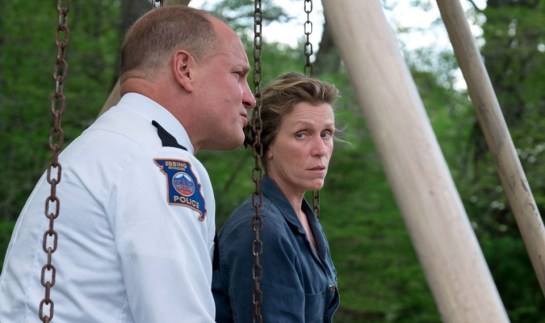
Funny enough the movie is most effective when it turns down the volume and focuses on the quieter dramatic moments. Many of these involve Woody Harrelson, an actor often known for being big, silly, and showy. His Sheriff Willoughby is probably the film’s most tempered character, but even he’s not immune to McDonagh’s occasional jarring dialogue. And it seems we are meant to be at least a little sympathetic towards him. But the movie ignores some gaping moral holes and expects us to do the same. Sorry, I can’t.

BILL2

Several other things keep “Three Billboards” from reaching the potential it teases. There’s McDonagh’s weird vision of small town America. He nails how the effects of a horrible tragedy can ripple through a rural tight-knit community. And visually the North Carolina location is a nice stand-in for the fictional town of Ebbing. But his wonky cast consists of racists, sexists, bigots, abusers, child molesters, and several other offensive classes of miscreants. Is this his rural perception? Give me a Coen brother’s version any day.

And then you have McDonagh’s insistence on being blatantly and often pointlessly vulgar and crass. I get that it’s his thing, but forcing it into the bulk of the dialogue becomes obvious and distracting. I have no problem with a writer bringing their own style and sensibility. But it’s never a good thing when a writer’s self-reverence overshadows his material. Mix that with the seismic tonal shifts and uneven and often incomprehensible characters, and you have a frustrating movie built on a good idea but undermined by problems too big to dismiss. Ultimately it’s a film that acts like it has something to say, but you quickly learn it’s little more than an empty hull.

VERDICT – 1.5 STARS

1-5-stars

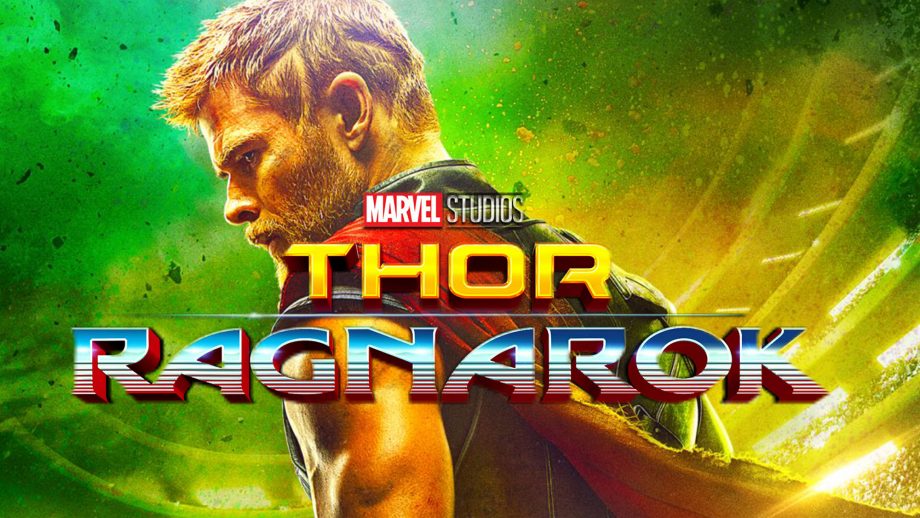
REVIEW: “Thor: Ragnarok”

THOR POSTER

Marvel Studios seems so have found a soft spot with many critics. Unlike their DC competition, Marvel movies are generally well received by critics who (as I gabbed about in my “Justice League” review) appreciate the MCU’s willingness to be a bit more lighthearted and poke fun at itself. Never has that been more true than with “Thor: Ragnarok”.

With a Rotten Tomatoes score of 92% and over $820 million in the box office bank (so far), Thor’s third solo film and seventeenth installment in Marvel’s cinematic universe has been yet another critical and commercial success. But what made is such a treat for many critics is part of what held me back.

Easily the most intriguing thing about “Thor: Ragnarok” was the choice of director. Taika Waititi has made two of my favorite straight comedies of the past several years. “What We Do in the Shadows” and “Hunt for the Wilderpeople” showcased Waititi’s hyper-quirky brand of humor. Handing him the reins of a Marvel franchise film was guaranteeing something different.

thor1

The story begins with Thor (Chris Hemsworth) held captive by the flaming demon Surtur. Thor learns that his father Odin (Anthony Hopkins) has left his throne and Surtur plans to fulfill the Ragnarok prophecy and destroy Asgard. The God of Thunder will have none of that. Waititi wastes no time showing his comic intentions. This quick opening sequence summarizes the balance the entire film wants to maintain – wacky humor and superhero action.

For the remainder of the first act the story hurriedly hops from one plot point to the next. Thinking he has prevented Ragnarok, Thor returns to Asgard and soon learns the true threat to the realm is none other than Cate Blanchett. She plays Hela, the Goddess of Death and Odom’s long-lost firstborn who returns to Asgard to take the throne and wake her army of the dead. Her intent is the same as most MCU baddies – power, world domination, the usual. But Blanchett is wickedly fun, a bit dry at times but a hoot.

Hela wins round one and Thor finds himself stranded on a trashy planet ran by Jeff Goldblum’s Grandmaster. No one else in the film can match Goldblum whose performance is both bizarre and hysterical. Waititi urged Goldblum to improvise and the actor runs with it without the slightest restraint. I can see some audience members bewildered by what he’s doing. I found him to be an absolute scene stealer.

THOR2

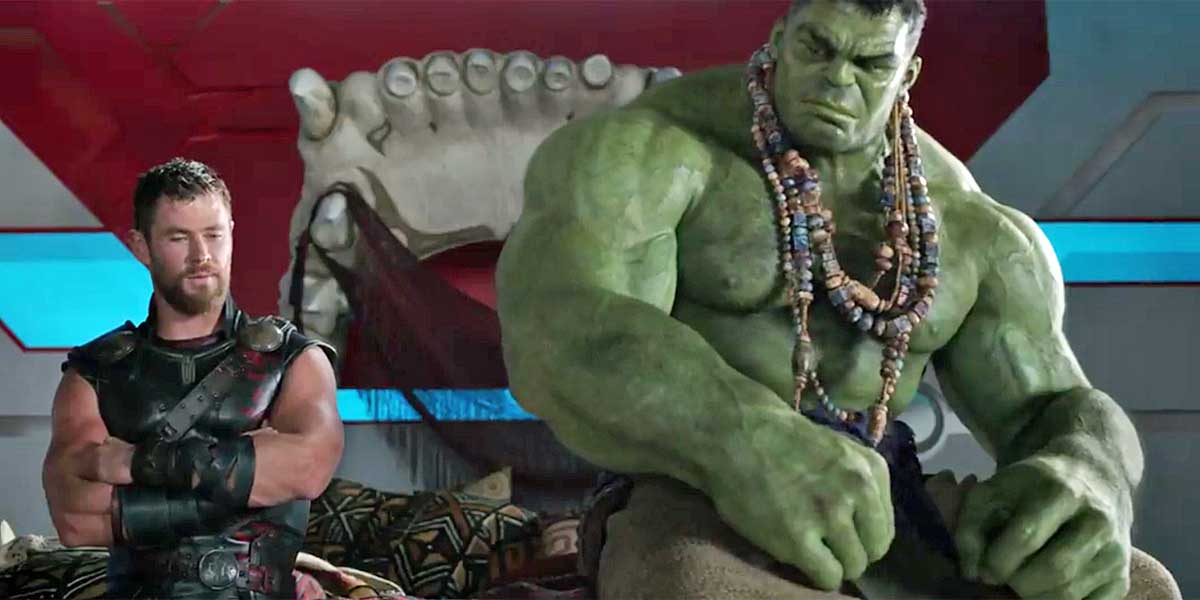
Adding to the fun is the return of the mischievous Loki (Tom Hiddleston). We also get an overly chatty Hulk played partly by Mark Ruffalo and partly by a lot of green CGI. Idris Elba also returns as Heimdall, Asgard’s guardian sentry. The biggest new addition is Tessa Thompson who plays a hard-as-nails bounty hunter with a complicated past. Thompson adds plenty of energy even though she occasionally overplays the hard-drinking scoundrel type.

Waititi and company put together a lot of big action, but the film plays more as a comedy which means plenty of funny moments. But his treatment of Thor clashes with the past Marvel movies. From his first film Thor has been a bit of a lug. “Ragnarok” portrays him as more of a wisecracking dimwit. There are scenes where he steps outside of that box and reminds us of why he’s one of Marvel’s powerhouses. But after this movie it will be hard for some to see him as much more than a goof. The same could be said with Hulk. The film makes some weird moves with him and it will be interesting to see how it effects the character going forward.

Those not interested in continuity or source material won’t have any problems with “Thor: Ragnarok”. That’s probably the best way to approach it. For me, despite having some truly great aspects, something felt off. I can’t deny the film’s charm and there are some genuinely funny scenes. By no means is it a difficult watch. But I find its skittish first act and some questionable character handling is still gnawing at me.

VERDICT – 3 STARS

3-stars