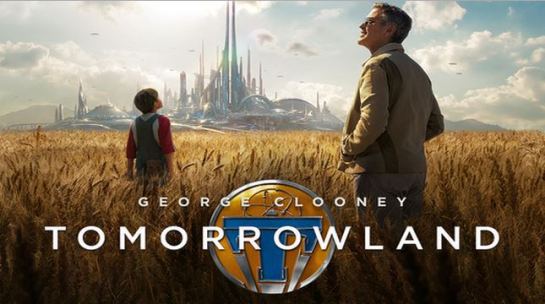
REVIEW: “Tomorrowland”

LAND poster

At the heart of Brad Bird’s “Tomorrowland” lies something good and noble. A movie about positivity and hope. A movie about optimism and faith in the future. A movie promoting the idea that we can change the world for the better. I give the film a lot of credit for sporting such important themes. But somewhere along the way Bird and company forgot the importance of good storytelling.

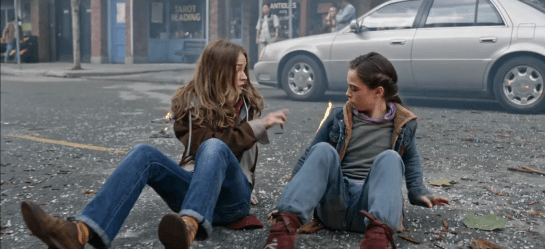
The story centers around a forward thinking and science-savvy teen named Casey (Britt Robertson). She discovers a T-shaped pin that grants her visions of the futuristic Tomorrowland – a utopia where science and technology has flourished. Once the pin’s battery runs out Casey seeks more information about it. A little girl named Athena (who is actually a robot) leads Casey to a cantankerous and disillusioned inventor named Frank (George Clooney).
 

Land1

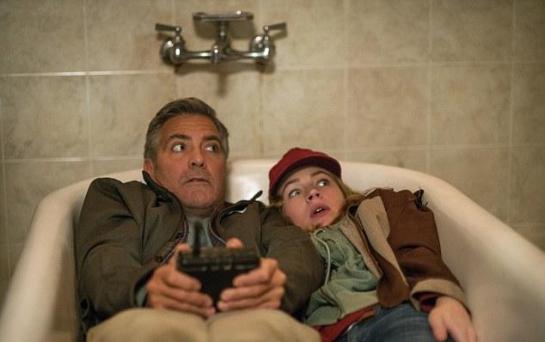
Frank supposedly knows how to travel to Tomorrowland but he wants nothing to do with it. When a group of angry robots show up to try to kill them, he grows even more obstinate. Frank represents the cynical ‘it can’t be done’ mentality. It clashes with Casey’s unbridled hope and optimism. This is also represented as a generational division between the older pessimistic attitude and the youthful ‘can do’ spirit. Ultimately the two will have to come together if there is to be any hope of saving Tomorrowland and the vision it represents.

“Tomorrowland” is an ambitious picture. It tries to be a flashy special effects spectacle and a thought-provoking essay packaged in pretty Disney wrapping. It gets the first part right. “Tomorrowland” looks absolutely amazing. The effects are dazzling – bright, beautiful colors and fun, innovative architecture and technology. Bird and company create a visually satisfying and compelling world and there is obviously a lot of time and attention  that went into its details.
Land2

But the same can’t be said for the story itself. This is a film that struggles to find its identity. It tinkers with several interesting ideas and it teases us with several fun and interesting story angles. But it never capitalizes on them. So often the story loses any momentum by bogging down in dull back-and-forths and tedious lectures. It is a film with a message but it is incredibly clunky in its delivery and the film’s preachiness is pretty glaring at times. These things strip the movie of its excitement, allure, and charm.

In a nutshell “Tomorrowland” is a messy and frustrating experience. It looks spectacular and its optimistic outlook is commendable. There is a really good story buried in there somewhere. But I grew tired of looking for it and waiting for it to show up. The story is simply too inconsistent, too uneven, and too flat. It doesn’t know what it wants to be. There is never enough Disney for young kids and not a well delivered message for adults. As a result we are left with yet another movie that falls terrible short of what it could have been.

VERDICT – 2 STARS

2 Stars

REVIEW: “Trust”

TRUST poster

When hearing David Schwimmer’s name most will automatically think back to his goofy, good-hearted character from the television comedy series “Friends”. What may surprise them is that Schwimmer is also the director of the 2010 feature film titled “Trust”, a bold and unflinching look at sexual abuse. This is no comedy. This is no lightweight drama. This film doesn’t skim around the edges of its topic. “Trust” is an honest examination – a cautionary tale focused on a topic that many would prefer to stay away from.

The film is based on a story written by Schwimmer. His inspiration came from his 14 years with The Rape Foundation, a group focused on support, prevention, and education about rape. Schwimmer’s intense research spanned seven years and took him to a number of individuals and families who have been decimated by these despicable crimes. For Schwimmer this was an important story to tell and his uncompromising yet sensitive approach does this highly relevant subject justice.

TRUST1

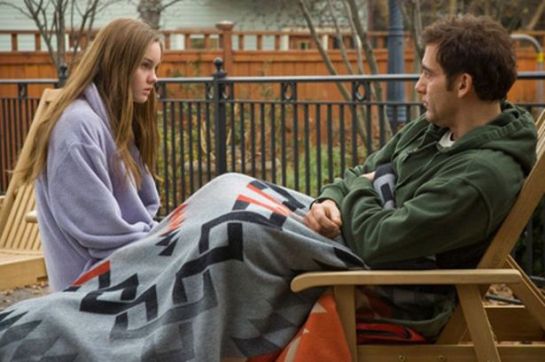
The film starts by showing us a strong, stable, and close family. Husband and wife Will (Clive Owen) and Lynn (Catherine Keener) are loving parents to their three children. Annie (Liana Liberato) is their strong and outgoing 14-year old. In almost systematic fashion the film shows the methodology and seduction of young Annie by a 35-year old internet predator going by the name of Charlie. It begins in an internet chat room and evolves to text messages and intimate phone calls. It starts with one lie followed by another and another until Annie gives in to Charlie’s manipulation.

The rape of a young girl is powerful and sobering material, but perhaps the film’s most compelling decision is to focus more on the aftermath and fallout than the actual transgression. Schwimmer takes us stage by stage through Annie’s coping struggles which range from denial to defending Charlie. At times Annie’s emotional battles are excruciating to watch mainly due to the deftly honest handling of the subject and Liberato’s revelatory performance. Liberato was actually 14-years old when the film was being made which gives so many of her scenes an even sharper and more unsettling edge. She is magnificent.

TRUST2

But the film goes further and examines several other consequences. It looks at distorted perceptions of sexual assault. It looks at internet bullying. It looks at the effects that such a horrible event can have on a family namely a devastated father. Clive Owen gives a performance that should have demanded Oscar recognition. He shows us a wounded father drowning in sadness, insuppressible rage, and unbridled guilt. And the scenes Owen shares with Liberato are powerful and heart-wrenching. Toss in great performances by the always reliable Keener and Viola Davis as Anna’s counsellor.

Schwimmer said in many ways this is a film about “parenting in the age of technology”. With so many children having smart phones, laptops, and tablets with open access to the internet, and with the sickening number of internet predators this is an extremely relevant topic. “Trust” is a startling and often troubling movie but an incredibly earnest and sensitive one as well. It sugarcoats nothing and offers no easy answers or quick solutions. It deals in painful reality. This could have easily been an exploitative and overly melodramatic project. Thankfully Schwimmer and his cast care about the topic and are deeply invested in getting it right. Ultimately that’s why “Trust” is such a gripping and forceful success.

VERDICT – 4.5 STARS

TEST star

REVIEW: “Transcendence”

TRANSPOSTER

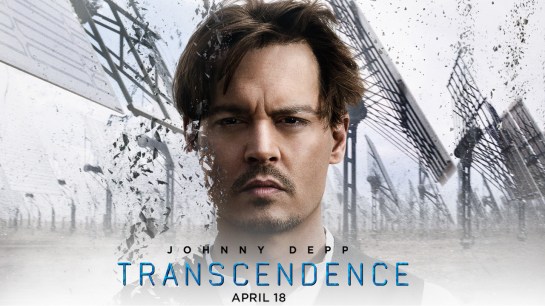
On paper “Transcendence” sounded like a sure thing. It had an intriguing science fiction premise. It had a fabulous cast featuring Johnny Depp, Rebecca Hall, Paul Bettany, Morgan Freeman, and Cillian Murphy. It was the directorial debut from one of my favorite cinematographers Wally Pfister. But as with anything you can have some great pieces but that does automatically equal a great whole. That’s certainly the case with “Transcendence”.

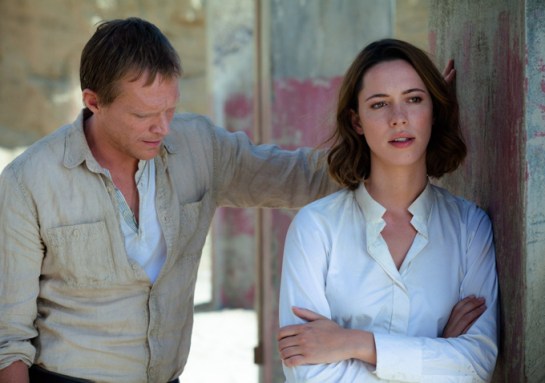
Without question “Transcendence” is a film with loads of ambition and some good things to say. It gets off to a good start and lays an interesting foundation. Dr. Will Caster (Depp) is a renowned scientist working on the creation of a sentient artificial intelligence. His devoted wife Evelyn (Hall) is a strong supporter and organizes the funding for his research. His best friend Max (Bettany) is a fellow scientist and an important contributor to Will’s work.

TRANS1

After speaking at a science and technology convention Will is shot by an anti-technology extremist. The act is part of a series of attacks by a terrorist group known as R.I.F.T. That stands for “Revolutionary Independence From Technology” and if you need something else to make you laugh, one of their weapons of choice is a poisonous birthday cake. Oh, and the bullet used on Will is radioactive. It poisons his blood and with no cure available he is given a month to live.

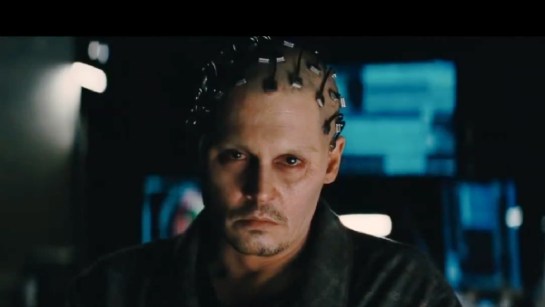
Desperate to hang onto her husband, Evelyn uploads Will’s consciousness to a super computer. He soon dies but is revived within the computer. Hunted down by R.I.F.T. and their dogged leader Bree (Kate Mara), Evelyn uploads Will to the internet giving him freedom and access to all the web’s information. As with any A.I. (or so we’re told) they survive by getting more information. With Evelyn’s help Will grows more powerful and soon crowds the line between helping the world and overtaking it.

This collision between mankind and technology does provide for some good conversation. There is also a compelling unconventional love story buried within this material. Unfortunately to get much of either you have to navigate through a litany of cavernous plot holes and inconceivable stretches of our imagination. As the movie moves forward we are constantly asked to overlook numerous gaps in logic and in the story itself. The film ends up smothering all of the interesting elements with one narrative blunder after another.

TRANS2

It also doesn’t help that some of the film’s plot machinations are so incredibly preposterous and implausible. This is frustrating because once again it overshadows the intriguing concepts that do have a lot of promise. We just can’t buy into it all and at times it looks like the cast doesn’t either. I wouldn’t say that they are phoning in their performances. There are moments where they are trying to salvage something from the ramshackle script, especially Hall and Bettany. But no one feels thoroughly engaged or convinced in the material.

Again, “Transcendence” looked good on paper but not in execution. It has so much going for it but it lacks one vital component – a competent script. There is a good story to be found here and I got just enough to be annoyed by the mishandling of it. It did engage me at first and I really liked what the film was going for with its ending. It’s the rocky road in between that makes this a tough movie to recommend. And that’s a shame because this should have and could have been better.

VERDICT – 2 STARS

REVIEW: “Two Days, One Night”

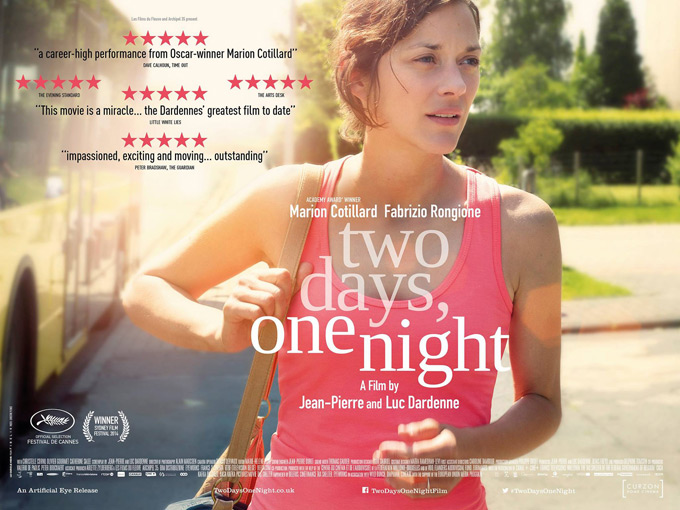
TWO POSTERI have this insatiable appetite for watching great actors or actresses work. I mean we all appreciate good acting, but for me there is something special about losing myself in great performances – a type of overwhelming and unequivocal admiration which enhances any moviegoing experience I may have. And there are certain actors and actresses who I know will automatically give these types of magnetic performances. One such actress is Marion Cotillard. Readers of mine probably know I think highly of her. In fact she holds a prominent spot on my “Greatest Series” list of the best actresses of all time (you can see that list HERE). She is one of the most intense and natural performers I have ever seen.

Cotillard’s latest movie teams her with the Belgian born Dardenne brothers and she once again shows off her wealth of talent. “Two Days, One Night” features several of the Dardennes’ thematic signatures. Most notably, their films take a naturalistic look at common, everyday people who often find themselves in difficult situations. There is no gloss or showiness to a Dardenne picture. Their movies tend to be unsentimental and they never romanticize their subject matter. In many ways it is as if they are holding up a cinematic mirror to human struggles which can make their films a bit bleak and depressing.

TWO DAYS1

In “Two Days, One Night” Cotillard plays Sandra. She’s a wife and mother working at a solar-panel plant in a Belgian industrial town. While on sick leave recovering from a nervous breakdown, Sandra is informed she has lost her job. While she was away her colleagues earned more money covering her shifts and management offers them a €1000 bonus if they vote to absorb Sandra’s position. The news hits the already emotionally fragile Sandra hard since her family depends on her salary to keep their home and to stay off government assistance.

But Sandra is encouraged by a friend and co-worker named Juliette (Catherine Salee) who convinces the company’s head to have another vote to decide Sandra’s fate. That gives Sandra a weekend to go visit each of her 16 co-workers in hopes of persuading them to give up their €1000 bonus and vote for her to get her job back on Monday morning. This would be a nerve-racking and uncomfortable task for anyone, but toss in the complication of her recent nervous breakdown and Sandra has seemingly insurmountable odds to overcome.

Most of the film follows her visits to her co-workers and the various exchanges they have. Through these brief interactions the Dardennes spotlight various shades of human nature, but there is more to it than just that. There is also the constant emotional struggle that often times gets the best of Sandra. Even the support of her patient and faithful husband Manu (Fabrizio Rongione) isn’t enough. We get a truly visceral and earnest portrait of depression that works so well due to the Dardennes’ disciplined focus and Cotillard’s sublime performance.

TWO2

Cotillard has this unmatched ability to deglamorize herself and become whatever her role requires. We’ve often seen this from her in the past and it is definitely on display here. She gives a subdued and low-key performance, perfectly fitting for the portrayal of a woman struggling within her bubble of depression. And she truly does carry the movie. She appears in almost every scene and the filmmaker’s confidence in her is crystal clear. She doesn’t overplay her role (which we often see in the these kinds of performances) and she doesn’t give us a single false scene or line of dialogue. It’s a performance unquestionably worthy of her recent Oscar nomination.

As usual the Dardennes write, produce, and direct “Two Days, One Night” which makes the film
undeniably their own. I appreciate their many creative touches from the strategic lack of a musical score to Dardenne favorite Alain Marcoen’s subtly attentive cinematography. I also love the unfeigned realism of their subject matter which is such a fresh change from the big studio norms of today. It also doesn’t hurt having a phenomenal lead performance to drive the film. Together all of these ingredients make “Two Days, One Night” another great entry into the Dardennes’ filmography and another shining example of why Marion Cotillard is arguably the best actress we have today.

VERDICT – 4.5 STARS

REVIEW: “The Two Faces of January”

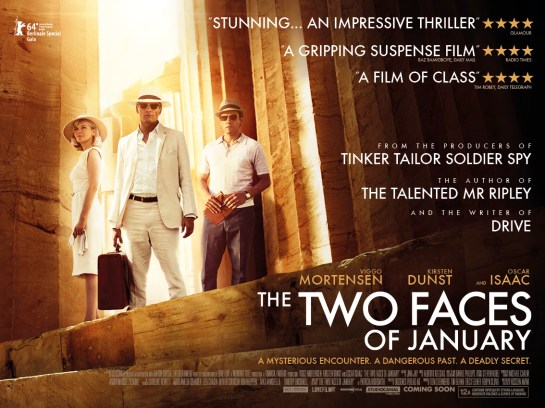
JANUARY POSTER

Beautiful Greek locales and three strong performances anchor “The Two Faces of January”, a smart and measured adaptation of Patricia Highsmith’s 1964 novel. Viggo Mortensen, Oscar Isaac, and Kirsten Dunst star in this steady-moving thriller that doesn’t depend on big twists or reveals. Instead it is straightforward and focused – a slick and stylish retro noir full of fedoras and cigarette smoke.

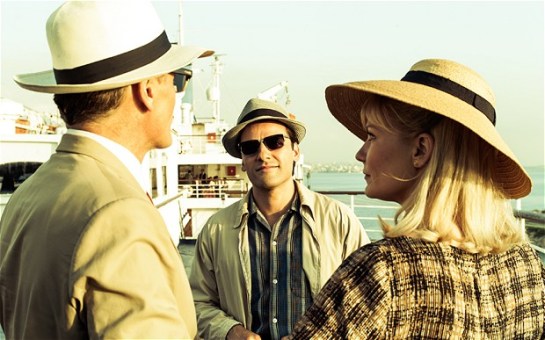
It’s 1962 in Athens, Greece. Rydal (Isaac) is a tour guide and small-time con man. While at the Acropolis of Athens he connects with an American couple Chester MacFarland (Mortensen) and his younger wife Colette (Dunst). Rydal is instantly attracted to Chester’s wealth and Colette’s beauty. Colette takes a liking to Rydal but Chester doesn’t trust him at all. The three have a pleasant dinner together and then part ways.


JANUARY1Chester and Colette return to their posh hotel where they are confronted by a mysterious armed man. Turns out Chester owes money to the wrong people. A struggle follows and the stranger ends up dead. In a panic Chester scrambles to do something with the body. While doing so he runs into Rydal who is returning a bracelet Colette left in a cab. A desperate Chester pleads with Rydal to help him and Colette get out of the city. Rydal agrees and the three head to the Greek Islands where they try to lay low until they can get back to the States.

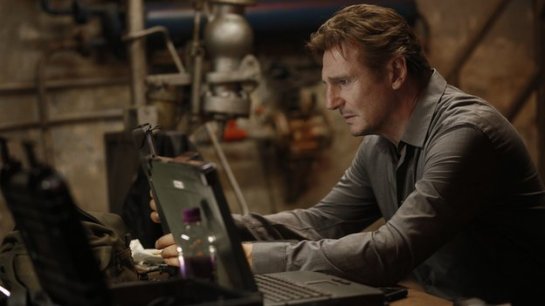
The tensions between the three characters skyrockets. There is an obvious sexual tension between Rydal and Colette. This leads to a growing animosity between Chester and Rydal. There is also Colette’s anger and frustration with Chester for getting them into the mess they’re in. Then you can sprinkle in Chester’s heavy drinking and growing paranoia along with the question of Rydal’s trustworthiness. Each one of these tensions are allowed to play out, sometimes in unexpected but satisfying ways.

Screenwriter Hossein Amini, probably best known for his work on “Drive”, makes his directorial debut and he certainly has an intriguing eye. The film is exquisitely shot and Amini doesn’t shy away from using the beauty of his setting. He also gives a keen attention to detail particularly in creating a nostalgic noir atmosphere. I swear, at times this film looked as if it were plucked right out of the the late 1940s or early 50s. It’s something Amini is clearly going for and for the most part he nails it.

JANUARY2

The film is also helped by its exceptional cast. Oscar Isaac is finally getting the respect he deserves as one of cinema’s most reliable actors. Here he gives a character that is charismatic, charming, but also a mystery. Mortensen is tasked with the bigger and louder performance and he has no problems with it. He lays out the intricacy of his character sometimes with bravado but other times with quiet uncertainty. And Dunst was also very good. She is an actress who keeps getting better and better. Here she gives us a character who may be the only one worthy of our sympathy.

“The Two Faces of January” is an intelligent and efficient thriller that is very confident with its presentation and with the story it is telling. Hossein Amini gives an impressive directorial debut, but he also deserves credit for his well-conceived screenplay. And it doesn’t hurt to have talents like Isaac, Mortensen, and Dunst to help create your vision. I wouldn’t say “January” will be one of those essential time capsule movies, but it is a highly entertaining throwback thriller that more people need to see.

VERDICT – 4 STARS


REVIEW: “Taken 3”

TAKENPOSTER

It’s the start of the 2015 movie season so you know what that means. It’s time for a Liam Neeson action flick. For several years we have gotten a Neeson action movie early in the year, mostly February. While they are usually forgotten by the end of the year, they do provide some decent escapist fun. Well, except for “Taken 2” which was an awful film, but it was also released in September. Now we get “Taken 3” and we get it in January. Will that early-year Neeson ‘magic’ give us yet another entertaining but forgettable thriller or does this film belong in the same crap bowl as “Taken 2”?

I can’t say I’ve been optimistic about “Taken 3”. Luc Beeson returns as co-writer and producer. Olivier Megaton returns to direct. In “Taken 2” these guys captured none of the first film’s edgy, butt-kicking entertainment. Instead they gave us a dopey and preposterous sequel filled with sloppy and undecipherable action scenes. With them back on board how could I expect anything different?

Taken2

The story follows the same basic blueprint as the other two movies. We spend the first 20 minutes or so getting reacquainted with these characters. Bryan Mills (Neeson) is still a fun loving father who loves a good bagel and owns a ‘particular set of skills’. He still has a close relationship with his ex-wife Lenore (Famke Janssen) and with his daughter Kim (Maggie Grace). Lenore has been having marital problems with her husband Stuart (Dougray Scott) which has rekindled her affections for Bryan.

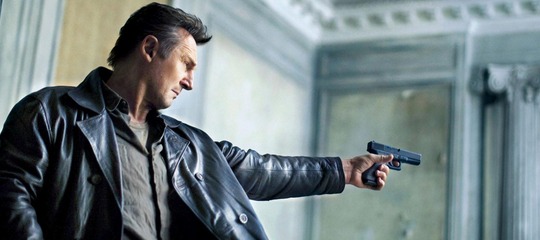
One day Lenore texts Brian and asks him to meet her at his apartment. When he arrives he finds her dead in his bed. The police immediately bust in and Bryan becomes the chief suspect. Thanks to a series of head-scratching decisions and amazing conveniences Bryan sets out to find who is responsible for his wife’s murder. Hot on his heels is LAPD Detective Franck Dotzler (Forest Whitaker) who wants to take him in. Clues, close calls, car chases, and fistfights follow as Bryan tries to get to the killer before the police get to him.

TAKEN1

The good news is “Taken 3” is better than the last film but not by a wide margin. There are just some things you have to expect. Beeson is going to give you some excruciating lines and some laughably bad plot contrivances. I swear, the guy writes some of the most simplistic and obvious dialogue. You can also expect Megaton to hack his action scenes to pieces and then paste them together in a headache-inducing collage of fast-paced images. His ridiculous quick cuts make following the action an impossible chore. He does slow it down a tad in the second half and that helps things a little.

I always enjoy Liam Neeson but for the first time he actually looks his age. Maybe it was how the fight scenes were shot. Maybe he was tired or uninterested. Whatever it is Neeson looked slow and limited. On the other hand he has that gravelly-voiced charisma and he can often make the most absurd scenes entertaining. He is asked to do a lot of that in “Taken 3” and in the end he makes it a lot more watchable than the last film. But as long as Beeson and Megaton are attached, it will be a silly and shallow series that even Neeson himself can’t fully save.

VERDICT – 2.5 STARS