

I would think it’s a tough task for anyone with a moral compass to be able to sit comfortably through a movie about slavery. I would say it’s virtually impossible with director Steve McQueen’s “12 Years a Slave”. This edgy, brutal, and uncomfortable drama takes a no-holds-barred approach in its depiction of one of America’s darkest times. That’s not always a bad thing. Sometimes people need to be jarred out of their comfort zone in order to truly understand the weight of the subject matter.
But in taking such an approach a movie is faced with an assortment of unique challenges especially in this case. McQueen has made some rather unusual comments on race and slavery. Some critics have lauded “12 Years a Slave” as the anti-“Gone with the Wind”, giving the one true and broad sweeping counter view of southern life and of all southern people. Things like this throw up unfortunate obstacles which can create a negative aura around a film. This can be a problem for those unable to separate such comments and positions from the movie itself. I try to judge a movie on its own merits and hope that the outside stuff doesn’t cause problems. Such was my approach to “12 Years a Slave”.

The film is adapted from the 1853 autobiography of Solomon Northup. McQueen was deeply moved by this stunning story of a free black man who is kidnapped and sold into slavery. As advertised, McQueen’s film pulls no punches. The movie certainly looks at slavery and the plantation life from one specific perspective and it offers no room for any other interpretation. But amazingly it’s extremely effective within the context of the story. I never felt McQueen was making a blanket statement about the South. Instead I felt he was forcing the audience to look at slavery from a position that is so often swept under the rug. We do squirm. We do wince. But sometimes we need to.
McQueen’s direction is strong. He carves a number of piercing images into our minds many of which will stick with me for a while. It may be his artful camera movement that focuses on a certain object or it may be a long take where his stationary camera refuses to let us turn away from the brutality on the screen. He captures the natural beauty of the deep South while exposing the ugliness boiling out of some of his characters. The settings, the atmospheres, the environments all ring true and at no point feel fabricated.

Helping his direction is a powerful yet subtle score from Hans Zimmer and an often times brilliant script from John Ridley. Ridley compliments McQueen’s vision by conceiving some powerful moments of unflinching truth. He also develops a number of characters that you’ll either strongly sympathize with or strongly detest. Regardless of which, you can’t take your eyes off of them. Unfortunately some of the film’s weaknesses can be traced back to his script. While at times Ridley’s story offers unquestionable greatness, I did feel he stretched things out a little too long. In a film like this you don’t want to do anything that would take the edge off of your message. I’m not saying Ridley did that, but he may have dulled it a bit during the middle of the movie. Thankfully things definitely picked up in the final act.
And then there is Chiwetel Ejiofor’s performance as Solomon. It is something to behold. He’s a perfect choice for the role. It’s an emotionally and physically taxing role as we see him move from a happy free family man to a kidnapped, separated, and brutalized slave. The skill with which Ejiofor handles some of these intensely difficult scenes is mind-blowing.
He’s helped by a fantastic supporting cast, most of who give really good performances. Perhaps my favorite performance in the entire movie is from Michael Fassbender. He plays a mercurial and utterly abhorrent plantation owner whose volatility knows no bounds. He’ll make your skin crawl and his barbarism will have you questioning his humanity. Fassbender really sells him. I also really liked Benedict Cumberbatch who plays a gentler plantation owner with a moral sensibility yet conflicted with the very slavery that he participates in. And I have to mention Lupita Nyong’o who plays a slave caught in an unwinnable circumstance. She is fantastic.

But there are two performances that stand out like a sore thumb. With a cast this big normally you could overlook them. But both are pivotal in that they drastically change Solomon’s circumstances. Paul Dano, an actor I’ve been very vocal about in the past, is just dreadful as a hateful slave foreman. Dano speaks his lines with that same weak, sniveling delivery that we’ve seen over and over. The problem is the role calls for something much more than he can deliver. Then Brad Pitt shows up complete with an Amish beard, a pretty corny accent, and with some of the more contrived lines of the entire film. To be fair, much of this falls in Ridley’s lap. He writes the character for the purpose of offering a moral summarization to the audience. He’s basically telling how to think and feel instead of just letting the potency of his film speak to our hearts.
While a few things do keep “12 Years a Slave” from being a masterpiece, it still is incredibly effective in giving us a look at slavery that is piercing and heart-wrenching. It does make us ask important questions but also appreciate how far we’ve come. Maybe there is an attempt here to give a one-sided visualization of the South, a perspective that has been shown to be untrue. But I didn’t get that from this film. I saw it as the incredible story of a man and his painful journey. His journey took him to dark and despicable places that are often times passed by. This film reminds us that they should never be forgotten. And for that alone Steve McQueen deserves a ton of credit.


 The 1895 novel “The Time Machine” by H.G. Wells has long established itself as a science fiction classic. While I’ve never read the entire novel, I still remember seeing a film adaptation as a young boy. It was a film from 1960 which was directed and produced by George Pal (Pal had already made a film version of the other Wells science fiction classic “The War of the Worlds” in 1953). There was a made for TV movie in the late 1970s but Pal’s version from 1960 was my first real exposure to this timeless story (pun intended).



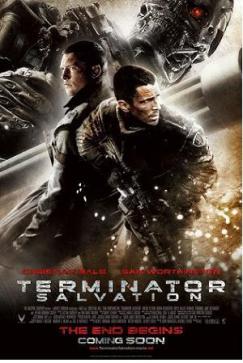 For some reason I’ve had this weird and unexplainable urge to write a review about a movie that I really like but most others don’t. Is it my pointless sense of duty to defend a film largely maligned by critics and my fellow movie fans? Is it some twisted pleasure I’ll take in the heat received from my fellow movie blogging pals? Whatever the reason I’m going to make my case for “Terminator Salvation”.


 Keith & the Movies