“THE VERDICT” – 4 1/2 STARS

I really enjoy courtroom dramas and “The Verdict” is a good one. It’s directed by Sidney Lumet and stars Paul Newman in one of his finest performances. David Mamet adapted the Barry Reed novel of the same name. The film received high praise from critics and Newman, Lumet, and Mamet each received Oscar nominations. It’s unique compared to other courtroom pictures in that the main case isn’t a huge unfolding mystery. In fact the case at the center of the film is pretty cut and dry. It’s the organizing of their defense, the fighting through the legal process, and the presentation of the case that fuels the narrative.

But “The Verdict” is also the tale of redemption. Underneath the courtroom drama is the story of a man who has watched his life crumble and but now sees a chance to get his life in order. Paul Newman plays Frank Galvin, a boozing Boston lawyer who has found himself resorting to ambulance chasing in order to pick up clients. In fact, he’s only had four cases in three years and lost them all. Just like his practice, his personal life is in shambles and he finds his only destructive solace at the bottom of a bottle. Newman nails this character and his Oscar nomination for the role was well deserved. It’s a nuanced performance that shows Frank as more than just a down-on-his-luck alcoholic. Newman expertly conveys the inner conflict within Frank and it’s that internal, personal struggle that drives one of the picture’s most compelling components.

Frank’s luck appears to change when an old friend and former partner Mickey (Jack Warden) hooks him up with a medical malpractice case that should be a slam dunk. But what kind of movie would this be if everything was all sunshine and flowers? Frank decides to take the case to trial and turns down a substantial settlement which baffles everyone including his clients. He then finds himself up against a biased judge and a prominent law firm led by Ed Concannon (played wonderfully by James Mason). It’s a legal David and Goliath story with Frank running into one complication after another. Add to it his personal and emotional fragility and you have the ingredients for a top-notch story.

David Mamet’s screenplay is intelligent and razor-sharp. The dialogue is well written and the pacing is methodical. While Mamet’s story intentionally moves deliberately, it does seem to spin its wheels a little during the middle of the film. And some people may argue that the movie isn’t the most detailed and cohesive courtroom drama. But Mamet doesn’t use the courtroom as his main focus. It’s a vehicle that allows this tired and broken man to try for redemption by doing the right thing. Lumet’s direction is fantastic and his ability to capture emotion and intensity through silence is impressive. He also gives the movie a gritty edge and authenticity that perfectly fits.

While Lumet and Mamet’s work is solid and there is a wonderful supporting cast, everything comes back to Paul Newman. Almost always seen on-screen as the handsome and vibrant performer, here he looks old, worn-down, and defeated. He perfectly captures this character and we never doubt him for a second. There’s no hard-to-believe miracle transformation. Instead we see someone taking one step at a time trying to dig himself out of the hole he made. Newman sells all of this with a down-to-earth genuineness that is easy to buy into. “The Verdict” may not be the most highly polished courtroom movie but it certainly holds its own. It’s an emotionally charged drama with a redemptive subtext that worked for me on so many levels. And how can you not love watching Newman dominate the screen in what is arguably his greatest performance.
REVIEW: “Vicky Cristina Barcelona”

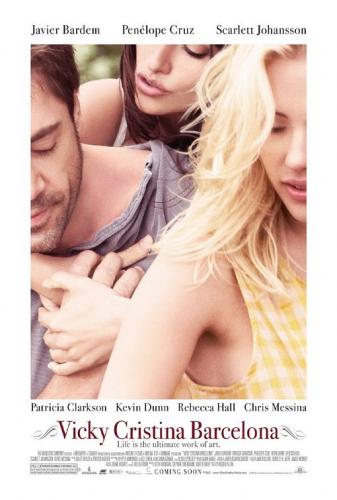
Many critics touted “Vicky Cristina Barcelona” as Woody Allen’s return to quality filmmaking after a few clear misses. I have to say I was with them, at least for the first half of the film. But that’s when Allen’s story started to undo everything I had bought into. His sharp locational eye beautifully captures the Spanish architecture and countryside and his good-looking characters lay the groundwork for a promising story. But the movie is never as funny or as clever as it tries to be and it ultimately falls apart in its nonsensical third act.

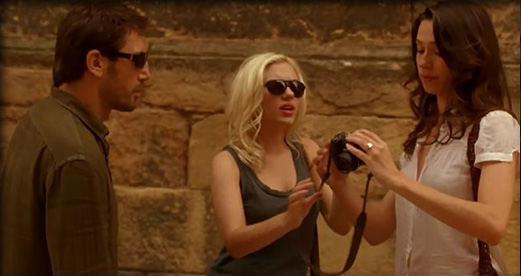
“Vicky Cristina Barcelona” is a romantic comedy that takes a rather cynical look at romance. Vicky (Rebecca Hall) and her friend Cristina (Scarlett Johansson) are spending the summer in Barcelona. Vicky holds what you might call a more traditional look at relationships. She is grounded, sure of what she wants, and engaged to a preppy young business man back home. Cristina is somewhat of a free spirit, prone to dive into love and life headfirst regardless of the consequences. One of the more compelling things about the friends is that they are so opposite at first. Hall and Johansson have some great moments together bouncing their own perspectives and idiosyncrasies off each other. They start off as genuinely interesting and believable best friends.

VICKY 1

Their summer takes an interesting turn when they meet Juan Antonio Gonzalo (Javier Bardem), a struggling artist who invites the girls to spend the weekend with him in the city of Oviedo. Vicky is against the idea but Cristina sees it as intriguing. The stronger spirit wins out and the three take off. Over the weekend the relationships between the three grow more complex. But things go from complex to nutty when Juan Antonio’s neurotic ex-wife María Elena (Penelope Cruz) enters the picture. All four of the main stars are fantastic. Cruz, who won the Best Supporting Actress for the role, gives the movie some energy just as it was starting to lag. But even she is undermined by Allen’s off-the-wall final act which seems to make everything earlier feel disingenuous.

VICKY 2

For me the biggest casualty of Allen’s uneven story is the unique difference between Vicky and Cristina. By the end of the film I didn’t feel that were that unique at all. Even when Cristina becomes involved in an absurd love triangle, the Vicky character, who I thought was more grounded and level-headed, responds in a way that seemed inconsistent with who she has been. Some may attribute that to an evolution of her character but I think the movie goes on to show that she isn’t as deep of a character as she appears to be at first. I also didn’t find the film nearly as funny as others. Sure it has a few dry quirky moments, but it’s real attempt at humor falls flat particularly in the second half of the film. This truly is a tale of two movies in one.

Some have felt the movie promotes the pursuit of love and happiness and the idea that romance may be fleeting but it’s worth the effort. I feel it looks at love through a very pessimistic and sometimes skewed lens. There’s no denying that “Vicky Cristina Barcelona” is a beautiful movie. The gorgeous Barcelona sights and sounds and the attention to the culture creates the perfect environment for what could have been. For me “Vicky Cristina Barcelona” wasn’t the summer to remember. Although it might have been if the second half of the film was as good as the first.

VERDICT – 2 STARS

“VERTIGO” – 4 STARS

In most conversations about Alfred Hitchcock’s films, “Vertigo” often finds itself mentioned as the quintessential Hitchcock movie. It’s called a masterpiece and is considered by many to be one of the best films of all time. While I don’t personally agree with that level of praise, there’s no denying that “Vertigo” is a cleverly crafted and stunningly stylized psychological thriller. “Vertigo” can never be branded as shallow or conventional. It has it’s fair share of mystery and suspense while also delving into more disturbing subjects such as mental breakdowns and romantic obsession. It’s takes it’s time playing out, but it’s still quite rewarding for those who appreciate it’s complexity.

The great James Stewart plays Scottie Ferguson, a San Francisco police detective. Scottie struggles with serious acrophobia which ends up contributing to the death of a police officer during a rooftop chase. The incident combined with his ailment cause him to retire early from the department. That’s when Scottie is hired by an old acquaintance named Gavin to follow his wife who he suspects has been possessed. Scottie doesn’t buy the supernatural assertion but still agrees to help. This sets the movie down it’s first of many twisty, unpredictable paths.  

It’s said that Hitchcock later stated he thought Stewart, who was 50 years old at the time, was too old and many critics initially felt he was miscast. Personally I think Stewart is fantastic here and it’s nice that over time his performance has garnered more appreciation. When first released, “Vertigo” was dismissed by most critics and Stewart became the easy scapegoat. The movie does have it’s flaws but it’s hard for me to associate any of them with Stewart’s performance. He’s grounded and believable and Stewart never loses control of his character even as things unravel around him.

Kim Novak plays Gavin’s wife Madeleine. She wasn’t Hitchcock’s first choice for the role but she ends up making the character her own. It’s impossible to talk about her character without giving away too much but Madeleine isn’t what she seems. A lot is required of Novak as her character branches out into several directions and for the most part she succeeds. She icy cold and mysterious yet we also see her as pitiful and sympathetic. She’s an essential character and while not as polished as Stewart, Novak’s performance works.

“Vertigo” is a technical marvel with some truly gorgeous camera work. Hitchcock keenly uses trickery and sleight of hand in several scenes to enhance the effects. The well-known vertigo zoom shots are still mentioned in most conversations about the film and the surreal use of lighting really dictate the tone of several scenes. I also love the wonderful locations. Hitchcock includes several San Francisco landmarks in the film and he uses the camera to accentuate the city’s beauty. Other small but effective devices include the use of reflections and clever elevated camera angles. It’s just an incredibly attractive film.

Some have described “Vertigo” as a meditation. Others have called it an observance. One reason these descriptions fit is because of the movie’s deliberate pacing particularly in the first half of the film. I felt it took a while getting it’s footing and the lackadaisical first 30 minutes could have been tightened up a bit. I was also a little surprised to see the timing of the big reveal. I certainly don’t want to give anything away but what I thought was the biggest red herring turned out to be no red herring at all.

For me “Vertigo” isn’t the perfect movie that many believe it is. That being said, it’s still a remarkable film that delivers despite it’s few flaws. It has the appearance of cinematic art with Hitchcock showing what skillful uses of a camera can bring to a movie. Stewart is brilliant and his performance immediately draws you into the picture. He’s the linchpin that keeps this dark but riveting film together. “Vertigo” has earned it’s “classic” label and it’s mandatory viewing for any fan of mysteries or thrillers. And while it’s not my favorite Hitchcock picture, it’s still a rock solid movie that satisfies with each viewing.