
REVIEW: “The Housemaid” (2025)

Sydney Sweeney and Amanda Seyfried square off in Paul Feig’s “The Housemaid”, a movie that starts off as a fun campy throwback before nosediving in its final act by taking the cheapest and most predictable route available. It’s a shame because Feig has all the ingredients he needs, from a game cast to a genre formula that audiences tend to enjoy. But all of its entertaining buildup is wasted on a ridiculous and trite final act that narratively and thematically rehashes ideas we’ve seen several times before.

In fairness, “The Housemaid” is based on Freida McFadden’s 2022 novel of the same name and from all indications it sticks pretty close to the book’s central story. But if you’re unfamiliar with the novel and hoping for a movie with the slightest original punch, you might leave this adaptation disappointed. For me, seeing potential squandered for something this obvious is more frustrating than disappointing.

Image Courtesy of Lionsgate

Sweeney plays a young woman named Millie Calloway who we first meet as she’s arriving at a lavish estate in Great Neck, New York. There she meets Nina Winchester (Seyfried), a wealthy wife and mother who has invited Millie to interview for a live-in housemaid position. It’s an important opportunity for Millie who isn’t quite who she claims to be. While she hides it from Nina, we learn Millie is fresh out of prison after serving ten years of a fifteen-year sentence for a crime which comes to light later. And she needs a steady job to meet the requirements of her parole.

Millie gets hired and wastes no time moving into a cramped A-frame attic space in the Winchester’s home. The converted bedroom isn’t much, but it beats sleeping out of her car. Millie is also introduced to Nina’s young daughter Cece (Indiana Elle) and her hunky husband Andrew (Brandon Sklenar). It looks like the ideal scenario for Millie. Cleaning, organizing, some light cooking, and helping with Cece in exchange for living in a nice house with a nice family for a nice salary.

But of course Millie’s scenario turns out to be far from ideal. It starts with Nina’s wild fits of rage. She then begins lashing out at Millie, blaming her for things she hasn’t done. Things get even more twisted when Nina begins framing Millie to make her look foolish. In normal circumstances, Millie would quit on the spot. But she desperately needs the job to stay out of prison. Thankfully she finds an ally in the endlessly charming Andrew who routinely steps in to reassure and reinforce Millie with his dreamy eyes and winning smile.

Image Courtesy of Lionsgate

Without giving too much away, screenwriter Rebecca Sonnenshine wastes no time ratcheting up the drama before eventually turning the story on its head. Seyfried does unhinged well while Sweeney wins our sympathy and our suspicion. But neither performance hits every right note, mostly due the material. The script cunningly pushes both characters to their breaking point only to undo its own good work with a lame reveal that’s more interested in being relevant than original.

Sadly the predictable big twist lets all the air out of “The Housemaid”. Not only does it sour the good stuff that came before it, but it kills the film’s finish where things get wackier and bloodier. But even without the story’s eye-rolling “surprise”, the final 20 minutes are a wobbly mess. It’s an ending littered with arbitrary actions, an overly long explain-it-all flashback, and a final scene with ludicrous implications. But to be honest, by that point it didn’t really matter. The damage had already been done.

VERDICT – 2 STARS

REVIEW: “First Reformed”

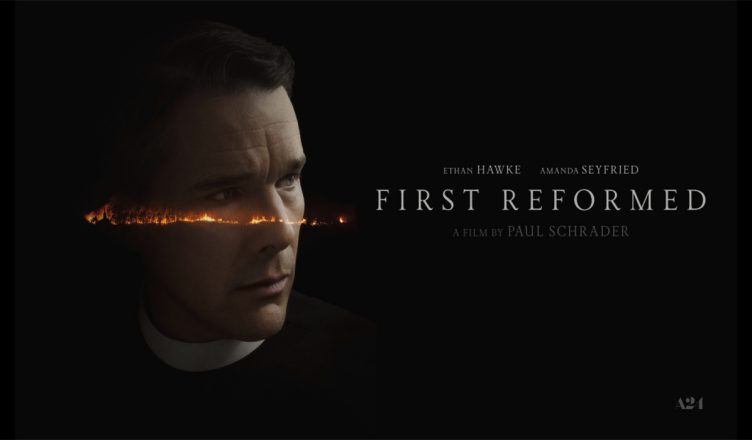
First poster

“A world without hope”. It’s an idea wrestled with (in some form or another) by several characters and it’s one of many things on the mind of “First Reformed”, the latest film from writer-director Paul Schrader. This hopelessness feeds a lingering despair that is mirrored in the lives of several key players and is woven into the very fabric of this hypnotic exploration.

I realize that may not be the most upbeat way to introduce a movie, but when honestly dealing with themes of guilt, obsession, self-destruction, and despair the rays of light should be just as difficult for us to find as it is for the characters. And much like the ‘Crisis of Faith’ classics it follows, “First Reformed” is more interested in the spiritual and emotional struggle as well as the toll it takes on the human psyche.

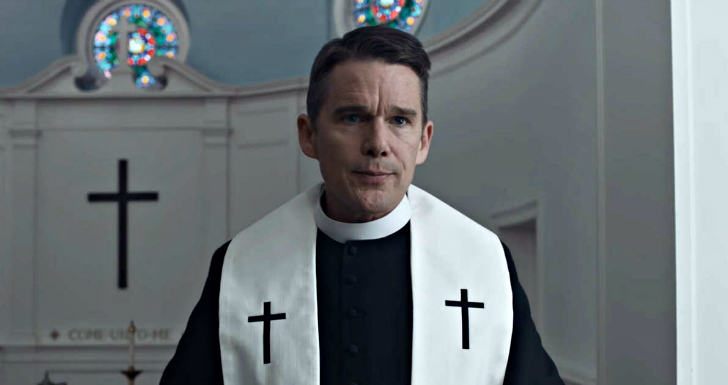
Giving the performance of his career, Ethan Hawke plays Reverend Ernst Toller. He pastors a Dutch Colonial church is upstate New York known more as a historical landmark than a place of worship. First Reformed Church gets by thanks to its parent megachurch, ironically named Abundant Life. It’s ran with a businesslike prowess by Pastor Jeffers (Cedric Kyles, better known as Cedric the Entertainer). Jeffers preaches to packed houses and has big community connections. Toller sees more sightseers than parishioners and struggles in his alone time to reconnect with God.

first1

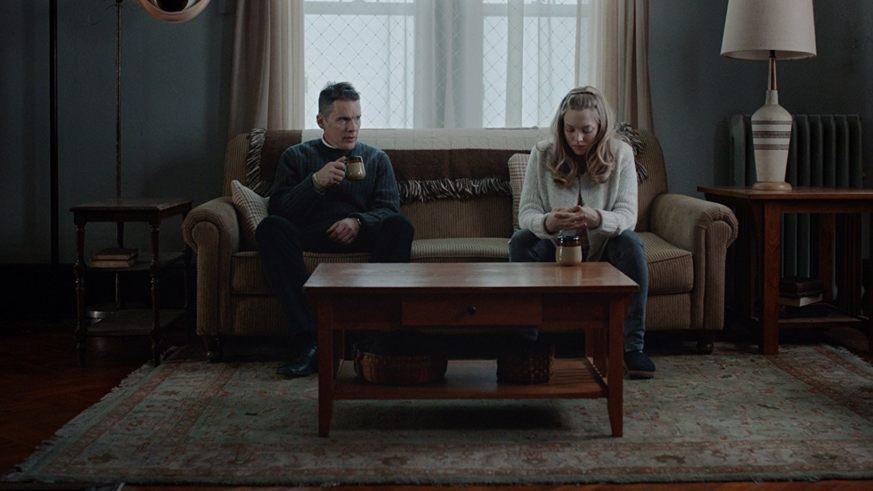
After a Sunday service Toller is approached by one of his few faithful church members, a pregnant woman named Mary (Amanda Seyfried). She implores him to meet with and counsel her husband Michael (Philip Ettinger) whose environmental fanaticism has driven him into a deep state of depression. Michael questions the “sanctioning” of bringing a child into a world he believes to be doomed and he poses a question that haunts Reverend Toller for the duration of the film, “Can God forgive us for what we’ve done to this world?”

Always a solid actor, Hawke dials back from the type of performances he’s known for. It’s a quiet and reserved portrayal allowing much to be told through expression and even appearance. Deep wrinkles etched in his brow held up by tired, forlorn eyes. You truly get a vision of a man who as Schrader himself put it “has lived a life”. In his case it hasn’t been an easy one. Harboring guilt from his past, unable to connect with God through prayer, and sickly due to a worsening stomach ailment. You can’t help but see shades of the struggling young priest from Robert Bresson’s “Diary of a Country Priest”.

The great French auteur wasn’t the only influence for Schrader. Hints of Carl Dreyer’s “Ordet”, Ingmar Bergman’s “Winter Light”, Tarkovsky, Ozu and Rossellini are everywhere. You even see him pulling from the same thematic toolkit he used in his acclaimed collaborations with Martin Scorsese (“Taxi Driver”, “Raging Bull”).

First2

The cracks in Reverend Toller’s psyche begin to show after an especially troubling tragedy. Add to that pressures from his church’s upcoming 250th anniversary reconsecration ceremony. During his daily duties Toller puts up a good front. But it’s at night, alone with his thoughts and journal, when we see the gravity of his dark inner turmoil. He’s a man mired in self-destruction and self-contradictions, yet at the same time he is yearning for the voice of God. He’s a good man who has lost his way.

The mood of the film is nailed down via Alexander Dynan’s stellar cinematography. The cold gray tones and deep shadows are only occasionally washed with color and those instances aren’t without meaning. There is also the stillness of Dynan’s camera offering very little motion at all. But in the rare scenes where the camera does move, you can be sure the movements are rich with purpose. Add to it the intensely effective score from Welsh composer Brian Williams, minimal yet undeniably foreboding.

In the 27th chapter of Matthew’s Gospel Jesus cries out “My God, My God why hast thou forsaken me?” It’s a cry of anguish from the Son of God calling out to His Father but hearing no response. To an obviously lesser degree, you can imagine the same cry burning in the heart of Reverend Toller. It all builds up to an ending that feels slightly out of tune with the rest of the film (or does it?). And while fascinating to watch and contemplate, I’m still not sure how I feel about it. At the same time I love how I’m still wrestling with it. And when complimented by a bracing career-best turn from Hawke, strong supporting work throughout, and an auteurist presentation, you have a film that I can’t help but love.

VERDICT – 4.5 STARS

4-5-stars

REVIEW: “While We’re Young”

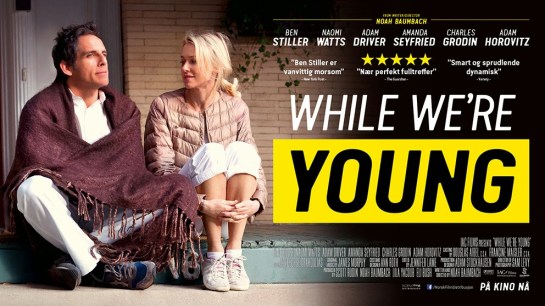
YOUNG POSTER

Noah Baumbach has made a career out of making movies about unlikable or generally unhappy characters. Many of his walking human complexities exist in various stages of lethargy, denial, or dissatisfaction. But at the same time the characters he creates drip with humanity and they are fascinating to watch. Yet with all of that being said, I don’t always fully go for his movies.

“While We’re Young” is another of Baumbach’s mixed bags. It is a sincere and genuinely human comedy that connects due to its observational honesty and its willingness to address real emotional struggles. But like a few other Baumbach projects, it doesn’t fully see its promise through and the final act of the film wanders away from what makes the story initially so compelling.

YOUNG1

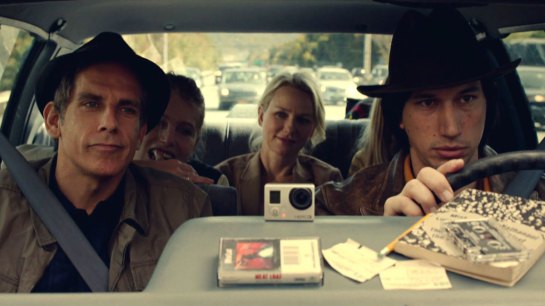
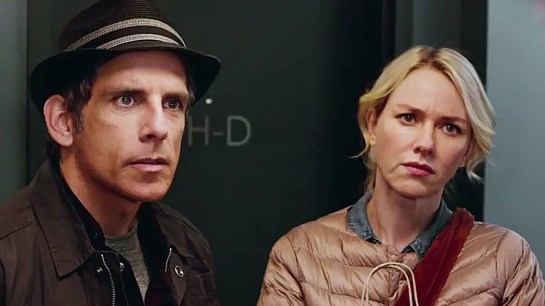
Ben Stiller and Naomi Watts play Josh and Cornelia Schrebnick, a middle-aged couple living in New York City. Their past difficulties in having a baby are highlighted with the birth of their best friends’ daughter. Josh and Cornelia attempt to brush aside their feelings of disappointment and unfulfillment by focusing on the freedoms they have as a family of two. But even that is effected by the plain ol’ fact that they are just getting old.

Josh is a movie documentarian who has been stuck in the rut of an eight year film project that shows no signs of nearing completion. After teaching a continuing education class at a local college he is approached by young twenty something couple Jamie and Darby Massey (Adam Driver and Amanda Seyfried). The Massey’s invite Josh and Cornelia to dinner where we learn Jamie is an aspiring documentarian and a huge fan of Josh’s first film.

Josh and Cornelia grow infatuated with their new young hipster friends and their exaggerated retro styles. They feel young and energetic whenever they are around Jamie and Darby and they begin feeling a disconnect with their old friends. But is this simply a refuge from their insecurities about getting older, or is the old adage correct – you’re only as old as you feel?

For most of the film Baumbach explores that question through a number of smart and witty conversations and situations. We see the Schrebnick’s, particularly Josh, open up and embrace new things. He puts aside some of his closed-minded, exclusionist perspectives and sees creativity and life in general through a new lens. But at the same time Baumbach is shrewdly pointing a finger, not at Josh but at the Masseys; asking compelling questions about the younger generation.

YOUNG2

Baumbach’s film works on so many levels but it also has its flaws. Stiller and Watts each convincingly play their individual parts. Yet there are moments where I couldn’t quite buy into them as a couple. There are also a few moments where the normal sharp wit gives way to the juvenile. For example, an Ayahuasca scene leads to a running vomit gag that never seems to end. I mean who doesn’t laugh at vomit, right? And the biggest problem is in the last act when the story loses its focus a bit and ventures off in a direction that simply wasn’t that interesting.

Baumbach is a unique filmmaker who tells unique stories. His tales rarely venture outside of his confined view of life, love, and relationships but that’s what provides his films with their own flavor. “While We’re Young” gives its audience things to ponder and to chew on while also being deftly funny and unflinchingly human. It just can’t quite see its strengths through till the end. It’s still a good film. Not “Frances Ha” good but hey…

VERDICT – 3.5 STARS

3.5 stars