

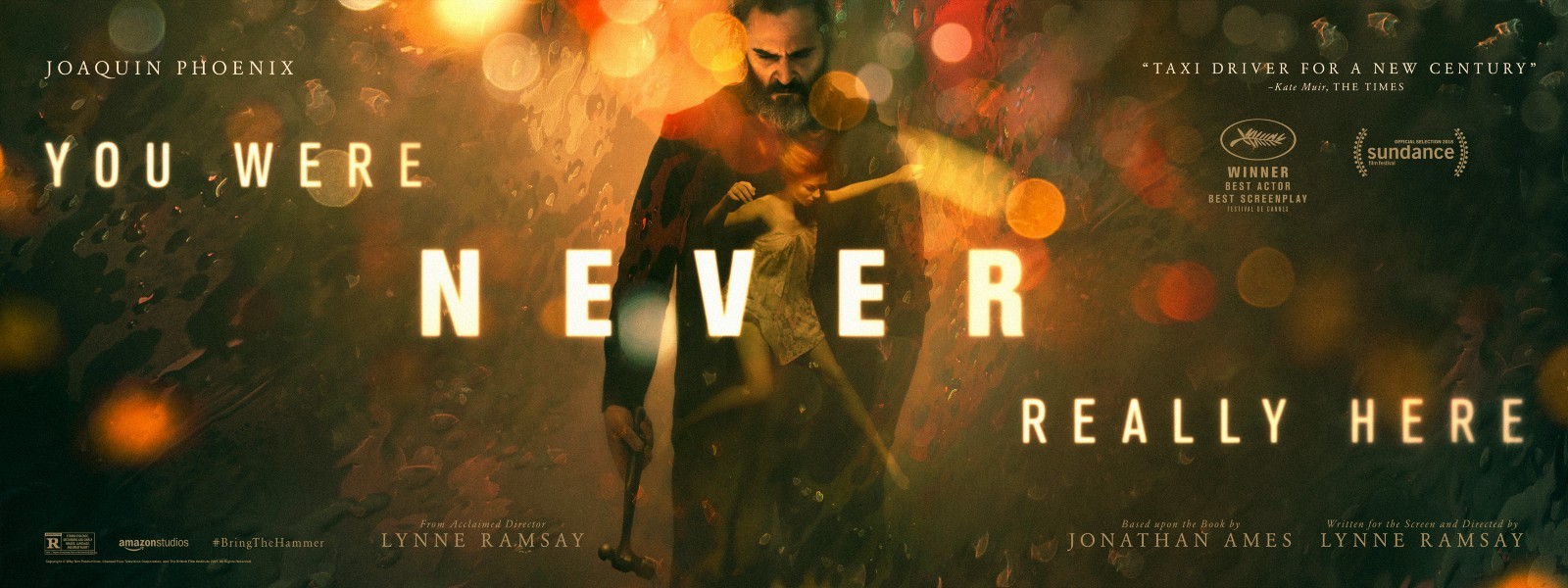
Jennifer Lawrence and Robert Pattinson are a couple trapped in a doomed relationship in director Lynne Ramsay’s grueling new feature, “Die My Love”. This is her first film since 2017’s much different but equally grim “You Were Never Really Here”. Though based on a 2012 Ariana Harwicz novel, Ramsay’s adaptation says nearly everything it has to say within the first half-hour. The remaining 90 minutes plays like misery porn as we watch a woefully unhappy woman barreling towards destruction.
“Die My Love” is written by the trio of Ramsay, Enda Walsh, and Alice Birch. Their story pitilessly blends motherhood and madness in a way that is surprisingly cold and unforgiving towards the lead characters, the lead cast, and the audience. It toys with such themes as postnatal depression and isolation. But Ramsay’s smothering approach spends more time breaking down and laying bare Lawrence’s character (as much physically as psychologically) than doing much meaningful with the themes that are introduced.

The film opens by introducing us to an unstable young couple, Grace (Lawrence) and Jackson (Pattinson). The two have moved away from the hustle and bustle of the big city to an old house in rural Montana that Jackson inherited from his late uncle. The couple settles into their new home, and following a rather ludicrous sex montage, they have a baby boy. From there to the final frame, the movie follows the slow disintegration of their ill-fated relationship.
Both Grace and Jackson are dissolute and self-destructive, to such a degree that we know things aren’t going to end well. But while Jackson has his own set of issues, it’s Grace who finds herself in the center of Ramsay’s sights. She’s a stalled writer who loses all inspiration and motivation after becoming a stay-at-home mother. She gets little support from Jackson who is off working for days at a time. And when he is home, his insensitivity (which seems to spring from nowhere) only pushes her closer to the edge.
But none of this is especially surprising considering Grace and Jackson never really feel like a true-to-life couple. They never have real-world conversations and so many of their interactions appear staged for the camera. Brief supporting work from Sissy Spacek and Nick Nolte does more to ground Grace and Jackson than anything they do together. It’s a critical issue that leaves us with two shallow and intemperate hipsters rather than an organic couple with actual depth and complexities.
It ends up being all about Grace and her downward spiral. Her behavior gets increasingly bizarre, soon resembling full-on psychosis more than postpartum depression. Lawrence fully commits, crawling around on all fours, rabidly barking at Jackson’s annoying dog, furiously clawing away at wallpaper until her fingers bleed, throwing herself through a glass door, and randomly taking off her clothes whenever Ramsay asks. It’s the kind of performance awards voters often fall for, yet here it feels so hollow.
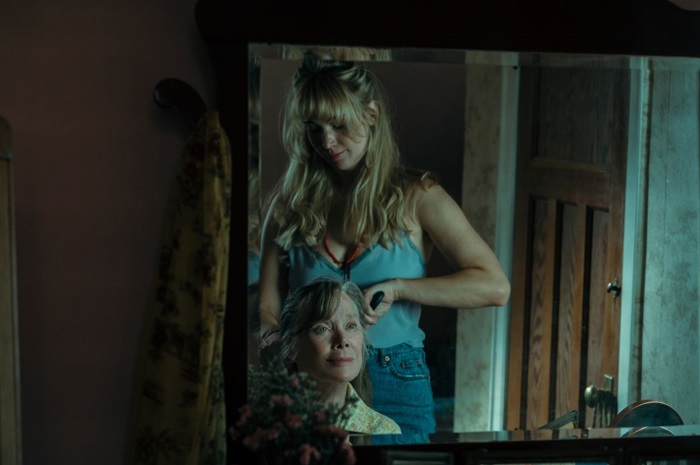
Unlike Ramsay’s previous films, “Die My Love” is full of empty provocations that are more interested in shocking the audience than challenging us with substance. When not assaulting us with weird needle-drops and stylistic flourishes, Ramsay is sprinkling gasoline on the fire that is Grace’s sanity. And for what purpose? The movie has already played its hand by the 20-minute mark. Even later, when we’re led to believe Grace is “better”, we can easily see through her sudden turn towards domesticity.
“Die My Love” ends up being a maddening experience. It’s essentially the equivalent of lighting a fuse and waiting two hours for your main character to finally blow. It’s just pointless misery with rarely a reprieve. Ramsay is a talented filmmaker who is no stranger to working with dark and unsettling material. But with “Die My Love”, she seems too focused on her own abrasive formalism and with pushing her acclaimed lead actress to ridiculous lengths.
VERDICT – 2 STARS

 Keith & the Movies