“REAL STEEL” – 3.5 STARS

I think the most surprising statement I’ll make this entire year is this: I liked “Real Steel”. From my perspective, everything about this film’s trailer pointed to disaster. The all too familiar story of a crummy father grudgingly paired with the son he’s never been there for mixed with radio controlled robot boxing. Sound exciting? Well, actually it is. There’s no denying the silliness of the concept on the surface. There’s also no denying that the film uses several clichés and plot devices that we’ve seen before. Yet as predictable as it is, the story has heart and it manages to take a ridiculous idea and make it pure and simple fun.

Hugh Jackman plays Charlie Kenton, a failed father and ex-boxer who travels to county fairs and pool halls with his robot boxer in tow. Charlie loses an ill-advised bet that he doesn’t have the cash to back and he has his mechanical meal ticket destroyed in the process. After his ex-girlfriend dies, Charlie is summoned to a court hearing that will determine custody his son Max (Dakota Moya) who he hasn’t seen in years. His ex-girlfriend’s rich sister and brother-in-law want the boy so Charlie comes up with a plan to sign over custody for $100,000 but he’ll have to keep Max for the summer while the couple is away in Europe.

There’s absolutely no reason to like Charlie. He’s immature, irresponsible, and self-absorbed. But just like every other character Jackman has played, there is something genuinely attractive about Charlie. Jackman brings out an almost natural likability with his performances. Charlie has a certain charm and personality that Jackman nails. You’ll shake your head in disgust at how he flippantly disregards his son but cheer him on through every boxing match. The biggest problem with the character is that his immaturity is a bit overdone. There are a couple of scenes where 11 year-old Max is speaking to his father like I would to my 3 year-old who I caught pulling the cat’s tail. Speaking of Max, Moya does a really nice job selling this hurt and hardened kid to the audience. He does fall victim to a few cheesy lines of dialogue and his occasional potty mouth did nothing to endear the character to me. But for the most part he’s believable as is his relationship to Charlie.

The film takes an almost ‘sports underdog movie’ turn after they find a junked sparring robot. Max immediately adopts the robot and calls him Atom. It’s Atom that plays a key role in bringing father and son together. The pair begin entering Atom into small time fights and notice he’s a little tougher than Charlie gave him credit for. There’s also hints that he may be more than just a lot of metal parts and circuitry.

That brings me to the wonderful special effects presented through a solid mix of computer generated images and animatronic props. The robots look amazing and they perfectly meld into the real world environments around them. This is especially impressive in the numerous scenes with the robots and real human characters together in cramped areas. The fight scenes are loud and bone-jarring and I couldn’t help but smile watching my son take it all in. Believe it or not, this silly concept is so visually flawless that I couldn’t help but be drawn in.

“Real Steel” is a little hammy and it’s very predictable. But it never takes itself too seriously and it knows exactly what it wants to be. It’s a little contrived in some parts but as a dad, even I couldn’t help but get a little misty during a few scenes. Most importantly “Real Steel” is fun. The characters are fun. The robots are fun. The fight sequences are fun. And most importantly, sitting next to my son in the theater soaking all of this up was fun. That’s good enough for me.

“JANE EYRE” – 4 STARS

Despite the semi-misleading trailers and studio promotions, Cary Fukunaga’s new adaptation of Charlotte Bronte’s classic “Jane Eyre” isn’t a horror picture. At it’s core it’s a period love story but with just the right amount of reimagining to make it feel new and fresh. It hits all the right notes whether it be romance, humor, or mystery. And even though it’s far from being the central tone of the film, there is a bit of creepiness mainly conveyed through the dark, more Gothic setting and a couple of routine yet spooky haunted house styled scenes. The most important thing is that most of this works. It gels together to give some familiar material a slightly new and energetic appeal.

Moira Buffini’s screenplay branches out into several different directions but the centerpiece of the story is still the romance between Jane (Mia Wasikowska) and her wealthy yet mysterious employer Edward Rochester (Michael Fassbender). It doesn’t spend as much time developing the rags-to-riches component of Jane’s life as I would have liked instead jumping headfirst into the obvious attraction between the two leads. But once Fassbender and Wasikowska are together on-screen for the first time, I didn’t care. I was immediately drawn in.

The story is anchored by some wonderful performances, great costume and set design, and it’s moody yet captivating cinematography. Fassbender’s Rochester is sophisticated but abstruse. Even if you’re familiar with the source material, Fassbender will have you questioning his every intent and motivation. Wasikowska gives a very reserved and controlled performance that captures her character perfectly. She’s quiet and solemn early on but we also see an unfeigned spunkiness that shows itself in some of the film’s best scenes.

“Jane Eyre” isn’t an old English horror picture regardless of what the trailer may have you believe. But it does use some of those spooky elements to create a perfect environment for this story. The movie teems with bridled passion and haunting secrets. It’s heartfelt and emotional but not without those perfect moments of humor that gives the movie life. Even though it touches on it, the film underplays the class-based challenges that Jane faces and the pacing is a bit erratic in the third act. But it’s hard not to enjoy this film and to appreciate the craftsmanship and artistry that goes into making this type of picture. I really enjoyed it.

“IN A BETTER WORLD” – 4 STARS

“In a Better World” is a Danish film from director Susanne Bier and the surprise Oscar winner for 2010′s Best Foreign Language Film. It’s a provocative and multi-layered picture that delves into such weighty subjects as bullying, divorce, the death of a parent, suicide, and even murder and violence in Sudan. It touches on many of these subjects with care and savvy but this is also where the film seems to lose it’s identity. It’s hard to tell what ”In a Better World” wants to be.

Mikael Persbrandt plays Anton, a Swedish doctor and father of two who has recently separated from his wife Marianne (Trine Dyrholm). Anton spends a lot of time away from home working at a refugee camp in Sudan. Here he treats all sorts of injuries, many inflicted by a ruthless local war lord. At home his son Elias (Markus Rygaard)  has been the victim of incessant bullying from a bigger kid at school. Upon witnessing Elias being ridiculed by the bully, a new student named Christian (William Juels Nielsen) intervenes kindling a new friendship with Elias. But Christian has problems of his own. He’s a disturbed and disconnected boy who is still unable to come to terms with his mother’s recent death due to cancer. Christian’s anger grows and grows despite the efforts of his father Claus (Ulrich Thomsen).

As I mentioned, “In a Better World” touches on a lot of themes but the film lacks a main focus. It’s most certainly a movie about bullying. It’s also a movie about the impact losing a parent has on a child and a film about the friendship of two struggling boys. But the word “violence” kept coming back to me. One consistent undercurrent flowing throughout the picture was violence, our propensity towards it, and our reaction to it. Whether it be the more savage and bloody violence that Anton witnessed in Sudan or the subtle and often overlooked violence in our own cozy neighborhoods, “In a Better World” presents it as something internal. The bigger question is how do we deal with it.

There’s a lot in the movie about revenge versus letting go. Anton is a passive man who would rather walk away than cause things to escalate. Christian convinces Elias this is a sign of his father’s weakness. Two different individuals reacting to violence in two very different ways. But such is violence that even Anton and his passivity fall victim to the impulse for vengeance. Everything in the film seems to be used as fuel for this one underlying theme.

While that’s what I took from the film I could be dead wrong. It just lacked the clarity needed to really impress it’s message upon me. But even though it goes into all sorts of difficult but real circumstances, it does so in a responsible and cohesive way. While several things could have used more attention, Bier makes it all flow together in a way that really kept me involved. The solid performances sold me on these characters and I genuinely cared about their situations. It’s also beautifully shot and features some polished camera work and great locations. So even with it’s flaws, I couldn’t take my eyes away from the screen.

“In a Better World” isn’t the perfect film and it surprised a lot of people when it won last year’s Oscar. But this is still a thoughtful and engaging picture that had my attention throughout. It deals with some weighty subjects and does so with sometimes brutal honesty. The performances are rich and pure and even when the script falls short in spots, the actors still manage to elevate the material. “In a Better World” may not have the depth and detail that some are looking for and that’s a valid argument. But I found it to be a moving experience that not only touched me but made me think. There’s a lot of movies out there that can’t accomplish that.

REVIEW: “Higher Ground”

Vera Farmiga has proven herself to be one of the most gifted and proficient actresses in Hollywood. In “Higher Ground” she once again shows off her acting chops but it also marks her directorial debut. It’s a thoughtful and sometimes challenging film that takes a more candid look at spirituality and how life’s difficulties make true faith seem out of reach. It’s also a story of decisions and the consequences that follow. It tackles some weighty religious issues but also looks at social troubles such as drug use, infidelity, and divorce. But at it’s heart, “Higher Ground” is the story of one woman’s conflict between the faith she envies and the lack of faith she feels.

Farmiga plays Corinne, a married mother of two who has watched her life take several drastic changes in direction. She was raised in church but was led away by her rebellion. After some poor choices lead to a premature pregnancy and marriage, she’s brought back to God by a near tragic accident. The family dedicates themselves to a small local church and we watch as Corinne grows in her personal relationship with God. But an inner conflict grows within as she struggles to see God’s hand in some truly difficult circumstances. She asks tough questions with genuine motivations and most of the picture focuses on her search for clarity. Corinne is a very earnest woman and Farmiga makes her believable and relatable regardless of your religious convictions. It’s a beautiful performance that drives the entire film and never shortchanges the character.

When it comes down to it, “Higher Ground” plays it pretty safe. It’s constructed in a way that different people can take away different conclusions largely based on their personal beliefs on Christianity and faith. The story certainly doesn’t target Christianity but neither does it shy away from asking some fairly provocative questions.  While at times it tries to paint faith into a corner and make Christians seem naive and disconnected, it also shows the deception and disloyalty of the faithless world. It may dabble in the occasional stereotype, but overall it stays on an even course which should allow it to speak to different people.

Farmiga’s direction is subtle and steady. She lets the story unfold without any overwrought theatrics or emotional gimmickry. The film looks and feels grounded in reality and Farmiga maintains a steady, natural tone. There are a couple of instances where it abruptly shifts to a new scene, but otherwise it moves at a smooth pace. The Christians are often times depicted well but at other times I couldn’t help notice how much they resembled a group of hippies from Woodstock. There are also several attempts at humor that are actually quite funny, but there are others that feel terribly out-of-place in the picture. One example is Corinne’s close friend explaining her method of keeping her marriage fresh. It’s not particularly funny and I found it pulled me out of the film.

There’s a lot to like about “Higher Ground”. Farmiga shows that she is certainly capable behind the camera even though the movie has it’s shortcomings. It’s a little clunky in some areas and it’s characterizations aren’t always consistent. But it is a careful and sincere picture that I bought into from the start. It clearly wants to speak to both sides of the faith issue but it does so without delegitimizing either position. It’s an intelligent and thought-provoking picture that may not be the best film of the year, but it certainly works on many levels.

VERDICT – 3.5 STARS

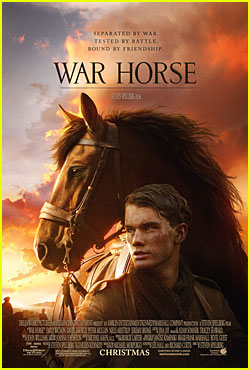
REVIEW: “War Horse”

“War Horse” is a Steven Spielberg movie throughout. It’s broad in scope, has huge production value, and soaked in melodrama. Spielberg produced and directed this war time period film and it features beautiful locations and several large-scale action scenes and set pieces. He has made several of these ambitious war pictures before so he’s in familiar territory. But his biggest challenge is taking a horse and making him the main star while keeping the audience engaged for the movie’s two and a half hour running time. “War Horse” does succeed in several areas but it never completely captures or maintains the emotional charge that it aims for.

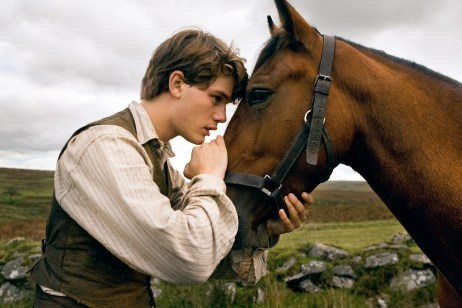
Based on a 1982 children’s book, “War Horse” follows a very special young colt who is unwisely bought at an auction by a struggling farmer who is supposed to be buying a bigger, stronger plow horse. The farmer’s wife is furious with the purchase but their young son Albert promises to raise and train the horse who he names Joey to eventually plow their hard, rocky farm plot. The family hits even harder times and circumstances arise that sees Joey thrust into the onset of World War I. “War Horse” never stays in the same place very long and becomes a collection of brief short stories about the people Joey encounters including a military officer heading to war, two young brothers reluctantly serving on the German front, and an elderly French farmer and his granddaughter. There are several other scenes featuring other characters but the one constant throughout is Joey.

WAR HORSE

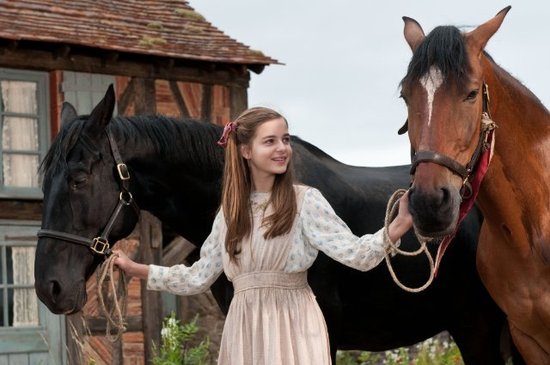
This storytelling technique works good in the broad sense. Joey is certainly an incredible animal and I couldn’t help but stay interested regardless of the convenience that dictates many of his situations. I particularly enjoyed the story of Joey and the military officer played wonderfully by Tom Hiddleston. Equally good were the scenes with the French Farmer played by the fantastic French actor Niels Arestrup and his young granddaughter Emilie played by the lovely Celine Buckens. These are the films best scenes and I can’t help but wish we could have gotten more from these characters. But as I mentioned, Joey is the real star and I was amazed that Spielberg was able to draw so much character out of his lead. As many as eight different horses played the part of Joey and even though the director uses several instances of emotional manipulation, the horse we get on-screen held my interest throughout.

But there was something missing in the movie. It’s clear what the movie wants to be but I could never get as emotionally invested as I was supposed to be. Some of the tugs at our heart-strings felt a bit artificial and there are several animal movie clichés that the movie fully embraces. It was also rather predictable in some areas and I found myself figuring out things well before they culminated on the screen. As with many Spielberg pictures, subtly isn’t a strong point and his attempts to bring tears feel heavy on delivery but light in effect. And with a movie that is striving to be an emotionally driven family drama, that hurts the film.

Flaws aside, “War Horse” is a very watchable film and even flirts with occasional greatness. As expected, it’s technically sound with some beautiful camera work, fantastic locations, and crisp editing. I loved the shots of the English countryside and the dank, muddy, war-torn areas are perfectly fitting. All the performances are solid and some of the character stories are great. There is a lot of charm and heart in “War Horse” but there are also several cheap and lazy attempts to bring out the tissues. It’s a good movie and one that I would certainly watch again. But I can’t help feel that with a tighter script and a slightly different approach, “War Horse” could have been a serious Oscar contender.

VERDICT – 3.5 STARS

REVIEW: “Dial M for Murder”

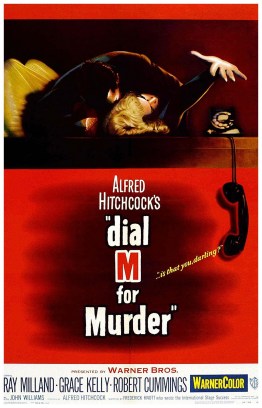
Classic Movie SpotlightDIAL MIt may not be the most acclaimed Alfred Hitchcock film, but “Dial M for Murder” is an intelligent and capable murder mystery adapted from Frederick Knott’s play. While there are special Hitchcock touches throughout the film, it’s Knott who really makes this such a memorable picture. He wrote the screenplay and kept most of his original work intact. The movie sharply resembles a play particularly by the fact that the majority of the film takes place in one single setting, a London apartment. Also, the dialogue flows in a way that favors what you would see on stage. But it’s that same dialogue delivered by some really strong performances and mixed with Hitchcock’s slick use of the camera that gives this movie it’s appeal.

“Dial M for Murder” explores the idea of the perfect murder. Ray Milland plays Tony Wendice, a professional tennis player who has enjoyed a lavish lifestyle thanks to his wife Margot’s wealth. After growing frustrated with Tony’s constant absence and busy schedule, Margot (Grace Kelly) begins a fling with an American writer named Mark Halliday (Robert Cummings). Tony finds out about the affair and fearing the loss of his meal ticket, he plans the murder of his unfaithful wife, leaving him her fortune. It’s a foolproof plan, carefully thought out to the smallest detail. But what may look good on paper doesn’t always translate well into real life.

The story is straightforward but structured and it pays great attention to the details. Clues are littered throughout the film with almost every seemingly small action from the characters having some type of relevance. It’s such a tight-knit and well-crafted story and watching it unfold is very satisfying. The story never trips over itself and Hitchcock let’s Knott’s script do most of the heavy lifting. The dialogue drives the film and it doesn’t rely on twists, turns, or red herrings. In fact, the narrative moves in a fairly straight line and never strays from it’s path. But I found it effective especially considering the movie is basically a single location cinematic play.

DIAL M 1

A movie of this sort only works with strong and grounded performances and “Dial M for Murder” certainly has them. I love watching Ray Milland’s shrewd and savvy Tony. He perfectly relays Tony’s arrogance and overconfidence in a way that never feels disingenuous or overwrought. He has a remarkable screen presence and is perfectly cast. Speaking of screen presence, the gorgeous Grace Kelly is mesmerizing. Whether it be her physical beauty and elegance or her graceful and authentic performance, Kelly steals almost every scene she’s in. I also loved John Williams as Inspector Hubbard. He’s fun, smart, and never misses a beat.

I suppose the location restrictions and the straightforward story could be considered faults especially for those comparing this film to some of Hitchcock’s other movies. But I loved how Hitchcock keeps the Wendice’s apartment fresh with inventive camera shots and clever angles. I can also appreciate the direct although conveniently tidy narrative. It’s an intelligent film that puts a solid story in the hands of some fantastic actors and lets them go from there. I always have fun with “Dial M for Murder” and it’s strongest message is this – keep up with your latchkey!

VERDICT – 4.5 STARS