REVIEW: “Breathless”

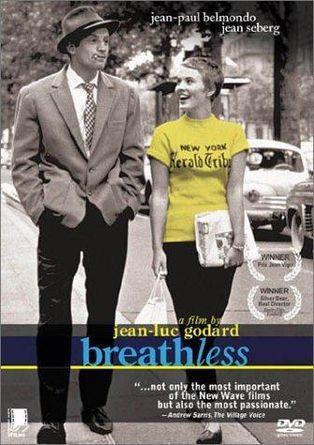
BREATHLESS poster

There are certain movies that will always be remembered for their undeniable influence. Such is the case with “Breathless”, the first feature film from acclaimed director Jean-Luc Godard and a major player in the French New Wave of the late 1950’s and early 1960’s. French New Wave was a bold and experimental movement that toyed with new techniques of filmmaking and storytelling. The stories were often rooted in and influenced by the social climate of the time and ambiguity, realism, and sometimes romanticism were key tools used to craft these stories.

French New Wave also had several distinguishable visual techniques that set it apart from the contemporary filmmaking of that time. New Wave directors experimented with long takes, creative tracking shots, handheld cameras, and fast scene changes. These techniques originated in low-budget necessity but they were also intended to buck the traditional brand of filmmaking. Godard and “Breathless” were instrumental in defining the movement. Nearly every technique unique to French New Wave can be found in “Breathless” and it has certainly made an important mark in cinema history.

BREATHLESS 1A

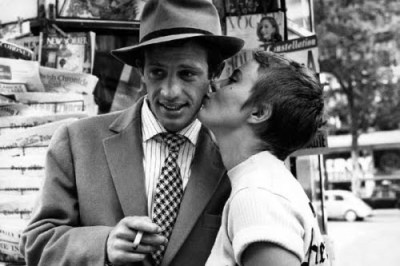
The movie follows around a young criminal named Michel (Jean-Paul Belmondo). His forte is stealing cars and petty crimes but things go bad when a simple car heist results in him killing a cop. He ends up on the run in Paris trying to secure some money to make his escape. Michel is not a good guy and it’s hard to get that impression from the film. But an argument could be made that, in a sense, the movie glamorizes Michel’s lifestyle. There is some legitimacy to that but I think it overlooks a major part if the story. Godard does try to emphasis a sense of cool about Michel through his freewheeling attitude, dangling cigarettes, and thumb rubs across his lips. But I feel his coolness is more his perception of himself – a misguided perception more rooted in arrogance than reality.

It’s a combination of his arrogance and his heart that proves to be his biggest obstacles. He fashions himself after movie stars such as Humphrey Bogart and he seems infatuated with his own press. Throughout the movie we constantly see him buying newspapers in an attempt to get information no doubt, but also to bask in his own headlines. He walks the streets of Paris, impervious to his wanted status, with nothing more than a pair of sunglasses to hide his identity. Even as scrolling marquees across the city report of the police manhunt drawing closer, Michel still takes to the streets of Paris with an almost cocky sense of invincibility.
Breathless 2

He also finds himself smitten with Patricia (Jean Seberg), a young American student at the Sorbonne and aspiring journalist. She’s a seemingly insecure young lady who ends up falling for Michel but with an ever-present sense of uncertainty. Michel often insults her and talks down to her yet she grows more and more fond of him. I believe it’s because she sees through his tough guy facade and finds something she can cling onto regardless of how unwise it is. She struggles with whether to stay with Michel or not but even after finding out what he’s done she can’t just walk away. In a very different way Michel finds himself in the same boat. It’s some compelling stuff.

“Breathless” is a little rough around the edges yet it’s exhilarating cinema. Much of the script was written as they were filming and it features a lot of improvisation. But I love the spontaneity that comes along with that both narratively and visually. Hand-held cameras, a signature of the movement, are tremendously effective both in giving it a unique style as well as capturing some of the beauty of Paris. In fact, “Breathless” features some of the best views of the city you’ll find in cinema. The movie is also recognized for its fresh and bold use of jump cuts – a film editing technique where a scene makes quick jumps forward. There are so many filmmaking devices in “Breathless” that have influenced directors for years and still do today. And even though the storytelling structure may feel a bit jarring, the film is hypnotic and its mark on cinema cannot be overstated.
VERDICT – 4.5 STARS

5 PHENOMENAL FRENCH LANGUAGE FILMS

movie_theatre - Phenom 5

Years ago as I began to grow as a movie fan I opened myself up to foreign cinema. I can’t express how thankful I am for that decision. And while I still don’t see as many foreign language films as I should, over the years foreign cinema has introduced me to some truly great movies. From the far east to the middle east, from South America to Central Europe, there are wonderful filmmakers making movies all over the globe. While I’ve dipped my toes into the films of many different countries, I’ve found French cinema to be one of my favorites. So I thought it would be fun to look at five phenomenal French language films. This is the first Phenomenal 5 dedicated to foreign cinema but it won’t be the last. Now there are many French films that I haven’t seen so it would be silly to call this the definitive list. But there is no denying that these five French movies are nothing short of phenomenal.

MON ONCLE#5 – “MON ONCLE”  Jacques Tati only made six feature-length movies but that’s all it took to establish him as a fantastic filmmaker. “Mon Oncle” is the consummation of Tati’s many talents all wrapped into one delightful creation. The film features Tati’s signature style of visual storytelling and comedy as well as his familiar critiques of materialism, consumerism, and social elitism. But at its heart is a very funny story featuring one of the most lovable characters you’ll find – socially awkward but certainly lovable. Monsieur Hulot’s sweet and friendly demeanor is infectious and he’s always content regardless of his state. But perhaps my favorite thing about this film is the incredible sense of community that Tati is able to capture. Hulot’s working class neighborhood is filled with life, energy, and an assortment of entertaining characters. Those things also perfectly describe “Mon Oncle”.

#4 – “BREATHLESS”BREATHLESS – Acclaimed director Jean-Luc Godard’s first feature-length film was “Breathless” from 1960. Long considered one of the signature movies from the French New Wave, “Breathless” remains to this day a highly influential film. In the movie Godard went to great lengths to buck the traditional trends in filmmaking by using several innovative visual techniques now forever associated with the French New Wave. But “Breathless” isn’t all about style. There’s also a very good story born out of the social climate of 1960 Paris. At first I had a tough time gathering my thoughts on the movie. But after processing the film and looking closer at the story, it has become a true favorite of mine. Jean-Paul Belmondo and the lovely Jean Seberg are fantastic and Godard gives us some of the best street views of Paris. Groundbreaking and highly entertaining.

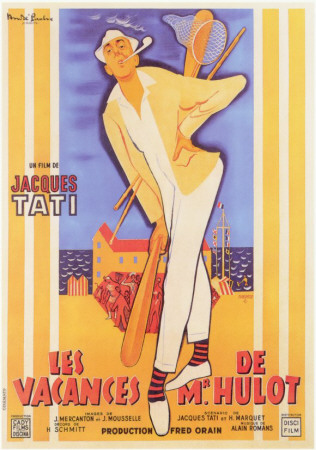
MR HULOT#3 – “MR. HULOT’S HOLIDAY – I really want there to be variety in every Phenomenal 5 I do, but for this list I couldn’t leave off either if these two Jacques Tati classics, the aforementioned “Mon Oncle” and “Mr. Hulot’s Holiday”. “Mr. Hulot’s Holiday” is my favorite Tati film and one of my favorite comedies of all time. Every ounce of Tati’s creative genius is on display in this film. As a director he has an incredible eye for structuring each scene and capturing each moment. In front of the camera as Mr. Hulot he brings out the comic brilliance of legends such as Keaton, Chaplin, and Lloyd. “Mr. Hulot’s Holiday” is a very visual comedy with a heavy emphasis on sight gags and perfectly timed humor. There are so many great laughs in this simple but hilarious picture and it’s a profound example of how true comedy can be done without the gimmicks and clichés we often see today.

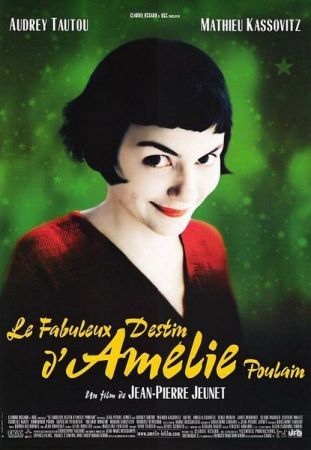
#2 – “AMELIE”AMELIE – One of the most delightful French films I have ever scene is “Amelie” and delightful is the perfect word for it. It’s the story of a shy and reserved waitress and all of the quirky individuals that make up her everyday life. She’s a lonely soul who tries to overcome it through her playful imagination. The perfectly cast Audrey Tautou is magnificent as Amelie who lives her life in beautifully filmed Montmartre. But there’s also the wonderful assortment of side characters that give this film such life. There’s the mysterious painter neighbor, her wacky cafe coworkers and regular customers, the mean jerk of a grocer. I can go on and on but regardless of who they are, Amelie has a positive impact on their lives. There is so much charm mixed with laugh-out-loud hilarity that permeates this entire picture. Gorgeous cinematography, brilliant writing, and pitch-perfect performances. “Amelie” is a joy.

The 400 Blows (1959)#1 – “THE 400 BLOWS” – Much like “Breathless”, Francois Truffaut’s “The 400 Blows” was a pivotal film in the French New Wave. It’s arguably the most powerful movie about adolescence and it’s an intensely personal film for the acclaimed director. Based on Truffaut’s own childhood, “The 400 Blows” looks at the life of young Antoine in early 1950’s Paris. He’s viewed as a troublemaker by the adults in his life and he finds the streets to be his only refuge. There are several stinging and uncomfortable scenes but all of them lead to the final shot which is one of the most potent in film history. There is such feeling and emotional pop throughout as we see this challenging and often times difficult world through young Antoine’s eyes. There’s also an undeniable technique and style behind the movie’s visual presentation. It’s an amazing expression of Truffaut’s vision and when combined with the brilliant screenplay the result is a glorious piece of cinema history.

So there are my five picks for the most phenomenal films in French cinema. Agree or disagree – please leave you thoughts below. Also be watching throughout the next several days as I review several of these and other French films on the site.

“Les Miserables” – 4 STARS

Les-Miserable

I’m not a fan of musicals. Never have been, never will be. Now there are one or two that I guess I could say I like, but as a whole it is one of my least favorite genres. So why would I think for a minute that I would like Tom Hooper’s “Les Miserables”? Well as suprising as it may sound, I liked “Les Miserables” a lot and if not for its mildly sluggish pacing leading up to the final act I would have gone as far as to call it a great film. Releasing a movie like this today would seem like a risk. Modern movie fans pour money into lame raunchy comedies and brainless rom-coms so it was refreshing to see “Les Miserables” reach a wide audience. The film has a lot to offer. Just as long as you prepare yourself and know what you’re going to get.

For the few that don’t know, “Les Miserables” is French writer Victor Hugo’s classic novel from 1862. In the 1980s a musical theater version of the novel opened and became a worldwide success and remains so to this day. Now Hooper, the Oscar winning director of “The King’s Speech”, tackles the ambitious task of bringing the stage version to the big screen. Now when I call this a musical I mean it in the fullest. There may be five or six short spoken lines in the entire film. The bulk of the story is told through song and the emotional performances from the cast. It concerned me going in but after a brief mental adjustment I was connected to the flow of the narrative.

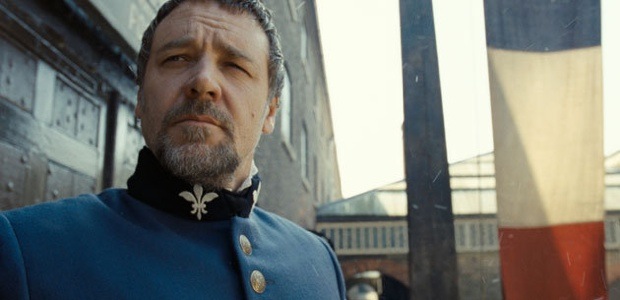
The story begins in 1815 and follows Jean Valijean (Hugh Jackman) who we see released from prison after serving a 19 year sentence for stealing a loaf of bread. After being moved by the compassion of a priest, Valijean breaks parole and heads off to start an honest life serving God under a new identity. This infuriates Officer Javert (Russell Crowe) who becomes obsessed with tracking him down. The movie jumps ahead, making stops at different time periods in early 19th century France. Valijean becomes a mayor and businessman, Javert a promoted inspector, and we are introduced to several other people who cross their paths.

LES MIZZ 1

There’s no need in going further into the story. I’ll save that for the movie but I will say that its an interesting look at everything from poverty to patriotism, from redemption to devastation. It takes place during a tumultuous time in French history and it translates very well on screen. The story navigates through the many hardships, tragedies, and inequalities of that era with an amazing sense of authenticity. Much of that is thanks to the sharp collaborative screenplay but a lot is due to the incredible period detail that we see throughout the entire film. There’s a real sense of place throughout the movie which was essential to my experience.

But enough of that right? This is after all a musical so I’ve got to get into the singing. Hugh Jackman was quite good in my eyes. I know some have felt that the part overpowered him but I didn’t see it. I thought some songs were better than others but his physical performance complemented his voice perfectly and I loved what he was doing on screen. Russell Crowe has received the brunt of the criticism when it comes to the singing but I’m going to defend him…well, kinda. I don’t think he’s as bad as many are saying. In fact, some of the songs nicely fit both him and his character. But I have to say there are moments where his voice clashes with the scene. For example, a few of the one-on-one singing conversations between him and Jackman just sound odd. A lot has to do with the songs themselves but some of it is that Crowe simply sounds off. But Crowe does have some good moments and his physical performance is fantastic.

LES MIZ 2

I also have to mention Ann Hathaway as a poor unemployed mother who has to resort to prostitution in order to send money back to care for her sick young daughter. Hathaway is brilliant and no doubt she was the star of the show for me. While she doesn’t have a big role, every scene she’s in is emotionally charged and heartbreaking. And her voice is simply beautiful. The best scene in the entire movie is her singing of “I Dreamed a Dream”. I usually get tired of Hooper’s insistence on putting the camera right in the face of his actors. But in this scene he knows he’s capturing something special. Hathaway’s brokenness, her tears, her anguish are all vividly captured as she sings this heart-wrenching song. This is an Oscar worthy performance.

There are also fun performances from Sacha Baron Cohen and Helena Bonham Carter as a crooked, pick pocketing husband and wife. And I was surprised at the singing chops of Eddie Redmayne. He has a pretty meaty role and never flinches. I was also very impressed with Samantha Barks and Amanda Seyfried. Both young ladies have lovely voices and I appreciated the way they poured everything into their characters. There were several other small but great cast members particularly some really strong child performances. It’s hard not to like this ensemble Hooper was able to put together.

“Les Miserables” does bog down during the buildup to its finale. For most of the film I was completely involved and for the movie to do that to a non-musical kind of guy like me is quite an accomplishment. But as Redmayne and company prepare their rebellion I felt myself drifting. Things start to feel repetitious and monotonous. But then in a snap of a finger the movie picks back up and rolls right through to its powerful and completely satisfying finale. In fact, I think “powerful” and “completely satisfying” are good descriptions of this movie as a whole. Sure it’s Oscar bait and I know it has disappointed some people, but I was surprised at how much I enjoyed this picture. This isn’t normally my cup of tea, but when a film is well made, well acted, and tells a good story I’m all in whether they’re singing the lines or not.

REVIEW: “The Red Balloon”

Classic Movie SpotlightRED BALLOON“The Red Balloon” is a 1956 short film written, produced, and directed by French filmmaker Albert Lamorisse. It was filmed in and takes place in the Belleville neighborhood in Paris and follows a little boy who discovers a bright red, helium filled balloon. The film is simple but it’s one of the most tender and enchanting pictures you’ll have the pleasure of watching. At only 34 minutes long, it manages to pack more heart and authenticity into it’s running time than most feature-length movies of today.

Young Pascal (played by Lamorisse’s son Pascal) discovers a beautiful red balloon on his way to school one morning. He proudly walks along the streets of Paris with his new balloon while encountering a wide assortment of people, some friendly and some not so friendly. But over time we begin to believe the balloon has a mind of its own and a wonderful relationship develops between it and Pascal. It’s hard to believe but Lamorisse manages to make the balloon a true character in the film and we have no problems investing in this little boy’s attraction to and love for his red balloon.

We the audience basically just sit back and watch this young boy. There is almost no dialogue throughout the film, only a beautiful and appropriate score used at just the right times. But dialogue isn’t needed. The visual narrative is perfectly structured and paced and there’s not one thing that more dialogue could add that would improve on what we’re given. Young Pascal’s expressions, the beauty of Paris – even in this working class area, the amazing handling of the balloon, and the incredible camera work all contribute to grabbing us and wrapping us up in the wonderfully visual story.

“The Red Balloon” has received a lot of praise and rightly so. In fact, it’s one of the few short films to ever win a major Academy Award category (Best Original Screenplay). I was completely engaged throughout this short picture. And even during the couple of times where I felt I was missing what Lamorisse was saying, I was still wrapped up. “The Red Balloon” is a magical meditation on the innocence of a child’s imagination meeting the harshness of reality. But there’s more to it than just that and for my money, it’s one of those rare movies that is impossible to dislike. If you haven’t seen it, take 34 minutes and experience it. It’s worth the time.
VERDICT – 4.5 STARS

Visiting the Locations of “Midnight in Paris”

It was only a little over a month ago that my wife and I made our first visit to Paris, France. Obviously this amazing city has tons of history and culture to offer and its sheer beauty, natural vibrancy, and great food make it a destination that shouldn’t be missed. But as a movie fan, and in this case a huge fan of Woody Allen’s “Midnight in Paris”, I saw our visit as an opportunity to see some of the locations he chose for his film (as well as several other Paris movies). We wandered all over the city from Montmartre to the Latin Quarter, from the upscale 7th arrondissement to Les Marais, and along the way I ran into several of Allen’s spots. So I thought it would be cool to share them here, not just as another way to drool over Paris (something I could easily do), but as a chance to share the great experience I had as a movie fan.

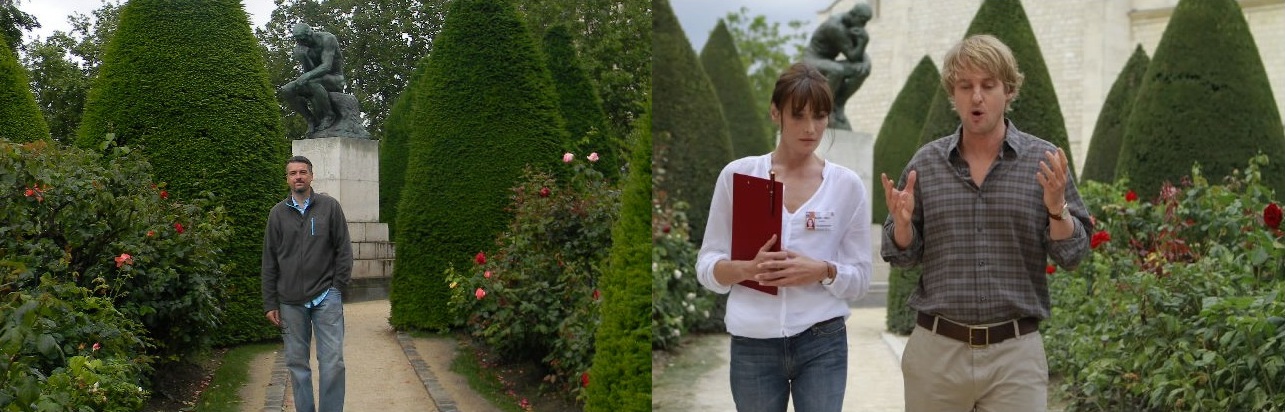
MUSEE RODIN

Early in the film we get our first real glimpse into Paul’s true pseudo-intellectual self absorption as they visit The Rodin Museum. As the four are admiring Rodin’s popular sculpture “The Thinker”, Paul flexes his faux knowledge of Rodin until he is corrected by the guide as well as Gil. Paul will have none of it and goes as far as to argue with the guide. Gil later returns to ask the guide for a favor.

I loved our visit to Musee Rodin. The inside collection was fabulous but for me the true treasures were in the beautiful gardens and wonderfully placed sculptures none better than “The Thinker”. While much smaller in scale than the Louvre or the Orsay, the Rodin Museum still managed to be a favorite spot of mine in all of Paris.

PLACE DAUPHINE

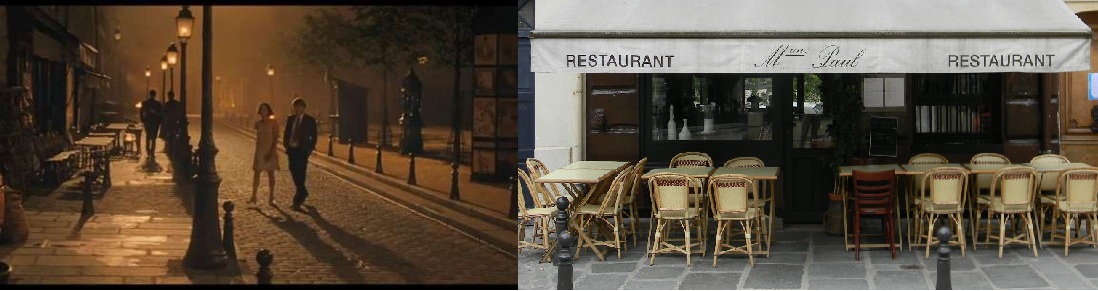
In one of the most romantic scenes in the movie, Gil and Adriana take a nighttime stroll and end up on the terrace at Restaurant Paul’s in Place Dauphine. It’s here that Gil gives her the earrings and then pours his heart out to her before a carriage comes to transport them back even further in time.

The cool thing is that Restaurant Paul isn’t a fictional place. It sits right in the cozy Place Dauphine. Unfortunately due to the time of day the restaurant was closed but we did get a chance to take pictures and admire the cool setting for what was one of my favorite scenes in the film.

SHAKESPEARE AND COMPANY

There’s a brief scene in “Midnight in Paris” that shows Gil walking out of Shakespeare and Company. It’s certainly not a pivotal scene but it shows Gil on one of his strolls admiring the city that he truly loves.

I loved Shakespeare and Company! We stumbled on it after walking around the Latin Quarter. There is such a great feel of history as you approach the cool English bookstore. The narrow aisles inside house an amazing assortment of titles and going upstairs takes you right back to the days of Hemingway, Joyce, and Sylvia Beach. I bought a copy of “The Great Gatsby” and got my Shakespeare and Company stamp on the inside. I left one happy traveler.

QUAI DE BOURBON

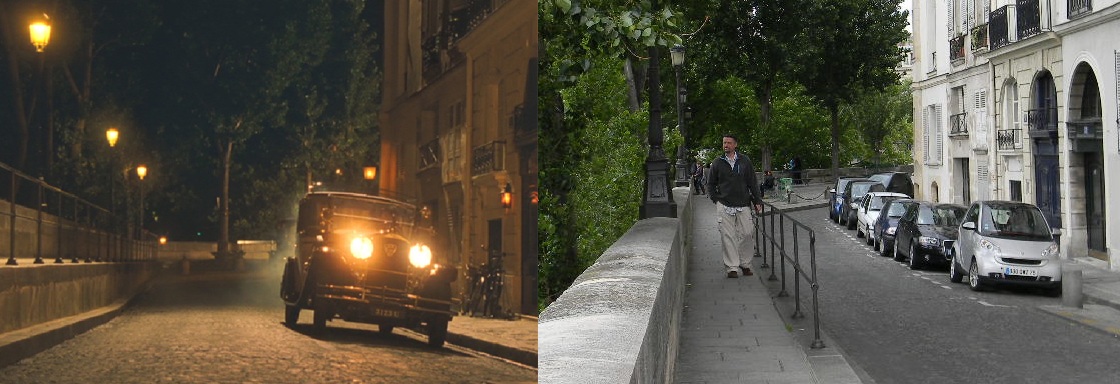
After Gil is picked up by the old-time classic car, it takes him back in time to a  lively party on Quai de Bourbon. It’s at this party that Gil notices Cole Porter singing and playing the piano. It’s here that he also meets Zelda and F. Scott Fitzgerald. In the film we see the street as the car drives up and this was Gil’s first taste of the Roaring Twenties.

Quai de Bourbon winds around the tip of Ile Saint-Louis. We crossed over from the Notre Dame cathedral and came across the street by mistake. In fact at the time I didn’t remember the name but I most certainly recognized it from the film. It was a great moment of discovery and I couldn’t help but reflect back on the film as we walked down the street.

QUAI DES ORFEVRES

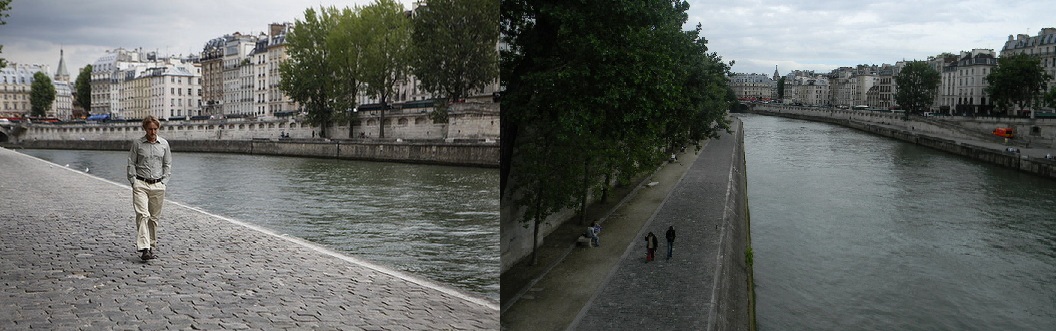
Quai des Orfevres appears in the movie on two different occasions. One of the scenes has Gil walking along the Seine clearing his mind and soaking up the city. Later in the movie it’s here that Gil and Adriana comes across a distraught Zelda threatening to jump into the Seine.

We came across this lovely location on a number of occasions. It was a gorgeous cobblestone walk along the river lined with trees and featuring some beautiful views of Paris. When you see it, it’s so easy to see why Woody Allen chose to include this particular location in his film.

SQUARE JEAN XXII

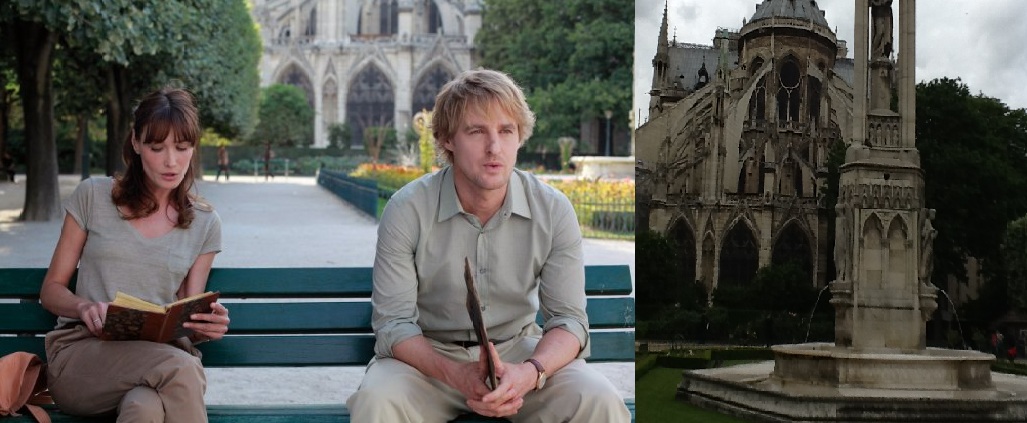
After buying an old book written by Adriana at a riverside book seller, Gil convinces the guide from the Rodin Museum the translate it for him. The two sit on a bench at Square Jean XXIII with Notre Dame standing tall in the background. It’s here that Gil finds out that there is a true connection between him and Adriana.

After visiting Notre Dame we spent a little time in the lovely Square Saint Jean. It’s here that you get the best views of Notre Dame’s buttresses and really highlights the Gothic architecture. The park is lined with benches, trees, and play areas for children. They also have bathrooms that you have to pay to use! No thanks.

PONT ALEXANDRE III

While it also appears in Woody Allen’s opening montage, the bridge known as Pont Alexandre III is also in the final scene of the film. Gil has broken up with Inez and is wandering around the city when he bumps into Gabrielle again on Pont Alexandre III. It’s here he tells her he’s staying and Paris. He offers to walk her home just as the rain starts to fall. It’s a wonderful ending.

After leaving Les Invalides we made our way to Pont Alexandre III. The beautiful ornate bridge was a sight. Tourists were snapping photos and brides were having wedding pictures made. We walked under it and over it admiring the River Seine and the wonderful architecture of the bridge itself.

There are so many wonderful locations in the city of Paris and Woody Allen takes advantage of so many. We visited several other places that you can see in the movie and missed out on some as well. Looks like we already have our excuse to head back to what I believe may be the world’s greatest city.

“Need to Drop 5 Pounds? Go to Paris!”

While my wonderful wife – for reasons that, in the interest of personal safety, I refuse to divulge – will vehemently refute the validity of my discovery, I feel compelled to share it nonetheless. In the United States, people make all kinds of New Year’s resolutions, join an assortment of gymns or diet groups, and spend loads of money to lose weight. Diet regimens and food supplements have become big business yet people are constantly let down by results and are left looking for the next fashionable weight loss plan. That’s where I come in. At the risk of sounding like the most tripe and scripted salesman, would you like to drop 5 pounds in only one week? Take a trip to Paris.

Hopefully by now you’ve finished sighing, rolling your eyes, or laughing out loud. But as preposterous as it sounds, I’ve witnessed this most satisfying weight loss miracle first hand. After a week in Paris enjoying the sights, the city, and of course the food, I was hesitant but curious as to how much weight I had gained. Now I’m not the skinny rail I was in high school. In fact, I’m the guy who recently had to lose 50 pounds after the verbal bludgeoning I received from my doctor over my weight, laziness, and eating habits. In other words, I’m one who can appreciate dropping some extra pounds. But like so many other ills of the world, Paris holds to solution.

When we returned home from our week-long adventure in the world’s greatest city I had to take time to face that thorn in the side of every weight conscious individual – the scales. But to my surprise it shared some good news. I had lost 5 pounds. It didn’t take long to reflect back on the things we did in Paris, particularly the things we ate while there. We didn’t scrimp on our meals. French food was something that we intended to make a big part of our trip and boy did we! So how could I have dropped 5 pounds. Well the obvious answer from the traveler like me, blinded by his utopian love for Paris, would be that the “City of Light” is pure, unadulterated magic and within the city of Paris miracles do happen. On the other hand, much more stable minds would say there’s a more reasonable and plausible explanation.

The Streets of Paris

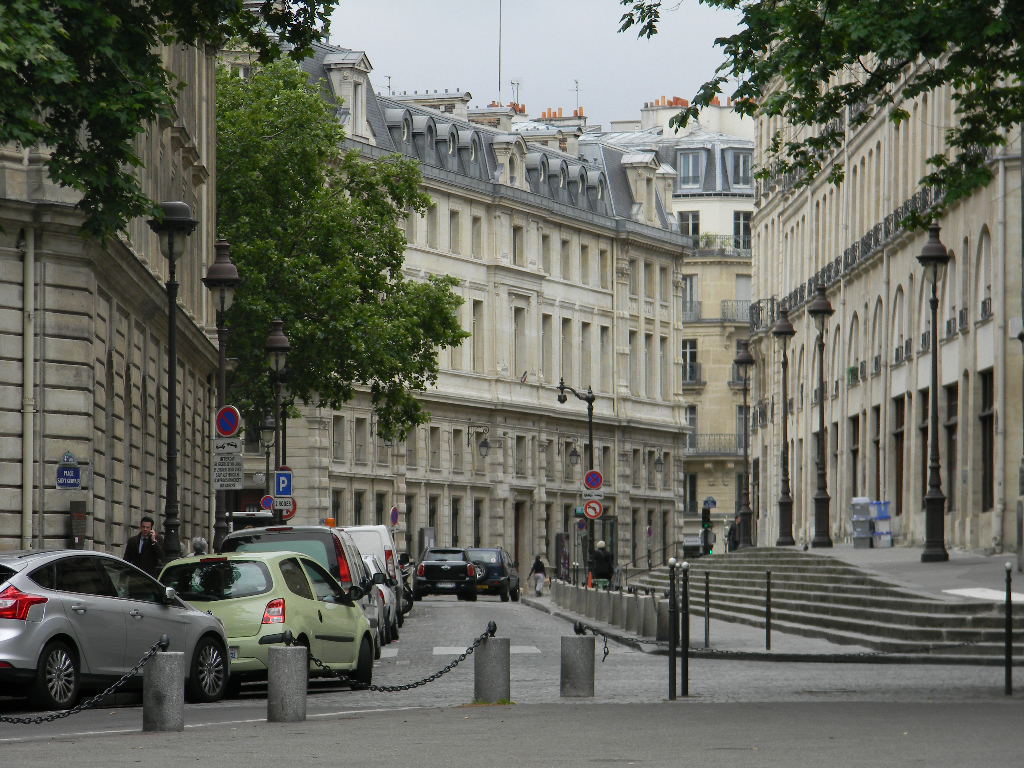
First, Paris is a city made for walking. Unlike in the United States, Paris is your prototypical European-styled city whose structure is tied directly into its history – a history that preceded the introduction of the automobile – therefore making walking not only an acceptable but enjoyable mode of transportation. In the states, we have become car dependent. We drive to work, we drive to get groceries, we do drive-thru banking, drive-thru fast food – our vehicles are a substantial part of our daily lives. In many ways – and my own life reflects this – we can’t function without our automobiles. That’s not the case in Paris. Be prepared to walk, burn calories, and enjoy it.

Parisians seem to move in a rapid yet fluid state of motion, zipping along through the arteries, veins, and capillaries of the city with confidence and purpose. Regardless of what part of Paris you’re in, the sidewalks are filled with fast walkers and no slow traffic lanes. I remember thinking to myself “We’re walking a lot faster that we would back home” yet we were being passed on both sides. In a way I felt like a street sweeper blocking rush hour traffic. So sometimes taking a walk down Rue de Rivoli or Boulevard Saint-Germain while keeping pace with the locals can feel like an extensive aerobic workout.

But don’t misunderstand me, it’s not as if walking in Paris is a headache. In fact it’s quite the opposite. While sometimes the Parisian pace can be hectic and rushed, there’s also plenty of walks in Paris that you simply can’t miss. It’s as if each and every street has an interesting story and a new discovery that you would never encounter if you chose to wage vehicular combat through the city’s streets (what we Americans call driving). The pedestrian market streets, the Seine-side sidewalks, and the beautiful green gardens are just some of the treasures awaiting those willing to navigate the city afoot. In other words, Paris invites you to walk and failing to do so would be like missing out on one of the greatest experiences the city has to offer.

The Paris Metro

Even using the Metro is a stringent workout in itself. Aside from keeping up with the fast-moving flow of people, the Metro is an impressive labyrinth of hallways and concrete stairways that are sure to burn off a few of those calories added by the morning’s ham and cheese crepe. And if you have to switch trains in one of the busy underground hubs, you can count on even more walking. Again, it’s not a headache, it’s just another method of maneuvering around Paris that encourages walking and provides more exercise than some of us get in a week.

Besides walking, another more logical reason for losing weight in Paris is the food. Now I don’t want to mislead anyone into thinking our French cuisine experience consisted of a strict diet of leafy green salads and fresh fruit. On the contrary, food was a key part of our trip. Parisians love their food and that was one element of their culture we had no problem diving into headfirst. We had our fair share of pastries and we most certainly threw ourselves into the cafe scene. We ended each day with lovely meal at a nice restaurant trying all sorts of local favorites such as duck, herring, lamb, shrimp, escargot, beef, and more. We ended our evening indulgences with a delectable assortment of chocolates, ice creams, and cakes.

Some of Paris’ many treats

There are several noteworthy things about food in Paris. First, unlike in the United States, it doesn’t take long to notice the absence of fast food places. They do exist. I mean there’s a McDonalds plopped right in the middle of the Champs Elysees. We saw a Pizza Hut stuck down a small side street in the 7th arrondissement. We were almost ran over by a Domino’s bicycle delivery guy. We even saw a poster advertising Kentucky Fried Chicken. But these spottings were extremely rare. Instead almost every street in Paris has a cafe, bistro, or restaurant serving an assortment of food of a higher quality than a Whopper with cheese or a Double Quarter Pounder. Of course you have to enjoy stops at the patisseries and the chocolate shops. And how can you not make Les Deux Magots’ pitcher of thick hot chocolate a part of your every week? Still, even though we ate a lot and ate good, I couldn’t help but feel I was eating better.

So while the romantic in me wants to credit the alluring and enchanting forces of Paris with my surprising five-pound drop, the realist in me has a more grounded understanding. But even though it’s not as dramatically fantastical or storybook, you can’t argue with results and even though I know the real reasons, I choose to credit and thank the mythical transcendental aura of Paris. Regardless, if given a choice, you can keep your magic pills, chalky diet shakes, and carb-free dinners. I’ll take a trip to Paris – a true miracle in weight loss.