Visiting the Locations of “Midnight in Paris”

It was only a little over a month ago that my wife and I made our first visit to Paris, France. Obviously this amazing city has tons of history and culture to offer and its sheer beauty, natural vibrancy, and great food make it a destination that shouldn’t be missed. But as a movie fan, and in this case a huge fan of Woody Allen’s “Midnight in Paris”, I saw our visit as an opportunity to see some of the locations he chose for his film (as well as several other Paris movies). We wandered all over the city from Montmartre to the Latin Quarter, from the upscale 7th arrondissement to Les Marais, and along the way I ran into several of Allen’s spots. So I thought it would be cool to share them here, not just as another way to drool over Paris (something I could easily do), but as a chance to share the great experience I had as a movie fan.

MUSEE RODIN
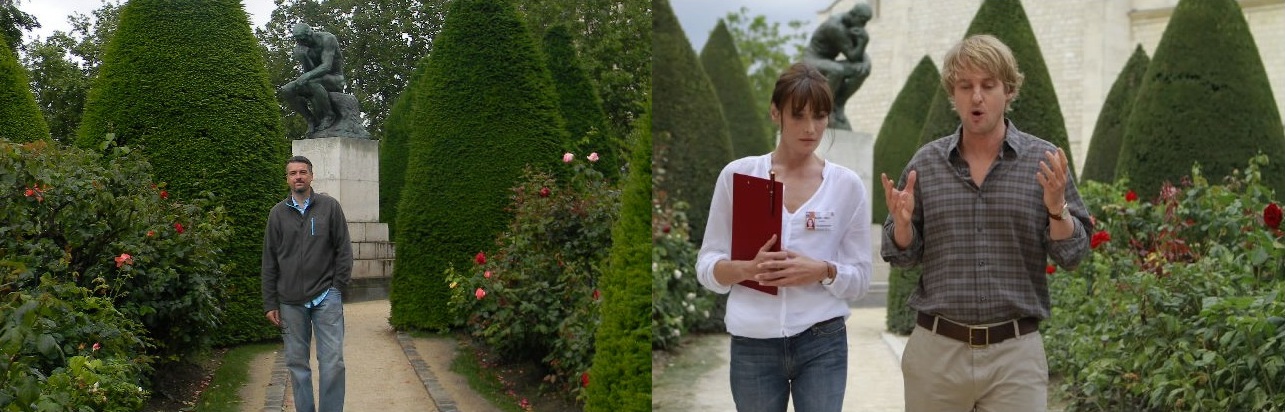
Early in the film we get our first real glimpse into Paul’s true pseudo-intellectual self absorption as they visit The Rodin Museum. As the four are admiring Rodin’s popular sculpture “The Thinker”, Paul flexes his faux knowledge of Rodin until he is corrected by the guide as well as Gil. Paul will have none of it and goes as far as to argue with the guide. Gil later returns to ask the guide for a favor.

I loved our visit to Musee Rodin. The inside collection was fabulous but for me the true treasures were in the beautiful gardens and wonderfully placed sculptures none better than “The Thinker”. While much smaller in scale than the Louvre or the Orsay, the Rodin Museum still managed to be a favorite spot of mine in all of Paris.

PLACE DAUPHINE
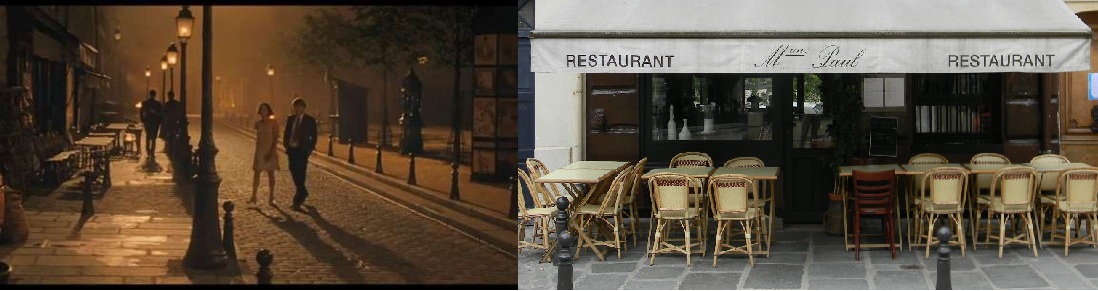
In one of the most romantic scenes in the movie, Gil and Adriana take a nighttime stroll and end up on the terrace at Restaurant Paul’s in Place Dauphine. It’s here that Gil gives her the earrings and then pours his heart out to her before a carriage comes to transport them back even further in time.

The cool thing is that Restaurant Paul isn’t a fictional place. It sits right in the cozy Place Dauphine. Unfortunately due to the time of day the restaurant was closed but we did get a chance to take pictures and admire the cool setting for what was one of my favorite scenes in the film.

SHAKESPEARE AND COMPANY

There’s a brief scene in “Midnight in Paris” that shows Gil walking out of Shakespeare and Company. It’s certainly not a pivotal scene but it shows Gil on one of his strolls admiring the city that he truly loves.

I loved Shakespeare and Company! We stumbled on it after walking around the Latin Quarter. There is such a great feel of history as you approach the cool English bookstore. The narrow aisles inside house an amazing assortment of titles and going upstairs takes you right back to the days of Hemingway, Joyce, and Sylvia Beach. I bought a copy of “The Great Gatsby” and got my Shakespeare and Company stamp on the inside. I left one happy traveler.

QUAI DE BOURBON
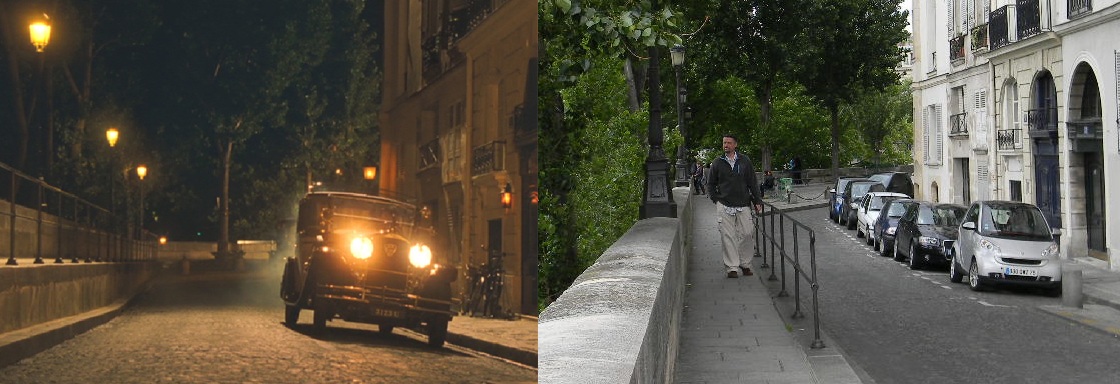
After Gil is picked up by the old-time classic car, it takes him back in time to a  lively party on Quai de Bourbon. It’s at this party that Gil notices Cole Porter singing and playing the piano. It’s here that he also meets Zelda and F. Scott Fitzgerald. In the film we see the street as the car drives up and this was Gil’s first taste of the Roaring Twenties.

Quai de Bourbon winds around the tip of Ile Saint-Louis. We crossed over from the Notre Dame cathedral and came across the street by mistake. In fact at the time I didn’t remember the name but I most certainly recognized it from the film. It was a great moment of discovery and I couldn’t help but reflect back on the film as we walked down the street.

QUAI DES ORFEVRES
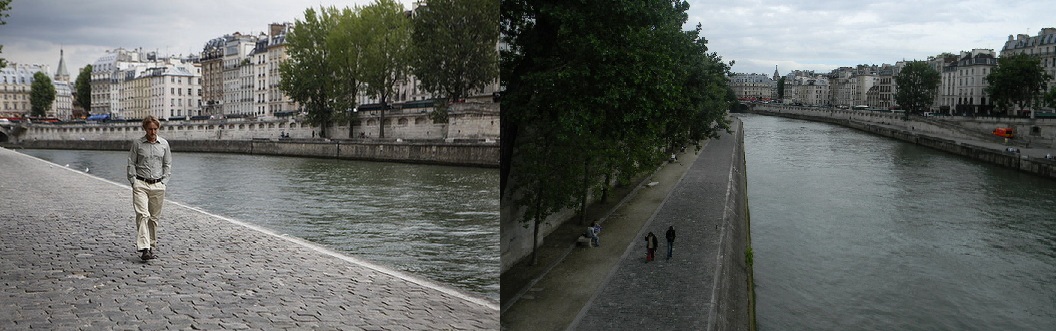
Quai des Orfevres appears in the movie on two different occasions. One of the scenes has Gil walking along the Seine clearing his mind and soaking up the city. Later in the movie it’s here that Gil and Adriana comes across a distraught Zelda threatening to jump into the Seine.

We came across this lovely location on a number of occasions. It was a gorgeous cobblestone walk along the river lined with trees and featuring some beautiful views of Paris. When you see it, it’s so easy to see why Woody Allen chose to include this particular location in his film.

SQUARE JEAN XXII
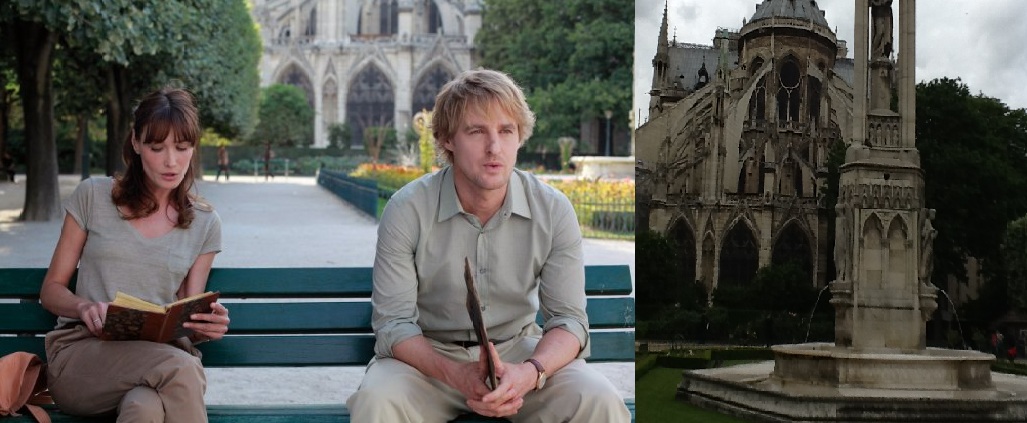
After buying an old book written by Adriana at a riverside book seller, Gil convinces the guide from the Rodin Museum the translate it for him. The two sit on a bench at Square Jean XXIII with Notre Dame standing tall in the background. It’s here that Gil finds out that there is a true connection between him and Adriana.

After visiting Notre Dame we spent a little time in the lovely Square Saint Jean. It’s here that you get the best views of Notre Dame’s buttresses and really highlights the Gothic architecture. The park is lined with benches, trees, and play areas for children. They also have bathrooms that you have to pay to use! No thanks.

PONT ALEXANDRE III

While it also appears in Woody Allen’s opening montage, the bridge known as Pont Alexandre III is also in the final scene of the film. Gil has broken up with Inez and is wandering around the city when he bumps into Gabrielle again on Pont Alexandre III. It’s here he tells her he’s staying and Paris. He offers to walk her home just as the rain starts to fall. It’s a wonderful ending.

After leaving Les Invalides we made our way to Pont Alexandre III. The beautiful ornate bridge was a sight. Tourists were snapping photos and brides were having wedding pictures made. We walked under it and over it admiring the River Seine and the wonderful architecture of the bridge itself.

There are so many wonderful locations in the city of Paris and Woody Allen takes advantage of so many. We visited several other places that you can see in the movie and missed out on some as well. Looks like we already have our excuse to head back to what I believe may be the world’s greatest city.
REVIEW: “Total Recall” (2012)

I don’t often consider the “is it necessary” question when approaching a movie remake. While too many remakes can become tiresome and many result in terrible movies, a good writer and director can provide a unique and fresh take on older material. That’s what I was hoping for from Len Wiseman’s remake of “Total Recall”, Arnold Schwarzenegger’s 1990 sci-fi action flick. Unfortunately, Wiseman’s film isn’t nearly as fun or engaging as the original. It takes away some of the more entertaining elements of the original and replaces them with a nice new glossy coat of paint.

The original “Total Recall” featured some great action and some genuinely funny moments. But it was also a relative to that great 80’s action genre so it had its share of cheese (which I love). This new version has some good action but it loses its punch thanks to its simple and lackluster story. Colin Farrell plays Quaid, an assembly line worker who has grown tired of his mundane life. About the only excitement he finds are in his reoccurring violent dreams. He decides to visit Rekall, a memory implant company who gives people exciting experiences by injecting them with artificial memories. Quaid chooses the secret agent implants but as the process begins Rekall is stormed by armed troops from the corrupt local Chancellor Cohaagen (Bryan Cranston). Quaid shoots his way out revealing a skill he never knew he had. He rushes home and tells his wife Lori (Kate Beckinsale), but she tries to kill him. Confused and no longer sure who he is, Quaid goes on the run chased by an army led by his one-time wife.

Most of the movie consists of one big chase. Quaid jumps from rooftop to rooftop, dangles from ledges, and dodges bullets while every once in a while stopping to get a little information about who he really is. Now I love good action but I eventually began to lose interest due to the lack of any real substance. Quaid does run across Melina (Jessica Biel), a girl who appeared in his nightmares, and you would expect her to add a little more to the story. But for the most part, she’s fairly shallow and basically just joins Quaid in being chased. Her character in the original film had considerable more depth. Beckinsale’s Lori gives the action scenes most of their life. She’s tough, mean, and persistent and she’s a strong female antagonist.  But the writing let’s her down as well and even she is one-dimensional.

One thing that I did like about the story was the sci-fi world it created. A chemical holocaust has ravaged earth and there are only two superpowers remaining, The United Federation of Britain which is essentially Europe and “The Colony” which is Australia. The two are connected by a massive elevator transport than runs through the Earth’s core. There’s a political tension between the two and it’s fueled by a strong resistance movement which Cohaagen is desperate to squash regardless of the cost. The special effects and CGI deliver a visually sharp and creative world. The UFB is a fancy, upscale region while “The Colony” has a dirty, over populated, inner-city look to it. Both locations are distinctly different but futuristic in their own unique ways. There are also several technologies that should make sci-fi geeks drool including a cool  hand phone implant and a wild electronic rope gun. I loved the environment and the visuals are truly impressive.

There’s little else to say about the “Total Recall” remake. Farrell tries to keep things interesting but in the end all he’s asked to do is run, jump, and look confused. I mentioned that Beckinsale was fairly fun but no other character really stands out. Even the always good Bryan Cranston is your typical cookie-cutter villain and he’s nowhere near as devious and evil as Ronny Cox’s Cohaagen in the original film. There are a few other things that keep the movie from being a complete wash-out. The special effects are dazzling, there are some good futuristic action sequences, and there are several fun little salutes to the original movie. But in the end there’s just not enough here to make this a worthwhile remake or anything more than a mediocre movie. And that’s disappointing, especially from a sci-fi fan like me.

VERDICT – 2 STARS

5 PHENOMENAL MOVIE HERO DEATHS

SPOILER: THESE ARE 5 FILMS WHERE THE MAIN HERO DIES. BE FOREWARNED!

Everyone loves a great hero. In fact, entire movies can stand or fall on how good the main hero of the story is. We’ve all seen the “ride off into the sunset” endings where everything is happy and uplifting. The boy gets the girl (or vice versa) and all is right with the world. But then there are the movies where the good guy may win, but dies in the process. If you think about it, there are several films that feature their hero dying. I’ve chosen five fantastic deaths that are worth some praise. Now there are many I had to leave off so this certainly isn’t the definitive list. But there’s no denying that these five movie hero deaths are absolutely phenomenal.

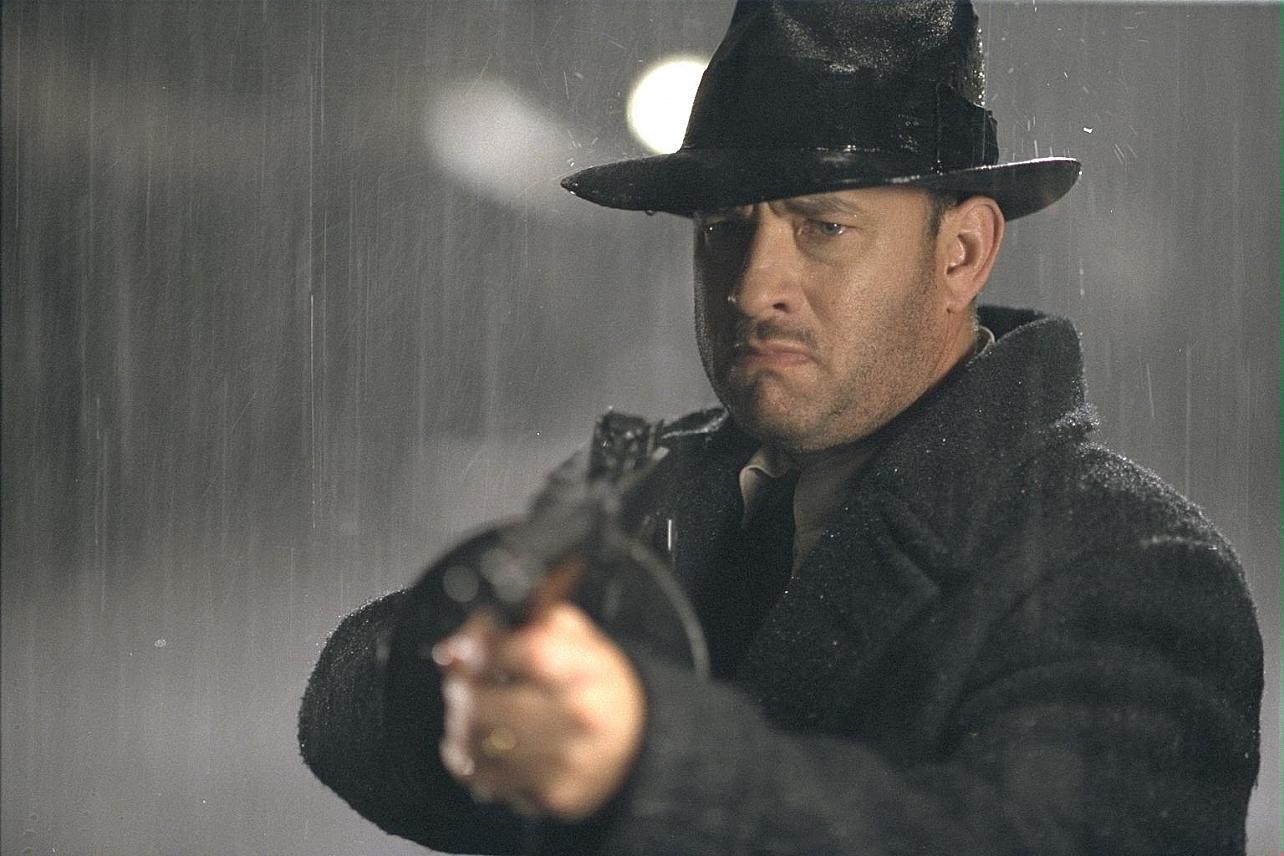
#5 – “ROAD TO PERDITION”

Sam Mendes’ “Road to Perdition” may have one of the saddest hero deaths in cinema. Tom Hanks plays Michael Sullivan, a mob hitman who gets revenge on his bosses who turn on him and kill his wife and younger son. The mob higher-ups seek to silence him and he escapes to a small town on Lake Michigan called Perdition. Sullivan stands by a window of a beach house looking out over the lake waters when two bullets hit him from behind. Jude Law walks out of the shadows as Sullivan falls to the ground. Sullivan kills his killer then dies in the arm of his crying son. It’s a devastating scene involving a young boy losing his father and even though Sullivan isn’t the most upright hero, we still root for him.

#4 – “THE PROFESSIONAL”

Jean Reno stars as Leon, the most loveable movie hitman who befriends and shelters a troubled young girl named Matilda (Natalie Portman) who has witnessed the murder of her family at the hands of Standfield, a corrupt DEA agent played by Gary Oldman. Stansfield brings his forces for a big final showdown in Leon’s apartment building. He gets Matilda to safety before sneaking out after a massive gun battle. He makes it out of the building and while hobbling down an alley Stansfield shows up and shoots him. Leon hands him a grenade pin that he says is “from Matilda”. Standfield rips open Leon’s jacket to expose a number of live grenades. BOOM! Leon take Stansfield with him. A hero going out with a bang.

#3 – “PAN’S LABYRINTH”

While young Ofelia isn’t your typical hero especially for this type of list, I had to put her on here. Fleeing from her brutal stepfather, Ofelia carries her infant brother into a garden labyrinth. She puts her life on the line to save her brother but her stepfather soon catches up with her and shoots her dead. He gets his when he reaches the exit of the labyrinth and plenty of people are waiting. But one of the most devastating scenes is when they discover Ofelia. What makes her death so powerful is the sad life she was confined to throughout the movie. In her fantasy world she went on to rule. But in our world she died a true hero’s death.

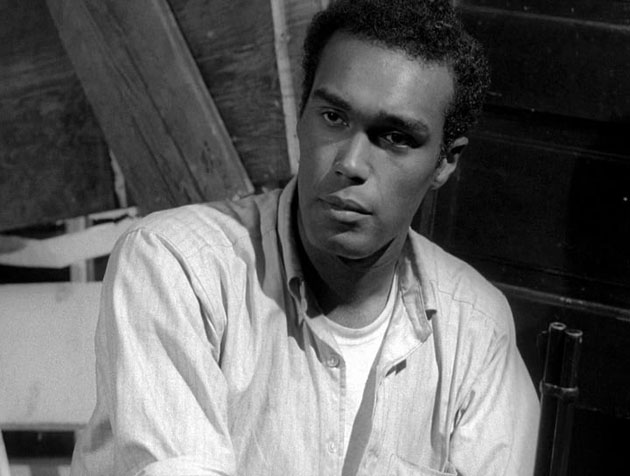
#2 – “NIGHT OF THE LIVING DEAD”

After all Ben had been through the night before, to be killed the way he was just stinks. Zombies corner up seven people in a Pennsylvania farm house and only Ben (Duane Jones) survives the night. After barricading himself in the cellar, he comes up after all seems quiet upstairs. It’s daylight outside and Ben hears dogs barking. He sneaks up to a window and peaks out. At that second he gets shot in the head by a group of men who mistake him for a zombie. Just like that. Ben was cool and calm and managed to survive the zombies. It’s too bad he was later mistaken for one.

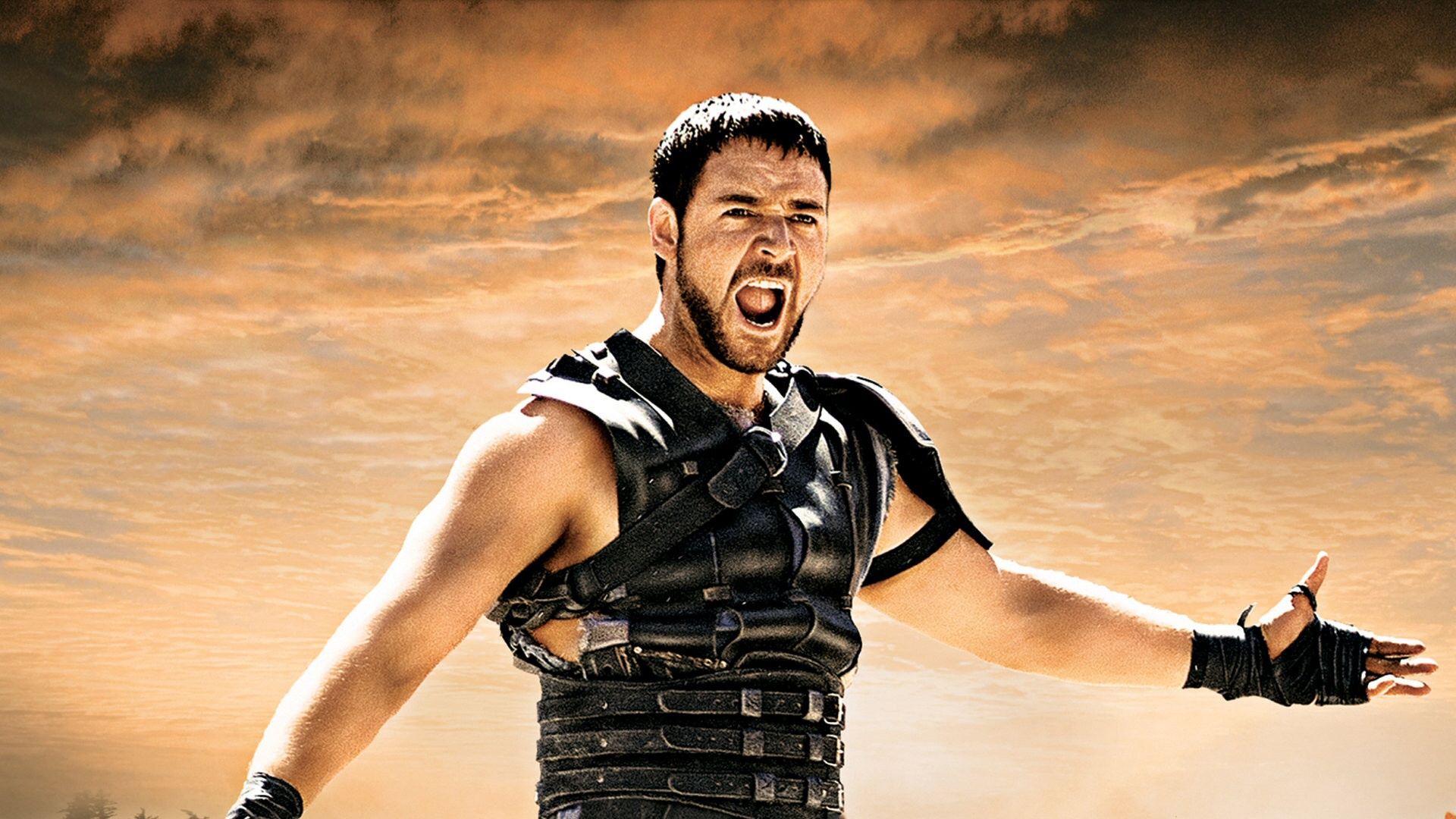
#1 – “GLADIATOR”

Russell Crowe’s performance as Maximus in Ridley Scott’s “Gladiator” was exceptional and his death was certainly that of a hero. After being stabbed while chained up by the sniveling Emperor Joaquin Phoenix, the wounded Maximus is then brought out to fight the Emperor and die in front of the huge crowd in the Coliseum. But just like a true hero, Maximus prevails and kills the Emperor just before passing out. He dies there in the Coliseum and we see him being reunited with his wife and son through a dying vision. Maximus is carried off while the Emperor is left laying in the dirt. It’s a poignant and moving ending and it still gets to me no matter how often I see it.

There ya go – 5 Phenomenal Movie Hero Deaths. Now I could easily have done a top 20 so I know I’ve left some good ones out. What’s your favorite movie hero death?

REVIEW: “THE BOURNE LEGACY” (2012)

I was late catching up with the “Bourne” series which is highly unusual since they are the type of movie I gravitate towards. I’ve now seen the first three films starring Matt Damon as Jason Bourne, one of several physically and mentally enhanced government black ops projects. Damon steps aside but the series continues with “The Bourne Legacy”. Jeremy Renner is the new leading man playing a new leading character but writer and director Tony Gilroy maintains an import sense of connection and familiarity with the previous films. Gilroy wrote the first three movies and goes to great lengths to make this feel like a Bourne film while also possibly launching the series into a new direction. While Gilroy does occasionally struggle matching up with earlier films, the movie definitely has its moments that nicely falls in line with the series.

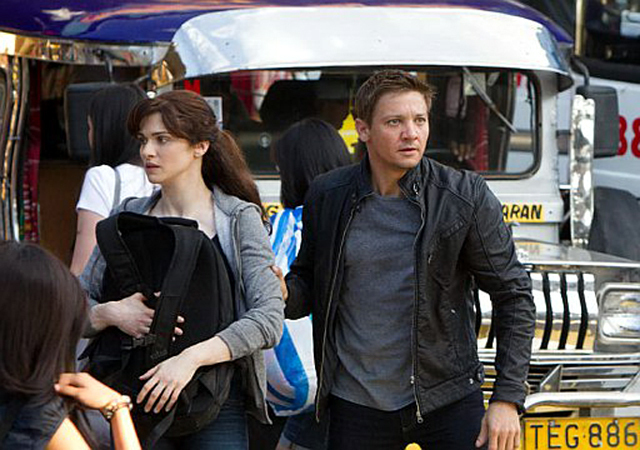
While Jason Bourne isn’t in the movie his presence is clearly felt. Gilroy (and his brother Dan who also helped with the screenplay) connect the actions of “The Bourne Ultimatum” to this story. As Jason Bourne continues to threaten the government’s black ops programs, Eric Byer (Edward Norton) is called in to clean the mess up. His solution – to wipe out all of the human projects and those connected to them. One of those projects turned target is Aaron Cross (Renner), an Operation Outcome agent who is considered a step up from those involved in the now exposed Treadstone. But when the attempt on his life fails, Cross is sent scrambling for answers. He’s also ran out of a special medication that keeps him both mentally and physically balanced. Cross tracks down Marta Shearing (Rachel Weisz), a doctor connected to Operation Outcome who he hopes can get him get the pills he needs. But she soon finds that her connection to the project has made her one of Byer’s targets and Cross is her only chance at survival.

For many, the big question revolves around Renner. Does his Aaron Cross match what Damon was able to bring to his Jason Bourne character? Well, yes and no. Renner is most certainly Damon’s equal when it comes to acting. Renner is completely convincing and he’s got the physical abilities to sell each and every action sequence. Cross is different from Bourne in that there is no amnesia.  He knows he’s part of a government project although the amount of knowledge he has is limited. While this isn’t necessarily a flaw with the character, it did take away one of the most intriguing elements of Bourne’s story. But a slightly bigger problem with the character isn’t as much about Renner as it is the writing and direction. Cross is a solid protagonist but I couldn’t help feeling that he lacked the intensity of Jason Bourne. There are a couple of scenes where he “loses it” for a lack of a better phrase, but overall he seldom comes across as intense or as threatening as Bourne.

Nonetheless, Renner’s performance is very good and he’s also surrounded by a strong supporting cast. Weisz is always great and she’s no different here. Her character is the most sympathetic in the film and I loved how Weisz portrays her through the numerous emotionally charged situations she has to deal with. Norton is also good as the evil government clean-up guy. He easily sells the amoral “just doing my job” persona and we genuinely dislike this guy from the moment he first enters the picture. I also really liked Oscar Isaac as a fellow Outcome operative who Cross encounters early in the film. Bourne fans will also enjoy the small but interesting returns of David Strathairn, Joan Allen, and Scott Glenn. Each have cool little tie-in scenes that answer questions left over from the last film.

“The Bourne Legacy” doesn’t hurry out of the gate. Gilroy takes his time laying out the story and defining his characters. There were a couple of times when I did feel things were moving a little too slow, but overall it works well  and the movie’s third act is pretty action packed. Speaking of the action, it captures some of the same qualities of the past Bourne flicks – hard-hitting hand-to-hand fight scenes and of course a vehicle chase scene. I mean you can’t have a Bourne movie without a vehicle chase and this film gives us a great one. Renner thrills as he runs, jumps, punches, and kicks. Unfortunately his fight scenes are almost rendered incoherent due to moments of inconsistent editing. There were a couple of fight scenes where I literally had no idea what was going on other than punching.

I can see where some would consider “The Bourne Legacy” a cash grab. But even with its few flaws it’s still a fun movie that fits right in with the Bourne series. It stumbles in a few areas and I wouldn’t consider it the best of the series. But Gilroy knows the material well and he knows how to bring new characters into this universe. Renner gives a strong performance and Weisz is wonderful to watch. It also features a chase sequence at the end that is nothing short of awesome. But more importantly, it left me anxious and anticipating what’s coming next. So I would call it a success.

VERDICT – 3.5 STARS

REVIEW: “ALIENS” (1986)

ALIENS

Personally, I don’t consider it a stretch to call Ridley Scott’s 1979 science fiction classic “Alien” a groundbreaking and incredibly influential film for the genre. It was a near perfect combination of horror and sci-fi which resulted in an intense and profoundly innovative thriller that still holds up today. Now when you have a movie so highly regarded, tackling a sequel is a pretty daunting task. You’re taking already great and established material and building on it while also creating a film that can stand on its own merit. Such was a the job facing James Cameron, writer and director of the 1986 sequel “Aliens”.

Cameron’s approach to the sequel centered around creating a story that captured both the horror and sci-fi elements that made the first film such a success and adding a militaristic action component to it. Much like Ridley Scott before him, Cameron is deliberate in setting up his story. “Aliens” starts with Ellen Ripley (Sigourney Weaver) being discovered by a salvage crew who come across her shuttle adrift in space. It turns out that she has been in stasis for over 50 years – since the horrible events on the Nostromo in the first film. She’s questioned by a group of executives behind the Nostromo’s mission who find her story questionable and her actions extreme.

Later she is visited by Carter Burke (Paul Reiser), a company representative who informs her that they had recently lost contact with a small colony on LV-426, the same planet where Ripley’s former crew had first came across the alien eggs. Burke asks Ripley to accompany him and a group of Colonial Marines to investigate. Ripley wants no part of going back but agrees after being reassured that the mission is to destroy the aliens and not study them. She sets out with Burke, the marines, and an android named Bishop (Lance Henriksen) to check out LV-426 and hopefully extinguish any threat they come across.

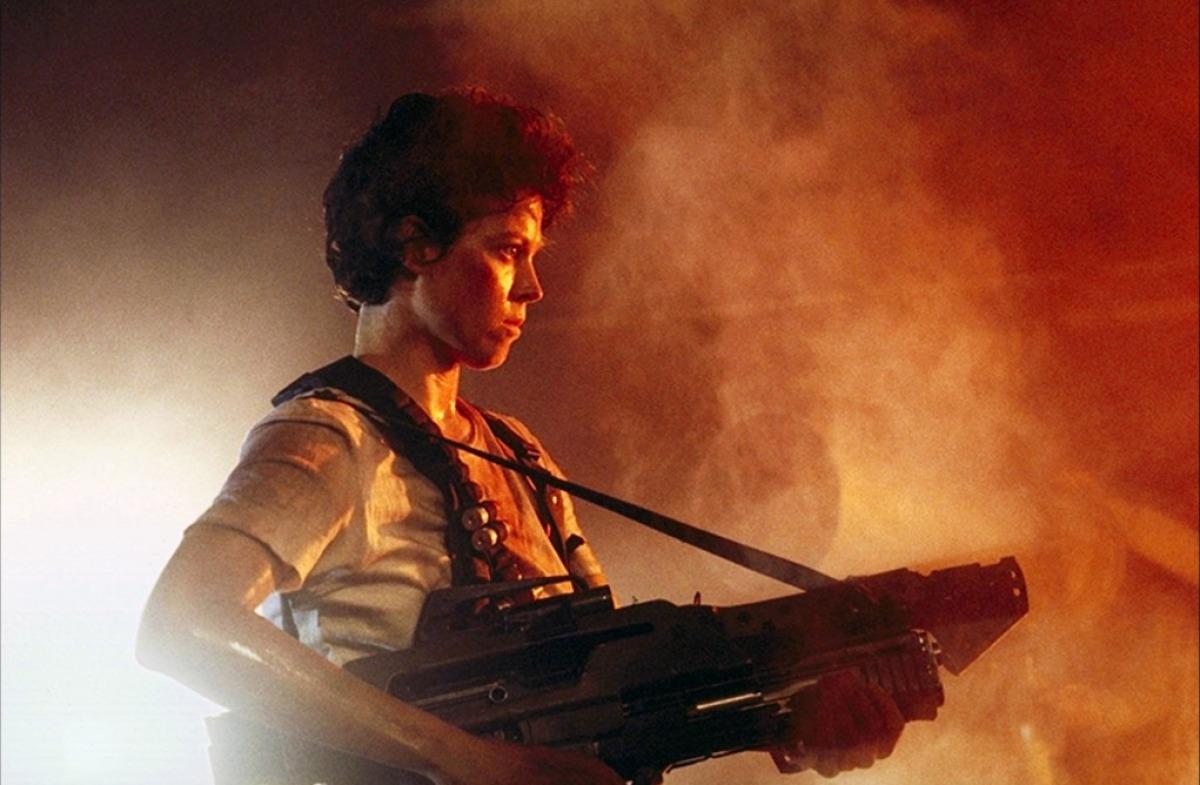
One interesting and recurring obstacle for Ripley is the constant disregard for her information and input. Planted right in the middle of a predominantly male environment, she constantly encounters skepticism and mockery. The corporate heads didn’t buy her story, Burke was skeptical of the severity of the threat, and the Marines laugh it off as a simple “bug hunt”. But Ripley not only turns out to be right, but she maintains the most calm and level-head of any of the group once the inevitable threat is realized. Through this, Cameron takes the tough survivor character from the first film and builds her into what I believe is one of the strongest female roles in cinema. Not only does Ripley adapt through physical toughness but you see a leadership that proves vital to their survival. But while she’s tough, I loved how we also see the gentleness and love she shows, especially after finding a young girl named Newt (Carrie Henn) alone in the ventilation systems of one of the colony office buildings. The two connect as Ripley takes on a mother-like role for a young girl who has seen horrors and lost everything.

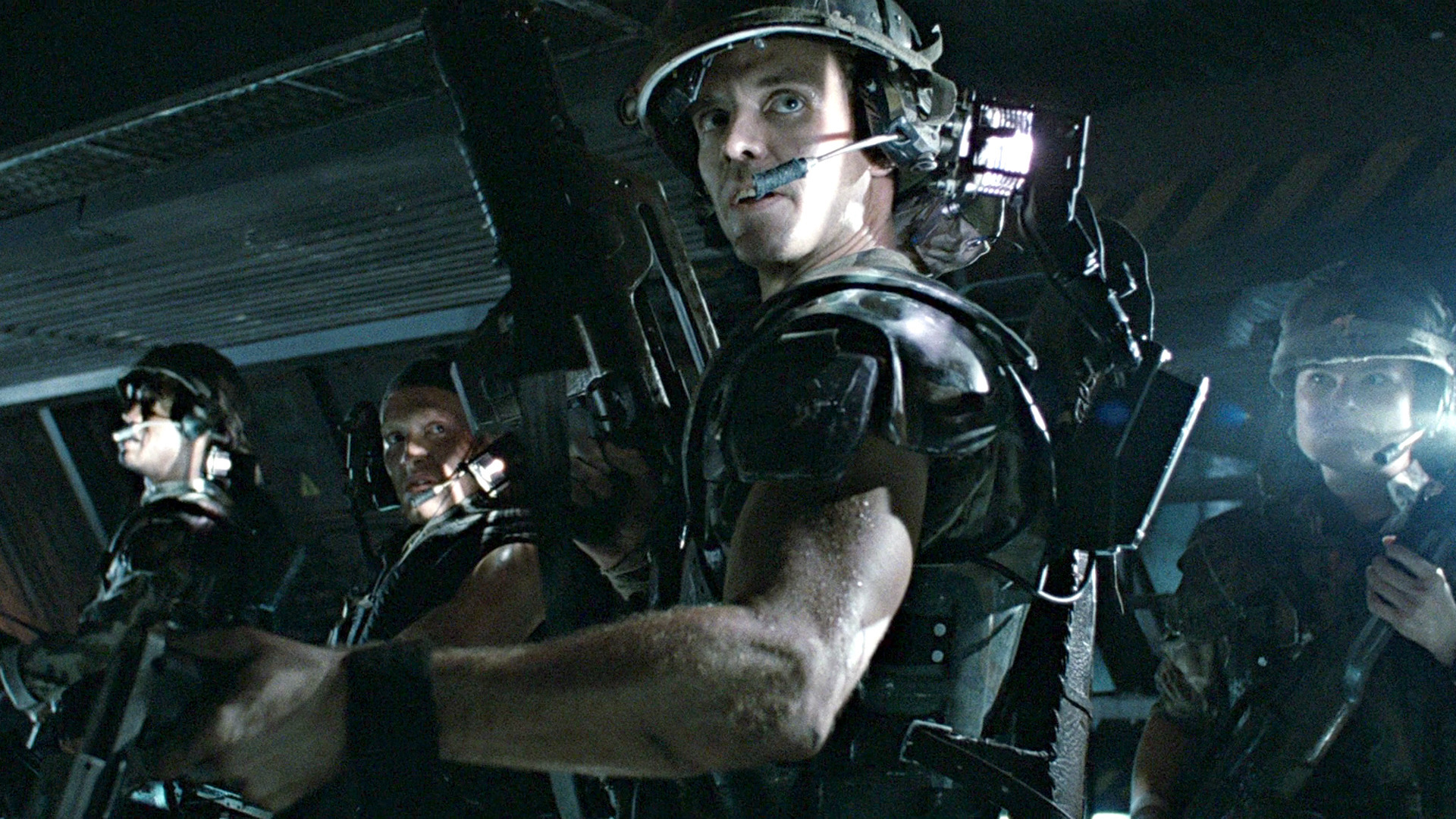
The marines themselves cover all of the personality angles including the cigar-chomping Sergeant Apone (Al Matthews) the smart-aleck, wise-cracking Hudson (Bill Paxton), and the dependable, by-the-books Corporal Hicks (Michael Biehn). We also get the tougher-than-all-the-guys Vazquez (Jenette Goldstein) and her heavy gunner partner Drake (Mark Rolston) and an inexperienced and sometimes incompetent Lieutenant Gorman (William Hope) who was just assigned to be the squad’s field leader. We get some clichéd but fun military banter between the soldiers during the first half of the film and later see them in full combat mode, fighting for survival. For the audience it really becomes one of those “let’s see who survives” stories. But it works so well because even though these are tough and resilient soldiers, they are humbled by the realization that they are overmatched. There are no Rambos in this bunch, only desperate people trying to survive. And when everything does hit the proverbial fan, they have to rely on a lot more than just strength and firepower to stay alive. That’s one reason Ripley is such a force in the movie.

Cameron is very clever in the way he sets up the tension. Again, much like Ridley Scott, for most of the film the true horror isn’t in what you see but what you think you are seeing. You get fleeting glances of the aliens – only enough to project images into your mind. In a sense, Cameron has the audience paste these brief images together in their minds to create what these deadly creatures look like. It isn’t until the very end that we get an unhindered look at them. I still remember the first time I saw the film. The brief camera shots of the creatures in motion really created a sense of tension and suspense. Of course now all movie fans know what the aliens look like thanks to the internet, comic books, sequels, etc. But the way Cameron never fully unveiled them in the film until the end was very effective.

The Oscar-winning special effects of “Aliens” were another major reason the movie works. The skilled crew use an amazing assortment of miniatures, trick cameras and lighting, carefully designed costumes, and a large number of puppeteers that contribute to a visual world that still looks impressive even in today’s fancy CGI-driven age. So many cool details add pop to the film such as the marines futuristic armor, weapons, and vehicles as well as their technologies and sciences. The effects most certainly stand out but they always stay consistent with the movie’s gritty, dark tone. The action sequences throw the soldiers and crew right into the darkness and the unknown. Much like us, they don’t know for sure what they’re fighting. The brief glimpses of the aliens through gun flashes, shoulder mounted flashlights, and dim emergency lighting makes the combat intensely fierce. Ray Lovejoy’s editing of the action scenes is phenomenal as is James Horner’s score. As a result, “Aliens” delivers two of the most pulse-pounding battle/escape sequences you’ll see.

Another major accomplishment for “Aliens” is the recognition it received from the motion picture community. The movie received 7 Academy Award nominations, none bigger that Sigourney Weaver for Best Actress. Of course she didn’t win but the fact that a science fiction/ horror film would received such recognition was a major step forward for the genre. But Weaver was also surrounded by an excellent cast. I loved Henriksen as Bishop, the company android. He’s a cryptic character in the sense that we know from the first film that androids aren’t without, shall I say, glitches. But Henriksen is a believable “artificial person” and we, like Ripley, just aren’t sure we can trust him. I also really liked Michael Biehn’s performance. He’s a tough but open-minded soldier and when the situation goes bad he steps up. Biehn doesn’t play him as a testosterone-driven macho type. He’s at times unsure and he understands what it will cost to get his people out alive.

“Aliens” was an extremely ambitious sequel that took a pretty sacred first film and built upon it in the most satisfying way. It’s a fantastic sci-fi movie. It’s a fantastic action movie. It’s a fantastic horror movie. It blends all of these things together and creates what I consider to be one of best motion picture sequels of all time. With the exception of the stereotypical “we are soldiers” profanity, the dialogue is crisp. While some may describe the first half of the film as languid, I think the pacing is brilliantly deliberate. The special effects were astounding for its time and still hold up today. The acting from each character big or small is strong throughout the film. The direction, the score, the editing, and the sound design grab us and drag us into the unnerving world. It’s just a great movie. And while some may not respond to a handful of things that are connected to the decade the film was made in, “Aliens” is still one of my favorite movies of all time and while it is a sci-fi movie it’s also a great, great action picture.

VERDICT – 5 STARS

5 STARSs

5STAR K&M

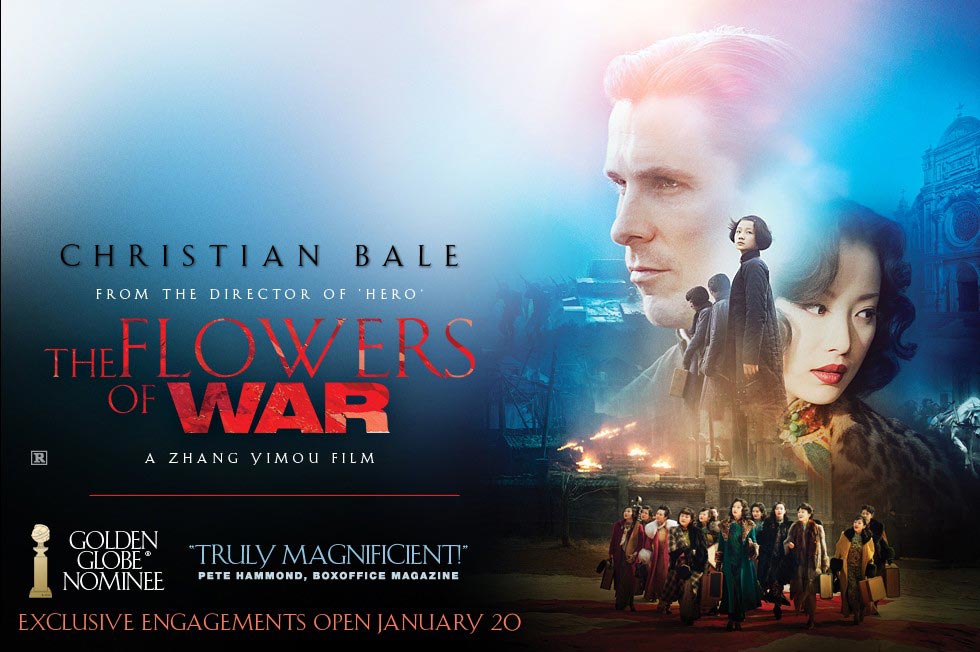
REVIEW: “THE FLOWERS OF WAR” (2011)

“The Flowers of War” is a Chinese war drama based on the Nanjing Massacre during the Second Sino-Japanese War. The stylish and sometimes brutal depiction of the scarring conflict and atrocities was made with a budget of almost $100 million making it the most expensive Chinese film ever made. Director Zhang Yimou’s respectful but straightforward approach to the story gives it quite a powerful punch even though it employs a few conventions that we’ve seen in several other films.

Christian Bale plays John Miller, a boozing American mortician who is hired to bury a priest at a convent in war-ravaged Nanjing. He arrives as the Japanese army is storming the streets catching and executing civilians and the small pockets of the Chinese forces struggling to survive. He narrowly makes it to the convent and performs his duties but we quickly find out that he’s a pretty despicable man. After being told they can’t pay him, he begins rummaging through the church in search of money and later gets drunk after finding the communion wine. But the horrors of the war outside the walls of the church find their way in which sets the table for John’s own personal salvation.  He’s faced with the choice of a self-seeking escape, leaving everyone else behind or staying and doing everything in his power to protect and save the young girls of the convent. 

John isn’t as shallow of a character as the material occasionally makes him look. Sure, he’s a drunken self-centered loser whose redemption is inevitable, but we later find out that there is more to him and his past. We understand his connection to the girls and why he feels the need to stay and protect them. He sees it as his chance to do something right for a change but it also touches on some deep inner feelings that are connected to his past. I really enjoyed watching Bale transform his character on-screen. Bale’s performance is strong, both as the obnoxious jerk and as the new man he becomes. I also bought into his relationship with the girls despite a few inexperienced performances from the young actresses.

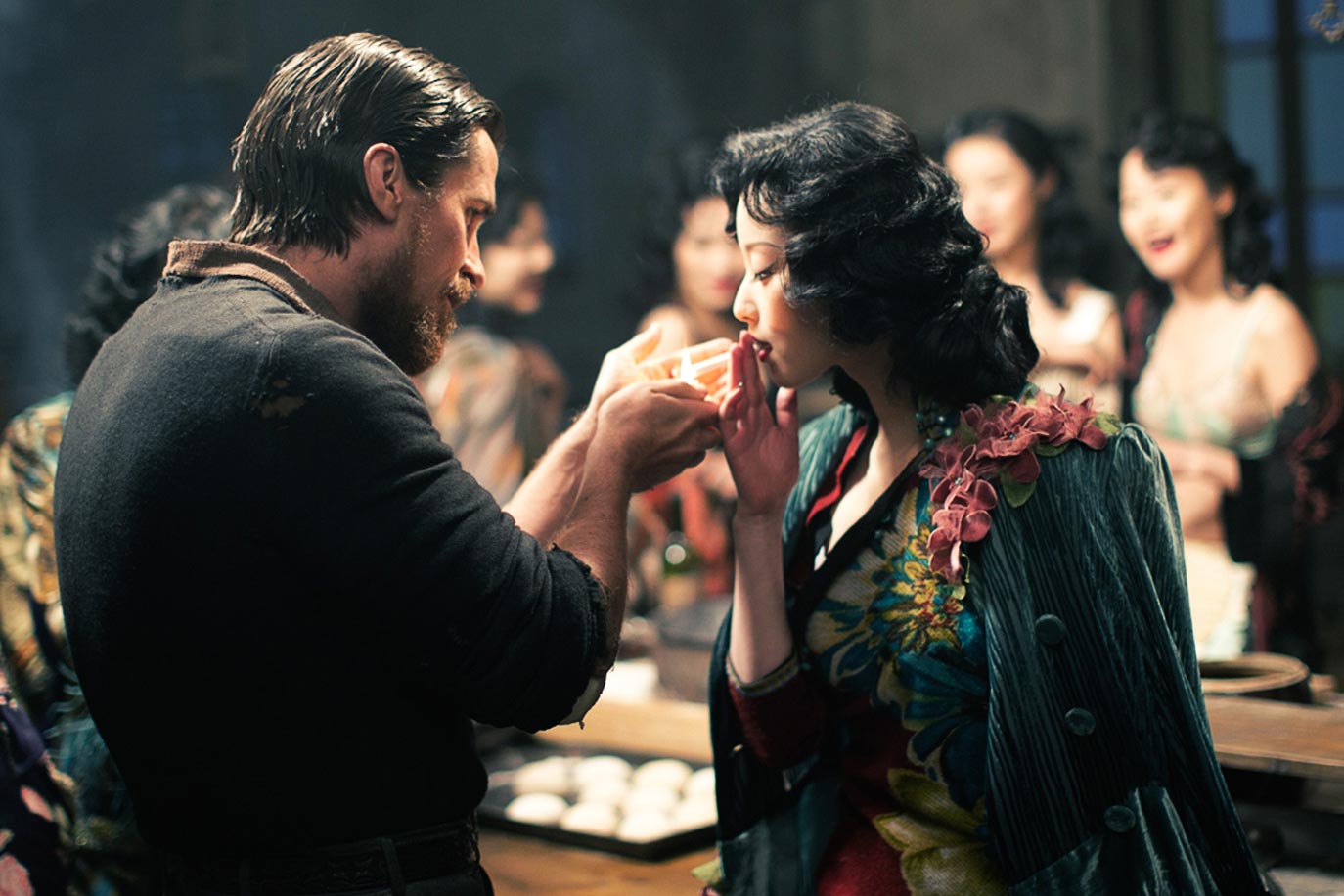
Things grow more complicated at the convent when a group of colorful prostitutes bust into the church seeking shelter from the rape and murder going on throughout the city at the hands of the Japanese soldiers. John gives them refuge in the cellar. But the young girls from the convent don’t like them and the prostitutes are almost as self-seeking as John is at first. But we also see the relationship between the two groups go in several different directions which gives us some of the film’s more moving moments. Much like John, the prostitutes aren’t as shallow as they seem and in many ways they seek the same personal redemption that he does. Ni Ni gives a very good performance as Yu Mo, the leader of the prostitutes for lack of a better word. She’s a tough and confident woman who instantly catches John’s eye. One of the remarkable things about Ni Ni is that this is her first film role. Director Yimou wanted someone from Nanjing and Ni Ni won the part.

Yimou’s direction is so good and his visual style permeates every scene. Not only has he directed 20 films but he’s also been involved in cinematography and that certainly contributes to his cleverness with the camera and impressive staging of shots. He also creates a believable gritty and bloody war-torn environment. The shells of the city’s buildings,the debris and rubble, and the gruesome images of corpses lined along the streets all contribute to convey the magnitude of the carnage and destruction to the audience. Yimou also doesn’t shy away from showing the savagery of the Japanese soldiers. There is a brutal rape scene that is truly hard to watch and an attempted mass rape scene that is equally difficult. Yimou kept everything in bounds but it still left me unnerved and shaken. There are also several scenes of war violence that are very well served by his stylistic flare. Now I did feel there were a couple of scenes where the bloodshed was unquestionably gratuitous, but overall it felt perfectly in place.

While the war and the atrocities are a big part of this movie, it’s not the main focus. Yimou has said that love, salvation, and sacrifice were some of the key things he wanted audiences to take from the film. The war was the backdrop which simply revealed the evil side of humanity. But there is good and there is love and that’s what we get as the story unfolds.  The story runs us through an emotional wringer and there are some gut punches along the way. While I concede that there are moments that feel a little contrived and the dialogue sometimes seems artificial and strictly intended to evoke emotion from the viewer, I have to say that the movie worked for me. I recognize its flaws, but I was drawn into this rather unfamiliar territory for me and the interesting dynamics and high stakes kept me enthralled throughout. 

Roger Ebert’s biggest complaint about the movie seemed to be that the story revolved around a white American as the priest. He ends his review by asking “Can you think of any reason the character John Miller is needed to tell his story? Was any consideration given to the possibility of a Chinese priest? Would that be asking for too much?”. I found this to be one of the oddest criticisms hurled at a film in a while. First, the Chinese filmmaking team had a good grasp on the story they wanted to tell and their film was based on a novel which set many of the characters up for them. Second, the fact that John was an American gave him a limited immunity from the Japanese aggression. We see this play a big role in the film on several occasions. So Ebert’s criticism is either grounded in something else or he simply overlooked these key facts.

I can see where this film could be too gruesome for some and too depressing for others. I can see arguments against the movie’s occasional gratuitous violence, the few instances of sub-par acting particularly from the children, and some of the movie’s emotional moments that seem generated solely to get a response from the audience. But I have to admit, while these issues kept “The Flowers of War” from being a great, great movie, they didn’t hinder it from being a very good film that touched me on numerous occasions. The stylistic visuals, Bale’s strong lead performance, and the many heart-wrenching moments that I responded to help make this a very satisfying movie. It’s not easy to watch at times but it’s still good storytelling and one I would have no problem seeing again soon.

VERDICT – 4 STARS