5 Phenomenally Volatile Movie Romances

PHENOM 5

A year or so ago I did a Phenomenal 5 list focused on movie romances. Today we are again looking at romances but this time with a twist. These are five movie relationships known more for their fire and volatility than love and kisses. It didn’t take long for a big number to come to mind so I certainly wouldn’t call this the definitive list. Still, there is no denying that these five movie romances are not only volatile but also phenomenal.

# 5 – “War of the Roses”
roses

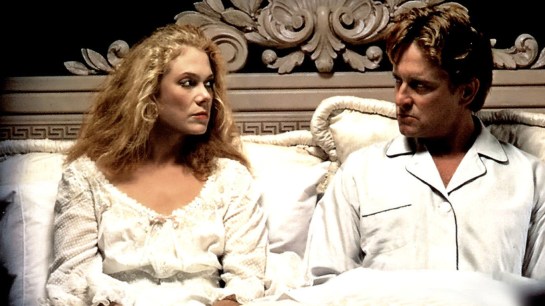
In the 1989 Danny DeVito directed “War of the Roses” everything starts reasonably well. Michael Douglas and Kathleen Turner meet in college, fall in love, and eventually marry. Oh but how quickly it turns into one of the most outrageous and darkest black comedies of its decade. Their relationship sours, their marriage crumbles, and the Roses bring new meaning to “ugly divorce”.

#4 – “Cat on a Hot Tin Roof”

hot-tin

The marriage between Paul Newman’s Brick and Elizabeth Taylor’s Maggie seemed destined for trouble. It becomes abundantly clear as “Cat on a Hot Tin Roof” moves forward, slowly shedding light on their feelings toward each other and on destructive secrets from their pasts. Alcoholism, deception, dysfunction – all factors that influence this stormy, bitter relationship between two deeply flawed people.

#3 – “Kalifornia”

kali

Adding a much different flavor to the list is “Kalifornia”, a twisted road thriller featuring a particularly tempestuous relationship between the violent, aggressive Early (Brad Pitt) and the simple, naive Adele (Juliette Lewis). The abuse we witness ranges from subtle and manipulative to fiercely physical. Incredibly the film makes the couple fascinating, even sweet on occasions. Perhaps that’s what makes the abusive side of their relationship even more disturbing.

#2 – “A Streetcar Named Desire”

streetcar

A second Tennessee Williams adaptation makes the list but with a twist. It’s impossible to consider one specific relationship in “Streetcar” without factoring in the three main players – Stanley, Stella, and Blanche. The depression and dysfunction of these three characters are so intrinsically intertwined and manifests itself through various degrees of mental and physical abuse. Sure, this may be a cheat, but the volatility of this three-headed relationship is too profound to exclude.

#1 – “Who’s Afraid of Virginia Woolf?”
virginia

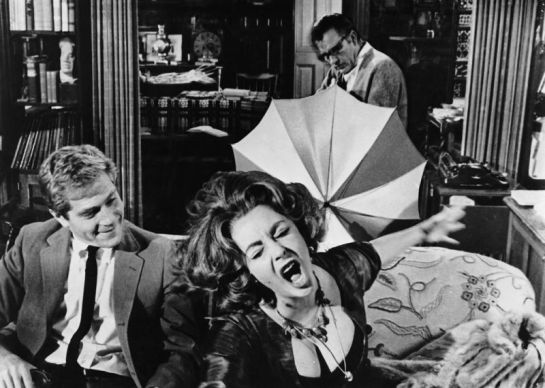
Relentlessly nasty, toxic, and brutal. Those are just a few adjectives which perfectly describe 1966’s “Who’s Afraid of Virginia Woolf?”. Perhaps no film has presented a more hateful, venomous relationship than the one shared between George (Richard Burton) and Martha (Elizabeth Taylor). As the film moves forward we get more alcohol, more insults, and more pain until these two severely damaged people simply have nothing left.

So there are my five volatile movie romances. What do you think of my picks? See something I missed? Please let me know in the comments section below.
2016 BlindSpot Series – “The Candidate” (1972)

cadidateposter

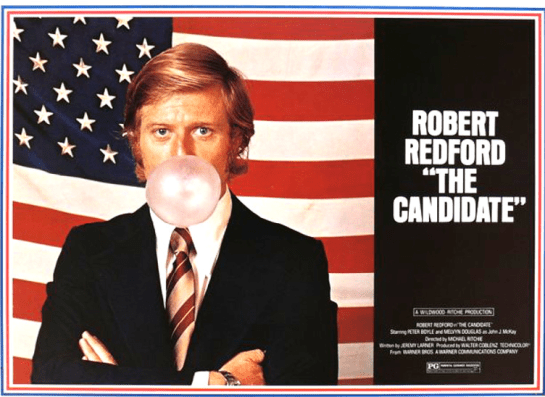
What better way to fill my November Blindspot than by watching “The Candidate”. On the heels of one of the ugliest elections in American history, “The Candidate” is a light and frothy escape by comparison. To take that a little further, putting today’s election process next to the film’s depiction of a political campaign is like putting Quentin Tarantino next to Walt Disney.

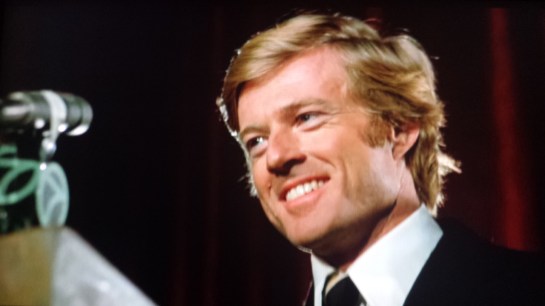
Robert Redford co-produced and starred in this small-budgeted political dramedy from 1972. This was a significant film for Redford who by that time was already an established movie star. But “The Candidate” was one of several early Redford pictures that showed his appreciation for smaller independent films. This would eventually lead to the creation of the Sunset Institute and of course the Sundance Film Festival.

candiate2

“The Candidate” follows the ins-and-outs of a California Senate race. Bill McKay (Robert Redford) is a community activist and son of former governor. He’s approached by Marvin Lucas (superbly played by Peter Boyle), a campaign strategist who needs a Democratic candidate for the U.S. Senate. Lucas’s sales pitch is a bit unusual – run against popular Republican incumbent Crocker Jarmon (Tom Porter) with absolutely no chance of winning. The one positive for McKay – say whatever you want about the issues you want. The idealistic McKay agrees.

From there the movie explores the behind-closed-doors politics involved in such a campaign. As McKay message begins to gain traction with the public, the party pours more resources into his campaign and (of course) want more control over him. That ‘clash versus compromise’ dynamic is a big part of the story. Jeremy Larner’s Oscar-winning script scrambles through the many layers of a campaign with keen insight and a satirical edge.

Director Michael Ritchie along with cinematographers Victor Kemper and John Korty shoot portions of the film in a semi-documentarian style which was a unique decision. It’s effective in adding an authenticity to how it pictures the campaign trail. They also do a good job capturing the sense of chaos both in front of the big crowds and the behind the scenes.

candidate1

“The Candidate” dives into the inner workings of a political campaign and portrays it as good as any film. The jostling and wrangling is shown in both a positive and negative light. Where the movie suffers is in its portrayal of Bill’s personal life, specifically with his wife Nancy (played by the lovely Karen Carlson). The script shortchanges their relationship and leaves a lot on the table. It hints at different conflicts but never explores them. Nancy has a good number of scenes but neither she or her relationship with Bill gets the attention it needs. It’s basically an afterthought and the plot-holes it leaves are noticeable.

Redford deserves a lot of credit. He has done a ton for independent cinema not only promoting it, but by making it a key part of his own filmography. At the time Redford was big enough to have focused strictly on attention-getting big studio pictures. “The Candidate” was far from that yet Redford made the movie he wanted to make. The result is a fine election film that excels when highlighting the campaign but falls a little short elsewhere.

VERDICT – 3.5 STARS

3.5 stars

REVIEW: “Three Colors: Red”

threecolorstrilogy

Krzysztof Kieślowski was at a pivotal point in his life while making his renowned Three Colors trilogy. He had determined that these would be his last movies and at the conclusion of his trilogy he announced it to the world. It was 1994 and Kieślowski was at the pinnacle of his career. Yet he stepped away from filmmaking with the intent of sitting at home and smoking while never ever visiting a cinema again. Sadly, Kieślowski would die two years later at the age 54. A true artist driven by his own rules right to the end.

Kieślowski’s Three Colors trilogy couldn’t be a better send off – a testament to a visionary’s passion for creating movies that burrow deep into the human elements that unite us. Kieślowski once said he preferred “touching on subject matters and situations which link people, and not those that divide people.” While he often spoke to the social and political climates of his times, they were too divisive and rarely his focus. He later said “Feelings are what link people together.” That very idea permeates ever frame of his Three Colors movies.

The trilogy’s name is taken from the three colors of the French flag – blue, white, and red. Each of the flag’s colors represent a particular ideal. Blue stood for liberty, white for equality, and red for fraternity. Each movie represents one of these ideals but on a human level and never within a political framework. Politics tend to divide and that was of no interest to Kieślowski. He sought to examine these principles within the confines of individual lives and all of the love, sorrow, pain, and humor that come with living. These are feelings and emotions that we all know and can connect to. All three films, while able to stand on their own, do connect in subtle and sometimes surprising ways.

redposer

With “Red”, the final film in the Three Colors trilogy, Kieślowski saves his best for last. While pulling some elements from the previous two movies, “Red” still feels strikingly unique both in look and tone. It probably has the most obvious relationship with the ideal it represents (fraternity), but that doesn’t mean it’s free of thematic exploration and nuance. Quite the obvious. Kieślowski rarely looks at his subjects literally meaning we get plenty to meditate and chew on.

“Red” features a fairly straightforward story but with a sense of mystery and wonderment. There is also a surprising amount of warmth that we don’t see in the other movies. “Blue” was cold in much of its dealings with isolation and separation. The coldness in “White” comes in the form of a broken relationship and a jilted husband’s desire for revenge. “Red” has some of the same but it slowly and steadily moves towards the warm glow of fraternity yet not without facing the quandaries of life Kieślowski loves to contemplate.

red1

Irène Jacob plays Valentine, a university student and part-time bubblegum model living in Geneva. While driving home one night she hits a German Shepherd with her car. The address on the collar leads her to a reclusive ex-judge named Joseph Kern (Jean-Louis Trintignant). Their initial meeting doesn’t go well. The soured, callous Joseph seems to care nothing about his dog and even less about Valentine. Eventually the loneliness they both share sparks a compelling bond between the two.

“Red” is a film that deals with fraternity but it’s also about miscommunication and missed connections. We see this in Valentine and Joseph’s central relationship, but there are other ways the film emphasizes it. For example, a law student named Auguste (Jean-Pierre Lorit) lives in the apartment building next to Valentine’s. The two cross paths every day yet never once seem to notice each other. Both are in less than perfect relationships, Valentine with the smug domineering Michel who we only hear over the phone, and Auguste with the flirty Karin (Frederique Feder). Both have an avenue for a potentially better relationship but constantly miss the connection.

red2

Kieślowski thoughtfully unwraps these people through their circumstances and intersects their stories in some unexpected ways. As he does so he challenges us to empathize with his characters and delve deeper into their motivations and feelings. This was common for Kieślowski whose true desire was to portray not merely what we see with our eyes but what we sense. This is so evident in his effective uses of each title’s color. In “Blue” it was moody and somber. In “White” it was often more naturalistic and at times idyllic. But in “Red” it conveys a number of feelings while also provokes our senses in a variety of ways.

“Red” is a mesmerizing and engaging experience right up to its peculiar but perfectly fitting ending. It connects itself to the previous two film but at the same time continues the trend of being surprisingly unique. All three movies have managed to be within the same world but strikingly different in terms of story, tone, aesthetic, and meaning. “Red” is a superb way to bring the trilogy to a close and it’s particularly moving in that this was the final movie Kieślowski would ever make. In “Red” he left us with an exclamation point on a fabulous career and a firm reminder that his work stands among the best of his craft.

VERDICT – 4.5 STARS

4.5 STARS

REVIEW: “Three Colors: White”

threecolorstrilogy

Krzysztof Kieślowski was at a pivotal point in his life while making his renowned Three Colors trilogy. He had determined that these would be his last movies and at the conclusion of his trilogy he announced it to the world. It was 1994 and Kieślowski was at the pinnacle of his career. Yet he stepped away from filmmaking with the intent of sitting at home and smoking while never ever visiting a cinema again. Sadly, Kieślowski would die two years later at the age 54. A true artist driven by his own rules right to the end.

Kieślowski’s Three Colors trilogy couldn’t be a better send off – a testament to a visionary’s passion for creating movies that burrow deep into the human elements that connect us. Kieślowski once said he preferred “touching on subject matters and situations which link people, and not those that divide people.” While he often spoke to the social and political climates of his times, they were too divisive and they were rarely his focus. He later said “Feelings are what link people together.” That very idea permeates ever frame of his Three Colors movies.

The trilogy’s name is taken from the three colors of the French flag – blue, white, and red. Each of the flag’s colors represent a particular ideal. Blue stands for liberty, white for equality, and red for fraternity. Each movie represents one of these ideals but on a human level and never within a political framework. Politics tend to divide and that was of no interest to Kieślowski. He sought to examine these principles within the confines of individual lives and all of the love, sorrow, pain, and humor that comes with living. These are feelings and emotions that we all know and can connect to. All three films, while able to stand on their own, do connect in subtle and sometimes surprising ways.

white-poster

When writing about “Blue” (the first film in Krzysztof Kieślowski ‘s Three Colors trilogy) I noted the difficulties in first finding the liberty. In “White” recognizing a meaningful connection to “equality” proves even harder, but it is there for the gleaning. All it takes is a careful eye to see it in the central relationship, in the sociopolitical probing, and in viewing the story as one big sweeping allegory. And as with the color blue in the previous film, white is prominently used for a number of purposes.

But at the same time Kieślowski doesn’t seem beyond using the color white to play with his audience. Those who have watched “Blue” will remember the mood and feeling conveyed by the director’s use of that color. Having set up our inquisitive eyes with that film, you can almost sense Kieślowski chuckling as we try to do the same in “White” – as we try to decipher meaning that isn’t always there. It’s an idea seemingly unique to this installment of the trilogy, but also congruent with what is essentially a dark comedy.

white1

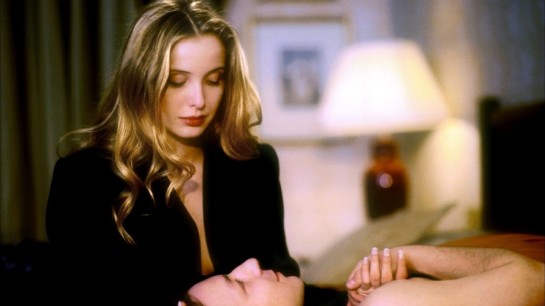
You could say “White” is a story about love, not so much through the eyes of a romantic but a realist. The love Kieślowski examines isn’t neat, warm, and bubbly. It’s peculiar, painful, and messy. That messiness is evident in the film’s opening moments as a Polish hairdresser named Karol (Zbigniew Zamachowski) is being humiliated in a Paris divorce court by his wife Dominique (Julie Delpy). She testifies that she no longer loves him and wants a divorce due to his impotency. Through a series of unfortunate mishaps he loses his home, money, and passport.

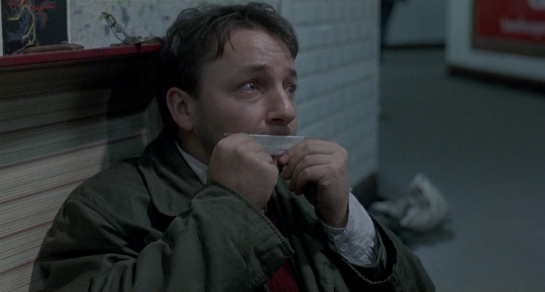
With no means of getting back to Poland, Karol resorts to panhandling in the Paris metro. There he meets and befriends a fellow Pole Mikołaj (Janusz Gajos) who helps him get back to Warsaw through the most unorthodox of means. Once home he gets his footing and sets out for revenge/equality which in Kieślowski’s film are inseparable. First Karol throws himself into the fledgling capitalist system of post-communist Poland where we hear repeatedly “everything is for sale”. It’s all part of an elaborate plan to get back at Dominique even though it’s abundantly clear that he still loves her.

white2

Zamachowski was instructed to keep Charlie Chaplin’s movies in the back of his mind when acting. Kieślowski’s intent was not to mimic Chaplin but to let his physical language influence Zamachowski’s performance. It works in two ways, first as an sly comedic device but also in portraying Karol as gentle and timid. We particularly see it in the first half of the film where Karol is seen as hapless and directionless. Much like the beat-up suitcase in the opening scene, moving along on an airport conveyor with absolutely no control of where it’s going.

Things get a little zany in the last act of “White”, but appropriately so considering the quirkiness of the story. Yet while this is easily the lightest of the trilogy, “White” clearly has much to say about a host of things pertaining to the human experience. It isn’t as meditative as “Blue” but it plays with just as many themes and delves into numerous facets of Kieślowski’s favorite subject – human nature. That makes it a worthwhile component of the Three Colors experience.

VERDICT – 4 STARS

4 Stars

REVIEW: “Three Colors: Blue”

threecolorstrilogy

Krzysztof Kieślowski was at a pivotal point in his life while making his renowned Three Colors trilogy. He had determined that these would be his last movies and at the conclusion of his trilogy he announced it to the world. It was 1994 and Kieślowski was at the pinnacle of his career. Yet he stepped away from filmmaking with the intent of sitting at home and smoking while never ever visiting a cinema again. Sadly, Kieślowski would die two years later at the age 54. A true artist driven by his own creative rules right to the end.

Kieślowski’s Three Colors trilogy couldn’t be a better send off – a testament to a visionary’s passion for creating movies that burrow deep into the human elements that connect us. Kieślowski once said he preferred “touching on subject matters and situations which link people, and not those that divide people.” While he often spoke to the social and political climates of his times, they were too divisive and they were rarely his focus. He later said “Feelings are what link people together.” That very idea permeates ever frame of his Three Colors movies.

The trilogy’s name is taken from the three colors of the French flag – blue, white, and red. Each of the flag’s colors represent a particular ideal. Blue stands for liberty, white for equality, and red for fraternity. Each movie represents one of these ideals but on a human level and never within a political framework. Politics tend to divide and that was of no interest to Kieślowski. He sought to examine these principles within the confines of individual lives and all of the love, sorrow, pain, and humor that comes with living. These are feelings and emotions that we all know and can connect to. All three films, while able to stand on their own, do connect in subtle and sometimes surprising ways.

blue-poster

For much of the film it can be difficult to find the liberty in “Blue”, the first movie of Kieślowski’s Three Colors trilogy. In fact much of the film seems to be exploring a form of bondage – to grief, to pain, to the past. But I suppose it’s true what they say – liberty/freedom is much sweeter once you’ve tasted bondage. In “Blue” liberty as a theme is present, but much more as a desire than a reality.

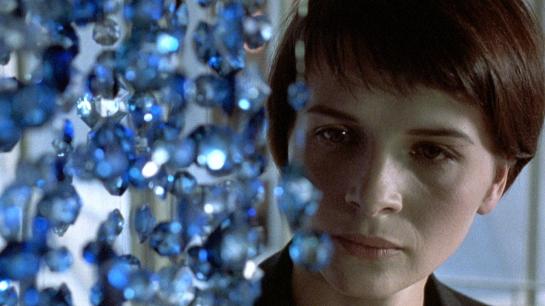
The entire trilogy was written by Kieślowski and trusted collaborator Krzysztof Piesiewicz. Their first film focuses on a woman named Julie (played by the sublime Juliette Binoche) who is dealing with the death of her famous composer husband and young daughter from a car accident. Weighed down by the burden of her grief, Julie seeks to cut all ties with her past. She puts the family home up for sale, disconnects from the people they knew, and even destroys her husband’s final unfinished commissioned score. The only thing she keeps is her daughter’s sparkling blue mobile.

Julie wants to live as someone with no past. She rents an apartment in a corner of Paris with hopes of living in anonymity. But every unintended new human connection inevitably brings her closer to the past she is trying to escape. It’s here that Julie must decide whether to burrow deeper into her hole of isolation or unearth her sorrow and pain in hopes of breaking free from their hold on her. Kieślowski doesn’t make this an easy decision. It becomes even more complicated when secrets of her husband’s past surface.

blue1

The cinematography was handled by Sławomir Idziak who shot most of Kieślowski’s early work. As you can guess Idziak finds many ways to incorporate the color blue into his shots but they never feel meaningless. Like skillful craftsmen he and Kieślowski use the tones to great effect to accentuate feeling and highlight mood. It’s both beautiful and evocative. You will also notice a plethora of other crafty visual techniques that are constantly adding new perspective.

Kieślowski was all about examining human nature and no detail was too small or without meaning. “Blue” moves steadily and confidently, traits that are no doubt reflections of its director. It’s an intimate meditation centered by a bold, piercing performance from Binoche who speaks little but tells much through her revealing outward expression. As we observe the unfolding emotional layers of “Blue” we are given plenty to soak in. And it doesn’t take long before Kieślowski has us invested in his main character and the compelling themes finally brought to the surface most notably the aforementioned idea of liberty.

VERDICT – 4.5 STARS

4.5 STARS

REVIEW: “Independence Day: Resurgence”

idposter

It’s hard to believe it has been 20 years since the release of “Independence Day”. I still remember that summer of 1996. ID4 was a big deal. A fantastic marketing campaign stirred up a ton of interest and when the film was finally released audiences weren’t disappointed. ID4 was a big, silly, science fiction romp that essentially redefined the summer blockbuster. It also represented a huge leap forward in CGI technology and featured some of the most memorable scenes ever created of movie mass destruction. It opened the gates for a slew of other disaster movies that would follow and its eventual sequel some twenty years later.

ID4 worked simply because it was fun. The pure spectacle was something to behold and unlike anything of that time. Most importantly it embraced its silliness and its cheesiness was part of its charm. Now flash-forward to “Independence Day: Resurgence”, a remarkably dull sequel devoid of any of its predecessors charms. Director Roland Emmerich returns along with co-writer and co-producer Dean Devlin. Both tapped into something good back in 1996, but their follow-up is a testament to how far blockbusters have fallen in terms of quality and ambition.

id3

“Resurgence” spends a lot of time hearkening back to the first movie and milking that connection for all it can. Minus a few fun bits of nostalgia, it doesn’t do much to help. Perhaps twenty years is too long ago. Maybe people have simply forgotten these characters. Personally speaking I had no hankering for a sequel. But problems like that can be squashed if you have good story to tell. “Resurgence” has nothing new to say and its redundancy along with a complete lack of inspiration makes it pretty tough to endure.

The cliché-riddled story is pretty basic. A now unified earth has created a global defense force to protect us from any potential alien attack. How do you think that worked? A 3,000 mile-wide alien mothership (that’s stupid in itself) crashes through our atmosphere and attaches itself to earth in order to harvest our planet’s core. Thankfully we have a team of the best fighter pilots, scientists, and ex-presidents to put up a resistance. None of them are the slightest bit interesting, but they do put up a resistance.

id2

It’s hard to say what we get more of, scenes of CGI or horrible lines of dialogue. It’s a close race. And of course we get the obligatory destruction of cities and the killing of millions of faceless people (poor London…isn’t it always London?). Sure, some of the visual effects look really nice and that’s where a bulk of its bloated $165 million budget goes. But it’s nothing we haven’t seen a million times by now and with nothing in the story worth clinging to, the effects ring hollow.

Speaking of hollow look no further than the characters and the performances. It may be a bit unfair to slam the cast when the material is this bad. There is line after line of cringe-worthy dialogue and nearly every character is firmly rooted in one stereotype or another. The cheesiness isn’t charming because the humor is so vapid and not a single relationship feels authentic.

Independence Day Resurgence

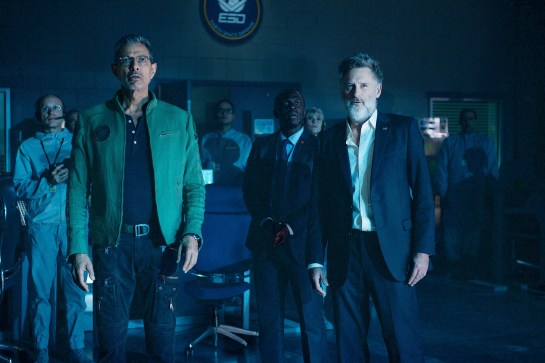
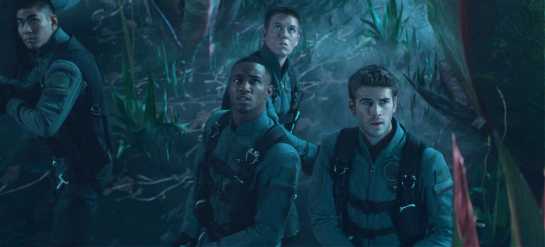
Then you get to the actors none of whom seem completely convinced of what they’re doing. Liam Hemsworth plays a poor man’s Maverick from “Top Gun”. Jessie Usher is shockingly bad as the fighter pilot son of Will Smith’s character from the first film (Smith wisely said “no thanks” to this one). Even the always enjoyable Jeff Golblum is handcuffed by the shoddy script. Bill Pullman, Brent Spiner, and Judd Hirsch also return for a paycheck while none of the newly added twenty-somethings offer even a hint of fresh energy.

“Resurgence” flounders out of the gate, never shows an ability to build suspense, and offers up some of the most uninteresting characters I’ve seen in a while. Its CGI looks good but over time slams against your senses like a wrecking-ball. Maybe if this film went further into the “Sharknado” vein of intentional goofiness and absurdity it could have worked. As it is, “Resurgence” bored me and left me wondering if this was the best they could come up with after twenty years?

VERDICT – 1.5 STARS

1.5 stars