REVIEW: “Point Break” (2015)

point-poster

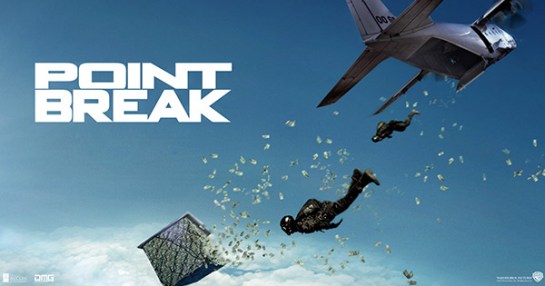
“Point Break” is a tough one to figure out. Putting aside the obvious answer (m-o-n-e-y), I’ve wondered why someone would even attempt to remake Kathryn Bigelow’s 1991 cult classic. Could a contemporary approach even capture the wacky ingredients which made the original such an over-the-top, fun movie of its time? In the case of this 2015 remake, not exactly.

Director Ericson Core and writer Kurt Wimmer take their version in a noticeably different direction. The outline is basically the same but with a much more dour and self-serious tone. Bigelow’s film had a subtle layer of humor which showed itself in the macho bromances, cheesy surfer banter, and of course Gary Busey. Core and Wimmer yank out all of that and the movie suffers for it.
point1

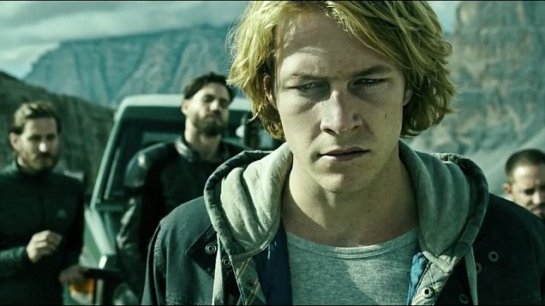
Luke Bracey takes the Keanu Reeves role as Johnny Utah. He’s no longer an ex-college football star with a bum knee. Instead he is an extreme sports poly-athlete (still not sure what that means) driven to the FBI after a friend’s death. Edgar Ramírez (an actor I generally like) takes Patrick Swayze’s place as Bodhi, an extreme sportsman and environmentally conscience mystic who often waxes eloquently about his oneness with the planet (“We’re trying to save this place by becoming one with it.”)

Bodhi is a thrill-seeking Robin Hood who, along with his merry band of X Gamers, rob from corporations and spread their wealth to the poor. In between these illegal deeds Bodhi is attempting to complete the Ozaki 8 – a series of extreme challenges which honor the forces of nature. This is what puts Johnny on their trail. He goes undercover earning the trust of Bodhi and gaining sympathy for his cause. But as Keanu so elegantly put it in 1991 “I’m an FBI agent!” The same applies in this film which does complicate things a bit for Mr. Utah.

point2

Unfortunately there isn’t much else to add. Storywise the new “Point Break” is pretty bare-bones. Hardly any time is spent trying to understand these eco-friendly renegades. All we get is goofy philosophizing meant to tap into their thinking. It doesn’t work. There are also plenty of brainless logic gaps that had me wondering how Bodhi’s crew had escaped capture for so long.

The same paper-thin treatment is given to the characters. In many ways they are never given a chance. Bracey’s brooding gets old and he’s rarely given a chance to do anything else. Ramírez tries his best to make Bodhi a mysterious and lively individual and at times he pulls it off. But the material never allows him to stretch the character past the scripts unfortunate limitations. We also get a wasted Ray Winstone performance. He takes on the Busey character minus any hint of humor. And get Teresa Palmer wedged in as the kinda, sorta love interest. Her character adds absolutely nothing to the story.

break3

But while it lacks in story, its visual presentation exhilarates. The remake doesn’t strictly focus on surfing. And while I believe that hurts the story, it also offers a host of opportunities for Core to capture some truly incredible extreme stunts from around the world. From BASE jumping in the Swiss Alps to wall climbing next to Venezuela’s Angel Falls. These are some insanely extreme sequences in some of the planet’s most beautiful locales and they are visually astounding. Core’s background is in cinematography and you can certainly see it on display.

If only the story had been given that same level of care and detail. Instead little creative thought seemed to go into the actual story, and the changes they did make simply don’t work. I don’t need “Point Break” to be serious or thought-provoking. I want it to be fun, action-packed, and it must have a sense of humor. Nowhere beneath the remake’s pseudo-spirituality, philosophical babbling, and fake tattoos will you find the humor it desperately needs. It certainly looks incredible and that saves it from being a disaster. But that’s not enough to make it a good remake.

VERDICT – 2 STARS

2 Stars

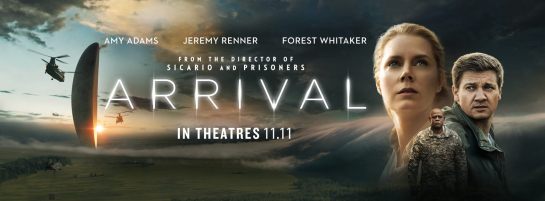
REVIEW: “Arrival”

arrival-poster

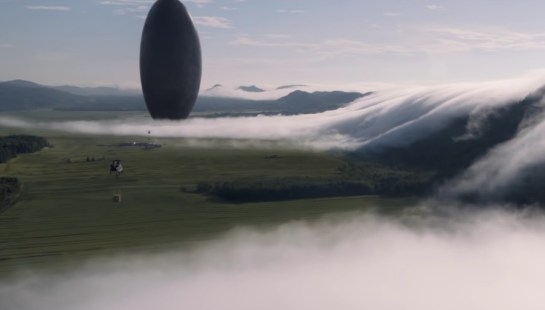
The cryptic and ambiguous ad campaign for Denis Villeneuve’s “Arrival” made the movie impossible to define. Some things are obvious. “Arrival ” is clearly science fiction and it looks to be playing around in the ‘alien invasion’ sub-genre. Past that it’s hard to tell what this movie is. There isn’t a glimpse of alien warfare or mass destruction. Actually there is no big action highlight to speak of. Since Hollywood has influenced our leanings towards that type of movie, I’m certain some people will leave “Arrival” having expected something far different than what they were given.

Denis Villeneuve is a filmmaker as difficult to pin down as his new movie. But there is one thing we can learn from his small but impressive filmography. Villeneuve loves tension and his ability to ratchet it up through a wild assortment of means is showcased in each of his movies. “Arrival” is a much different project but it doesn’t take long to recognize that common thread of tension.

arrival1

The film is based on Ted Chiang’s award-winning short story “Story of Your Life” which played with linguistics and communication inside of an alien encounter. Villeneuve and screenwriter Eric Heisserer stick close to that idea. Their adaptation isn’t about flying saucers, alien abductions, or the CGI devastation of Earth’s metropolises. It’s much more cerebral and metaphysical. I guess you could say this is the thinking man’s alien abduction movie.

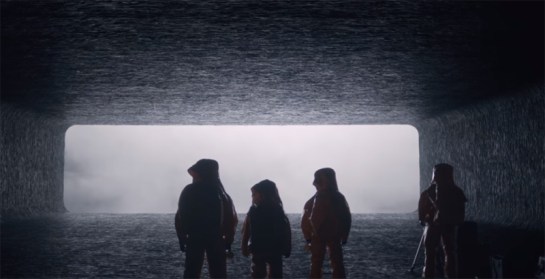
Amy Adams plays Louise, a language professor who, along with everyone else on the planet, is shocked when twelve mysterious spacecraft land at different points around the globe. After one ship lands in Montana, Louise is approached by Army Colonel Weber (Forest Whitaker) to lead a team sent in to communicate with the aliens. She is to work alongside theoretical physicist Ian Donnelly (Jeremy Renner) to find the answer to the biggest question – what is their purpose here?

arrival2

To answer that question Louise and Ian must first learn the alien’s highly advanced language which comes in the form of symbols resembling inkblots or coffee mug stains. For Louise it’s imperative that her superiors be patient, but as world governments begin to cave to paranoia it could be us who ushers in a global catastrophe.

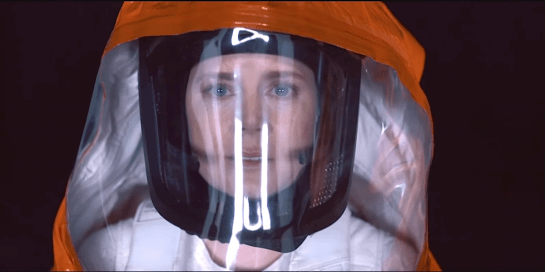
There is another reoccurring layer to the story that feeds into the overall mystery. From the opening shot we get flashbacks to a tragedy from Louise’s past. The more she learns of the alien language the more vivid her flashbacks become. In addition to developing suspense, these sequences provide a human pulse to the film mainly because of Adams’ measured performance. She is sophisticated enough as an actress to remain genuine and understated which keeps her character emotionally grounded.

arrival3

Villeneuve’s storytelling is both patient and methodical which is sure to frustrate some and blow the minds of others. Yet while deliberate, the aforementioned tension never fully leaves even in the quieter scenes. That’s in big part thanks to an ever-present sense of dread and an eerie ominous mood which is clearly a focal point. Villeneuve has shown himself to be a stylish, visual filmmaker and he combined his flair for tantalizing imagery with cinematographer Bradford Young’s love for deep shadows and natural lighting. Also adding to the mood is the ethereal, off-kilter score from Villeneuve favorite Jóhann Jóhannsson. It’s both beautiful and foreboding – some of the best use of movie music this year. Plus there is the use of Max Richter’s exquisitely haunting “On the Nature of Daylight” which is such a perfect fit.

The film’s final act becomes a real mindbender as we start fitting together all of the pieces including some things we didn’t even know were pieces. This too is sure to split audiences between those who go for its mental gymnastics and those who see it as too much. Me, I loved it from the start. I appreciated the intelligent science fiction, but also how the film steps beyond genre. It turned out to be far more intimate and thought-provoking than I ever expected. And all of that on top of the superb visuals, art direction, and score. “Arrival” is an absolute gem from Denis Villeneuve and hopefully a precursor to his next movie, 2017’s Blade Runner sequel.

VERDICT – 5 STARS

5 STARSs

5STAR K&M

REVIEW: “Nerve”

nerve-poster

In the age of Twitter, Periscope, Facebook, and Instagram I suppose it’s only natural that we get a cautionary tale on the dangers of social media and the World Wide Web. At first glance it’s pretty easy to question the need, but if there are kids in the world as dim-witted as some we meet in “Nerve” perhaps we do need a cinematic intervention.

“Nerve” is directed by the duo of Henry Joost and Ariel Schulman. The two are probably best known for their clever 2010 maybe-documentary “Catfish”. The two movies are obviously different, but they do have something in common – both play with the connection between young people and social media. For “Catfish” it was limited to Facebook. For “Nerve” the playground is significantly bigger.

nerve2

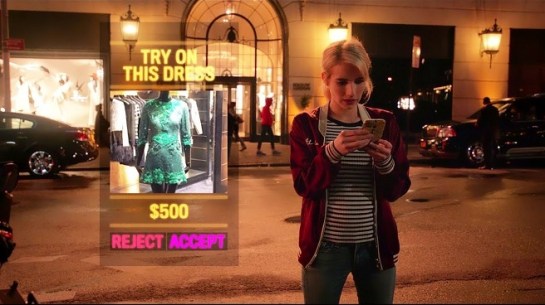
Emma Roberts plays Venus Delmonico, but everyone knows her as simply Vee. She’s a smart and somewhat reserved senior in high school with an art school scholarship waiting if she chooses to take it. Contrast her with her best friend Sydney (Emily Meade), a rambunctious popularity hound who has become an internet “somebody” by playing a cyber reality game called Nerve. It’s basically live-streaming Truth or Dare where you gain money and (more importantly) followers by doing dumb stuff in public. The followers then dare you to do something even dumber and they watch as you stream it. Yippee.

Fed up with Sydney constantly pointing out her lack of moxie, Vee begins playing Nerve. Her first dare crosses paths with another player Ian (Dave Franco). Their followers team them up for an assortment of dares across New York City, each a little riskier than the previous one. The dares move from embarrassing to life-threatening and the game (much like the film) eventually gets completely out of hand.

nerve1

At times “Nerve” is presented like a music video – high energy, bright lights, pounding modern music. It all fits in with the film’s hyper pacing. The story never stays planted in one place very long which is probably a good thing. It keeps our attention away from the shallowness of the characters and the stupidity of their actions. And by the time we get to the final act no amount of fast pacing can cover how preposterous things become.

There is a lively, spirited heartbeat in “Nerve” that pretty much runs from the opening title screen to the ending credits.  Joost and Schulman deserve credit for sustaining that energy as they explore some intriguing internet-based themes. But the film is undercut by its story’s inability to finish and its flimsy handling of its characters. For example, you get the sense that the movie wants us to believe these characters are deeper than the surface impressions we are left with. It never convinced me. And by the time the story reaches its climax practically all logic is out the window. So for all of its hip style and colorful vivacity “Nerve” still has issues it can’t quite overcome. But then again maybe I’m just getting old

VERDICT – 2.5 STARS

2.5 stars

REVIEW: “Doctor Strange”

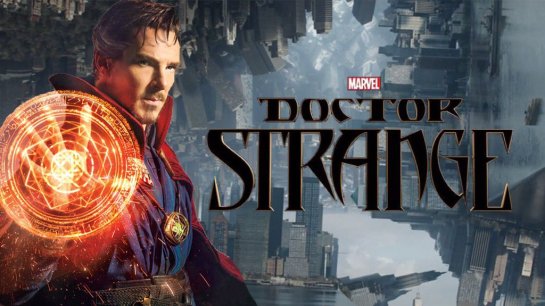
strange-poster

As their bank accounts have blossomed Marvel Studios has shown a confidence and willingness to explore nearly every corner of their comic book universe. Obviously they have spotlighted their biggest properties – The Avengers, Captain America, Iron Man and so on. But they have also ventured into other areas occupied by lesser known characters (to some). Here you find movies like “Ant-Man”, “Guardians of the Galaxy” and the latest Marvel installment “Doctor Strange”.

When watching “Doctor Strange” it doesn’t take long to recognize what has become a familiar origin story blueprint for the Marvel Cinematic Universe. It’s particularly similar to what we got with “Iron Man” and “Ant-Man” – a deeply flawed individual becomes the possessor of great power, he uses said power to face a sizable threat, he gets a measure of self-redemption, and then he is connected to the greater MCU through a an end credits scene. The names have changed and the powers are different, but it’s more or less the same Marvel formula.

strange1

Something Marvel Studios does exceptionally well is cast their movies. Benedict Cumberbatch is the ideal choice to play Stephen Strange, a renowned neurosurgeon with a big IQ and an even bigger ego. After a violent car crash costs him the full use of his hands, he has several experimental surgeries all of which fail. Unwilling to accept his fate, Strange seeks out eastern medicine in Nepal. He meets with a mystic known only as The Ancient One (played by a shorn Tilda Swinton) who shows him he must put aside his intellect and look inward to his spirit, something that’s a bit difficult for a raving egomaniac.

The main antagonist is a fellow named Kaecilius (played with the appropriate amount of gruff by Mads Mikkelsen). He’s actually one of the more compelling characters – a sorcerer who deeply believes that he is acting for a greater good. Other characters include Chiwetel Ejiofor as Mordo, the Anicient One’s right-hand man, Rachel McAdams as Strange’s (sort of) love interest Christine, and Benedict Wong as a faithful soldier/librarian named…well…Wong.

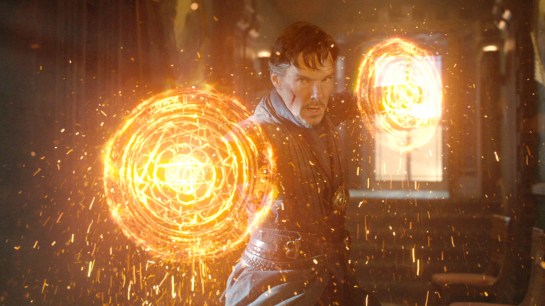
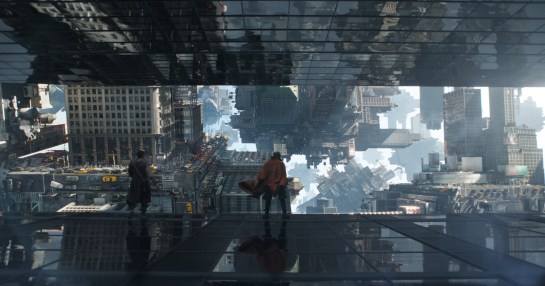
Director Scott Derrickson, most known for his horror movies, was given $160 million which he mostly put to good use. Locations are a highlight with filming taking place from New York City to Hong Kong to Kathmandu. But the film’s bread and butter lies in the special effects which range from merely okay to absolutely astounding. So often Marvel movies focus their effects on blowing up buildings or crashing large objects. “Doctor Strange” offers a new look that deals more with magic and the otherworldly. The visuals look their best when characters distort the dimensions of a cityscape. Think “Inception” but on mystical HGH. Whenever it plays around with the Dark Dimension stuff it doesn’t look nearly as impressive.

null

Also in line with other Marvel movies is the humor. The MCU has wisely refused to take itself too seriously and the same applies here. The humor comes from a number of sources but most prominently from an inanimate object. The Cloak of Levitation is easily the most recognizable piece of Doctor Strange attire. Here it functions semi-autonomously and some of the movies funniest scenes involve the cloak running around with a mystical mind of its own. There are also a few clever lines where the film understands its absurdity and winks at the audience. It’s a much-needed ingredient.

“Doctor Strange” seemed like another wild stretch by the MCU, but if early box office numbers are an indicator they have another success on their hands. There are definitely some new things being done here most notably in the visual effects. The ending is also a nice diversion from the routine MCU formula. On the other hand, this is a Marvel origin story through-and-through which is getting a little tiresome even for a bonafide comic book fan like me.

VERDICT – 3.5 STARS

3.5 stars

REVIEW: “Hacksaw Ridge”

hacksaw-poster

You might say Hollywood’s selective forgiveness hasn’t fully extended to Mel Gibson. While the transgressions of many stars have been hypocritically swept under the rug, Gibson has remained a Hollywood pariah due to his vile alcohol-related incidents of nearly ten years ago. Despite apologies, treatments, and the support of close friends like Jodie Foster, Whoopi Goldberg, and Robert Downey, Jr., it has been tough road back into movies for Gibson. But the early responses to his new film “Hacksaw Ridge” may be a sign that Tinseltown is finally giving him a second chance.

Hollywood has tried to tell the incredible story of Desmond Doss for decades. Screen rights to the story have swapped hands numerous times and multiple producers have attempted to get the project off the ground. Mel Gibson was first approached to direct the film in 2004. He would turn down the offer twice before accepting some ten years later. “Hacksaw Ridge” would be Gibson’s first directed movie since 2006’s “Apocalypto”.

hacksaw3

The story of Desmond Doss is astonishing. In April of 1942 Doss enlisted in the Army but refused to carry a weapon due to his deeply held religious convictions. Despite early criticisms and persecution, Doss worked his way up to Corporal and was a field medic during the bloody Battle of Okinawa. He became the first conscientious objector to receive the Medal of Honor.

Andrew Garfield plays Doss and is tasked with carrying the bulk of the film on his shoulders. Garfield is an actor who has always flown a bit under the radar despite some strong performances. In “Hacksaw Ridge” he brings the audience through several portions of Doss’s life. We see his early life at home and his tumultuous relationship with his war-scarred, alcoholic father (played with bruising realism by Hugo Weaving in some of the year’s best supporting work). We watch his courtship with a local nurse named Dorothy (played by a radiant and warm Teresa Palmer). The next stop is boot camp where Doss’s convictions raises the ire of his unit especially his superiors Sgt. Howell (Vince Vaughn) and Capt. Glover (Sam Worthington).

And then there is the final act which is dedicated to Doss’s heroism at Okinawa where some of the most ferocious fighting of World War 2 took place. From the first shot fired, the film presents the battlefield violence vividly and in a manner reminiscent of the D-Day sequence in “Saving Private Ryan”. Mel Gibson is no stranger to depicting the brutal nature of combat and it is especially effective here considering the harsh reality it’s based on. Make no mistake, it’s bloody, unflinching, and harrowing.

hacksaw2

Some have found Gibson’s intense war violence at odds with his story of a pacifist. I couldn’t disagree more. Yes, the battle scenes are brutal and graphic but not without reason. You see, in the middle of the blood, the bullets, and the dizzying madness of war is Desmond Doss who personifies grace in the face of violence, life in a sea of death. Gibson contrasts the horrors of war with the heroism of Doss in such a way as to make his protagonist’s light shine even brighter. There is no glorification of war. These soldiers are in a picture of hell. The only light for them and the audience is Desmond Doss. It’s all incredibly effective.

“Hacksaw Ridge” was made with a fairly modest $40 million budget (quite modest compared to the $165 million price tag for the week’s other big release, Marvel’s second tier “Doctor Strange”). But as you would expect from Gibson, the movie looks like a billion bucks. The superbly shot battle scenes aside, Gibson’s traditionalist sensibilities show up in how he shoots everything else which is a perfect fit for this particular film. It’s easy to get lost in the period he visualizes.

hacksaw1

But I have to get back to Garfield whose work in this film should catch a few eyes. His accent may require an adjustment, but he fully commits to his character and his performance is full of authenticity and earnestness. The movie simply wouldn’t work without him. And it certainly helps to have great supporting work especially from Hugo Weaving (Oscar nomination perhaps). I also loved Palmer who at times seems plucked right out of a 1940’s movie. Worthington is solid and Vaughan surprised me. There are also nice performances from Luke Bracey as the unit’s alpha male and Rachel Griffiths as Doss’s mother.

The story of Desmond Doss is both incredible and inspirational. “Hacksaw Ridge” tells the story well and never wavers from its central theme of believing in and staying true to your convictions even in the face of intense adversity. It’s never preachy in its presentations of one man’s beliefs, but it also never wavers in portraying them for what they are. And that’s what you expect from Mel Gibson  – a filmmaker of great vision and conviction who may have finally found the forgiveness he deserves. I hope so. “Hacksaw Ridge” shows he still has an amazing gift and an insight into filmmaking that many in the business simply do not possess.

VERDICT – 4.5 STARS

4.5 STARS

REVIEW: “Free State of Jones”

free-state-poster

There are moments in the historical war picture “Free State of Jones” where everything feels right – from its impassioned story to its artful attention to period detail. But then there are times when the flow of the narrative falls apart and the filmmakers seem to be biting off more than it can chew. Such is the dilemma with this riveting yet frustrating Civil War era mini-epic.

Oscar nominated writer Gary Ross pens the screenplay and directs this fictional story based on the historical account of Newton Knight, a southerner who led a group of deserters and escaped slaves up against the confederacy. Ross focuses on Newton and his impact on Jones County, Mississippi from the height of the Civil War through to the Reconstruction Era. Ambitious and  thoughtful, but a bit more than his film can handle.

jones1

A perfectly cast Matthew McConaughey plays Newton. McConaughey almost naturally projects what you need from this character – scraggly unkept beard, tired and worn face, seamless southern drawl. We first see him performing his field medic duties for the Confederates at the Battle of Corinth. His war-weariness and disillusionment finally reach their boiling points and he leaves his unit. Wanted as a deserter, Newton is forced to hide in the swamps where he befriends a group of escaped slaves.

Their numbers begin to grow as more deserters break ranks and seek refuge in the swamps. Ross settles here a bit and builds some relationships particularly between Newton and a young house slave named Rachel (warmly played by Gugu Mbatha-Raw). We also see a growing unease as desperate Confederates begin ransacking local farms and stealing crops to supply the failing war effort. Newton’s newly founded militia fight back across southeastern Mississippi until the war ends in 1865.

From there Ross ventures into the Reconstruction Era which is where his story begins to lose its footing. The smoothly paced narrative gives way to a chopped up historical checklist of events that are interesting but terribly underserved. Post-war subjects such as local manipulation of slavery laws, freedman voter registration, KKK violence and democratic election fraud are addressed by title cards or brief segments. The story is constantly leaping forward in time never staying on a subject for more than a few minutes. It leaves the impression that Ross ran out of time, ran out of funds, or maybe both.

jones2

It’s really a shame because Ross doesn’t shy away from the issues be it southern slave persecution or northern indifference. But he skims over the latter stuff leaning on didacticism over drama. The final third ends up being the film equivalent of history CliffsNotes. And there are instances where time could have been used better. We get a series of flash-forwards to a court room sequence some 85 years into the future. It’s not that effective and it took time away from more interesting parts of the story.

Newton Knight has remained a controversial figure. While Ross portrays his legitimate heroic side, he strategically prunes a portion of Newton’s personal life that you could call objectionable. After the war Newton lived on a farm with his wife AND his common-law wife (the Rachel character). He had fourteen children between the two women. This other layer of Newton would have been fascinating to explore. Then again the film struggles to cover everything it does include. But when it is on point “Free State of Jones” is a well-made film that’s both gripping and informative.

VERDICT – 3 STARS