

Dunesday is just a little over a month away and legions of fans are already percolating. The MCU’s next Avengers installment and the final film in Denis Villeneuve’s Dune trilogy are easily two the most anticipated blockbuster sequels of the year. But just as high on my own personal list is Takashi Yamazaki’s kaiju epic “Godzilla Minus Zero”. It’s the follow-up to 2023’s phenomenal “Godzilla Minus One” and the 39th film in the enduring Godzilla franchise.
“Minus One” saw the great Toho Studios teaming with director, writer, and visual effects supervisor Yamazaki for a Godzilla movie that was both visually spectacular and emotionality resonant. Its title, “Minus One”, is a reference to the state of Japan in the wake of World War II. After atomic bombs were dropped on Hiroshima and Nagasaki, the decimated country was essentially reduced to ‘zero’. Godzilla’s devastating attack sent Japan further down to “minus one”. The movie centered on everyday people fighting their way back to “zero”.
For “Minus Zero”, Yamazaki explores some of the same thematic territory by once again effectively rooting his story in the struggles of post-World War II Japan. Set in 1949, two years after defeating Godzilla, the country is still finding its way in the painful aftermath of two atomic bombs and one equally destructive kaiju. The human element has often been front and center in the best Godzilla movies. That remains the case here.
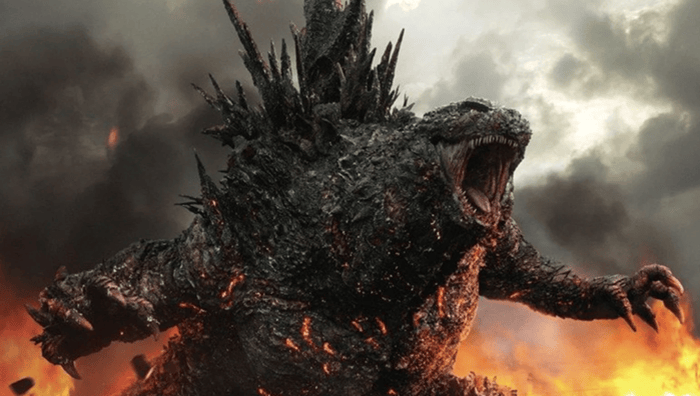
Several characters from the first film return including Kōichi Shikishima (Ryunosuke Kamiki), a former kamikaze pilot who was integral in taking down Godzilla. Kōichi is now married to Noriko (Minami Hamabe) who narrowly survived Godzilla’s Ginza attack. Together they are raising their adopted daughter Akiko (Sae Nagatani) with the help of their friend and next-door neighbor Sumiko (Sakura Ando), who now runs the War Orphans Relief Home.
Not far away in Matsumoto City, a massive new threat emerges. An enormous winged creature resembling a dragon lays waste to the city, quickly killing thousands and sending the nation back into a state of shock. As the creature lies dormant, the Disaster Response Bureau, led by its director, Kenji Noda (a returning Hidetaka Yoshioka), immediately begin planning a course of action. Blending the words for “chimera” and “hydra”, they name the new beast “Ghidorah”.
The rest of the story follows the desperate joint efforts by scientists and the military to stop Ghidorah. Noda brings aboard a meteorology prodigy named Makoto (Masami Nagasawa) to track the beast. The Americans offer to provide state-of-the-art weaponry, much to the chagrin of biologist Murakami (Min Tanaka), who lost his family in the bombing of Hiroshima. And Kōichi and Noriko eventually find themselves assisting in Noda’s ultimate plan which includes the King of the Monsters himself, Godzilla.
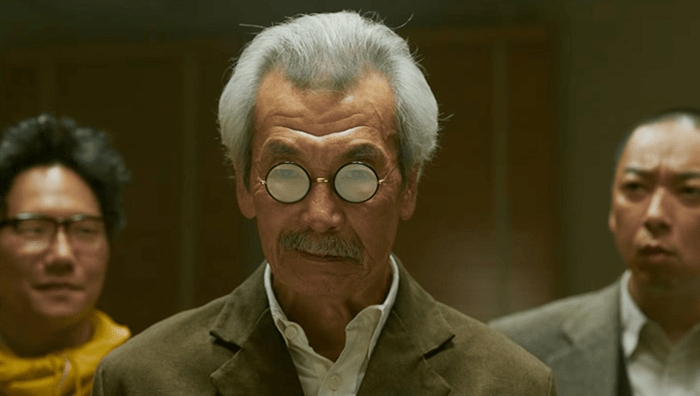
While the movie steadily builds towards its inevitable kaiju climax, Yamazaki makes sure the human toll is always in sight. The haunting echo of the war reverberates throughout his movie, and it can be felt in a number of compelling ways. For example, American involvement reopens old wounds and understandably sparks skepticism and distrust. And the impact of war trauma is once again powerfully expressed through several characters. On a more personal level, Kōichi and Noriko labor over their duties as parents to Akiko verses their call to service which could save thousands of lives. Again, humanity is central.
But Godzilla fans shouldn’t worry. The action-packed payoff to the buildup is well worth the wait. The special effects in “Minus One” were extraordinary, leading it to being the first Godzilla movie to win an Academy Award. Nothing changes in “Minus Zero”. Everything from the spectacular framing of the action to the kaiju themselves will take your breath away. Through Yamazaki’s artistry, every scene involving his monsters feel enormous. And composer Naoki Satō’s simple yet nerve-racking score soaks it all in a steady sense of dread.
One area that could have used a little more attention is the film’s unique spin on G-Cells. It’s not that they’re poorly handled or even shortchanged. It’s that they add such a compelling layer to the story and we’re left wanting to know more. Aside from some occasionally shaky acting, that’s about as close to a criticism as I have. Otherwise, “Minus Zero” had this Godzilla fan in a state of cinematic euphoria. The kaiju are jaw-dropping spectacles to behold. The scale of the action sequences is breathtaking. The human drama is anchored in emotional truth. Yamazaki has once again delivered the radioactive goods, and I can only hope he and Toho have more in store for us.
VERDICT – 4.5 STARS


