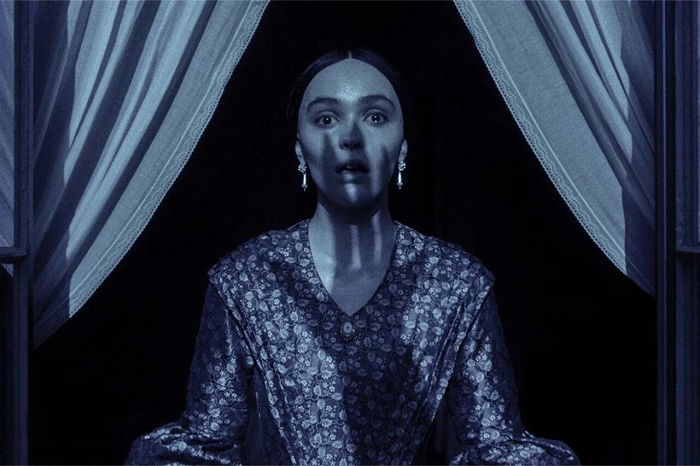
The wickedly interesting cinematic vision of filmmaker Robert Eggers is without question distinctly and uniquely his own. His three feature films have ran the gamut between incredible (“The Witch”) to disappointing (“The Lighthouse”) to something in between (“The Northman”). Regardless, each film displayed an alluring visual and narrative style unlike anything else out there today. Judging by its captivating first trailer, his new film “Nosferatu” looks to continue that trend.
Essentially a remake of F. W. Murnau’s 1922 film of the same name, “Nosferatu” is a gothic period piece that tells the story of Count Orlock (Bill Skarsgård) and his growing infatuation with a troubled young woman named Ellen Hunter (Lily-Rose Depp). The film also features Nicholas Hoult, Aaron Taylor-Johnson, Emma Corrin, Willem Dafoe, Ralph Ineson, and Simon McBurney. Eggers’ fascinating use of imagery is seen all through the trailer and we get a really good sense of the tone he’s going for. I can’t wait to see what he has in store for us.
“Nosferatu” is currently set to release on December 25th. Check out the trailer below and let me know if you’ll be seeing it or taking a pass.
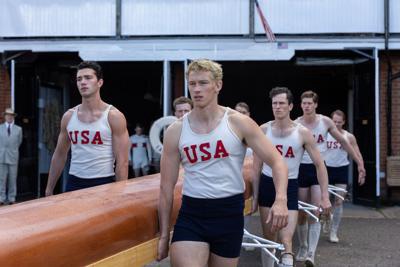
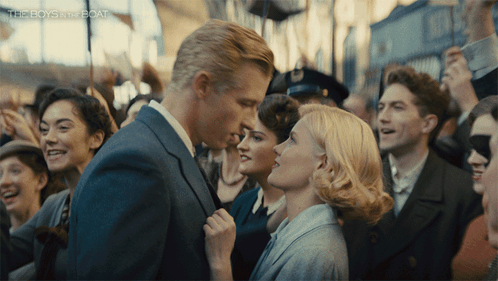
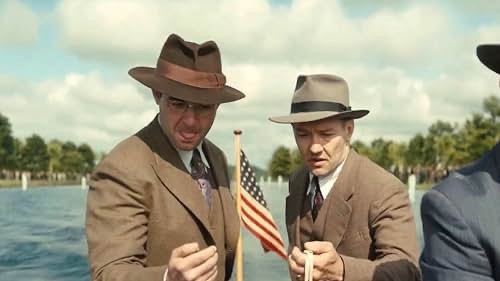
Warner Brothers Discovery Home Entertainment and Amazon MGM Studios have announced the release of “The Boys in the Boat” to home video. Directed by George Clooney and featuring a fantastic Callum Turner lead performance, this inspiring biographical sports drama is based on Daniel James Brown’s non-fiction book about the 1936 University of Washington rowing team and their unlikely run towards the Summer Olympics in Berlin, Germany. Read my full review [HERE].
This Blu-ray edition of “The Boys in the Boat” will be available for purchase on July 25th. See below for a full synopsis and release information including special features.
About the Film:
Year: 2024
Runtime: 123 Minutes
Director: George Clooney
Screenwriter: Mark L. Smith
Based on the Book by: Daniel James Brown
Cast: Callum Turner, Joel Edgerton, Peter Guinness, Jack Mulhern, James Wolk, Hadley Robinson, Courtney Henggeler, Chris Diamantopoulos, Sam Strike, Alec Newman
Rating: PG-13 for Language and Smoking
“The Boys in the Boat” is a sports drama based on the #1 New York Times bestselling non-fiction book written by Daniel James Brown. The film, directed by George Clooney, is about the 1936 University of Washington rowing team that competed for gold at the Summer Olympics in Berlin. This inspirational true story follows a group of underdogs at the height of the Great Depression as they are thrust into the spotlight and take on elite rivals from around the world.
“The Boys in the Boat” stars Joel Edgerton (“Loving”), Callum Turner (The “Fantastic Beasts” films), Peter Guinness (“Sleepy Hollow”), Jack Mulhern (TV’s “Mare of Easttown”), James Wolk (TV’s “Mad Men”), Hadley Robinson (“Anyone But You”), and Courtney Henggeler (TV’s “Cobra Kai”).
Believe it or not, “The Exorcism” isn’t connected to last year’s “The Pope’s Exorcist”. Without question there are some striking similarities. Both are supernatural horror movies about demon possession and both star Oscar winner Russell Crowe. But it doesn’t take long watching “The Exorcism” to recognize it is doing some dramatically different things. And while I had a blast with “The Pope’s Exorcist”, this film takes a slightly different approach to the demonic possession subgenre. The results are mixed at best.
Crowe plays Tony Miller, a once revered movie star whose self-destructive behavior derailed his career and his life. After his wife was diagnosed with cancer, Tony spiraled into a world of drugs and alcohol. It ruined his relationship with his family, especially his daughter Lee (Ryan Simpkins). But now one year out of rehab, Tony is looking to put his life back together, starting by healing his fragile relationship with Lee, who just moved back home after being suspended from school.
Image Courtesy of Vertical
Tony’s luck seems to take a turn after he’s invited to audition for the lead role in an upcoming Exorcist-esque remake following the mysterious death of the previously cast actor. He gets the part mainly because the film’s pitiless director (a satisfyingly despicable Adam Goldberg) sees Tony’s real-life struggles as inspiration for the character. He’s able to get Lee on an associate producer and the father and daughter begin to bond.
But only a few days into filming, the cast and crew start noticing disturbing changes in Tony’s behavior. Lee begins to wonder if the role is affecting her father too deeply and causing old personal demons to resurface. Or is there something more sinister and malevolent at work? Anyone who has watched a horror movie or two will instantly know the answer. You’ll recognize all the marks and see all of the signs.
Image Courtesy of Vertical
And that gets to the main weakness of the film. None of the horror elements generate any real scares. Some are a little eerie and Crowe does all he can to creep us out. But most of its tricks we’ve seen before – demonic voices, unnatural body contortions, unexplained cuts and gashes, and so on. It’s all there. To its credit, the movie set setting does offer a slightly new perspective, incorporating a lot of fun behind-the-scenes looks at filmmaking into its story. But the meat of the movie tastes pretty familiar.
“The Exorcism” ultimately comes to a lackluster final act that does nothing with the initially promising premise. The use of possession as a metaphor for addiction is interesting and early on you get the feeling that the filmmakers have something unexpected up their sleeves. But the conventional and glaringly unremarkable finish is deflating. Meanwhile the lightly breaded characters languish in a surprisingly low-stakes affair that could have been so much more. “The Exorcism” is in theaters now.
Filmland, an annual celebration of filmmaking from Arkansas and beyond, has played an important part in the Arkansas Cinema Society’s work to grow and nurture a passionate local film culture. Throughout its seven years, one of the anchors of Filmland has been director, screenwriter, and ACS co-founderJeff Nichols. An Arkansas native, Nichols’ investment in growing his home state’s film community has been invaluable.
As a filmmaker, Nichols has several notable signatures that give his movies their particular appeal. His stories tend to have a distinctly southern flavor and shrewdly represent a region of the country he knows very well. He also has a knack for writing characters who feel incredibly organic to the worlds they exist in. These things are only enhanced by the fact that Nichols is a natural storyteller.
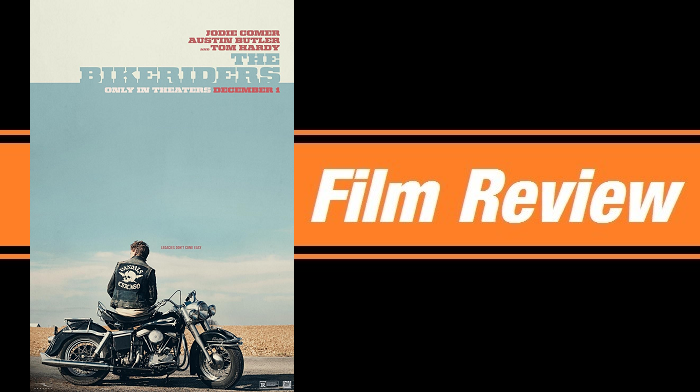
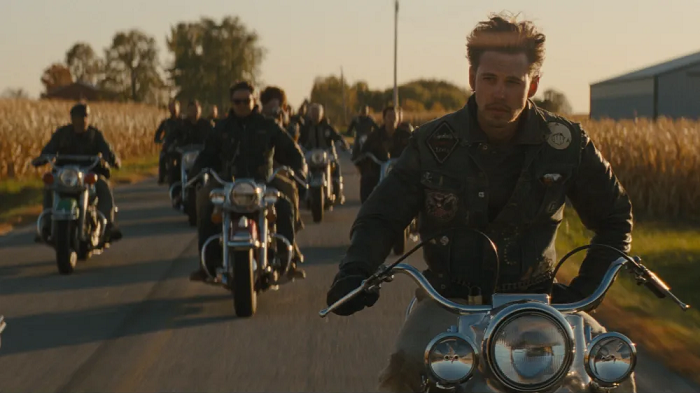
Among the highlights of last year’s Filmland was Nichols’ new movie “The Bikeriders”. It’s his first feature since 2016’s “Loving” and his biggest film in terms of budget and ambition. It’s inspired by photojournalistDanny Lyon’s 1968 book of the same name that explored the members and firsthand stories of the Chicago Outlaws Motorcycle Club. The book featured a collection of Lyon’s photography and interviews captured during his time as a member of the Outlaws in the mid sixties.
Image Courtesy of 20th Century Studios
Much like Lyon’s book, Nichols sets out to deconstruct the somewhat romanticized view of this 1960s motorcycle subculture. At the same time he doesn’t shy away from the nostalgic allure of the time. Instead he embraces it, creating a near longing for a bygone era while also viewing it as something best left to a very specific period in American history. His film is an incredible balance of gritty realism and heartfelt sentimentality.
Merely inspired by Lyon’s work, Nichols takes several ideas from the book and then builds his own fictional story. He frames it through a series of interviews that Danny Lyon (played by Mike Faist) conducts with a woman named Kathy (a sublime Jodie Comer). Through three meetings spanning nearly a decade, Kathy talks about her time with the Vandals, a Chicago based motorcycle club that rode to prominence during the 1960s.
The meat of the story follows the club’s rise from a close-knit brotherhood to a vastmob-like menace. Over the course of the movie, what starts as a small pack of local outcasts emulating Marlon Brando’s “The Wild Ones” morphs into a violent network of riders from different cities across the country. It’s a fascinating evolution that in many ways is shaped by the shifting social and political landscapes of the time.
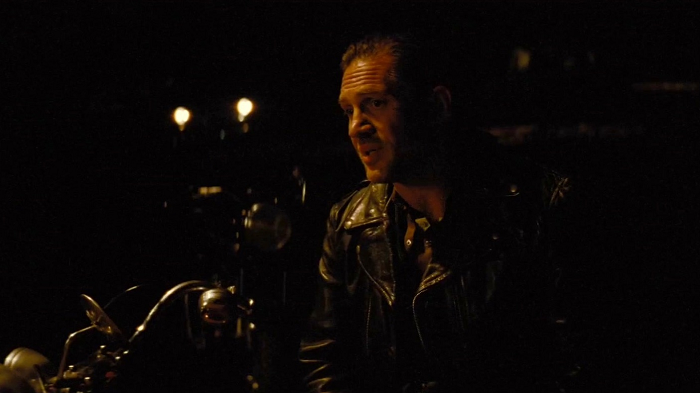
At the very heart of “The Bikeriders” is a captivating trio of characters whose interconnected relationships humanize the story and shape the drama. Tom Hardy is a force of nature playing Johnny, the founder and leader of the Vandals. There’s no doubting Johnny is in charge, but he’s well respected by the members. His idea is that one day his kid brother Benny (Austin Butler) will take his place. The problem is Benny is a wild card – loyal but volatile. Butler is magnetic, embodying a smoldering bad boy image that you can’t turn away from.
And then there’s Kathy who finds herself stuck within this testosterone driven coterie. She sees the Vandals for what they are and often pushes back against their macho codes and rituals. Yet there’s a part of her that’s fascinated and drawn to their world – at least early on. She’s especially enchanted with Benny who she meets in a bar and then marries five weeks later.
Image Courtesy of 20th Century Studios
Benny’s bond with his brother is every bit as strong as his bond with Kathy which inevitably leads to tension between all three. It’s only amplified in the second half as the club starts to grow and the once intimate camaraderie starts to crumble. It’s here that the story takes a darker turn, becoming a “Goodfellas” type of mob drama but with a biker movie bend. The violence ratchets up and the romanticism of the early scenes all but vanishes.
While the three central performances shine brightest, Nichols amasses a superb supporting cast who play an assortment of colorful characters, many based on actual photos from Lyon’s book. There’s Michael Shannon as Zipco, Boyd Holbrook as Cal, Norman Reedus as Funny Sonny, Damon Harriman as Brucie, and Emory Cohen as Cockroach, just to name a few. They fill out the world well (though some disappear for stretches), but it’s Nichols’ interest in their psychologies that make them so individually compelling.
While it’s technically more Midwestern than Southern, there are still several wonderful similarities between “The Bikeriders” and other stories Jeff Nichols has told. The big difference here is that Nichols has opened a window to a notoriously private world. His presentation is strikingly authentic, highlighted by incredible sound, cinematography, costume design, and a cracking 60’s flavored soundtrack. It all helps to create a transporting experience – one that lures you in with its infectious cool before hitting you hard with the grim and violent reality. “The Bikeriders” opens in theaters June 21st.
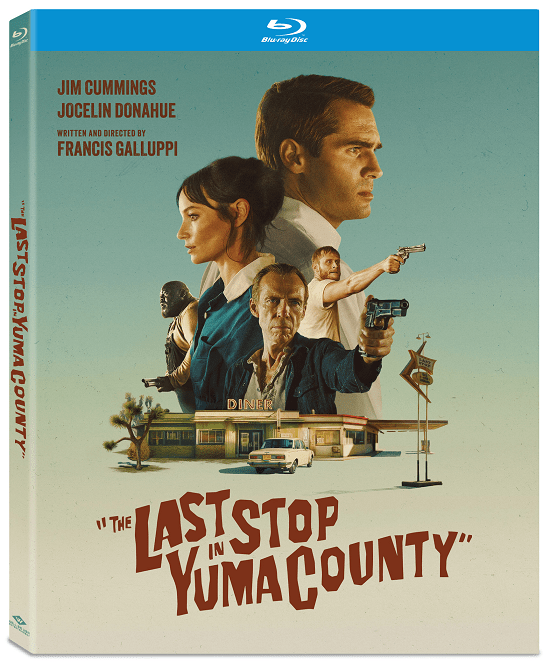
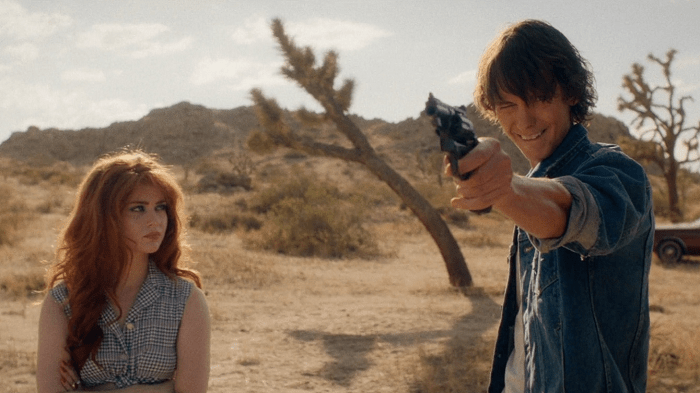
Well Go USA is bringing one of the best surprises of 2024 to home video. The riveting, stylishly made, and darkly funny action-thriller “The Last Stop in Yuma County” is coming to Blu-ray and it shouldn’t be missed. It marks the feature film debut for writer/director Francis Galluppi who pulls inspiration from the Coen brothers, “Pulp Fiction”, and many other genre gems. A cracking cast along with a terrific sense of time and place are just some of the reasons the film works so well. Read my review [HERE].
This Blu-ray edition of “The Last Stop in Yuma County” will be available for purchase on July 16th. See below for a full synopsis and release information including special features.
About the Film:
Year: 2024
Runtime: 90 Minutes
Director: Francis Galluppi
Screenwriter: Francis Galluppi
Cast: Jim Cummings, Jocelin Donahue, Richard Brake, Sierra McCormick, Faizon Love, Nicholas Logan, Michael Abbott Jr., Gene Jones, Connor Paolo, Alex Essoe, Robin Bartlett, Jon Proudstar, Sam Huntington, Ryan Masson, Barbara Crampton, Robert Broski
Rating: R for Violence and Language
While awaiting the next fuel truck at a middle-of-nowhere Arizona rest stop, a traveling young knife salesman is thrust into a high-stakes hostage situation by the arrival of two similarly stranded bank robbers with no qualms about using cruelty—or cold, hard steel—to protect their bloodstained, ill-begotten fortune.
“The Last Stop in Yuma County” is the impressive debut feature film by writer/director Francis Galluppi, who has been tapped to write and direct the next Evil Dead movie—makes its Blu-ray™ debut July 16from Well Go USA Entertainment. While stranded at a rural Arizona rest stop, a traveling salesman is thrust into a dire hostage situation by the arrival of two bank robbers with no qualms about using cruelty—or cold, hard steel—to protect their bloodstained fortune. “THE LAST STOP IN YUMA COUNTY” stars Jim Cummings (Halloween Kills), Jocelin Donahue (Insidious: Chapter 2), Sierra McCormick (The Nana Project), Nicholas Logan (“Dopesick”), Michael Abbott Jr. (Killers of the Flower Moon), Connor Paolo (A Creature was Stirring), Alexandra Essoe (The Pope’s Exorcist), Robin Bartlett (“Playing For Time”), Jon Proudstar (Young Guns II), and Sam Huntington (Seven Stages to Achieve Eternal Bliss). Bonus materials include a Making-of featurette and three commentary tracks.
In my recent review of 1975’s “Death Race 2000”, I took some time to talk about the film’s producer, the legendary Roger Corman who just recently passed away at the age of 98. I shared how the independent cinema icon had been instrumental in launching the careers of numerous high profile filmmakers. Among them was none other than the ten-time Oscar nominated director, Martin Scorsese.
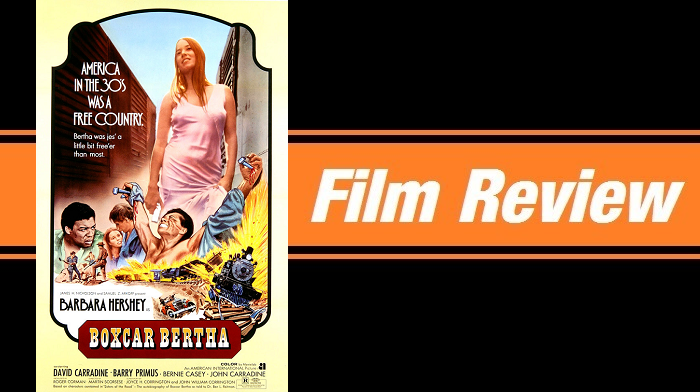
Roger Corman was hungry for another female gangster movie and was drawn to Ben Reitman’s 1937 novel “Sister of the Road: The Autobiography of Boxcar Bertha”. A script was written by the husband and wife duo of John William and Joyce Corrington and Martin Scorsese was hired to direct after impressing Corman with his debut feature, “Who’s That Knocking at My Door”.
“Boxcar Bertha” has many of the usual markings that accompany the majority of Corman’s early exploitation flicks. But the crafty Scorsese brought his own gritty sensibility which made it feel a little different. Regardless of what you call it, you can see the fingerprints of the director that Scorsese would quickly become. His specific attention to detail, his knack for immersing the audience into his well-drawn setting, his fluid use of the camera – it’s all on display and in many ways saves the movie from itself.
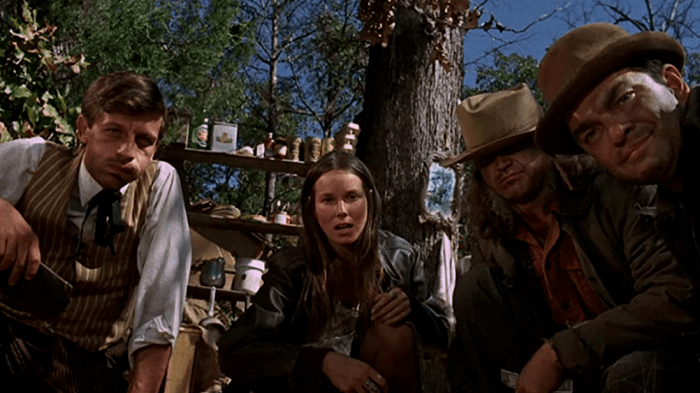
Set in the Depression era South, “Boxcar Bertha” follows an orphaned and dirt-poor young girl named Bertha Thompson (Barbara Hershey) who begins trainhopping after her father is killed in a cropdusting accident. A couple years later Bertha crosses paths and falls in love with a down-on-his-luck union organizer Big Bill Shelly (David Carradine). The couple are later joined by Rake Brown (Barry Primus), a slick but cowardly gambler who Bertha saves at a poker table, and by Von Morton (Bernie Casey), an old family friend who worked for Bertha’s father.
The group tries the ‘straight and narrow’ path, but in such hard times our foursome has to resort to robbing banks and passenger trains just to get by. They eventually accept that they’re criminals which ends up putting them in the crosshairs of a powerful railroad magnate (played David Carradine’s real-life father, John). Soon the press is covering their antics – embellishing their hardened status for big headlines. But much like in “Bonnie and Clyde” (a clear inspiration for Corman), the attention eventually catches up to them.
Though bound by the exploitative tropes of bare flesh and blood (a Corman dictum that even Martin Scorsese couldn’t escape), there was still room for the director to take a few of his own swings. Not all of them hit their marks. Take the handful of messy cuts and quick camera pans. And a couple of woefully unconvincing fight scenes that look even more dated that usual for that era of movie history. But then you have his deft handling of his performers along with the detail he pours into his rich Southern setting. And unlike many of Corman’s exploitation films, there’s no glamour in the violence. It’s rough, crude, and abrupt.
Through it all Bertha remains the centerpiece, wonderfully played by Hershey who guides the character from naive to streetwise, always adapting to survive yet maintaining a level of vulnerability that earns our empathy. Her performance can’t fully cover the handful of glaring flaws, and those with a distaste for Corman’s brand of exploitation will likely struggle to get past his obvious influence. But watching Scorsese at such an early stage of his career, playing around with formula, exploring techniques, and finding his cinematic form makes it worth watching on its own.