
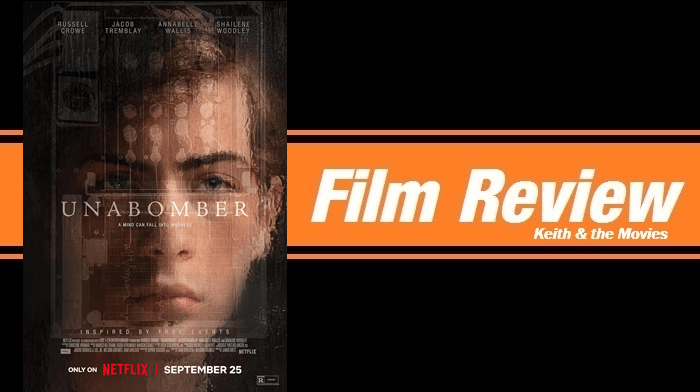
In “Unabomber”, director Janus Metz takes two different routes in exploring the story of Ted Kaczynski, the mathematics prodigy turned domestic terrorist whose 17-year mail bombing campaign resulted in three deaths and 23 injuries. The efforts to find and apprehend Kaczynski resulted in what was the longest and most expensive investigation in the history of the FBI.
“Unabomber” highlights two distinct eras from the Ted Kaczynski timeline. Screenwriters Sam Chalsen and Nelson Greaves look back at a young Theodore Kaczynski in an advanced academics program at Harvard College. But they also hone in on the last months of the FBI’s manhunt, which finally resulted in Kaczynski’s 1996 arrest. The two storylines attempt to offer a well-rounded portrayal of who Kaczynski was versus who he became. Unfortunately some of the film’s fictional flourishes keep it from reaching its potential.
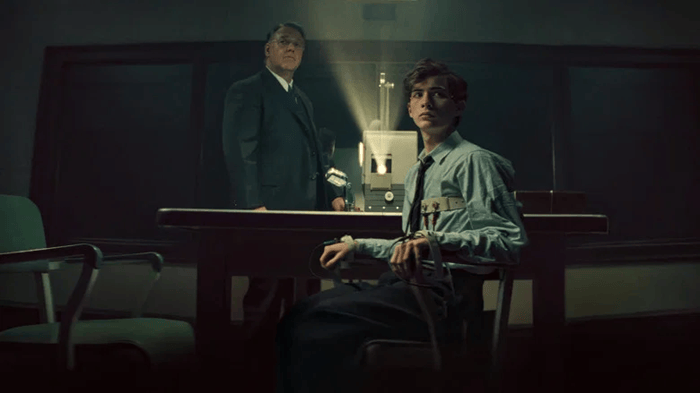
In 1958, 16-year-old math whiz Theodore “Ted” Kaczynski (Jacob Tremblay) enrolls at Harvard College. His special interest in psychology leads to him being recruited for a series of debate experiments being performed by professor Henry Murray (Russell Crowe). His admiration for Murray along with some coaxing by Murray’s co-director Christiana Morgan (Annabelle Wallis) drives Ted to disobey his parents and volunteer for the program. But he soon learns he has been lured into something shady, unethical, and abusive.
Jump to 1995, where the FBI is intensifying their investigation into a series of mail bombings by a domestic terrorist dubbed the “Unabomber”. Agent Joanne Miller (Shailene Woodley), a linguistics expert on the UNABOM Task Force, begins narrowing down her list of suspects after the mysterious culprit releases his 35,000 word manifesto. But getting the mostly all-male team to trust her instincts becomes an obstacle to the entire investigation.
The film’s two-timeline structure is effective, with Metz frequently cross-cutting back and forth to build a believable psychological connection. It’s the mix of fact and fiction that trips up the story. And it’s an issue found in both timelines. Despite there being no evidence that Murray mentored Kaczynski or shared personal moments with him, the movie puts a lot of time into that very thing. While it eventually amps up the drama, it comes across as a bit too contrived and obvious The charismatic Crowe makes it enjoyable, as does Wallis, despite being stuck in her own go-nowhere fictionalized angle.
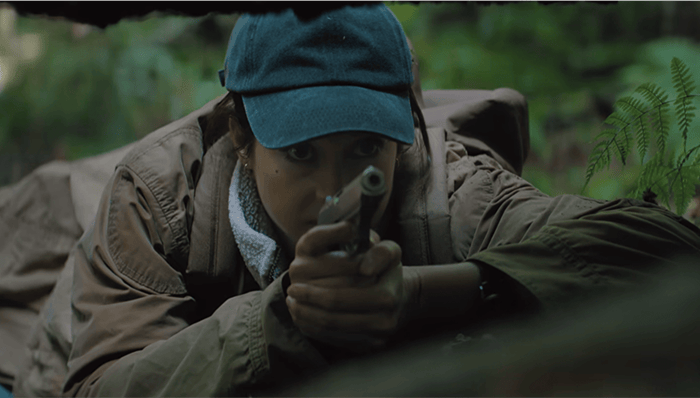
The creative liberties hamper the FBI storyline even more. Woodley’s character was conceived for the movie and handcuffed to a half-baked story about a capable woman hindered at every turn by her male colleagues. Nothing about it feels authentic. Also, the role of Kaczynski’s family is dramatically downplayed to make Joanne more of a prototypical 90s crime-thriller protagonist. It results in some borderline ridiculous events as she takes matters into her own hands.
Despite some noteworthy issues, “Unabomber” remaining entertaining in its own unusual way. But the film’s wobbly melding of fact and fiction proves to be an obstacle too big to overcome. I’m all for filmmakers having creative license to make the movie they want to make. But when using such a serious true story and with inventions this dramatic, you need to make sure the changes deliver where it counts. Sadly they don’t for “Unabomber”, which is a shame considering its potential and the amount of onscreen talent attached.
VERDICT – 2.5 STARS



So annoying when you can see the better story that should have been told.
It’s right in the real events. Yet they went another way. Sigh.