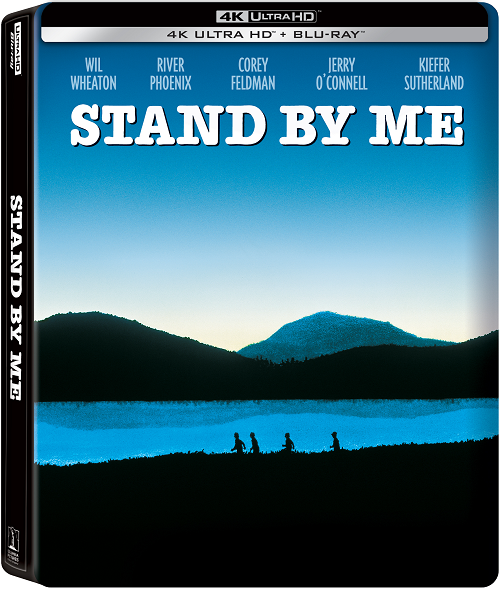
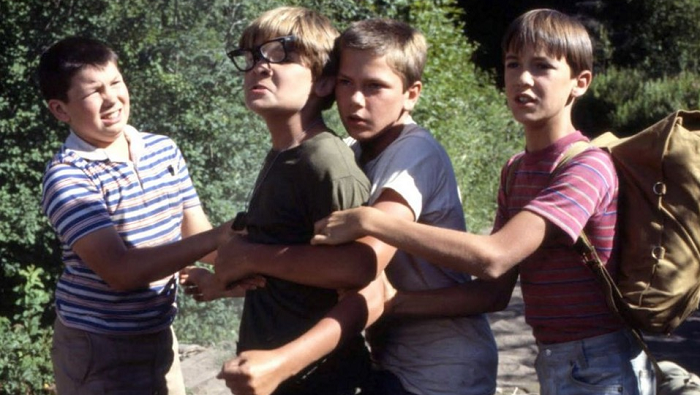
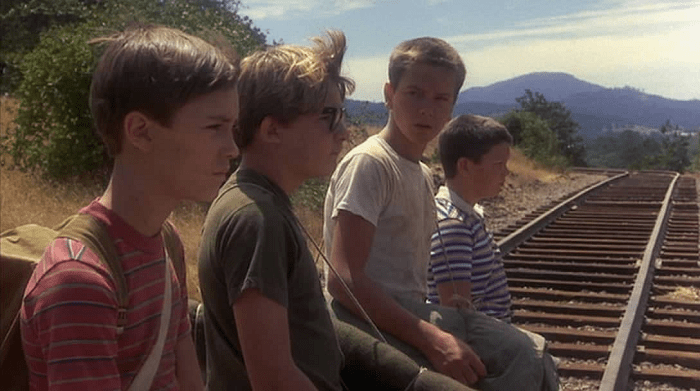
“Stand By Me” remains one of the definitive coming-of-age dramas from the 1980s. Now Sony Pictures Home Entertainment is releasing this gem on 4K Ultra HD in a new exclusive steelbook. Directed by Rob Reiner and based on a 1982 novella by Stephen King, the story follows a group of four boys who discover a dead body while out on a hike. The film is anchored by great storytelling and a star-studded young cast. “Stand By Me” remains a timeless classic and this is a terrific edition to own.
This 4K UHD exclusive steelbook of “Stand By Me” includes the film on standard Blu-ray. It releases on December 5th. See below for a full synopsis and release information.
About the Film:
Year: 1986
Runtime: 88 Minutes
Director: Rob Reiner
Screenwriter: Raynold Gideon & Bruce A. Evans
Based on the Novella “The Body” by Stephen King
Cast: Wil Wheaton, River Phoenix, Corey Feldman, Jerry O’Connell, Richard Dreyfuss, Kiefer Sutherland, Casey Siemaszko, John Cusack, Marshall Bell, Frances Lee McCain, Gary Riley, Bradley Gregg
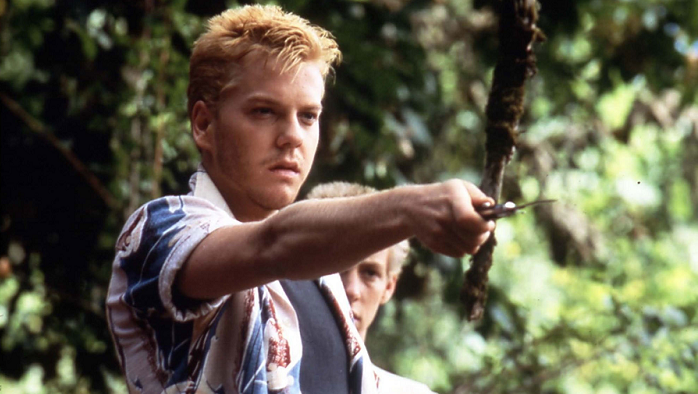
In a small woodsy Oregon town, a group of friends – sensitive Gordie (Wil Wheaton), tough guy Chris (River Phoenix), flamboyant Teddy (Corey Feldman), and scaredy-cat Vern (Jerry O’Connell) – are in search of a missing teenager’s body. Wanting to be heroes in each other’s and their hometown’s eyes, they set out on an unforgettable two-day trek that turns into an odyssey of self-discovery. They sneak smokes, tell tall tales, cuss ’cause it’s cool and band together when the going gets tough. When they encounter the town’s knife-wielding hoods who are also after the body, the boys discover a strength they never knew they had. STAND BY ME is a rare and special film about friendship and the indelible experiences of growingup. Filled with humor and suspense, STAND BY ME is based on the novella ‘The Body’ by Stephen King.
Special Features:
4K ULTRA HD DISC
Feature presented in 4K resolution with Dolby Vision.
Dolby Atmos + DTS-HD MA 5.1 and Mono audio options.
Special Features:
Deleted and Alternate Scenes (presented in HD)
BLU-RAY DISC
Feature presented in High Definition
5.1 audio.
Special Features:
Picture-in-Picture Commentary with Director Rob Reiner and Actors Wil Wheaton & Corey Feldman
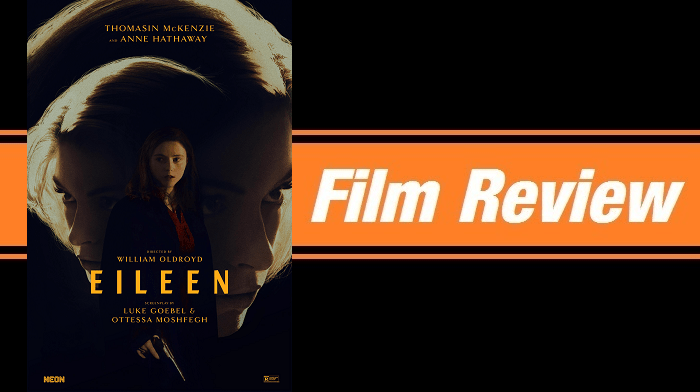
Director William Oldroyd’s “Eileen” is an equally captivating and frustrating psychological thriller based on Ottessa Moshfegh’s 2015 novel of the same name. It features the spellbinding duo of Thomason McKenzie and Ann Hathaway. It’s accented by the brilliant visual work from cinematographer Ari Wegner. And it features an alluring premise that mixes in an array of genres.
Unfortunately “Eileen” is held down by a sometimes clumsy and opaque screenplay. Adapted for the screen by Moshfegh and her husband Luke Goebel, the story starts a little messy but quickly evolves into something delightfully enigmatic and beguiling. Yet the script can’t deliver a satisfying payoff. The final act is riddled with holes in its logic. And there’s a good chance that anyone who has seen an episode of two of “Law and Order” will be picking the ending apart.
Image Courtesy of NEON
Set in the 1960s, McKenzie plays Eileen Dunlop, a mousy young secretary who works at a Massachusetts prison for boys. From the very start it’s obvious there’s something slightly “off” with her. But beyond that, she’s also a victim of her circumstances. She’s lonely and with no friends to speak of. She lives with her drunk and sickly ex-cop father (Shea Whigham) whose passive-aggressive cruelty is enough to mess with anyone’s mind. And she’s stuck in a go-nowhere job with no signs of opportunity.
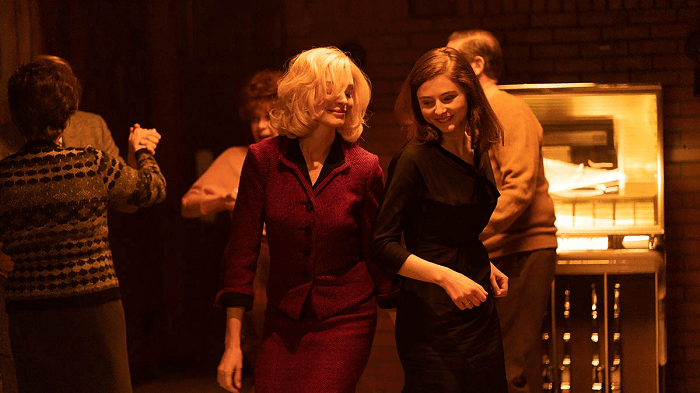
But things change after the prison hires Dr. Rebecca St. John (Hathaway) to be their new psychologist. Rebecca is confident, beautiful, and vivacious and Eileen is instantly captivated. The more Eileen observes Rebecca the more infatuated she becomes. Soon she’s mimicking her new coworker – taking up smoking and coffee, dressing up as elegant as she can with nothing but her late mother’s clothes. And as a rather thinly sketched friendship forms between them, Eileen’s interest turns into full-on obsession.
At its best, “Eileen” is a sly and devious thriller with dashes of dark humor and even a tinge of Hitchcock. The off-kilter chemistry between McKenzie and Hathaway keeps us wondering what Oldroyd is going for. It makes for a good mystery, but he keeps the characters at an arm’s length. We never feel close enough to them to get a good sense of their feelings or (more importantly for a movie like this) their motivations.
Image Courtesy of NEON
The bigger issue comes in the final 30 minutes. The story takes a dramatic turn that’s meant to be both a surprising reveal and (I think) a shocking twist. Unfortunately it doesn’t make much sense. Our two main characters make several head-scratching decisions and their actions defy good sense. The ending is cloaked in ambiguity but not necessarily the good kind. Instead it leaves the movie in a far-fetched place. Oldroyd definitely goes for the jolt. What he delivers is more of a nudge.
“Eileen” has its strengths starting with the dazzling performances from McKenzie and Hathaway. The story itself is full of intriguing parts waiting to be pieced together. And the film is exquisitely shot, routinely impressing with its clever framing and evocative use of lighting and shadows. But in the end “Eileen” doesn’t seem sure of what it wants to be. Or maybe it wants to be several things. Either way, this diverting yet messy feature has a hard time sticking its landing. “Eileen” hits theaters December 8th.
Not to be confused with the recent American line of Godzilla movies from production company Legendary Pictures, “Godzilla Minus One” comes from Japan’s celebrated Toho Studios. It’s Toho’s first Godzilla movie since 2016’s “Shin Godzilla”. And it’s their 33rd Godzilla film since first creating the iconic King of the Monsters in 1954. And what better way to celebrate the franchise’s upcoming 70th anniversary than with a new Toho production?
Written and directed by Takashi Yamazaki (who also served as visual effects supervisor), “Godzilla Minus One” has the feel of some the earliest Toho classics both in setting and style of storytelling. But don’t worry, today’s state-of-the-art visual effects and production design are on prominent display. As expected we get some jaw-dropping wide-scale destruction, and the encounters with the eponymous kaiju are exhilarating. Yet it’s the undercurrent of humanity that may catch audiences by surprise.
Image Courtesy of Toho Studios
Takashi’s story unfolds in the years immediately following World War II. Japan’s infrastructure, economy, and morale has been decimated. Its people struggle to put their lives back together, living in makeshift homes and barely able to provide food for their families. The government offers little help leading to an unstable and vulnerable country. It’s a setting that fans of Toho’s earliest films will immediately recognize – one that’s still rich with political and cultural undertones.
Disgraced kamikaze pilot Koichi Shikishima (Ryunosuke Kamiki) returns home to Tokyo only to find his parents were killed and his neighborhood decimated from air raids in the waning days of the war. Not only is Koichi overwhelmed with grief, but he also struggles with PTSD and survivors guilt. We learn that two years prior he feigned a mechanical issue with his plane, landing on Odo island rather than carrying out his mission. While there the small outpost of mechanics is attacked by a massive prehistoric creature dubbed “Godzilla” by the locals. Koichi is one of only two survivors.
In Tokyo Koichi reluctantly takes in a young woman named Noriko (Minami Hamabe) and helps her care for an orphaned baby girl whose parents were also killed in the bombing. This family (of sorts) have a difficult time getting by, leading a desperate Koichi to take a dangerous government sanctioned job detonating sea mines left over from the war. But he and his eclectic boat crew come face-to-face with a danger far greater than mines. Yep, Godzilla returns and has the Japanese mainland in its sights.
Image Courtesy of Toho Studios
The government tries to keep the discovery from going public, but you can only keep a giant lizard the size of a skyscraper a secret for so long. Inevitably Godzilla reaches land allowing Yamazaki to let loose with some stunning effects-drive set pieces brought to life through an array of visual wizardry. We witness devastation and destruction on a visually epic scale. And then there is Godzilla who’s presented as a terrifying force of nature yet remains a powerful metaphor for nuclear weapons.
While the kaiju action he delivers is immensely satisfying, Yamazaki never loses sight of the humanity-rich stories being told at the same time. These two facets remain inseparable throughout this surprisingly heartfelt and artful throwback. “Godzilla Minus One” offers a crash course on how to make a great blockbuster. It has the signature thrills and big screen spectacle. But it’s the deeply ingrained human element that make it stand out. It certainly left me wanting more. “Godzilla Minus One” is in select theaters now.
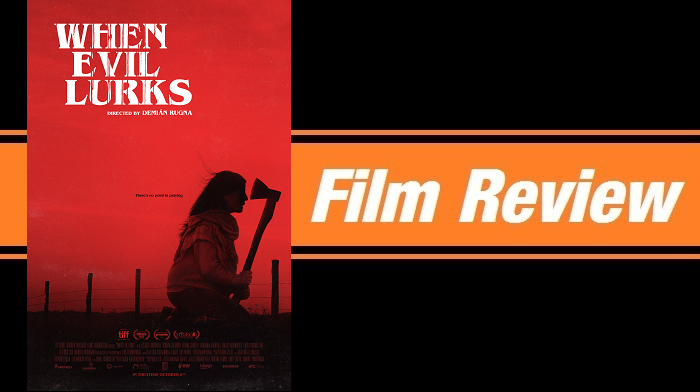
Two brothers make a startling discovery after hearing gunshots in a patch of woods near their land. That kicks things off in Argentinean writer-director Demián Rugna’s unsettling chiller “When Evil Lurks”. The film blends elements of psychological horror with the supernatural in telling a smart and original story that I guarantee is unlike anything you’ve seen this year. And coming from a genre that has often struggled when it comes to good original ideas, that is certainly high praise.
From the very outset there’s something alluring about Rugna’s story. It’s dark, uncomfortable and insidious, but alluring nonetheless. It doesn’t take long for him to jolt us with the first of several gruesome shocks. And as he cleverly unpacks and defines his horrifying dystopia, we get a movie that’s as unpredictable as it is horrifying. That’s because no one in his grim and sinister world is safe.
Image Courtesy of IFC Films
The movie opens with gunshots in the middle of the night. Brothers Pedro (Ezequiel Rodríguez) and Jaime (Demián Salomon) try to gauge the distance and prepare to investigate. But they wisely decide to wait until morning. Shortly after daybreak the two make their way through their field and into some woods where they come across a grisly scene. I’m hesitant to say much more about the opening because experiencing the scene-by-scene setup within the first fifteen minutes or so really leaves a mark.
Suffice it to say the brothers discover that a malevolent entity has settled into their small rural town. They learn that Uriel, the son of a poor elderly woman, has turned “Rotten”, which is a name given to those possessed by a sinister evil spirit. Pedro and Jaime quickly notify the police who don’t seem concerned. “There’s a protocol for cases like this”, they’re told. That protocol involves people known as “Cleaners” who are able to kill the doomed host without unleashing the demon. But here’s the problem – the Cleaner summoned to their town never showed up.
So with the help of a coarse and concerned neighbor Ruiz (Luis Ziembrowski), Pedro and Jaime attempt to take care of the Rotten themselves. But we quickly learn that in Rugna’s world there are very specific rules for dealing with a Rotten (use nothing electric, no lights, don’t use bullets, etc.). The rules don’t always make sense, but they emphasize the need of Cleaners. And the tension certainly ramps up once the brothers and Ruiz inevitably break them. The evil spreads and infects with gruesomely violent results. Meanwhile Pedro and Jaime race to gather their family and escape from the horror they’ve unleashed.
Image Courtesy of IFC Films
Even at a tight and fleet-footed 99 minutes, Rugna makes time for his characters, specifically the two brothers. There is a compelling dynamic between them. Pedro seems to have the most to lose as the father of two sons, the young Santino (Marcelo Michinaux) and his autistic teenager Jair (Emilio Vodanovich). The responsibility of protecting them and the weight of losing them at times seems unbearable. Jaime is the loyal brother who not only stands by Pedro, but who keeps him together when he starts to crack.
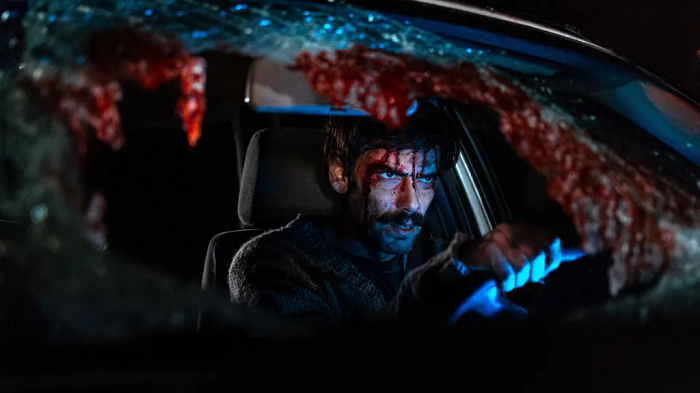
As you might have gathered, “When Evil Lurks” is not for the faint of heart. It’s bleak, gory and disturbing. Rugna and his team often broadside us with several squirm-worthy moments, most of them realized though some gnarly practical effects. You rarely see these instances coming which makes them all the more effective. Not all of the pieces fit firmly into place, mainly in the second half. But Rugna sticks his landing and ends his film in a way that only seems fitting. It’s yet another example of good instincts from a filmmaker who is sure to get a lot more attention.
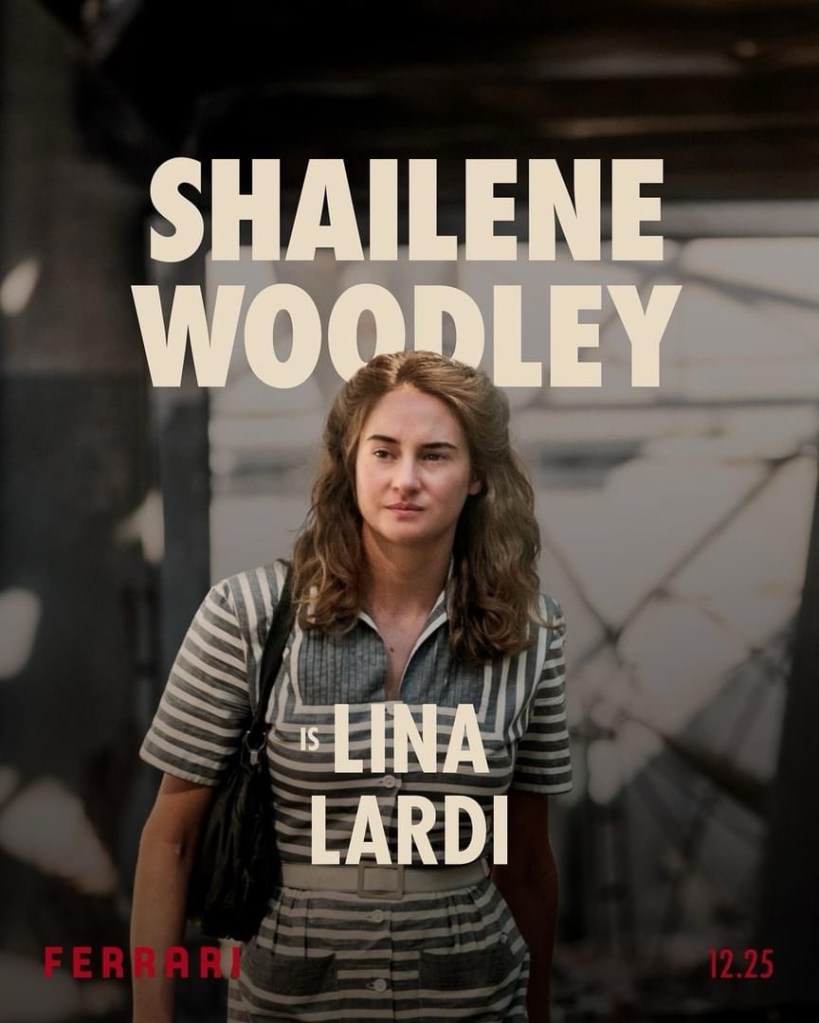
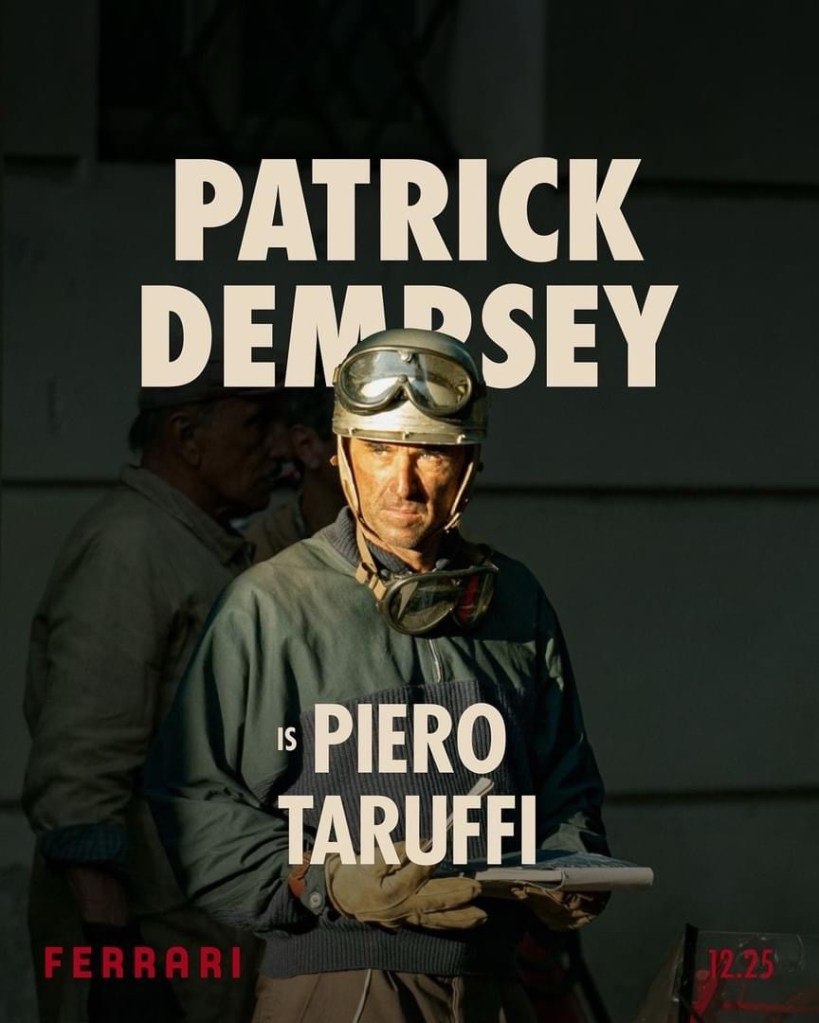
Michael Mann’s spectacular snapshot biography “Ferrari” has been one of the biggest surprises of the 2023 movie year. With its December 25th theatrical release fast approaching, NEON has released five new character posters highlighting several members from the film’s terrific ensemble. Included are stars Adam Driver and Penélope Cruz, along with Shailene Woodley, Patrick Dempsey, and Gabriel Leone. Check them out below and let me know what you think.
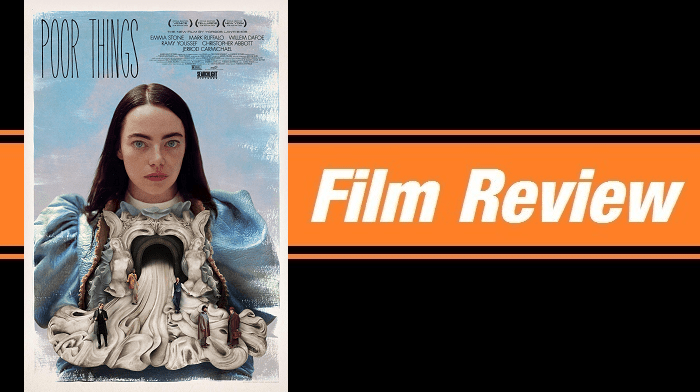
For me Yorgos Lanthimos is something like a taste I have yet to acquire. His latest, “Poor Things” won’t do much to change that. If anything it only reinforces my feelings towards a filmmaker with extraordinary talent, but whose cinematic self-obsessions often wring the meaning out of the movies he makes. Never before has that been more true than with “Poor Things”, yet another self-satisfying exercise where indulgence and excess masquerades as daring and subversive.
Working from a head-scratching screenplay by Tony McNamara, Lanthimos wastes no time plunging us deep into his bizarre world. It’s one that visually lets him stretch his creative self as far as he ever has. The early scenes are stunning, shot in crisply detailed black-and-white and full of wacky off-kilter imagery. Some of it is incredibly creative; some of it is downright funny (a bulldog with a goose’s head???). The production design is exquisite, shifting from Victorian elegance with a dash of steampunk to the more glaring artifice of elaborate studio stage creations. DP Robbie Ryan and production designers Shona Heath and James Price are the film’s biggest assets.
But as is too often the case, Lanthimos tends to get carried away. In “Poor Things” some of his visual flourishes have particular purposes specifically it terms of perspective. Others are done repeatedly for no discernible reason whatsoever. Lanthimos’ penchant for immoderation extends to his near gluttonous delight in pushing the envelope. Here we see an almost childlike preoccupation with body horror and gratuitous sex, most of which comes across as more attention-hungry and narcissistic.
Image Courtesy of Searchlight Pictures
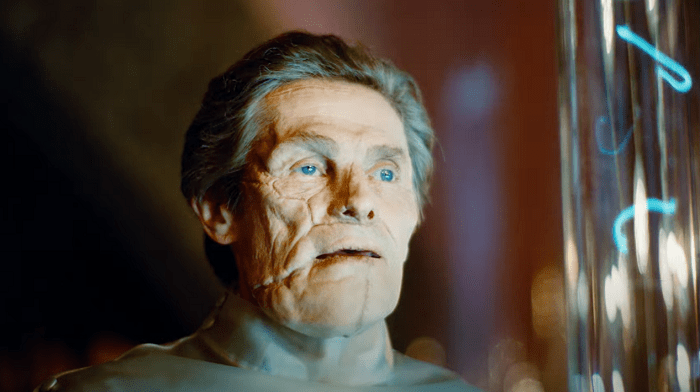
Set in a time that mixes the past with the otherworldly, “Poor Things” spins a Frankensteinesque yarn. In London, a scar-faced mad scientist named Dr. Godwin Baxter (the always refreshing Willem Dafoe) secretly retrieves the dead body of a pregnant woman who committed suicide. In a rather macabre experiment (I’ll spare you the details), Godwin reanimates the corpse and names her Bella (Emma Stone). Bella’s toddler mind and adult body have yet to synchronize, but her intelligence is increasing at a rapid rate which leads to several of the film’s funnier absurdities.
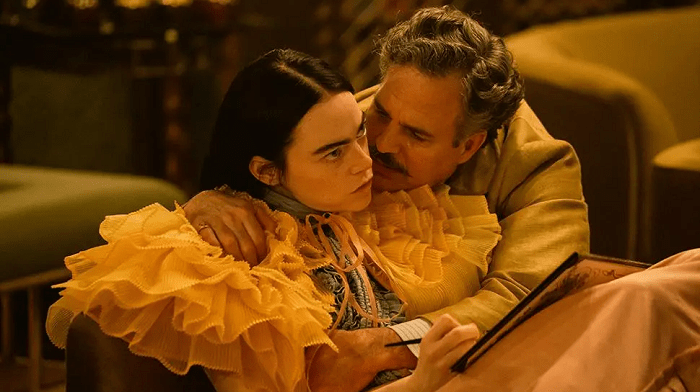
In need of help Godwin hires one of his medical students, the meek and demure Max McCandles (Ramy Youssef) as his assistant. Max’s job is to observe and meticulously document Bella’s progress. It requires following her around with pencil and notepad, collecting data such as nutritional intake and growth of vocabulary. Max, a starstruck fan of Godwin, doesn’t fully understand Bella. He’s first told she has a brain injury but quickly learns the morbid truth.
With little explanation why, Max soon becomes infatuated with Bella, eventually making a pact with Godwin to marry her. There’s so much that could have been said here about the insidious nature of controlling men, both father figures and suitors. But Lanthimos is fine with alluding to it. Instead he’s much more interested in introducing Bella to sex. And its sex that immediately becomes a focal point for Lanthimos. It fuels much of his storytelling. And it both shapes and defines the film’s warped idea of freedom, agency, and empowerment.
This is best seen with the sudden appearance of a lawyer named Duncan Wedderburn (Mark Ruffalo). He’s a sniveling lecherous cad who pops up and then two scenes later is whisking Bella away on a debauchery-filled trip around the world. It’s here that the story’s intents are both clarified and undermined. What’s meant to be a coming-of-age tale of liberation and self-discovery is more of a shallow impression of womanhood marked by the director’s obsession with his own batty and bawdy style. So much so that it prompted a woman who watched with me to deem it “insulting“.
Image Courtesy of Searchlight Pictures
Though being touted as bold and courageous, Stone’s scenes of pure brilliance (and there are several) are diminished by Lanthimos who too often turns her into sexual fodder for his camera. There are countless scenes where she’s made into little more than a spectacle for the male gaze – scenes where she’s put into one graphic sexual situation after another, all in the misleading name of freedom and discovery. Lanthimos gets so caught up in leering at Stone that he sabotages the messages he’s trying to promote.
There are so many potent issues that “Poor Things” could have confronted. There’s so much that could have been said about misogyny, patriarchy, societal expectations, and the female experience. Instead it shallowly skims over such things, investing more into its director’s unbridled lust for shock and showmanship. Somewhere within this intemperate backfire are the pieces for a really good movie – one that doesn’t see female empowerment and liberation through such a narrow lens.
For a while it’s easy to get caught up in the visual artistry, the extravagant staging, and the smattering of good laughs. In many ways the film is a technical marvel, and some of the gags are laugh-out-loud hilarious. But once you see what’s underneath the silly and shiny veneer, the frustrating reality of what this could have been sets in. “Poor Things” hits select theaters December 8th.