The January 2023 movie calendar is taking shape, and horror fans already have something to look forward to. In many ways “Megan” looks very much like a January movie release. But it also looks like the kind of schlocky B-movie horror that I tend to have fun with. The film has several interesting names attached. It’s Blumhouse produced. James Wan gets a story credit. Akela Cooper (“Malignant”) wrote the screenplay. It stars Allison Williams (“Get Out”).
The story is undeniably goofy, but in a pretty entertaining way. Williams plays Gemma, a high-tech toy maker who uses artificial intelligence to create M3GAN (Model 3 Generative Android), a life-like prototype doll programmed to be a child’s best friend and protector. When her niece suddenly loses her parents in a terrible accident, Gemma is given custody. Overwhelmed, she brings home M3GAN to help care for her niece. Guess how that goes. M3GAN evolves and bloodshed ensues. The trailer’s second half looks absolutely bonkers which is kinda what you want from a movie borrowing from so many others that came before it. We’ll see.
“Megan” hits theaters January 13th. Check out the trailer below and let me know if you’ll be seeing it or taking a pass.
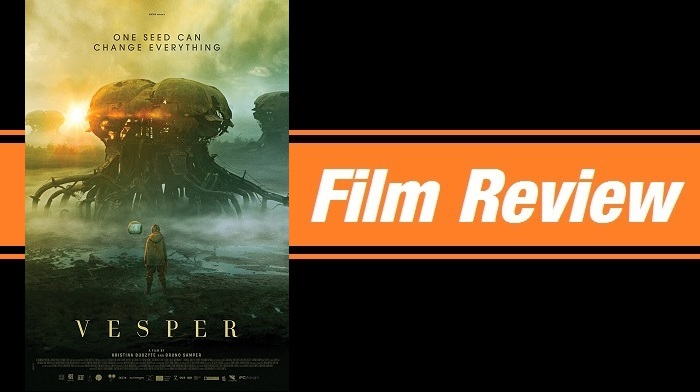
Science-fiction fans who have been starving for something new, look no further. The directing duo of Kristina Buožytė and Bruno Samper have melded sci-fi with dystopian dark fantasy to give us “Vesper”. Don’t let its small indie status fool you. “Vesper” is a transporting experience and a masterclass on immersive world-building, showing that you don’t need the deep pockets of a major studio to create an absorbing setting.
Filmed in Lithuania, Buožytė and Samper vividly portray a dank and harsh planet Earth. They show us a tragically ravaged world, yet it’s one of spellbinding beauty. It’s much like the actual story itself which is somber-toned and melancholy yet warm-hearted and (in its own eventual way) hopeful. This creative balance is one of several things that set “Vesper” apart. And while its overall concept isn’t particularly new, the film carves its own identity by freshening up familiar ideas and shrewdly utilizing one of science-fiction’s biggest strengths – its ability to show us ourselves and our world from a number of enlightening perspectives.
Image Courtesy of IFC Films
In the world of “Vesper”, humanity tried and failed to dodge an impending ecological disaster by investing heavily in genetics. But as a result genetically engineered viruses and organisms escaped containment and wiped out most plant-based foods, animals, and a large portion of the human population. In this New Dark Age, those with power and status live in enclosed cities called Citadels. All those on the outside struggle to survive, dependent on seeds engineered and sold by the Citadels for food. It’s a social structure doomed by its very nature.
Outside the safety of the Citadels is a treacherous land filled with eerie mutated plant life and animated flora. Predatory plants with piercing tendrils or noxious gases pose a constant threat while others pulsate with a near fluorescent glow and react like an adoring pet to human touch. Such a complicated ecosystem may sound overwhelming, but not for 13-year-old Vesper (a very good Raffiella Chapman). Keen, resourceful, and with a knack for biohacking, Vesper has not only adapted to her surroundings, but she’s studied it and used what she has learned to engineer her own biological creations.
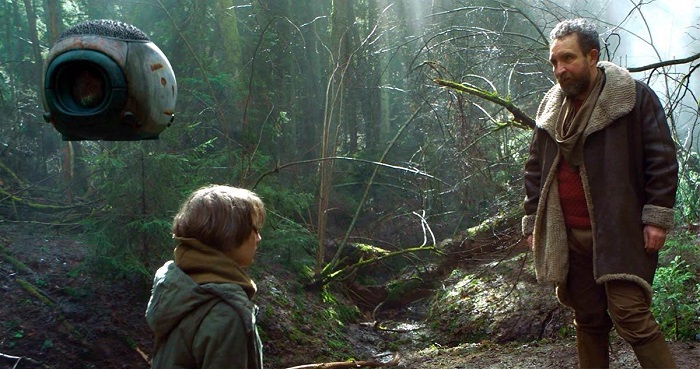
Vesper dreams of one day working in the labs of the nearest Citadel. But the reality of her situation offers no real hope. She lives in an old wood shack with her paralyzed and bed-ridden father Darius (Richard Blake). His brain is linked to a drone that he uses to communicate with Vesper and follow her when she goes out for supplies. Her mother left them a year earlier, joining a nomadic group of creepy scavengers called Pilgrims. So it’s left to Vesper to run the house, provide food, and take care of her father.
After their house is robbed, Vesper seeks help from her uncle Jonas (Eddie Marsan), a smart but ruthless leader of a small nearby town. Jonas is a cold and callous man who excuses his actions in the name of survival. Take his ghastly agreement with the closest Citadel. He trades bags of children’s blood for seeds. The Citadel’s scientists then use the blood to create synthetic humans called Jugs who are designed to do the work of laborers. “Jugs are designed to be loyal”, one character says. “It wouldn’t be so easy with humans.” Again, a social structure doomed to failure.
Image Courtesy of IFC Films
Vesper and Darius’ lives change dramatically after a Citadel glider crashes in the forest. Vesper discovers an injured woman named Camellia (Rosie McEwen) near the wreckage and nurses her back to health. The presence of a Citadel citizen excites Vesper but concerns Darius. And things only get worse once Jonas gets wind of the crash. The story takes some darker turns in its second half, especially as it digs deeper into the best and worst of humanity.
Despite their film’s overall bleakness, Buožytė and Samper don’t leave us without hope. Nothing in their world is certain, but they give us a reason to believe in Vesper, and they show a glimmer of light at the end of the proverbial tunnel. Chapman’s earnest and determined performance is key. But none of it works without the rich, captivating world which is brought to life through a remarkable mixture of digital and practical effects. It feels real and organic, yet full of mystery. Even more, it adds a harrowing layer to Vesper’s journey and ours as well. “Vesper” is now available on VOD.
Zombie movies come in all shapes and sizes. To further prove that glaringly obvious point, just look at the Spanish film “Valley of the Dead” which recently premiered on Netflix. Now while its name may sound like a pretty run-of-the-mill zombie horror title, a first glance of the movie teases something quite different. It starts off resembling like a heavy war movie. Shortly after it starts to play like a comedy. But ultimately things get serious when the dead come alive and begin feasting on the living.
“The Valley of the Dead” is co-directed by Javier Ruiz Caldera and Alberto del Toro. It’s an adaptation of the novel “Noche de difuntos del 38” by Manuel Martín Ferreras. It premiered at 2020 Sitges Film Festival but had its official release delayed until this year due to COVID-19. Now Netflix imports it to their platform, adding to their already large collection of international features.
While this may be a hard film to read initially, it quickly begins to reveal its identity. It’s a zombie flick for certain. But it’s also very much a war movie, a survival thriller, at times a black comedy, and a sharp critique of human division and how we cling so tightly to our differences. When it’s all put together it may not be the most innovative or groundbreaking concoction. But there’s enough action, cool period production design, and good character work to make this a pretty entertaining stew.
The story is set in 1938 and unfolds during the Spanish Civil War. It opens with a Nazi convoy pulling up to a wedding party in a small Italian village and brutally gunning them all down. A Nazi officer puts on a gas mask and then tosses a canister among the dead bodies. A blue gas pours out engulfing the deceased and then the camera cuts. And just like that you have a good example of who is ultimately behind what we are about to experience.
Image Courtesy of Netflix
From there we’re introduced to Captain Jan Lozano (Miki Esparbé), a perpetual troublemaker who finds himself on the brink of being executed for the third time (this time for head-butting a judge who happened to be the cousin of Francisco Franco). Just as the firing squad is about to shoot, Jan’s high-ranking uncle stops the execution. He has convinced his superiors to spare his nephew’s life. But in return, Jan will have to carry out a suicide mission. One that will take him across no man’s land to the other side of the Sierra.
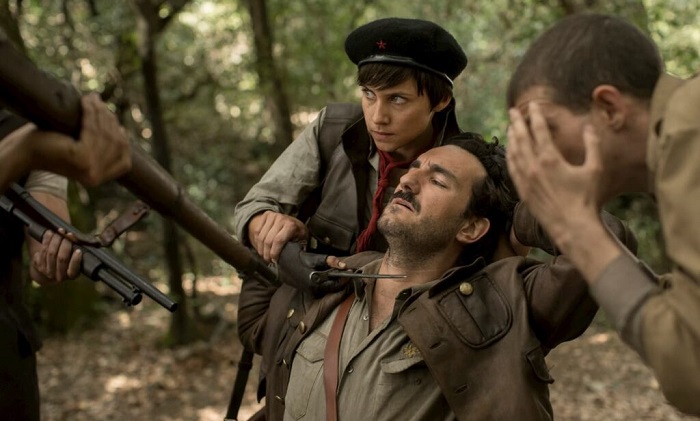
Jan is assigned a 17-year-old driver named Private Decruz (Manel Llunell) and the two head out into the wild. Their first obstacle comes while checking out a downed fighter plane. The pair are surprised and taken captive by a squad of enemy rebels. But before the adversaries can sort out their predicament, they have their first encounter with the undead. Yep, it turns out the battlefield is littered with flesh-eating zombies. And if they want to survive, the Nationalists and the Republicans will have to put aside their politics and work together…if possible.
It’s not hard to see where things go from there. It becomes a story of ‘who makes it till the end’ as the band of survivors fight battles from within and without just to stay alive. There are some fun action sequences as well as some entertaining encounters between characters. There are pinches of black comedy which keep things light early on. But later, the critique of war and politics along with the divisions they cause is addressed in a number of interesting ways. For much of the film, the greatest threat to the group’s survival lies within them, not the undead.
While “Valley of the Dead” takes a few ambitious swings, ultimately it follows a pretty familiar path. You won’t have any problems figuring out how things play out. There’s actually more mystery in guessing who makes it out than how they do. Still, the period wartime setting, the variety of character types, and some genuinely fun zombie action makes for a movie with a little more to offer than you might think. “Valley of the Dead” is streaming now on Netflix.
David O. Russell’s “Amsterdam” is a star-studded affair that hasn’t exactly been greeted with open arms. More than a few film critics have sauteed the period mystery comedy, calling it “exhausting”, “bloated”, “meandering”, “tedious”, and even “unwatchable”. But a far bigger hurdle than bad reviews is the studio’s bad marketing strategy. They understandably lean on the film’s star wattage. But “Amsterdam” isn’t just some light and jaunty romp. And its true-to-life themes are sure to be lost under the advertising’s heavy coat of studio varnish.
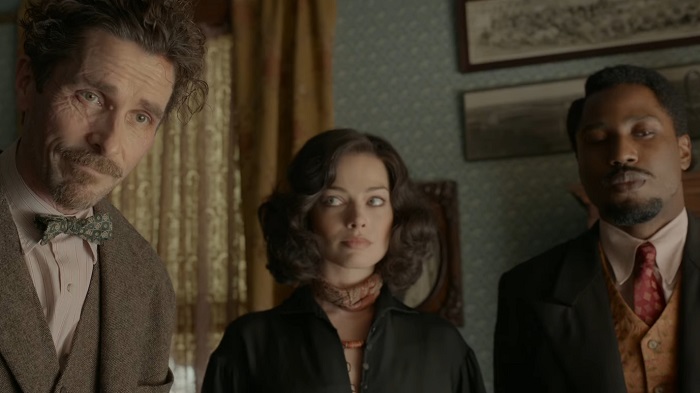
“Amsterdam” is Russell’s first film since 2015 and cast-wise it’s an embarrassment of riches. The film is led by Christian Bale, John David Washington, and Margot Robbie. But then you have a supporting cast that features Robert De Niro, Chris Rock, Anya Taylor-Joy, Rami Malek, Michael Shannon, Mike Myers, Zoe Saldaña, Taylor Swift, Andrea Riseborough, Timothy Olyphant, Matthias Schoenaerts, Alessandro Nivola, and Ed Bagley Jr among others. It looks overwhelming on paper. But everyone fits well in their roles, and most are clearly having fun with their characters.
Russell (who also writes the screenplay) bites off a lot in this overly long story about three tight-knit friends in 1930s New York. There’s a murder mystery at its core that blossoms into something bigger and more ambitious. But it’s also a comedy that’s more sly and subtle with its humor than you might expect. In one sense it keeps “Amsterdam” from running over into full-blown farce, but it also keeps it from being as funny as it could have been. Russell plays it too safe, which seems like a missed opportunity.
Image Courtesy of 20th Century Studios
Yet despite some missteps and miscalculations, I liked “Amsterdam”. Granted, it’s not quite the movie it advertises itself to be (I saw one social media promotion calling it a “thrill ride” – hardly). But it has loads of personality and character. And while Russell overextends his story and wanders off in too many directions, it still holds together nicely and makes for good satire. I also loved its period style and (in certain scenes) swagger. Plus, as someone who loves watching good actors act, this was a feast.
In the waning days of World War I, wounded war buddies Burt Berendsen (Bale) and Harold Woodsman (Washington) meet a nurse, Valerie Voze (Robbie) in a French hospital. As the war comes to an end, the trio become close friends and form a pact during some fun and frolicking in Amsterdam. But their time of carefree bliss eventually comes to an end, and they’re eventually forced to come back to reality (aka America).
Back home and 12 years later, things aren’t as breezy and buoyant as in Amsterdam. Burt (whose disheveled mien and unruly glass eye gives off serious Peter Falk vibes) returned to his wife, Beatrice (Riseborough) and her upscale, status-obsessed parents (they’re the ones who convinced him to go to war in the first place). He becomes a doctor in a struggling practice specializing in cosmetic work for fellow veterans. And he dabbles in creative “medicines” on the side.
Harold graduated from Harvard. But in the racial climate of 1930s America, there weren’t a lot of doors open for a black attorney. So he works with Burt, waiting for opportunities that sadly were still years away. The two lose track of Valerie who ends up with a hereditary nerve disorder (or so she’s told) and kept housebound by her prima-donna brother Tom (Malek) and his controlling wife, Libby Voze (Taylor-Joy).
Image Courtesy of 20th Century Studios
One day Burt and Harold are approached by Elizabeth Meekins (Swift), the daughter of United States Senator Bill Meekins (Begley Jr). She tells them that her father has died, and she believes he was murdered. She implores Burt and Harold to investigate, starting with a secret autopsy. Normally this is something the pair would immediately turn down. But Senator Meekins was their commanding officer during the war and the one who introduced the two friends. So they reluctantly agree to help Elizabeth.
Rather than spoil things, let’s just say Burt and Harold reunite with Valerie and the trio become prime murder suspects. In their efforts to prove their innocence, they uncover something far more insidious. And along the way they encounter a fun and colorful array characters that includes a vet from their old regiment, Milton King (Rock), two not-so-undercover intelligence agents, Paul Canterbury (Myers) and Henry Norcross (Shannon), a good-hearted pathologist, Irma St. Clair (Zoe Saldana), two pulpy detectives Getwiller (Schoenaerts) and Hiltz (Nivola), a ruthless thug, Tarim Milfax (Olyphant), and a highly esteemed general, Gil Dillenbeck (De Niro).
“Amsterdam” certainly has its playful side, but its satirical kick often comes attached to some weighty subjects. Racism, antisemitism, and fascism are all touched on to varying degrees. And while much of the story is pure fiction, there are several things scattered throughout that are based on real-life details, people, or events. Again, I won’t spoil the story by pointing them out, but these give the movie some bite. Sadly, Russell’s approach to storytelling will make separating fact from fiction a chore for some. But I admit, I fell for this messy, off-beat extravaganza. And I think it has a lot more to say than some may give it credit for. “Amsterdam” is out now in theaters.
In 1987, author Clive Barker gave the horror genre a mighty jolt with his directorial debut, “Hellraiser”. With a healthy lean on the twisted and the macabre, Barker’s terrifying vision rooted its evil in both the supernatural and humanity, with the latter easily being the more wicked and vicious. At a time when the genre was saturated with slasher movies, “Hellraiser” gave horror fans something fresh and unique.
“Hellraiser” spawned one good sequel and eight rather forgettable ones. Now, in keeping with the never-ending horror trend of reboots and remakes, we have a new “Hellraiser”. It’s directed by David Bruckner whose previous film was last year’s terrific “The Night House”. Joining Bruckner from “The Night House” are screenwriters Ben Collins and Luke Piotrowski who clearly aim for the same dark and gnarly tone of the original “Hellraiser” film.
But there’s something missing from this well-made yet surprisingly vapid reboot. Visually it certainly looks in line with Barker’s fiendish vision found in his 1987 film. It’s weird, gruesome, an even a bit sadistic – all fun trademarks of the series. But “Hellraiser” 2022 struggles in other areas. There is some clunky plotting, it’s overly long, and it’s hard to make any sense of its rules.
Image Courtesy of Hulu
But most significantly, and what makes the reboot pale in comparison to the original, is the lack of any compelling human villain. The filmmakers attempt to create something close, but it’s no one near as interesting or as black-hearted as Julia (Clare Higgins) and Frank (Sean Chapman). They drove Barker’s film and were its primary evil, with the mysterious Cenobites strategically used in a handful of terrifying encounters. Bruckner leans heavier on the Cenobites while revealing very little about them. They end up frustratingly hollow and zapped of the mystique that made the original Pinhead and company so compelling.
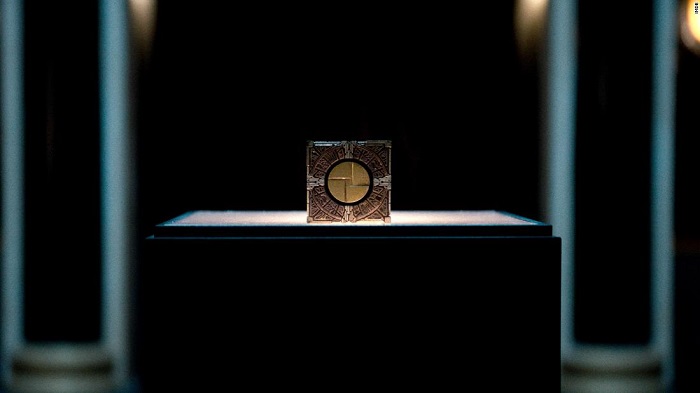
After a brief stop in Serbia, the story kicks off in The Berkshires, Massachusetts where a wealthy socialite and certifiable madman named Roland Voight (Goran Višnjić) is hosting a decadent party at his remote mansion. We quickly learn Voight is a collector of occult artifacts (gulp), and among his most prized pieces is an ornate puzzle box. Now this is not some fancy Rubik’s Cube, but a gateway to another plane of existence. When solved, the box summons mutilated extra-dimensional sadomasochists called Cenobites to ‘collect’ those who have opened their portal.
Jump ahead six years and we meet Riley (Odessa A’zion), a troubled young woman fighting alcohol and drug addiction. Despite the warnings of her concerned brother Matt (Brandon Flynn), Riley is semi-dating a fellow addict named Trevor (Drew Starkey) who isn’t the best influence. Case in point: Trevor convinces her to help him break into some mystery warehouse containing some mystery shipment belonging to some mysterious person. Inside the warehouse they find a single shipping container containing a single safe. And I bet you can guess what’s inside that safe – the dreaded puzzle box.
Image Courtesy of Hulu
To no one’s surprise, the puzzle box is triggered and the Cenobites come calling. From there we’re treated to streams of blood, flayed flesh, and a lot of chains with hooks. But the weirdest twist comes when Riley goes searching for answers about the box. It takes her to Voight’s mansion and a third act that leaves you with more questions than answers. That is if you even ask questions. In a movie like this, it’s probably better that you don’t.
To the film’s credit, it does try to offer today’s horror audiences something unique, in the same way Barker’s film did in the slasher-soaked late 1980s. But aside from some creative gore and a delightfully deranged concept, “Hellraiser” doesn’t do enough to sell the need for a reboot. It’s more lurid than frightening, and even its best moments are easily forgotten.
Then you have the 2022 Cenobites who offer little more than their updated new looks and a lot of otherworldly mumbo-jumbo. Out is the bloody black leather, the chilling entrances, and the memorable lines. These Cenobites are the brooding types and not the sharpest knives in the drawer. Their new look emphasizes peeled skin in elaborate patterns – an interesting choice but not the most convincing one. Suffice it to say, some of the Cenobites look a lot more “real” than others do. That’s pretty tough for a movie that relies so heavily on them. “Hellraiser” is now streaming on Hulu.
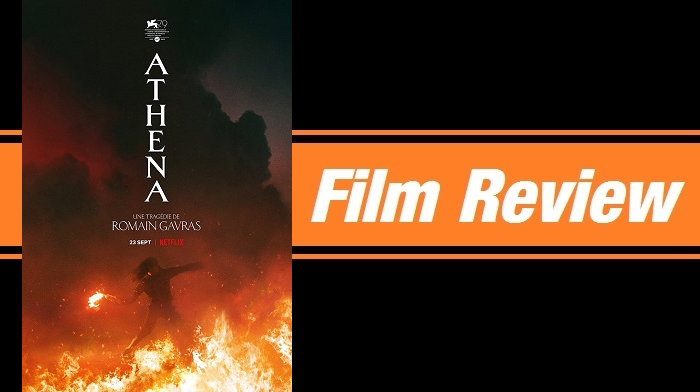
“Athena” opens with a powerful closeup of a man named Abdel. The camera stays firmly locked onto his solemn face as he walks through a police station and outside to an awaiting crowd of reporters. He steps up to a podium to issue a family statement following the death of his 13-year-old kid brother Idir who was allegedly killed by police brutality. Abdel says all the usual things: a plea for peace, it’s a difficult time for their family, and that the police have pledged to conduct a thorough investigation.
But in the back of the crowd, Abdel’s brother Karim (Sami Slimane in his screen debut) stands seething with anger. He lights a Molotov cocktail and heaves it at the police station, sending everyone scrambling and igniting a meticulously orchestrated riot. All of this is captured through one jaw-dropping single take as DP Matias Boucard’s camera sticks to the rioters as they storm and ransack the police station and then make their escape to the massive housing project called Athena, which Karim and his hundreds of rage-filled followers immediately turn into a fortress.
Image Courtesy of Netflix
This incredible opening sets the table for “Athena”, the latest film from French director Romain Gavras. It’s a movie with so much to admire, especially from a technical standpoint. It’s hard not be impressed with the sheer spectacle Gavras and Boucard bring to the screen. Their heavy emphasis on choreography may come at a price (more on that in a second), but it gives the movie an explosive and propulsive energy. And while it never cinematically matches the sheer intensity and craftsmanship of its opening, “Athena” keeps you riveted throughout by its visuals alone.
But as I said, its kinetic presentation comes at a cost. With “Athena”, it’s the characters who suffer most. The emotions we see from the key players are raw and genuine. But the movie is content with simply telling us how they feel rather than meaningfully exploring those feelings (the closest we get to emotional complexity is Abdel). Gavras teases us with deeper feeling (there’s a powerful scene with Karim tearfully staring at a picture of his deceased brother – one of the film’s few still moments). Otherwise it’s all rage and not much else.
Of the characters, Abdel (Dali Benssalah) is by far the most detailed. He’s a decorated French soldier just back from a tour in Mali, so he has a good understanding of war and its consequences. For that reason, Abdel seeks the peaceful, patient resolution. But with his brother leading a violent uprising, he’s caught between stopping a potentially deadly showdown and standing with his family. Karim is an interesting character and Slimane makes his fury palpable. But he’s little more than an avatar of rage. There’s a third player – Abdel and Karim’s underdeveloped stepbrother Moktar (Ouassini Embarek). He’s unhinged and most worried about the attention Karim’s revolt will bring to his drug business.
Their family dynamic is volatile, but nothing like the tinderboxes Karim’s actions ignite all across France. As a cellphone video of three police officers brutally beating Idir goes viral, tensions reach a dangerous high. The police claim it wasn’t their officers in the video. The marginalized, mostly Algerian communities point to other recent cases of police misconduct that were swept under the rug. Karim harnesses that anger in his revolt, which evolves into urban warfare once police converge on Athena. And after Karim takes a nervous and overwhelmed young officer Jérôme (Anthony Bajon) hostage, the situation with the cops and between the brothers intensifies.
Image Courtesy of Netflix
Amid the mace, batons, and beanbag guns of the police and the lead pipes, Molotovs, and fireworks of the Athenians, the family drama ends up underserved. This really stands out with one particular character twist that’s pivotal to the story yet desperately in need of buildup and detail. And the film needs more of the quieter moments, such as the scenes with the worried mother of the brothers trying to reach her sons on their phones. It’s a small touch, but a powerful one.
Despite throwing out some intensely relevant themes, the movie plays as more of an visually mesmerizing adrenaline jolt than any kind of intellectual challenge. And the emotions, which are real and comprehensible, feel more like a catalyst for the action than something we’re allowed to explore. But that’s not to say “Athena” is toothless. It may rely too heavily on its amazing visual craftsmanship, but the themes (though only scratched upon) are there. And watching society crumble and violence beget violence on screen is affecting, from the film’s astonishing opening to its gut-punch final shot. “Athena” is now streaming on Netflix.













 Keith & the Movies