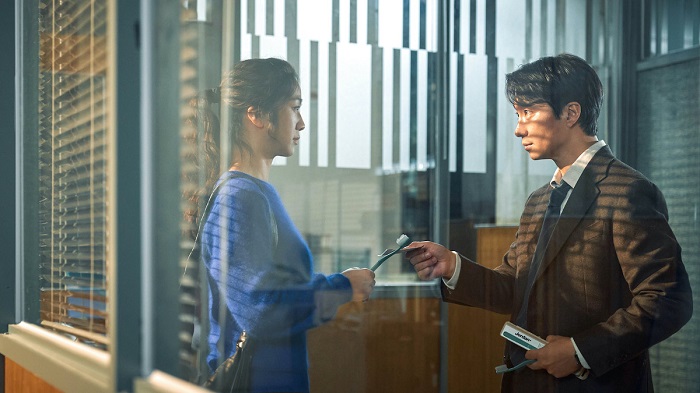
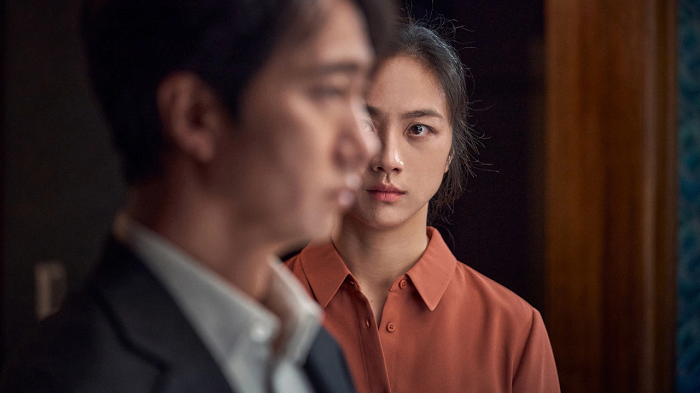
One of my very favorite movies of last year makes its way to home video courtesy of MUBI. South Korean auteur Park Chan-wook’s brilliant “Decision to Leave” may be the acclaimed filmmakers very best film to date. It’s his first film since 2016’s “The Handmaiden”, and what a return it is. And despite the inexplicable snub at this year’s Academy Awards, the movie earned him the Best Director prize at Cannes and has received awards from critics groups all around the globe. Perfectly cast, deftly written, sumptuously shot, and masterfully directed, “Decision to Leave” is sublime cinema. Read my full review of the film HERE.
This new Blu-ray edition of “Decision to Leave” hit shelves February 14, 2023. See below for a full synopsis and breakdown of the bonus features.
OFFICIAL SYNOPSIS:
Year: 2022
Rating: NR
Runtime: 139 Minutes
Director: Park Chan-wook
Starring: Tang Wei, Park Hae-il, Lee Jung-hyun, Go Kyung-pyo, Kim Shin-young, Jung Yi-seo, Jung Young-Sook, Park Jeong-min, Yoo Seung-mok, Seo Hyun-woo, Teo Yoo, Ho Min-si, Jeong Ha-dam
What happens when an object of suspicion becomes a case of obsession? Winner of Cannes Best Director in 2022, Park Chan-wook (Oldboy, The Handmaiden) returns with a seductive romantic thriller that takes his renowned stylistic flair to dizzying new heights. When detective Hae-joon (Park Hae-il) arrives at a murder scene, he begins to suspect the dead man’s wife Seo-rae (Tang Wei) may know more than she initially lets on. But as he digs deeper into the investigation, Hae-joon finds himself trapped in a web of deception and desire, proving that the darkest mysteries lurk inside the human heart.
BONUS FEATURES:
Introduction with Park Hae-il and Tang Wei
New York Film Festival Talks: Park Chan-wook
Interview with Director Park Chan-wook
“Moments of Decision to Leave” Behind the Scenes Featurette
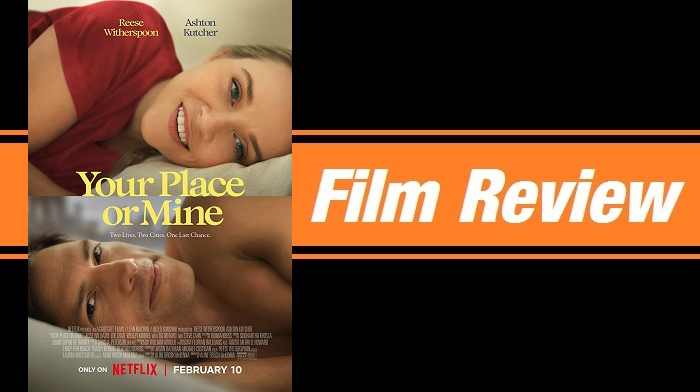
“Your Place or Mine” lives and breathes through the likability of its two stars, Reese Witherspoon and Ashton Kutcher. Both have plenty of charm and they give us two best friends who are fairly easy to root for. They have decent chemistry, although it’s hard to gauge due to the fact that they’re rarely on screen together (the vast majority of their interactions come through phone calls and FaceTimes). But for the most part, the always likable Witherspoon and the nicely toned down Kutcher have the ingredients for a winning pair.
But here’s the issue – the film is plagued by a problem that comes baked into so many of these romantic comedies – predictably. Within the first five minutes we know exactly how this story is going to end. Over the course of the movie we recognize many of the genre’s usual character types. And even with a couple of noticeable diversions, the overall trajectory of the story follows the well-worn rom-com blueprint to a tee. So we’re left with a promising yet ultimately forgettable movie.
Image Courtesy of Netflix
Debbie (Witherspoon) and Peter (Kutcher) have a close yet not-so-close friendship. They had a fling 20 years ago in Los Angeles and then Peter promptly left for New York (he claims it was due to his fear of earthquakes). But they stayed in touch, becoming long distance best friends. During that time Debbie stayed in LA, got married, had a son Jack (Wesley Kimmel), and got divorced. Peter became a successful business consultant and now lives in a swanky apartment overlooking the Manhattan Bridge.
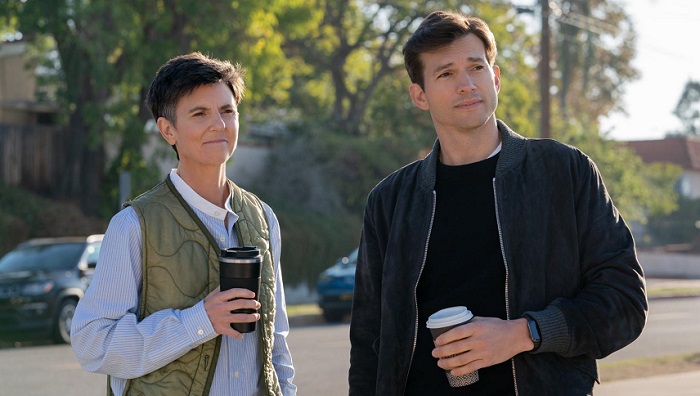
Listening to them talk, you would think Debbie and Peter are two peas in a pod. But they’re actually quite the opposites. Debbie plays things safe and is very by-the-numbers. She never takes chances and rarely makes time for herself despite the urging of her thoughtful (and dryly funny) friend Alicia (a really good Tig Notaro). Peter is a bit of a flake and can’t get a firm grip on what he truly wants to do with his life.
Debbie is all set to come to New York for a writing class she’s long put off, but her excitement and plans are put on hold after her sitter for Jack bails out on her. So Peter offers to fly over and watch Jack. He’ll stay at her homey place in LA and she’ll stay at his ultra-modern apartment in New York. While there, each gets a taste of the others life. “We tell each other everything,” they each repeat during their stay-overs. But both are surprised by how little they actually know about the other, including feelings that may go beyond friendship.
Image Courtesy of Netflix
As Debbie and Peter have their considerably different adventures on opposite coasts, we’re introduced to a collection of colorful characters including Debbie’s wacky self-assigned gardener Zen (Steve Zahn), Peter’s trendy and kooky neighbor Minka (Zoë Chao) who takes Debbie under her wing (despite not being asked), and a hunky literary editor named Theo (Jesse Williams) who Debbie immediately hits it off with. He’s the romantic diversion that helps her to ‘see the light’.
Within its smattering of hit-or-miss humor and a lot of songs from The Cars, “Your Place or Mine” has a pretty sweet center. The relationship between Peter and Jack is easily the funniest and warmest. Meanwhile Witherspoon and Kutcher manage enough chemistry despite spending the majority of their time ‘together’ in split screen. But it’s hard to shake the feelings of “we’ve seen it all before”, and it simply doesn’t have enough ideas of its own to be the slightest bit memorable. It’ll probably work for its target audience. But for anyone else…it probably won’t. “Your Place or Mine” is now streaming on Netflix.
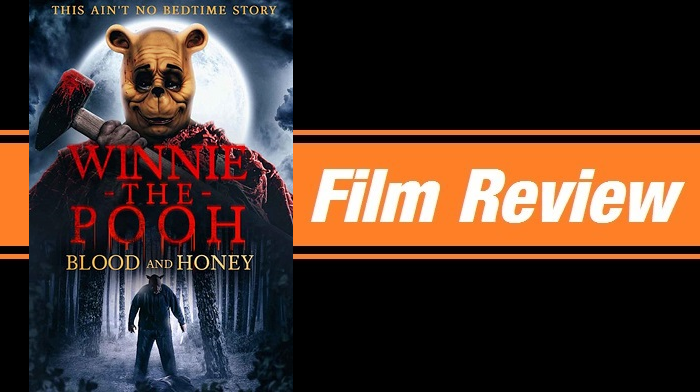
Following its announcement, I’m guessing “Winnie-the-Pooh: Blood and Honey” prompted a slew of different reactions from belly-laughs to eye-rolls. I can see some immediately hopping onboard while others instantly checked out. And I bet there were just as many (myself included) left scratching their heads. Well, I can honestly say that after watching this baffling concoction I’m still scratching my head.
So how did this movie come about? On January 1, 2022, A. A. Milne and E. H. Shepard’s 1926 Winnie-the-Pooh book entered the public domain. Previously the rights had been owned by Disney since 1966. Disney was able to retain the character likenesses they created, but the actual characters themselves (Pooh, Piglet, Eeyore, Owl, Rabbit, etc.) went into the public domain. So what was the first thing someone immediately did? Why turn the beloved children’s characters into deranged homicidal maniacs of course.
Now at first glance “Winnie-the-Pooh: Blood and Honey” resembled the kind of self-aware grindhouse schlock I could get behind. It opens with some promise both in its embrace of its patently silly premise and its willingness to poke fun at the slasher genre. But it quickly runs its central conceit into the ground, and it gets increasingly harder to separate the jokes from more serious scenes that happen to be really bad. And it doesn’t help that the movie is such a technical mess.
Image Courtesy of Altitude Film Distribution
That’s hard for me to say, especially as someone who loves watching talented filmmakers, old and new, do incredible things with minuscule budgets. But here, everything is sub-par. The cinematography is bad. The editing is bad. The sound is bad. The lighting is bad. Again, budget constraints should always be considered. But when the characters speak so low we can’t hear them, or the lighting is so dim we can’t make out what’s going on, or the camera is shaking so much we can’t follow the action, or the cuts either come too quick or leave us stuck on a scene way too long, it makes for an exploitation film of the lowest order.
If anything, director, writer, and producer Rhys Frake-Waterfield certainly seized an opportunity when he saw it. I mean countless filmmakers with original ideas struggle to find a screen for their work, especially in the horror genre. But Frake-Waterfield takes anthropomorphic animals from countless childhoods and turns them into Leatherface knock-offs and is able to nab a big screen “event”. That’s more impressive than anything in the actual movie.
As for the story, the amusing setup goes something like this: Years ago a young boy named Christopher Robin met and befriended the walking and talking Winnie-the-Pooh, Piglet, Eeyore, Owl, and Rabbit inside the Hundred Acre Wood. Christopher fed them, played with them, and essentially grew up with them. They were his closest friends.
As he got older, the time came for Christopher Robin to head off to college. But with CR no longer there to feed and care for them, his animal friends began to starve. Desperate for food, they killed and ate Eeyore which pushed them over the edge. Enraged, Pooh, Piglet, Owl, and Rabbit formed a pact. They renounced their human side and swore never to talk again. Instead they went back to their animalistic roots. After five years away Christopher Robin (Nikolai Leon) returns, anxious to introduce his new fiancée Mary (Paula Coiz) to his old friends. But rather than a warm reunion, they are savagely attacked by a feral Pooh (Craig David Dowsett) and Piglet (Chris Cordell).
Image Courtesy of Altitude Film Distribution
Jump ahead a couple of years and we meet Maria (Maria Taylor) a young woman dealing with a trauma that the movie never seems all that interested in. Her therapist recommends she takes some time away to “disconnect”. So she and four girlfriends from college rent a two-story cabin deep in the Hundred Acre Wood, apparently within shouting distance of the vengeful, murderous Pooh and Piglet’s place (there are so many obvious questions about this scenario, but don’t expect any answers).
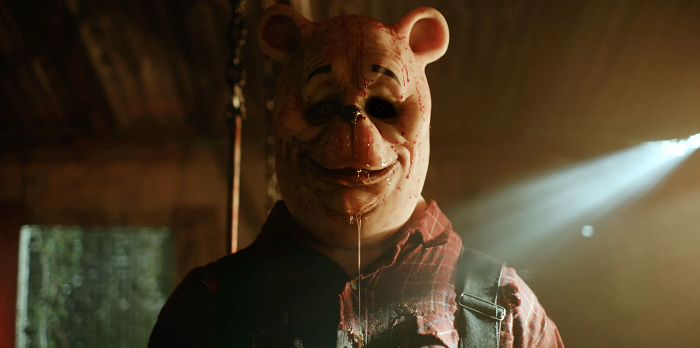
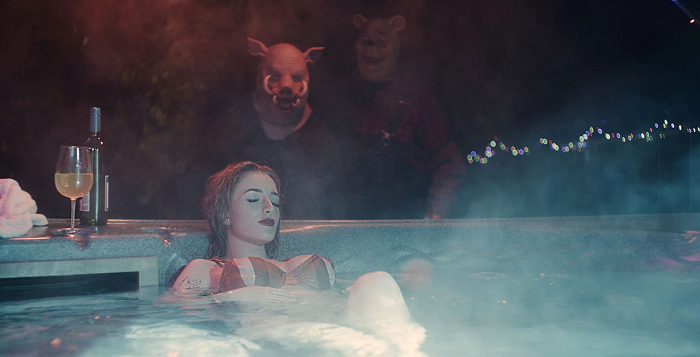
I shouldn’t have to tell you where things go from there. Yes Pooh, with his overalls and beer-gut, and Piglet, with his bad leg and sadistic love for chains, terrorize the young women, picking them off one by one in a number of grisly ways. And it isn’t that hard. Their victims are way too stupid to stand a chance, leading to a handful of laughs – some intentional but more that aren’t. Even calling them characters seems a stretch. They’re thinly sketched and the movie clearly doesn’t care about them so why should we?
To the film’s credit, the audience I watched it with seemed to have a good time (although I’m pretty sure they were laughing more AT the movie than WITH it). Clearly a big chunk of the budget went into the over-the-top gory kills which can be fun (when we’re able to make them out). But it’s one thing to spoof dumb and chintzy slasher movies. It’s another thing to become one. And it’s one thing to revisit your one big gag. It’s another thing to milk it dry before your movie is half over. Just more things to add to a laundry list of problems that make this potential romp feel like a dirt-cheap cash grab.
How long has Kevin Feige and the massive entity known as the Marvel Cinematic Universe been introducing us to the Multiverse? It seems like forever. Yet here we are again with “Ant-Man and the Wasp: Quantumania”, the first big Marvel production of the year and the 31st film in the MCU. Director Peyton Reed returns for his third Ant-Man film, although this one is more ambitious and has a significantly larger scope. Unfortunately that alone doesn’t equal a great movie.
I guess it depends on who you talk to, but ever since 2019’s “Avengers: Endgame”, the MCU has been a frustrating and at times rudderless mess. It has nowhere near the flow or baked-in excitement since Thanos was defeated. Instead, Feige and company have over-extended into television, repackaged classic old characters, brought in a humdrum selection of new characters, and has spent more time introducing storylines than exploring them. Perhaps success has gone to their heads. Or maybe they’ve forgotten what made the early run so great.
Admittedly, out of the early MCU, the Ant-Man films were among the weakest for me. I liked their smaller and more intimate scale. But neither the stories or the storytelling left much of an impression. “Quantumania” has much more on its plate. It’s supposedly the start of Phase 5 of the MCU although I quit trying to understand their “phases” years ago. Most of the cast returns including Paul Rudd, Evangeline Lilly, Michelle Pfeiffer, and Michael Douglas. I say “most” of the cast because for some reason Feige recast Cassie Lang (Emma Fuhrmann was dropped and replaced by Kathryn Newton).
Image Courtesy of Marvel Studios
This time the villain is Kang the Conqueror (Jonathan Majors), a classic baddie in the comics who is still waiting to be adequately defined in the MCU. Those who watch Marvel’s assembly line of Disney+ shows first saw Kang in the first season of “Loki”. I was hoping “Quantumania” would give us a deep dive into the character, but sadly it doesn’t. Yes he gets some good screen time and we get to see him in action. Otherwise he only gives us vague allusions to grand ambitions and of “what’s to come”.
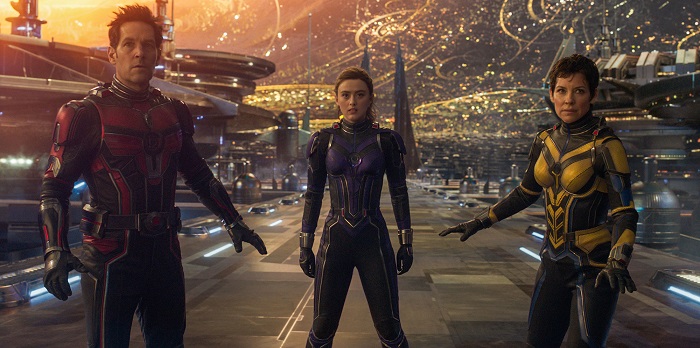
As for Scott Lang (Rudd), aka Ant-Man, he’s been spending his post-Endgame days basking in the glory of his days as an Avenger. Hope (Lilly) is running things at the Pym van Dyne Foundation. Cassie is an activist who keeps winding up in jail. Janet (Pfeiffer) is holding onto secrets from the 30 years she spent trapped in the Quantum Realm. And Hank (Douglas) basically tags along and talks to ants.
Scott and his family are sucked into the Quantum Realm after one of his daughter’s experiments goes haywire. The Quantum Realm is a CGI world full of wacky creatures, sentient walking buildings, and Bill Murray running around playing himself. It’s also a realm on the brink war as a rather bland tribe of freedom fighters led by Jentorra (Katy M. O’Brian) are rising up to fight the mighty Kang who has amassed a mighty techno-army. Scott just wants to get his family home. But Cassie believes they should get in the fight. So we get some manufactured tension between a conqueror and the people, and (on a smaller scale) between a father and his daughter.
But it’s hard to get too invested mainly because the movie barely goes skin deep. So much feels left out or underdeveloped. Kang is the best example. This should have been where we learned the most about him. Instead he just wants to leave the Quantum Realm. That’s it. He’s not into quelling the uprising. He barely seems aware they exist. He just wants to leave. His “powers” are never really explained, and even fans of the comics will have a hard time making sense of some of the things he does. And while the movie tries to make him menacing (in an almost Shakespearean way thanks to Majors), it lacks the edge to pull it off.
Many of the problems can be traced back to screenwriter Jeff Loveness’ script. Taking on something this massive and expansive as your first feature film screenplay is a big ask, especially coming from writing for “Jimmy Kimmel Live!” and doing a handful of “Rick and Morty” episodes. His story lacks depth, detail, emotion, and even laughs (the scattered attempts at humor fall flat). The dialogue goes from stiff to hammy, and all the quantumumbo-jumbo is never as interesting as it should be.
Image Courtesy of Marvel Studios
But the biggest problem with “Quantumania” is that it just doesn’t move the needle in the MCU. Nothing about it feels special or even significant. And it certainly doesn’t feel as though it moves things forward. But it’s also short of its own personality and charm. The entire thing feels processed and churned out by the Marvel machine rather than creative minds.
I’ve came down pretty hard on the movie as if it’s terrible. It has a great cast, some of the visuals are actually quite striking. And then there’s M.O.D.O.K., a character I’ve always loved in the comics. The MCU’s origin of M.O.D.O.K. is utterly ridiculous. But once I got past that disappointment, he was actually one of my favorite things in the movie. Not because he’s a great character. But because he looks so hilariously bizarre, sometimes by design and sometimes due to crappy CGI.
But while “Quantumania” may not be terrible, it’s not memorable either. Kinda like the entire MCU since “Endgame”. This is another entry that fails to muster excitement or move things forward in a meaningful way. It just exists – a gear in a moneymaking machine that is starting to lose its steam. “Quantumania” will still make money. But even the most rabid loyalists are noticing the dips in quality and letting their voices be heard. And if the MCU loses them….. .
Who hasn’t played Tetris? I know I have. I remember my little brother getting the original Nintendo GameBoy which came with Tetris packed in. Created by developer Alexey Pajitnov, the cascading puzzle game has had several iterations over the years, but it’s hard to beat the classic original which has sold hundreds of millions of copies. But have you heard the story behind the game? Now you get to thanks to Apple TV+.
The first trailer for the fittingly titled “Tetris” dropped today. Directed by Jon S. Baird, written by Noah Pink, and starring Taron Egerton, “Tetris” chronicles the intense legal battle that was fought just to take the game around the world. Based on a true story, this looks like part video game biography and part Cold War thriller. I love the sound of that. The trailer gives us a good sense of what to expect, and we won’t have to wait long to see it.
“Tetris” premieres March 31st on Apple TV+. Check out the trailer below and let me know if you’ll be seeing it or taking a pass.
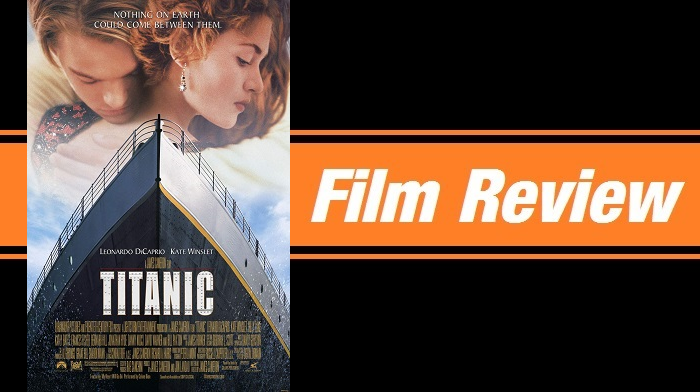
It still remember seeing “Titanic” 25 years ago. Despite being directed by the same guy who did such “manly” movies as “The Terminator”, “Aliens”, and “True Lies”, I remember dismissing “Titanic” as little more that a cornball romance set aboard the ill-fated British passenger liner. Well, it kinda is that.
But it was also a James Cameron movie meaning it would be an enormous blockbuster spectacle unlike anything done before. Sporting a whopping $200 million production budget, “Titanic” was easily the most expensive at the time. It became the first film ever to reach $1 billion at the box office and remained the highest grossing film of all-time until it was passed by 2019’s “Avatar”, yet another Cameron extravaganza.
“Titanic” truly is two movies fused into one – a sudsy love story and an epic disaster film. In addition to directing, producing, and editing, Cameron wrote the script, incorporating numerous historical details into his story. He also included several real-life characters including “The Unsinkable” Molly Brown (Kathy Bates), the vessel’s architect and shipbuilder Thomas Andrews (Victor Gerber), Captain Edward John Smith (Bernard Hill), and the ship’s bandmaster Wallace Hartley (Jonathan Evans-Jones), among several others.
Image Courtesy of Paramount Pictures
But at its core “Titanic” is a fictional love story anchored by its two young stars. In 1997 Leonardo DiCaprio and Kate Winslet, both barely over 20-years-old at the time of their casting, had already gained notoriety and each had already earned Academy Award nominations for supporting roles, him for “What’s Eating Gilbert Grape” and her for “Sense and Sensibility”. But “Titanic” catapulted them both into Hollywood stardom (Winslet’s performance earned her a second Oscar nomination).
While Winslet’s Rose DeWitt Bukater and DiCaprio’s Jack Dawson were purely fictional, several things about their characters and circumstances were rooted in reality. Cameron gave a lot of attention to the class distinctions between the two leads. Jack was a poor aspiring artist who won his third-class ticket on the Titanic in a poker game. Rose was the upper-class fiancé to an older and wealthy heir (played by Billy Zane), a relationship encouraged by her widowed mother (Frances Fisher) who was desperate to maintain her high-end social status.
For Cameron, realistically portraying the Titanic was vital, and he felt a great responsibility to get it right. He poured a lot of time, effort, and budget into researching and recreating the Titanic’s interiors and exterior. The ship was reconstructed to full scale, and Cameron, along with his production designer Peter Lamont, followed archived blueprints and old photographs to capture the liner’s luxurious original designs. The meticulous attention to detail is as remarkable as it is impressive, and understanding what all went into accurately representing the Titanic really enhances the experience.
Image Courtesy of Paramount Pictures
Meanwhile Winslet and DiCaprio fleshed out what would become one of cinema’s most well-known tragic love stories. Rose and Jack’s tale of forbidden love has its share of mushy moments. But Cameron never pushes it too far, and there is lots of compelling dressing surrounding their romance in the form of interesting characters, side stories, and themes. The good casting doesn’t hurt either, starting with Winslet and DiCaprio. And I can’t say enough about the often underappreciated Billy Zane. He’s a bit of a mustache-twirling cartoon (minus the mustache) which is one reason I like him so much. He’s possessive, conceited, and snobbish and Zane hits every single vile or despicable mark.
Then of course you have the second half which combines powerful emotional beats with pure moviemaking extravagance. As the film shifts to disaster movie mode, we again see Cameron pushing the boundaries of special effects. Much like with “Terminator 2: Judgement Day” and “The Abyss”, he once again took digital technology in some groundbreaking new directions. But just as impressive are the incredible practical effects that included elaborate miniatures, a 5,000,000 gallon water tank, and some extraordinary set design. And all of it to create the most realistic rendering of the Titanic disaster ever put on screen.
“Titanic” would go on to earn 14 Academy Award nominations, winning eleven including Best Picture and Best Director for Cameron. To its credit the movie has stood the proverbial test of time. I still find the central romance a bit too syrupy at times, but it’s hard not to be moved by where it goes. And you can say what you want about James Cameron, but he makes movies that people want to go see. Whether they’re about a blue-skinned indigenous tribe on a faraway planet or a love story set aboard a doomed luxury liner in 1912.