
REVIEW: “Frankenstein” (2025)

Mary Shelley’s 1818 novel “Frankenstein” has always felt like the perfect material for Guillermo del Toro. Now the Oscar-winning filmmaker is bringing to life his extraordinary vision of Shelley’s celebrated classic. Del Toro puts together an exceptional cast along with a team of amazing artists and designers to create a profoundly fresh retelling of “Frankenstein” while also capturing what has made it such a beloved and timeless story.

For decades del Toro has longed to make his own Frankenstein movie. He was finally given the means by Netflix following the massive success of his Academy Award winning “Pinocchio”. Del Toro’s approach to “Frankenstein” is much the same as it was for “Pinocchio”. By that I mean he not only looks at the well known core of the story, but also the depths of the source material that has yet to make it on screen. And of course we also get del Toro’s unique sense of the dark and fantastical which is what ultimately gives the movie its distinct identity.

Del Toro opens his film with a stunning prelude that highlights the kind of eye-popping practical effects work woven throughout the entire production. In 1857, a Danish ship finds itself trapped in thick Artic ice while on an expedition to the North Pole. As night falls, an explosion in the distance grabs their attention. The Captain (Lars Mikkelsen) leads a detail of men to investigate the site where they find a severely injured man. A loud unidentifiable roar sends the frightened men retreating to the ship. Once back, the captain takes the injured man to his quarters. The stranger introduces himself as Victor Frankenstein (Oscar Isaac).

Image Courtesy of Netflix

As the creature (a sublime Jacob Elordi) wreaks havoc amid the terrified crew, Victor begins telling his story to the Captain. Through exquisitely crafted flashbacks he shares about his troubled childhood under the rule of a cold and overbearing father (Charles Dance). And he expresses his immense sadness at the loss of his mother, who died while giving birth to his younger brother William. That loss triggered an obsession in young Victor who pledged to one day conquer death.

Years later in 1855, we see the brilliant yet vain Victor defending his attempts at reanimating the dead during a disciplinary hearing at Edinburgh’s Royal College of Medicine. After he brings part of a corpse to life, the repulsed professors expel him from their ranks. But he impresses Henrich Harlander (Christoph Waltz), a wealthy arms broker who offers him unlimited funding, starting with securing an abandoned coastal tower to serve as Victor’s laboratory. Through del Toro’s beautifully twisted lens we see Victor bring his grotesque creation to life and soon after face the consequences of playing God.

From there the perspective shifts to the creature. While Victor’s tale is one of genius converging with madness, the creature’s story is more of a heart-wrenching tragedy. Elordi brilliantly captures his character’s traumatic evolution, where childlike innocence transforms into pain-filled maturity. Just as del Toro vividly reveals Victor’s profound arrogance and recklessness, he equally conveys the creature’s emptiness and despair. The ugliness he encounters leaves him dejected and hopeless, eventually fueling a vengeful fury within him which only adds to the tragedy.

Image Courtesy of Netflix

To no surprise, “Frankenstein” is a feast for the senses. Whether it’s the intensely detailed sets, the gorgeous vistas, or the meticulously designed costumes, there’s never a moment where there’s not something for our eyes to admire, especially as captured by DP Dan Laustsen. The sound design is equally captivating, as is composer Alexandre Desplat’s score which oscillates between ominously Gothic to emotionally tender. As for the violence, it’s fittingly gruesome and in-tune with the gloriously dark vibe del Toro is going for.

The performances are nearly as captivating. As mentioned, Elordi impresses in a role originally planned for Andrew Garfield. But the 28-year-old Australian makes the character his own. Isaac is just as good, furiously teetering between brilliance and insanity. Waltz is his usual sturdy self while Mia Goth is compelling as Harlander’s niece, Elizabeth. The grizzled Mikkelsen is a nice fit for as the sea-weary Captain Anderson. And Felix Kammerer is solid as William although his character sometimes gets lost within the story’s many moving parts.

“Frankenstein” is a symphony of creative energy emanating from a filmmaker with a deep and obvious passion for the classic tale he’s retelling. Del Toro’s passion project honors the very best from Shelley’s beloved work. But as with most inspired filmmakers, he adds his own distinct spin which manifests itself in the soulful storytelling and the visionary craftsmanship. His imagination soars throughout his richly textured world. His heart finds empathy and humanity in the story’s darkest places. And his longstanding affection for myth and the macabre is on full display, pleasing GDT fans everywhere.

VERDICT – 4.5 STARS

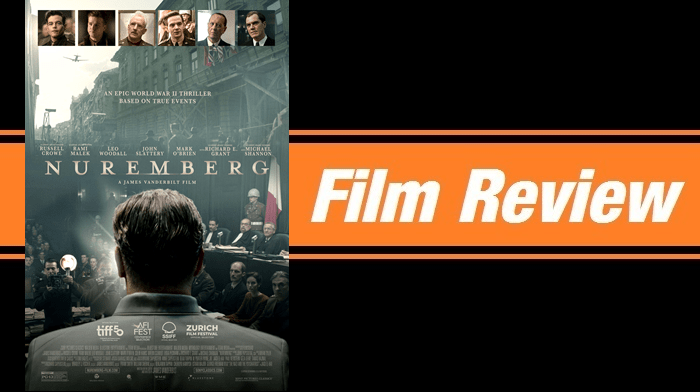
REVIEW: “Nuremberg” (2025)

Writer-director James Vanderbilt’s riveting “Nuremberg” chronicles key events surrounding one of the biggest trials in world history. The Nuremberg Trials were a joint Allied effort to prosecute captured Nazi leaders following the death of Adolf Hitler and the fall of the Third Reich. The purpose of the trial was not only to convict the Nazi High Command, but to also present irrefutable evidence of Nazi atrocities to the world while discouraging the defeated Germans from following the same path they did after World War I.

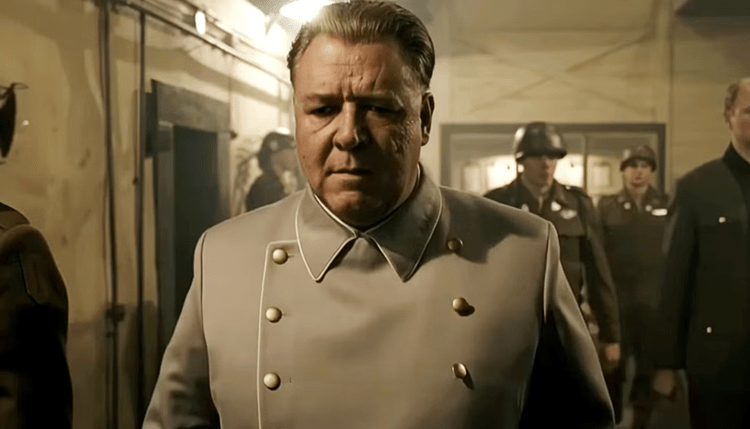
The highest ranking Nazi put on trial at Nuremberg was the Führer’s second in command, Hermann Göring. Highly intelligent, fiercely loyal, and grossly narcissistic, Göring expanded his role as the Supreme Commander of the German Air Force to become one of Hitler’s most trusted officers. His arrogance and cunning were on display at Nuremberg, with both working for him and then later against him.

Inspired by the 2013 nonfiction book “The Nazi and the Psychiatrist” by Jack El-Hai, Vanderbilt’s “Nuremberg” focuses more on the buildup to the first trial than the a trial itself. It’s an effective approach that gives us clearer insight into how the prosecution’s case was built. It also allows us into the head of Hermann Göring, as seen through the commanding performance of Russell Crowe, who deserves nothing less than an Oscar nomination for his astonishing portrayal.

Image Courtesy of Sony Pictures Classic

Set mostly in 1945 and 1946, “Nuremberg” begins in Austria with Hermann Göring surrendering to American troops. He’s taken to the Grand Hotel Mondorf in Luxembourg which has been turned into a secret prison to house Nazi war criminals. Meanwhile the Allies are struggling to find the best way to hold their prisoners accountable for their crimes. After much deliberation and internal wrangling, they decide on an international tribunal to take place at the reconstructed Palace of Justice in Nuremberg, Germany.

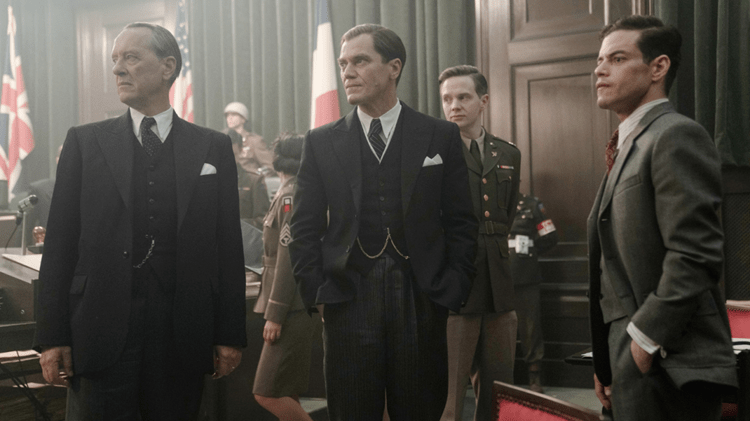
The steadfast yet slightly insecure Associate Justice Robert H. Jackson (Michael Shannon) is sent to Nuremberg to represent the United States on the prosecution team. He’s joined by the savvy and straightforward British prosecutor David Maxwell Fyfe (Richard E. Grant). As they are working through logistics problems, lack of precedent, and untested case law, U.S. Army psychiatrist Douglas Kelley (Rami Malek) is summoned for a specifically challenging task. He is to evaluate Göring and his fellow Nazi prisoners until they face justice in front of the entire world.

Much of the movie is centered on the numerous meetings between Kelley and Göring. Kelley’s plan is to earn Göring’s trust and to exploit his overconfidence. By doing so, not only would he be gaining insight for his superiors, but he could also collect data for a honey of a book deal once the trials are done. But what he doesn’t expect is for the calculating Göring to be playing his own game, turning on the charm and using Kelley’s empathy to his advantage. It’s a mesmerizing psychological chess match energized by two stellar performances. Crowe is especially good, luring us in just as he does Kelley.

Image Courtesy of Sony Pictures Classics

A strong and sturdy supporting cast reinforces the already powerful script. In addition to Shannon and Grant, Leo Woodall gets the film’s most memorable monologue playing Sgt. Howie Triest (Leo Woodall), a young American translator with a sobering connection to Germany. John Slattery is appropriately leathery as Colonel Burton C. Andrus, the commandant of the Nuremberg Prison. And Lotte Verbeek pulls some unexpected humanity from Göring’s wife Emmy.

The trial itself plays out in a stunning recreation of the palace courtroom. By putting the time and effort into building up to the moment, the trial sequence packs a surprising emotional punch. The anticipation in the opening shots, the discomfort that fills the room once Göring and his fellow Nazis are ushered in, the tension in every question and answer – it all keeps you glued to the screen. But the most sobering moments come with the inclusion of the film footage from inside the concentration camps. It’s the same footage shown during the real trial and it will leave you speechless.

“Nuremberg” ends with a powerful quote from R.G. Collingwood, “The only clue to what man can do is what man has done.” Those words echo well after the film’s final credits have ran. Yet even before that, Vanderbilt keeps that central thought in the forefront of our minds throughout his enthralling drama. Not only does “Nuremberg” offer a powerful historical account, but it has an incisive current-day relevance that makes it even more potent. Perhaps it could have gone deeper. But it’s perspective is crystal clear, and its conveyed with sincerity and urgency.

VERDICT – 4.5 STARS

First Glance: “Michael”

Music biopics have grown increasingly popular with studios. Just in the last few years we’ve seen onscreen biographies of such acts as Elvis Presley, Queen, Elton John, Whitney Houston, Bob Marley, Bob Dylan, and most recently Bruce Springsteen. Casting is already completed for The Beatles. But before their movie hits theaters, we’re getting “Michael”, a biopic based on the life of the King of Pop himself, Michael Jackson.

“Michael” is set to star Jaafar Jackson, son of Jermaine Jackson and nephew to Michael Jackson himself. The film is said to follow Michael’s journey from his introduction to stardom as a member of The Jackson 5 to his meteoric rise to global fame in the 1980s as a solo artist. The film also stars Miles Teller, Colman Domingo, and Nia Long, and is directed by Antoine Fuqua. Music biopics have varied wildly in quality and success. What should we expect from “Michael”? The new teaser gives us a taste.

“Michael” dances its way into theaters on April 24, 2026. Check out the trailer below and let me know if you’ll be seeing it or taking a pass.

REVIEW: “Predator: Badlands” (2025)

For us film critics, November and December are the busiest months on the calendar. It’s when studios and distributors send us their biggest movies of the year for awards consideration. So we go on a two-month cram session, watching every big or small awards contender before our voting deadlines. These are often more serious-minded movies. And after 15 or 20 in a row, you’re often looking for an escape. Enter “Predator: Badlands”.

Dan Trachtenberg continues to re-energize the Predator series with his third entry into the franchise. After two direct-to-Hulu hits (2022’s “Prey” and the animated “Predator: Killer of Killers” from earlier this year), Trachtenberg brings Predator back to the big screen with “Badlands”, and he doesn’t disappoint. His latest takes us to a new setting yet features the same feral action the movies are known for despite its surprising PG-13 rating.

Image Courtesy of 20th Century Studios

The setting isn’t the only thing fresh about “Badlands”. Thematically, Trachtenberg takes his film in a slightly new direction, tapping into such themes as family strife, forging your own path, and finding the will to trust others. But fear not, “Badlands” serves up a steady diet of gritty action that fans will expect. And Trachtenberg leaves the door wide open for more of the traditionally ruthless Predator stories. Simply put, the franchise is in great hands.

On the distant planet Yautja Prime, a young Predator named Dek (Dimitrius Schuster-Koloamatangi) is considered the runt of his Yautja Clan. His older brother Kwei (Mike Homik) tirelessly trains him, but Dek is never able to earn his chieftain father’s approval. Kwei tells Dek he can earn his place in the clan by traveling to the deadly planet Genna and hunting an unkillable beast known as the Kalisk. Dek eagerly accepts. But before he can depart, his father arrives and orders Kwei to kill his weaker brother. Kwei defies his father and is executed on the spot. But before he is, Kwei manages to seal Dek in their ship and launch him to Genna.

Genna is a planet of beauty and peril. It has lush forests and vast mountain ranges which Trachtenberg exquisitely captures. It’s also a planet where both flora and fauna can be a threat. The rage-fueled Dek immediately finds himself fighting for his life. But he gets help from the most unexpected source – Thia (Elle Fanning), a Weyland-Yutani synthetic who had her bottom half torn off during an encounter with the Kalisk. The comically cheerful Thia convinces the comically gruff Dek that she can be a useful “tool”. So he (literally) carries her with him on his hunt.

But creatures and plant life aren’t the only dangers on Genna. Thia’s synthetic sister, Tessa (also played by Fanning) leads an army of androids from Weyland-Yutani’s bioweapons division to capture the Kalisk for the company’s own nefarious purposes. This puts them at direct odds with Dek and Thia, setting up the film’s second-half conflict which is loaded with sci-fi action of all sorts. We get a little bit of everything from primal combat to giant creatures versus mechs. And of course there are the Predator favorites – shoulder-mounted cannons, triangulated laser sights, retractable blades, etc.

Image Courtesy of 20th Century Studios

“Badlands” takes the series in a unique direction by having a Yautja become a protagonist rather than the antagonist. It also injects a healthy dose of humor, much of which is implemented well. Most of it comes through Dek and Thia’s oddball partnership (you can’t help but laugh as he carries her around on his back as Luke Skywalker did Yoda on Dagobah). Less effective is an indigenous CGI creature dubbed Bud who is a bit too cutesy and who visually stands out against the otherwise extraordinary digital effects.

But again, the franchise faithful shouldn’t worry and no one should give air to the knee-jerk negativity on social media. “Badlands” offers a new kind of story within the Predator universe that adds more depth and dimension to its eponymous hunter than we’ve ever seen. Yet it doesn’t forsake the sheer ferocity and (in some cases) brutality that has been a signature of the series. “Badlands” doesn’t come close to reaching the heights of the 1987 original. But to Trachtenberg’s credit, he doesn’t try to. He simply shows there are a variety of stories to tell within this growing franchise. And I’m thrilled that he has the keys to it.

VERDICT – 4 STARS

REVIEW: “Die My Love” (2025)

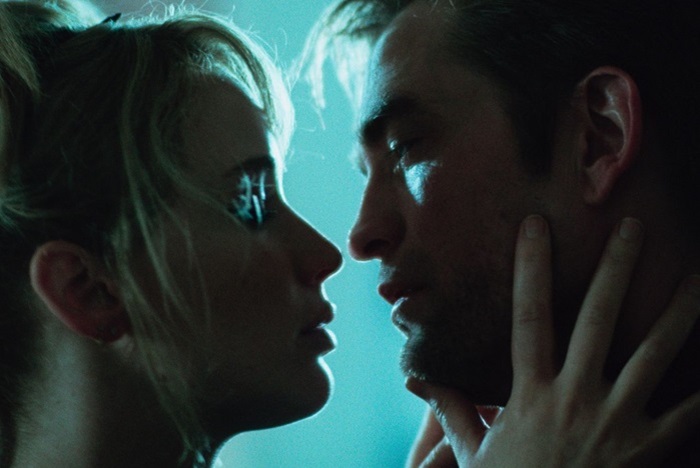
Jennifer Lawrence and Robert Pattinson are a couple trapped in a doomed relationship in director Lynne Ramsay’s grueling new feature, “Die My Love”. This is her first film since 2017’s much different but equally grim “You Were Never Really Here”. Though based on a 2012 Ariana Harwicz novel, Ramsay’s adaptation says nearly everything it has to say within the first half-hour. The remaining 90 minutes plays like misery porn as we watch a woefully unhappy woman barreling towards destruction.

“Die My Love” is written by the trio of Ramsay, Enda Walsh, and Alice Birch. Their story pitilessly blends motherhood and madness in a way that is surprisingly cold and unforgiving towards the lead characters, the lead cast, and the audience. It toys with such themes as postnatal depression and isolation. But Ramsay’s smothering approach spends more time breaking down and laying bare Lawrence’s character (as much physically as psychologically) than doing much meaningful with the themes that are introduced.

Image Courtesy of Mubi

The film opens by introducing us to an unstable young couple, Grace (Lawrence) and Jackson (Pattinson). The two have moved away from the hustle and bustle of the big city to an old house in rural Montana that Jackson inherited from his late uncle. The couple settles into their new home, and following a rather ludicrous sex montage, they have a baby boy. From there to the final frame, the movie follows the slow disintegration of their ill-fated relationship.

Both Grace and Jackson are dissolute and self-destructive, to such a degree that we know things aren’t going to end well. But while Jackson has his own set of issues, it’s Grace who finds herself in the center of Ramsay’s sights. She’s a stalled writer who loses all inspiration and motivation after becoming a stay-at-home mother. She gets little support from Jackson who is off working for days at a time. And when he is home, his insensitivity (which seems to spring from nowhere) only pushes her closer to the edge.

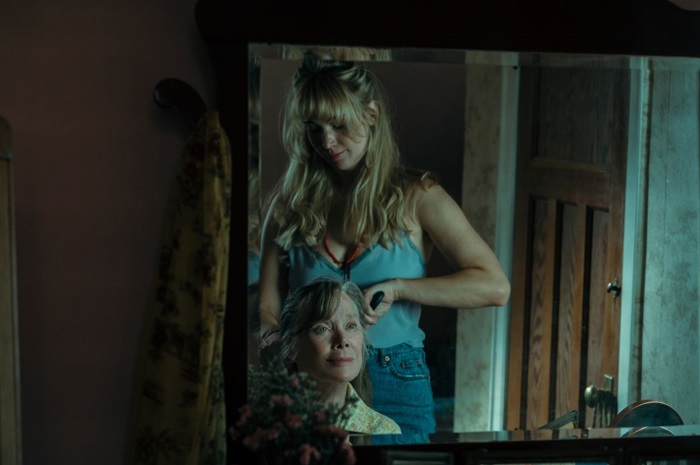
But none of this is especially surprising considering Grace and Jackson never really feel like a true-to-life couple. They never have real-world conversations and so many of their interactions appear staged for the camera. Brief supporting work from Sissy Spacek and Nick Nolte does more to ground Grace and Jackson than anything they do together. It’s a critical issue that leaves us with two shallow and intemperate hipsters rather than an organic couple with actual depth and complexities.

It ends up being all about Grace and her downward spiral. Her behavior gets increasingly bizarre, soon resembling full-on psychosis more than postpartum depression. Lawrence fully commits, crawling around on all fours, rabidly barking at Jackson’s annoying dog, furiously clawing away at wallpaper until her fingers bleed, throwing herself through a glass door, and randomly taking off her clothes whenever Ramsay asks. It’s the kind of performance awards voters often fall for, yet here it feels so hollow.

Image Courtesy of Mubi

Unlike Ramsay’s previous films, “Die My Love” is full of empty provocations that are more interested in shocking the audience than challenging us with substance. When not assaulting us with weird needle-drops and stylistic flourishes, Ramsay is sprinkling gasoline on the fire that is Grace’s sanity. And for what purpose? The movie has already played its hand by the 20-minute mark. Even later, when we’re led to believe Grace is “better”, we can easily see through her sudden turn towards domesticity.

“Die My Love” ends up being a maddening experience. It’s essentially the equivalent of lighting a fuse and waiting two hours for your main character to finally blow. It’s just pointless misery with rarely a reprieve. Ramsay is a talented filmmaker who is no stranger to working with dark and unsettling material. But with “Die My Love”, she seems too focused on her own abrasive formalism and with pushing her acclaimed lead actress to ridiculous lengths.

VERDICT – 2 STARS

REVIEW: “The Beldham” (2025)

In the opening moments of “The Beldham”, we read that the title refers to an old crone. More explicitly, a bird-like witch who feeds on the souls of infants. That description alone is enough to paint the film as a dark and unsettling chiller. But that turns out to be somewhat of a misdirection. It’s true that “The Beldham” has some classic horror ingredients. But in reality, writer and director Angela Gulner has a lot more on her mind which she conveys through this solid directorial debut.

The movie opens with an introduction to Harper (Katie Parker), a single mother to her infant daughter Christine (Lincoln Taylor). The story kicks off with the two arriving at the home of Harper’s mother, Sadie (Patricia Heaton). Sadie has recently retired and bought a suburban farmhouse to renovate. Harper has come to help, or so she thinks. We learn Harper has recently had an accident of some kind and her mother is intent on taking care of her and Christine.

Image Courtesy of Quiver Distribution

It doesn’t take long for us to notice a simmering tension between mother and daughter. It’s obvious in Sadie’s poorly veiled disapproval of her daughter’s parenting and in Harper’s resistance to any advice her mother tries to give. Gulner doesn’t immediately reveal the root of their friction. But as her haunting story unfolds we get snippets of information meant to be cataloged in our minds. Meanwhile other characters play into the mystery. Namely Frank (Corbin Bernsen), Sadie’s partner and general peacemaker, and Bette (Emma Fitzpatrick), a young nurse and housemaid who connects with Harper.

The vast majority of the story is told through Harper’s eyes – a choice of perspective that Gulner uses to introduce the horror aspect of her movie. Harper begins having creepy encounters that blur the lines between what’s real and what’s in her mind. The eerie caws of black crows, an old tattered journal filled with the unsettling testimonies of the home’s former owner, dark visions of a witch living within the walls. It all gets under your skin while slyly informing the big reveal to come.

Image Courtesy of Quiver Distribution

As for the film’s big reveal – it dramatically reshapes everything leading up to it. And it immediately transforms the movie from a psychological horror film to an unexpectedly poignant domestic drama. Getting to the big reveal can be challenging as a lot of the information doesn’t always make sense in the moment. But again, it’s best to take the information given and log it for later. And once we finally get clarity, the payoff is pretty satisfying.

“The Beldham” is the latest film to tackle the theme of motherhood from a uniquely specific perspective. The various phases of maternal drama add several interesting layers to the story while the turns towards genre creates a psychological tension that keeps us off-balance. Over time the movie can wear you down as you try to collect and connect its loose pieces. But it’s worth the effort thanks to an ending that packs an emotional jolt as it’s bringing everything into focus.

VERDICT – 3 STARS