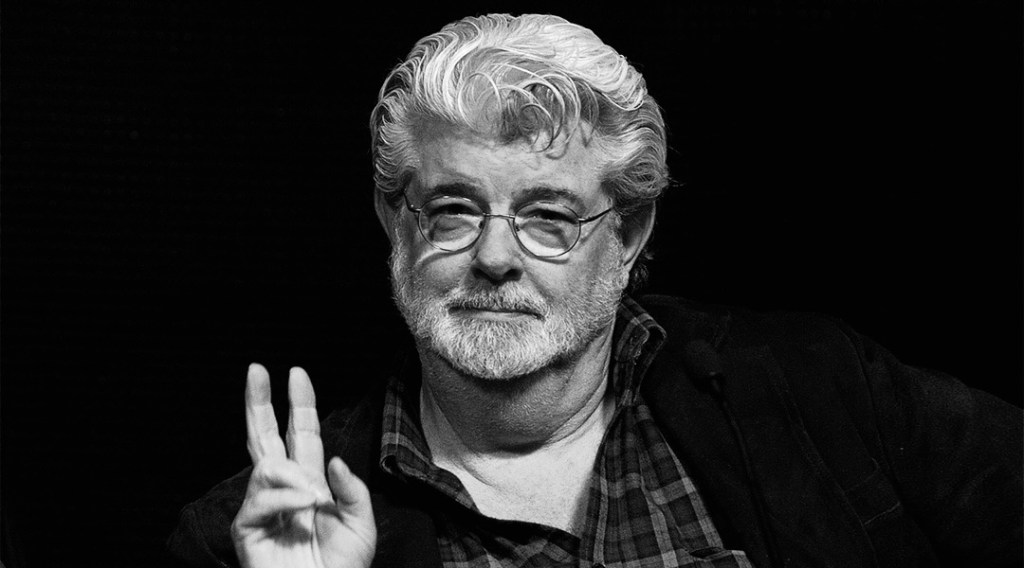
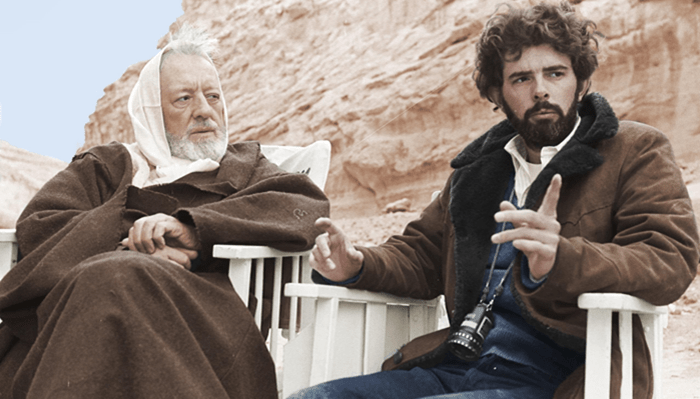
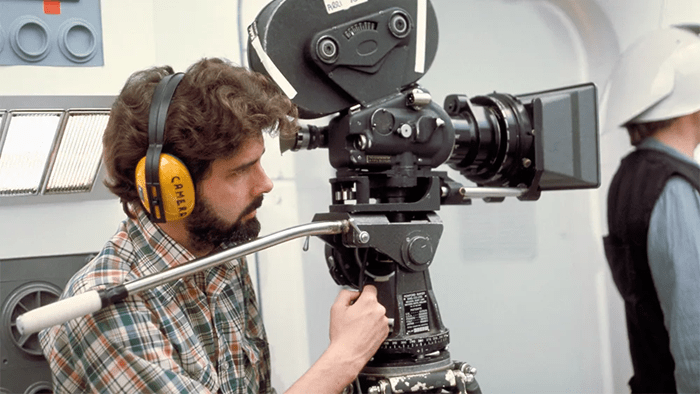
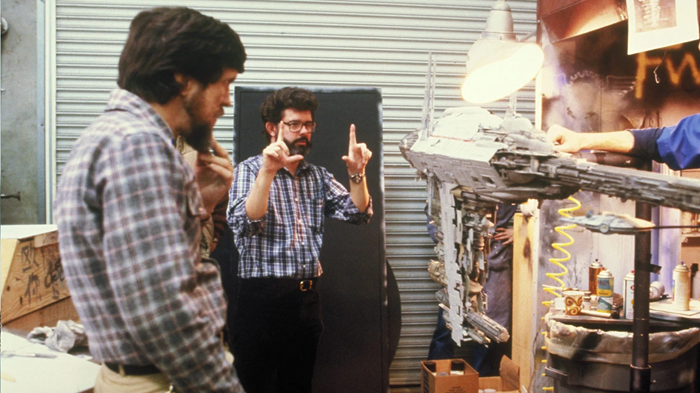
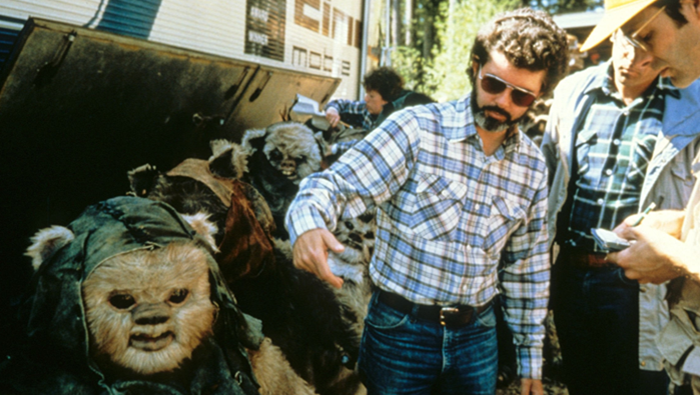
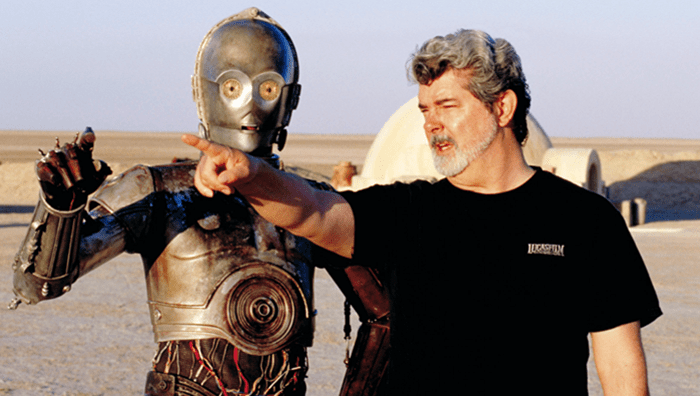
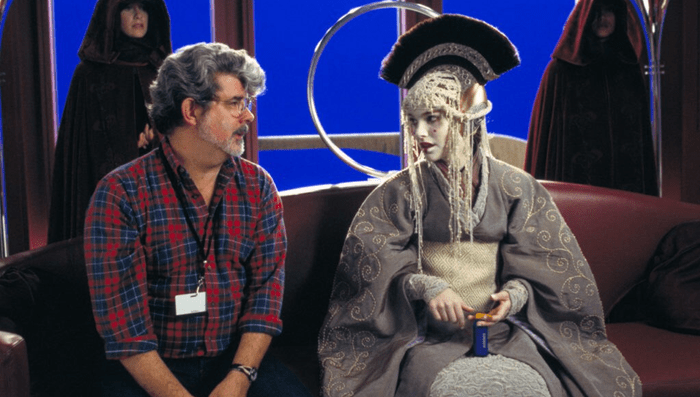
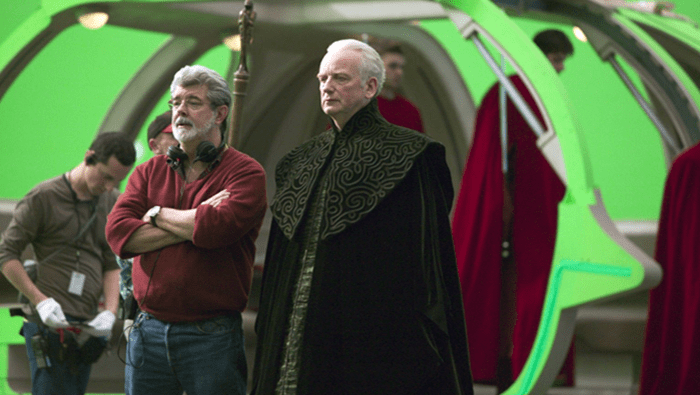
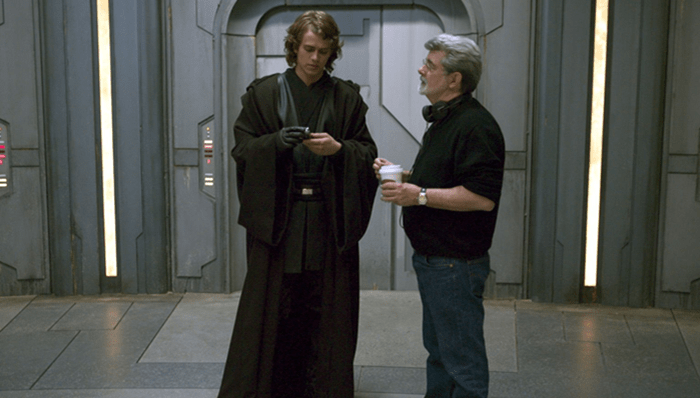
On this day in 1944 a young George Walton Lucas Jr. was born in Modesto, California. Like so many of us, he grew up loving comic books and science fiction, having a special affection for the Flash Gordon serials. And while he aspired to be a racecar driver, a near fatal accident changed his mind. Filmmaking became his passion, starting in Junior College and on through his time at the University of Southern California. And of course we all know how his career blossomed from there.
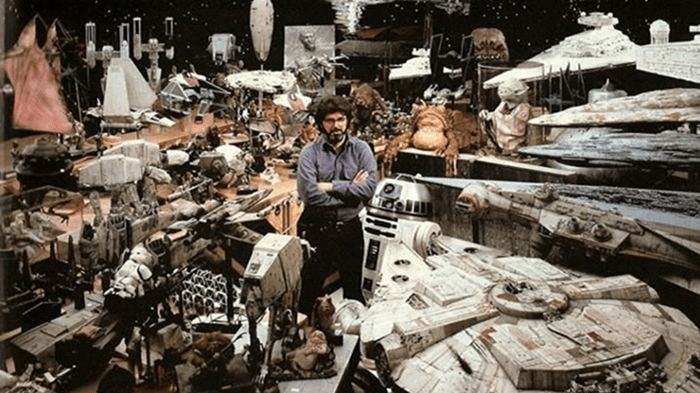
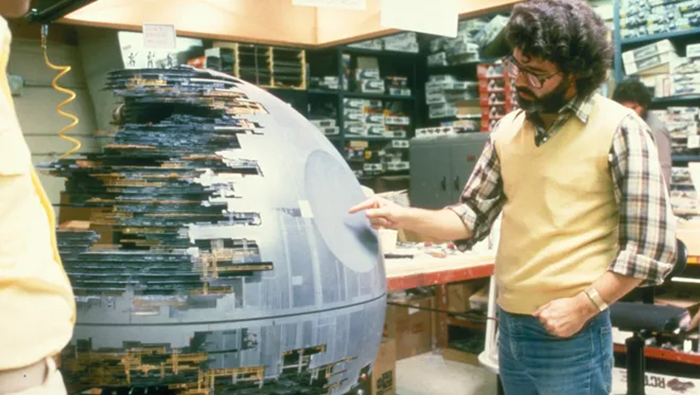
Lucas made his feature film debut in 1971 with his dystopian sci-fi thriller “THX 1138”. He followed it up in 1973 with the coming-of-age classic “American Graffiti”. But it was in 1977 that he took an ambitious swing that would change the cinematic landscape in ways he never expected. “Star Wars” took the world by storm and launched what is arguably the most beloved entertainment franchises of all time. He was also instrumental in creating the iconic Indiana Jones character and he founded LucasFilm, LucasArts, THX, and Industrial Light & Magic. But it’s Star Wars that he will forever be known for.
Frequent readers know how much I love Star Wars. As a kid, I watched the original trilogy on repeat. I played with the toys. I read the storybooks. I wore the pajamas. I carried the lunchbox. If it was Star Wars related, I probably had a part. Later, I would watch his prequel trilogy as many times as I could in the theaters; read the Star Wars comics till the covers came off; dove head-first into “The Clone Wars” animated series; and so on. And it hasn’t stopped. Whether it’s on the big screen, small screen, or page, I’m still invested in this sprawling world.
So needless to say, a huge part of my childhood was influenced by the creative force that is George Lucas. And even today, some of my favorite entertainment involves the franchise that he created nearly 50 years ago and that is now carried on by others. For that reason I had to write a small but heartfelt tribute on his 82nd birthday. George Lucas is a name that many of us have revered since taking our first trip to his galaxy far, far away. Happy Birthday Mr. Lucas.
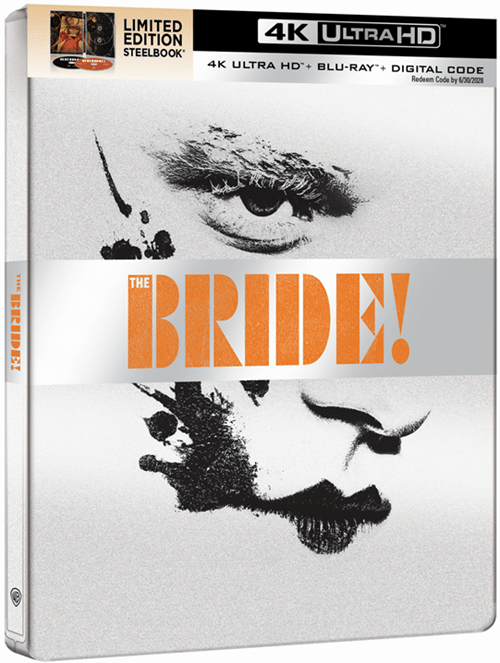
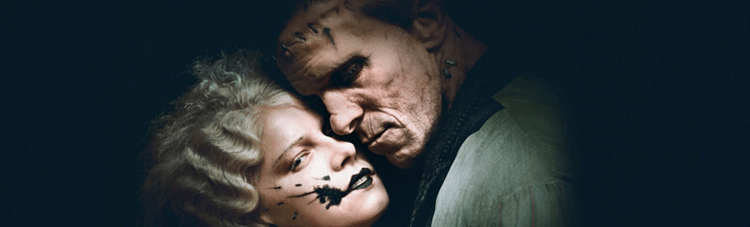
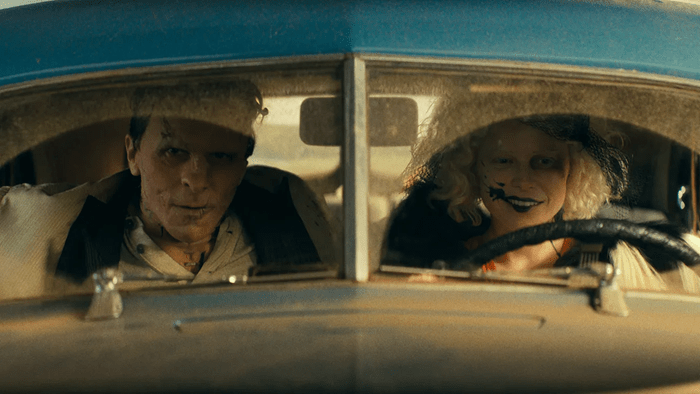
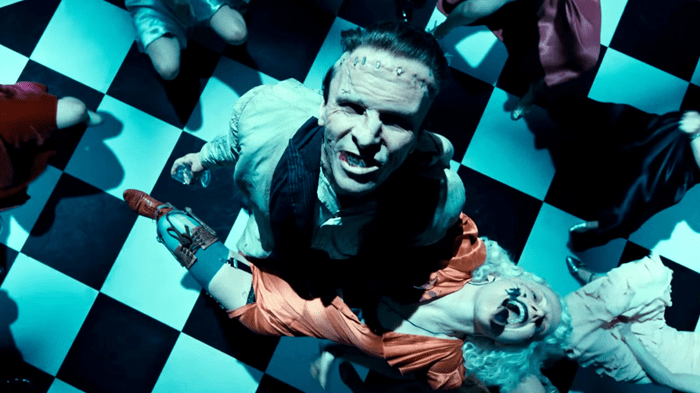
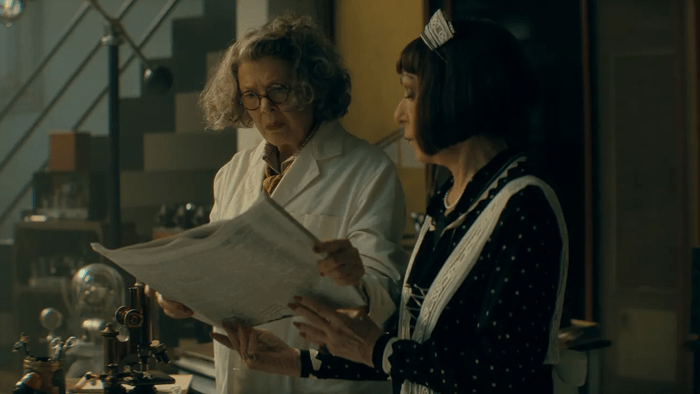
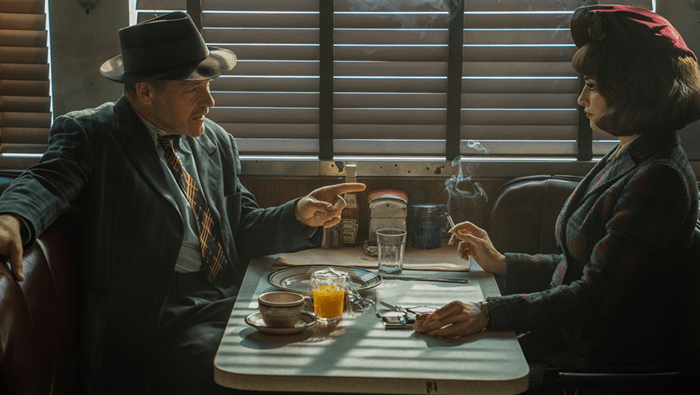
Warner Bros. Discovery Home Entertainment is bringing “The Bride!” to home video via a special 4K Ultra HD SteelBook edition and on Blu-ray and DVD. Written, directed, and produced by Maggie Gyllenhaal, “The Bride!” offered up a new spin on the 1935 horror classic “The Bride of Frankenstein”. Though the movie struggled at the box office, it features a top-notch cast and a very particular sense of style. Now it will be available to own physically and digitally.
“The Bride!” will be available to own on 4K Ultra HD, Blu-ray, and DVD on May 19th. See below for a full synopsis of the film as well as release information including a list of special features.
About the Film:
Year: 2026
Runtime: 126 Minutes
Director: Maggie Gyllenhaal
Screenwriter: Maggie Gyllenhaal
Cast: Jessie Buckley, Christian Bale, Peter Sarsgaard, Jake Gyllenhaal, Penélope Cruz, Annette Benning, John Magaro, Matthew Maher, Zlatko Burić, Jeannie Berlin, Julianne Hough, Louis Cancelmi
Rating: R for strong/bloody violent content, sexual content/nudity and language
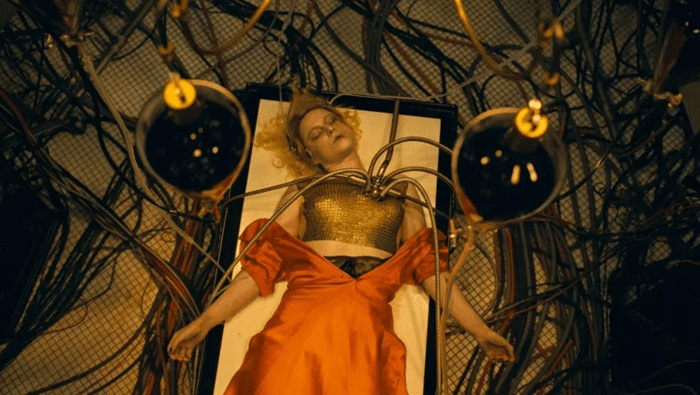
A lonely “Frank” (Bale) travels to 1930s Chicago to ask groundbreaking scientist Dr. Euphronious (five-time Oscar nominee Annette Bening) to create a companion for him. The two revive a murdered young woman and The Bride (Buckley) is born. What ensues is beyond what either of them imagined: Murder! Possession! A radical cultural movement! And outlaw lovers in a wild and combustible romance!
Special Features:
“The Bride!” Digital release and 4K Ultra HD and Blu-ray contain the following new special features:
Stitching Together The Bride! (8:15)Uncover the artistry behind The Bride! with exclusive footage and revealing interviews. From Maggie Gyllenhaal’s daring direction to the cast’s transformative performances, witness how this modern masterpiece was brought to life.
Designing the Look (8:44)From first sketch to final transformation, explore how The Bride!’s unforgettable creatures took shape. With exclusive make-up tests, behind-the-scenes footage, and cast insights, discover the artistry that turned vision into cinematic legend.
The Muse and the Reimagined Monster (8:02)In The Bride!, Jessie Buckley and Christian Bale embody the intertwined forces of creation and consequence. Guided by Maggie Gyllenhaal’s vision, their performances reveal how love, pain, and artistry can reanimate even the darkest myths.
The Bride! Party (6:15)A bride is always the center of attention—especially this one. Annette Bening, Penélope Cruz, Julianne Hough, John Magaro, and Peter Sarsgaard reveal their deepest thoughts on The Bride, Frank, and the unforgettable film they all leapt to be in.
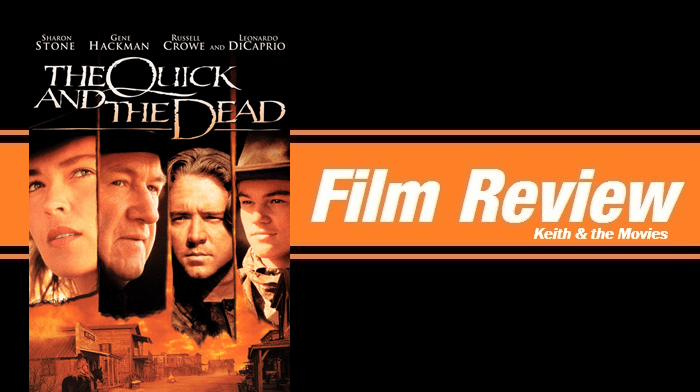
Sam Raimi takes on the Western genre. That’s all I needed to know in 1995 to get me to buy a ticket for “The Quick and the Dead”. I’ve been a fan of Raimi since he tilted the horror genre on its head with his enduring classic “Evil Dead”. And Westerns have been a part of my cinematic life since I was too young to appreciate them. But I watched them anyway because my father and grandfather always had them on the television. Over time I would grow to admire them myself.
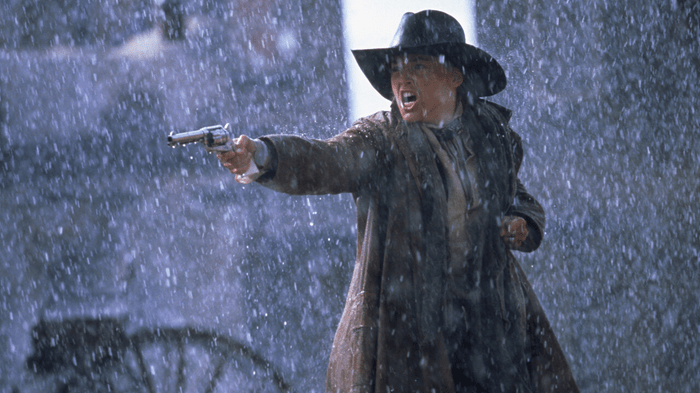
“The Quick and the Dead” features a superb cast beginning with its lead Sharon Stone. Fresh off the enormous success of “Basic Instinct”, Stone was brought on to star and co-produce. She ended up playing a big part in how the film turned out. She threatened to quit if the studio didn’t hire Sam Raimi to direct. She pushed hard for her co-star Russell Crowe, in a role that would put the Australian actor on the Hollywood map. And she even paid a young Leonardo DiCaprio’s salary after the studio hesitated to hire him.
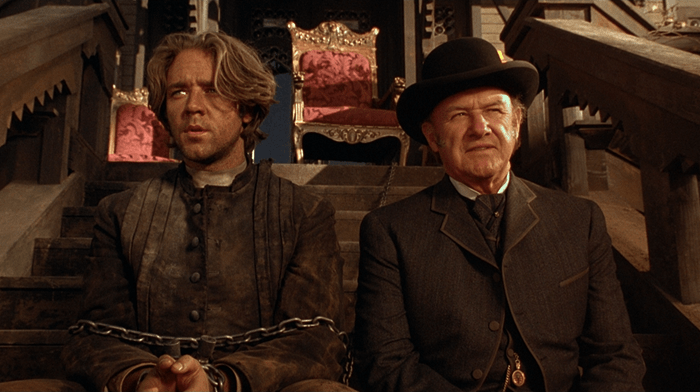
The icing on the cake was casting the effortlessly brilliant Gene Hackman as the film’s vile and utterly chilling villain. Hackman offers a masterclass in calm calculated menace, delivering a character who is as magnetic as he is ruthless. Surrounding the two former and two future A-listers was a terrific supporting cast that included Keith David, Tobin Bell, Lance Henriksen, Gary Sinise, Pat Hingle, Mark Boone, and more.
Image Courtesy of Sony Pictures Releasing
Raimi and screenwriter Simon Moore make their ambitions clear. “The Quick and the Dead” is an unashamed homage to the great spaghetti westerns of Sergio Leone and Sergio Corbucci. Their influence drips from every portion of the movie, from its story to its characters to its gritty violence to the very way it’s shot. But Raimi and Moore add their own spin by offering an interesting gender twist to the usual revenge-driven gunfighter story.
The story kicks off with a mysterious woman named Ellen (Stone) riding into the ironically named town of Redemption. We learn all we need to know about Redemption in the first few minutes. It’s a lawless town where miscreants are allowed to run wild and its busiest man is the coffin maker. And it’s all ran by the tyrannical self-appointed mayor John Herod (Hackman), who plucks half of every dollar made by the good folks who remain. And who punishes anyone who dares to question his iron fist rule.
Ellen keeps her reasons for coming to Redemption to herself. But over the course of the film, a series of flashbacks make it abundantly clear – it’s good old-fashioned revenge. And while no one recognizes her, she has a painful history with the town that she has come to reckon with. And it just so happens she arrives as Herod announces a single elimination quick-draw tournament. Ellen quickly signs up, claiming she’s only interested in the prize money.
Image Courtesy of Sony Pictures Releasing
An assortment of other gunslingers, wannabes, and unsavory types sign up as well. Among them is a young hothead calling himself “The Kid” (DiCaprio), a bragging blowhard named Ace (Henriksen), the cryptic Sgt. Clay Cantrell (David), and of course John Herod himself, who isn’t afraid to bend to rules and change them for his benefit. The wildcard is a man named Cort (Crowe), a former member of Herod’s gang who renounced violence and became a preacher. Seeing it as an act of betrayal, Herod has his henchmen shackle Cort and forces him into the tourney.
As Moore’s script thrives in its straightforward simplicity, Raimi’s dynamic visual style injects the story with so much energy and life. The film features some of the director’s most audacious swings to date. He and cinematographer Dante Spinotti empty their visual bag of tricks – extreme closeups, whip pans, dutch angles, split diopter shots, rapid zooms. Add in the grainy textures and sepia hue and you have the kind of kinetic filmmaking that hearkens back to classic movies while making its own creative statement.
“The Quick and the Dead” surprisingly bombed at the box office. But over time opinions have changed as it has been given the reassessment it deserves. It’s both an artfully nostalgic and a slyly subversive feature that was clearly ahead of its time. It’s true that the story could use more depth. But the aggressively daring style is exhilarating and the cast is top-to-bottom entertaining. Simply watching Hackman is pure joy and you can see the future Best Actor chops in Crowe. We even get the final film role from the great character actor Roberts Blossom. What’s not to love?
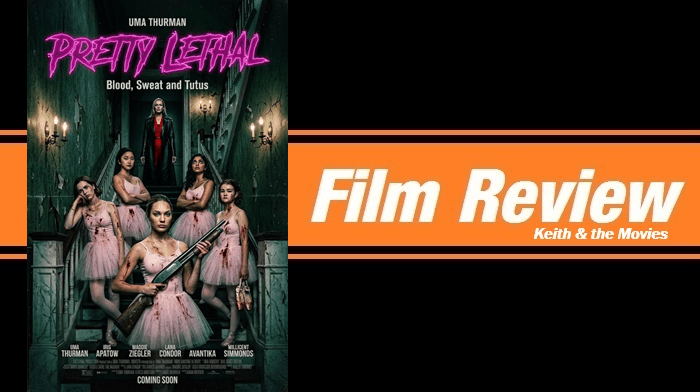
How’s this for a premise – five twenty-ish ballerinas turn their dance moves into a brutal fighting style as they combat violent gangsters intent on killing them. That’s what director Vicky Jewson serves up with the stylish and fun “Pretty Lethal”. Sound silly? Well it certainly is. But Jewson finds a nice balance by not taking things too seriously but yet never winking at the camera. The tone can be a bit erratic. But the film remains entertaining throughout.
Screenwriter Kate Freund tells a girl-power story that avoids many of the traps that movies of its kind often fall into. It does so because Freund and Jewson stick close to their wild genre-bending vision. The story itself is straightforward to a fault, barely putting any time into developing its world or exploring its characters beyond the archetypes they are. But the genre elements surprisingly click, and the impressive cast fully commits to the blood-soaked chaos that unfolds in the film’s brisk 88 minutes.
Image Courtesy of Amazon MGM Studios
“Pretty Lethal” follows a talented yet dysfunctional ballet troupe from Los Angeles who are invited to compete at the prestigious and potentially life-changing Budapest Showcase. Held together by their supportive teacher, Thorna (Lydia Leonard), the five young ladies are prima ballerinas whenever they’re able to put aside their petty differences and work as a troupe. But that’s easier said than done.
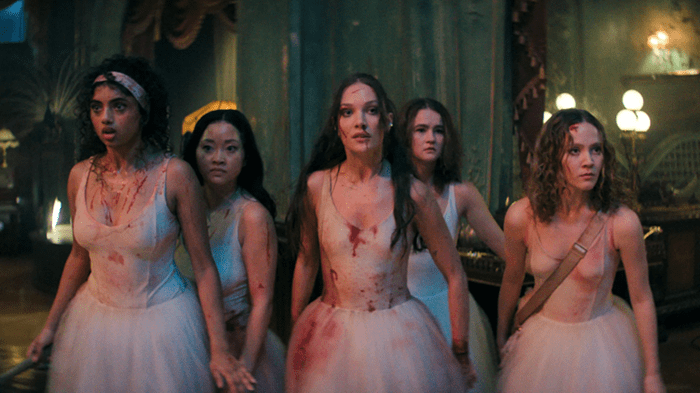
The tough outsider Bones (Maddie Ziegler), the pampered rich girl Princess (Lana Condor), the openly religious Grace (Avantika Vandanapu), the sensitive Zoe (Iris Apatow), and her hearing-impaired sister Chloe (Millicent Simmonds) arrive in Hungary with Thorna. But their trip hits a snag after a mixup at the airport forces them to take a clunker of a bus which promptly breaks down on a remote country road.
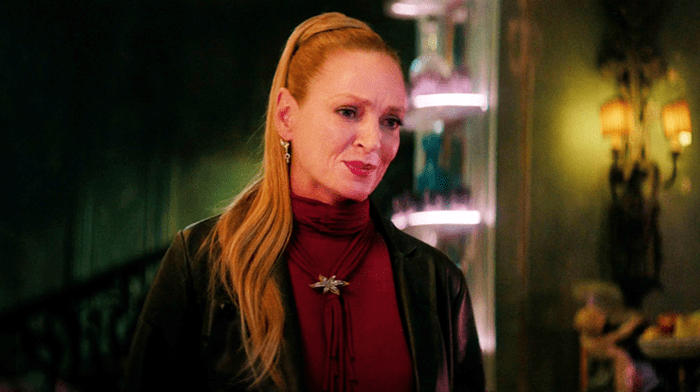
Realizing they will lose their spot to alternates if they don’t make it to the theater in time, Thorna and her dancers grab their things and set out walking. They eventually arrive at the out-of-the-way Teremok Inn which is ran by its mysterious owner, Devora Kasimer (Uma Thurman). The group gathers in the inn’s restaurant and bar where they make an alarming discovery – in reality, the Teremok is a safe haven for mobsters.
But before they can leave the group has a violent encounter with Pasha (Tamás Szabó Sipos), the psychotic son of a powerful crime boss. Things spiral from there as the five ballerinas are locked inside with a mass of gangsters ordered to kill them before they can escape. Of course our tutu-sporting protagonists learn the hard way that the only way to survive is to work together. So they unleash their own special brand of “ballet-fu”, ferociously using everything from their flexibility to their choreography with delightfully bloody results.
Image Courtesy of Amazon MGM Studios
Jewson doesn’t hold back on the violence or the absurdity. It’s hard not to let out a gasp at the brutality of some of the action. At the same time, it’s hard not to laugh at the lethal pirouettes, as ballerina’s armed with razor blades in the toes of their pointe shoes cut through waves of angry wise guys. Meanwhile Thurman chews the scenery in the best of ways, laying on the sinister villainy that’s both menacing and hilarious. Yet she brings an unexpected empathy that adds more layers to her character than first expected.
“Pretty Lethal” is another genre cocktail that has enough self-awareness to keep our expectations in check. We know what it is going in, and Jewson delivers exactly what she promises. I do wish the characters were given more depth, and it would be nice if the world was better defined. But it’s hard not to enjoy the all-in performances, the amusing interplay, the terrific production design, and the stylishly original action that is equal parts visceral and comical.
During the later days of the video game arcade era, two wildly popular fighting games found themselves competing against each other for the quarters of players everywhere. Those games were “Street Fighter II” and the considerably more brutal “Mortal Kombat”. Both had legions of passionate fans who would gather around the cabinets and pump in coins for hours. Both ended up leaving a surprising footprint on pop culture, even getting their own mid-1990s movie adaptations.
While a “Street Fighter” reboot hits theaters later this year, “Mortal Kombat” got its own back in 2021. Unfortunately, with the exception of its terrific opening sequence, the movie was serviceable for fans but ultimately a letdown. Director Simon McQuoid went all-in for the R-rating, gifting fans of the video games with all the blood-drenched throwdowns and gory fatalities they could want. But the film didn’t tell a compelling story. Instead, it just expected you to know enough. And if you didn’t, too bad.
Image Courtesy of New Line Cinema
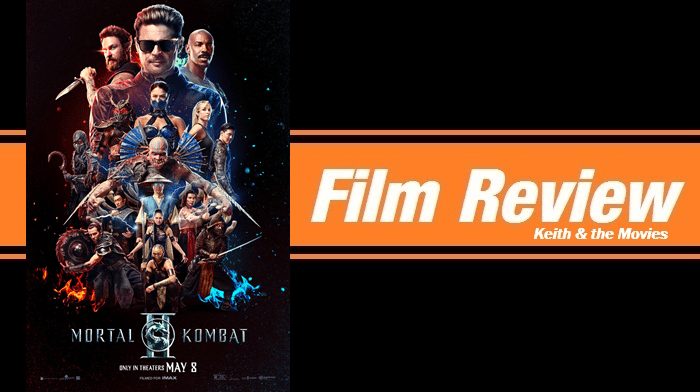
McQuoid returns to direct “Mortal Kombat II”, this time working with a different screenwriter, Jeremy Slater. Their film does a lot of the same things. For starters, they once again expect you to know the basics. But if you don’t, they throw in brief yet jarringly on-point exposition drops that only serve that one purpose. They surround these scenes with some incredibly silly and stilted dialogue that aren’t always meant to earn the laughs they get. But to be honest, I’m not sure how many people go to a Mortal Kombat movie for the storytelling.
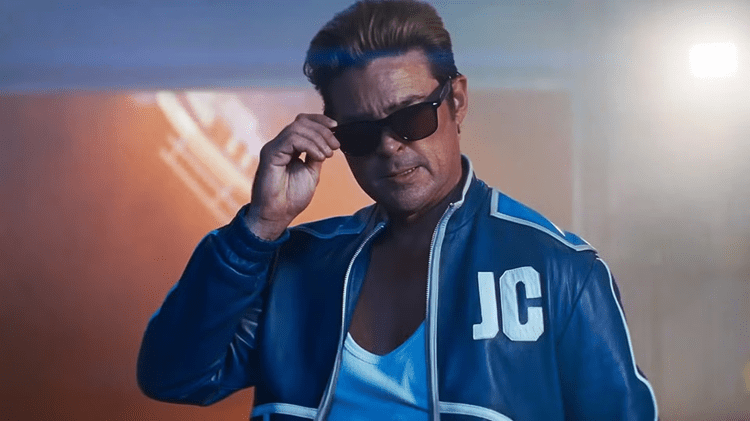
On the positive side, instead of building the story around an unknown and mostly uninteresting new character like the first film, the sequel leans on franchise favorite Johnny Cage as a co-lead. He’s played by Karl Urban, whose seismic smirk, comical snark, and overall bad attitude puts an interesting spin on the character. Gone is the Cage’s signature narcissism. Instead, here he is a washed-up action star who makes his living signing autographs and selling DVD copies of his old movies at small conventions.
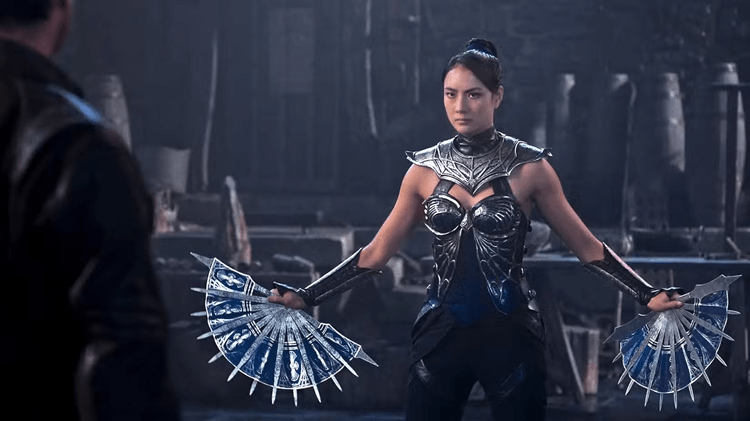
A second story thread follows Princess Kitana (Adeline Rudolph). As a child, she witnessed her father’s death at the hands of the power-mad emperor Shao Kahn (a fittingly ominous Martyn Ford). The two faced off in Mortal Kombat with the fate of their realm on the line. Shao Kahn’s brutal victory gave him control of the realm, and he took Kitana to be his daughter. But as the years go by, Kitana trains and prepares for a moment where she might have her revenge on the oppressive emperor.
The two stories merge after Shao Kahn seeks to take control of Earthrealm. And he does so in the only way one settles such a conflict – through a tournament featuring one-on-one combat to the death. Kitana is chosen to be one of Shao Kahn’s five warriors. But Earthrealm has a problem – they are one fighter short. So Lord Raiden (Tadanobu Asano), the protector of Earthrealm who selects and mentors the warriors who defend it, recruits a down-on-his-luck Johnny Cage to fight for Earth’s survival.
Image Courtesy of New Line Cinema
That is the story in a nutshell. There are some vague attempts at dramatic depth in Johnny’s road to redemption and Kitana’s attempt to unseat Shao Kahn and free her people. Both are welcomed, but neither move the needle much. That’s because the movie is much more interested in speeding through to the next fight while dropping in characters from the game for fans to check off. That’s almost enough to keep the movie afloat. The problem is the fights grow more repetitious instead of more exciting.
To its credit, “Mortal Kombat II” delivers some enjoyably gruesome fatalities, especially early on. And Karl Urban does a good job generating some legitimate laughs. But nearly everyone else are trapped in character skins so scantly defined that they barely register. So we’re left with a thinly sketched and overly crass feature that puts more energy into magical portals, ancient amulets, and stolen god powers than characters we want to root for or against. And once the fights start blurring together, there’s not much left for us to cling to.
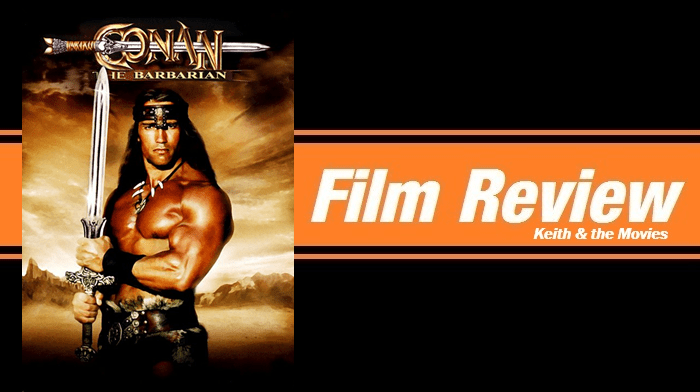
While Conan was born in 1932 on the pulpy pages of “Weird Tales” magazine, for many of us it was the 1982 film “Conan the Barbarian” that gave us our proper introduction to the character. Directed by John Milius, this sword-and-sorcery epic was a commercial success and over time it gained a sizable cult following. Perhaps most notable, “Conan the Barbarian” put its star, a young Arnold Schwarzenegger, on the cinematic map.
Bringing Robert E. Howard’s creation to the big screen had been attempted for years, but licensing and funding issues repeatedly got in the way. But it wasn’t until Dino De Laurentiis came onboard that the movie received its proper green light. Milius was to direct and co-write the script along with Oliver Stone. Filming began in October, 1980 with the majority of the production shot in Spain. And Spain provides some truly epic landscapes which helps give the film its grand and epic scale.
In a harrowing prelude, we watch as a young Conan (Jorge Sanz) witnesses his Cimmerian village being ravaged and his people being slaughtered by a violent band of marauders led by a ruthless sorcerer and cult leader named Thulsa Doom (James Earl Doom). Among the massacred dead are Conan’s father and his mother, who was beheaded as she held her son’s hand. Conan and the other children are then taken south and sold into labor.
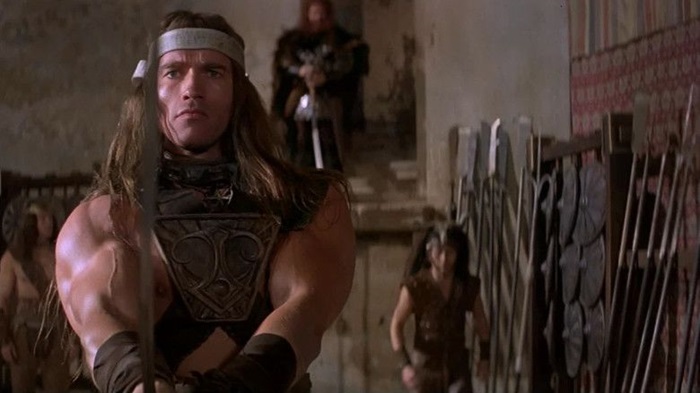
Years pass for the enslaved Conan, who is forced to work in a grueling mill until adulthood. Now played by Schwarzenegger, the rugged and muscled Conan is forced into brutal pit fighting where he battles to the death for the pleasures of bloodthirsty crowds. He eventually earns his freedom. But with no place to call home, he roams the land, having a number of fantastical encounters (and a few hedonistic ones) along the way.
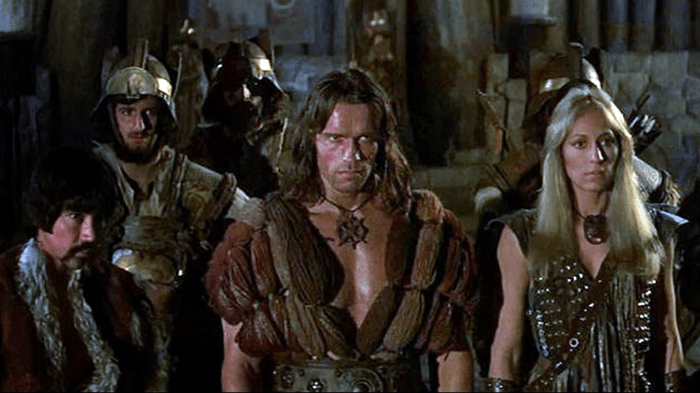
But Conan’s course changes after he meets and teams up with a fierce warrior and bandit, Valeria (Sandahl Bergman) and a skilled thief named Subotai (Gerry Lopez). The trio loot, waste their riches, and then steal some more until they are captured and brought before King Osric the Usurper (played by the late, great Max von Sydow). But rather than imprison them, the king hires them to retrieve his daughter Yasimina (Valérie Quennessen) who has been lured away by none other than Thulsa Doom.
Seeing his chance for revenge, Conan readily accepts, setting the stakes for the rest of the story which plays out similarly to so many other sword-and-sorcery adventures. But to its credit, “Conan the Barbarian” has long stood out as one of the blueprints for a movie genre that thrived for over a decade before dying off amid the waves of new genre trends. And for many of us, there is an appreciation for it (and other films like it) that goes beyond mere nostalgia.
Perhaps you could pick apart some of the performances. Maybe certain elements haven’t aged as well as others. It’s possible that the film’s serious tone is too much for more modern expectations. Regardless, “Conan the Barbarian” remains a pillar among the 1980s fantasy adventure films while setting Arnold Schwarzenegger on a path to motion picture stardom. It’s true that it’s a movie of its time. But that does nothing to take away its impact or appeal.