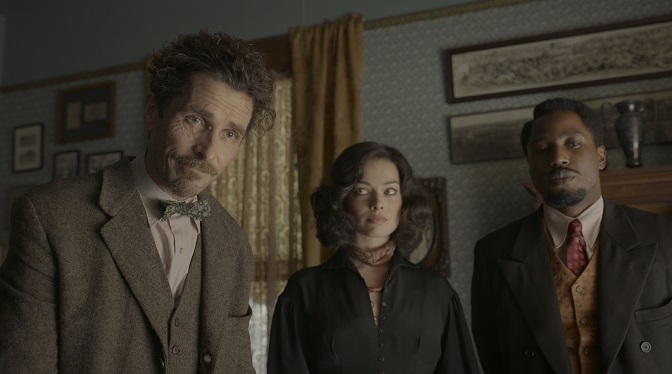
Filmmaker David O. Russell’s long-awaited new film “Amsterdam” has dropped its first trailer and it’s something to see. The period dark comedy is Russell’s first film since 2015’s “Joy” and there’s no denying its impressive star power. It features Christian Bale, Margot Robbie, John David Washington, Rami Malek, Zoe Saldana, Robert De Niro, Michael Shannon, Chris Rock, Mike Myers, Anya Taylor-Joy, Timothy Olyphant, Andrea Riseborough, Taylor Swift, and Matthias Schoenaerts among others. That’s a lot of talent.
The film follows three close friends – a doctor, a nurse, and an attorney (Bale, Robbie, and Washington) who find themselves prime suspects in a murder and drawn into one of the “most shocking secret plots in American history.” This thing looks kinda bonkers and I say that as a compliment. With the tag “a lot of this actually happened,” it looks to combine a bit of history with a bit of wacky humor. I’ve always been a bit mixed when it comes to Russell’s filmography, but this one looks to be a lot of fun.
“Amsterdam” opens this November. Check out the trailer below and let me know if you’ll be seeing it or taking a pass.
Viola Davis stars in the upcoming historical epic “The Woman King”. It’s a movie focused on the Dahomey Amazons, a name given to the brave and tenacious all-female military regiment who defended the West African kingdom of Dahomey during the 18th and 19th centuries. It’s directed by Gina Prince-Bythewood whose last movie was the not-so-good “The Old Guard” for Netflix. This one looks more promising with Lashana Lynch, Thuso Mbedu and John Boyega co-starring.
In the film’s first trailer we see Davis playing General Nanisca, the ruthless leader of the Agoji warrior women. The film follows their intense training and eventually their fight to protect their kingdom from the influx of white settlers. Judging by this first look, the movie looks to be epic in scale with incredibly detailed costume design by Gersha Phillips and some intense action-fueled set pieces. How in-depth will the story be? That’s the question. But everything else looks impressive.
“The Woman King” hits theaters September 6th. Check out the trailer below and let me know if you’ll be seeing it or taking a pass.
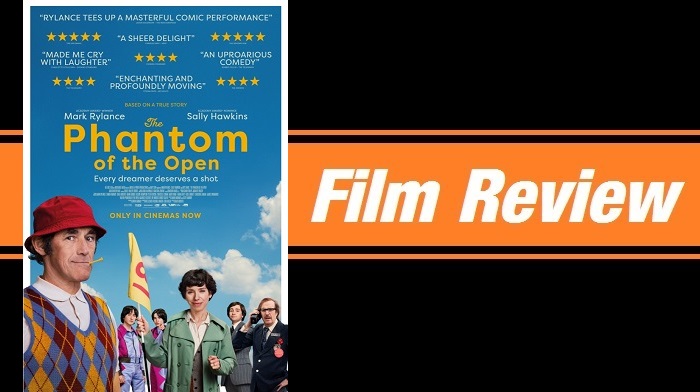
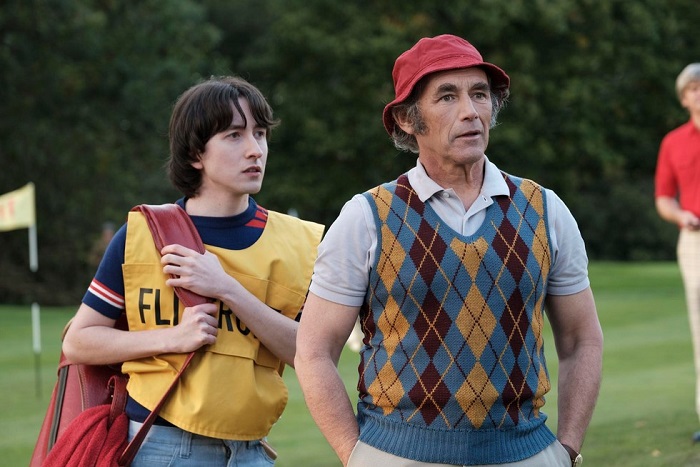
Mark Rylance finds another custom-fit role in “The Phantom of the Open”, a biographical dramedy that you can file in the “so crazy that it must be true” category. Directed by Craig Roberts, this delightful stranger-than-fiction tale takes the true story of golf enthusiast/hoaxer Maurice Flitcroft and gives it its own hearty fictional spin. What we get is a warm and effortlessly witty crowd-pleaser anchored by yet another great performance from the always satisfying Mark Rylance.
If you’re like me, the name Maurice Flitcroft may not immediately ring a bell. But his story is one to remember. Flitcroft was a crane operator at a shipyard in the English port town of Barrow-in-Furness. But he’s most known for his successful attempts at gate-crashing The British Open golf tournament, the oldest and arguably most prestigious golf tournament in the world. His claim to “fame” came in 1976 when posing as a professional he secured a spot in the qualifying round of The Open Championship. Flitcroft’s lack of skill became shockingly evident after he shot an abysmal 49 over par, the worst score in tournament history.
The Open’s rules were promptly changed to keep Flitcroft from entering again, but that didn’t stop him. The next several years saw him continuing his attempts to enter, often under ridiculous aliases such as Gene Paychecki and Arnold Palmtree. He would even use physical disguises to hide his appearance from the tournament officials. Flitcroft earned himself a following of fans who saw him as the antithesis to the game’s more upper-crust reputation.
Roberts smartly latches onto the ever amiable Rylance who fits so snugly into the skin of Maurice Flitcroft (or at least the movie’s version of him). The story is penned by Simon Farnaby and based on a 2010 biography he wrote with Scott Murray. Farnaby is also the co-writer of 2017’s infectiously charming “Paddington 2”. And you can tell. There are some amusing similarities between Maurice and the anthropomorphic bear in the blue raincoat. Both bumble through their circumstances with a big-hearted naïveté, all while showing what a little kindness can do in the world.
The movie takes its share of liberties, downplaying the more mischievous side of Flitcroft’s personality and settling on his earnest dream of winning the British Open. Roberts and Farnaby have a lot of fun exaggerating the inherent zaniness of Flitcroft’s underdog story while also building up a playful family dynamic. Ultimately, its the film’s mix of heart and humor that makes it irresistible. And there’s such earnestness in Rylance’s performance that you can’t help but root for him, even in the final act where the schmaltz really kicks in.
The mustachioed Rylance endows Maurice with a lovable awkwardness both in manner and appearance. He’s humble and kind – traits that really come through in his relationship with his family. He married his wife, Jean (the always great Sally Hawkins) while she was a struggling single mother and adopted her bright young son Michael as his own. He and Jean later had twin boys together. Maurice would set aside his own big dreams in order to care for and support his family.
But everything changed during the summer of 1975 after Maurice has a late night epiphany. After watching Tom Watson win the Claret Jug, he decides to take up golf with plans of winning the Open Championship and its $10,000 top prize. And when I say epiphany, I mean we get a literal dreamlike sequence full of wacky imagery including Maurice being hit through the air like a golf ball and him ascending a staircase to the heavens made of green Bermuda.
Maurice buys himself a cheap set of clubs and a rule book and sets out to realize his newfound dream. And through a series of comical misunderstandings and a little willful ignorance, he finds himself in the qualifying round of the British Open. But his shockingly bad 63 on the opening nine holes sends the tournament heads (led by a hysterically conceited Rhys Ifans) into a tizzy while the media brands him as everything from “the people’s golfer” to “the great pretender”.
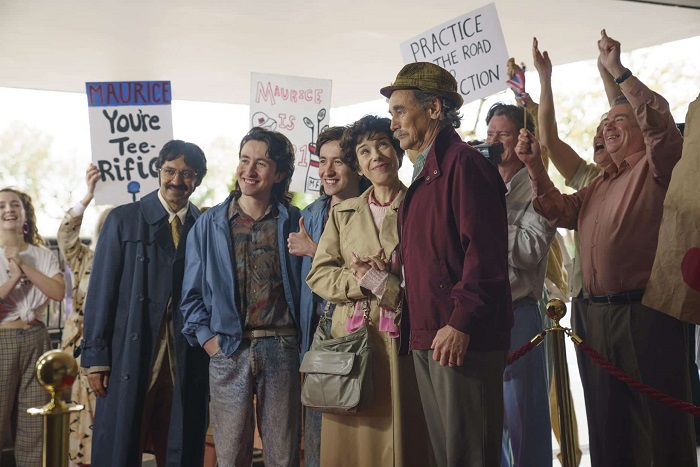
Back home, Maurice’s “fame” inspires his disco-loving twins, Gene and James (Jonah and Christian Lees) to pursue their dreams of becoming professional dancers. But the ambitious Michael (Jake Davies) is more interested in climbing the corporate ladder and is embarrassed by his father’s sudden notoriety. It creates a pretty obvious tension that goes in an obvious direction before reaching its obvious finish. But by the time we reach its syrupy ending, the film has earned so much goodwill that it’s hard not to be moved by it.
I wasn’t quite sure what to expect from “The Phantom of the Open”. It turns out to be a feel-good movie with a light and easy sense of humor. And while the biographical elements are present, there’s also a stretch where the movie takes the story’s goofiness and runs with it, delivering some pretty good laughs. And how can you not love Mark Rylance who always manages to find roles tailor-made for his strengths. He’s such a treat here and you can’t help but to fall under his spell, regardless of how silly or sappy things may get. “The Phantom of the Open” is out now in select theaters.
Chris Hemsworth sheds his golden God of Thunder locks and takes on the role of a mad scientist (of sorts) in the new Netflix thriller “Spiderhead”. The film re-teams actor Miles Teller and director Joseph Kosinski who are both fresh off of the biggest box office hit of the year so far, “Top Gun: Maverick”. Based on the George Saunders short story “Escape From Spiderhead”, the film adaptation opens up with a thought-provoking setup. Sadly, it’s mostly undone by a movie that ultimately has nothing to say.
Again, things start promising. Hemsworth plays Steve Abnesti, a dapper and charismatic scientist/prison warden for the state-of-the-art Spiderhead penitentiary. But this is no ordinary prison. The remote complex is also a research facility where clinical trials take place on prisoners who have volunteered to be human lab rats. In exchange, they get lesser sentences along with a semblance of freedom they wouldn’t normally get. They have their own rooms, they can move about without strict supervision, and they get finely cooked meals.
Image Courtesy of Netflix
The first head-scratcher for me was the absence of prison guards. I mean there are literally no guards with the exceptions of two guys in pull-over polo shirts who pop up from time to time. Otherwise, it’s just Steve and his apprehensive assistant, Mark (Mark Paguio). The movie takes a weak swing at offering a possible explanation later on, but it’s hard to buy. These are essentially prisoners of the state and their crimes range from drunk driving to mass murder. Yet they roam around freely together without any concerns from the courts, law enforcement, or the government.
Inside the penitentiary, each prisoner is fitted with a white plastic dispenser on the small of their backs that looks like a cheap baby monitor. Inside of the contraption are five small vials of mood-altering chemicals with goofy names like “Darkenfloxx” and “Laffodil”. The dispensers are controlled by a cellphone app that Steve and Mark use during testing. They monitor their subjects and then record the results for some mysterious “protocol committee”. Unsure of the kind of work they’re doing? Don’t worry, the film is content with the tried-and-true line “The work we do could help millions of people.”
One such prisoner is Jeff (Miles Teller) who is in for accidentally killing his best friend while driving drunk. He’s haunted by the memories of that fatal mistake which makes him one of Steve’s favorite test subjects. When not being served sensory overloading “love drugs”, he hangs out with his love(ish) interest, Lizzy (Jurnee Smollett). Their lukewarm romance is supposed to add a little emotion. Instead, it never gets out of first gear.
Image Courtesy of Netflix
Despite having a thought-provoking setup, “Spiderhead” is ultimately undone by a number of flaws that no amount of Hemsworth charisma can overcome. For example, the paper-thin story leaves so much unexplained. I can’t get into the details without spoiling things, but let’s just say the ending does more to emphasis the story’s shallowness than offer any meaningful answers. It also reinforces the premise’s utter absurdity. The movie is also surprisingly empty in terms commentary. It wants to say something yet has remarkably little to say about much of anything.
I did get a kick out of some things (take the hilariously on-the-nose needle drops such as Thomas Dolby’s “She Blinded Me with Science”). But the disappointingly bland and hollow “Spiderhead” needs a lot more than that to get by. Maybe if you can completely turn off your brain, ask no logical questions whatsoever, and simply accept whatever you see at face-value, “Spiderhead” could work for you. For me, that proved to be too much to ask. “Spiderhead” is now streaming on Netflix.
The new trailer for “Barbarian” is full of moments that’ll have you constantly thinking “That’s a bad idea!”. Characters do some things that are absolute no-no’s in the horror genre. Yet the trailer still leaves a lot under wraps. Rather than tipping his hand, writer-director Zach Cregger keeps us wondering by teasing us rather than showing too much. I have no idea how the movie will turn out, but I do appreciate that aspect of the trailer.
The story goes like this: Georgina Campbell plays Tess who arrives in Detroit for a job interview. She gets to her Airbnb only to find it occupied by Keith (Bill Skarsgård). He’s as shocked as she is and immediately tries contacting the house’s owners. Unable to reach them, Keith invites Tess to stay the night until they can get things worked out. She agrees. Bad idea. Soon she learns the house is full of terrifying secrets and she’s caught like a rat in a deadly maze. I like the look of this. Does it have anything fresh and original to offer? That’ll be the big question.
“Barbarian” opens in theaters August 31st. Check out the trailer below and let me know if you’ll be seeing it or taking a pass.
“Mr. Malcolm’s List” is sure to be comfort food for fans of light and breezy period rom-coms. It also provides a happy escape for moviegoers who might be seeking refuge from the wave of tent-pole summer blockbusters that are currently in full force. And while a Jane Austen-ish feature film won’t be everyone’s cup of tea (normally myself included), I was surprised by just how much I enjoyed this quaint and witty regency-era romance.
Directed by first-time feature filmmaker Emma Holly Jones, “Mr. Malcolm’s List” boasts a fresh multiracial cast yet still tells a story that very much feels a part of its British romantic comedy sub-genre. Comparisons to the popular Netflix series “Bridgerton” seem inevitable. But far more visible is the loose inspiration of Austen’s “Pride and Prejudice”. Either way, Jones adds enough of her own special sauce to give her film its own flavor, despite some fairly obvious final act predictability.
The story is written by Suzanne Allain and based on her own 2009 self-published novel of the same name. It’s set in the prim and proper 19th century London where the marriage game is as competitive as any sport we obsess over today. The dashing Mr. Jeremiah Malcolm (Ṣọpẹ Dìrísù) is a most eligible bachelor who’s considered the biggest catch of the 1818 “season”. Despite lacking a proper title of his own, his maternal aunt left him a sizable fortune and a large country estate. That was more than enough to catch the attention of every young aristocratic maiden in the region.
Image Courtesy of Bleeker Street
One such bride-in-waiting is the wealthy and entitled Julia Thistlewaite (a pitch-perfect Zawe Ashton). She’s a bit of a snoot and sees Mr. Malcolm as a means of cementing her position in society’s upper-crust. But Jeremiah isn’t a shallow man. He’s looking for a bride with qualities beyond high standing and a flirty smile (gold-diggers and social climbers need not apply). Rather, Jeremiah is the kind and gentlemanly sort who has a literal list of qualifications for the woman he hopes to spend the rest of his life with.
So it’s no surprise that the haughty Julia’s date with the highly sought-after Mr. Malcolm flops. And after he doesn’t extend a second call, her rejection becomes the talk of the public gossip circles. Adding to her humiliation, Julia learns of Mr. Malcolm’s notorious list. So she enlists the help of her push-over cousin, Lord Cassidy (a slyly comical Oliver Jackson-Cohen) and the two immediately hatch a plan for revenge.
Julia calls on her childhood friend, Selina Dalton (Freida Pinto), a sweet rural girl and the daughter of a country vicar. The two first met as classmates at Mrs. Finch’s Ladies Academy where they made a pact to always have each other’s back. When Selina arrives at Julia’s swanky London manor she reluctantly agrees to go along with her friend’s scheme. It goes something like this: Train Selina to check off all the boxes on Mr. Malcolm’s list, win his heart, and then turn around and give him a taste of his own medicine.
Image Courtesy of Bleeker Street
You can probably guess what happens next. Selina sees a much different side of Mr. Malcolm. “I’m just not sure he’s the villain you paint him to be“, she contends. But Julia will have none of it and is determined that Mr. Malcolm gets his comeuppance. “I want him humiliated” she exclaims, “just like I was.” Selina and Jeremiah inevitably grow closer while Julia’s poorly veiled jealousy and resentment festers.
While that may sound like a pretty toxic recipe, Jones keeps things from souring by maintaining a slightly whimsical tone. It never goes the full-on comedy route of something like Whit Stillman’s deliciously vicious and sharp-tongued “Love and Friendship”. But there is plenty of baked-in humor, much of it from the stellar supporting cast that includes Jackson-Cohen, Ashley Park, Theo James and the hilariously expressive Divian Ladwa.
My lone gripe is with the film’s conventional and by-the-book final act. It plays it so aggressively safe. But in its defense, there’s practically an expectation for how these stories should end. It’s a formula deeply ingrained in these types of movies. So criticizing it almost sounds frivolous. And besides, there’s still plenty to appreciate in this surprisingly enjoyable period piece. “Mr. Malcom’s List” opens today in theaters.












 Keith & the Movies