REVIEW: “Dolly” (2025)

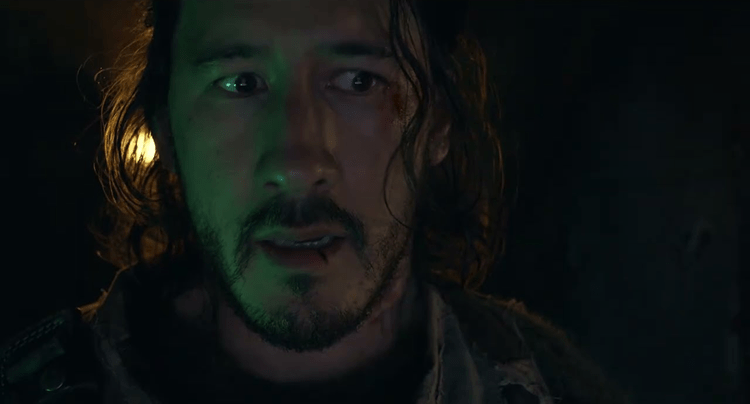
Rod Blackhurst makes his feature directorial debut with a film that hearkens back to the pulpy horror movies from 1970s which found new life on video store shelves in the 1980s. “Dolly” transports us back to the grindhouse with its noticeably low budget, gritty aesthetic, and unflinching graphic violence. At the same time we see flashes of the same artistic merit that made Tobe Hooper’s “The Texas Chain Saw Massacre” stand out from its contemporaries.

Now I don’t want to get too carried away. “Dolly” isn’t up there with Hooper’s seminal horror classic and I don’t think it’s trying to be. Instead Blackhurst (who also co-wrote the script with Brandon Weavil) embraces his clear inspiration and deep affection for genre films by both paying homage and adding his own deranged flavor. The result is an effectively chilling and delightfully twisted horror throwback that has just the kind of kick genre fans will relish.

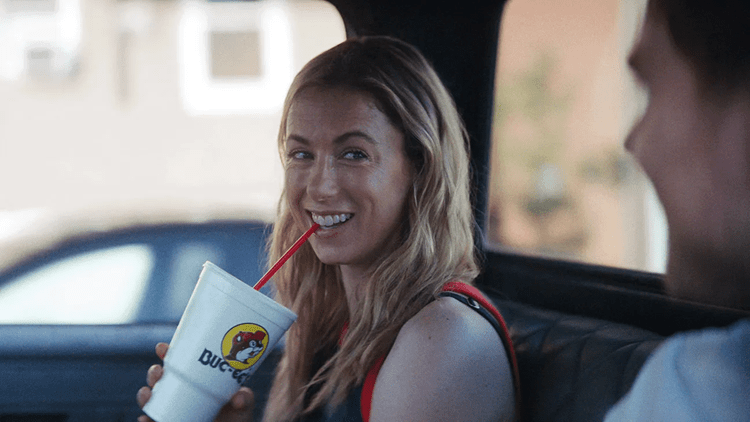
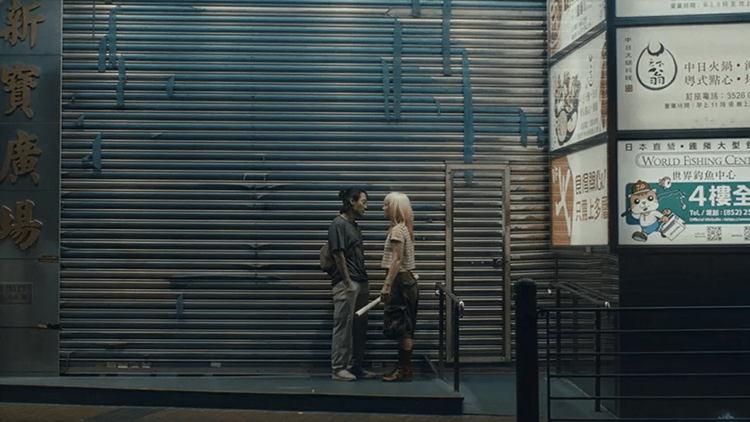
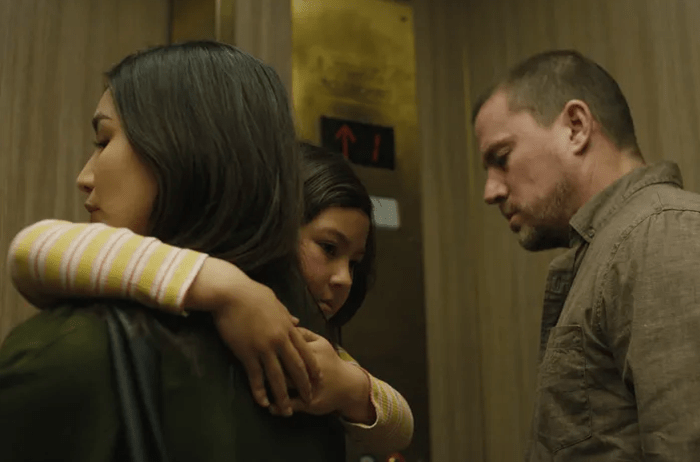
Blackhurst and Weavil break their story into seven or so chapters with such titles as Mother, Daughter, Home, Reunion, etc. While it’s hardly significant or even necessary, the chapter structure strangely fits well and adds to the story’s macabre tone. As for the small cast of characters, we meet Macy (Fabianne Therese) and her boyfriend Chase (Seann William Scott) as they’re dropping off his daughter before heading out for a hike in the mountains. But it’s no normal couple’s getaway. Chase plans to ask Macy to marry him. Little does he know, Macy isn’t sure she’s ready to be a wife or a step-mother.

After taking a nature trail through the forest, Chase and Macy arrive at his favorite overlook. But before he can pop the question, Chase breaks his own rule and leaves the trail to investigate the eerie sound of music from a toy radio. When Chase doesn’t return, Macy goes looking for him. But instead she encounters a hulking non-verbal mother figure named Dolly (played by American pro wrestler Max the Impaler) who knocks Macy unconscious and carries her to an old house deep in the woods.

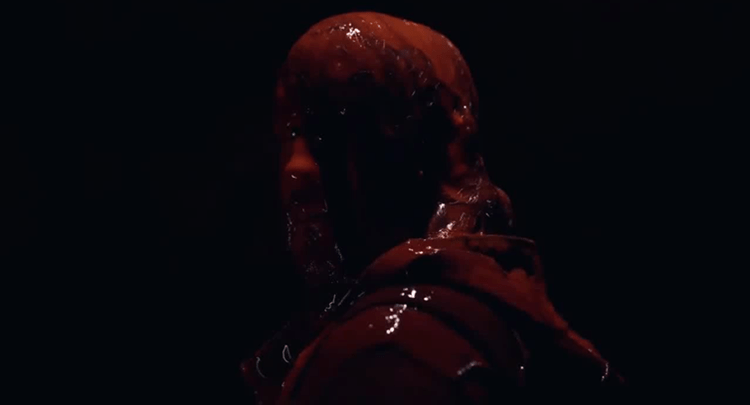
Macy eventually wakes up to find herself in a disturbing situation. She’s in an upstairs nursery, wearing baby girl clothes and awkwardly lying in an oversized bassinet. Just as Macy comes to her senses and begins looking for a way out, Dolly bursts in. She’s an imposing figure, wearing a tattered dress and a crude Porcelain doll head, who wants to raise Macy as her child. It’s a twisted scenario made even more unsettling with the revelation that Macy is the latest of many who have brutally suffered and died by the bloodstained hands of this unhinged ‘mother’.

Much like Hooper’s classic, things only get more depraved and bizarre the longer we stay in the house. Dolly’s delusion starts with pacifiers and baby bottles before devolving into something dramatically more shocking. And her warped motherly instincts are routinely interrupted by unstable fits of self-loathing rage. It makes the unstable Dolly even more terrifying. Meanwhile Therese, channeling her very best Marilyn Burns, shows Macy’s indomitable will to live which fuels her fight for survival, setting up several killer throwdowns with her captor.

“Dolly” was filmed over the course of 19 days on location in Chattanooga, Tennessee. Lovingly shot on Super 16mm, the lo-fi visual style alone has a transportive effect. It shrewdly calls back to the many similar films that paved its way. But it also plays a big part in capturing and sustaining the mood and atmosphere Blackhurst is going for. Equally essential is the assortment of crafty camera techniques he and DP Justin Derry employ including tilt shots, tracking shots, high angles, wide angles, intense close-ups, even a classic iris shot.

“Dolly” flaunts a premise that is as outrageous as it is creepy. It’s not for the squeamish, especially as the horror progressively turns more grisly. Yet there is a darkly comical undercurrent that Blackhurst knowingly embraces. Even with the hints of pitch-black humor, it’s easy to be unnerved by Dolly’s merciless psychosis, her grimy blood-splattered home, and some gnarly practical effects that have no shortage of blood and gore. These things alone meld into something wildly satisfying. But it’s the distinct throwback style that makes this catnip for genre junkies like me.

VERDICT – 4 STARS

New on Home Video: “Superman” on 4K Ultra HD + Digital

Warner Bros. Discovery Home Entertainment is bringing their summer blockbuster hit “Superman” to home video. This reimagining of the iconic superhero is the first film in James Gunn’s new DC cinematic universe. Writer-director Gunn injects his signature style into a movie that feels more a kickstart to the DCU than an actual Superman story. That’s only one of the movie’s several issues, yet the film did well, taking in over $615 million at the box office. You can read my full review of the film [HERE].

This 4K Ultra HD Blu-ray edition of “Superman” includes a digital copy and will be available to purchase on September 23rd. See below for a full synopsis of the film as well as a list of special features.

About the Film:

Year: 2025

Runtime: 129 Minutes

Director: James Gunn

Screenwriter: James Gunn

Cast: David Corenswet, Rachel Brosnahan, Nicholas Hoult, Edi Gathegi, Nathan Fillion, Isabela Merced, Anthony Carrigan, Wendell Pierce, Mikaela Hoover, Steve Lombard, Alan Tudyk, Sara Sampaio, Frank Grillo

Rating: PG-13 for violence, action, and language

When Superman is drawn into conflicts both abroad and at home, his actions to protect humankind are questioned, and his vulnerability allows tech billionaire and master deceiver Lex Luthor to leverage the opportunity to get Superman out of the way for good.  Will the Daily Planet’s intrepid reporter Lois Lane, together with the aid of Metropolis’s other metahumans and Superman’s own four-legged companion, Krypto, be able to help Superman before Luthor can completely destroy him?

The film follows Superman’s journey to reconcile his heritage as the Kryptonian Kal-El with his human upbringing as Clark Kent of Smallville, Kansas, and his selfless determination to use his power for good as humanity’s protector. Guided by human kindness in a world that sees kindness as old-fashioned, he is the embodiment of truth, justice, and a better tomorrow.

Special Features:

Superman Digital, 4K UHD, and Blu-ray contain the following special features:  

  • Krypto Saves the Day!: School Bus Scuffle – (5:32)
  • Adventures in Making Superman Featurette (60:00)
  • Icons Forever: Superman’s Enduring Legacy – Featurette (6:05)
  • Lex Luthor: The Mind of a Master Villain – Featurette (5:18)
  • Kryptunes: The Music of Superman – Featurette (6:31)
  • Paws to Pixels: Krypto is Born – Featurette (5:54)
  • Breaking News: The Daily Planet Returns – Featurette (5:23)
  • The Ultimate Villain – Featurette (5:30)
  • The Justice Gang – Featurette (10:37)
  • A New Era: DC Takes Off – Featurette (4:53)

REVIEW: “A Big Bold Beautiful Journey” (2025)

Given the current cynical and hyper-polarized state of our society, a movie like “A Big Bold Beautiful Journey” runs the risk of facing two vastly different reactions. It could end up being too earnest and sentimental for the more calloused hearts. But it could also be just the kind of warm and touching movie some people are yearning for during this strangely turbulent moment in time. I tend to fall in with the latter group. If only the movie delivered on its potential.

“A Big Bold Beautiful Journey” is the third film from video essayist turned filmmaker Kogonada. His previous two indie features, “Columbus” (2017) and “After Yang” (2021), both left long-lasting impressions on me while vividly defining Kogonada’s keen visual craftsmanship and distinct approach to storytelling. His latest veers slightly more mainstream while maintaining a semblance of the quiet patient rhythm and introspective gaze from his earlier works.

Image Courtesy of Sony Pictures Releasing

The problem is Kogonada’s virtuosity can’t fully make up for the film’s biggest issue – the script. Rather than directing his own material as he did with “Columbus” and “After Yang”, this time Kogonada works from a screenplay written by Seth Reiss. To be fair, the script has its strengths. There are several pure moments of heart and humanity. And the characters are given more than enough space to develop. Even more, its themes of memory and reflection are the very ideas that Kogonada has shown to be interested in.

But “A Big Bold Beautiful Journey” can’t quite live up to its enticing title, mostly because its script is littered with shortcuts and slow patches. There are several times where the story jumps from one point to the next, skipping information and details it doesn’t seem interested in sharing. Even more, there are other instances where any momentum grinds to a halt. It can be maddeningly lethargic as it sluggishly navigates a tale with surprisingly little substance.

The movie certainly has the star power in Colin Farrell and Margot Robbie. But they’re somewhat of a mismatched pair, struggling to develop the kind of chemistry a story like this desperately needs but doesn’t provide. Farrell plays David, a lonely New Yorker on his way to a friend’s wedding. He stops at the generically named The Car Rental Agency where he’s greeted by two oddball attendants (Kevin Kline and Phoebe Waller-Bridge). They give him the keys to a 1994 Saturn, complete with a very unique GPS.

At the wedding David has an abrupt meet-cute with fellow lost soul, Sarah (Margot Robbie). She’s a straightforward free-spirit who does some playful flirting with him before going her own way. Later, as David is leaving, his now seemingly sentient GPS guides him to a Burger King where he unexpectedly bumps into Sarah. This kicks off an unexpected road trip of self-reflection as David and Sarah follow the GPS to a series of doors standing in remote locations, each transporting them to specific moments from their individual pasts.

Image Courtesy of Sony Pictures Releasing

Though their lives have followed dramatically different paths, David and Sarah possess a similar sense of emptiness. Learning who they are by revisiting their pasts is the story’s most interesting thread. Some doorway adventures work better than others by giving us some crisp insight into who these characters are. Others are either drawn out for too long or play out exactly how you would expect them to. But what slows things down the most are the conversations in between them. Farrell and Robbie do their very best to make the dialogue meaningful. But for every good exchange there are two that go nowhere.

As for the more obvious question of who or what brought David and Sarah together and who or what is guiding their journey? Well, who knows? Is it fate, destiny, or something else supernatural? We’re never told or shown. The film shows no real interest in explaining in detail or even lightly ruminating. Perhaps in a better movie it wouldn’t matter. But with “A Big Bold Beautiful Journey”, I found myself searching for something to grab my imagination. Kogonada’s striking visuals could only do it for so long. And my affection for Farrell and Robbie just left me wishing they had been given better material to work with.

VERDICT – 2 STARS

REVIEW: “Him” (2025)

Few films (if any) this year have left me more conflicted than “Him”. Directed by Justin Tipping, “Him” is a sensory feast that serves up helping after helping of big bold ideas. Unfortunately for it (and us), many of them come out the creative oven half-baked rather than fully cooked. Yet the movie’s unflinching vision and ferocious sense of style makes its allegory-soaked deconstruction of football culture hard to turn away from, even if it never reaches the heights of its ambition.

“Him” is a queasy cinematic mix of surrealist horror and football drama that’s more committed to telling its story through striking imagery than narrative cohesion. Making sense of everything we see gets harder and harder as we go, and the movie doesn’t seem to care. It doesn’t leave us with much time to think about anything, and it certainly doesn’t take its own time to explore the ideas it opens up.

And that gets to one of the bigger frustrations with “Him”. I could fill a lengthy paragraph just listing the themes introduced by Tipping and his co-writers Skip Bronkie and Zack Akers. Without question they are vividly and surprisingly potent. But the filmmakers are too content with simply revealing themes rather than examining them. There are so many things expressed about the world of sports that are begging to be explored.

Image Courtesy of Universal Pictures

Yet while “Him” may cast its net too wide, it still cleverly gets several big points across with alarming and often unsettling clarity. It starts with its intentionally heavy-handed and highly effective comparing of professional football to a religious cult. The grooming of young acolytes/athletes, the veneration of our on-field idols, the ritualistic worship of sporting events, the sacrifice of self at the alter of success and stardom. It’s a powerful analogy that is woven into the story from its fiery beginning to its blood-drenched finish.

But “Him” goes even further. It also delves into such issues as parental pressures, athlete commodification, the allure of fame, the mental and physical toll of performing at high levels, the predatory nature of sports agencies, and the cold dehumanizing business side of professional sports. Again, it’s way too much for one movie to handle. But Tipping gets in several good shots while also exposing some powerful truths.

Interestingly, the name plastered across every poster, trailer, and TV spot is Jordan Peele. Peele serving as a producer is meant to be a major selling point. But the person most people will be talking about as they leave the theater will be Marlon Wayans. He delivers a scorching performance playing Isaiah White, the superstar quarterback of the San Antonio Saviors. With eight championship rings to his name, White has been heralded as the G.O.A.T. But with his contract set to expire at the end of the year, he and the team may be looking to pass the torch.

Image Courtesy of Universal Pictures

Enter Cameron Cane (Tyriq Withers), a college football superstar who many believe will be the next Isaiah White. But days before the pro football combine, the consensus #1 pick in the upcoming draft is attacked by an obsessed fan, leaving him with a severe concussion. While the football world questions Cam’s status in light of his injury, Isaiah invites him to his remote sanctuary/compound in the desert for a mini bootcamp. If Cam impresses Isaiah he’ll get a contract with the Saviors and he’ll be christened as Isaiah’s successor.

But what starts as training with his hero turns into a dark, nightmarish descent that pits Cam’s quest for greatness against the grueling cost of achieving it. The brutal workout drills with Isaiah’s ruthless practice squad, the grinding body training regimens, the mysterious injections and blood transfusions – the film sends Cam on a deranged downward spiral that pushes his body and mind to the brink of destruction. Tipping intercuts these scenes with warped imagery accented by Bobby Krlic’s ominous score that’s meant to emphasize the physical and psychological violence Cam endures.

It’s all driven by Isaiah who Wayans portrays as a whirlwind of charm and menace. Withers is an intriguing protagonist despite being frustratingly opaque. They both fully commit to the material which ushers them along at a breakneck pace, right through the film’s blistering, batty, and bloody ending. It’s the kind of finish that can legitimately make or break your opinion of the movie. For me, it was a genre-licious exclamation point to a movie overflowing with rich and provocative themes, some that are amply dissected, others not as much.

VERDICT – 2.5 STARS
REVIEW: “Swiped” (2025)

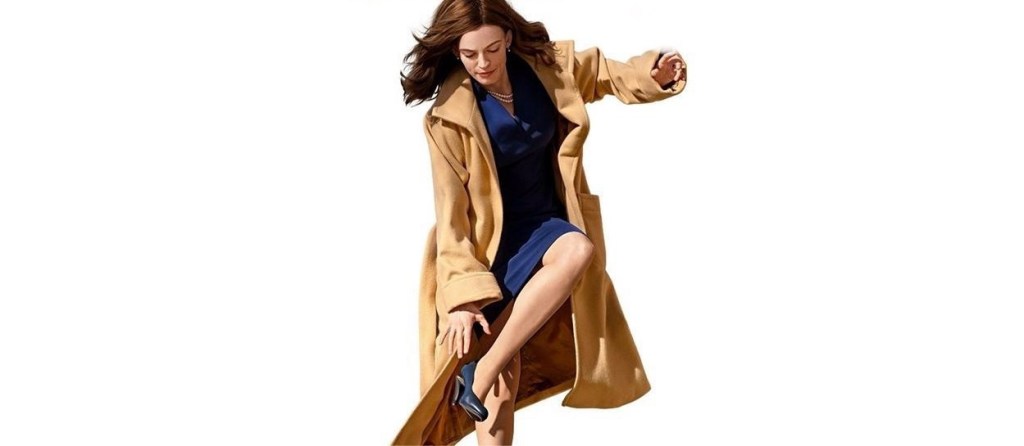
Rachel Lee Goldenberg directs and co-writes “Swiped”, a biographical drama that follows the professional career of Whitney Wolfe Herd. If you’re like me, that may not be a name you’re familiar with. Herd was the co-founder of the popular dating app Tinder and later the founder and CEO of the dating and social networking app Bumble. She broke down countless barriers, and as a result of her work she became the world’s youngest self-made female billionaire.

Goldenberg’s story, which she co-wrote with Bill Parker and Kim Caramele, begins with Whitney Wolfe (wonderfully played by Lily James) trying to raise capital for her new startup. The Whitney we are introduced to is smart, ambitious, and determined. It’s those traits that impress a young upstart CEO named Sean Rad (Ben Schnetzer) who hires her to be the Marketing Director for his own startup, Cardify.

Image Courtesy of 20th Century Studios

But his fortune changes when Rad launches a new dating app called Tinder. Despite being one of the big brains behind the app, Whitney watches as Rad and his two frat-boyish partners, Justin (Jackson White) and Jonathan (Ian Colletti) take most of the credit. That is until Whitney takes the app on a college marketing blitz starting with her alma mater, SMU. As a result, Tinder’s downloads skyrocket and Whitney is promoted to co-founder.

But despite her new status within the company, Whitney can’t penetrate the poorly veiled boys club at the top. A big chunk of the movie examines that workplace dynamic which only intensifies after she starts dating fellow founder Justin. Misogyny, jealousy, and harassment follow as Goldenberg takes a scalpel to the male-dominated tech industry culture. Unfortunately her blade never quite breaks the skin of what could have been an insightful interrogation of a pertinent subject.

The problem lies in the sometimes skittish storytelling that sweeps us from point to point without ever really planting its feet anywhere. That leaves it feeling as if there’s far more to the story than we’re getting. The male characters are especially puzzling, often lurching from compassionate and supportive to diabolically vile without much dramatic notice. Never is this more true than in the last act when her billionaire backer and loyal ally Andrey Andreev (a hard to recognize Dan Stevens) becomes an enabling heel on a dime.

Image Courtesy of 20th Century Studios

Much of those issues stem from the film’s obvious girl-boss aspirations. From all indications the filmmakers stretch the real-life story beyond its bounds in their efforts to emphasize empowerment. And despite delivering several piercing scenes showing the various shades of workplace misogyny, “Swiped” has a tendency of moving along too quickly rather delving deeper into the people involved. The shallow treatment isn’t just reserved for the sexist tech-bros. Later, Whitney meets and falls for a hunky cowboy (Pierson Fodé), a good catch with little personality and less agency who mostly lingers in the background.

Even with its flaws, “Swiped” quite easily holds your attention and it does a decent job getting its overall point across. The often underrated Lily James elevates the film on her own. And it’s worth telling the story of Whitney Wolfe Herd, a young woman from Salt Lake City who created her first startup in her dorm room before going on to become a successful groundbreaker for women in the tech space. Yet by the end, while I knew what Herd had endured and accomplished, I never felt like I really knew her. Another example of where a little more time and attention could have made a world of difference. “Swiped” releases September 19th exclusively on Hulu.

VERDICT – 2.5 STARS
REVIEW: “London Calling” (2025)

Sappy romances, weepy dramas, big summer blockbusters, straight to video crime thrillers – Josh Duhamel has done a little bit of everything in the world of movies, television, and even in major video games. Yet Duhamel is an actor who has never quite gotten the recognition he deserves. A part of that is due to the movies he has played in. But even then, Duhamel routinely rises above the material or makes the films he’s in better.

His latest feature is a good showcase for Duhamel’s range and versatility. “London Calling” is an action/crime comedy from Canadian director Allan Ungar. Written by the trio of Ungar, Levin Menekse, and Quinn Wolfe, “London Calling” sees Duhamel playing Tommy Ward, a hitman with bad eyesight who opens the film by botching a job in London. It’s a mistake that ultimately follows him through the rest of the film.

Image Courtesy of Quiver Distribution

While at a fancy London night club, Tommy mistakenly kills the distant relative of a powerful mobster named Freddy Darby (Aidan Gillen). Freddy is determined to avenge his family member, not out of any deeply felt pain (he doesn’t even know the guy), but because it’s what gangsters stereotypically do. His comical fixation on ‘family’ sets up one of the film’s better running jokes. As for Tommy, he’s forced to flee to Los Angeles, leaving his young son in London with his frustrated ex-wife.

A year passes and Tommy now works for a despicable low-rent LA crime boss named Benson (Rick Hoffman). Tommy desperately wants to go see his son, so Benson makes him a deal. In exchange for safe passage into London, Tommy must agree to take Benson’s son Julian (Jeremy Ray Taylor) on his next hit job. Why, you ask? Julian is more interested Fortnite, larping, and bears (yes, bears) than following in his father’s footsteps. Benson wants Tommy to toughen up his socially awkward son and teach him how to “become a man”.

Image Courtesy of Quiver Distribution

The rest of the film plays like a buddy-cop movie minus the cops. Amid the steady waves of action and amusement, Duhamel and Taylor have a blast and feature a fun comic chemistry. The job they are given involves a lethal assassin who has gone off the deep end (Neil Sandilands), his overly protected brother (Brandon Auret), and inevitably Freddy and his goons from the UK. It’s a bit all over the place, making Tommy and Julian’s burgeoning friendship far more interesting.

With “London Calling”, Allan Ungar delivers an entertaining melding of big action and straightforward comedy. While the action is serviceable, it’s the sheer number of good laughs that surprises most. Meanwhile Akexander Chinnici’s vibrant sun-bathed cinematography captures the colorful diversity of Southern California despite being shot in South Africa. But the cast is the main attraction, led by Duhamel whose versatility enables him to bring everything his character and the movie needs. In theaters September 19th.

VERDICT – 3.5 STARS