Random Thoughts: The 2026 Oscar Nominations

The last stop on the lengthy awards season grind is the Academy Awards. It’s an event that I once adored. Yet in recent years I’ve slowly but steadily been losing interest. Awards season has gotten so homogenized with the same tiny group of nominees appearing everywhere. That’s made it extremely predictable, and never has that been more true than this year.

The 2026 Oscar nominations offered no real surprise to anyone who has even casually followed awards season. Sure, there was a handful of snubs (or surprises, depending on your perspective), but nothing that would indicate an actual diversity of thought or taste in the whole process. Yet still, as I always do, here are a few random thoughts from this year’s Academy Award nominations.

  • To no one’s surprise, the Academy accomplished its goal of cramming “One Battle After Another” and “Sinners” into every category possible. It was expected, but it also led to several of the ‘snubs’ that I’ll talk about shortly.
  • Mission accomplished. “Sinners” broke a record by earning 16 Oscar nominations this morning. It was something that had started circulating a few days ago. Look, “Sinners” is a good movie. But it’s not THAT good.
  • Of course “One Battle After Another” remains the awards season darling and is the clear Best Picture frontrunner. Overall it earned 13 Oscar nominations and is on track to be the third subpar movie to win BP in the last four years. Congrats.
  • To their credit, nine out of the Academy’s ten nominees for Best Picture are good films. And they did include the year’s best film, “Train Dreams”. It doesn’t stand a chance at winning, but it’s nice to see it rightfully included.
  • It’s hard to believe “Frankenstein” received so many nominations yet nothing for Guillermo del Toro in directing. It’s a tremendous film that doesn’t get off the ground without his vision and craftsmanship. He should be the frontrunner. Instead he’s not even nominated.
  • Instead Josh Safdie gets a directing nod for “Marty Supreme”, an entertaining movie but a noticeably flawed one, in large part due to Safdie’s breakneck direction.
  • The Best Actress category belongs to Jessie Buckley and rightfully so. Of course the Academy remains smitten with Emma Stone so she gobbles up the last slot. But to her credit, she’s very good in “Bugonia”. Much better than her last Yorgos Lanthimos collaboration.
  • Staying with Best Actress, Chase Infiniti is the absolute best thing in “One Battle After Another” by MILES yet she doesn’t get nominated. You can’t make this stuff up.
  • Best Actor seems to be between Timothee Chalamet (“Marty Supreme”) and Wagner Moura (“The Secret Agent”). It’s good to see Michael B. Jordan nominated for “Sinners” but a shame that Joel Edgerton is snubbed for “Train Dreams”. Both deserve the win ahead of the frontrunners.
  • It wasn’t a good morning for “Wicked: For Good”. Unlike its predecessor, this mess of a sequel was completely shut out, receiving no nominations whatsoever. File this under something the Academy got right.
  • It was also great seeing “F1” among the Best Picture nominees. Again, it has no chance of winning, but the recognition is nice.
  • This is hard to believe, but Stellan Skarsgard is the very first international nominee to be included in the Supporting Actor category. Either way he deserves to win. His performance in “Sentimental Value” was one of the year’s very best.
  • The rest of the Supporting Actor category wasn’t as impressive. The Academy insisted on clogging it up with both Sean Penn and Benicio del Toro from “One Battle After Another”. They threw in Delroy Lindo from “Sinners” which sadly means no Paul Mescal (“Hamnet”) and no Adam Sandler (“Jay Kelley”). Whatever.
  • Best Casting is the first new competitive category at the Oscars in 25 years. Meanwhile stunt performers are still asking, “What about us?”
  • It’s hard to put much into this year’s awards when I think of the glaring omissions that have plagued the whole season. No Daniel Day-Lewis or Sean Bean for “Anemone”. No love for Josh O’Connor after the year he had. Nothing for “Nouvelle Vague”. Only one nomination for “Weapons”. No Russell Crowe for “Nuremberg”. Barely a mention of great films like “Warfare”, “Black Bag”, and “Eddington”. Again, there is no diversity of tastes or opinions. It’s mostly the same small pool of nominees at every stop.

And those are a few random thoughts from this year’s Oscar nominations. The 98th Academy Awards will be held Sunday, March 15th. What are your thoughts on the Academy’s crop of nominees?
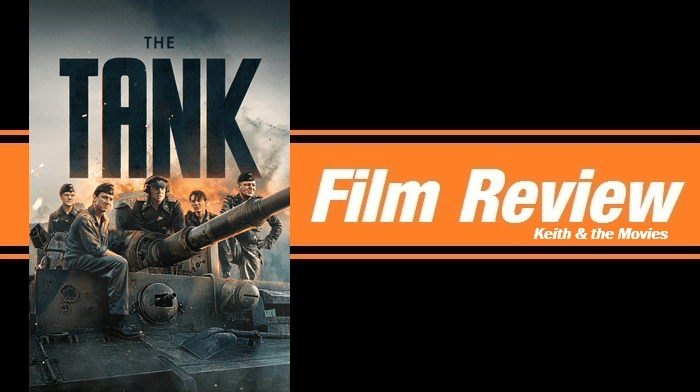
REVIEW: “The Tank” (2026)

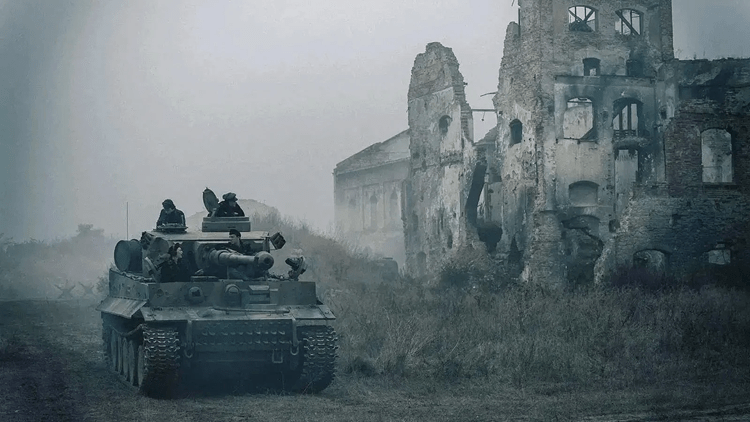
Dennis Gansel combines shrewd direction with impressive technical savvy in “The Tank”, a gripping German war thriller that carves out its own World War II story while calling back to such classics as “Sahara”, “Das Boot”, and even “Apocalypse Now”. It’s a movie that repeatedly steers you towards believing it’s one thing, only to surprise you by taking itself in a number of unexpected directions.

Set in 1943, “The Tank” (originally titled “Der Tiger”) begins with a nerve-racking action sequence on a bridge over the Dnieper River in what is now Ukraine. As the German army is being pushed back by Russian forces, Lieutenant Gerkens (David Schütter) leads a five-man Tiger tank crew in defending the bridge. Shells detonate around them and fire rains down from above as the five anxious soldiers huddle in their cramped iron compartment. It’s a harrowing scene that gives us a glimpse of what Gansel has in store for us, both narratively and visually.

Image Courtesy of Amazon MGM Studios

After the bridge battle, Gerkens is immediately given new orders. He and his crew are tasked with covertly locating and extracting the mysterious Lieutenant Colonel von Hardenburg, a German officer believed to be hiding in a bunker behind enemy lines. Little is known about the dangers they’ll face along the way. And even less is known about the man they are to retrieve.

Together with his driver, Helmut (Leonard Kunz), his machine gunner, Weller (Laurence Rupp), his radio operator, Keilig (Sebastian Urzendowsky), and his young reloader, Michel (Yoran Leicher), Gerken and his crew set out on their perilous mission. Their treacherous trek over No Man’s Land takes them across ominous fields, into quiet forests littered with dead bodies, and through the haunting remains of bombed out towns. These remnants of war emphasize its senselessness which ends up being one of the film’s central themes.

While there is no shortage of tension-soaked action, “The Tank” is as much interested in the psychological pressure as it is large-scale spectacle. Gansel crafts several nail-biting scenes that pit the crew against an array of threats, from land mines to Russian tank hunters. But the farther they travel, the more it begins to feel like a one-may mission. And the more they’re forced to reckon with feelings of guilt and complicity that they’ve attempted to bury throughout the war.

Image Courtesy of Amazon MGM Studios

The balance between the wartime action and the psychological isn’t just captured by Gansel’s sharp direction. It’s also found in the stunning cinematography of Carlo Jelavic. He shrewdly oscillates between the cramped confines of the tank’s interior, affecting character closeups, and evocative landscapes, all vividly detailed, atmospheric, and suggestive. The sound design is equally effective in channeling the sheer sense of dread and the deeper emotional stakes. It’s a technical gem.

“The Tank” delivers all kinds of wartime thrills while avoiding the common action movie trappings. It doesn’t shy away from the atrocities of war nor does it exploit them. And while it conveys the bond of brotherhood among the crew, there isn’t an ounce of sentimentality in the storytelling. It’s as authentic as it is riveting. Overall, “The Tank” follows a unique narrative path marked by clever foreshadowing and intriguing moral reflections, finishing up with a bold final act that immediately calls for a second viewing.

VERDICT – 4 STARS

REVIEW: “People We Meet on Vacation” (2026)

Netflix had a tremendous year last, specifically when it comes to original movies. They delivered the best movie of 2025 with “Train Dreams”. But right behind it were several other outstanding features including three that also made my Top 10, “Nouvelle Vague”, “Frankenstein”, and “Jay Kelly”. Not to mention Kathryn Bigelow’s “A House of Dynamite” and “Wake Up Dead Man”, the latest and best Knives Out film so far.

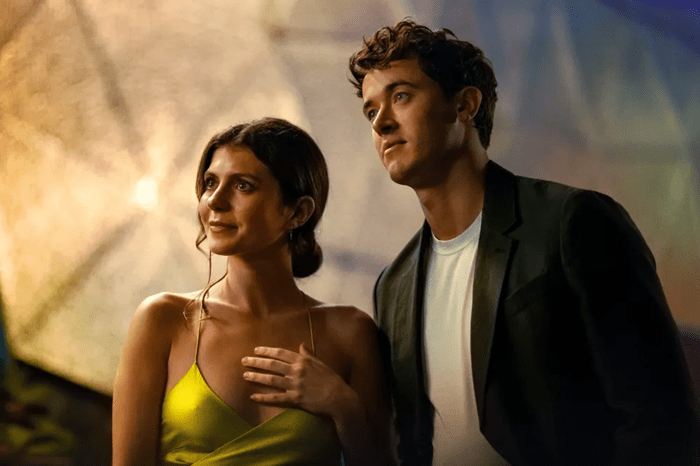
Netflix kicks off 2026 with a romantic comedy that certainly doesn’t reach the heights of the above movies. But for most of its running time, “People We Meet on Vacation” is an unexpected delight. Much of its success hinges on the sparkling chemistry of its two stars, Emily Bader and Tom Blyth. It’s only later, when the script slips into that all too familiar romcom formula, that the movie starts to come unglued.

Image Courtesy of Netflix

“People We Meet on Vacation” is based on Emily Henry’s 2021 novel of the same name. This light and breezy adaptation is directed by Brett Haley who’s working from a script by Yulin Kuang, Amos Vernon, and Nunzio Randazzo. The film stars Bader as Poppy, a free-spirited New York City travel writer. Nine years earlier, Poppy met the tightly wound Alex (Blyth) met while sharing a ride from their college in Boston to their home in Lynnfield, Ohio. Despite being polar opposites, Poppy and Alex become unexpected best friends.

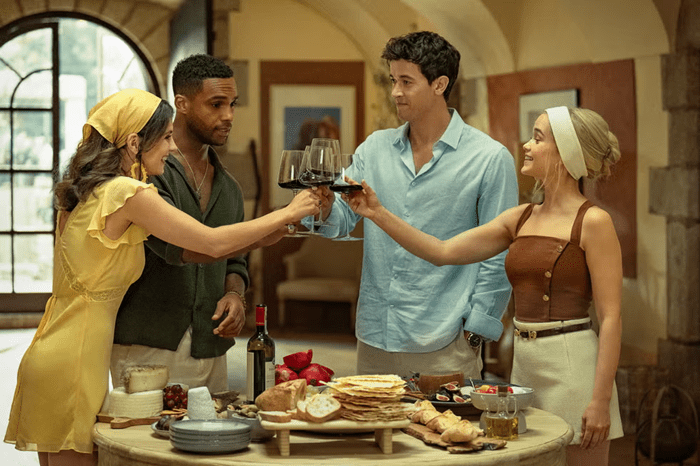
For nearly a decade the (ahem) strictly platonic friends have taken summer vacations together. A series of flashbacks take us back to several of their trips – camping in Canada, partying in New Orleans, and an especially relationship-changing summer in Tuscany. But something happened leading Poppy and Alex to have a falling-out. They haven’t spoken in two years, but they’re given a chance to reconnect after Alex’s brother David (Miles Heizer) invites Poppy to his wedding in Barcelona.

Image Courtesy of Netflix

For the majority of its 118 minutes, Haley manages to keep things surprisingly fresh. There is never a time when we don’t know where things are going or how it’s going to end. But the road to that point is littered with good laughs while maintaining a believable romantic spark. Alan Ruck and Molly Shannon get one lone yet hysterical scene as Poppy’s parents. But the heavy lifting is done by Bader and Blyth who win us over and earn our affection.

Yet along with its predictability, “People We Meet on Vacation” also leans on a few easy to recognize romcom tropes that come off as a little lazy. But its biggest issue comes in the final act where the story completely gives way to the Hallmark formula. It’s as if the filmmakers lost faith in everything that had worked so well. Still, you could do a lot worse than “People We Meet on Vacation” – a romantic comedy that depends on good characters, strong chemistry, and crisp dialogue right up until it doesn’t.

VERDICT – 3 STARS

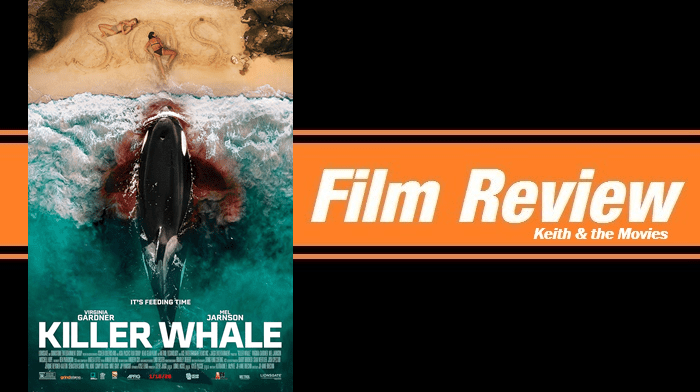
REVIEW: “Killer Whale” (2026)

In “Killer Whale”, director Jo-Anne Brechin attempts to add a slightly new spin to the sharksploitation genre by making an orca the chief antagonist. Unfortunately that’s not enough to save the movie from the sea of well-worn tropes and its obvious budget constraints. The latter issue grows especially burdensome, specifically in the second half where the glaringly obvious digital effects distract from the experience more than enhances it.

Co-written by Brechin and Katharine McPhee, “Killer Whale” follows best friends Maddie (Virginia Gardner) and Trish (Mel Jarnson), who reunite after a tragedy tore Maddie’s world apart. Only a year earlier, Maddie lost her prospective boyfriend Chad (Isaac Crawley) and most of her hearing during a robbery at a burger restaurant where she worked. Since then she has mostly disconnected from the things she loves, including Trish.

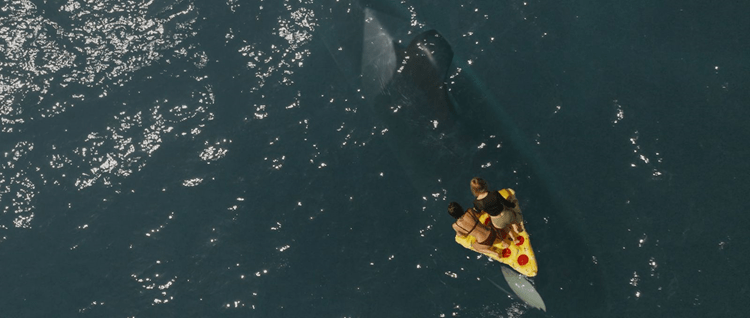
But Trish pays Maddie a visit, insisting that her grieving friend joins her on a seven-day, all expenses paid trip to the Andaman Sea Islands in Thailand. Maddie reluctantly agrees and the two take off, settling in at a swanky beachfront resort. During a night of drinking and dancing, the two meet a local bartender named Josh (Mitchell Hope). The next morning Josh sweeps Maddie and Trish away for an afternoon of fun at a remote lagoon. But their fun turns to terror after they’re attacked by an enormous killer whale.

We learn the angry orca has wandered into the lagoon after escaping from a cheap SeaWorld knockoff. Named Cito, the whale was the main attraction at a theme park called World of Orca. That is until mistreatment and one specific tragic event drove Cito to kill a couple of her handlers. Now she’s trapped in the lagoon with those same killer instincts and three hapless humans as her prey. And so sets the table for another man vs beast showdown.

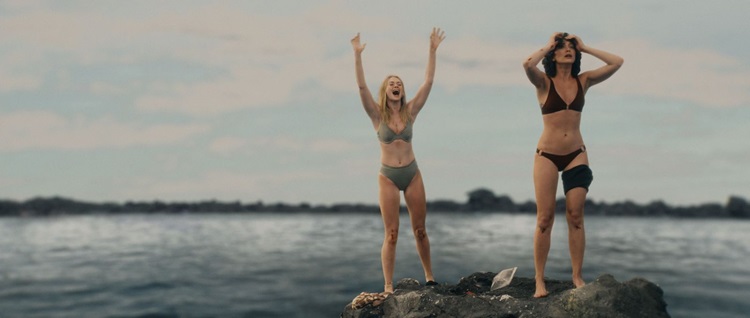
To Brechin’s credit, she attempts to make her film more than a copy-and-paste horror thriller. For a while she leans into the survival element, especially when the friends end up stranded on a small rock surrounded by water that’s being patrolled by a bloodthirsty orca. She also makes time for drama, giving the emotionally wounded Maddie the space to deal with her grief and potentially find closure. Unfortunately the drama is undermined by an ill-advised late twist that I’m sure sounded better on paper that it appeared on-screen.

As for any thrills, Brechin manages to generate some tension and suspense although not enough to put us on the edges of our seats. Her problem lies with the comically cheap digital effects that too often yanks us out of key scenes. The noticeable CGI isn’t just restricted to the massive killer whale, but to scenes where characters look superimposed onto their backgrounds. The artists do what they can, but they simply don’t have the funds to sell us on what we see.

We also encounter parts of the story that feel remarkably shortchanged. None more than the drama at World of Orca which is woefully underdeveloped despite having a rather significant impact on the story. Again, Brechin deserves credit for trying to make a movie that isn’t more of the same. She also smartly makes the human element central to her storytelling. But budget limitations and a few too many shortcuts keep this well-intentioned feature from delivering on its ambition.

VERDICT – 2 STARS

REVIEW: “The Rip” (2026)

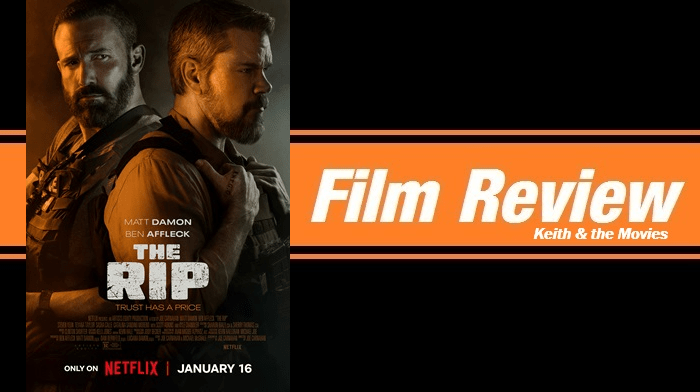
It has been nearly thirty years since childhood friends Matt Damon and Ben Affleck collaborated to write the screenplay for “Good Will Hunting”. The film would go on to be a box office smash, grossing over $225 million. Even more, the two buddies from Cambridge, Massachusetts would win an Academy Award for Best Original Screenplay. Soon after, both Damon and Affleck were catapulted into full leading man status. Yet despite their individual successes, their friendship remains strong to this day.

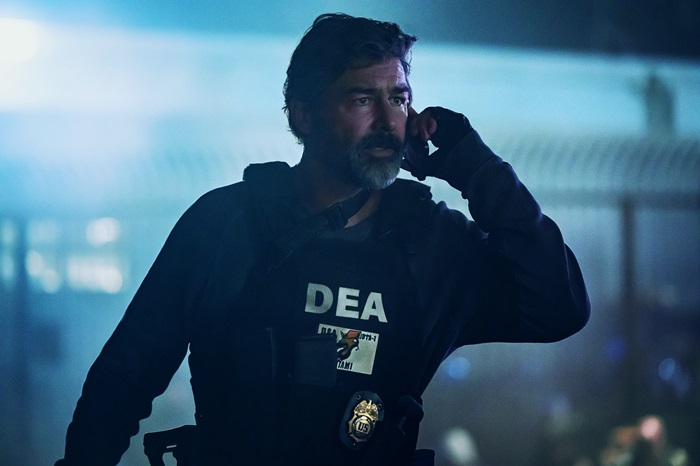
Damon and Affleck share the screen together again in Netflix’s “The Rip”, a pulse-pounding action thriller written and directed by Joe Carnahan. While they sit firmly as the film’s leads, Carnahan surrounds them with a compelling supporting cast that includes Steven Yeun, recent Golden Globe winner Teyana Taylor, Catalina Sandino Moreno, Sasha Calle, Néstor Carbonell, and the always great Kyle Chandler.

Image Courtesy of Netflix

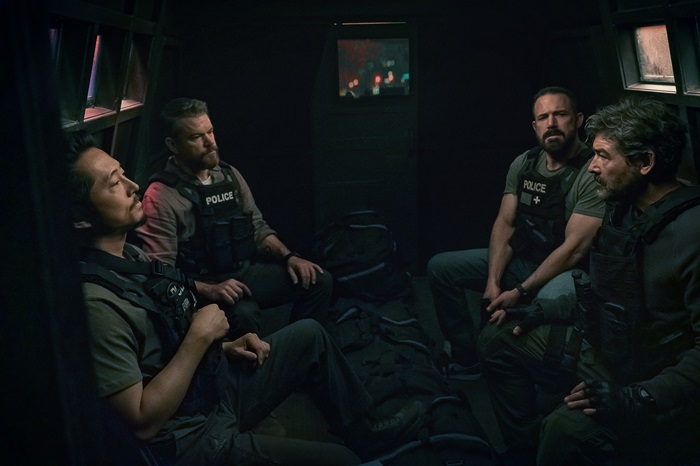
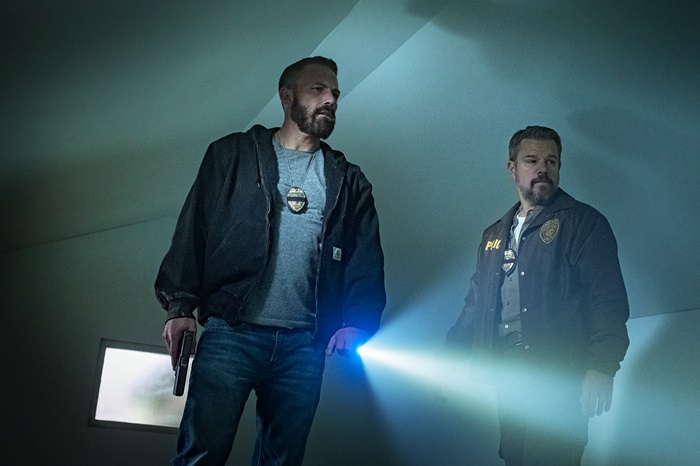
“The Rip” tells a gritty, street-level crime story set in Miami. It begins with the violent murder of Captain Jackie Velez (Lina Esco), the leader of the police department’s Tactical Narcotics Team. With the tight-knit squad still reeling from Jackie’s death, the FBI begin an Internal Affairs investigation to see if the murder was pulled off by someone within the department. Meanwhile Lieutenant Dane Dumars (Damon) is promoted to team leader. But his job won’t be easy with the division falling apart and morale at rock-bottom.

After receiving a Crime Stoppers tip identifying a stash house belonging to the Hialeah cartel, Dane rounds up his frustrated and disillusioned team of detectives. They consist of his his best friend and a long-time cop, Detective Sergeant J.D. Byrne (Affleck), Detective Mike Ro (Yeun), Detective Numa Baptiste (Taylor), and Detective Lolo Salazar (Moreno). The team arrives at the house which sits at the end of a quiet cul-de-sac. With his tone set and pieces in place, Carnahan then begins tightening the screws.

Image Courtesy of Netflix

The team is met at the door by a young woman named Desi (Calle) who claims the house belongs to her grandmother. But inside tells a much different story. While searching the rooms they discover fifteen buckets filled with cartel cash hidden in the walls of an attic. The team expected the “rip” to be from $150k to $300k. But they quickly realize they’re sitting on an estimated $20 million. Procedure states they count the money at the site of the seizure. But that much money comes with an extra layer of danger, which they soon learn after a mysterious phone call gives them 30 minutes to leave or else.

Carnahan drops his team in a pressure cooker as the detectives scramble to figure out the best course of action. Or are there other motivations in play? As the external threat mounts, it’s the internal fractures that drive the suspense. The real tension kicks in once the team members begin losing trust in each other. And as trust erodes, loyalties shift and paranoia sets in. Who’s dirty? Who’s clean? Carnahan masterfully keeps us guessing as he digs deep into corruption and betrayal.

The film’s mystery is a key reason it works so well. Carnahan plants seeds of suspicion everywhere without ever tipping his hand. And whenever we think we have things figured out, he proves to be one step ahead of us. At the same time, he and DP Juan Miguel Azpiroz use their camera to give the world a gritty and visceral texture. The striking visuals not only keep us on the edges of our seats, they also energize the action sequences, grounding them in realism and putting us in the middle of the violence. It’s exhilarating.

“The Rip” is Joe Carnahan’s best film since “The Grey” and it’s a killer start of the year for Netflix. Inspired by true events, the story and storytelling grips you from the opening scene to the closing credits. The conscious barrage of f-bombs dumbs things down a bit. But otherwise the script is razor-sharp, giving the intensely focused cast some rich material to work with. Of course it helps to have actors working at such strong comfort levels as Damon snd Affleck. They really do have a natural chemistry that comes through on screen. And that’s one of many reasons this enthralling action thriller hits with such force.

VERDICT – 4 STARS

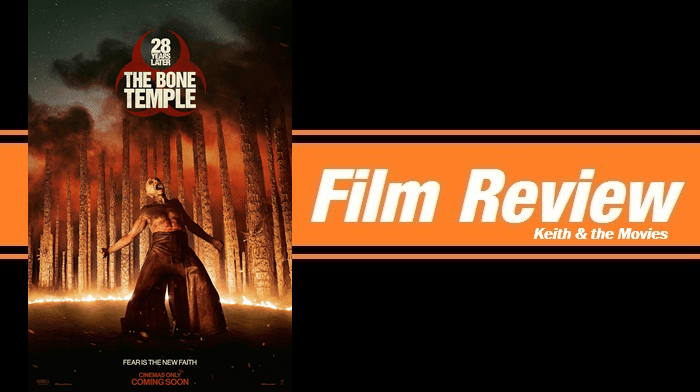
REVIEW: “28 Years Later: The Bone Temple” (2026)

Last year’s “28 Years Later” was Danny Boyle’s return to the bleak and harrowing zombie hellscape he first introduced with 2002’s “28 Days Later”. That world was further explored in 2007’s “28 Weeks Later” and then again in 2025. In the third film, Boyle and screenwriter Alex Garland picked things up 28 years after the second outbreak of the Rage Virus, adding a host of new characters and just as many old references that fans of the apocalyptic horror franchise enjoyed.

My issues with “28 Years Later” wasn’t with its presentation. Boyle nailed the grim representation of a collapsed society and the horrors that exist within its remnants. Instead, the problems were with the lack of cohesion in the rushed final act. Even worse was its preposterous and tone-shattering finish that did more to hurt the film than to set the table for another one.

But some of the best sequels have made the movie that came before it better. Unfortunately that’s not the case with “28 Years Later: The Bone Temple”. Nia DaCosta takes over directing duties and she proves to have her finger firmly on the pulse of this dark and forbidding world. Unfortunately she’s repeatedly undermined by Garland’s script which keeps her handcuffed to two competing storylines that inevitably merge but not in the most satisfying of ways.

Image Courtesy of Sony Pictures Releasing

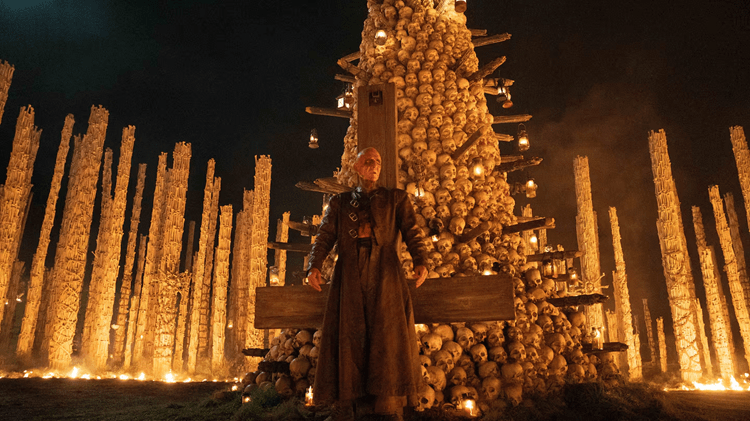
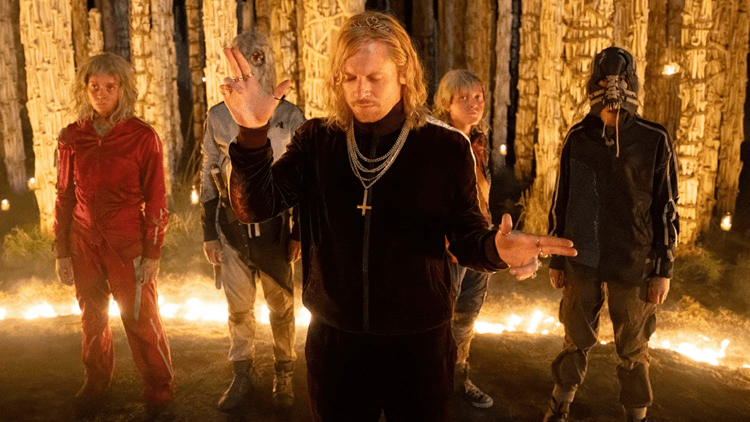
The previous film ends with 12-year-old Spike (Alfie Williams) being ‘rescued’ by a pack of blonde wigged tracksuit satanists with Power Ranger agility. This film picks up their story as the group’s maniacal leader, Sir Lord Jimmy Crystal (Jack O’Connell) is forcing Spike to fight one of his lackeys to the death, all to earn a spot in his cult. Spike manages to survive and reluctantly joins their ranks. He quickly learns these are violently deranged people who gruesomely torture and “sacrifice” anyone they come across.

Elsewhere, we get more of the previous film’s most fascinating character, Dr. Ian Kelson (Ralph Fiennes), a reclusive former doctor who had dedicated his life to memorializing the victims of the virus through his haunting Bone Temple. But now, when not jamming out to his Duran Duran records, he’s getting high on morphine with an area Alpha he’s named Samson (Chi Lewis-Parry). This is the same Alpha that was ripping heads off of people in the previous movie. Now he’s the doctor’s test subject and hangout buddy.

Garland’s script bounces back and forth between these two arcs, with neither feeling all that significant to the overall story. Spike’s parade with The Jimmy’s is especially confounding. They’re basically psychopathic killers driven by a blind allegiance to a clownish charlatan. And frankly, they aren’t all that interesting. Even worse, Spike often gets lost in cult’s chaos, leaving his coming-of-age drama stuck on the back burner.

Image Courtesy of Sony Pictures Releasing

As for DaCosta, she is given the unenviable task of turning Garland’s tuneless story into something meaningful and cohesive. One of her biggest challenges is sorting through the tonal confusion that plagues the majority of the film. Things can switch from grimly serious to comically absurd in a matter of seconds. DaCosta also has to find a way to keep us from asking some glaringly obvious questions. For example, what about the community of survivors on Lindisfarne? What about Spike’s father who was last seen painfully screaming his son’s name. Apparently he wasn’t anguished enough to go out searching.

“The Bone Temple” also seems to forget about the infected (minus Samson). They aren’t the same terrifying threats who kept us on the edges of our seats during the last film. Gone is the nerve-shredding tension of simply walking through the forest. Instead the infected mainly pop up whenever the story needs them to. And when they do, DaCosta simply can’t quite match Boyle’s intensely kinetic style of framing and shooting the action.

Thematically, “The Bone Temple” touches on inhumanity and the nature of evil while single-mindedly skewering the concept of faith. But like much in the movie, its themes are so confined that they don’t really go anywhere. Similarly, the two parallel stories feel restricted to different worlds until finally intersecting at a strangely opportune juncture. We’re left with the sense that very little in the film is moving towards a particular narrative goal. The tonal hopscotch, numbing sadism, and off-balance storytelling only make things worse.

VERDICT – 2 STARS