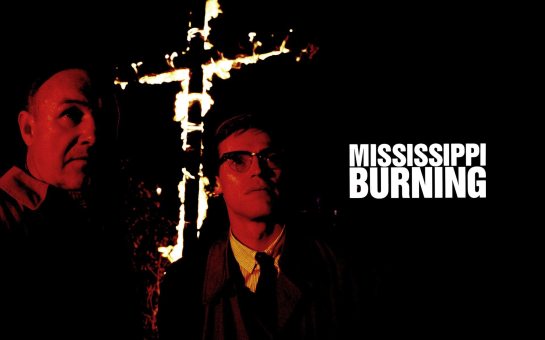
RETRO REVIEW: “Mississippi Burning” (1988)

burningposter

It was interesting to finally revisit 1988’s “Mississippi Burning” after so many years especially in light of the recent wave of fresh new filmmakers offering their own points of view on racism and the historical stain it has left on America’s social fabric. It was a movie that faced more than its share of criticisms, some thoughtful and others unfair.

The film is based on a true story about three young civil rights workers who went missing in 1964 Mississippi. The title comes from “MIBURN”, the code name given to the missing persons investigation by the FBI after the workers’ burnt-out car was discovered. It would become one of the signature cases in the long and painful road towards racial justice.
burning1

Many of the criticisms were unfortunate especially considering the type of movie “Mississippi Burning” is. There were complaints, even boycotts aimed at the film’s inaccuracies, its choice of story perspective, and its lack of a central black character. And then there was the unwarranted white savior accusation, as if the situation in that small Mississippi town had been dramatically changed for the better by the end of the film. This was never meant to be a documentary. It’s clearly a fictionalization intended as a suspenseful police drama but with the guts to hold up a mirror to the segregated south.

Director Alan Parker starts his film with an impeccably shot opening sequence. At dusk three young men are driving down a country road in Jessup County, Mississippi. Within seconds three vehicles are barreling down on them. The foreboding beats of Trevor Jones’ score and Peter Biziou’s tension-soaked cinematography lets us know that something bad is about to happen.

burning2

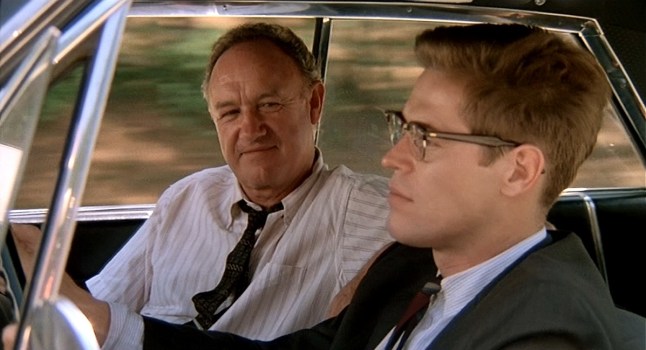
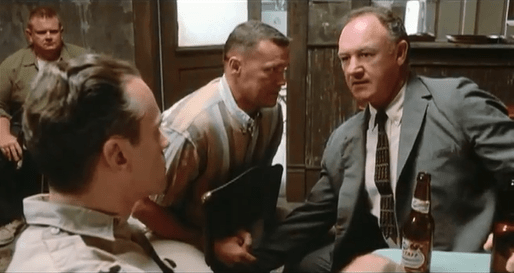
The boys go missing and the FBI sends Agent Rupert Anderson (Gene Hackman), a brash but seasoned g-man with southern connections of his own and Agent Alan Ward (Willem Defoe), a by-the-numbers bureau guy fresh out of the Justice Department. Their approaches to the investigation are drastically different. Anderson wants to melt into the community, getting information by mixing with the locals at the barbershop or the Main Street cafe. Ward wants to use every government resource at his disposal. That includes over 100 FBI agents who converge on the small Mississippi town much to the chagrin of Sheriff Stuckey (Gailard Sartain). He and his slimeball Deputy Pell (Brad Dourif) put up every wall of jurisdiction they can and work hard to convince the townsfolk that the feds don’t belong there.

Anderson and Ward find themselves in a boiling hotbed of deeply ingrained racism. With the KKK running free and a seemingly complicit local law enforcement, finding clues to the missing boys’ whereabouts proves difficult. This touches on one of most heart-shattering elements to the story which involves the black community and their unwillingness to share information with the feds.

This reveals a terrible circle of injustice. Anderson and Ward can’t tighten the screws on racist local suspects unless the black folks will talk to them. The black folks won’t talk to them for fear of violent retaliation from the racist locals. Anyone in the black community who speaks out ends up hurt or killed. Their families are terrorized and their homes burnt to the ground. As Anderson tells a discouraged Ward, “They have to live here long after we’re gone.” It’s a revealing truth that the film handles well.
burning3

As a crime thriller “Mississippi Burning” maintains a simmering level of suspense. Interestingly the suspense lies more in how things play out rather than what the outcome will be. The longer the movie goes the worse things get. Hope dwindles and patience begins to wear thin. Several key players factor in most notably Deputy Pell’s wife (played by an excellent Frances McDormand who received her first Oscar nomination). We also get a young Michael Rucker playing a hate-fueled yokel with a disgustingly long leash.

But it all comes back to the two leads. DaFoe works at the perfect temperature for his character, a principled man with a sharp blend of smarts and naïveté. But it’s Hackman who steals the show reminding us of just how good of an actor he is. Effortlessly natural at every turn, convincingly fiery when needed, and with loads subtle flourishes that make his performance stand out.

VERDICT 4.5 STARS

4-5-stars

REVIEW: “Support the Girls”

Support

The trailer for Andrew Bujalski’s “Support the Girls” left me expecting an amusing but lightweight little indie comedy. Turns out I was selling it short. In addition to serving up some genuinely funny laughs, the film surprised me by revealing a ton of heart and an attention to its characters that I wasn’t expecting.

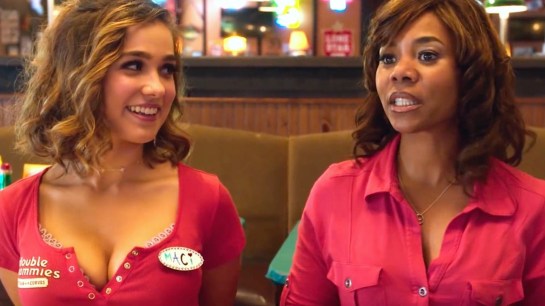
Writer-director Bujalski doesn’t worry too much with plot. Instead this is entirely character-based and follows an overloaded yet resourceful manager of a locally-owned Hooters-styled Texas sports bar. Her name is Lisa and she’s played by a delightful Regina Hall. Essentially she’s the glue that keeps Double Whammies together, whether she’s looking out for her staff of underpaid waitresses or trying to keep the overbearing oaf of an owner (James LeGros) satisfied.

SUPPORT2


What makes Bujalski’s film work so well is the focus he puts on the bond of sisterhood. Hall gives one of last year’s truest and most lived in performances, strikingly authentic at every turn. Just as important are some of the wonderful supporting work specifically from Haley Lu Richardson (so brilliant in 2017’s “Columbus”). She plays the kind-hearted and always cheery Maci whose sudden bursts of air-headed energy make for some of the movie’s brightest moments.

Even with its layers of warmth and wit there is also a subtle undercurrent of heartache. Bujalski provides plenty of playful moments and certain characters have inherently entertaining personalities. But each have personal real-world problems to deal with – a fractured marriage, an abusive boyfriend, a single mother struggling with child care. And then there is shadow of uncertainty when it comes to their jobs, their futures, and so on.

The opening credits lets you know that the film is operating on a shoestring budget, but within five minutes I was already invested in this slice-of-life working class comedy. The characters aren’t punchlines nor do they feed into common stereotypes. This makes them interesting and worth our time even when they’re doing nothing more than their daily work routines. So I found it easy to believe in what “Support the Girls” was showing me. And while it may seem a bit light, I enjoyed my time with Lisa and her girls.

VERDICT – 4 STARS

4-stars

5 Phenomenal Opening Scenes

PHENOM 5

Sometimes a great opening sequence can set the tone for the entire movie. In today’s Phenomenal 5 we are going to look at some of the very best of them. Narrowing it down to just five is brutal but those are my self-inflicted rules. While I wouldn’t call this the definitive list, there is no denying that these five opening scenes are nothing short of phenomenal.

#5 – “Saving Private Ryan”

RYAN

Of all the films on this list this is probably the most heralded movie opening of the bunch. Steven Spielberg ratchets locks in on battlefield realism in giving us what many have called the most authentic depiction of combat ever put on screen. From the very first frame we understand Spielberg wants to immerse us in the tension and horror of D-Day. The result is a gripping and visceral cinematic account unlike anything we’ve seen.

#4 – “The Dark Knight”

DARKKNIGHT

There are many things I love about Christopher Nolan’s unforgettable opening to “The Dark Knight”. First and foremost it serves as our first introduction to Heath Ledger’s iconic Joker. It begins with an eerie opening shot of him holding a mask on a street corner. From there Nolan takes us through a bank heist that’s deftly shot and edited, has such sharp pacing, and features some of the best moments from Hans Zimmer’s score. It’s a superb scene.

#3 – “Touch of Evil”

YOUCH

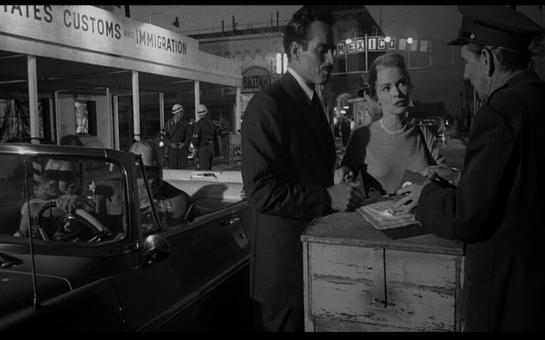
There are many examples you can point to that shows off Orson Welles’ brilliance as a filmmaker. One is found in the opening scene of his 1958 gem “Touch of Evil”. The movie opens with one of cinema’s great uninterrupted tracking shots. For over three minutes the camera weaves back and forth between two newlyweds walking and a second couple slowly navigating their convertible down a crowded street. Talking about it doesn’t do it justice. It is truly a must-see sequence for any movie fan.

#2 – Inglourious Basterds”

LANDA

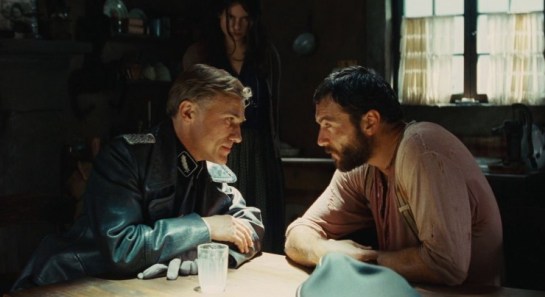
While I may not have been blown away by every aspect of Quentin Tarantino’s “Inglourious Basterds”, the opening of his alternate-reality World War 2 film may be his very best work. It features Nazi Colonel Hans Landa (Oscar winner Christoph Waltz) questioning a French farmer (Denis Ménochet) about the whereabouts of missing Jewish families. The white-knuckled interrogation ratchets up the intensity unlike anything I’ve seen on screen.

#1 – “Once Upon A Time in the West”

once

An absolute masterclass on the use of image and sound to build atmosphere and tension. This Sergio Leone classic is my favorite western for a host a reasons, one being Leone’s unmatched technique. The opening train station scene encapsulates Leone’s breathtaking artistry. From the first look into Jack Elam’s eyes to the echo of Charles Bronson’s revolver. It’s pure cinematic brilliance and the perfect way to open Leone’s masterpiece.

There were several big ones I hated to leave off so I’m counting on the comments section to help me out. C’mon readers, don’t let me down.

REVIEW: “The Hurricane Heist”


HEISTposter

Let’s be honest, with some movies you kind of know what you’re going to get just by the title alone. Okay, some more than others, but you get my point, right? Take the action-disaster mash-up “The Hurricane Heist”. Its hysterically literal title assures us of what we are in for – 100 minutes of category five absurdity. The question is how far can you go with it?

Toby Kebbell and his hilariously over-stressed Southern drawl plays Will Rutledge, a government meteorologist in Alabama keeping tabs on the mother of all hurricanes approaching the Gulf Coast. His relationship with his brother Breeze (Ryan Kwanten) has been strained since 1992 when they lost their father to Hurricane Andrew (see the prologue).

Heist1

Breeze is a mechanic who has stayed in their hometown of Gulfport to run the family’s towing business. He has a repair contract with a U.S. Treasury facility – the same facility a group of hoodlums are planning to knock off. And boy is their scheme an elaborate one full of carefully planned double-crosses, infiltration, computer hacking, and of course one made-to-order hurricane. What they didn’t factor in was dedicated Treasury agent Casey Corbyn (Maggie Grace) who quickly becomes a thorn in the bad guys’ side.

As the hurricane bears down, Breeze ends up in the treasury facility while Will and Casey are on the outside working together to thwart the heist. But to be honest none of that really matters. By this point the story is so silly and inconsequential, functioning mostly to move from one weather-action scene to the next. Admittedly I did get a kick out of some of the set piece antics. Whether I took them the way intended by the filmmakers, I don’t know. But they are just goofy enough to keep things mildly entertaining.

The film is directed by “Fast and Furious” creator Rob Cohen but don’t expect “The Hurricane Heist” to follow in that franchise’s footsteps. It bombed at the box office, unable to make back its semi-meager $35 million budget. Despite that there is some ridiculous fun to be found if your head is in the right place. This isn’t an offensively bad movie (it’s no “Geostorm”). Then again, that’s not much of a bar.

VERDICT – 2 STARS

2-stars

First Glance: “Star Wars: Episode IX – The Rise of Skywalker”

STARWARS9

Hype is not something I put a ton of stock in nor is it something I generally get caught up in. But I would be dishonest if I didn’t admit to having my excitement level shoot through the roof following the drop of the “Star Wars: Episode IX” trailer.

The annual Star Wars Celebration in Chicago has given franchise fans a ton to be excited about, nothing bigger than our first look at this year’s huge Star Wars installment. The teaser alone has several cheer-worthy moments – Rey’s tearful embrace with Princess Leia, the return of Billy Dee Williams as Lando Calrissian, and of course the all too familiar laugh we hear right before the title is revealed.

Those tired of Star Wars or with no invested interest in the franchise will understandably shrug it off. Me, I’m pumped. What about you? Check out the trailer below and let me know if you’ll be seeing it or giving it a pass.

REVIEW: “Life Itself” (2018)

lifesmall

Navigating through the haze that is “Life Itself” isn’t the most pleasurable experience. But this wasn’t totally unexpected. Writer/Director Dan Fogelman’s quasi-meditation on life and death has been widely panned by critics appearing on more than one ‘Worst of’ list last year. But when movies sport such an intriguing cast I like to give them a chance.

Unfortunately “Life Itself” gives you cause for concern right out of the gate. It starts with an off-putting opening sequence featuring truly cringe-worthy narration from Samuel L. Jackson (who must have been told to milk every drop out of his Samuel L. persona). It’s meant to serve as an introduction to the first of five chapters all connected by one traumatic event.

lifeitself_day11-889.CR2

Chapter one focuses on a deeply depressed and lonely New Yorker named Will Dempsey (Oscar Isaac). Through flashbacks on top of flashbacks we learn of his past relationship with the free-spirited Abby (Olivia Wilde). Fogelman attempts to put us in Will’s head as he constructs stories in his mind that we must sift through to find the truth.

Most of our clarity comes from a messy series of sessions Will has with his therapist (Annette Bening). These scenes range from exposition-soaked chats to weird trips back in time where the two resemble ghosts from Christmas past. Isaac and Bening give it their best and they’re clearly better than the material they are working with. Isaac works especially hard trying to add emotional depth and nuance to his character. He can only do so much.

The narrative leapfrogs back-and-forth across the timeline before finally getting to the key incident and the ripple effect it has across the remaining chapters. Each chapter attempts to tell a different person’s story yet the connections between them are glaringly obvious. But it some cases it takes time to come into focus. Take when the story suddenly shifts from the Big Apple to the countryside of Spain.

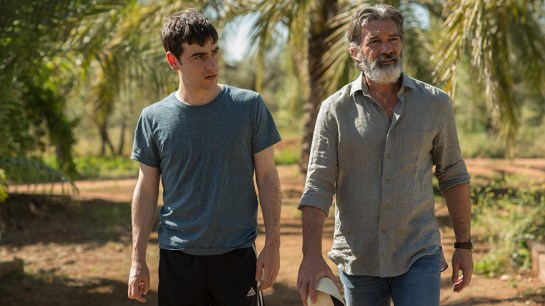
Here we have Vincent (Antonio Banderas, again a good performance despite the material) who grows olives on a patch of land he owns. He promotes the quiet but hardworking Javier (Sergio Peris-Mencheta) to foreman. Now with a means of support, Javier marries his girlfriend Isabel (Laia Costa) and they have a son. Like the New York storyline, this one hops through time, shifts its focus and reveals its connection to what we’ve seen already.

02024©joseharo.NEF

If all of this sounds too hard to follow, don’t worry. Fogelman spells it all out to us. Every detail, every emotion, you name it. Any question you might have is probably answered in an on-the-nose flashback or montage. We are given no room to wrestle with these characters or come to our own conclusions about them. This seems like an example of a filmmaker not trusting his audience to understand his movie.

It’s odd that a film filled with this much sorrow, longing, heartache, and loss can leave you so emotionally numb. Perhaps if it didn’t hold our hand the entire time. Maybe if it weren’t so sloppy in its execution. It’s funny, the ending seems perfectly fitting – a facepalm worthy finish that’s telegraphed from miles away. On one hand I want to give credit to Fogelman for having a unique concept and interesting vision. On the other I’m reminded of how poorly it all comes together and no amount of time leaps or Bob Dylan references can save it.

VERDICT – 1.5 STARS

1-5-stars