REVIEW: “Jackie”

jackie-poster

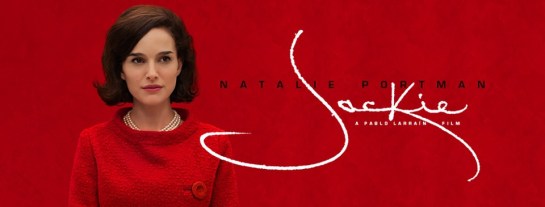
There are a number of traps and obstacles filmmakers face when making a biopic. It grows even more challenging when the film’s focus is a beloved historical and cultural figure. “Jackie”, director Pablo Larraín’s portrait of Jackie Kennedy, would seem to be a prime example. But this film avoids many of these routine complications by setting itself up as something strikingly unique right out of the gate.

Writer Noah Oppenheim first conceived “Jackie” as an HBO miniseries but the project evolved into a compact, tightly-wound 98 minute feature. It tells the story of Jackie Kennedy but not in the traditional sense. Instead it restricts its focus to the four days between the assassination of her husband President John F. Kennedy on November 22, 1963 to the state funeral on November 25th. It’s told almost entirely from her perspective yet it’s much more than a detailed historical account. The film’s interest is in exploring Jackie’s state of mind during those impossibly traumatic few days. It does so with equal amounts of fact and speculation.

jackie1

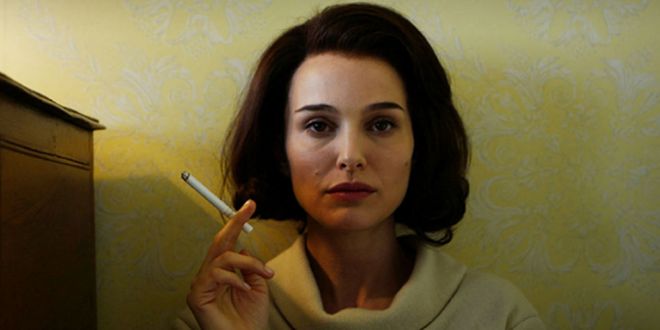
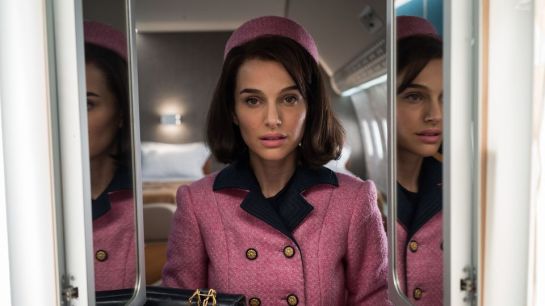
The narrative framework comes in the form of an interview. Billy Crudup, credited as simply The Journalist (but based on Life magazine journalist Theodore White), arrives at the Kennedy’s Hyannis Port compound to interview the former First Lady. He’s met by a pale, drained Jackie (played with uncanny ferocity by Natalie Portman). Throughout their mercurial and sometimes contentious interview it becomes clear Jackie is the one dictating the terms of what will be written. When she lights a cigarette she emphatically tells the journalist “I don’t smoke.” – a clear signal to him that she controls the message.

Through the interview we revisit those agonizing four days the way Jackie recalls them. All of the iconic imagery is there – the ’61 Lincoln convertible, the pink bloodstained Chanel dress, Jackie and Caroline kneeling at JFK’s casket. Larraín presents these scenes through well detailed recreations and archived historical footage. But this movie is more interested in the time between those well-documented moments. What did Jackie do? Better yet what was she feeling?

Because of this focus “Jackie” maintains a keen psychological edge to it. You see it as she maneuvers through an emotional haze of grief and anxiety. Larraín and Oppenheim want us inside of Jackie’s head as they themselves ponder her internal reactions to such painful and uncertain events. Portman runs with it, diving so deeply into the psyche of her character that we completely forget the two look nothing alike. You buy into her personal struggles and her wranglings with others including her compassionate brother-in-law Bobby (played by Peter Sarsgaard who is so good here) and Lyndon B. Johnson (John Carroll Lynch).

jackie2

Surprisingly this isn’t a puff piece aimed at reinforcing Jackie’s venerated cultural image. It doesn’t shy away from her weaknesses or blemishes. At the same time it doesn’t shortchange her strength and fortitude. At no point does the film question her resilience or integrity. If anything it humanizes her and makes her a more sympathetic and relatable person especially considering the overwhelming pressures she faced.

This movie’s unusual approach to the biopic is sure to catch a lot of people off guard. In some of its deeper internal moments it’s almost hallucinogenic, maybe too much so on occasion. Mica Levi’s moody score is a big contributor. It plays prominently from start to finish and blankets the entire film with a steady sense of unease. And then we get back to Portman and her sublime performance. It’s peculiar and off-kilter, perfectly so. That makes it a wonderful fit for this unusual but thoroughly satisfying portrait.

VERDICT – 4 STARS

4-stars

REVIEW: “Infernal Affairs”

infernal-poster

Back in 2006 Martin Scorsese’s “The Departed” grabbed a lot of attention. It received universal acclaim and would go on to win four Oscars including Best Picture. For many it also brought attention to the 2002 Hong Kong crime drama “Infernal Affairs” – the direct inspiration for Scorsese’s “The Departed”. Scorsese would later say “Infernal Affairs” was an example of why he loved Hong Kong cinema.

“Infernal Affairs” was a critical and box office hit when first released winning seven of its sixteen Hong Kong Film Awards nominations. Over time it has gained a global appreciation and has influenced a number of prominent filmmakers. Much of its impact is due to a riveting script featuring two rich, intersecting storylines and a near flawless pacing. Once it starts it keeps you locked in for the duration.

infernal3

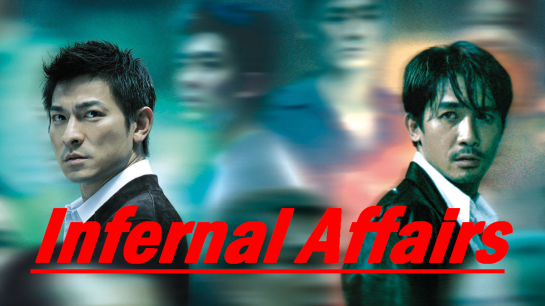
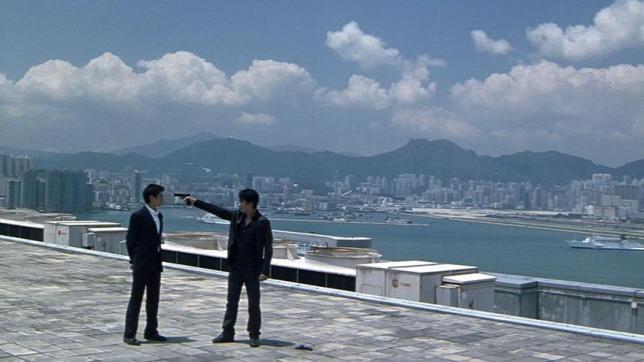
Following the same timeline a young police cadet is sent to infiltrate a local triad while a young gang member is sent to infiltrate the Hong Kong police department. Ten years pass and both men climb the ranks to higher and more trusted positions. Chen (Tony Leung) is a top dog to triad boss Sam (Eric Tsang) but has grown tired of undercover cop life. Lau (Andy Lau) has become Sam’s top insider within the police department. As both feed more information to their bosses it becomes evident to each they have a mole that needs exterminated.

What follows is a tense game of cat-and-mouse as one tries to root out the other. The Alan Mak and Felix Chong screenplay impressively weaves together its two narrative threads while steadily building towards its inevitable explosive conclusion. And while action is a component of their story, Mak and Chong are much more interested in moral dilemmas and inner conflicts. They deal personally with themes of identity, loyalty, and suffering – specifically a continued state of suffering.

You could say suffering is the main theme. The film begins and ends with two Buddhist verses which speak of a “continuous hell” and the actual Chinese movie title is translated “The Unceasing Path”. Chen and Lau are trapped in their own unending personal hells with no discernible escapes. It’s a concept the movie explores to great effect and all within a riveting, tightly-wound crime thriller.

infernal2

The casting of charismatic leads Tony Leung and Andy Lau energizes the movie even more. Both give focused, understated performances that earned them critical acclaim. But that’s no surprise. By that time both actors were immensely popular and have since been established as two of Hong Kong’s most successful and bankable movie stars. They have very little screentime together but the scenes they do eventually share serves as a most satisfying payoff.

“Infernal Affairs” is recognized by many as one of the signature Hong Kong movies of its era. It’s easy to see why. It features a highly original crime/police story brimming with drama and tension. The small bursts of action we get are thrilling and the film is shot with an impeccable attention to tone. But the characters are the story’s lifeblood and everything the movie puts around them reveals more of the struggle within them. It’s an unexpected ingredient that separates the movie from the bulk of action movie fodder.

VERDICT 4.5 STARS

4-5-stars

REVIEW: “Lion”

lionposter

“Lion” may best be described as a true account of two extraordinary, life-changing journeys experienced by young Saroo Brierley. That description gets to the  meat-and-potatoes of this moving, inspirational drama from first time feature director Garth Davis. And regardless of how hard you try, you’ll have a tough time leaving the theater dry-eyed.

“Lion” is adapted from Brierley’s memoir titled “A Long Way Home” which chronicles his separation from home as a young boy and his intense emotional struggle to reconnect as a young man. Australian poet and novelist Luke Davies wrote the screenplay which provided a series of unique challenges. From handling cultural shifts to avoiding the common trappings of highly emotional material, he and Davis masterfully present this complex tale.

Sunny Pawar stars in LION  Photo: Mark Rogers

The film divides Saroo’s life into two parts. The first features him as a 5 year-old boy living in a poor remote village outside of Khandwa, India. He’s portrayed through an astonishing performance by newcomer Sunny Pawar. Saroo’s mother (Priyanka Bose) collects rocks to provide food for her children while Saroo helps his older brother Guddu (Abhishek Bharate) doing menial jobs for change.

While in Khandwa for a week-long job Saroo is separated from his brother at a train station. After waiting for Guddu to come for him, Saroo mistakenly boards a train which takes him 1000 miles away to Calcutta. Once there the film confronts a number of issues through young Saroo’s eyes – the plight of street children, child trafficking, poverty, and even adoption which we see when Saroo is taken in by John and Sue Brierley, an Australian couple played by David Wenham and Nicole Kidman.

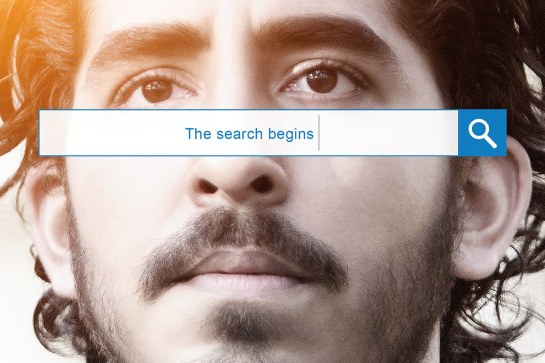
20 years later Saroo (now played by Dev Patel) is leaving home to study hotel management in Melbourne. There he meets and falls for a fellow student named Lucy (Rooney Mara). As they dine with a group of Indian friends Saroo is hit by a rush of memories and emotions. With his friends encouragement he begins to track down his birthplace through flashes of memories and Google Earth. But every dead-end compounds his pain and intensifies his longings to know who he truly is. Perhaps Saroo describes himself best when he simply states “I’m lost”.

lion2

Watching “Lion” is like taking in two dramatically different movies yet there is a powerful human connection that links them. Young Pawar’s segment is both harrowing and heart-breaking. Davis’ camera often has us seeing things from Saroo’s perspective which adds an extra layer of distress and concern. He doesn’t overplay it nor does he feel the need to manipulate his audience by embellishing the peril. When Patel arrives the film becomes much more internal, at times even meditative as older Saroo not only wrestles with his identity crisis but also helplessly watches the effects it has on his relationships.

The final act wrings out every ounce of emotion left, but it feels honest and earned considering the journey we’ve taken. Aside from one slightly underserved relationship and the film drifting a tad in the second half, “Lion” eloquently handles this incredible multi-layered story. Patel’s leading man star has never shown brighter. Pawar is a delightful discovery. A quiet, understated Kidman melts into her character. It’s also a beautifully shot first feature from a director worth keeping an eye on.

VERDICT – 4.5 STARS

4-5-stars

Random Thoughts – 2017 Oscar Nominations

oscars

It’s hard to believe but Oscar time is upon us again and this morning the Academy tossed out their list of this year’s nominees. As is always the case, there were a handful of surprises, several frustrations, and some things that simply didn’t make sense. As I do every year, here are a few random thoughts about this year’s Oscar nominations.

  • First off, please never use this method of announcing the Oscar nominations again. It felt terribly messy and splotched together. C’mon Academy. Most of us aren’t complicated people. Just give us the nominations.
  • Meryl Streep? Seriously? As I asked on Twitter, was she nominated for her performance in “Florence Foster Jenkins” or for her Golden Globes speech? Her automatic spot at the Oscar’s Best Actress table is getting ridiculous. Don’t get me wrong, she is good in “FFJ” but far from Oscar worthy. Worse than that she knocks out other actresses who are much more deserving. Sigh…
  • Spinning off of that, the Amy Adams snub is egregious. Yes it happens every year, but Adams is so good in “Arrival” and most people have rightly recognized that. How she misses out on an Oscar nomination is baffling. I guess someone had to fall on the sword for Meryl.
  • Tom Hanks again misses out on a Best Actor nomination. I loved his performance in “Sully” but I’m not really surprised he fell short. But here’s an interesting tidbit – Hanks hasn’t been nominated in this category since 2000! Think about all of his performances yet nothing since “Cast Away”. Interesting…
  • Aaron Taylor-Johnson surprised many by winning the Golden Globe for Best Supporting Actor. That won’t be the case come Oscar night. His “Nocturnal Animals” cast-mate Michael Shannon got a nomination instead. I’m fine with that.
  • It was really nice to see movies like “Lion” and “Hell or High Water” get several prominent nominations. Neither will win in the big categories, but their inclusion is encouraging.
  • Absolutely nothing for Whit Stillman’s brilliant “Love & Friendship”. Not surprised but I did hold out a little hope. It didn’t even make a dent in the Costume Design category. Sigh…
  • Speaking of “Love & Friendship”, it would have been great to have seen Kate Beckinsale get a nomination. It was never going to happen, but she certainly deserves it. But at least they got Meryl in there.
  • “Suicide Squad” is now an Oscar-nominated film. Let that sink in for a second.
  • I did pump my fist for “A Man Called Ove”. It’s a wonderful movie that not only received a Best Foreign Language nomination but also in Makeup and Hairstyling. That makes me happy.
  • So NINE Best Picture nominees. Not EIGHT and certainly not TEN. But NINE. Sure, okay.
  • Martin Scorsese’s “Silence” didn’t get much attention. It did grab a much-deserved nomination in cinematography, but as a whole it was ignored. That’s a shame. I wonder if enough voters have seen it considering its insanely limited release schedule? Then again it isn’t a film aiming for attention. Whatever, all the more reason for me to consider it the first great movie of 2017.
  • And get this – as IndieWire pointed out, “Passengers” has more Oscar nominations than “Silence”. Excuse we while I go lay into oncoming freeway traffic.
  • The Best Actor category fell right in line with nearly everyone’s projections. Looks to be a showdown between Casey Affleck and Ryan Gosling. I still thing Denzel Washington deserves it the most.
  • “La La Land” lands 14 Oscar nominations. 14! That ties it with “All About Eve” and “Titanic” for the most all-time. Big showings like this sometimes turn people off, but you won’t hear me complain. Damien Chazelle has crafted something truly special.
  • I’ve already heard some people touting the success of last year’s #OscarsSoWhite campaign, but how true is that? The Oscars aren’t the big issue. They are simply a reflection. If anything we should look at the studios and the opportunities they give. This year’s nominees reflect what is hopefully a meaningful change in that area.
  • Speaking of which, congrats to Bradford Young, the first African-American ever to be nominated in the cinematography category. His work on “Arrival” is some of the best of the year. It’s well-deserved recognition.
  • Looks like “Zootopia” is an easy pick to win Best Animated Feature. I’ll remain in the tiny minority who aren’t fans of it…a tiny, tiny minority.
  • Sticking with that category, I’m surprised that “Finding Dorey” didn’t get a nod. Did they even think of how that will effect my little girl?
  • No, “Deadpool” didn’t get a nomination. No, Ryan Reynolds didn’t get a nomination. No, neither deserved nominations.
  • But “Sing Street” did deserve a nomination especially in the Best Original Song category. I’m still rooting for “La La Land” there, but how can “Drive It Like You Stole It” not find a place in the conversation?
  • Some people are calling Viggo Mortensen’s Best Actor nomination a surprise. Maybe so but he is very deserving. “Captain Fantastic” was such a fresh, unique and unpredictable movie. That’s a great way of describing Viggo’s performance as well. Love seeing him nominated.
  • I’m not going to start a protest but “Captain America: Civil War” didn’t even get a technical nod? Superheros have a tough go at Oscar time.
  • I’m glad to see so much love for “Hacksaw Ridge”. The film earned six nominations from the Academy including Best Picture, Best Lead Actor, and Best Director for Mel Gibson. It won’t win much of anything but it’s great to see the recognition as well as the forgiveness.
  • Thrilled for Viola Davis. What an electrifying performance in “Fences”. Here is an interesting note – she becomes the first African-American actress with three nominations. Bravo.

So there are a handful of random thoughts about this year’s nominations.  In case you missed it here is a full list of the nominees:

Best picture:
“Arrival”
“Fences”
“Hacksaw Ridge”
“Hell or High Water”
“Hidden Figures”
“La La Land”
“Lion”
“Manchester by the Sea”
“Moonlight”

Best director:
Damien Chazelle – “La La Land”
Mel Gibson – “Hacksaw Ridge”
Barry Jenkins – “Moonlight”
Kenneth Lonergan – “Manchester by the Sea”
Denis Villeneuve – “Arrival”

Lead actor:
Casey Affleck – “Manchester by the Sea”
Andrew Garfield – “Hacksaw Ridge”
Ryan Gosling – “La La Land,”
Viggo Mortensen – “Captain Fantastic”
Denzel Washington – “Fences”

Lead actress:
Isabelle Huppert – “Elle”
Ruth Negga – “Loving”
Natalie Portman – “Jackie”
Emma Stone – “La La Land”
Meryl Streep – “Florence Foster Jenkins”

Supporting actor:
Mahershala Ali – “Moonlight”
Jeff Bridges – “Hell or High Water”
Lucas Hedges – “Manchester by the Sea”
Dev Patel – “Lion”
Michael Shannon – “Nocturnal Animals”

Supporting actress:
Viola Davis – “Fences”
Naomie Harris – “Moonlight”
Nicole Kidman – “Lion”
Octavia Spencer – “Hidden Figures”
Michelle Williams – “Manchester by the Sea”

Animated feature:
“Kubo and the Two Strings”
“Moana”
“My Life as a Zucchini”
“The Red Turtle”
“Zootopia”

Animated short:
“Blind Vaysha”
“Borrowed Time”
“Pear Cider and Cigarettes”
“Pearl”
“Piper”

Adapted screenplay:
Eric Heisserer – “Arrival”
August Wilson – “Fences”
Allison Schroeder and Theodore Melfi – “Hidden Figures,”
Luke Davies – “Lion” Luke Davies
Barry Jenkins – “Moonlight”

Original screenplay:
Mike Mills – “20th Century Women”
Taylor Sheridan – “Hell or High Water”
Damien Chazelle – “La La Land,”
Yorgos Lanthimos, Efthimis Filippou – “The Lobster”
Kenneth Lonergan – “Manchester by the Sea”

Cinematography:
Bradford Young – “Arrival”
Linus Sandgren – “La La Land”
Greig Fraser “Lion”
James Laxton – “Moonlight”
Rodrigo Prieto – “Silence”

Best documentary feature:
“13th”
“Fire at Sea”
“I Am Not Your Negro”
“Life, Animated”
“O.J.: Made in America”

Best documentary short subject:
“4.1 Miles”
“Extremis”
“Joe’s Violin”
“Watani: My Homeland”
“The White Helmets”

Best live action short film:
“Ennemis Interieurs”
“La Femme et le TGV”
“Silent Nights”
“Sing”
“Timecode”

Best foreign language film:
“A Man Called Ove,” Sweden
“The Salesman” Iran
“Tanna,” Australia
“Land of Mine” Denmark
“Toni Erdmann,” Germany

Film editing:
“Arrival”
“Hacksaw Ridge”
“Hell or High Water”
“La La Land”
“Moonlight”

Visual effects:
“Deepwater Horizon”
“Doctor Strange”
“The Jungle Book”
“Kubo and the Two Strings”
“Rogue One: A Star Wars Story”

Sound editing:
“Arrival”
“Deep Water Horizon”
“Hacksaw Ridge”
“La La Land”
“Sully”

Sound mixing:
“Arrival”
“Hacksaw Ridge”
“La La Land”
“Rogue One: A Star Wars Story”
“13 Hours: The Secret Soldiers of Benghazi”

Production design:
“Arrival”
“Fantastic Beasts and Where to Find Them”
“Hail, Caesar!”
“La La Land”
“Passengers”

Original score:
“Jackie”
“La La Land”
“Lion”
“Moonlight”
“Passengers”

Original song:
“Audition (The Fools Who Dream)” – “La La Land”
“Can’t Stop the Feeling” – “Trolls”
“City of Stars” – “La La Land”
“The Empty Chair”- “Jim: The James Foley Story”
“How Far I’ll Go” – “Moana”

Makeup and hair:
“A Man Called Ove”
“Star Trek Beyond”
“Suicide Squad”

Costume design:
“Allied”
“Fantastic Beasts and Where to Find Them”
“Florence Foster Jenkins”
“Jackie”
“La La Land”
REVIEW: “Silence”

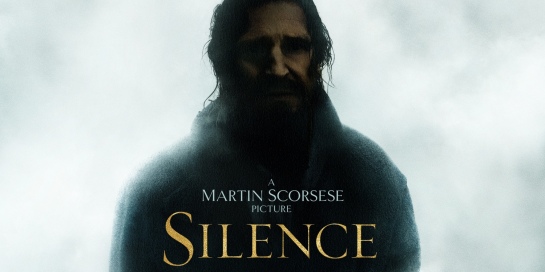
silence-poster

For Martin Scorsese bringing “Silence” to the screen has been a fascinating journey. It started as an inspiration in 1989. Over the next 25 years it grew and evolved into something deeply personal for the filmmaker. In several interviews Scorsese has intimated that the film’s conceptual evolution mirrored his very own spiritual maturation. This intimate connection seeps from every pore of “Silence” making it a profoundly affecting labor of love.

It was in 1989 that Scorsese first read “Silence”, Shūsaku Endō’s historical fiction novel published in 1966. Scorsese immediately knew he wanted to make a film adaptation but he didn’t know how. Early attempts lead to an unfinished script in 1991. Plans to begin production in 1997 were postponed. More delays came in 2004 and 2011. But these postponements weren’t without purpose. During that time Scorsese gained a better sense of what “Silence” was saying. In his words he finally figured out “the heart of the book”.

silence3

Endō’s novel is a deep exploration of the depths of faith. It drills below the surface-level perceptions of faith, down to its most bare and intimate state. Scorsese’s cinematic study of this central spiritual theme is absorbing but also challenging. The story he and co-writer Jay Cocks tells is powerful and rooted in historical significance. At the same time the film is a bruising meditation that is calling its audience to self-reflection.

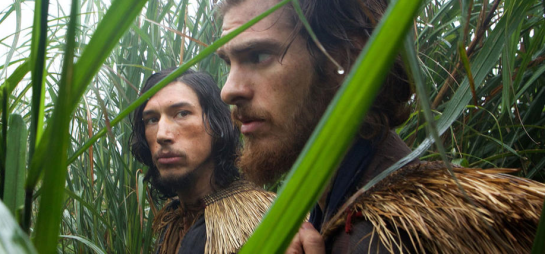
To get us to that point we follow two 17th century Portuguese Jesuit priests, Father Sebastião Rodrigues (James Garfield) and Father Francisco Garupe (Adam Driver). The two receive word that their mentor Father Ferreira (Liam Neeson) has vanished after renouncing his faith amid intense persecution in the mission fields of Japan. Unconvinced of Ferreira’s apostasy, the two priests set out to find their mentor’s whereabouts despite the cloud of danger awaiting them.

The Japan of the 17th century was controlled by the Tokugawa shogunate. Christianity was deemed a threat and subsequently outlawed. Anyone breaking these laws faced torture and/or execution. It’s here that Father Rodrigues and Father Garupe sneak ashore with the aid of a boozing local vagrant named Kichijiro (Yôsuke Kubozuka). There the “padres” connect with a small village of Christians who secretly practice their faith in the dark of night.

silence2

It’s worth noting Scorsese’s use of his camera to portray the arduous, uncompromising world these two priests enter into. It feels just as foreign to us as it does them. Even the sound design contributes to the sense of uncertainty and isolation. The heightened sounds of nature routinely take the place of a your standard musical score and sometimes the silence itself speaks volumes.

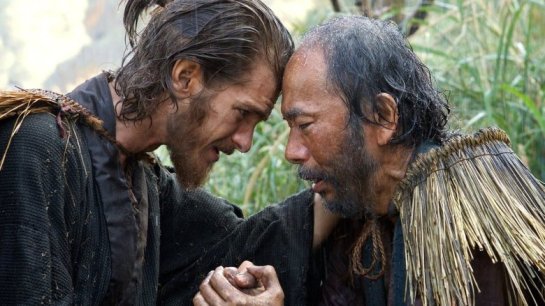
Rodrigues and Garupe establish a semblance of ministerial and sacramental normalcy for the village believers and as a result see their own faith strengthened. But the region’s ruling shogunate led by the freakishly blithe and casually brutal Inquisitor Inoue (Issey Ogata) is intent on rooting out and purging the land of Christianity. His dogged persistence paves the way to the film’s central conflict – something much deeper than a faithful Christian versus his relentless persecutor.

The further you get into “Silence” the better you understand the challenge Scorsese lays before us. The obvious storyline is compelling, but to truly understand the heart of the story requires a willingness to internalize the theme of faith and reckon with what is revealed to you. Yes, it’s a deeply spiritual film but not a preachy one. In fact it could be said it asks more questions than it answers. Still Scorsese ponders these ideas with the sincerest curiosity and unflinching patience – the essence of faith, the pain of betrayal, our human frailty. And what do we make of God’s silence in the midst of tremendous suffering?

silence1

As you would expect the performances are sublime. Neeson’s portrait of anguish and conflict helps make his handful of scenes some of the film’s finest. Driver is as tense as he is gaunt which is strikingly in-tune with his type of character. That gets to Garfield, a guy who has steadily gotten better with each role he has taken. In “Silence” he literally transforms before our eyes both in character and performance. He plays it a bit safe early on but quickly tosses aside all restraints and commits every ounce of himself. Portraying spiritual struggle is tough and Garfield impressively carries the bulk of that load.

It has taken me two viewings and a lot of wrestling to truly figure out how I feel about this film and what it means to me. It’s that type of movie – one that can’t be appreciated with a mere surface reading. Despite its incredible artistry and beautifully sculpted scenes (cinematographer Rodrigo Prieto deserves an Oscar nomination), “Silence” seeks to be something more – a spiritual epic that not only reflects where Scorsese is in his personal journey but challenges us in ours.

“Silence” is a film that may not sit well with Scorsese die-hards looking for his normal cinematic swagger and it certainly doesn’t aim to be a 2 hour and 40 minute crowd-pleaser. But after a second look it clicked for me in every meaningful way. I still have questions the movie stirred up within me and I love the its unwillingness to give me every answer. In fact Scorsese isn’t saying he has every answer. But he is saying the questions are worth asking, and the answers you get just might change your life.

VERDICT – 5 STARS

5STAR K&M

5-starss

Best of 2016 – Lead Actor

2016supleadactor

Each year I set aside time to examine and spotlight what I think are the best performances of the past movie year. In keeping with the upcoming Oscars I have adopted their format and for the last several days I’ve been highlighting the very best performances for each of the four acting categories. Today wraps it up with a look at the best lead actor performances. While not as strong as the women’s categories, there were still several to choose from. Here are my favorites.

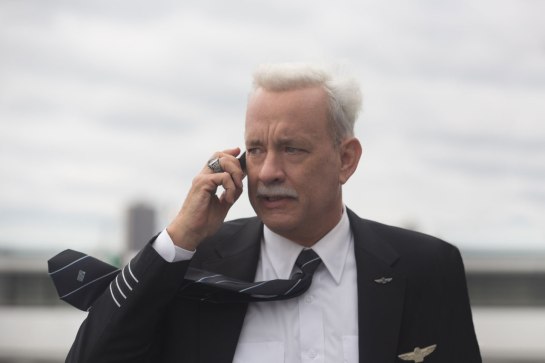
#5 – Tom Hanks (“Sully”)

sully

I think we have reached a point where many people take Tom Hanks performances for granted. He is expected to be good so people either overlook him or simple don’t muster the excitement come awards time. But that doesn’t change the quality of his work. “Sully” is yet another example of why Hanks is one of the tops in Hollywood. It’s a perfectly contained performance in tune with what the film and character needed.

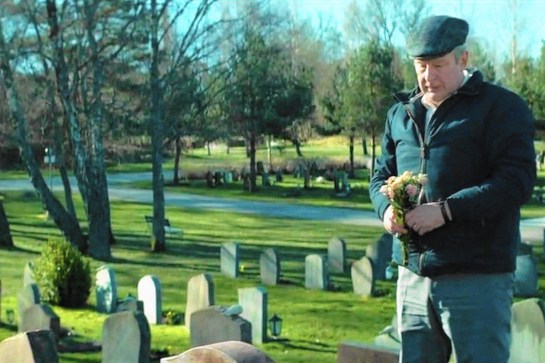
#4 – Rolf Lassgård  (“A Man Called Ove”)

ove

Watching Rolf Lassgård portray his cranky, curmudgeon of a character is simply a ton of fun. He manuevers through layers of the blackest comedy and the tenderest drama. Lassgård’s tough-minded performance carves its way through the story’s steady wave revelations. Many critics have called the film overly sentimental and manipulative. I found it to be both delightful and heart-breaking and that is in large part due to Lassgård’s great work.

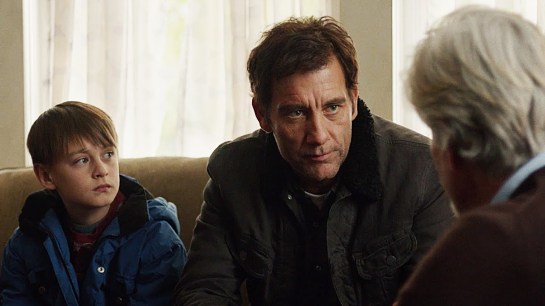
#3 – Clive Owens (“The Confirmation”)

clive

In one of the more underseen movies of 2016 Clive Owen plays a down-on-his-luck father trying to reconnect with his son. Bob Nelson penned 2013’s wonderful “Nebraska” and here he brings some of the same straightforward realism and prickly dark comedy. Owen has no problem fitting into Nelson’s character. At times he’s very funny, but Owen also keeps his character firmly grounded in the real world. It’s such a good performance that too many people missed.

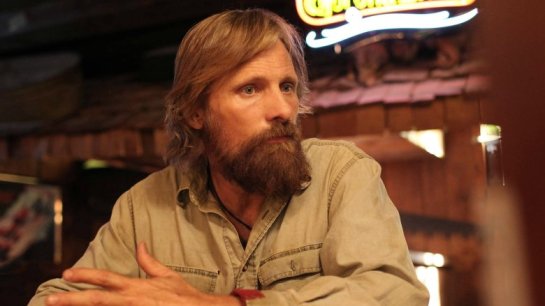
#2 – Viggo Mortenson (“Captain Fantastic”)

fantastic

Now here is a movie that came completely out of the blue. “Captain Fantastic” is an impossible picture to peg down, and even when you think you have it figured out the film becomes something dramatically different. But it works in large part due to Viggo Mortenson’s outstanding performances. It’s impossible to list every layer and complexity his character exhibits, but one thing is for certain – Mortenson loses himself in the role and the results are simply captivating.

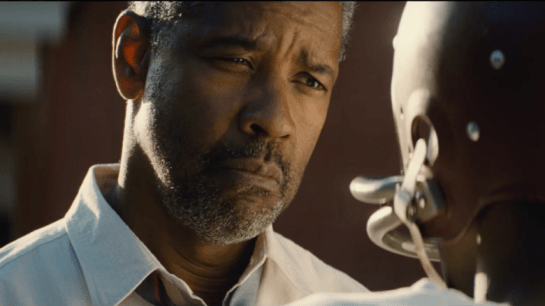
#1 – Denzel Washington (“Fences”)

denzel

In a year rich with wonderful performances Denzel Washington’s work in “Fences” was still an easy choice for my #1 spot. That’s not a knock on the others. Washington is just that good playing a bitter, jaded man deeply bruised by his past. The film stays close to its stage roots which means lots and lots of dialogue. This allows Washington to showcase why he is one of the very best actors in the business. There are so many 2016 performances worthy of attention, but Washington soars on an entirely different level.

That finishes up this year’s look at the four acting categories. What did you think about this list? Please share your thoughts in the comments section below.