REVIEW: “Justice League”

JUSTICE POSTER

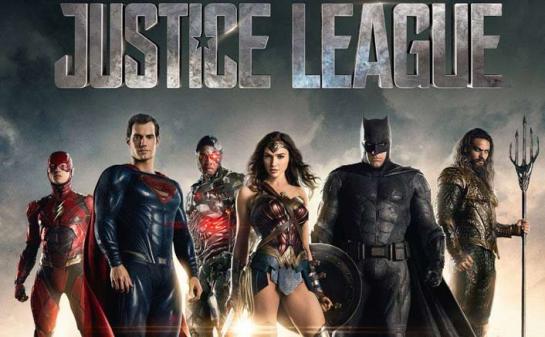
Going back to the start of the 2017 movie year “Justice League” gave us two of the easiest things to predict. First, “Justice League” would (one way or another) get a lot of attention for Warner Brothers. Second, the majority of film critics wouldn’t like “Justice League”. Okay, perhaps the second prediction was a bit cynical, but lets just say with one prominent exception (this year’s “Wonder Woman”) critics haven’t responded well with the DCEU’s approach.

DC films have a much different flavor than their rival, Disney-owned Marvel. Marvel movies tend to be lighter and often poke fun at themselves for their overall absurdity, so much so that several of their films could be called all-out comedies. DC movies are darker and considerably more serious. In many ways they are more like their comic book inspirations in how they tonally treat their stories. Therefore critics who have a hard time taking comic books seriously equally struggle with DC’s movies.

Justice1

Contrary to some, I’ve enjoyed the DC formula (minus “Suicide Squad”) and for the most part “Justice League” sticks to it. Yet this movie is far from humorless and there’s no denying that the creative heads have made it a point to inject some laughs (to a fault). But some of the serious tone and dire threat is still there, just to a slightly lesser degree.

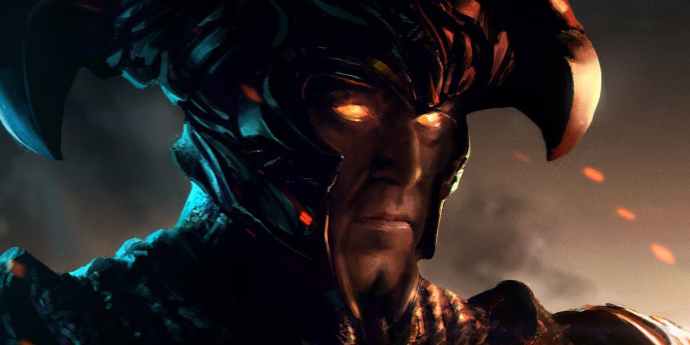
The story begins with the world still mourning the death of Superman (Henry Cavill). In his absence an increase of crime can be seen from city to city. Fear sets in which attracts the attention of an interdimensional conqueror Steppenwolf (Ciarán Hinds) and his army of parademons. Recognizing the weakened earth’s vulnerability, Steppenwolf sets out to resume his centuries-old hunt for three powerful energy sources called Mother Boxes.

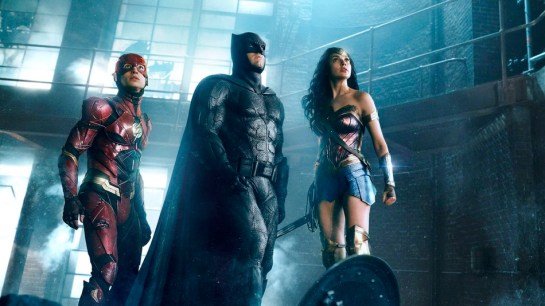
Batman (Ben Affleck) is the first to get a whiff of the impending invasion. Superman’s death and the reality that he can’t handle it alone drives Bats to contact Wonder Woman (Gal Gadot) to help him form a team. Enter Arthur Curry a.k.a. Aquaman (Jason Momoa), Barry Allen (Ezra Miller) also known as The Flash, and Ray Fisher who is called Cyborg. Each have their own demons that keep them on their own, but each are faced with personal trials that eventually bring them together.
Justice3

Returning director Zack Snyder’s vision once again plays with a lot of moving parts but manages to keep them all within a cohesive working universe. Several smaller characters with connections to past films return – Amy Adams as Lois Lane, Diane Lane as Ma Kent, Jeremy Irons as Alfred, Connie Nielsen as Hyppolyta, J.K. Simmons as James Gordon. They never feel wedged in and each have their moments that serve the story well.

Oscar-winning screenwriter Chris Terrio (who worked with Affleck on “Argo”) wrote the screenplay based on a story he developed with Snyder. But Snyder left the project in post-production following the heart-breaking loss of his daughter. Joss Whedon came aboard to finish up and received a screenplay credit. The trio work hard to balance the fantastical with the human element. Sometimes the get it right, sometimes not so much. Some personal stories are better and more fleshed out than others. Perhaps the most surprising is Cyborg – a failed experiment whose story pulsates with a Frankenstein’s monster vibe. Fisher is excellent at juggling the proper amounts of sorrow and anger. Ezra Miller is the wide-eyed comic relief who dances close to the line of overkill but never crosses it. That said it still feels like there is more to their stories that needs to be told.

As for the big guns, Affleck has the dark brooding side of Bruce Wayne down and (for better or worse) he’s not asked to do much beyond that. While I’m ready for the character to show a tad more life, I do like how he is written here. He’s older, tired, and unsure of himself. He knows he can’t lead a team and we get a good sense of that internal struggle. Gadot’s Diana hits nearly every note that has made her the star of the DCEU. She’s strong, courageous, and upright yet she too sports her own personal scars. Then there is Cavill’s Superman, long accused of being dry and lifeless (I’ve never fully agreed with that take). We see him in the trailer and I won’t go further than that, but I’ll say this is a strong depiction of what makes Superman great.
Justice2

“Justice League” isn’t without its issues. It has been difficult for comic book movies of all sorts to truly nail their villain and it’s no different here. There is actually a cool otherworldly background alluded to but ultimately Steppenwolf comes off as a little thin. You’ll easily recognize him as the familiar cosmic threat here to take over our planet. There is more just under the surface but we never get a good enough taste. There are also instances where the CGI and green-screen backgrounds are far too obvious. The bulk of the action is fun, but those instances do stick out.

It was no surprise that “Justice League” was met with the same consternation as “Batman vs. Superman”. And even though it addresses many of the complaints hurled at its predecessor, “Justice League” and its audacity to take itself and its story seriously is sure to set the film up as a fashionable punching bag. It’s unfortunate because this is a solid DCEU installment that expands the established characters, introduces compelling new ones and does some nifty world building. It will do nothing to win over those uninterested in the DCEU or the superhero genre as a whole. But for fans, especially those who want something that doesn’t strictly adhere to the Marvel formula, “Justice League” is a fun ride.

VERDICT – 3.5 STARS

3-5-stars

REVIEW: “The Unknown Girl” (2017)

UnknownPoster

Few modern filmmakers capture my attention quite like the Dardenne brothers. It’s not due to some pronounced signature style or showy big budget crowd-pleasing. Instead it is the undeniable naturalism that is found in each of their movies. Their stories are true to life and delve into an assortment of moral conflicts all while remaining free of narrative gimmicks or shiny Hollywood gloss.

Luc and Jean-Pierre’s latest “The Unknown Girl” checks all of the above boxes. It’s story revolves around a young doctor named Jenny. She’s played by Adèle Haenel whose striking performance comes across as almost Bressonian. It’s quiet yet at the same time it brims with intensity, not from any thundering dramatic force or narrative machinations. Instead it comes from the sheer authenticity of the performance.

Unknown1

Jenny works at free clinic in a blue collar neighborhood but has recently been accepted to a lucrative doctors position with a prominent medical group. With her career and future set, Jenny finishes out her final days at the clinic treating familiar patients and training an insecure intern named Julien (Olivier Bonnaud). Late one evening the buzzer sounds at the front door as Jenny and Julien prepare to leave for the day. Already an hour past closing time, Jenny chooses not to answer it – a decision that will come back to haunt her.

The next day Jenny learns that an unidentified immigrant teenaged girl was found dead nearby. The clinic’s security cameras reveal that it was the girl who had frantically rang the buzzer the night before.   Jenny is shaken by the news and by the guilt of her own negligence. In a quest for atonement Jenny sets out to discover the girl’s identity and to find out what happened to her.

For Jenny it becomes an obsession rooted in finding justice for the young woman but also in obtaining some semblance of personal closure. The Dardenne’s use her obsession to dig deeper into the weakened economic and social structure of Liége, Belgium, a field they have plowed numerous times before. The brothers have always had a keen sensibility towards working-class issues and plights. Here it’s explored through every location Jenny visits in her search for information. We also see it in the various lower-income patients Jenny sees. Some are dealing with social service cutbacks, some with illegal documentation, even addicts wanting fake prescriptions. None are glorified or demonized. They are simply observed through an real-life lens.

unknown2

A bit more about Adèle Haenel. Her performance and its importance to the film cannot be overstated. She is in practically every frame of the movie and there is such an emotional subtlety in her portrayal. It makes sense. She once tells Julien “A good doctor has to control his emotions”. But the further her search for answers goes she finds it harder to abide by her own rule. Also, despite her one moment of compromise, Jenny is a true organic heroine. It’s seen in her heartfelt desire to identify the girl and in the compassion she has for every patient she sees. Haenel makes it real for us.

“The Unknown Girl” certainly has its place in Luc and Jean-Pierre Dardenne’s catalog. As with their past films, its potency comes from its firm anchor in reality. We get thoughtful scrutiny of the medical, economical, and social systems without being preachy or heavy-handed. Instead the Dardennes simply depict true life and allow it to speak volumes. That’s the cinematic world they work in and Adèle Haenel fits beautifully on their canvas.

VERDICT – 4.5 STARS

4-5-stars

REVIEW: “First They Killed My Father” (2017)

firstPOSTER

Throughout her 15 year career Angelina Jolie has been called many things – actress, sex symbol, humanitarian, one-half of the ridiculously over-publicized, paparazzi darling “Brangelina”. But not enough people have considered her prowess behind the camera. Through four directed films she has shown a sharp awareness of technique but never quite hit her stride. That changes with her fifth film, “First They Killed My Father”.

This piercing historical thriller is an adaptation of human rights activist Loung Ung’s memoir of the same name. In her book Ung, a childhood survivor of the brutal Pol Pot dictatorship, tells the heart-wrenching story of growing up during the Khmer Rouge reign. For the film she collaborated with Jolie in writing the screenplay.

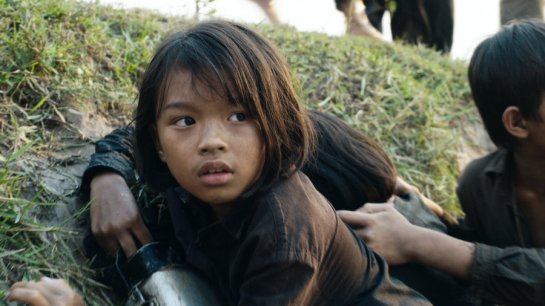
A brief but pointed newsreel introduction lays the foundation for Cambodia’s vulnerability and the subsequent rise of the Khmer Rouge. From there we move to  April, 1975. We meet Loung as a fun, precocious 7 year-old (played with such vivacity and emotion by Sreymoch Sareum). As the daughter of a government official she lives a privileged life with her loving parents and six siblings in Phnom Penh. But her world is forever turned upside down when the Khmer Rouge take control and forcibly evacuate the entire city.

First1

Loung and her family leave with nothing but necessities. They join floods of people, now refugees in their own country, on what some journalists and historians have described as a death march. For Loung’s family it’s particularly stressful. Her father (played with such warmth by Kompheak Phoeungas) is an instant target due to his government ties. This makes every checkpoint or encounter with a Khmer Rouge soldier a harrowing experience.

In a bit of ominous foreshadowing the film’s title looms over a good portion of the story and is an indicator that the road ahead of this family will be a difficult one. Much like the memoir it’s based on, the movie puts us behind the eyes of young Loung. Many films have told their story from a child’s perspective, but not many have done it as well as Jolie does here. You genuinely feel Loung trying to make sense of all she is witnessing and experiencing. You also feel Loung’s love for her family by the way they are often filmed from her perspective. It’s especially evident with her father who Jolie often frames with a childlike adoration. Loung’s love for her family is a fundamental ingredient to the story.

first2

Visually Jolie intentionally understates the brutality and violence choosing to allow it to burn just outside of our sight. It keeps our focus on the characters but also leads to some of the film’s most stunning photography – breathtaking overhead shots that briefly pull us out of Luong’s head to give us a broader picture of the horror. Later in the film the violence comes more into focus as it becomes more of a reality for Loung. Jolie shoots it careful and with great effect. And even beyond the violence, there are so many powerful images captured by cinematographer Anthony Dod Mantle (know most for his collaborations with Danny Boyle).

Jolie should also be commended for her deep desire for authenticity. It led her to film on location in Cambodia. She also used Cambodian actors and actresses as well as the native language of Khmer. All great decisions which puts us the viewers in the proper mindset to take in this story as we should. The film comes across as truly Cambodian in its respect and passion. In fact the film is Cambodia’s submission to the Academy Awards for Best Foreign Language Film.

“In new Cambodia they’ll be no banking, no trading, no private property. No Rich, no poor. No class. We are all the same now.” This one of many lines of propaganda we hear shouted out by Khmer Rouge soldiers. We know it’s a lie. So do Loung’s parents. Yet they are powerless to do anything. That may be the greatest tragedy. As a kid it wasnt a history class that first educated me on the Khmer Rouge and the atrocities committed by their hand. It was a movie – 1984’s powerful “The Killing Fields”. Now I feel another movie is reopening my eyes. Jolie’s film has been simmering in the back of my mind for days. I want to see it again. Sure it’s a difficult watch, but some stories need to be etched into our brains. I would argue this is one of them.

VERDICT – 4.5 STARS

4-5-stars

REVIEW: “Only the Brave”

BRAVEposter

If you aren’t familiar with the story of the Granite Mountain Hotshots but plan on seeing “Only the Brave”, do yourself a favor and don’t read up on their story before seeing the movie. It’s worth it just to experience the fullness of the emotional gut punch this film packs. I had not heard of  these brave men who fought wildfires on the frontlines. I’m certain that’s why this movie provoked such a powerful response from me.

“Only the Brave” could have been several things under that familiar guise of “based on a true story”. It could have been some big studio action movie with more CGI than human element. It could have been a cliché-riddled buddy survival-thriller that Hollywood has produced by the dozens. To be honest I was expecting a bit of all that. What I got was a movie far more interested in its characters than I expected it to be. It isn’t perfect, but when focused on the right stuff (which is more often than not) it reveals a depth that will surprise a lot of people (including me).

Brave2

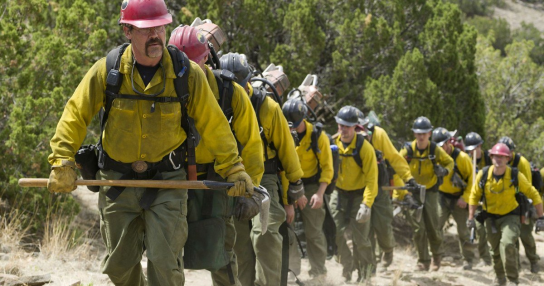
Eric Marsh (Josh Brolin) heads a team of firefighters in Prescott, Arizona. They are a top-notch group who find themselves constantly brushed aside by higher ranked elites. Sick of the federal bureaucracy and lack of progress for his crew, Eric seeks the help of mentor and former firefighter Duane Steinbrink (Jeff Bridges). Because of Duane’s pull a portion of the film deals with the team earning their elite certification and becoming the Granite Mountain Hotshots.

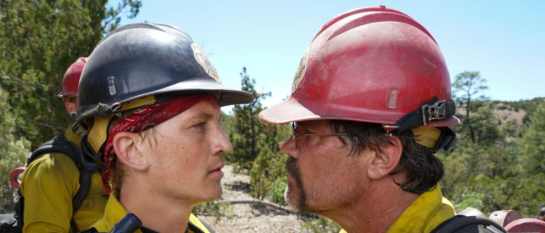
The reason this is even the slightest bit interesting is because of the characters. The writing team of Ken Nolan and Eric Warren Singer put the bulk of their focus on two of the firefighters, Brolin’s Eric and Brendan “Donut” McDonough played by a very convincing Miles Teller. Donut is a stoner looking to turn his life around following the birth of his daughter. Eric sees him as a kindred spirit of sorts hinting at some baggage looming from his past. Team-wise there is some strong supporting work James Badge Dale who plays Eric’s reliable second-in-command and Taylor Kitsch, a bit of a flake but a good-hearted one and always dependable in the field. The other firemen aren’t given much attention yet they still feel integral and important.

A lot of time is given to the team chemistry both in the field and away from it. There are plenty of good scenes that show the camaraderie of this tight-knit unit. At the same time the writers occasionally overdo it with some of their banter which I think is meant to be stereotypical “guy talk”. At times it gets a bit silly and perhaps even offensive (depending on your perspective).

Brave1

But we really see these characters open up in the scenes where these men step away from their firefighting. Eric’s story is especially compelling because we get Jennifer Connelly who is excellent playing his wife Amanda. She spends more time with the horses she nurses back to health than her husband who is always away on duty. Over time we begin to sense the stress it has on their relationship. Connelly shrewdly maneuvers through Amanda’s slowly shifting emotions never hitting a false note. She’s so good in the scenes she is given and has a great chemistry with Brolin.

All of this relationship building and character development fuels the final act which, despite some predictable narrative setup, has a profound dramatic kick. Director Joseph Kosinski needs no manipulation or gimmickry because by this point his characters are in a good place and he has the emotional heft of the true events to carry his ending. And by the end I not only knew about the Granite Mountain Hotshots, but I had an intense respect for them and their loved ones.

VERDICT – 3.5 STARS

REVIEW: “Happy Death Day”

HAppyposter

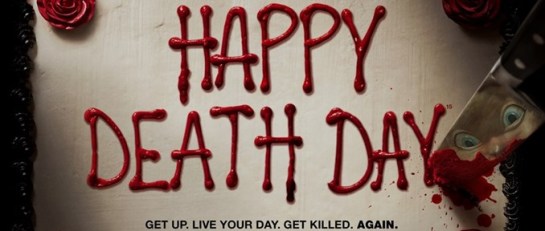
If you’re like me it’s tempting to dismiss this movie because of its title alone. It sounds like the straight-to-video B-movie horror that often found its home on the back shelves of those 80s video rental stores. But in truth that’s part of the craftiness at the center of “Happy Death Day” – a playfully subversive horror film that has a field day toying with familiar tropes that have defined a genre.

Writer Scott Lobdell (known for his work in comic books) pens a script that may best be described as “Groundhog Day” meets “Scream”. This wacky genre blend plays out far better than it may sound and it makes “Happy Death Day” a hard movie to pigeonhole. Case in point, Lobdell and director Christopher Landon are mainly focused on making a horror-comedy, but you could also call it college campus satire, a romcom, and even a life-affirming morality tale. It’s far from revolutionary, but there is much more to this movie than you would expect.

Happy1

Jessica Rothe plays the snooty and loose-living ‘mean girl’ Theresa “Tree” Gelbman who wakes up in the unfamiliar dorm room of sweet, unassuming ‘nice guy’ Carter (Israel Broussard). Unable to remember anything from her previous night of partying, Tree storms out and begins her normal routine of berating or belittling the people in her life. But her day doesn’t have a happy ending. On her way to a party she is stalked and murdered by a killer in a black hoodie and a baby mask.

Now enter the “Groundhog Day” conceit. The moment of her death she suddenly wakes up in Carter’s room yet again. She’s met with the same response from him and everyone else she encounters. She quickly realizes she is replaying the same day. This happens again and again, with her dying at the end of each day regardless of her efforts to avoid it.

At a point during this time loop we see a transformation take place both in the story and in Tree. She turns from novice scream queen to super sleuth and the film becomes more of a murder mystery as she works to reveal her own killer. The list of suspects is long, filled with people Tree has mistreated or offended. She focuses each replayed day on a new potential suspect and as she goes down her list she begins to learn some not so flattering things about herself.

Happy2

Rothe (perhaps best known for her bit part as one of Emma Stone’s roommates in “La La Land”) may be the biggest reason to see this film. I’m pretty sure she is in every single scene and it’s not the easiest role to tackle. She’s asked to stretch herself out in several different directions. Perhaps the most surprising element to her performance is her sharp comedic chops. I can see this opening up some new doors for Rothe.

While the script is clever and the performances are good, I don’t want to oversell “Happy Death Day” or leave the impression that it is some kind of seminal groundbreaker for the horror genre. It definitely utilizes some of the same tropes it pokes fun at and the whole thing is unquestionably silly. But the tongue-in-cheek approach by the filmmakers and their willingness to laugh at themselves makes this a better experience than the corny title would have you believe.

VERDICT – 3.5 STARS

3-5-stars

REVIEW: “Saw”

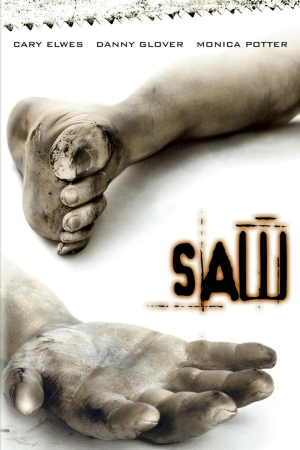
saw posterHere’s some useless information you may not know about me – I’ve never seen any of the “Saw” movies. At least not in their entirety. I’ve seen bits and pieces here and there but not enough to tell them apart or to even care. Frankly it’s a brand of horror that doesn’t appeal to me and what I’ve seen has given me no reason to spend my time on them. Yet that’s exactly what I did.

I decided to watch 2004’s “Saw” for several reasons. 1) It’s the Halloween season and what better time to catch up on some horror movies. 2) I discovered that the original “Saw” marked the feature film directorial debut for James Wan, the man behind the two “Conjuring” films which I happen to really like. 3) “Jigsaw”, the eighth film in the franchise (yes I said eighth), came out over the weekend. 4) It just happened to be on television.

Despite my general apathy for this franchise it has been incredibly successful. Starting in 2004 one “Saw” movie came out every year for seven years. Each film was made with a tiny budget yet each cleared $100 million at the box office with the exception of one. But it all sprang from Wan’s film which turned out to be a tad smarter and craftier than I expected.

The “Saw” franchise is synonymous with the term “torture porn” and deservedly so. But that’s a title earned by the sequels. Wan’s film is an exception. It’s unquestionably a horror film, but it’s just as a much a suspenseful mystery told with a surprising Hitchcockian flavor. Now don’t get me wrong, “Saw” doesn’t break new ground nor is it particularly good. But it is a far cry from what the franchise would become.

saw1

A huge part of the movie takes place in one space – a filthy rundown bathroom. Inside two men wake up with no prior knowledge of how they ended up there. They are chained to walls opposite of each other and between them lies a body in a pool of blood. We learn the first man is Lawrence (Carl Elwes), a successful oncologist, husband, and father. The younger man is Adam (screenwriter Leigh Whannell), a streetwise photographer.

With seemingly no connections, the two try and piece together who put them in the room and why they are there. This is the basis for the mystery aspect of the story.  The horror side comes from Lawrence and Adam’s efforts to escape. There are some pretty graphic scenes but more of the focus is on the psychological. None of it is particularly scary but it’s just engaging enough to keep your attention. Danny Glover pops up as a police detective whose own case intersects with this one. Monica Porter is good playing Lawrence’s wife Alison.

saw2

While a chunk of the film takes place in the bathroom, we spend a lot of time with Glover as well. Unfortunately his hunt for truth is fairly generic. There is also a lot of narrative backtracking through flashbacks that Wan leans heavily on. For the most part it works but it also feels like a necessary device. And while all the story pieces do eventually fit together, there is still a lot that we are expected to simply accept.

“Saw” is an interesting debut from James Wan. It should be commended for attempting to tell a compelling story and for extending itself beyond its tiny budget. But despite its good efforts “Saw” never fully clicks. It’s a far cry from the ridiculous gore-soaked torturefest the franchise has since become, but it still isn’t particularly good horror. At the same time it is a bit better than I expected.

VERDICT – 2.5 STARS