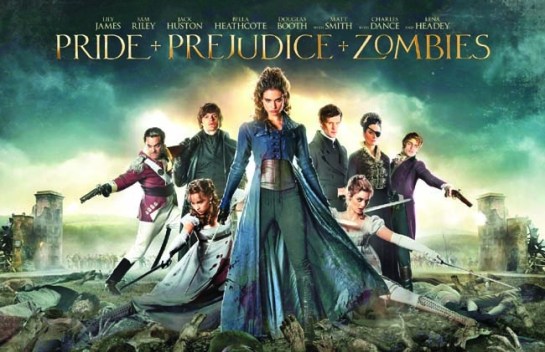
REVIEW: “Pride and Prejudice and Zombies”

PRIDEPOSTER

I saw the trailer for “Pride and Prejudice and Zombies” several times in the theater. The responses from the audiences were always the same – completely quiet until the end when the title popped up. That’s when chuckles could be heard all through the crowd. How can you blame them? It is such an absurdly comical title. It’s also the main reason I was curious to see it.

It surprised me to find this was actually based on a 2009 book parodying Jane Austen’s classic 1813 novel. David O. Russell was originally slated to write and direct  but dropped out for scheduling reasons. A carousel of directors would come and go before Burr Steers took the reins of this wacky project. It’s truly something strange to behold.

PPZ is impossible to categorize. It is a veritable smorgasbord of genres. It could be called several things – a comedy, a romance, a period drama, or a horror picture. As you can imagine some of it works better than others, but just watching Steers try to juggle so many components is entertaining in itself. And the fact that it gets as much right as it does is astonishing.

PRIDE1

The story goes something like this: It has been a century since a zombie plague ravaged England and the war between folks and flesheaters rages on. Amid this chaotic 19th century world are the Bennet sisters. Living with their parents on the family estate, these five young ladies aren’t your typical prim and proper aristocrats. At their fathers urging, each girl has been extensively trained in the martial arts and in zombie killing. They are just as skilled at wielding a sword as a corset.

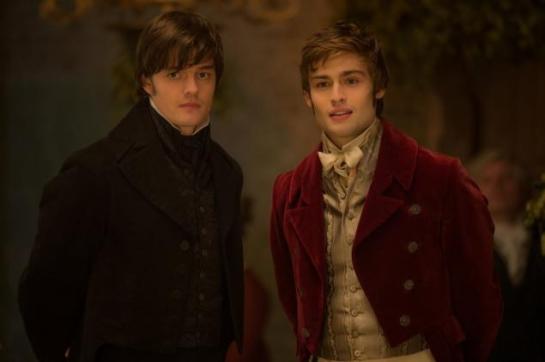
Their father (Charles Dance) wants his daughters to be more in tune with weaponry than the kitchen. Their mother (Sally Phillips) wants  to quickly marry them off to the most eligible and wealthy bachelors. The oldest daughter Elizabeth (Lily James of Downton Abbey fame) wants nothing to do with marriage but her sisters are intrigued especially when a handsome young suitor named Charles Bingley (Douglas Booth) moves into the neighborhood.

Elizabeth is the centerpiece particularly her relationships with two very different Englishmen. Her refreshing independence butts head with the mannish arrogance of Mr. Darcy (Sam Riley). Then you have the handsome and noble Wickham (Jack Huston), a soldier who woos Elizabeth with his honesty and charm. It surprised me how much time was spent on this romantic triangle.
PRIDE2

All of this makes for pretty good high society drama and it nails its distinctly English period flavor. In fact it would easily pass for a straight-laced Austen adaptation if not for those other two ingredients – the comedy and horror. There are a few laughs but for the most part the humor is restricted to the absurdity of what you’re seeing and in many ways it and the horror go hand-in-hand.

As for the zombies, they aren’t really a focus and they certainly aren’t scary. They mainly serve as part of the setting. When they do bleed over into the story the movie takes a bit of a dive. We get several scattered injections of zombie violence that is wacky enough to be funny at first but it eventually loses its effect. That is a problem because the film goes to that well too many times.

PPZ is a peculiar movie that reaches out in so many different directions. Sometimes its vision pays off while other times not as much. The Austen-esque drama is surprisingly good in large part because of the well written characters and solid performances. It’s the other stuff that causes the film to stumble. At times it seems unsure about what it wants to be – serious or parody, and eventually the novelty of the clashing tones wears off. By the end it’s simply too wacky for its own good. But don’t be fooled (by my criticisms or the goofy title). This isn’t a throwaway movie. Despite its issues, it is still fun and manages to be more entertaining than it had any right to be.

VERDICT – 3 STARS

3 Stars

2016 BlindSpot Series: “Touch of Evil”

TOUCH poster

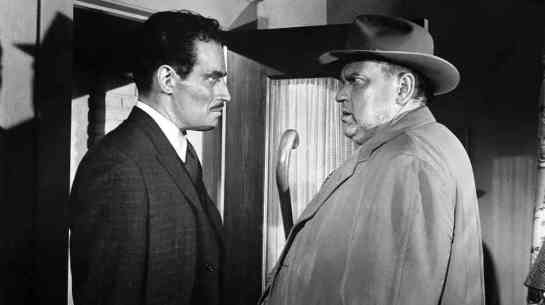
When examining Orson Welles’ career as a director you won’t find a huge volume of movies. What you will find is a filmmaker not only willing, but driven to experiment and explore every facet of making a movie. You see it in “Citizen Kane”, his most acclaimed film and what may be the greatest directorial debut. You see it in his superb period drama “The Magnificent Ambersons. But you may see it best in his 1958 crime noir classic “Touch of Evil”.

Originally hired for the supporting role of Police Captain Quinlan, Welles was convinced to also rewrite the screenplay and direct. The resulting “Touch of Evil” is considered by many to be one of the last great examples of film noir, featuring a fun cast, a twisting story, and a fantastic visual style.

touch1

The story is set in a Mexican/United States border town and begins with one of cinema’s greatest openings. A bomb is planted in the trunk of a car. A couple gets in the car and begins to drive through town towards the US border. Welles follows the car in one continuous three-minute shot stopping in traffic and slowly weaving through large numbers of pedestrians.

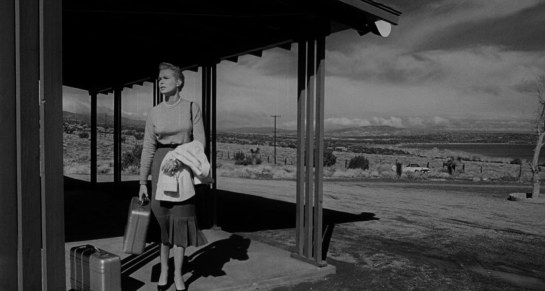
We the audience know something bad is bound to happen. We just don’t know when. Welles plays with our expectations and strings us along until the car does indeed blow. Among the nearby gathering crowd is Mexican drug enforcement officer Mike Vargas (Charlton Heston) and his new wife Susie (Janet Leigh). Vargas begins an investigation but is pushed aside by Captain Quinlan, an American police investigator who instantly butts heads with Vargas.

The film follows the investigation but it soon takes a backseat to issues of corruption, prejudice, and abuse of power. Welles’ story makes several wild and unexpected turns and the tone gets darker the further it goes. The moody camerawork embraces the visual approaches that made noir such a fascinating cinematic movement and it helps stress the edginess of Welles’ screenplay.

touch2

Heston was an odd choice but added star power and heft to the lead role. Leigh is very good and is featured in one of the film’s darker angles. Welles’ performance is also strong as the heavy, unpleasant Quinlan. But you have to tip your hat to the wild array of wonderful side characters who fill in this seedy, shady tale. Joseph Calleia is great as Quinlan’s right-hand man. Marlene Dietrich has a small but captivating role as a local ‘procuress’. Dennis Weaver is uncomfortably weird as a Norman Bates-like hotel night manager. Akim Tamiroff is a hoot playing a scuzzy gang boss. These characters and more pop in and out of Welles’ story and offer up some of the film’s best moments.

The original cut and unquestionably Welles purest vision for the film ended up being chopped, re-edited, and released in a 93 minute form. Over time it has been put back together as well as could be. That’s good for cinema fans because “Touch of Evil” is a movie filled with craft and vision. Its winding labyrinthine plot and deep moody visual style work together magnificently and highlight the very best film noir had to offer.

VERDICT – 4.5 STARS

4.5 STARS

REVIEW: “Mustang”

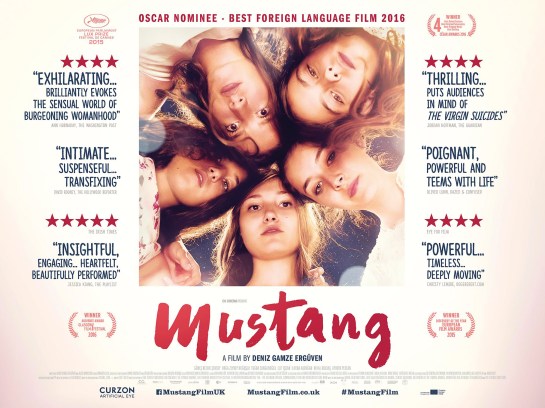
MUSTANGposter

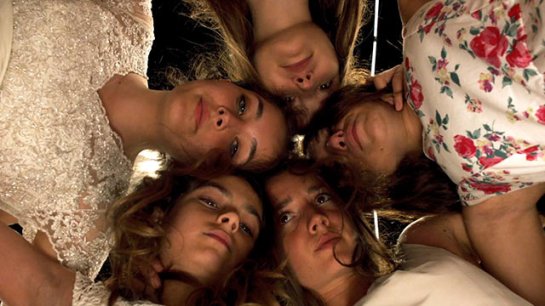
“Mustang” begins innocently enough. The school day ends for five orphaned sisters. The youngest girl and the film’s main protagonist Lale (played by Gunes Sensoy) is giving a teary-eyed goodbye to her favorite teacher who is leaving their small Turkish village for Istanbul. On the way home the five girls take a detour and have playful outing in the sea with some local boys.

But co-writer and first time director Deniz Gamze Ergüven wastes no time peeling back the many complex layers to her story. The townsfolk believe the girls to be unruly and promiscuous and are quick to judge their swim with the boys. By the time they get home their grandmother and guardian (Nihal Koldaş) has heard the neighbors’ salacious rumors and physically punishes the girls despite their pleas of innocence.

mustang1

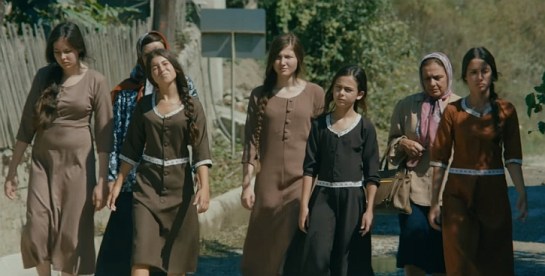
That opening event sets the table for the film’s main idea – five young sisters coming of age in a hyper-conservative, religiously stringent home. With each conflict their home becomes more of a prison both literally and figuratively. Ergüven’s honest portrayal doesn’t skirt around the physical and emotional hardships each girl experiences. We still get those playful and warm moments between them, but we are quickly reminded of how painfully serious and heart-wrenching their situation is.

One thing “Mustang” does so well is give all five sisters their own identity. This works thanks to great attention to personal detail in the writing and fantastic performances all around. Lale is the youngest and serves as our eyes and ears. Nur (Doğa Doğuşlu) is a fireball and closest to Lale’s age. Ece (Elit İşcan) is the sister who often languishes in her middle child status. Next is Sonay (İlayda Akdoğan) the rebellious one who sneaks out of the house with no regard of consequence. And last is Selma (Tuğba Sunguroğlu) the quiet and reserved one who as the oldest girl faces the brunt of punishment.

So many variables factor into the lives these girls are forced to live. The village’s strict religious tradition strips the girls of nearly every youthful experience they long for. It may be a trip to a soccer match or simply falling in love. Their vile uncle Erol (Ayberk Pekcan) is even worse – verbally berating them, subjecting them to medical virginity tests, barring their windows, and in some instances far worse.

mustang2

“Mustang” can be intensely uncomfortable and its bleakness often clouds any hint of optimism. But Ergüven never abandons hope. In many ways “Mustang” is a celebration of the youthful spirit and spotlights the longing for personal freedom and independence. That is what kept me glued to the story and emotionally bound to these young girls. That is what would sadden me in one scene and then have me laughing out loud a few scenes later.

Few movies have held my heart in its hands like “Mustang”. As the film moved forward I found my affections for the five girls growing. As a result I experienced joy, sympathy, shock, outrage, despair, and hope, all within Ergüven’s dramatic scope. “Mustang” is earnest, authentic, and brave enough to challenge specific social norms without a heavy hand. But it always comes back to five young girls desperate to experience life. That focus is what made “Mustang” such an extraordinary film.

VERDICT – 5 STARS

5 STARSs

5STAR K&M

REVIEW: “Suicide Squad”

SSQUADposter

Poor, poor DC Entertainment. Since Christopher Nolan’s departure from their cinematic playground DC has had a rough go of it. 2013’s “Man of Steel” faced more than its share of scrutiny. This year’s “Batman vs Superman” was the fashionable punching bag for both critics and many viewers alike even prior to its release. Now we have “Suicide Squad”, a DC attempt at being subversive and unique while also bowing to the overblown criticisms regarding the serious tones employed by the first two films.

Here’s the problem, critics have greeted “Suicide Squad” with the harshest reception yet (and that’s saying something). To give you a taste, “trash”, “toxic”, “unpleasant”, “disastrous”, “sadistic”, and “putrid” are just a handful of the colorful terms used by critics to describe David Ayer’s supervillain antihero ensemble piece.

SSQUAD1

I would love to dismiss all of the negativity as smug nonsense or as some form of bias against the DCEU. Unfortunately the film itself doesn’t allow me to do that. “Suicide Squad” may not deserve to be called “putrid” or “toxic”, but it should be called out for its host of faults, annoyances, and its flat-out shoddy execution in nearly every department.

I’m a generally positive guy and I tend to give a movie more credit for its fun factor and unique vision. I’m not sure you could call “Suicide Squad” a fun movie. It certainly wants to be colorful, funny, and cool. At times it seems like Ayers has convinced himself his film is all of those things. But a bright, fluorescent title screen is about as colorful as it gets, and you can count the mildly amusing moments on one hand. Also someone should tell Ayers that it takes more than a crazy amount of classic rock, a smattering of tattoos, and Will Smith’s attitude to be considered “cool”.

Ssquad2

As for a unique vision, nope. Aside from its ‘bad guys doing good’ angle (something that isn’t completely original itself), “Suicide Squad” doesn’t offer a single unique idea. The story is so poorly constructed and presented through such base level storytelling. Devious government operative Amanda Waller (played with stone-faced disinterest by Viola Davis) wants to create a covert strike team made up of metahuman criminals. There just happens to be a bunch at a high-security prison installation. A weird, out-of-the-blue threat arrives. It’s time for her team of misfits to get to work. It’s as simple as that.

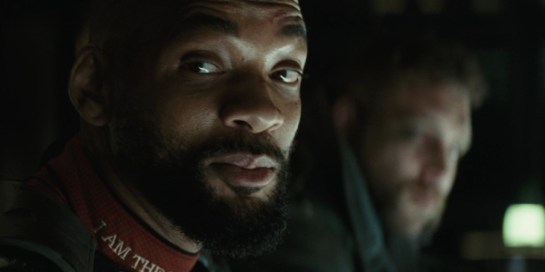
To be fair, Ayers does try to add a hint of depth to the team. His bigger stars get their own weird backstory snapshot at the beginning of the film. Will Smith plays Deadshot, a lethal assassin who hits everything he shoots at. Margot Robbie play’s Harley Quinn, an ex-psychiatrist who has a freakishly dysfunctional relationship with Jared Leto’s Joker (more on him in a second). Everyone else gets their own flashback shoehorned in at random junctures, but they’re more or less disposable. Killer Croc, Katana, Boomerang, whatever.

ssquad3

And then there is Joker, the character most people were talking about prior to release. The marketing would have you believe he is a significant player in the story but that’s not the case. He simply pops up in a few scenes mostly connected to Harley and then in a couple that feel completely disconnected. As for the Joker himself, I do give Leto credit for trying to put a unique spin on the character. But I have to say I hate the grillz, the tattoos, and the jewelry. He reminded me of James Franco from “Springbreakers”. Beyond that Leto isn’t given much space to present his version. We do get small glimpses of DC’s greatest villain, but not enough. This simply isn’t a Joker I care about watching.

While there are a few energetic moments and a fun performance from Robbie, “Suicide Squad” mostly maintains a generic look and feel throughout. A bland story, uninteresting chemistries, a boring and ridiculously lame central threat. But what stands out the most is how poorly this film is made. Bad pacing, horribly chopped-up story structure, and dull forgettable action. Every hint of what the film could have been is buried under a ton of poor execution. It clearly does a lot of box-checking for its studio, but in doing so it forgets to do the most important thing – make a good movie.

VERDICT – 1.5 STARS

1.5 stars

REVIEW: “Anthropoid”

anthropoidposter

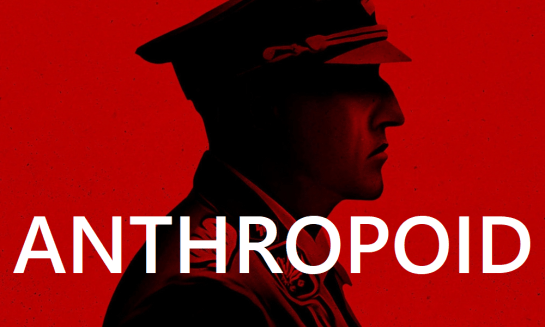
Operation Anthropoid was the code name given to the 1942 attempted assassination of Reinhard Heydrich, Hitler’s third in command and one of the chief architects of the Holocaust. The secret mission took place in Prague and was carried out by agents of the exiled Czechoslovakian government. It’s also the subject of Sean Ellis’ new film “Anthropoid”.

“Anthropoid” isn’t the first movie to share this remarkable true story, but it is the first since 1975’s “Operation Daybreak”. Ellis directs, shoots, co-writes, and co-produces this taut wartime thriller that moves from methodical and restrained to intense and explosive in the snap of a finger. This unique shift in pace seems to have been a problem for some people. For me it represented two very different sides of a story that are intrinsically tied together, so much so that their eventual clash was inevitable.

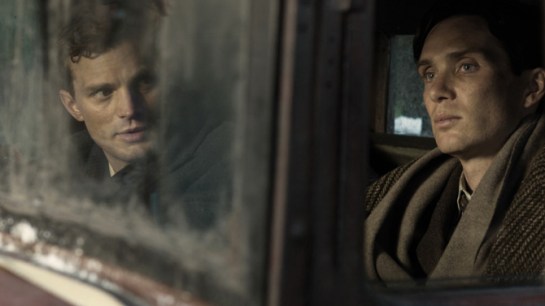
anthropoid1

Jozef Gabčík (Cillian Murphy) and Jan Kubiš (Jamie Dornan) are Czech secret agents tasked with carrying out Operation Anthropoid. The two covertly slip into the Nazi-occupied city of Prague where they meet up with the dwindled Czech resistence led by Jan Zelenka-Hajský (Toby Jones). The early part of the film focuses on preparation and reconnaissance. They meet up with the rest of their team and begin planning their mission.

Ellis adds several layers to these early scenes. First is the layer of fear that blankets everyone Jozef and Jan encounter. Heydrich’s brutal presence in Prague has left the resistence in shambles and sympathizers terrorized. So many moments, even quiet ones, are soaked with anxiety and stress. This everpresent tension leads to bouts of distrust, uncertainty, and debates over the consequences of their potential actions.

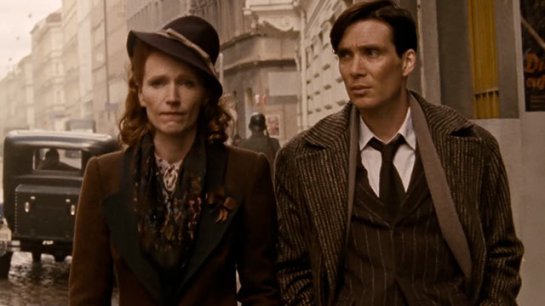
ANTHROPOID2

Jozef and Jan do get vague refuges of normalcy through their relationships with two women sympathetic to the resistance, Lenka (Anna Geislerová) and Marie (Charlotte Le Bon). Both are intriguing characters particularly Lenka who hints at a deeper disdain for the Nazis. Romances spring up which don’t feel forced or out of place, but that are underserviced and I wish they were given more time.

Ellis’ pace shifts and the intensity only gets thicker as the assassination attempt gets closer. The final act is edge-of-your-seat thrilling while also being perfectly (and violently) harmonious with the earlier slow-burning buildup. Ellis’ camerawork in the final act offers up some of the most visually gripping sequences of the year.

ANthropoid3

One of my favorite things about “Anthropoid” is that it feels grounded and authentic. There is no stilted dialogue or grandiose verbiage. There is no sign of Hollywood formula, overwrought melodrama, or heavy sentimentality. It feels genuine and true to the story it’s telling. And while some may struggle with Jozef and Jan’s lack of backstory, I was drawn to their humanity and invigorated by their valor and conviction. And it is all conveyed without a flashy coat of studio gloss.

“Anthropoid” is refreshingly earnest and subtle. It has confidence in the compelling strength of its story and feels no need to embellish it or the characters. That same confidence allows Ellis to put more of his focus on an accurate historical portrayal. Sure, it may not be a common crowd-pleasing approach, but when it comes together this potently I can’t help but love it.

VERDICT – 4.5 STARS

4.5 STARS

REVIEW: “The Confirmation”

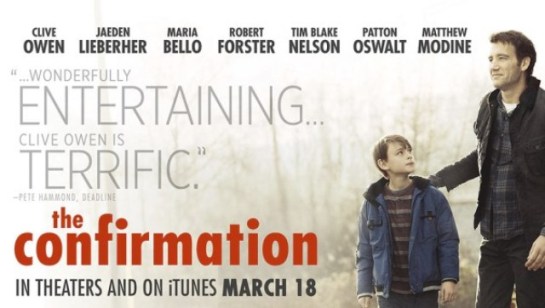
confirmposter

Bob Nelson’s first splash in the world of cinema was a big one. Director Alexander Payne was asked to find a director for Nelson’s original screenplay “Nebraska”. Payne was so impressed with the script he petitioned to direct the film himself. “Nebraska” would go on to receive six Academy Award nominations including one for Nelson. Not a bad feature film debut.

“The Confirmation” is Nelson’s second feature length screenplay and his directorial debut. Much like with “Nebraska”, Nelson grounds “The Confirmation” in no-nonsense, real world drama and just the right amount of dark humor. In many ways this story feels familiar, but there is an unglossed earnestness to every dramatic detail and a genuine, raw emotional undercurrent that makes it strikingly unique.

confess2

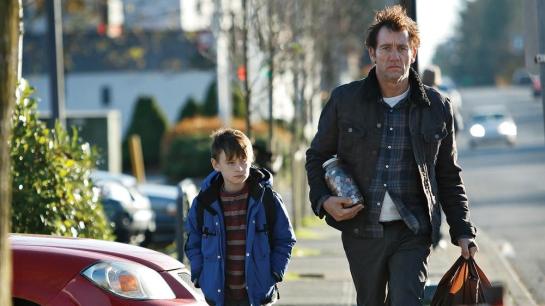
Clive Owens (one of the most underrated actors working today) plays a down-on-his-luck carpenter named Walt. Since his divorce Walt has struggled to make ends meet as an independent construction contractor. He can’t find a job and his wife Bonnie (Maria Bello) has threatened to revoke his visitation rights to their son Anthony (Jaeden Lieberher) if he doesn’t get his drinking under control.

Bonnie asks Walt if he can keep Anthony for a night while she and her husband Kyle (Matthew Modine) go on a church couples retreat. Walt agrees and the story follows their eventful 24 hours together. It revolves around a box of tools stolen from Walt’s truck. The two set out around town to find them encountering a motley assortment of people along the way. Most importantly it offers Walt and Anthony a much needed opportunity to reconnect.

While Walt is a major player it could be said this is a story about Anthony and his head-on collision with real life. Nelson shows us so much of the film through Anthony’s eyes. The movie starts with him at confession unable to list a single sin. He truly is a good boy but while navigating an array of moral gray areas with his father Anthony breaks nearly every commandment. This opens him up to the realities of the world and also of himself.

confess1

This is Lieberher’s second father/son movie of 2016. He was alongside Michael Shannon in the superb “Midnight Special”. Both roles require a very specific demeanor which Lieberher has no trouble with. He also maintains a wonderful rapport with Clive Owen. There is a striking similarity between the two performances. Both are authentic and unobtrusive, never relying on artifice or show.

Perhaps my greatest compliment for Nelson is this – every second we spend in his film feels like we are in the real world. Nothing feels fabricated. Nothing feels manipulative. It’s impressive because so many filmmakers could take this same concept and fill it to the brim with sappy melodrama and overblown sentimentality. Nelson is smarter than that and his movie reflects it.

VERDICT – 4.5 STARS4.5 STARS