REVIEW: “The Legend of Tarzan” (2016)

TARZANPOSTER

The story of Tarzan certainly has legs. Edgar Rice Burroughs first introduced the character in 1912. In all Burroughs wrote 26 Tarzan novels. Dating back to the silent era there have been over 50 Tarzan movies. He has been featured in eight television series, seven documentaries, several comic books, a video game, and even a 1980’s pop song (if you want to count that). As I said, Tarzan certainly has legs.

While he has had a long and impressive history, is Tarzan still a bankable property? Modern moviegoers embrace some truly wacky stuff, but an ape-man who swings on vines and communicates with animals? “The Legend of Tarzan” certainly tries to bring itself into the 21st century by including topics of genocide, slavery, etc. But early box office numbers make you question its effectiveness.
TARZAN1

“The Legend of Tarzan” is the first live action Tarzan film since 1998’s misfire “Tarzan and the Lost City”. Director David Yates of Harry Potter fame was given a $180 million budget to bring Tarzan back to the screen in this new era of visual filmmaking. From an effects perspective the film definitely brings Tarzan into a new light. Storywise it struggles to do anything significantly original or new.

Co-writers Adam Cozad and Craig Brewer take a serious approach to the Tarzan story which makes it an even tougher sell. It’s the 19th century and the Congo has been divided up between Belgium and England. Belgium’s King Leopold II decides to mine the resource-rich territory of its Opar diamonds to pay for his country’s significant debt. To oversee it Leopold sins his envoy Leon Rom (played by a fedora wearing moustached Christoph Waltz). In order the get the diamonds from a brutal tribe he must deliver Tarzan to the tribe’s leader (Djimon Hounsou).

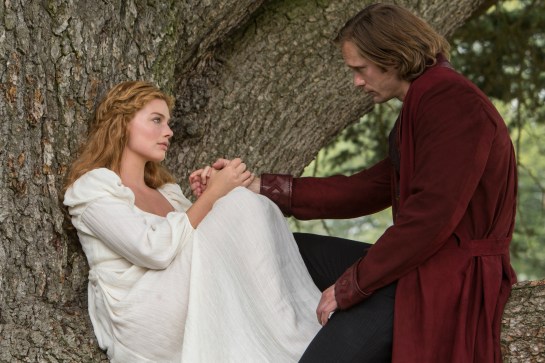
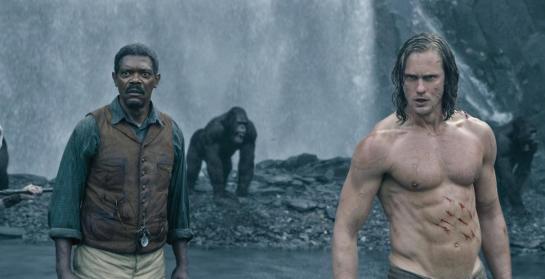
Alexander Skarsgård plays Tarzan, now going by John Clayton III. He’s a celebrity in England with his wife Jane (Margot Robbie) even though he languishes away from the jungle. He is convinced to go back to the Congo by George Washington Williams (Samuel L. Jackson as the film’s lone comic relief) who suspects the Belgians of enslaving the Congolese people. He reluctantly allows Jane to come along not knowing the turmoil that lies ahead.
TARZAN2

Skarsgård, perhaps best known for his seven seasons on HBO’s “True Blood”, looks the part – flowing blonde hair, stoic manliness, and chiseled abs. But past that his performance can best be described as emotionally dry and expressionless. Margot Robbie is a different story. She is lively, authentic, and does her best to break out of the ‘damsel in distress’ role. The script doesn’t fully allow for that. It ultimately becomes another ‘Tarzan saving Jane’ story as it hops from one set piece to the next.

Yates does a good job of giving us interesting locales and some beautiful photography. The story itself doesn’t carve new ground, but it does keep your interest especially if approached lightheartedly. Many critics have sneeringly scrutinized the film with overly cynical modern sensibilities. I don’t think those criticisms holds water. The film’s faults center more around its inability to invigorate the franchise and surprise us with something fresh and new. It is far from being a horrible movie, but it’s even farther from being a great one.

VERDICT – 2.5 STARS

 

REVIEW: “The Purge: Election Year”

PURGEPOSTER

There wasn’t much subtlety in the political messaging of the first two Purge movies. There isn’t a hint of it in the third installment “The Purge: Election Year”. In fact this film is so laughably direct from the start that it’s tough to take any of its characters or dramatic moments seriously.

I’ll admit, I do consider the Purge movies guilty pleasures while also fully admitting their mediocrity. Yes, the concept is preposterous, but each of the first two films did interesting things with it before flying off the rails in their own way. “Election Year” never fully gets on the rails. It does tap into some of the things the other films did right, but it never completely gets its footing.

Writer and director James DeMonaco returns and gives us his most heavy-handed critique of everything he dislikes about America. Leaving nothing to the imagination, DeMonaco vilifies every right-leaning persuasion, baits every like-minded group, and beats his class warfare drum at deafening levels. Yet among his smothering lecturing is a fairly interesting story that desperately needed more room to breathe.

PURGE2

In the not to distant future America is preparing for the 23rd annual Purge. For those not familiar, the Purge is one designated night of the year where all crime is legal including murder. Its stated purpose is to lower the crime rate, but Purge detractors believe it is meant to target low-income and minority citizens. With elections on the horizon, Senator Charlie Roan (Elizabeth Mitchell) has pledged to end the barbaric Purge if she is voted in.

The establishment isn’t happy with the outspoken Senator. The New Founding Fathers of America party (a group of evil suit and tie wearing white guys) have control of the government and decide to use the Purge to kill their political threat. Against the wishes of her head of security Leo Barnes (a returning Frank Grillo), Roan determines to stay in her unsecured Washington DC home on Purge night. That proves to be a bad idea and soon Leo and Roan are on the streets running for their lives.

At the same time we get the story of an inner city deli owner named Joe (Mykelti Williamson), his helper Marcos (Joseph Julian Soria), and a tough as nails EMT named Laney (Betty Gabriel). In a clever bit of writing their story intersects with Leo and Roan and the two groups are forced to depend on each other to survive against purgers and the FFA’s white supremacist hit squad (conveniently sporting swastika, white power, and confederate flag patches to keep us from missing the point).

PURGE1

While advertised as a horror movie it really isn’t. The horror is confined to a handful of cheap jump scares and the lightly creepy masks worn by some of the purgers. This is an action thriller with a lot of bullets and blood. In fact DeMonaco sometimes undercuts his message when his gunplay and violence goes beyond satire.

The cast definitely gives it their all and they often keep the film afloat. That’s no easy job. They are frequently tasked with delivering some of silliest, most on-the-nose lines you will hear. Grillo’s tough, businesslike approach to literally everything is a lot of fun, and Mitchell is earnest and authentic. A few other characters tend to be likable but flimsy and you know exactly how their stories will play out. They need and deserve more thought.

And once again that brings me back to the writing. Whether DeMonaco is visualizing a reflection of our current condition or providing a cautionary tale, his dependency on his high-minded message ultimately drowns out the drama. It could even be said he is sometimes careless, irresponsible, and borderline militant in his exploitation. I’m not delusional. I know America is a nation with problems and I don’t mind movies that address them. In fact I often love films that intelligently challenge society within the framework of a good story. DeMonaco’s cynicism isn’t implied. It isn’t subtle. It isn’t cleverly implemented. It’s just there smothering out everything else the film tries to do.

VERDICT – 2 STARS

2 Stars

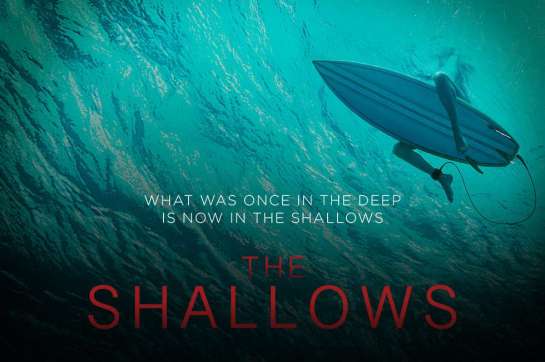
REVIEW: “The Shallows”

SHALLOWSPOSTER

One the surface “The Shallows” isn’t a film that would normally catch my eye. Neither Blake Lively in the lead role nor frequent Liam Neeson collaborator Jaume Collet-Serra directing was enough to draw my interest. But it’s amazing how a slick, compelling trailer can change your perspective.

In the Neeson thriller “Non-Stop” Collet-Serra played within the small confined space of a Boeing 767. Here he does the same, trading in the tight spaces of a jet plane for a remote Mexican beach. The bulk of the story takes place in a small isolated lagoon. It’s here that Lively’s character Nancy ends her emotional pilgrimage to find a favorite surfing spot of her recently deceased mother.

Shallows2

The simplicity of the story is actually a strength. We are fed small chunks of backstory that are a bit on the nose, but still brief enough to add context without distracting. The bulk of the story focuses on Nancy’s experience on the beach and what an experience it is. Her emotional release soon becomes a fight for survival after she is attacked by a shark and left stranded on a small reef.

“The Shallows” ultimately becomes an ocean water survival thriller mixed with shark horror in a tone reminiscent of “Jaws”. It works for a number of reasons namely that Collet-Serra and company never lose their lean and simple focus. It maintains its course steadily building up tension and offering up a handful of legitimate scares. It also works thanks to some fantastic cinematography featuring some great overhead shots and even better underwater photography.

shallows1

While all of that is important to the film’s success,  Blake Lively is the anchor. I have to admit, I was surprised by her strong and gutsy performance. For the most part she carries the movie on her shoulders and she puts it all out there both physically and emotionally. It is a demanding role which Lively is more than capable of handling.

Those unable to put aside an overly critical eye could dwell on a cheesy scene or two. They could point out a couple of preposterous things that happen in the final act. But I find it hard to imagine that someone wouldn’t find this to be a fun and entertaining ride especially considering the deluge of mediocre films so far this summer. “The Shallows” wisely stays true to its central concept. Its hook could easily wear thin if it extended itself too far, but the compact 80 minute running time keeps the tension high and the story moving forward. It keeps its bite and, unlike that pesky shark, it never overstays its welcome.

VERDICT – 4 STARS

4 Stars

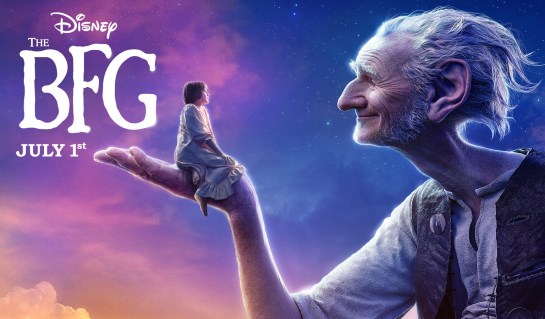
REVIEW: “The BFG”

BFGposter

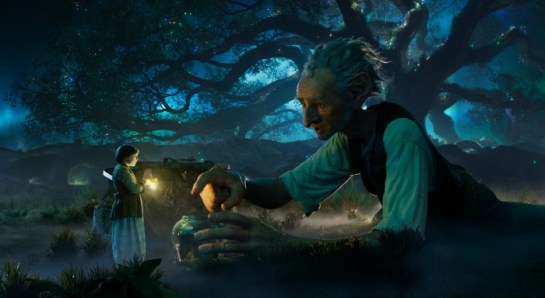
Some movies can’t be made until technology catches up to the concepts. I fully believe the “The BFG” is a prime example. Certainly attempts could have been made. CGI and motion-capture have been around long enough to bring some wobbly form of Roald Dahl’s children’s book to the big screen. But Steven Spielberg’s latest fantasy endeavor proved that now was the right time.

I won’t say “The BFG” is without a stumble here or there, but it is far more charming and delightful than I anticipated. That’s because Spielberg and screenwriter Melissa Mathison (who sadly passed away last November) have a very clear idea of how they want to tell this story. The two first collaborated on “E.T.” which released in 1982, the same year “The BFG” book was published. Here they’ve pruned certain elements of Dahl’s story and made a lighter, relationship-focused fantasy adventure.

BFG1

The key ingredient to the film’s success is Mark Rylance. Spielberg has called Rylance “transformational”. Last year they made “Bridge of Spies” which netted the stage veteran the Supporting Actor Oscar. They have two more films together coming soon. The two clearly have a creative chemistry which “The BFG” uses to its fullest advantage.

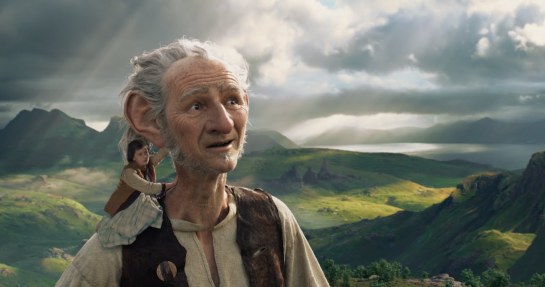
Rylance’s performance is sublime. You simply can’t turn away from what he is doing. And this is more than just motion-capture. Yes Rylance went through the process of wearing a black bodysuit covered with sensors that captured his every movement. But much like the very best Andy Serkis work, this truly visualizes a full performance. The amazing representation of this 24 foot tall gentle giant is equally due to the sensational visual artistry and the impeccable performance delivered by Rylance.

bfg2

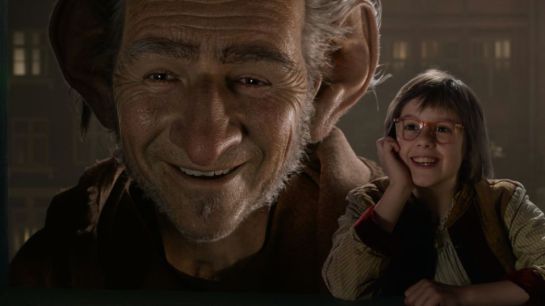
We also get a fine performance from young Ruby Barnhill who plays a orphan girl named Sophie. Late one night Sophie looks out her window and sees Rylance’s Big Friendly Giant sneaking around her street. Fearing she will tell others of his existence, BFG plucks Sophie from the orphanage and takes her to his home in Giant Country.

Despite their glaringly obvious differences, the two develop an unlikely friendship and find they have much in common. Both are lonely and have no friends. Both struggle with a sense of belonging. Each fill a significant void in the other’s life. But things are complicated by the nine child-eating giants who also live in Giant Country. The nine, who feature such names as Childchewer and  Gizzardgulper, constantly bully BFG. But things get even worse when their leader Fleshlumpeater (Jemaine Clement) gets a whiff of young Sophie (if you know what I mean).

BFG3

The film occasionally flirts with the conventional, but it never fully falls into that trap. It doesn’t drown its story with silly slapstick. It doesn’t dumb itself down. It doesn’t numb your senses with hyperactive pacing. For the most part it steers clear of common clichés found in kids/family movies. I liked the slow build and the attention to character. I also thought it was very funny at times (although why do you find fart jokes in 99% of these things).

There are a handful of meandering moments and a few obvious gaps in narrative logic. But as a whole “The BFG” is a delightfully heartwarming movie that may push away those looking to have their senses set ablaze by nonstop action and rampant silliness. But for those looking for an intelligent and engaging experience, “The BFG” more than delivers. And if nothing else it’s worth seeing for Mark Rylance’s nomination-worthy performance.

VERDICT – 4 STARS

4 Stars

REVIEW: “X-Men: Apocalypse”

xmenposter

So exactly how do you categorize “X-Men: Apocalypse”? Is it the sixth film of the X-Men franchise or is it the third film in the second trilogy? Perhaps a hybrid of both? Do we even count the Deadpool and Wolverine movies? Whatever you call it, it is the follow-up to 2014’s “Days of Future Past” and the third film featuring this new wave of X-Men characters some of whom are actually younger versions of older characters. Clear as mud, right?

“Days of Future Past” made a strong attempt at bringing the first original three X-Men films together with the new ones. Arguably it did a decent job of accomplishing that rather hefty task. But now “Apocalypse” comes along and injects a little more confusion by tossing in more new mutants, bringing back old ones, and leaving you unsure how some of it all fits together.

At the same time the film shows satisfying flashes of brilliance as it deals head-on with weighty topics of personal struggle, loss, and self-sacrifice. It also offers several moments (particularly in the second half) that will genuinely excite die-hard fans. But who knows whether those moments are enough to overcome the film’s many crazy contortions of the source material whether it be characters, back stories, or storylines.

xmen2

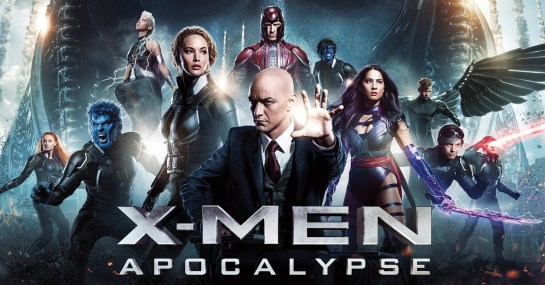
X-Men architect and shepherd Bryan Singer returns as director, producer, and co-writer. This time his villain is Apocalypse (played by an unrecognizable Oscar Isaac), a powerful mutant worshiped by the ancient Egyptians but betrayed by a sect of non believers. His body is buried under a collapsed pyramid until he is unearthed and awoken in 1983. Ashamed of the perceived weakness of Earth, Apocalypse pledges to destroy the world and then raise it in his image, stripping power from the weak and granting it to the strong.

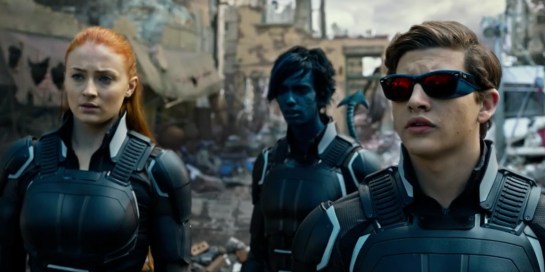
In addition to that we also get a number of side stories intended to fill us in on old characters as well as introduce us to new ones. Charles Xavier (James McAvoy) continues growing his school for young mutants. Mystique (Jennifer Lawrence) is smuggling mutants out of dangerous locales around the globe. Magneto (Michael Fassbender) is a mill worker living in Poland with his wife and daughter. Then we get into the stories of a ton of new characters. It takes over an hour to get all of the introductions out of the way and the principle story pieces in place.

The first hour is tough. There are several compelling individual sequences, but collectively it’s a mishmash of origin stories and mandatory table setting. To Singer’s credit he does manage to reel in most of his moving parts and piece them together pretty well by the final act. But at the same time it’s hard to ignore how the film turns a blind eye to several glaring plot problems. I mean am I silly to think they might address the 10 million people killed when a city is leveled?

xmen1

Thankfully the script does allow for some interesting character exploration and development. Characters are overwhelmed with sorrow, crumble to inner turmoil, battle depression and feelings of isolation, and of course struggle with the common X-Men theme of belonging. Most of these issues are handled with a genuine sensibility that allows the characters to be seen as more than disposable even though the script sometimes shortchanges them.

By the third act the movie is pretty much in tune with the common superhero formula – a gigantic, loud, action-packed finale. But I have to say it’s a good one. There are some fun superhero effects and several moments that will bring smiles to the faces of those familiar with the history of these characters. I’m not too sure if it will have the same effect on casual fans.

“X-Men: Apocalypse” won’t do much to cure some people’s comic book movie fatigue, but for those still enjoying these superhero tales there are things to like. Fassbender and McAvoy are fantastic. The story doesn’t shy away from deeper human themes. There are tons of little treats and several fun surprises for fans. But there is also a bloated first hour and several head-scratching oversights as the story progresses. There still is plenty to admire and Singer’s vision is ambitious. I can easily say I was entertained. I can just as easily understand how others may not be.

VERDICT – 3 STARS

3 Stars

2016 Blindspot Series: “La Strada”

La strada poster

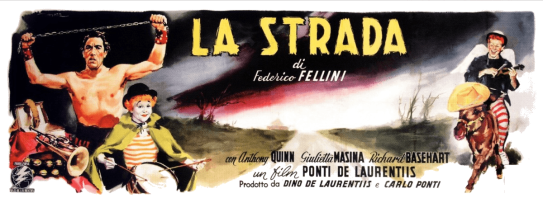
When venturing through Federico Fellini’s brilliant filmography you witness an unmistakable shift in his style of filmmaking and storytelling. From his roots as an Italian neo-realist to his more fantastical experimental pictures, Fellini made films that were identifiable and personal. He didn’t mind changing his style in order to make a more honest picture.

At the start of his transitional period sits “La Strada”, one of Fellini’s more strenuous and intimate projects. According to biographer Tullio Kezich, Fellini said the film was “a dangerous representation of my identity that was undertaken with no precedent whatsoever.” His internal and external struggles with making the film were significant.

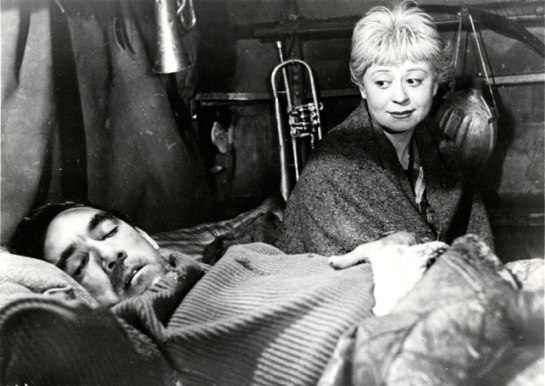
Fellini had a difficult time getting the project financed and he was constantly maneuvering through various budget restraints. There were also casting conflicts. Fellini’s wife Giulietta Masina was a big part of his inspiration for the story and for him casting her was essential despite objections from the producers. Anthony Quinn passed on the role despite numerous requests from Fellini. It wasn’t until he saw “I Vitelloni” that he was convinced of Fellini’s abilities as a filmmaker. Injuries, several delays, and crew changes made things even more difficult.

la strada1

But the emotional pressures were far more taxing than the production problems. The concept sprang from memories and images from his childhood, most of them troubling and unpleasant. The production issues were stressful for Fellini leading to severe bouts with depression and an eventual nervous breakdown. With the help of his wife and medical treatment Fellini was able to finish the film.

Like many true classics the movie wasn’t initially met with universal acclaim. Several critics blistered Fellini saying he had gotten away from the strengths of neo-realism. Despite the smattering of negativity “La Strada” had its fans and it received the first ever Academy Award for a foreign language film. Over the years critics and filmmakers have grown to appreciate its vision and influence even more.

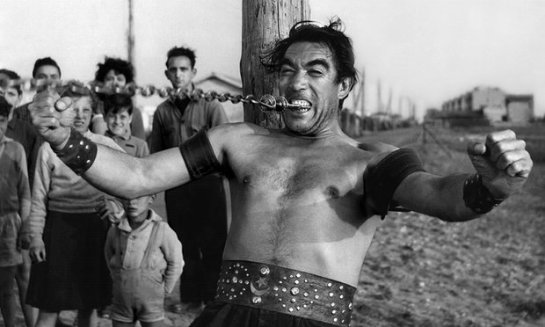
The story begins with a young woman named Gelsomina (Masina) finding out her sister has died while working for a brutish traveling street performer named Zampanò (Quinn). In the face of poverty Gelsomina’s mother sells her to Zampanò to serve as his assistant. The two take Zampanò’s strongman act from town to town with Gelsomina playing his clown and passing around his hat for money.

la strada2

For the simple and waifish Gelsomina it is a tough new world. She looks at everything through an innocent and naive lens. That’s what makes Zampanò such a despicable character. He treats her as worthless and disposable. His mental and physical abuse is abhorrent and it’s often met with confusion by Gelsomina. But she feels confined to her situation. The idea of leaving Zampanò surfaces several times in the film, but she never sees them as a viable option. Instead these two character archetypes travel on together, both bound to a situation that is certain to end poorly.

In many ways Fellini’s film is a tragedy. Others have viewed it as an inspirational piece. Regardless this is an instance where the film’s meaningful complexities serve as evidence of its greatness. It clearly shows a director branching off from his roots and exploring things foreign to the popular trends of the time. The story is beautifully poetic and painfully heartbreaking at the same time and the performances from Quinn and Masina are so good.

Fellini fans will notice techniques and visual touches from “La Strada” reused in many of his films that would come after. Its stylistic reach would stretch for decades as waves of filmmakers were inspired. And while some consider this Fellini’s greatest work, I agree with critic Roger Ebert. “La Strada” opened the creative doors to his true masterpieces that would follow. It’s a wonderful film and a turning point in one of cinema’s greatest filmmaking careers.

VERDICT – 4.5 STARS

4.5 STARS