2016 Blindspot Series: “Red River”

RIVER POSTER

There are several interesting stories surrounding “Red River”, the 1948 Western directed by Howard Hawks. At the time John Wayne was a Hollywood star, but many of the bigger names in directing and producing didn’t consider him a good actor. That reputation led to Gary Cooper being first offered the lead in “Red River”. Cooper declined leaving the door open for Wayne who eagerly accepted. What resulted was an eye-opening performance from the Duke that literally changed the direction of his career.

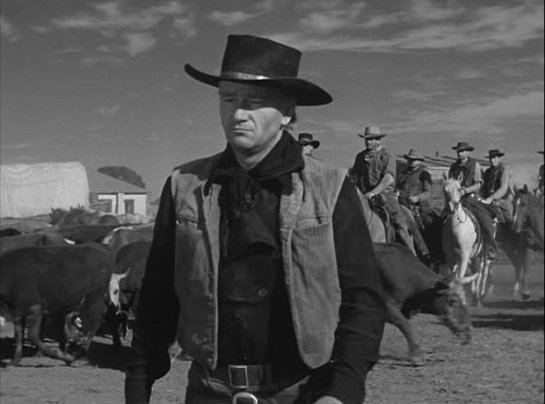
Wayne’s enthusiasm was spurred by the opportunity to work with the great Howard Hawks. At that point in his career Wayne had made well over thirty movies but he had often found himself typecast. But “Red River” offered him the chance to step outside of his reputation. Hawks oversees this western version of “Mutiny on the Bounty” which pits a stubborn, crusty Wayne against an earnest, loyal Montgomery Clift.
RIVER1

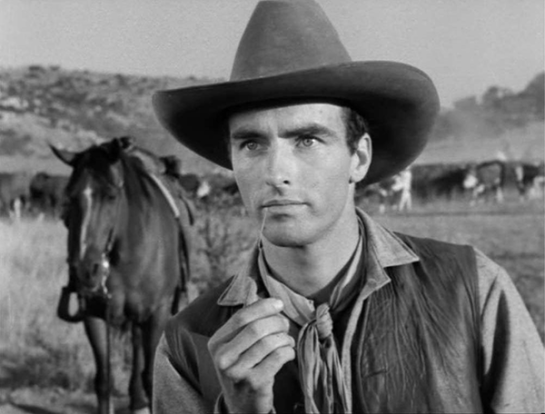
Clift was an interesting choice. This was his first movie (even though “The Search” actually released first) and he was a very different actor than Wayne. Clift was one of the original method actors and he brought a quiter, detail-oriented performance. But surpringly Wayne matches him in subtlty. This invigorates the film’s pivotal central relationship.

Borden Chase and Charles Schnee’s story starts with Thomas Dunson (Wayne) and his longtime trail hand and pal Groot (Walter Brennan) breaking off from a wagon train to head south into Texas. Dunson’s plan is to stake a claim on some land and make a name as a cattle rancher. The wagon train is attacked by Indians and the lone survivor, a young boy named Matt (Mickey Kuhn), comes across Dunson and Groot. They take Matt in and head for Texas. The trio travel further south near the Rio Grande and with one cow and one bull build a huge cattle ranch.

The story hops ahead fourteen years. An adult Matt (Clift) has returned from school and is set to help Dunson run the ranch. Due to post-Civil War poverty they can’t sell their beef in the South so Dunson sets up a rigorous and perilous cattle drive north to a railroad town in Missouri. They hire several hands and head north. The drive proves more difficult than Dunson is willing to admit and a rift forms between him and his disillusioned men. Matt is the man caught in the middle. Does he side with the trail-weary men or does he stay loyal to his father figure and mentor?

Hawks doesn’t make that an easy question to answer. He tosses in all sorts of physical and moral dilemmas along the way that complicate the relationships. Wayne’s mule-headed Dunson teeters between hero and villain and his stubbornness threatens not only the morale of his men but their safety. Matt balances that with a level-headed but subordinate approach. He’s a clearer thinker but is handcuffed by his loyalty to Dunson.
RIVER2

But while that central conflicted relationship is the centerpiece, “Red River” does so many other things well particularly with its Western boundaries. The cattle drive scenes are some of the very best of the genre. There is one particular famous stampede sequence that still lives up to its praise. Russell Harlan (probably best known for his work on “To Kill a Mockingbird”) handles the cinematography which captures the many facets of ‘life on the trail’. 99% of the film takes place outdoors and Harlan often shoots in a way that accentuates the hardships but also the open-aired freedom this small band of men experience.

But it all gets back to Wayne, Clift, and a soured father/adopted son relationship that plays out like a Greek tragedy. The two leads are superb particularly Wayne who surprised me just as much as his contemporaries when the film first released. The Duke shows a level of acting that goes far beyond the cardboard cutout performances he so often delivered. When you toss in Clift’s grounded method approach, Hawks’ confident direction, and a sure-footed story, “Red River” stakes its claim as a true classic of the Western genre.

VERDICT – 4 STARS

4 Stars

REVIEW: “Calvary”

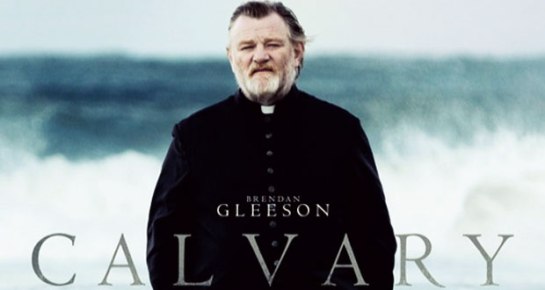
Calvary poster

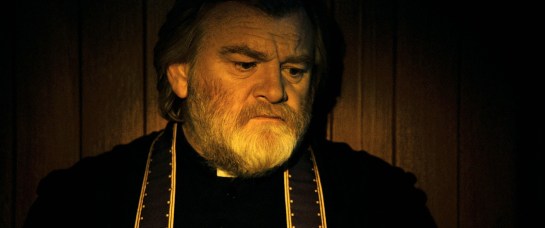
The opening scene in “Calvary” wastes no time conveying the tone of the film – bleak, cynical, and disturbing yet with an odd touch of subtle dark humor. The scene opens with a shot of Father James in a confessional. The camera never leaves his face. He is listening to a parishioner talk about the horrible sexual abuse he experienced as a child at the hands of a now deceased priest. He says he is going to kill Father James in one week because killing a “good priest” would be a much bigger shock to the Catholic Church. The scene ends.

This brilliantly unsettling opening sets the framework for writer and director John Michael McDonagh’s stinging Irish drama. The story moves through what may or may not be Father James’ final week on earth. He spends the time going about his normal work in his Irish coastal town – tending to the church and tending to his flippantly immoral and ungrateful flock. We also see him getting a few personal things in order, you know, just in case.

Calvary1

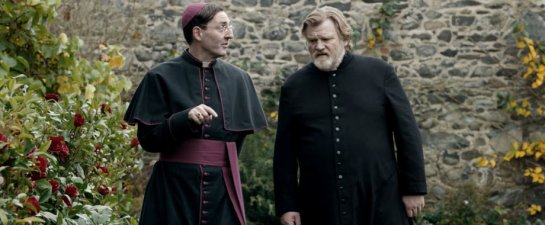
Father James is played by Brendan Gleeson, an actor so naturally gifted and perfectly cast. Father James is an earnest and faithful man of the cloth. He is a man of integrity which allows him a degree of respect from the community. But at the same time that same virtue and integrity is what they hate about him. It clashes with their shameful and unrepentant lives. His encounters and conversations with these people make up the bulk of the story.

One by one we meet these townsfolk each with their own level of vileness. A fantastic supporting cast flesh out these heathens and ingrates. Chris O’Dowd plays a local butcher and abusive husband. His wife (Ola O’Rourke) is no saint. She shamelessly flaunts her affairs, her latest being with a cocky Ivorian (Isaach de Bankolé). Aidan Gillen plays a disgustingly calloused athiest doctor and Dylan Moran plays a lonely, pompous, and self-absorbed millionaire.

There are a handful of other characters that round out this motley crew of miscreants. All of them view Father James as a walking joke – a punching bag for their cruel and merciless ridicule and mockery. These are really bad human beings and we begin to wonder how much Father James can take. He truly is a good man (McDonagh stated he wanted to make a film about a good priest). We often see him bewildered by the gall of these people and it feels as if he wears down a bit more with each encounter.

Calvary2

Thankfully there are a few small rays of light among the downers. Father James has the opportunity to reconnect with his daughter Fiona (Kelly Reilly). The two haven’t been close since her mother died several years earlier. Repairing the fractured relationship would feel a void in both of their lives. For James moments with Fiona are like a refuge and an escape. In a way it is for us too. These scenes give us (the audience) a slight break from the ugliness.

And then there is the mystery of who wants to kill Father James. Is it one of the people he encounters throughout the final week he is given to live? In a clever narrative maneuver McDonagh makes it clear that James knows who has threatened him. But we do not. So we also watch these encounters and conversations with a slight deductive eye. This isn’t the main focus of the story yet it’s a fun and crafty way to engage the audience even more.

Calvary3

“Calvary” is indeed a movie of conversations, one right after another. This could make some a little wary but it shouldn’t. McDonagh’s writing is just so good and each conversation seems important to the story and full of meaning. There is also some gorgeous imagery in the form of landscapes, ocean views, and green-coated mountains. It’s magnificent to see but it also serves as a sharp reoccurring contrast between the beauty of the scenery and the ugliness of the people living there. McDonagh offers several creative touches like this which douses his film with grit and energy.

And it all comes back to Gleeson, the veritable linchpin of this layered but slyly simple character study. The man strikes every note with an unmistakable honesty that comes through in each thoughtful response, in each perplexed expression, and each tired and weary sigh. There is a gelling, a chemistry if you will, between Gleeson’s approach and McDonagh’s script which gives us a realistic and sturdy anchor within the film’s almost otherworldly vileness. That clash is just one of the film’s many compelling components.

VERDICT – 4.5 STARS

4.5 STARS

REVIEW: “North by Northwest”

NORTH POSTER

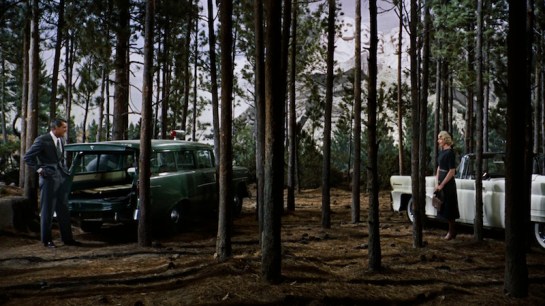
By the time Alfred Hitchcock and Cary Grant hooked up to make “North by Northwest” both were starting the last leg of their phenomenal careers. Grant would make six more films before retiring from acting in 1967. Hitchcock would direct seven more features including “Psycho” and “The Birds”. Both were considered among the best of their craft, but they also shared something else in common. Despite their brilliance, shockingly neither ever won an Oscar for their work.

Hitchcock didn’t make it a secret that Cary Grant was among his favorite actors and this was their fourth movie together. The script was written by the great Ernest Lehman (who also never won an Oscar despite a career filled will superb work). Lehman’s ambition was through the roof. His intent was to make “the Hitchcock movie to end all Hitchcock movies”. Not an easy task but one he pulled off mightily.

NORTH1

The story itself takes many of the Hitchcock signatures that had developed over the years, it accentuates them, and then playfully heightens each. They’re all here – the twisty storyline, the beautiful and mysterious blonde, the McGuffin. Lehman works hard to utilize each of his cohorts’ strengths. He creates perfect settings for Hitchcock to build tension and capture grand visual spectacles. He allows Grant plenty of opportunities to show off his natural charm and  sharp wit.

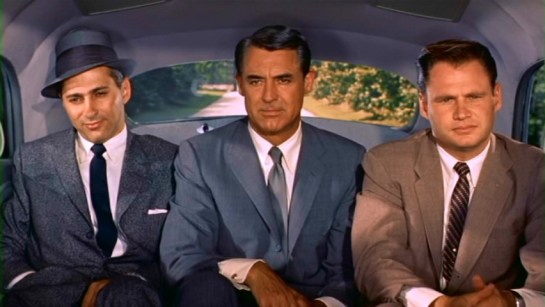
At times you’ll wonder if your watching a James Bond prototype. Spies, big action, a mistaken identity, a sizzling but complex romance – all of it can be found here. Grant plays Manhattan advertising executive Roger Thornhill. Or is he Roger Thornhill? A certain mysterious stranger (played with leisurely villainy by James Mason) doesn’t think so. He has two of his goons kidnap Thornhill under the impression that he is George Kaplan, a fellow they have a pretty big beef with.

From there the story makes one wild turn after another as Thornhill scrambles to find out who is after him and why? Following him are the police, the bad guys, and even a shadowy government agency. Complicating matters even more is the sexy, mystifying Eve Kendall (Eva Marie Saint). Thornhill is seduced by her charms but puzzled by how much she knows about him. Saint doesn’t show up until halfway through and instantly injects the film with a new alluring energy as well as yet another thread of mystery.

NORTH2

Another Bond-ish element is how proudly it plays in the absurd and preposterous. Scaling the president’s faces on Mount Rushmore or dodging dive-bombing crop dusters is wild stuff. And let’s face it, the entire story is pretty far-fetched. But I go back to Lehman’s idea – “the Hitchcock movie to end all Hitchcock movies”. “North by Northwest” is intentionally outrageous and serves as a nice change of pace from the two darker movies it sits between in Hitchcock’s filmography – “Vertigo” and “Psycho”.

There are several other components that help make “North by Northwest” such a fabulous whole – a deviously fun Martin Landau, the auction scene (arguably Hitchcock’s funniest), a hilarious comedic turn by Jessie Royce Landis, a masterful score from Hitchcock favorite Bernard Herrmann, that now legendary Cary Grant suit. There are so many entertaining pieces. It’s lighter, flashier, and more stylish than some of Hitch’s other classics, but those are the things that make it a unique but fitting part of Hitchcock’s wonderful filmography.

VERDICT -4.5 STARS

4.5 STARS

5 Phenomenal Movie Mob Bosses

PHENOM 5

Vito Corleone, a name every movie fan knows. It’s also a name that would obviously top a list of great movie mob bosses. For that reason you won’t find him here. Still it was pretty easy finding other mob bosses that deserve a tip of the hat. That is what we are looking at in today’s Phenomenal 5. The movies have been fascinated with mobsters for decades which means I had a ton of bosses to choose from. With that in mind I wouldn’t call this the definitive list. But there is no denying that these five movie mob bosses are nothing short of phenomenal.

#5 – Frank Costello (“The Departed”)

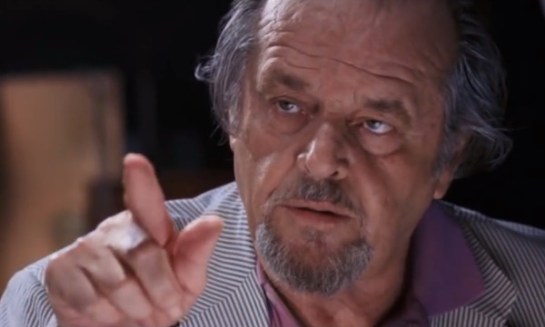
DEPRTED

In Martin Scorsese’s “The Departed” Jack Nicholson plays Frank Costello. No, not the real-life Italian mob boss who once ran the Luciano crime family. A fictional Irish mob boss based on “Whitey” Bulger. As you would expect, Nicholson is calm, cool, and charismatic. He gives us a streetwise Boston mob boss who is trusted by his men but who also holds a pretty big and significant secret. It should be no surprise that Scorsese knows how to portray a mob boss or that Nicholson can deliver that vision in spades.

#4 – Al Capone (“The Untouchables”)

CAPONE

Robert De Niro as a mob boss. Talk about a formula ripe with potential. Brian De Palma gives it to us in his 1987 Chicago gangster picture “The Untouchables”. This is a very different mob boss depiction from any others on this list. In many ways it is a stylized portrayal. De Niro is asked to go big and he REALLY goes big. But that is one reason his Al Capone is so much fun. “The Untouchables” is a great movie and Eliot Ness is its focus. But De Niro nails every scene he has and he always leaves you anxious for him to show up again.

#3 – Leo O’Bannon (“Miller’s Crossing”)

MILLERS

Most fans of the Coen brothers hold “Miller’s Crossing” in pretty high regard. This neo-noir gangster movie from 1990 takes its inspiration from a number of sources, but ultimately it is a Coen brothers movie through and through. In the film we are introduced to Irish mob boss Leo O’Bannon (played with such controlled energy by Albert Finney). Leo knows how things work in the Prohibition era and he’ll push his weight around whether it’s with bullets, brawn, or his brain. Finney is superb and the Coens give him so many great scenes to define his character.

#2 – Bill the Butcher (“Gangs of New York”)

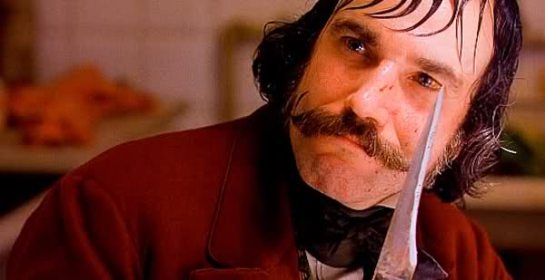
BUTCHER

It’s Martin Scorsese again. Instead of Boston this time he is in Lower Manhattan’s Five Points. It’s 1846 and the territory is ran by William “Bill the Butcher” Cutting. His influence and power reaches all through Five Points and beyond and he’s not afraid to flex his muscle sometimes in incredibly violent fashion. Bill the Butcher is such an intriguing character but what makes him shine is the performance by Daniel Day-Lewis. He wears the bizarre suits, top hats, and the curly mustache with gusto. But while he sometimes seems otherworldly, he slams us back to reality with his bonafide mean side. A great character.

#1 – Caesar “Rico” Bandello (“Little Caesar”)

CAESAR

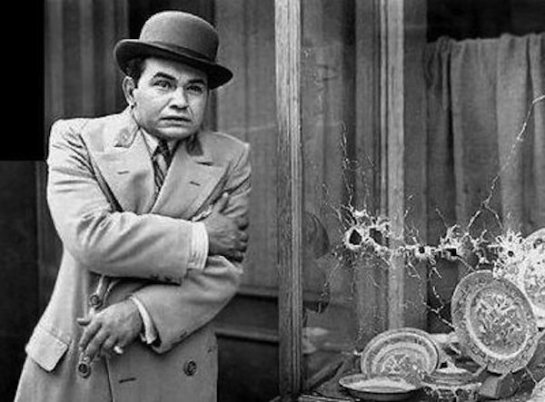
He simply had to be at the top of the list. “Little Caesar” was Edward G. Robinson’s star making role. It granted him instant fame and started what would be a long line of gangster pictures for an actor with one of cinema’s most recognizable mugs. “Little Caesar” is also important because it is widely considered to be one of the first straight up gangster movies. Robinson is so perfect as Rico, a small-time hood who joins a gang and rises through the ranks by any means necessary. That sometimes means stealing and sometimes killing. His time at the top isn’t without conflict both externally and internally. It all leads to one fantastic finish. Little Caesar himself was an easy choice for #1.

So what do you think? Agree or disagree with my picks? I would love to hear why. Also be sure to share some of your favorite choices of movie mob bosses. Head down the comments section below and sound off.

REVIEW: “The Visit”

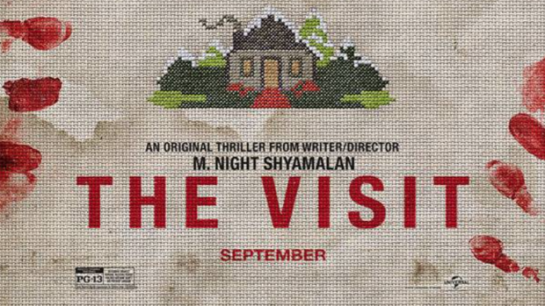
VISIT poster

Few people have had a more roller coaster Hollywood career than M. Night Shyamalan. His first films earned him a ton of praise from enthusiastic critics and moviegoers. But after that he put out a series of true stinkers that threatened to railroad his once promising career. In fact many people wrote Shyamalan off as dead in the water. Yet while he did put out some really bad movies there was always a glimmer of hope that we would once again get a glimpse of the filmmaker we want him to be.

His latest film “The Visit” is another reminder of how effective Shyamalan can be with small-scale focused horror. It follows his familiar formula of slow buildup, slow buildup, big reveal and it does so competently and effectively. As with many of his stories, “The Visit” toys with some of our secret personal fears – twisting, contorting, and amplifying them before our eyes. This time it’s the fear of the elderly and senility.

VISIT2

As the movie started my very first response was a concerned “Oh no”. Shyamalan chose to make this a found footage picture which is a fad I had hoped was finally dead and gone. But Shyamalan is intelligent in his usage of it. He dodges most of the annoyances that come with the found footage style, most notably narrative holes and the constantly moving cameras. We get fluid storytelling and predominately still cameras which are strategically implemented throughout the film.

The story is fairly simple. A single mother named Paula (played by Kathryn Hahn) hasn’t been the same since her husband left her and their two young children years prior. Her documentarian-in-training daughter Rebecca (Olivia DeJonge) and freestyle rapping young son Tyler (Ed Oxenbould) encourage her to take a cruise with her boyfriend while they go spend the week with their grandparents who they have never met. Here’s the deal, Paula hasn’t spoken to her parents for 15 years following a painful and bitter fight.

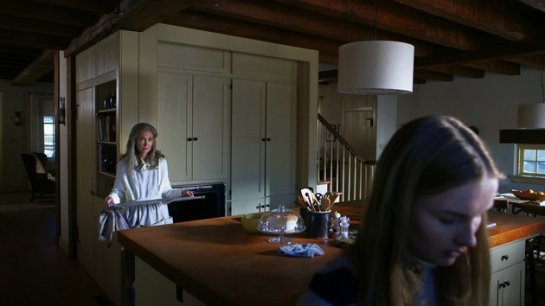
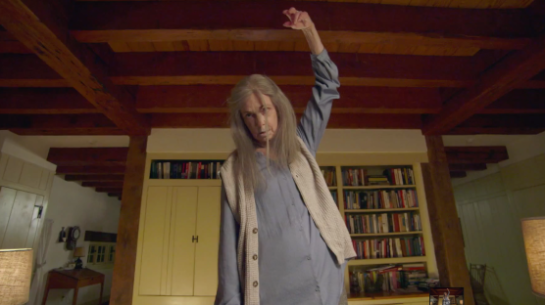
This will sound absurd but just go with it. Paula puts her two children on a train to Masonville, Pennsylvania where their grandparents pick them up. Rebecca films the entire thing as a gift to her mom hoping for a possible healing and reconciliation. At the station the kids are greeted by their Nana (Deanna Dunagan) and Pop Pop (Peter McRobbie) who take them out to their country farmhouse. Everything is documented through Rebecca’s two cameras. Things start well but soon the kids begin noticing weird behavior from their grandparents which gets worse during their week-long stay.

VISIT3

As I mentioned M. Night Shyamalan is known for his slow, methodical buildups and here we get it in the form of creepy moments from the grandparents. Shyamalan takes his time in feeding us these moments and just as the film started to fade for me we get the big twist which I thought worked like a charm. It quickly re-energized the story and made the final act a chilling and eerie ride filled with terrifying unpredictability.

While Shyamalan doesn’t reinvent the wheel with “The Visit”, he does show the creative flourishes that made him a respected name and overnight success in the horror-thriller genre. It also (hopefully) reinvigorates a career that had been written off by many due to four consecutive disappointments. Maybe it’s the smaller budget or maybe it’s the clearer focus. Whatever the case, I can get behind Shyamalan doing these types of projects and hopefully this is the first step in an exciting comeback.

VERDICT – 4 STARS
4 Stars

POSTER2

REVIEW: “Midnight Special”

MIDNIGHT POSTER

For many, a new movie from an accomplished filmmaker can be a special occasion. Tarantino, Scorsese, and the Coen brothers all have fanbases who mark their calendars whenever these filmmakers have a new project hitting theaters. Jeff Nichols has become that guy for me. Now before I am called out for unduly thrusting him into the company of the greats, all I am saying is that with only four movies under his belt Nichols has a defined vision and sensibility that I absolutely love. Whenever a Nichols film arrives it is a must-see.

“Midnight Special” is his latest film and first since 2012’s “Mud”. For the first time it features Nichols playing within multiple genres but not without adding his own undeniable signature. It’s a science fiction picture with Spielbergian flavor, but at the same time it’s impossible to pigeonhole. Quite honestly I don’t know what to call “Midnight Special” other than one more example of Jeff Nichols’ brilliance as a filmmaker and storyteller.

MIDNIGHT SPECIAL

Armed with a humble $18 million budget, “Midnight Special” accomplishes many things that $200 million blockbusters rarely nail down. Most notably, a strong and compelling story that trumps an overload of special effects and thoughtful, interesting characters who are easy to invest in. The film looks great as Nichols knows how to shoot a scene and build a load of tension with his camera. But as with each of his other films, the characters are the core of the story.

Nichols favorite (and one of the most underappreciated actors in the business) Michael Shannon plays a man named Roy who is running from the law along with his childhood friend Lucas (played by the perfectly tuned Joel Edgerton). With them is Roy’s eight-year-old son Alton (Jaeden Lieberher) in what appears to be an abduction. Amber Alerts spread across Texas, Arkansas, and Louisiana. The story becomes a fixture on national TV news coverage. The FBI joins the state and local authorities to intensify the search.

MIDNIGHT2

Here’s the thing, Alton mysteriously possesses otherworldly powers and different parties want him for their own selfish reasons. Roy just wants him as his son, and that gets to the true heart of the film. Nichols gradually lets us in on this father/son relationship that doesn’t always go in the directions you would expect. Another intriguing layer is added when Alton’s estranged mother Sarah (Kirsten Dunst) enters the picture. Adam Driver is excellent as an NSA analyst reluctantly thrown into the search and the always reliable is really good Sam Shepard playing a cult-like religious leader.

“Midnight Special” is undoubtedly science-fiction, but it also plays around in other genres and with several interesting ideas. It is very much a family drama. It’s a suspenseful thriller. It’s a chase movie. It dabbles in parenting, childhood, cultism, and government intervention among other things. Remarkably none of these things feel underserved. Nichols (who also wrote the story) brings all of these things together in a way that helps to strategically define the world his main characters are navigating.

MIDNIGHT3

Perhaps my favorite thing about the film is that Nichols doesn’t hold our hands and walk us through every aspect of his story. He slowly grants us bits of information while allowing us the space to piece them together ourselves. Sometimes he leaves things wide open, but it is never ambiguity for the sake of ambiguity as we often see in movies. He simply doesn’t answer every single question he asks choosing to allow the open-ended plot point or character to remain a mystery. The vast majority of that works perfectly, but I must admit there were a couple of instances that I felt deserved a little more attention.

That aside, “Midnight Special” is such a satisfying experience from Nichols’ smart script and assured direction to the top-notch performances especially from Shannon. It is an unconventional concoction that doesn’t feed on a desire for mass appeal. Instead it is a unique yet surefooted project that pulled me in and kept me hooked all the way through. I love it when a movie can do that.

VERDICT – 4.5 STARS

4.5 STARS