REVIEW: “Small Things Like These” (2024)

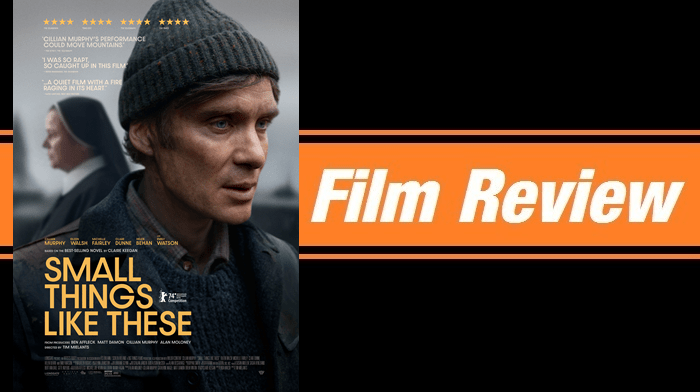
Cillian Murphy follows his brilliant Oscar-winning performance in “Oppenheimer” with an equally stunning turn in “Small Things Like These”, a wrenching historical drama based on the 2021 best-selling and award-winning novella of the same name by Claire Keegan. The story is set against the backdrop of Ireland’s Magdalene Laundries – institutions ran by Catholic orders with the complicity of the Irish government for over two centuries.

For those unfamiliar – in Ireland, many who were categorized as “fallen women” were sent to workhouses often posing as convents for “penance and rehabilitation”. Against their will, they were isolated from society and forced to work insufferable jobs, mostly in laundries, with no compensation. It wasn’t until 1993, when the bodies of 155 women were discovered in unmarked graves on the grounds of a Dublin convent, that the oppressive institutions were brought into the public eye.

Set in the mid-1980s, Murphy plays Bill Furlong, a loving and devoted father and a coal merchant who owns his own business, Furlong’s Coal & Fuel. Bill is a hard-working man who puts in long hours to support his wife Eileen (Eileen Walsh) and their five daughters in the Irish town of New Ross.
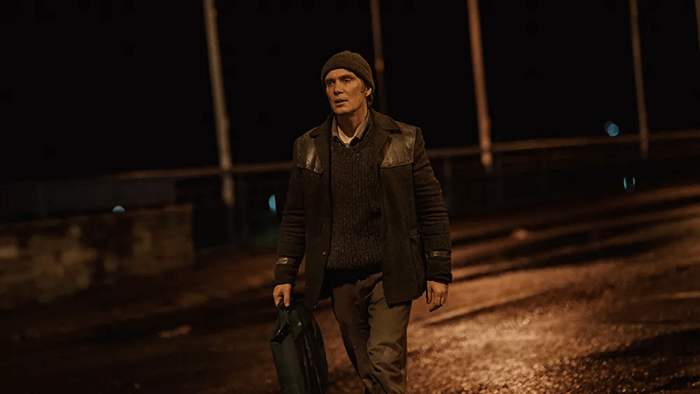
Image Courtesy of Lionsgate

Director Tim Mielants uses the strengths of Frank van den Eeden’s cinematography and Paki Smith’s production design to portray Bill’s lived-in and richly detailed blue-collar life. From the tight-quartered interiors of the Furlong home to Bill’s coal dust coated depot, a big effort is put into recreating a realistic representation. It’s one of the film’s many strengths.

While out delivering bags of coal, Bill makes his regular stop at a convent sitting on the outskirts of town. While there, he witnesses a distressed young woman being forced inside. It’s a troubling scene that clearly rattles Bill. Yet we’re left with the feeling that he’s not completely surprised. Over time we get the sense that not just Bill but most of the town are aware that something is going on at the convent. But the people are content with remaining quiet. They see it better to do nothing and stay on the right side of certain powerful people, namely Sister Mary (Emily Watson), the local Mother superior.

Much of the film focuses on Bill’s internal struggle with what he knows is happening and his feelings of complicity for staying silent. Mielants visualizes that struggle in a variety of ways including the image of Bill washing his hands. When arriving home each evening the first thing he does is go to the bathroom sink, fill it with water, take soap and a brush, and feverishly cleans his hands of the coal dust and grime. But over time his scrubbing gets more intense, a metaphor for his anguished efforts to cleanse himself of guilt.

Image Courtesy of Lionsgate

Bill’s feelings are amplified by his own traumatic childhood which is shared through a series of well implemented flashbacks. There we see a young Bill (played by Louis Kirwan) forced to deal with the sudden death of his mother Sarah (Agnes O’Casey). There’s also the fear of what could happen to any of his five daughters if he gets on the wrong side of the convent. “It’s none of our business”, his wife contends, more out of anxiety than apathy.

But the naturally soft-hearted Bill reaches his breaking point after discovering a visibly shaken young woman (Zara Devlin) locked in the convent’s coal shed. Does he risk his family’s well-being and incur the wrath of the Sisters just for doing the right thing? What will his wife say? Will the community rise up and support him? Mielants doesn’t answer all of those questions, and the potential consequences for Bill leave us with a lingering sense of concern.

We live in a day where there is no shortage of anti-Catholic sentiment circulating in the form of entertainment. But that doesn’t mean the Catholic Church is above scrutiny, especially with its troubled history. Mielants maintains a razor-sharp and deeply human focus that never allows his film to turn into some agenda-driven hit piece. Instead, he has made a gripping character study about turning a blind eye in the face of horrendous institutional abuse. And it’s relayed through another brilliant Oscar-worthy turn from Cillian Murphy.

VERDICT – 4 STARS

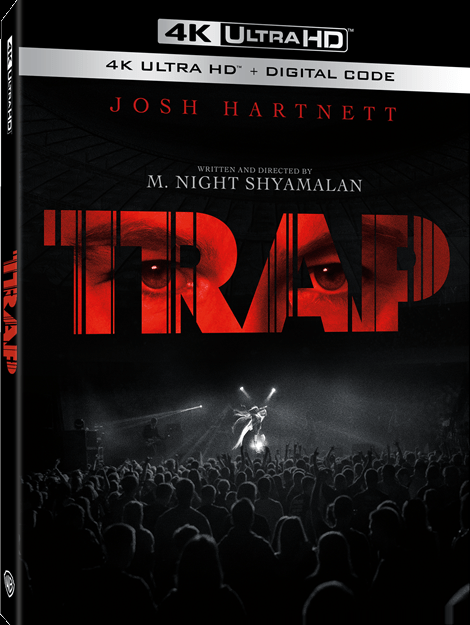
New on Home Video : “Trap” on 4K Ultra HD + Digital Copy

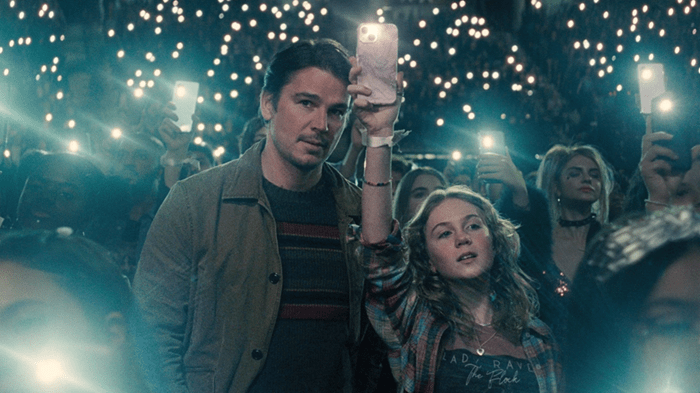
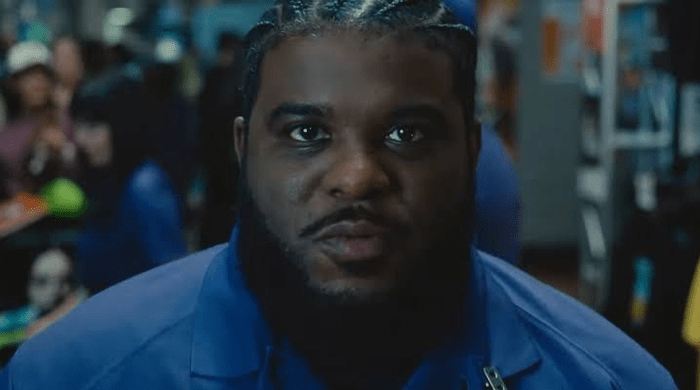
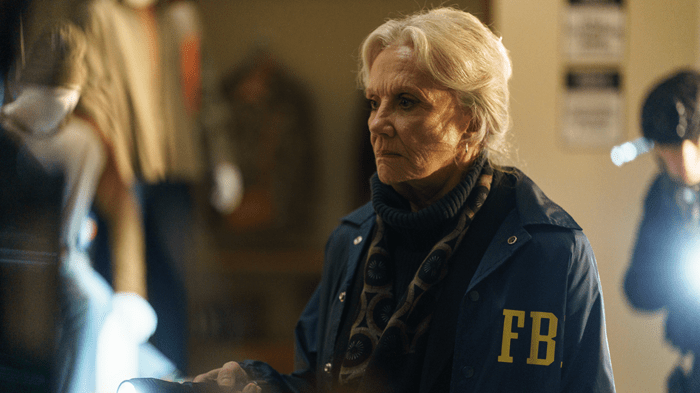
Warner Bros. Discovery Home Entertainment is bringing M. Night Shyamalan’s latest psychological thriller “Trap” to home video. The movie continues the career resurgence of Josh Hartnett who plays a father hiding a deep dark secret. It also stars Ariel Donoghue, Saleka Night Shyamalan, Alison Pill, Hayley Mills, and Jonathan Langdon. Check out my full film review [HERE].

This 4K Ultra HD edition of “Trap” includes a digital copy of the film and will be available to purchase on November 5th. See below for a full synopsis and release information including special features.

About the Film:

Year: 2024

Runtime: 105 Minutes

Directors: M. Night Shayamalan

Screenwriters: M. Night Shayamalan

Cast: Josh Hartnett, Ariel Donoghue, Saleka Shayamalan, Hayley Mills and Allison Pill

Rating: PG-13

Warner Bros. Pictures presents a new experience in the world of M. Night Shayamalan – Trap – featuring performances by rising music star Saleka Shayamalan. A father and teen daughter attend a pop concert, where they realize they’re at the center of a dark and sinister event.

Special Features:

Trap Premium Digital Ownership, 4K UHD and Blu-ray contain the following:  

  • Setting the Trap: A New M. Night Shayamalan Experience
  • Saleka as Lady Raven
  • Deleted Scenes
    • Cooper Gets Stopped by SWAT
    • Riley Shows Lady Raven Her Room
    • Cooper Takes a Hostage and Slips Away
  • Extended Concert Scene: Where Did She Go

REVIEW: “Here” (2024)

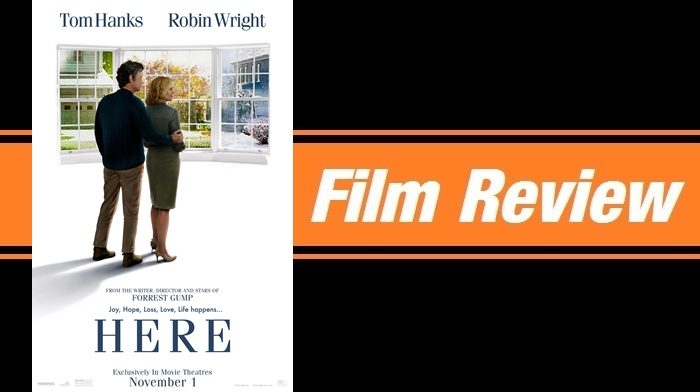
Robert Zemeckis and Tom Hanks have a history of making some pretty good movie magic together. 1994’s “Forrest Gump” won six Academy Awards. 2000’s “Cast Away” remains a personal favorite of mine. 2004’s “The Polar Express” has become a perennial Christmas classic for many. And regardless of what my film critic colleagues say, 2022’s live-action “Pinocchio” had more than enough heart, charm, and creative vision to “justify its existence”.

Now Zemeckis and Hanks team up for the fifth time with “Here”, a warm-hearted drama built around a gutsy high-concept idea that works in more ways than it doesn’t. The film is based on a six-page comic strip by Richard McGuire that was published in 1989 and turned into a graphic novel in 2014. Written for the screen by fellow Oscar winners Zemeckis and Eric Roth, “Here” is a bold and ambitious adaptation that may not reach the full potential of its concept, but that swings for the fences nevertheless, challenging cinematic norms and touching our souls along the way.

A part of me wonders if we’ve grown too cynical and jaded for a movie like “Here”. Not so much for its technical conceit, but for its earnest and open-hearted vision. There’s little resembling a cohesive plot. Instead “Here” functions as a thematically rich experience you absorb and relate to. It can be sweet and unashamedly sentimental. But it’s also honest and straightforward with its intentions.

Image Courtesy of TriStar Pictures

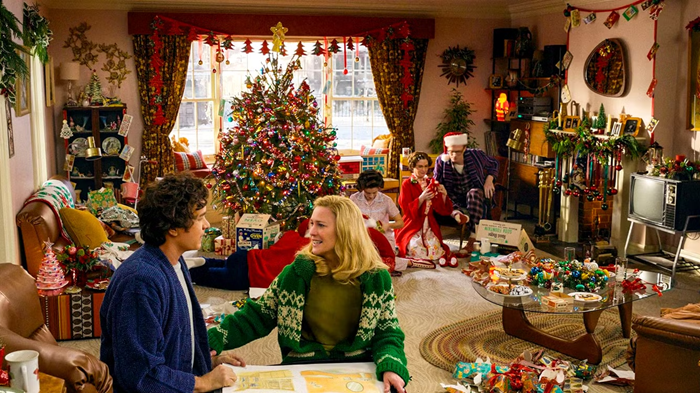
With “Here”, Zemeckis presents a multi-generational saga that explores the various phases of life, the persistence of time, the immeasurable value of family, and the power of unfailing love in light of our human fallibility. And it all unfolds through the lens of a single static camera with a fixed point-of-view, set upon one small parcel of New England land. As the camera sits stationary for the duration of the film, centuries of life play out before our eyes, most involving a single family and the colonial house they share.

“Here” takes a non-linear approach to storytelling, artfully moving us back-and-forth to different points on the timeline while telling several stories along the way. We see the house being built in 1911 and meet the first of several generations of residents, an aviation enthusiast (Gwilym Lee) and his disapproving wife (Michelle Dockery). A little later it’s occupied by an easygoing inventor (David Flynn) and his high-energy wife (Ophelia Lovibond). And in our current day, it’s a young couple (Nikki Amuka-Bird and Nicholas Pinnock) and their teenage son (Cache Vanderpuye). We also get (briefly), dinosaurs, Native Americans, and Ben Franklin.

But the bulk of its time follows the Young family. In 1943, Al (Paul Bettany) and his wife Rose (Kelly Reilly) buy the house after he returns from World War II. Al is a heavy drinker and struggles with PTSD. But he’s a hard worker who desperately wants to provide for his family. Meanwhile Rose proves to be the home’s stabilizing force. They go on to raise three kids in the house, one of them being Richard (Tom Hanks), the film’s most prominent character.

Image Courtesy of TriStar Pictures

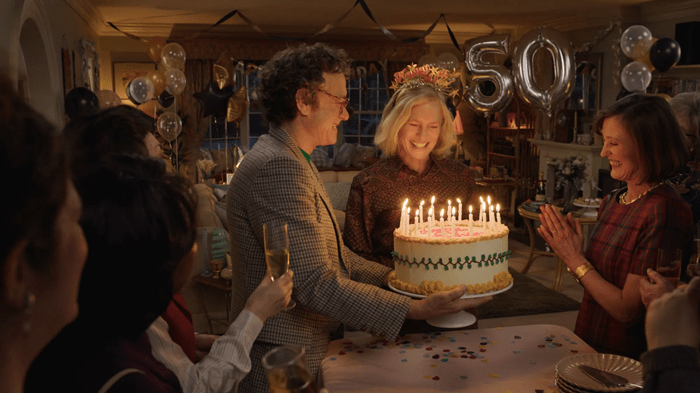
Richard meets and falls for Margaret (fellow “Forrest Gump” alum Robin Wright) who he brings home to meet his family. Later, after discovering Margaret is pregnant, the two get married and end up living with Al and Rose. Before long their daughter Vanessa is born. From there we follow the ebb and flow of the Young family’s life playing out in their living room. And similar to the bustling world outside of their big bay window, there’s a lot of beauty, chaos, and change to behold.

As Zemeckis plays hopscotch across his timeline, he uses a variety of young performers and digital de-aging technology to follow his characters through various stages of their lives. The effects work can occasionally be jarring, but it’s often mind-blowing. Meanwhile the evocative score from Alan Silvestri (yet another “Forrest Gump” alum) is teeming with warmth yet with an ache that’s befitting of the realities being explored.

“Here” is an experiment for you to sit back and emotionally savor as it chronicles the circle of life with all of its joy, sorrow, and bittersweetness. It’s not a movie custom-made for social media buzz. It doesn’t milk the celebrity status of hot young stars. It doesn’t cater to any edgy popular trend. It’s simply a movie about life where we watch significant events unfold on screen that distinctly relate to our own real-world experiences. It’s all conveyed through amazing visual craft and a cast putting every bit of themselves into realizing a powerful shared vision. “Here” is in theaters now.

VERDICT – 4 STARS
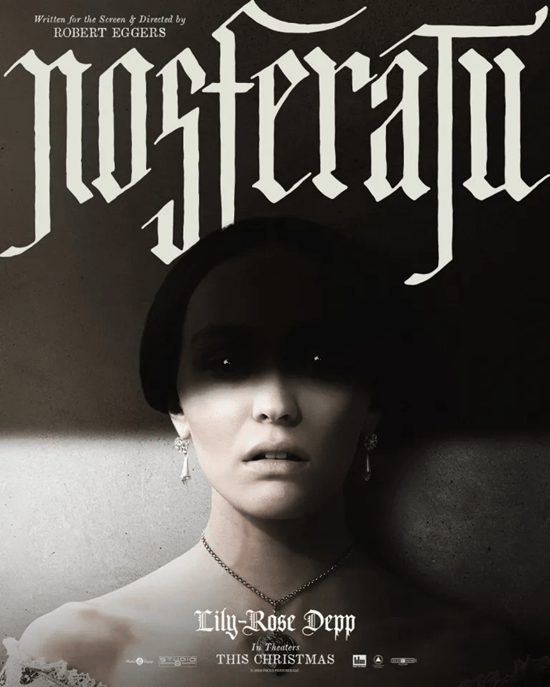
Focus Features and Robert Eggers Drop New Character Posters for “Nosferatu”

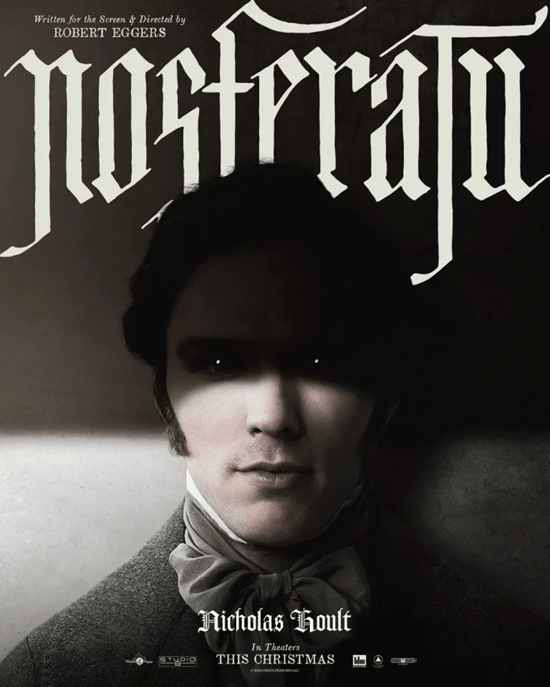
Focus Features has released five new character posters for their upcoming feature film “Nosferatu”. Written and directed by Robert Eggers (“The Witch”, “The Lighthouse”, “The Northman”), “Nosferatu” is a remake of F. W. Murnau’s 1922 gothic horror classic of the same name. The film is highlighted by a stellar cast that includes Bill Skarsgård, Nicholas Hoult, Lily-Rose Depp, Aaron Taylor-Johnson, Willem Dafoe, and Emma Corrin.

“Nosferatu” releases in theaters on December 25th. Check out the new character posters below and let me know what you think.

Five Reasons to Love George Romero’s “Night of the Living Dead”

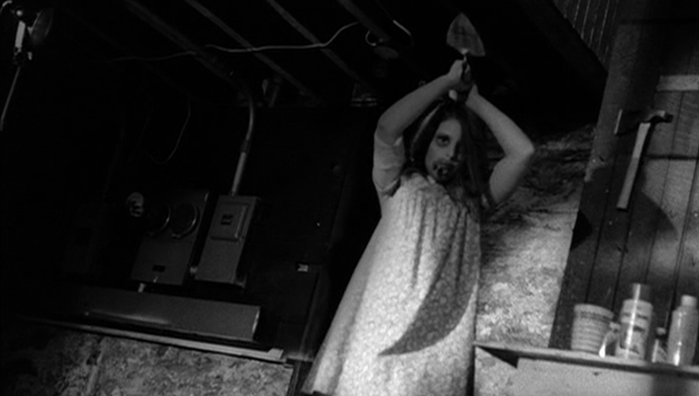
How can I let Halloween pass without spending a little time on what I still believe to be the greatest horror film of all time, George Romero’s original “Night of the Living Dead”. For most it’s probably impossible (and admittedly a bit silly) to narrow down a vast and diverse genre to one indisputable favorite. But for me, “Night of the Living Dead” has left a mark on me since first seeing it as an early teen.

So for this Halloween I’m going to toss out five big reasons (and there are so many more) why I love “Night of the Living Dead”.

#5 – The Music and Sound

One of the key ingredients of “Night of the Living Dead” is the fantastic sound design and music. In many ways it’s critical in developing and maintaining the film’s creepy tone. Interestingly, the music was purchased after previously appearing in other productions. Subtle but effective alterations were made to numerous tracks to better connect them to the film. The live sound effects were recorded on a budget by Richard Lococo. Echos and distortions were used to make things eerier and several small sound choices add to the tense atmosphere. Take the television newscast that plays in the background for much of the film. It and all of the sound design lends much to the film’s uneasy feel.

#4 – Duane Jones

He was a relatively unknown stage actor when George Romero hired him to star in “Night of the Living Dead”. But Duane Jones was stepping into what would become an iconic role particularly in the horror genre. His performance as the composed and resourceful Ben is a real strength of the picture. We’re not told much about his character’s backstory, but we do learn a lot about him. He’s cool, calm, and collective, and without him things would have instantly fallen apart. Jones’ casting was significant because at the time African Americans weren’t often considered for leading roles especially with an otherwise all-white cast. But he fits seamlessly as Ben and the movie wouldn’t be the same without his rock-solid performance.

#3 – The Setting

The first time I watched “Night of the Living Dead” was on a rented VCR. My parents let me stay up late to watch and I’ve loved it ever since. One of the main things that has stuck with me from that very first viewing was the film’s mostly one-location setting. The idea of being cornered in an isolated farmhouse with hordes of flesh-hungry undead gathering outside terrified me as a child and is still creepy today. The survivalist elements mixed with the “nowhere to go” angle remains effective and it has influenced countless movies since. No matter how many times I watch “Night of the Living Dead”, I still find myself immersed in that remote Pennsylvania farmhouse.

#2 – George Romero

“Night of the Living Dead” is known for many firsts and for paving several new paths. Perhaps most notable is being the feature film directorial debut for George Romero. He was the mastermind behind the project and what he was able to accomplish with a miniscule $114,000 budget is astonishing. Despite the monetary limitations, Romero showed an impressive creative savvy through his intelligent uses of sound, the camera, and minimal special effects. He also chose to shoot the film in 35mm black-and-white which was initially a budget constraint. But over time it has proven to be the only way the movie should be viewed.

#1 – The Zombie Craze

Zombies have found permanent homes in media of all kinds including comics, video games, movies, and television. And to think it all started with Romero’s vision. “Night of the Living Dead” wasn’t the first film to deal with the dead coming back to life. But it was the first to truly develop zombies into what they they are known as today. It would be impossible to list everything that has drawn inspiration from Romero’s classic. It’s influence goes beyond cinema and into the culture as a whole. So the next time you see a zombie movie, rewatch an episode of “The Walking Dead”, or play “Plants verses Zombies”, just remember that it can all be traced back to 1968 and “Night of the Living Dead”.

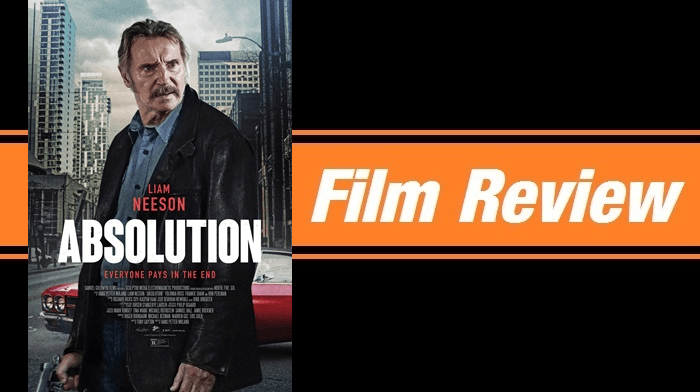
REVIEW: “Absolution” (2024)

Liam Neeson thrillers have become as common as day and night and we’ve grown accustomed to getting at least one a year. They usually follow a pretty familiar blueprint and each generally adheres to the same narrative formula although with slight variations (and I say that as a fan). But lately many of his thrillers have shifted from light and easy genre fare to grittier and more serious-minded. That trend continues with his latest, “Absolution”.

In “Absolution”, Neeson reunites with director Hans Petter Moland (the two worked together in 2019’s “Cold Pursuit”). While their previous collaboration had a pitch-black comedy element to it, “Absolution” is more of a tragedy. Screenwriter Tony Gayton puts together a sturdy crime thriller framework. But his interests lie deeper and are more human. And as its “Everyone Pays in the End” tagline foretells, not even the film’s damaged protagonist will remain unscathed.

Image Courtesy of Samuel Goldwyn Films

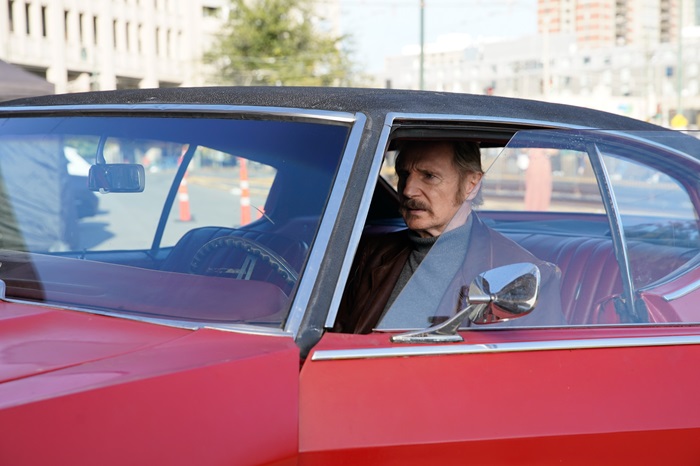
In “Absolution” Nesson is in top form and his signature gravitas is one of the film’s biggest assets. He puts off distinct Charles Bronson vibes with his late ’70s fashion sense, thick mustache, and steely tough-as-nails intensity. He plays Thug, a former boxer and hardened gangster who has loyally worked under a Boston crime boss (Ron Perlman) for thirty years. Though still deadly and efficient, some see Thug as a relic. This comes out most in some early scenes where he’s asked to work alongside the boss’s inexperienced and reckless son (Daniel Diemer).

But Thug has other concerns, mainly his reoccurring headaches and bouts with memory loss. He sometimes forgets names and directions, and even where he lives. He finally sees a doctor and is diagnosed with CTE (Chronic Traumatic Encephalopathy), a neurodegenerative disease directly linked to repeated head trauma. He’s told to expect a sharp decline over the next couple of years which inspires him to make amends for the life he has lived.

Thug reaches out to his estranged and rightfully bitter daughter Daisy (Frankie Shaw), a struggling single mother who reluctantly introduces him to his grandson, Dre (Terrence Pulliam). Moland and Gayton tease what looks to be a conventional reconciliation story. But for Thug, reconnecting proves difficult. And no matter how hard he tries, he can only keep his condition a secret for so long – from his understandably leery daughter; from the kind-hearted and filterless prostitute he begins seeing on the side (Yolonda Ross); and from his suspicious boss.

Image Courtesy of Samuel Goldwyn Films

Neeson shrewdly embodies every facet of his character, from the grizzled tough-guy to the broken shell of a man fighting to keep his mind intact. It’s a measured and textured performance that pulls from the often underappreciated screen veteran’s acting arsenal. Both Shaw and Ross add compelling pieces while Perlman is a sturdy presence in a small but impactful role.

Not everything in the film clicks into place. There are a couple of well-meaning but out of tune dream sequences that don’t quite pack the emotion punch they’re going for. And there’s Thug’s sudden soft spot for a captive sex worker that desperately needs more attention. Yet “Absolution” remains a gripping slow-burn that offers Liam Neeson a meatier and more contemplative role while giving him the chance to knock off a few goons for old times’ sake. “Absolution” opens in theaters this Friday.

VERDICT – 3.5 STARS