REVIEW: “Mr. Hulot’s Holiday”

Classic Movie SpotlightHULOTMy recent time spent looking at the movies of French filmmaker Jacques Tati has been a true delight. As I’ve made my way through his small but brilliant catalog of films I’ve grown more and more impressed with the ingenious craft at the heart of them. “Mr. Hulot’s Holiday” was the first film featuring Tati’s lovable Monsieur Hulot character and it’s arguably the greatest display of his physical comedic abilities. Tati both starred in and directed this picture and his meticulous approach to filmmaking is seen in every frame from his carefully conceived sight gags to his beautiful work with the camera.

There’s no strict and focused narrative in “Mr. Hulot’s Holiday”. It simply follows Hulot’s vacation at a small French beachside resort. Much like other Tati films, there is a great focus on community here. We’re introduced to a number of fellow vacationers each with their own unique personalities and quirks. There’s no real effort towards character development. Instead they simply become familiar faces who we grow to know through their reappearances. This is one of the characteristics of Tati’s films that I enjoy the most. I love how he develops a community of characters all built around their individual interactions with Mr. Hulot.

Hulot is the picture of gentleness and happiness. With his pipe in mouth and striped socks showing he certainly stands out in the crowd. But it’s his fidgety demeanor and overall clumsiness that makes him so physically awkward, something only rivaled by his social awkwardness which he seems totally unaware of. He simply goes on enjoying life completely impervious to the inconveniences he may be accidentally causing. He annoys several of his fellow vacationers which provides some great laughs for the audience.

HULOT2

For me the true treat was just watching him interact with this wonderful assortment of people. For example there’s the grumpy and mopey waiter who doesn’t crack a smile for the entire movie. There’s the pretty blonde who gets the attention of nearly every young man at the resort yet she lives in her own uninterested little world. There’s the older couple who just stroll around observing everyone and taking everything in. We get the mischievous children and a handful of animals, both of which Tati loves to incorporate into his films. There are several other great characters and we never really get to know any of them yet they become very familiar to us. They all share the resort, the dining area, and the beach with Mr. Hulot which results in some hysterical moments.

First and foremost Jacques Tati is a physical comedian, a skill that dates back to his early years as a mime. His films often reflect back on the days of Chaplin, Lloyd, and Keeton when the stories were told through the amazing vehicles of expressions, gestures, postures, and athleticism. That’s certainly the case here. The dialogue is scarce and the speaking we do hear from people is mostly unintelligible. Instead the story is made for our eyes and mainly told through the lens of Tati’s camera. His skill is incredible and you can’t take your eyes off what he’s doing on screen. It’s unlike anything we see today.

In many ways “Mr. Hulot’s Holiday” resembles a classic silent film yet there is a steady emphasis on sound. There’s the aforementioned chatter from the characters. Most of the time we have no idea what they’re saying yet they are a delightful ingredient. The spitting and sputtering of Mr. Hulot’s funky automobile almost makes it a character itself. Then there are the little things such as the swinging door to the dining room. Every time someone walks through, it makes this peculiar “fwoom” sound. Tati removes the music and places a heavy emphasis on that unusual sound. It may not sound like much but in the flow of the film it fits perfectly.

HULOT1

Tati is also a director of timing. So many of his hilarious gags are dependent on precise timing and I can imagine even some of the smallest scenes taking a lot of time and expertise to get right. Take one scene where Hulot is fixing his broken down jalopy on the side of the road. He is underneath his car but with his legs laying out in the road. Another car comes flying through and at just the right time Hulot pulls in his legs as the car barely misses them. He never moves his legs to miss the oncoming car but to just shift positions yet the timing is perfect. Now there could very well be some camera trickery involved but it’s just one example of the many great gags revolving around perfectly timed people or objects.

“Mr. Hulot’s Holiday” was a huge success upon its release and it remains a cherished movie for many today. It’s a perfect display of Jacques Tati’s artistry as both a filmmaker and a comedic actor. It’s a celebration of silent comedy as well as its own unique brand of filmmaking. It also gives us our first introduction to one of the most lovable characters in cinema chock full of his deadpan humor. Just a couple of days ago as I sat in a theater watching a series of comedy trailers that looked neither interesting or funny I thought of this film. I thought of how lazy and formulaic the one-trick-pony comedies of today are. Then I thought of Tati’s creativity, his style, his skill with the camera, his poetic grace. All of these things and more are beautifully wrapped up in “Mr. Hulot’s Holiday”. I sat in that dark theater thinking the same thing I’m thinking now – “Man I wish they still made comedies like this today”!

VERDICT – 5 STARS

5 STARSs

5STAR K&M

REVIEW: “Mon Oncle”

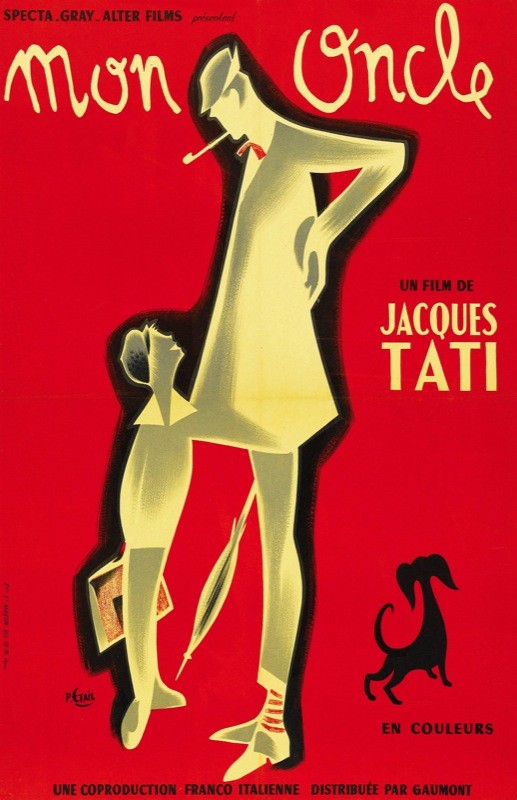
mon_oncle poster“Mon Oncle” Is French filmmaker Jacques Tati’s 1958 comedy and his second of four films featuring his Monsieur Hulot character. The acclaimed director only had six feature-length films to his credit and this was his first in color. It’s also a widely appreciated picture that earned Tati an Academy Award for Best Foreign Language Film. There are several themes that Tati plays with in what’s an otherwise playful comedy. He satirizes materialism and the lust for things. And he shows the sterile and artificial relationships of those absorbed with social status. These and other things are certainly interwoven within the story, but for me the movie is more effective as a fun and often times charming comedy.

Tati not only directed, produced, and co-wrote “Mon Oncle”, he starred in it as well. His Monsieur Hulot character is as lovable as he is inept. He’s an awkward and almost child-like character who views life with a smile, a bow, and a tip of his hat. Hulot lives in an energetic working class neighborhood in Paris filled with older buildings and busy streets. For me the very best part of this film is the time we spend in this close-knit community. Tati does a wonderful job of familiarizing us with the places and the people who make up Hulot’s lively neighborhood. There’s the lovely young girl from his building who always greets him with a smile and sometimes sweets. There’s the short cranky produce man whose tools fall out of his truck whenever he opens his door. There’s the friendly street sweeper who spends more time talking than sweeping. There’s the group of men who spend most of their time at the Chez Margot cafe. These are just a few of the people who give this community its beautiful life and character.

In stark contrast you have the wealthy upscale suburb which is where Hulet’s sister and brother-in-law Monsieur and Madame Arpel live. Their modern, high-tech home is as cold and sterile as an operating room, a description that also fits their relationship. Their true joy is in showing off their house to their more important visitors. There is a reoccurring joke that has Madame Arpel running to turn on a hideous metallic fish fountain in their front garden whenever a truly important guest shows up. It’s all about appearance and self-importance with the Arpel’s.

MON ONCLE

But their young son Gerard feels trapped inside the monotonous walls of the Arpel estate. That’s why he loves it when his Uncle Hulot comes to visit. Gerard loves going back to Hulot’s neighborhood to enjoy the vibrant atmosphere and especially to play with his mischievous friends. Some of the film’s funniest moments involve these little pranksters pulling all sorts of practical jokes on passersby. Hulot, in many ways a child himself, really doesn’t try to control them. He just reacts to them as he does everything else – no harm, no foul. Gerard’s affection for his uncle doesn’t make Monsieur Arpel very happy. He is jealous of the relationship even though he doesn’t invest any time in Gerard. He also looks down on Hulot as his inferior. Madame Arpel believes she can change all of that by introducing Hulot to their social circle, an idea that’s doomed (and hilarious) right from the start.

For the most part “Mon Oncle” is a visual comedy with very little understandable dialogue. Often times we hear the unintelligible voices of the people but it’s plenty to let us know what’s happening. The dialogue that is there is strategically placed and works perfectly within the confines of the story. The bulk of the story is told through nods, gestures, and mannerisms and the humor depends more on slick and subtle sight gags than normal straightforward jokes. All of this contributes to the sheer genius of this movie. Tati incorporates some methods taken from the great silent films both is his direction but especially in his acting.

I adore the Monsieur Hulot character. I love watching him tip his fedora and tap his pipe on the bottom of his shoe. I love his happiness and contentment that is ever-present even though he lacks the material possessions that others crave. I love his innocent naivety about the modern world and I love his playful relationship with his nephew. He’s such an endearing character and he’s the perfect model for Tati’s ‘man versus modern technological’ concern.

It’s not just the good humor and great characters that make this movie so good. There’s also Tati’s amazing visual technique. He uses the camera like a pair of eyes just watching and taking in what his characters are doing. This is what gives “Mon Oncle” it’s undeniable life and vibrancy. Tati never shortchanges any detail and as a result I felt I was right there walking through the neighborhood square and watching the same five little dogs pop up throughout the movie. This is made all the sweeter after getting a taste of the Arpel’s cold and impersonal home. The contrast is huge but it’s that kind of connection that makes the characters so dear and the humor so effective. And that’s what makes “Mon Oncle” such a classic.

VERDICT – 4.5 STARS

REVIEW: “Breathless”

BREATHLESS poster

There are certain movies that will always be remembered for their undeniable influence. Such is the case with “Breathless”, the first feature film from acclaimed director Jean-Luc Godard and a major player in the French New Wave of the late 1950’s and early 1960’s. French New Wave was a bold and experimental movement that toyed with new techniques of filmmaking and storytelling. The stories were often rooted in and influenced by the social climate of the time and ambiguity, realism, and sometimes romanticism were key tools used to craft these stories.

French New Wave also had several distinguishable visual techniques that set it apart from the contemporary filmmaking of that time. New Wave directors experimented with long takes, creative tracking shots, handheld cameras, and fast scene changes. These techniques originated in low-budget necessity but they were also intended to buck the traditional brand of filmmaking. Godard and “Breathless” were instrumental in defining the movement. Nearly every technique unique to French New Wave can be found in “Breathless” and it has certainly made an important mark in cinema history.

BREATHLESS 1A

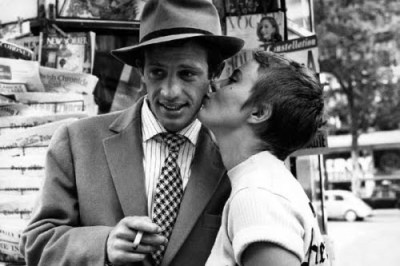
The movie follows around a young criminal named Michel (Jean-Paul Belmondo). His forte is stealing cars and petty crimes but things go bad when a simple car heist results in him killing a cop. He ends up on the run in Paris trying to secure some money to make his escape. Michel is not a good guy and it’s hard to get that impression from the film. But an argument could be made that, in a sense, the movie glamorizes Michel’s lifestyle. There is some legitimacy to that but I think it overlooks a major part if the story. Godard does try to emphasis a sense of cool about Michel through his freewheeling attitude, dangling cigarettes, and thumb rubs across his lips. But I feel his coolness is more his perception of himself – a misguided perception more rooted in arrogance than reality.

It’s a combination of his arrogance and his heart that proves to be his biggest obstacles. He fashions himself after movie stars such as Humphrey Bogart and he seems infatuated with his own press. Throughout the movie we constantly see him buying newspapers in an attempt to get information no doubt, but also to bask in his own headlines. He walks the streets of Paris, impervious to his wanted status, with nothing more than a pair of sunglasses to hide his identity. Even as scrolling marquees across the city report of the police manhunt drawing closer, Michel still takes to the streets of Paris with an almost cocky sense of invincibility.

Breathless 2

He also finds himself smitten with Patricia (Jean Seberg), a young American student at the Sorbonne and aspiring journalist. She’s a seemingly insecure young lady who ends up falling for Michel but with an ever-present sense of uncertainty. Michel often insults her and talks down to her yet she grows more and more fond of him. I believe it’s because she sees through his tough guy facade and finds something she can cling onto regardless of how unwise it is. She struggles with whether to stay with Michel or not but even after finding out what he’s done she can’t just walk away. In a very different way Michel finds himself in the same boat. It’s some compelling stuff.

“Breathless” is a little rough around the edges yet it’s exhilarating cinema. Much of the script was written as they were filming and it features a lot of improvisation. But I love the spontaneity that comes along with that both narratively and visually. Hand-held cameras, a signature of the movement, are tremendously effective both in giving it a unique style as well as capturing some of the beauty of Paris. In fact, “Breathless” features some of the best views of the city you’ll find in cinema. The movie is also recognized for its fresh and bold use of jump cuts – a film editing technique where a scene makes quick jumps forward. There are so many filmmaking devices in “Breathless” that have influenced directors for years and still do today. And even though the storytelling structure may feel a bit jarring, the film is hypnotic and its mark on cinema cannot be overstated.

VERDICT – 4.5 STARS

Review: “It’s A Wonderful Life” (1946)


(Originally Reviewed in 2012)

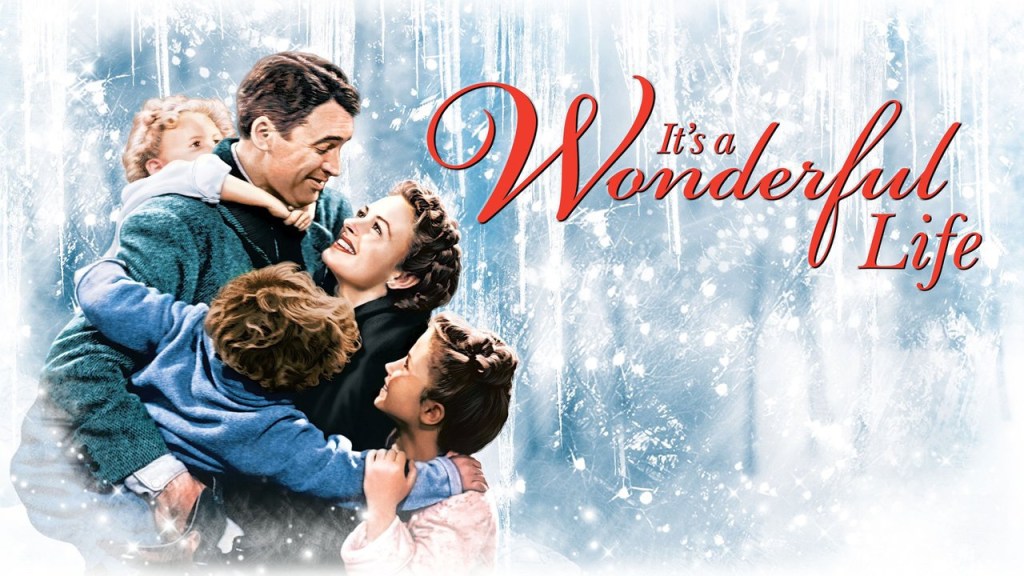
Out of all the movies we watch each Christmas season, no other holiday film hits me quite like Frank Capra’s “It’s A Wonderful Life”. Over the years this 1946 gem has become a perennial favorite. But this beloved feature can’t be easily pigeonholed as a simple Christmas movie. Its so much more. It’s a tremendous bit of filmmaking full of warmth, some really funny humor, a well-written story, a terrific ensemble, and a heartfelt ending that I still adore. It’s a true motion picture classic that shouldn’t be reserved for just the holiday season.

“It’s a Wonderful Life” is the movie that introduced me to the great Jimmy Stewart. Over the years, he would grow to be one of my favorite actors. Here he plays George Bailey, an adventure-minded young man who desires to shake off the dust of his small hometown and see the world. But in his close-knit community things don’t always go as planned. And in George’s case, circumstances would always arise that managed to keep him in Bedford Falls.

The story (co-written by Capra, Frances Goodrich, and Albert Hackett) is an adaptation of Philip Van Doren Stern’s short story “The Greatest Gift”. It begins close to its end. George as is at the end of his rope and is thinking about taking his own life. But Heaven has heard the many prayers of his family and friends and is set to intervene by sending George’s guardian angel Clarence (Henry Travers) to remind him of the wonderful life he has lived. In order for the plan to be successful, first Clarence needs to know about the man he’s saving. So he (and the audience) are shown how George’s life has unfolded.

WONDERFUL

We’re shown that at a young age George Bailey had a significant influence on Bedford Falls. That influence took off after he finished high school and went to work with his father at the Bailey Building and Loan, the only thing in town the miserly money-grubbing Mr. Potter (Lionel Barrymore) couldn’t get his hands on. It’s George’s fight with Potter that leads to his troubles. But it’s also the thing that leads to an important revelation – he truly has had a wonderful life.

The beautiful and charming Donna Reed plays Mary Hatch who first catches George’s eye at a high school dance. The spark between them is undeniable and over time they marry. Stewart and Reed have a delightful chemistry which is evident in every scene they share. Reed really impresses with her ability to convey the love-sick sweetness of young Mary as well as the motherly concern and maturity of older Mary. Together, she and Stewart are a treat.

The rest of the supporting cast are equally great. Barrymore is pitch-perfect as the story’s despicable antagonist who has he hands around the throats of everyone in town. Travers has a ton of fun playing Clarence, the most unlikely of guardian angels. His back-and-forth’s with Stewart offer some of the film’s best moments. And then there is Thomas Mitchell as the absent-minded uncle Billy. The rest of the cast wonderfully brings life and personality to George’s family and Bedford Falls.

But at the end of the day this is Stewart’s show. He brings depth and personality to George Bailey and portrays him in a way that only Stewart could. He’s the charismatic engine that drives this unforgettable and utterly timeless classic. Surprisingly “It’s a Wonderful Life” wasn’t the most well reviewed movie when it was first released. But over time, especially during the Christmas season, it has earned the high praise it has so richly deserves.

VERDICT – 5 STARS


REVIEW: “Miracle on 34th Street”

MIRACLE POSTER

While there have been two serviceable remakes, neither come close to the magic of the original “Miracle on 34th Street”. This 1947 Christmas picture has become a stalwart for Christmas movie watchers each and every year. But while most modern Christmas movies are cheap and gimmicky, “Miracle on 34th Street” rightfully holds its place as a true Christmas classic as well as an incredibly well-made film. It’s also one of the few seasonal pictures to get recognition from the Academy Awards. It won four Oscars, was nominated for Best Picture, and is a movie that deserves the accolades and treasured status it has received.

George Seaton directed and wrote the script which begins on Thanksgiving day. The beautiful Maureen O’Hara plays Doris, a cynical single mother who works for Macy’s and is in charge of their Thanksgiving Day Parade. As she frantically works to get the parade under way, she discovers that her Santa Claus is drunk off his feet. Desperate to find a replacement for the big finale of the parade, she convinces a passerby named Kris (Edmund Gwenn), who strikingly looks the part, to fill in. His convincing work eventually earns him a spot as Macy’s department store Santa. His only quirk? He claims to be the real Santa. But Doris’ bosses overlook that after seeing their customers positive reaction to him.

MIRACLE

But the core of the story and the most satisfying component of it revolves around the relationship between Kris, Doris, and her young daughter Susan (Natalie Wood). Susan is just like her mother, cynical and skeptical about all sorts of things, most notably the existence of Santa Claus. Kris sets out to not only convince Susan that he is Santa Claus but to convince Doris that there are many things in life worth believing it. Helping him along the way is Fred Gailey (John Payne), a struggling attorney who is also attracted to Doris. Fred uses the crafty old technique of getting close to the daughter in order to get close to the mother. He and Doris eventually hit it off even though his willingness to believe in things sometimes clashes with her stubbornness.

I really like the chemistry between O’Hara and Payne. Their developing relationship is easy to buy into especially thanks to O’Hara’s cautious confidence and Payne’s witty self-deprecating humor. Both give spot-on performances. Also, young Natalie Wood is fantastic. She wonderfully portrays Susan and her childlike innocence combined with her inherited skepticism. And then there is Edmund Gwenn who is still the most convincing Santa Claus I’ve seen on film. His undeniable sincerity and infectious charm flows from every scene he’s in and his Oscar was well deserved. The movie also gives us great supporting roles such as Porter Hall as Macy’s psych evaluator and the movie’s chief antagonist, James Seay as a nursing home doctor and friend to Kris, and Jerome Cowan as a district attorney given an certain impossible task. The cast is fantastic from start to finish.

“Miracle on 34th Street” is a nice mix of holiday sentimentality (in a good way) and genuine feel-goodness. But it’s also a wonderfully written story that’s flawlessly realized through sharp direction and the perfect cast. It’s easy for some to dismiss Christmas movies as shallow seasonal escapism. But there are those special gems that are simply great movies. They show us that sense of style and craft that remind us of how good movies can be. This is one of those films.

VERDICT – 4.5 STARS

REVIEW: “The Third Man”

“The Third Man” is a stunning British film noir from 1949 directed by Carol Reed and starring Joseph Cotten. It’s a film featuring a tight Hitchcockian story and some extremely clever uses of cameras and lighting. Novelist Graham Greene wrote the screenplay that takes place in a battered post-World War 2 Vienna. The city has been broken up into sectors, each owned by different countries. This plays a big part in Greene’s story. Throughout the film we see shells of buildings, burnt out cars and piles a debris left from the war and it creates one of the most believable atmospheres. This is in large part due to the incredible cinematography from Richard Krasker but more on that later.

This is the Vienna that novelist Holly Martins (Joseph Cotten) enters into. He arrives there at the request of his friend Harry Lime who has offered him a job. But he finds out that Harry had just been killed after being struck by a car. Curious about the circumstances surrounding his death, Martins begins to suspect that Harry was murdered. Along the way he runs into several characters including a cryptic British military policeman (Trevor Howard), Harry’s girlfriend (Anna Schmidt), a couple of Harry’s suspicious “friends” (Ernst Deutsch & Siegfried Breuer), Harry’s doctor (Erich Ponto), and an eyewitness to Harry’s death (Paul Horbiger). Martins sets out to piece together the tidbits of information he gets from each of these people and soon finds out that the truth may be a hard thing to handle.

The story moves at a perfect pace while nicely delivering all the elements you would expect from a high quality mystery and film noir. Cotten is fabulous as always and the supporting cast does a marvelous job of creating the shady and hard-to-read characters that give a movie like this such energy. It’s also necessary to mention that Orson Welles has a small but pivotal part in the movie and, just as you would expect, he is superb. The story never hits a lull nor does it ever overplay it’s hand. It’s intelligent and well constructed and I was consumed by both the narrative and the environment in took place in.

Getting back to Krasker’s cinematography, it’s impossible to watch this picture and not be struck by it. His work was ahead of its time and serves as an object lesson on creative camera angles and the use of lighting. The film was shot almost entirely in Vienna. Krasker goes to great lengths to capture the historical beauty of the city although it’s often shrouded in the darkness of night. But his impeccable use of lighting and shadows draws out the attraction of the statues, architecture, and cobblestone streets as well as the devastation left by the war. Also, you can’t talk about the presentation without mentioning the lovely score by Anton Karas. It features some great tunes none better that the beloved “Third Man Theme”.

I love “The Third Man”. Everything from its production value to the performances to the mesmerizing story works for me. This is great example of classic film noir and it had me hooked from the opening moments until that perfect final shot. This is a film that may have slid under some people’s classic movie radar. But this film excels in both visual presentation and intelligent storytelling. “The Third Man” is a real gem and it’s a movie that simply must be seen.

VERDICT – 5 STARS

5 STARSs

5STAR K&M