REVIEW: “BATTLE OF THE BULGE” (1965)

Ken Annakin’s “Battle of the Bulge” from 1965 is another solid entry into the field of War World 2 films. Over the Memorial Day weekend I had the opportunity to finally catch up with the entire film. “Battle of the Bulge” (the movie) has an interesting history. It was met with a wide range of opinions, mostly positive but plenty of negative. Some criticized the film for it’s obvious historical inaccuracies. Others griped about it’s overly talky and bloated script. There certainly is some merit to these and other criticisms, but I found the movie to be a solid war picture despite it’s overly long running time.

“Battle of the Bulge” is the telling of the German’s last-ditch offensive through the heavily forested mountain regions of Belgium in the later days of World War 2… at least the title of the film suggests that. It could be better described as loosely based on events surrounding the bloody, costly, and complicated battle. The film doesn’t depict any particular real-life figure during the war. It’s clearly intended to be a drama set during wartime. This is something some people took issue with but I don’t think the movie ever pretends to be something it’s not. Perhaps it could have chosen a different title for the film, but historical accuracy doesn’t seem to be a goal. That said, the movie does attempt to capture elements from the real 50 day battle. Some of the attempts work more than others.

The film’s centerpiece seems to be Colonel Hessler (Robert Shaw), a German officer put in charge of a large group of new King Tiger tanks. His mission is to slam into and push back the Allied lines which are slowly hemming the Germans in. The Americans believe the Germans are undermanned and out of resources and incapable of a worthwhile offensive, everyone except Lieutenant Colonel Kiley (Henry Fonda). During an overhead recon flight, Kiley noticed German tanks in hiding which leads him to believe the Germans are planning an attack. His suspicions are dismissed by General Grey (Robert Ryan) and the Americans are caught unprepared when Hessler and his tank division hit the Allied lines.

Hessler seems loosely based (there’s that description again) on the real-life Nazi Joachim Peiper. Peiper was a shrewd and brutal field officer with close personal connections with Himmler. During The Battle of the Bulge, Peiper was to lead a division of the new King Tigers. The tanks were heavily armored but they were gas guzzlers (it’s said the went about 1/2 mile per gallon of fuel). We see some of this with the movie’s Hessler character. He is a shrewd and dedicated German and we definitely see the fuel issue play a key role in how things turn out. But Peiper was a high-ranking SS Nazi and was convicted of war crimes for the brutal massacre of American prisoners and civilians who he came across during the battle. Hessler isn’t an SS officer and seems to be angered when he hears of a massacre that took place elsewhere during the offensive.

On the American side we send a lot of time with Lt. Col. Kiley as he tries to persuade the higher-ups of the upcoming attack and later as he plays a key role in trying to figure out Hessler’s ultimate strategy. We also spend time with Major Walenski (Charles Bronson) and his soldiers who find themselves face-to-face with Hessler’s forces on more than one occasion. Some of my favorite moments in the film revolved around Walenski and his men. I guess that’s why I was a little let down by the way he just drops off the map later in movie. Once he disappears, we never see him again. Telly Savalas plays Sgt. Gruffy, a tank commander who has a little business on the side. The movie tries to build a little story around him but it’s pretty flimsy. I did enjoy the short side-story about a green, by-the-books Lt. Weaver (James MacArthur) and the seasoned Sgt. Duquesne (George Montgomery). When things go bad for the two Weaver flaunts his rank while Duquesne relies on his field experience. It’s a familiar dynamic but one that I enjoyed.

But the complaints about the movie’s script are legitimate. There were instances where it felt like we were seeing the same thing over and over. The American leaders would discuss what the Allied game plan should be. Then we would switch to Hessler and his heads talking about a better course of action for them. Then we would do both all over again without making any progress in between. There were also some scenes that could have been edited better. For example, there is a cool scene where the Allies are sending guns via train to the front line to stop Hessler’s advance. The camera is put on the front of the train as it races to it’s location. But the coolness wears off as the scene just keeps on going and going. There were also several scenes features rolling tanks that seem to go on forever. A little better editing could have cut out some wasted time on scenes like these.

And while I don’t think the movie should be dismissed simply because it’s not historically accurate, I can see where some may not be as fond of it due to certain out-of-place details. For example, the location of a big tank battle close to the end almost resembled Arizona more than Belgium. It didn’t at all feel connected to the real environment in which they fought. In fact, much of the Battle of the Bulge was fought in snowy, hilly areas with thick forests. We see small bits of that here and there but it completely disappears later in the film. Now I perfectly realize that this is something that only someone interested in the history behind the battle would fuss about. And while it would add so much more to the film for someone like me, it really isn’t something that killed my enjoyment of the picture.

On the flip side, “Battle of the Bulge” is a visual delight. The film is filled with huge detailed set pieces and wide screened action sequences that feel completely authentic. The camera work is fantastic and there are times where the carefully crafted angles blew me away. Jack Hildyard, the Oscar-winning cinematographer for “Bridge on the River Kwai”, handles the same duties here and his work is fantastic. The movie is immediately set apart by it’s visuals and they only get better as the film progresses.

Yes “Battle of the Bulge” is long and sometimes talky. No it’s not a movie to watch in order to learn the real details of this historical and important battle. But in terms of cinematic entertainment, the movie works. The performances are good especially from Shaw and Bronson and it’s visual presentation can stand with any other war picture. “Battle of the Bulge” may not be the best World War 2 movie, but it’s certainly a satisfying film that captures a lot of the action and spirit you want. It’s definitely worth checking out.
VERDICT – 4 STARS

REVIEW: “To Kill A Mockingbird”

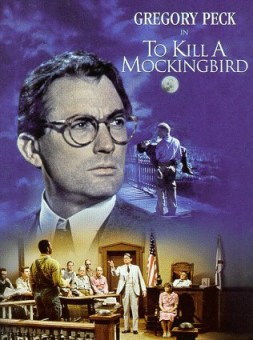
Classic Movie SpotlightMOCKINGConsidered an American movie classic, “To Kill a Mockingbird” is one of the best films to come out of the 1960’s and features what many consider to be Gregory Peck’s finest performance. It was nominated for eight Oscars, a winner of three, and was listed in The National Film Registry in 1995. In many ways “To Kill a Mockingbird” is a time capsule. Each time I watch it I’m transported back to a time that in many ways was kinder and gentler but not without its own open wounds. What’s most impressive is that it manages to do this without ever feeling unimportant or dated. It feels just as powerful and relevent now as it did when I first saw it.
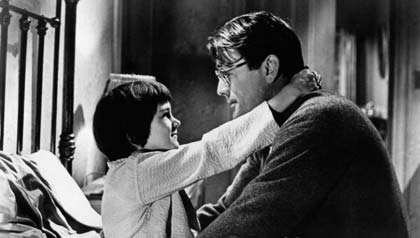
The movie is based on the Pulitzer Prize winning novel by Harper Lee about the small town of Maycomb, Alabama during the 1930’s. Gregory Peck plays Atticus Finch, a town lawyer and a single father of two young children. Atticus is asked to represent Tom Robinson (Brock Peters), a black man who is accused of beating and raping a white woman. Atticus believes in the judicial process and believes Tom to be innocent. But even before the trial, many in the town have already judged Tom to be guilty and tensions soon reach the boiling point.

Peck won the Best Actor Oscar for his performance and many have said it was because of the striking similarity between him and his Atticus character. Atticus is a true man of character and integrity. He stands up for what’s right and tries to instill that same principle in his children. But while the trial and the fallout is a key part of the story, it’s not the main part. The movie’s bigger focus is on Atticus’ children, his son Jem (Phillip Alford) and his daughter Scout (Mary Badham). We first see them in all their innocence, from their imaginative playtime to their light-hearted mischief. Jem and Scout just live their life with a care-free child-like approach that I was really, really drawn into. Perhaps the wonderful portrayal of their innocence helps make what comes later so much more powerful.

At its core, “To Kill a Mockingbird” is about the loss of innocence. Eventually things unfold through the eyes of the children that reveals to them the darker and more troubling aspects to the world they live in. As the town begins to react to the alleged rape and the tensions leading up to the trial date rise, the kids see things that leave them confused and often times scared. The way director Robert Mulligan switches his camera to the children as they’re watching these harsh and disturbing things unfold is beautifully executed yet so heart-breaking. But yet it’s true and authentic. Unfortunately, as kids we’ve all had those moments. Moments when we realized that the world wasn’t just about tire swings and ice cream. Moments that we see the dark side of society and the people around us. But that’s also when the light shines the brightest and for these kids, their father Atticus was certainly a shining light.
There are several other smaller but equally enthralling side stories and side characters in the movie. Jem and Scout make friends with a young boy named Dill (John Megna) who comes to visit his Aunt Rachel each summer. I loved Dill and the three have some great scenes together including their investigations into Boo Radley, a mysterious crazy man who is believed to only come out of his creepy broken-down house after dark. Robert Duvall plays Boo in what was his big screen debut. I also loved Jack K. Anderson’s performance as Bob Ewell, the slimy and disgraceful father of the rape victim. He’s a despicable man and his vitriol hatred makes him an easy character to dislike. Everyone is well cast and the performances are spot-on.

I also loved the way the film visually captured the 1930’s Depression-era South. By the end of the film you really feel as though you know Jem and Scout’s neighborhood as if it were your own. The subtle things such as porch swings, school attire, and southern accents all give the movie such a homey and believable feel. But the movie doesn’t shy away from the deep racial divide and clear bigotry that was a problem at that time. It shows a warped and broken social structure that put personal hatred above justice and makes no apologies. We see this in not only the story itself but also in the striking visual details as well.

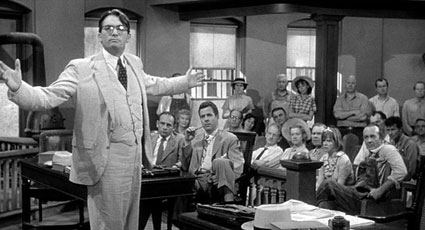
 I think my only real issue with “To Kill a Mockingbird” was with the courtroom scene. Now don’t misunderstand me, it was a great extended scene. But it felt to me like something was missing. With a couple of exceptions, there wasn’t a lot of emotion or intensity. It also seemed as though everything moved and flowed perfectly with nothing to buck the plans of the defense or the prosecution. Now I understand that the courtroom scene itself wasn’t intended to be the centerpiece of the picture. But I really felt it could have had a little more “pop”. That said, Peck was fantastic in the scene and his questioning of Bob Ewell and Tom Robinson were fantastic moments in the film.

“To Kill a Mockingbird” does so many things right that it’s easy to overlook the small faults. Peck certainly deserved his Oscar as he is brilliant playing, as many believe, himself. Atticus Finch really touched me especially as a father trying but failing to shield his kids from the sick side of the world they live in. That father/children relationship really, really worked for me. But the movie also had so many other components that resonated with me and that’s another reason it’s so good. It’s a multifaceted story that’s told with a great visual and technical style and that isn’t ashamed to address the deep-rooted problems of that day. It’s been called “timeless” and I have to agree. It never gets old and it still has the same effect on me today as it always has.

VERDICT – 4.5 STARS

REVIEW: “The Maltese Falcon” (1941)

Classic Movie SpotlightMALTESEA good argument could be made that The Maltese Falcon is Humphrey Bogart’s best film. It’s a movie that seems to get better each time I watch it and has earned its recognition as a film noir classic. It’s also a film featuring two notable firsts. This was Sydney Greenstreet’s first feature film and it was John Huston’s directorial debut. Huston also wrote the story which is based on Dashiell Hammett’s novel of the same name. It’s said that Huston extensively planned everything in the script, even to the most minute detail. It certainly shows. The movie is smart, well written, and deftly made.
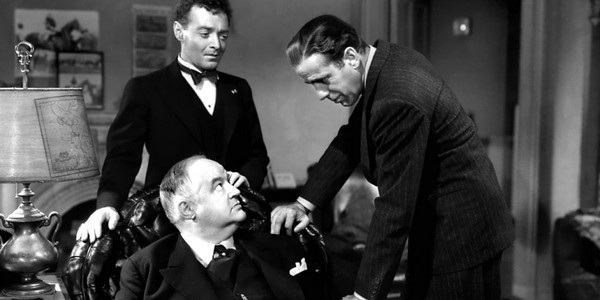
Bogart plays Sam Spade, a San Francisco private investigator. He and his partner Miles Archer (played by Jerome Cowan) meet with an attractive new client, Ruth Wonderly (Mary Astor), who hires them to help find her missing sister. Archer volunteers to follow her as she meets with Floyd Thursby, an acquaintance of her sister. Later that night Spade receives a call that Archer has been murdered. Spade weaves through a gnarly web of lies and an assortment of shady characters to find that it all revolves around a priceless statuette of a bird covered in jewels.

Bogart wasn’t Huston’s first choice to play Sam Spade, but after George Raft turned down the part Bogie was brought in. This was the beginning of a great friendship between Bogart and Huston that spawned many other wonderful films such as “The Treasure of the Sierra Madre”, “The African Queen”, and “Key Largo”. Bogart’s performance is simply brilliant and it’s hard to imagine anyone else in the role. Mary Astor gives a strong performance and sets the table for some of Bogart’s best lines in the film. Toss in the terrific Peter Lorre and Greenstreet, both of whom add their own flavors to the story. Also keep an eye out for a cool cameo from Walter Huston, John Huston’s father.

MALTESE1

The film’s is also helped by some fine cinematography. The movie features some crafty camera work, low-level lighting, and use of shadows which adds to the picture’s mood and tone. Cinematographer Arthur Edeson plays around with the angles and camera locations which give the movie a cool, sleek look.  It’s a technically sound and stylish movie and Huston’s accomplishment is really profound considering this was his first picture.

The Maltese Falcon epitomizes what high level filmmaking and storytelling is all about. Bogart’s performance became the model for other film noir detective roles and the supporting cast is nothing short of brilliant. The movie was nominated for three Academy Awards but it’s contribution to filmmaking  can’t be measured by that alone. This is a true cinema classic and it should be considered mandatory viewing for any fan of the art form. And despite being over 70-years-old, “The Maltese Falcon” still hits every beat.

VERDICT – 5 STARS

5 STARSs

5STAR K&M

REVIEW: “Easy Rider” (1969)

EASYI fully understand that the 1969 motorcycle road film “Easy Rider” is considered a motion picture classic. I also understand that the movie introduced a new style of filmmaking that had a great impact on the industry. But while so many film critics and movie fans hold “Easy Rider” in high regard, I found it to be a flat, muddled, and occasionally annoying picture that hasn’t aged well at all. At the time of its release it was a relevent film examining such things as the hippie movement, the drug culture, and the late 60’s political environment. On the surface it may sound like an intelligent and thought-provoking experience. But it’s banal presentation, clunky storytelling, and overly cynical portrait of America did nothing to draw me in or keep my interest.

“Easy Rider” is a buddy movie about two motorcycle riding potheads named Wyatt (Peter Fonda) and Billy (Dennis Hopper). It sounds like the ingredients for a stoner comedy but they are actually treated seriously. They’re free-spirited counterculturalists who are out to capture their idea of live-by-your-own-rules Americanism. After smuggling some cocaine across the border, the two sell it in Los Angeles for a large amount of money. They then use that money for a road trip across the southwest and eventually to Louisiana where they hope to make it in time for Mardi Gras. They travel from location to location with just their bikes,  a gas tank full of hidden money, and apparently a bushel of marijuana.

Just like any other road movie, “Easy Rider” is more about the journey than the destination. As they travel, Wyatt and Billy see some beautiful sites and encounter a wide assortment of people. They are helped by a rancher who is struggling to make ends meet. They pickup a hitchhiker (Luke Askew) who leads them to a hippie commune filled with people who resemble space aliens more than human beings. They befriend an alcoholic civil liberties lawyer named George played by Jack Nicholson. They are arrested by small town police officers and harassed by intolerant locals. Yet the one constant seems to be their love for pot. It seems like during every stop they take time for a smoke especially at night as they sit around their camp fire rambling while under the influence. The story ultimately becomes about Wyatt and Billy’s search for freedom, freedom that turns out to be much more elusive than they thought.

EASY

“Easy Rider” is basically the hippie movement’s self-portrait and it looks at everything through their eyes. But it comes across as a sanctimonious and often times self-indulgent lecture that doesn’t have near the substance it wants to have. One prominent movie critic who is older than me praised the film saying “Seeing the movie years later is like opening a time capsule.” I guess I can see where the movie would have a stronger impact on you if you were a part of those years or if you’re sympathetic to the hippie culture. But as someone seeing it for the first time it feels incredibly dated and it definitely comes across as a drug-induced hallucination at times. It does dabble in a few interesting themes and the cinematography is impressive especially considering the tiny budget. But I never connected with “Easy Rider” or its characters.

This is a movie that is considered by many to be great. In fact, it’s #84 on AFI’s Top 100 Movies of all time. I don’t see it. Maybe it’s the overwrought counterculture message or maybe it’s just my personal disconnect with this element of that time period (I was born is 1971), but “Easy Rider” became an uninteresting and sometimes tedious undertaking. There are several scenes including a terribly annoying drug high in a cemetery and numerous campfire ramblings that had me desperately wanting to hit the fast-forward button. What little screenplay there is does nothing to help the film and the final few scenes of the movie feel cheaply pasted together. We do get some pretty camera work and a breakout performance from Jack Nicholson. But that’s not enough make me want to watch “Easy Rider” again. No thanks, I’ll pass.

VERDICT – 1.5 STARS

REVIEW: “In the Heat of the Night”

HEAT poster

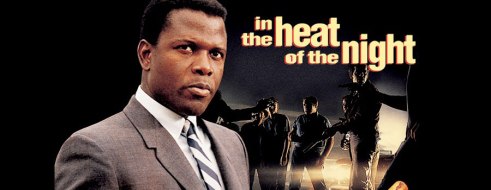
“They call me Mister Tibbs.” When Virgil utters this classic line to Chief Gillespie in 1967’s “In the Heat of the Night”, the racial tensions have already been well-defined. And while the movie is a police drama/murder mystery, it’s the racial contention between a black Philadelphia police detective and the small Mississippi town that makes the film truly memorable. “In the Heat of the Night” won five Academy Awards including Best Picture and inspired two sequels and a popular TV series. But it’s the movie’s statement on 1960’s Southern racism and it’s strong black lead character that causes it to be recognized as a ground-breaking film.

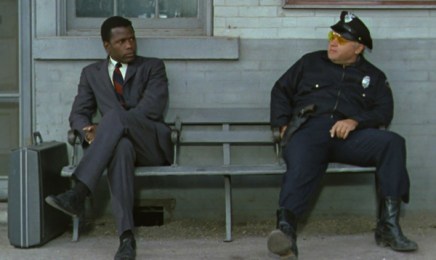
The movie takes place in the small fictional town of Sparta, Mississippi. While out on patrol a deputy comes across the body of a wealthy business man. After ruling that the man was murdered, Police Chief Bill Gillespie (Rod Steiger) sends a deputy to look around town. While checking out the train station, the deputy comes across a black man sitting inside. Unjustly assuming the man is the killer, the deputy arrests him and brings him to the station. The man informs Chief Gillespie that his name is Virgil Tibbs (Sidney Poitier) and he’s a homicide detective from Philadelphia. Virgil’s captain back in Philly recommends that he stay in Sparta and help with the murder investigation. Neither Virgil or Gillespie like the idea yet they both agree.  But the case may never be solved due the incompetence of the police department and the numerous racial barriers that keep Tibbs from accomplishing anything.

HEAT1

Even though this is a crime drama, the murder mystery itself never feels all that important. The investigation spends most of its time looking in the wrong directions and when the killer is finally revealed it feels too convenient. This is the movie’s one significant shortcoming. A tighter more engaging mystery would have added another intense dimension to the story. But it could easily be argued that the murder mystery is simply a backdrop to the greater story of a small town police chief and a big city detective breaking down the walls of racism while dealing with their own personal biases. Steiger and Poitier are great together and watching their complex and often times abrasive relationship unfold provides us with the movie’s best moments.

The great attention given to the town and its citizens is another thing that makes the movie work. The small town South is perfectly captured and there was never a time I questioned its genuineness for a second. From its assortment of main street stores to its rundown parts of town, the film succeeds in providing the perfect setting. But while we saw the current day South we also catch a glimpse of the old South during a scene in which Gillespie and Tibbs go to question a rich plantation owner named Endicott. The drive up to the main house is lined with cotton fields filled with black workers and it almost feels as though the movie has moved back in time. This also leads to the famous scene where Endicott slaps Tibbs once he realizes he is being questioned for the murder. Tibbs slaps him back, something unheard of in that day. Tibbs’ physical retaliation drew attention from around the country once the movie was released and it marked an interesting turn in the way many movies treated black characters.

“In the Heat of the Night” certainly gets points for its head-on approach to the topic of racism. It also manages to keep the audience engaged by first getting us invested in Virgil Tibbs, then showing us the racially fueled obstacles and dangers that he was up against in Sparta, Mississippi. We also get a fantastic character in Chief Gillespie and it’s fascinating to watch him evolve as he fights with the community expectations and his own inner struggles. The small town vibe permeates every single scene and the hot and humid Southern summer makes everything sweatier and grimier. It’s just unfortunate that the murder mystery never feels as serious or as threatening as it should have been. That’s the only thing holding down “In the Heat of the Night”. But it’s something that did make a difference for me.

VERDICT – 4 STARS

REVIEW: “Yojimbo”

Classic Movie SpotlightYojiMboAkira Kurosawa’s 1961 classic Yojimbo is a Japanese samurai film that’s not only beautifully hypnotic entertainment but is a master’s class on camera work and film making. Kurosawa creates a gritty and audacious period picture that manages to mix action with small bits of dark comedy while constantly showing off his technical savvy.
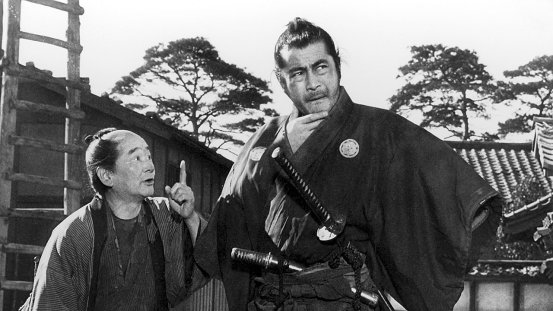
Yojimbo was heavily influenced by American westerns from the Japanese village’s dusty, deserted main street to the face-offs reminiscent of classic western one-on-one gun duels. Even more interesting is that it went on to be the inspiration for other westerns including Sergio Leone’s A Fistful of Dollars, which is almost a scene by scene replication instead of a remake. Both films tell the story of a mysterious stranger who enters a small town ran by two brutal, warring gangs. Instead of heeding the advice of a local resident, the stranger sees there’s money to be made in the village by playing both sides. Even Clint Eastwood’s Fistful character seems specifically patterned after Yojimbo’s samurai all the way down to his constant beard scratching.

Toshiro Mifune gives an impeccable performance as the solemn wandering samurai. He and Kurosawa collaborated for 16 films with Kurosawa once saying of Mifune  ”I am proud of nothing I have done other than with him”. Their creative chemistry is evident in Yojimbo with Kurosawa really focusing on Mifune’s strength of communication through expressions and mannerisms. This is a strong performance.

Yojimbo looks and sounds amazing. Masaru Sato’s magnetic score starts with the opening credits and resonates throughout the picture. The cinematography is fascinating with some cleverly staged camera angles, near perfect camera movement, and beautiful wide-framed shots. The story is pretty basic but very efficient with the exception of a few too many conversations over sake at the restaurant. Yet it’s never boring and more often times mesmerizing.

Yojimbo earns it’s recognition as a classic. With each viewing I gain a better appreciation for the movie and for Kurosawa’s brilliant vision. It’s easy to see why another great director like Sergio Leone would be inspired by Yojimbo. It’s a true motion picture  accomplishment and you don’t have to be a cinephile to appreciate it. If you haven’t seen it, make time to. Then follow it up by watching A Fistful of Dollars. You’ll not only see a great film but also appreciate it’s influence.

VERDICT – 5 STARS

5 STARSs

5STAR K&M