REVIEW: “42”

42 poster

I am a huge baseball fan and I’ve always been drawn to a good baseball movie. Unlike any other sport, baseball has the history, the personalities, and the spirit which are perfect ingredients for a good sports movie. For years we’ve seen baseball movies that focus on everything from the sport’s history, inspirational true stories, hilarious locker room comedies, and spirited fantasy pictures. The newest one to join the bunch is “42”. It’s the story of Jackie Robinson and his breaking of the color barrier which opened the door for black baseball players to play in Major League Baseball.

I mentioned inspirational, it’s hard to find a more inspirational story than this one. While this is the story of Jackie Robinson, a large part of the movie focuses on Branch Rickey, the president and general manager of the Brooklyn Dodgers. In the film Rickey (Harrison Ford) decides to shake things up in the world of baseball by bringing a black player into the all white league. With the 1946 season ahead, Ricky knows that the backlash will be severe but he believes it’s the right thing not just for baseball but for his bottom line. He believes he’s found his man in Jackie Robinson (Chadwick Boseman) – a tough kid who Rickey believes can handle the pressures that are sure to come.

42 3

Jackie is brought from the Negro League to play for the Montreal Royals, Brooklyn’s farm team. The movie then follows his eventual rise to the big leagues while documenting the many struggles and hardships he faced in a segregated and racially divided America. Writer and director Brian Helgeland doesn’t gloss over the uncomfortable racism of the time which is something that gives Jackie’s story such a sense of significance and importance. It makes his endurance and accomplishment all the more profound.

I also appreciated how Helgeland showed people on both sides of the racial line willing to look past the peripheral façades in order to see and accomplish a greater good. But of course it was Jackie who bore the brunt of the abuse and it was his strength of character and perseverance that ultimately made the difference. The film also does a great job of recreating the mid-1940s. The clothes, uniforms, and neighborhoods all brim with a pitch-perfect period feel. And seeing Ebbets Field recreated full of energy and life was spectacular.

Boseman gives a really nice performance. In movies like this actors will often take an opportunity to overact which tends to heighten the performance while lowering the material. That’s not the case here. Boseman remains surprisingly restrained even during more emotional scenes. I was also struck by how much he resembled Robinson, not so much in the off the field scenes but during the baseball games. There were four or five glimpses on the field where I would have sworn there was CGI trickery involved.

42 2

And then there’s Harrison Ford, fake eyebrows, gravely voice, and all. It took me a couple of minutes to adjust to his performance, but in no time I was completely sold on his character. It’s such a great role and Ford knocks it out of the park (pun most certainly intended). Ford and Boseman are the most notables but there is some good supporting work worth mentioning. I really liked Christopher Meloni as manger Leo Durocher. Unfortunately his role is a pretty small one. I also liked Nicole Beharie as Jackie’s wife Rachel. And then the baseball guy in me really enjoyed watching Lucas Black as Pee Wee Reese. Granted, sometimes the material he’s given is pretty flimsy but he’s still a lot of fun.

All of these things help make “42” a good movie despite a few issues I have with it. I was really hoping the movie would be able to avoid many of the common trappings that biopics fall into. Now I knew Jackie’s story so I wasn’t expecting a huge surprise. But I  was hoping for more than the obvious and conventional finale we’re given. I won’t go into detail but everything neatly falls into place and the movie gives the emotionally uplifting ending it aims for. You can see it coming a mile away.

42 1

I also had to roll my eyes at several injected scenes meant for either dramatic effect or to shed light on the racism of the day. It stands out because in several other scenes “42” shows the racism of the day in much more potent and effective ways. But then you get Alan Tudyk as Phillies manager Ben Chapman. History bears witness that Chapman was a bad guy and his actions, especially against Jackie Robinson, were deplorable. But here he almost comes across as a cartoon character. He gets to the heart of what actually happened but I had a hard time buying into him.

Still this is a solid baseball movie based on an incredible story of courage and perseverance. I also couldn’t help but feel that giddy baseball fan excitement well up inside of me as I watched it. There’s a great sense of love for the game and a sensitive respectfulness for the subject matter found in “42”. And while it’s not a perfect film, it’s yet another example of how this great sport is fertile ground for quality storytelling.
VERDICT – 3.5 STARS

“Flight” – 3 STARS

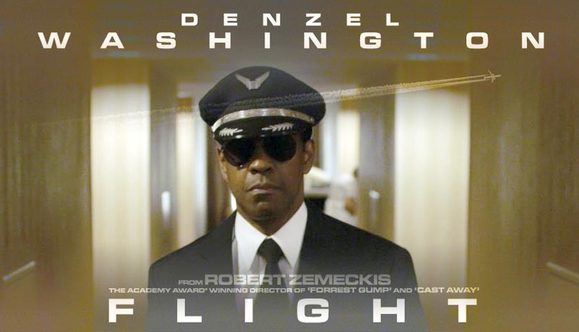
FLIGHT POSTER

If you watch the trailers for “Flight” you come away expecting this to be a movie about a doomed flight and the heroic pilot who tries to save it. But as with so many trailers whose lone goal is to sell a product, this isn’t the case at all. It’s the story of a self-destructive man whose many vices are brought out into the spotlight by one heroic deed. It marks Robert Zemeckis’ return to live action movies, this being his first since “Cast Away” in 2000.

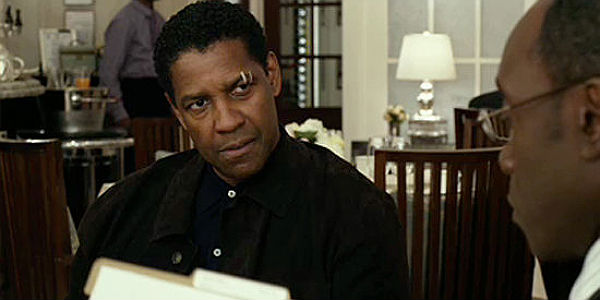
“Flight” stars Denzel Washington so automatically there’s one thing you know for sure – the lead performance is going to be strong. Here he plays an airline pilot named William “Whip” Whitaker. After a mostly sleepless night of booze, drugs, and sex with one of his flight attendants, Whip heads out to pilot a commercial airliner from Orlando to Atlanta. I don’t think this will be scheduled as an in-flight movie anytime soon. Right off the bat the film introduces us to Whip’s raging alcoholism. Before the flight even takes off, he slips two travel bottles of vodka into his orange juice before heading into the cockpit. Washington handles this subject matter like an old pro. Scene after scene we see him in his self-inflicted hell and as despicable as his actions are, he causes us to feel sympathy for this character.

FLIGHT2

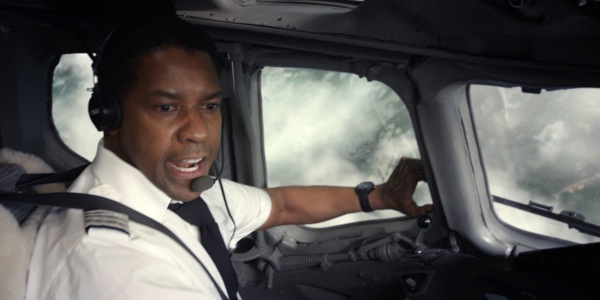
After taking a questionable risk to get through some turbulence after takeoff, Whip falls asleep while copilot Ken Evans (Brian Geraghty) flies the plane. But he’s jarred awake after the plane goes into a nose dive while approaching Atlanta. Whip takes control of the situation and pulls off an incredible series of maneuvers before landing the plane in a field. Watching this was an incredibly intense visual experience and its one of the best movie moments from last year. The impact knocks him unconscious and he later wakes up in an Atlanta hospital. He learns from pilot union head and old friend Charlie Anderson (Bruce Greenwood) that his heroics saved 96 people of the 102 on board.

This creates one of the most interesting dynamics in the entire film. As Whip says, “No one else could have landed that plane” and his heroics seem unquestionable. But due to the loss of life, mandatory investigations have to take place which uncover his drunkenness during the time of the crash. As I mentioned above, his one amazing deed which saved many lives turns out to reveal his darkest secrets. A team is put together to try and cover up his intoxication. Charlie brings in attorney Hugh Lang (Don Cheadle) who believes he has all the pieces to keep things under wraps. But it turns out that Lang is not just fighting the evidence. He’s fighting the uncontrollable alcoholism of his client.

“Flight” does good when it stays on course and focuses on Whip’s problems and the potential trouble he faces due to the crash. Washington is amazing to watch and I also really liked Greenwood and Cheadle. But there’s also a side story where Whip gets together with a recovering heroin addict (Kelly Reilly). This really didn’t work for me at all other than to show the depths of Whip’s fall via a handful of scenes. The two seem to connect through their desperation but as a whole I just didn’t buy into or care about their relationship. Unfortunately this takes up a big hunk of the middle part of the picture and I can think of other ways I wish they would’ve spent that time.

Flight 1

I also didn’t care for what I feel was Zemeckis’ gratuitous use of some of his content. The opening features a nude scene which goes on and on and (as is often the case) adds nothing to the film. Zemeckis pulls his camera back and for seemingly no other reason than to have nudity in his picture, he keeps it going while Nadine Velazquez parades around while on display. I had similar feelings about John Goodman’s character. No, thankfully he doesn’t walk around in the buff, but his character’s foul mouth seems so forced. I know he’s a dope dealer but his dialogue is at times terrible and it seems like it’s straining to include profanity. I’m not trying to get on a soapbox about movie content, but both of these instances in “Flight” really pushed me away.

Unfortunately these gripes of mine played a big role in my overall experience with “Flight”. There’s a really great movie somewhere in what we get but you have to cull the wasted moments to get to it. Washington is wonderful as always and through his performance we see a fascinating study on addiction and personal destruction. I only wish the movie could have stayed focused on it and that Zemeckis didn’t lose control of his mesmerizing central story. With a little pruning and a tighter vision, I think this could’ve been an even better film than it was.

Want more Denzel? Check out my reviews of “Safe House” and “The Taking of Pelham 123”.

REVIEW: “The 400 Blows”

Francois Truffaut heads the list of great directors whose work I’m fairly unfamiliar with. Truffaut was an esteemed French filmmaker who was also a father to the French New Wave of the late 1950’s and 1960’s. He was deeply critical of the state of French cinema in the mid-50’s and eventually begin to make films of his own. His first feature-length picture came in 1959 with “The 400 Blows”. This is my launching point into the films of Truffaut and what a wonderful way to start. “The 400 Blows” is a gripping and deeply penetrating picture that instantly grabbed me with its heartfelt realism and its crisp visual style. And judging by this, his initial effort, there’s a clear reason why Truffaut is heralded as one of the most influential filmmakers in cinema history.

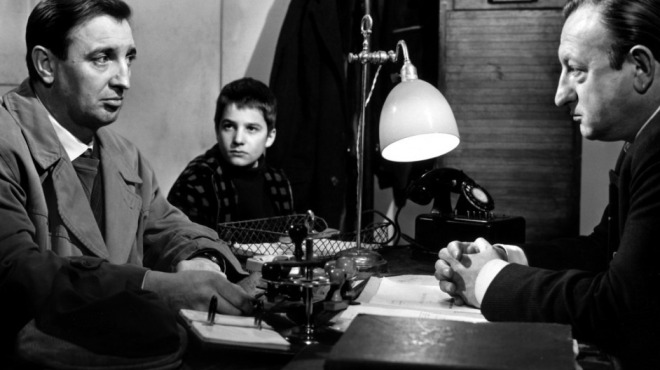
“The 400 Blows” follows 12-year old Antoine (played wonderfully by Jean-Pierre Leaud) and his life in 1950’s Paris. At first Antoine comes across as unruly and rebellious. But as the story unfolds we see that he is inundated with negative influences. His father is a forceful and sometimes pernicious authoritarian who takes the frustrations from his life out on his son. His abusive temper shows itself physically and verbally even to the point of publically humiliating his son . His mother is even more unhappy and discontent and she lets it show through her emotional negligence and general disinterest in her son. It’s only after Antoine catches her in an affair that she begins to show affection for him but even that is grounded in her own arrogant self-interest. Even at school Antoine faces his teacher whose meanness is based on his assumptive judgements that Antoine is and forever will be a bad kid.

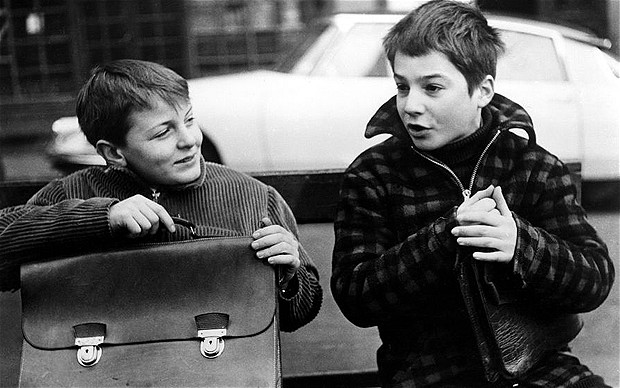
Antoine finds refuge on the streets of Paris and in the company of his best friend Rene (Patrick Auffay). Rene is a mischievous type and it’s uncertain whether he’s the best influence either. But the two have a true friendship which Antoine depends on. Some of the movies best scenes are with these two friends walking the streets of Paris talking back and forth. As things break down at home and at school, Antoine sees the streets as his only out and it’s Rene who’s there to help him survive, although not always in the most wise of ways.

At its core, this is really a heartbreaking story. It’s a perfect example of a young boy being a product of his environment yet fighting hard not to be. Those who should be the stable, influential forces in his life utterly fail him. Even the law enforcement system heartlessly mistreat him later in the film. But Antoine just wants to be a little boy. We get to see the childlike yearnings for a stable home with a loving mother and father.

400

There’s a scene where Antoine is at home alone with his father and they are preparing dinner. It’s one of the few instances where his father is being a father. Truffaut elegantly shows Antoine’s love for this father-son moment through the young boys gazes and expressions. There is also another scene where the family goes out to see a movie together. For these few moments we see the happy family that Antoine wants and needs. Sadly, these are anomalies – exceptions to an otherwise dismal life for the 12-year old.

“The 400 Blows” is a powerful movie that will take you through a wide range of emotion. We experience the playfulness and cruelty of life along with the young boy. Before long, we’re rooting for him yet we’re uncertain of what the future holds right up to the last shot. It’s truly a magnificent film that put Truffaut on the map and I can certainly see why it remains influential to this day. It’s gorgeously crafted, deeply moving, and features penetrating performances. Enough with the adjectives. Let’s just say I loved “The 400 Blows” and I can’t wait to dive into more of Truffaut’s work.

VERDICT – 5 STARS

5 STARSs

5STAR K&M

REVIEW: “Frankenweenie” (2012)

It’s October so it makes sense that we have a new Tim Burton movie. Burton is one of those filmmakers with an undeniably unique style in both the look and tone of his films as well as the subject matter he dabbles in. But while you can always recognize a Tim Burton film, it is fair to say that he is a polarizing filmmaker. You either like him or you don’t. I happen to appreciate when a filmmaker can inexorably define themselves with their work. But from a purely entertainment point of view, I’m not one you would categorize as a Tim Burton fan. Seldom are his movies as good as advertised and I find he often sacrifices quality storytelling for style. But he definitely has a following which is evident by the loads of money studios are willing to pay for his creations.

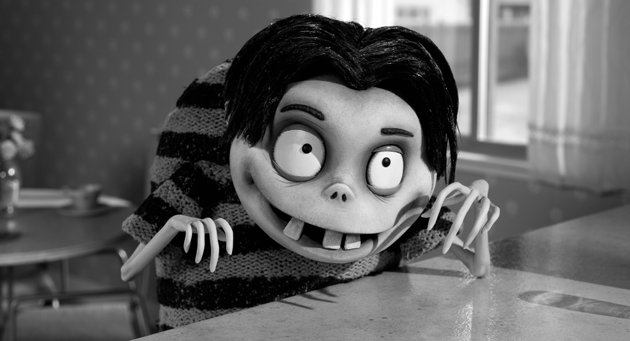
Now we have Burton’s latest concoction, in theaters just in time for Halloween. “Frankenweenie” has its roots in a 30 minute live-action short that Burton did in 1984 before his career took off. Here he adds an hour’s worth of story to make it a feature-length film. He also ditches the live-action and goes with stop-motion animation. This is familiar territory for Burton and you can see his fingerprints from the opening scene to the ending credits. But surprisingly there are some things that separate this movie from Burton’s past efforts – movies that didn’t work for me. More specifically, “Frankenweenie” is a rare film where Burton embraces his style but never allows it to overwhelm his story. Even more, I would go as far as to call this his best film since 1989’s “Batman”.

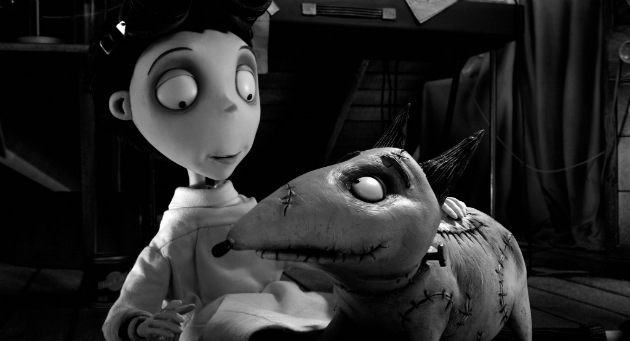
At its core, this is the story of a boy and his dog dressed up as a classic horror movie homage. Victor Frankenstein is a young introvert with an affection for science and movie making. He has no friends to speak of with the exception of his extremely loyal and loving dog Sparky. But one day Victor is devastated after Sparky is hit by a car and killed after chasing a ball into the street. Inspired by his eccentric science teacher and true to his last name, Victor sets out to use the power of electricity to bring his canine companion back to life. He succeeds but he soon learns there are some pretty serious consequences that effect the entire town.

It doesn’t take long to see an almost childlike enthusiasm from Burton that permeates every scene of this movie. There’s a playfulness to both his story and presentation that I’ve never seen from him before. But the movie also has a lot of heart as it deals with topics such as reclusive children and a child facing loss. It’s an incredibly straightforward and honest look as these issues that are comfortably nestled in Burton’s ghoulish and amusing landscape. But I have to admit that I was impressed with his heartwarming narrative and I can see where this film may connect with audiences unlike any of his other pictures.

But don’t think for a minute that “Frankenweenie” doesn’t have the dark, eerie aesthetic and offbeat imagination that you would expect from Burton. It’s very much a light-hearted horror film sprinkled with dashes of humor. There are so many nods to old horror pictures from the original 1931 “Frankenstein” to “Gremlins” to “Godzilla”. And perhaps my favorite tips of the hat comes through the assortment of side characters. There’s the strange girl next door named Elsa Van Helsing. There’s Victor’s creepy (and hilarious) hunchbacked classmate named Edgar E. Gore who sounds just like Peter Lorre. And then there’s my personal favorite Mr. Rzykruski, Victor’s science teacher who’s an animated carbon copy of the great Vincent Price. Another big plus is the gorgeous, crisp stop-motion animation. I’m a big fan of the technique and here it shines especially in Burton’s glorious black and white.

I loved “Frankenweenie”. It’s a compact and well conceived movie that should strike a chord with all ages. I was absorbed in its authentic emotion, clever social satire, macabre sense of humor, and appreciation for the horror classics. I laughed, I jumped, I teared up. What’s most impressive is Burton’s creative self-control which allowed him to create a wonderful story while maintaining his own wacky sense of style. There’s just so much to like about “Frankenweenie” and it’s a particularly pleasurable experience for moviegoers like me who aren’t always fans of Tim Burton’s work. Sure it’s weird, spooky, and goofy. But it’s also beautiful, imaginative, and nostalgic and it’s a prime example of why we go to the movies.

VERDICT – 4 STARS

“THE FIVE-YEAR ENGAGEMENT” – 2 STARS

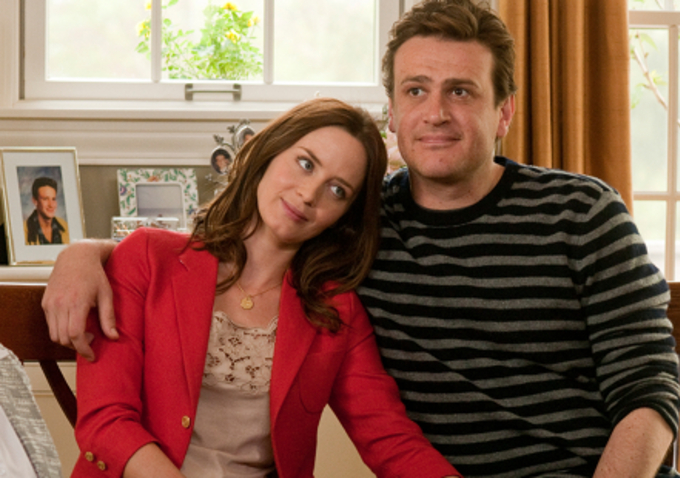
Let me start off by saying that I went into “The Five-Year Engagement” at a slight disadvantage. Unlike many people today, I’m not a fan of Judd Apatow, his films, or most of his usual collaborators. Apatow frequently works with the same casts including Seth Rogen and Jonah Hill – two actors that I instantly avoid, as well Will Ferrell who I feel is terribly overrated. This particular Apatow production stars another favorite of his, Jason Segel who’s nowhere near as annoying as Rogen and Hill, but has never really blown me away either. But I was encouraged to give the movie a try after seeing Emily Blunt’s named attached. I think she’s a fabulous and underrated actress who also has a knack for humor. Unfortunately, despite her wonderful performance and occasional hilarity, “The Five-Year Engagement” is a sluggish and often times erratic romantic comedy that had me checking my watch numerous times.

The film was directed by Nicholas Stoller who also co-wrote the story along with Segel. At it’s core it’s a fairly basic rom-com but with genuine promise. Segel plays Tom Solomon a chef at a fancy San Francisco restaurant. Those familiar with Segel will recognize this character from several of his other pictures. Tom is a dorky but easygoing guy. After a year together, Tom proposes to his girlfriend Violet (Blunt), a psychology graduate who is desperately hoping to be accepted by Berkley for doctoral studies. It doesn’t take us long to see where the story is going. The two begin planning their wedding but soon Violet receives a letter saying she has been accepted by the University of Michigan. The two push back their wedding and Tom sacrifices a chance to be the head chef at a new restaurant to relocate to Michigan.

While in Michigan Violet’s career takes off while Tom grows more and more disenchanted with his job at a sandwich shop. A wedge (that you can see coming a mile away) forms in their relationship and soon her career desires and his hatred for living in Michigan leave them questioning whether they were ever meant to be. Blunt and Segel have a nice chemistry even though there were a few scenes where I couldn’t help but question the authenticity of their relationship. Segel gives a solid performance all while hitting the same notes over and over. Blunt is fantastic and her character has more depth and range than any other in the film. There are several times where their jovial playfulness cracked me up. There are also some more serious scenes where the two work off each other exceptionally well. Then there are the few instances where their relationship feels completely manufactured. This can be attributed to what I think is the biggest problem with this film – the writing.

Segel and Stoller’s story runs into a wall at about the 80 minute mark. With a running time of over two hours, “The Five-Year Engagement” lumbers along to the point where I was taking the movie’s “5 Year” title seriously. Segel and Stoller cram way too much into the film, dragging things out and apparently leaving nothing on the cutting room floor. They take the basic plot points and draw them out well beyond what’s necessary. There were several times where I was so ready for them to move on to the next part of the story. They also stray off into some fairly weird directions. For example, in a dark comedy turn of sorts, Tom becomes this deranged mountain man type. It happens out of the blue and is over before you know it. Overall, the plodding pace and unneeded deviations end up squashing whatever charm and affection the movie builds up.

I also struggled with the erratic use and styles of humor. Now don’t get me wrong, there were instances where I laughed pretty hard. Many of these instances were due to some quirky, out-of-the-blue moment that hit just right. But there’s no real flow to the comedy and many of the gags fall flat. I mentioned the dark comedy turns, but there are also dashes of slapstick and the unfortunate and unfunny raunchy gutter humor that Apatow productions just can’t seem to steer away from. I can think of several of these scenes that added nothing to the movie and that could have been sacrificed for a tighter and more concise story.

“The Five-Year Engagement” has the premise for a smart and entertaining romantic comedy but the overindulged writing and poor execution causes it to fall short. It’s a shame because Blunt is wonderful and her performance feels wasted. But I did find some laughs and our couple do have some good moments on-screen. There are also some good supporting roles that help the movie along as well as some rehashed roles that we’ve all seen before. But in the end it’s the writing that lets the movie down and that may surprise those people who are big fans of these guys.

REVIEW: “Fright Night” (2011)

Hollywood is head-over-heels in love with remaking movies from the 80’s right now. So far we’ve had everything from “Footloose” to Total Recall” remade with a modernized story and gloss. Many more already have release dates or are in production. As someone who grew up in the 80’s watching the original pictures, I’m still waiting for one of these recent remakes to really blow me away and make it feel worthwhile.

So along comes “Fright Night”, a 2011 version of the 1985 vampire film that I truly loved. The original was a fun and occasionally creepy horror flick that played around with elements of vampire, werewolf, and haunted house movies. It had its share of old-school special effects and classic horror cheese while also maintaining a thoroughly compelling narrative. So I had a natural curiosity and concerns about the remake. Would the Hollywood modernization process be able to capture what made the original so entertaining? Well, not exactly.

The remake’s story is built upon the clever premise of the original “Fright Night” film. Charley Brewster (Anton Yelchin) and his mother Jane (Toni Collette) live in a small suburb of Las Vegas. An attractive single man named Jerry Dandrige (Colin Farrell) moves into the house next door. Over time we find out that Dandrige is a vampire and Charley, his mother, and his girlfriend Amy (Imogen Poots) are right in his new neighbor’s crosshairs.

There aren’t many other significant ways that this “Fright Night” resembles the original. One of my biggest disappointments with this film was with how little effort went into building more tension between Charley and Dandrige. The original spent a lot of time with Charley trying to convince his mother, friends, and the police that his neighbor was a killer responsible for the disappearances of many area women. This made for several creepy confrontations between the two. This version gives us only a scene or two of this, choosing instead to jump headfirst into more action-based horror that seems specifically designed for 3D rather than deeper storytelling.

Charley’s predicament is so dire that he seeks the help a Las Vegas horror illusionist Peter Vincent (David Tennant). This Peter Vincent is a boozing, profane, and abusive jerk void of any of the sympathetic charm that made Roddy McDowall’s character so memorable. There was nothing at all in this character that was the least bit interesting. To be fair, it’s not that Tennant’s performance is bad. This is a writing issue that’s a direct result of a story direction choice. This is an instance of modernizing a great character from the original story with pretty poor results.

The movie is plagued by several fairly generic characters outside of Charley. Poots is good as Charley’s girlfriend but she isn’t given much to do. Charley’s mom is about as shallow as they come and then there are a couple of his friends that are just thrown in. Then you have one of the first film’s more memorable characters “Evil” Ed (this time played by Christopher Mintz-Plasse). Here he’s actually developed into a fairly sympathetic character before quickly being thrown aside. Farrell is fun and sometimes charismatic, but he’s only asked to talk in a creepy tone, wipe his mouth and lick his fingers after “feeding”.

The special effects were a big part of what made the first film such fun. It had some over-the-top gore but it fit in perfectly with the story. Here the effects are fine although in several places the CGI is clearly evident. And with the exception of a pretty spectacular car chase sequence, there isn’t much that has stuck with me. And this leads into the fact that this “Fright Night” just isn’t scary at all. There are a couple of loud jump scares but in terms of actual creepiness, nope.

I know it seems like I made a lot of comparisons between the original movie and this new version of “Fright Night”. I try not to do that. Maybe I’m just too big of a fan of the original to help myself. But I also think this film has flaws that keep it from being as good as it could be. The decision to spend far more time on horror-based action actually strips the picture of the spookiness that made the first picture so much fun. It’s not boring and there are a few good laughs scattered throughout. There’s also a fantastic cameo from Chris Sarandon (Dandrige from the first film) that really hit the spot. But in the end, I’m still waiting for an 80’s remake to blow me away.

VERDICT – 2.5 STARS