REVIEW: “The Hand That Rocks the Cradle” (2025)

“The Hand That Rocks the Cradle” is a new Hulu streaming exclusive that may sound familiar to viewers of a certain age. That’s because it’s a remake of the 1992 Curtis Hanson directed film of the same name which starred Annabella Sciorra and Rebecca De Mornay. The original wasn’t a particularly great film, but it was an entertaining domestic thriller despite its silliness. This new spin on the story doesn’t fare quite as well.

Directed by Michelle Garza Cervera and written by Micah Bloomberg, this new iteration of Amanda Silver’s 1992 screenplay uses the basic framework of the original film but surrounds it with a considerably different and less convincing story. It’s enough to set the movie apart from its inspiration. But it’s mostly a drab contemporary reimaging that relies too much on the incompetence of characters and the willingness of audiences to go along no matter how frustrating things get.

Image Courtesy of 20th Century Studios

The film stars a committed Mary Elizabeth Winstead who squeezes what she can out of her character. She plays Caitlin Morales, a successful Los Angeles attorney who has just given birth to her second daughter. The tightly wound Caitlin and her remarkably dense husband Miguel (Raúl Castillo) live comfortably in a swanky suburb where the only real inconvenience are speeding cars and the need of a stop sign.

Caitlin is set to return to work while hoping to avoid another poorly defined post-partum episode like the one that followed the birth of her first child. To help, Caitlin and Miguel decide to hire a nanny to help watch their 10-year-old Emma and newborn Josie. They decide on Polly Murphy (Maika Monroe), a former client at Caitlin’s firm who impresses Caitlin with her knowledgeable of saturated fats and microplastics. Polly wastes no time ingratiating herself to the family, even earning an invite to move into their guest room.

Amazingly Polly’s hushed intensity and ice-cold demeanor doesn’t set off warning sirens. Instead, she gains Caitlin and Miquel’s full trust. Of course we know immediately that she’s up to no good and is not the person she claims to be. We watch as Polly secretly breaks Caitlin’s rules to win the children’s affection and methodically works on turning Emma against her mother.

Image Courtesy of 20th Century Studios

It takes a while before Caitlin finally grows suspicious but she gets no support from the oblivious Miguel who couldn’t see light if he were staring into the son. So we’re left to watch an hour of endless gaslighting as Polly pushes Caitlin over her psychological edge. It’s here that the frustration sets in as the movie becomes a near endless cycle of Polly’s ruthlessness, Caitlin’s suffering, and Miguel’s mind-boggling incognizance. Meanwhile any hint at a motive for Polly’s actions is stashed away until late in the movie when any chance at building suspense is gone.

Many of the movie’s wild swings at modernizing the story come off as thematically lazy. Look no further than its bungled attempt at addressing childhood trauma. Even more surprising is the lack of genuine tension, especially in a movie with this kind of premise. The pace does finally pick up as the movie races towards a payoff. But even then, the rush of final act reveals is too little too late. “The Hand that Rocks the Cradle” is streaming now exclusively on Hulu.

VERDICT – 2 STARS

REVIEW: “Highest 2 Lowest” (2025)

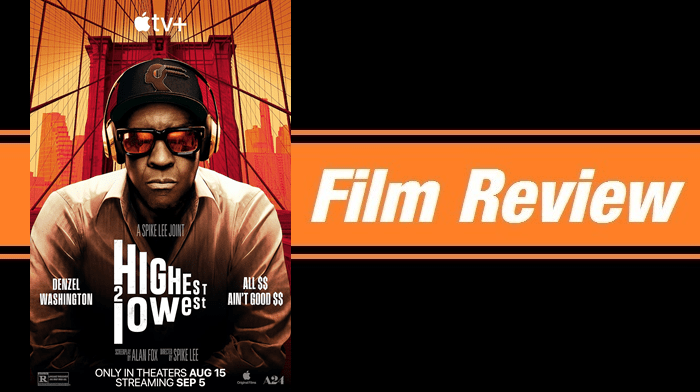
Spike Lee‘s latest joint sees him reteaming with one of the greatest actors of our time, Denzel Washington. “Highest 2 Lowest” is the pair’s fifth big screen collaboration and their first since 2006’s “Inside Man”. With their long overdue reunion it’s pretty clear they haven’t missed a beat. Lee’s direction is imbued with what feels like fresh energy. And the always watch-worthy Washington mixes swagger with solemnity with pitch-perfect savvy.

“Highest 2 Lowest” is an adaptation of Akira Kurosawa’s 1963 classic “High and Low” but reworked for 2025 by Lee and screenwriter Alan Fox. While catching the similarities between the versions is fun in itself, it’s the differences in Lee’s reimagination that make the movie purr. Aside from the many smaller details and style choices, there is the noticeably upbeat and less cynical tenor, the move from Yokohama to a vibrant New York City, the integral role of music in its story, the emphasis on Black culture, and the fascinating alterations to the final act.

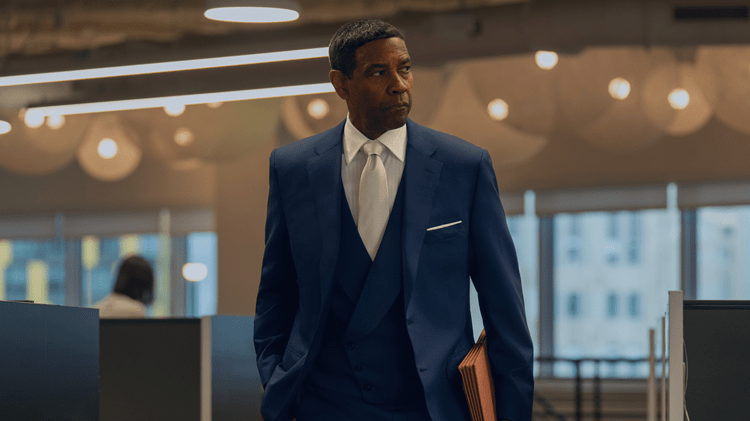
But the richness of Lee’s verve could only carry the movie so far without Washington’s invigorating lead performance (among the actor’s best in years). Dripping with charisma that manifests itself in scenes of both grandiosity and subtlety, Washington takes Toshiro Mifune’s voracious shoe executive and fully transforms him into a beguiling modern day music mogul. Through his impeccably precise yet effortlessly smooth performance, Washington conveys a lifetime’s worth of aspiration, struggle, and resilience.

Image Courtesy of A24

Lee kicks things off with a soaring opening credits sequence featuring rapturous views of New York City capped off by an elegant long zoom to the penthouse balcony atop Brooklyn’s waterfront Olympia Dumbo complex. There stands David King (Washington), a millionaire music executive and founder of Stackin’ Hits Records. Said to have “the best ears in the business”, David spent 25 years building a music business focused on cultivating and promoting black artists before deciding to sell his majority interest.

With his two co-owners on the verge of selling to a rival label, David convinces one of his partners (Michael Potts) to sell him his shares, allowing him to regain controlling interest in the business he founded. But to do so, David is forced to put up his penthouse and art collection to finance the deal, much to the concern of his wife Pam (an excellent Ilfenesh Hadera). While there is some good character work involved, all the early corporate drama is merely setting the table for the next act.

The tone shifts dramatically on the eve of his big business deal after David receives a call saying his son Trey (Aubrey Joseph) has been kidnapped and the ransom is $17.5 million in Swiss francs. It only takes one call from David before the NYPD arrive, led by three detectives (Dean Winters, LaChanze and John Douglas Thompson). They quickly find Trey leading to the reveal that the kidnapper snatched the boy’s best friend Kyle (Elijah Wright) by mistake. Kyle is the son of David’s childhood friend and chauffeur Paul (Jeffrey Wright).

Image Courtesy of A24

One of Lee’s biggest and best changes to Kurosawa’s story involves David and Paul’s relationship. The two friends grew up together on the streets but their lives took different paths. David became a successful self-made entrepreneur while Paul ended up doing prison time. Yet their friendship stayed strong. But that friendship is tested with David’s sudden hesitation over paying the ransom – something he was fully prepared to do when he thought his son’s life was on the line. The thick moral haze only thickens once David’s pending business deal is factored into the scenario.

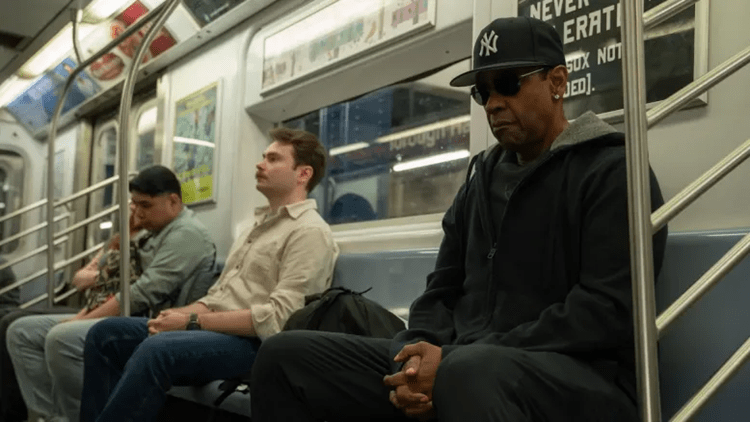
I don’t want to reveal too much, but the tone shifts again with the propulsive third act. After David agrees to pay, he’s instructed by the kidnapper to deliver the money himself. From there the story moves from the posh comforts of the penthouse to the vivid character-rich streets. It kicks off with an exhilarating set piece beginning on the 4 train from Brooklyn to the Bronx before spilling over into a Puerto Rican Day festival powered by a spellbinding street performance from the late jazz legend Eddie Palmieri. It’s a thrilling sequence with the only distraction being Winters and his incessant over-the-top yelling.

There’s so much more to appreciate and glean from Spike Lee’s 24th feature film. There’s his unique spin on Kurosawa’s examination of class. There are his statements on the influence of social media and public perception where “attention is the biggest form of currency”. There’s his admonition on preserving music and culture. Add to it Lee’s spirited perspective, seen most through his freshly polished direction, Matthew Libatique’s dynamic lensing, and the array of sublime performances highlighted by the force of nature that is Denzel Washington. Here’s hoping we see these two together again sooner rather than later.

VERDICT – 4 STARS

REVIEW: “Him” (2025)

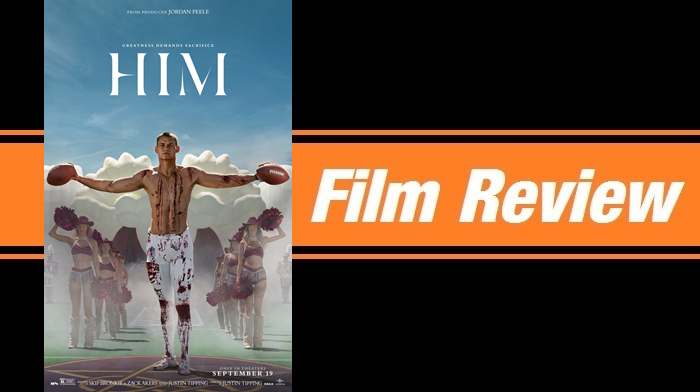
Few films (if any) this year have left me more conflicted than “Him”. Directed by Justin Tipping, “Him” is a sensory feast that serves up helping after helping of big bold ideas. Unfortunately for it (and us), many of them come out the creative oven half-baked rather than fully cooked. Yet the movie’s unflinching vision and ferocious sense of style makes its allegory-soaked deconstruction of football culture hard to turn away from, even if it never reaches the heights of its ambition.

“Him” is a queasy cinematic mix of surrealist horror and football drama that’s more committed to telling its story through striking imagery than narrative cohesion. Making sense of everything we see gets harder and harder as we go, and the movie doesn’t seem to care. It doesn’t leave us with much time to think about anything, and it certainly doesn’t take its own time to explore the ideas it opens up.

And that gets to one of the bigger frustrations with “Him”. I could fill a lengthy paragraph just listing the themes introduced by Tipping and his co-writers Skip Bronkie and Zack Akers. Without question they are vividly and surprisingly potent. But the filmmakers are too content with simply revealing themes rather than examining them. There are so many things expressed about the world of sports that are begging to be explored.

Image Courtesy of Universal Pictures

Yet while “Him” may cast its net too wide, it still cleverly gets several big points across with alarming and often unsettling clarity. It starts with its intentionally heavy-handed and highly effective comparing of professional football to a religious cult. The grooming of young acolytes/athletes, the veneration of our on-field idols, the ritualistic worship of sporting events, the sacrifice of self at the alter of success and stardom. It’s a powerful analogy that is woven into the story from its fiery beginning to its blood-drenched finish.

But “Him” goes even further. It also delves into such issues as parental pressures, athlete commodification, the allure of fame, the mental and physical toll of performing at high levels, the predatory nature of sports agencies, and the cold dehumanizing business side of professional sports. Again, it’s way too much for one movie to handle. But Tipping gets in several good shots while also exposing some powerful truths.

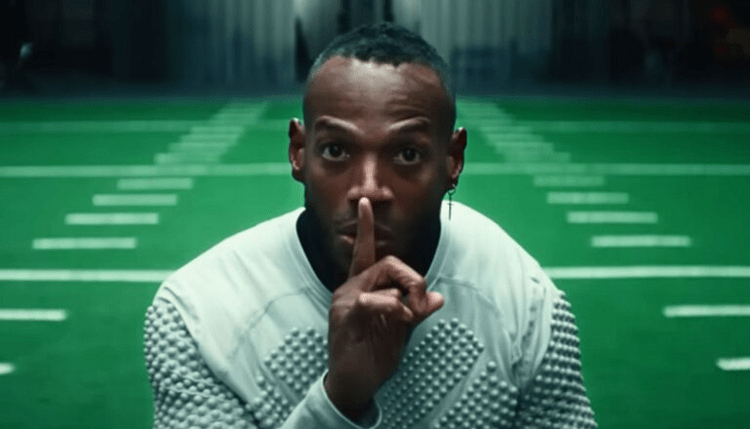
Interestingly, the name plastered across every poster, trailer, and TV spot is Jordan Peele. Peele serving as a producer is meant to be a major selling point. But the person most people will be talking about as they leave the theater will be Marlon Wayans. He delivers a scorching performance playing Isaiah White, the superstar quarterback of the San Antonio Saviors. With eight championship rings to his name, White has been heralded as the G.O.A.T. But with his contract set to expire at the end of the year, he and the team may be looking to pass the torch.

Image Courtesy of Universal Pictures

Enter Cameron Cane (Tyriq Withers), a college football superstar who many believe will be the next Isaiah White. But days before the pro football combine, the consensus #1 pick in the upcoming draft is attacked by an obsessed fan, leaving him with a severe concussion. While the football world questions Cam’s status in light of his injury, Isaiah invites him to his remote sanctuary/compound in the desert for a mini bootcamp. If Cam impresses Isaiah he’ll get a contract with the Saviors and he’ll be christened as Isaiah’s successor.

But what starts as training with his hero turns into a dark, nightmarish descent that pits Cam’s quest for greatness against the grueling cost of achieving it. The brutal workout drills with Isaiah’s ruthless practice squad, the grinding body training regimens, the mysterious injections and blood transfusions – the film sends Cam on a deranged downward spiral that pushes his body and mind to the brink of destruction. Tipping intercuts these scenes with warped imagery accented by Bobby Krlic’s ominous score that’s meant to emphasize the physical and psychological violence Cam endures.

It’s all driven by Isaiah who Wayans portrays as a whirlwind of charm and menace. Withers is an intriguing protagonist despite being frustratingly opaque. They both fully commit to the material which ushers them along at a breakneck pace, right through the film’s blistering, batty, and bloody ending. It’s the kind of finish that can legitimately make or break your opinion of the movie. For me, it was a genre-licious exclamation point to a movie overflowing with rich and provocative themes, some that are amply dissected, others not as much.

VERDICT – 2.5 STARS

REVIEW: “Heads of State” (2025)

Suspending disbelief is both a requirement and a challenge in the action comedy “Heads of State”. Premiering worldwide on Prime Video, “Heads of State” is a big-budget summer popcorn movie in every sense of the term. Rather than taking it to theaters, Amazon MGM Studios elected to make it one of their big summer streaming releases. It’s an utterly preposterous concoction. But there is just enough scenic globetrotting, crazy action, and wild set pieces to keep your attention.

The movie stars Idris Elba and John Cena and it wastes no time challenging its audience. Elba plays U.K. Prime Minister Sam Clarke, a bit grumpy and cynical but believable as England’s head of government. Much harder to buy is Cena playing United States President Will Derringer, a former underwear model, turned action movie star, turned America’s Commander in Chief. Both actors put in the work. But while Elba’s sophistication and charm clicks, Cena is less convincing – endlessly oscillating between inspiring world leader and all-out goofball.

Image Courtesy of Amazon MGM Studios

A petty (and at times almost juvenile) rivalry has formed between the two heads of state. Clarke is a six-year incumbent with sagging approval ratings who doesn’t like Derringer’s image-first celebrity politician status. Derringer still holds a grudge for Clarke endorsing his opponent via a highly publicized fish and chip dinner. It comes to a head during a press conference as the two prepare to depart London for an important NATO meeting.

Seeing the need for some good press, their chiefs of staff (played well by Sarah Niles for the Yanks and Richard Coyle for the Brits) concoct a relatively simple PR scheme. They reluctantly agree to fly together on Air Force One in an effort to show solidarity. But while in Belarusian air space, their plane is attacks by terrorists loyal to Russian arms dealer Viktor Gradov (Paddy Considine). Clarke and Derringer manage to parachute out as the plane crashes. And while the rest of the world believes them to be dead, the two are forced to put aside their differences and work together if they want to get to safety.

“Heads of State” comes from director Ilya Naishuller who is perhaps known for the considerably better “Nobody” starring Bob Odenkirk. In his defense, this is a much different movie with a much different aim. The screenwriting trio of Josh Applebaum, André Nemec, and Harrison Query lean heavily on comedy which both helps and hurts their movie. It unquestionable shows the film doesn’t take itself seriously (as it shouldn’t). At the same time, the constant petty arguing, the slew of overly corny jokes, the goofy needle drops – it starts to wear thin pretty quick.

Image Courtesy of Amazon MGM Studios

Yet the cast works hard to make the movie more entertaining than it has any right to be. It gets a boost from Priyanka Chopra who plays MI6 agent Noel Bissett. She’s a former love interest of Clarke thought to have been killed after a botched operation in Buñol, Spain. Chopra adds some unexpected punch to the action. Equally fun is Jack Quaid who gets a small part playing a goofy yet endearing CIA operator in charge of a Warsaw safehouse.

Even with what seems like stretches of self-awareness, the absurdity of “Heads of State” can be tough to look past. It’s not helped by Cena’s casting, jokes that frequently miss their marks, or the dopey occasions where the movie tries to say something serious. But it’s somewhat saved by Idris’ charisma, Chopra’s grit, and a handful of impressive high-dollar set pieces that energize the movie when it needs it most. Is that enough to justify the potential sequel that is teased at the end? For some, perhaps. For me, probably not.

VERDICT – 2.5 STARS

REVIEW: “Happy Gilmore 2” (2025)

Way back in the 1990s Adam Sandler had a breakout run of movies that transformed him from a Saturday Night Live cast member to a big screen star. Among them was 1996’s “Happy Gilmore”, a silly but endearing comedy about a rough around the edges hockey player who shakes up the prim and proper world of golf. The film didn’t blow up the box office but it was a commercial success. Even more, it gained and has maintained a loyal and vocal cult following.

Since then, Sandler movies have slid into a frustratingly redundant but undeniably lucrative routine. They’re often lazy exercises that recycle the same humor and are stuffed with nonstop cameos from the actor’s many friends. Nevertheless, there apparently remains a demand for these movies as evident by the enormous deals Sandler has made with Netflix. And that leads us to their latest collaboration.

“Happy Gilmore 2” arrives nearly thirty years after the original film released. At its core is a fairly basic feel-good comeback story with occasional scenes that tease a beating heart. But Sandler and director Kyle Newacheck drown their story in nostalgia, flooding the movie with constant callbacks. Far worse, “Happy Gilmore 2” is plagued by some of the worst tendencies from the more recent Sandler movies. In other words, it smothers out the few good gags with waves of unfunny low-bar humor. And it wedges in endless cameos that leads to one embarrassingly bad scene after another.

Image Courtesy of Netflix

For Sandler’s Happy Gilmore, a lot has happened since winning his first championship in 1996, A ridiculous narrated prologue tells us Happy would go on to have a successful professional career, winning five more titles. Meanwhile at home, he and his wife Virginia (Julie Bowen) had five children together. But everything changed in 2014. While playing in a Mother’s Day golf tournament, Happy shanks a drive which ends up striking Virginia in the head, killing her.

Left alone to raise their five kids, a (supposedly) devastated Happy quits golf and drowns himself in booze. He ends up broke which leads to him losing everything including their home. Still he refuses to get back into golf, instead taking a job stocking produce at a local supermarket. But then his lone daughter Vienna (Sunny Sandler) is offered a spot in an exclusive $75,000 a year ballet school in Paris. Determined to help her realize her dream, Happy dusts off his clubs and heads back to the Tour.

The film’s big bland baddie is Frank Manatee (Benny Safdie). He’s the CEO of the Maxi Golf League, a raucous reimagining of the game of golf. Manatee approaches Happy about joining his tour but Happy declines. This inspires an angry Manatee to seek out Happy’s old rival Shooter McGavin (Christopher McDonald) who has spent the last 29 years in a mental institution. Manatee’s plan is to railroad Happy’s comeback and catapult Maxi as the world’s premiere golf league.

Image Courtesy of Netflix

For reasons that are never really explained, golf’s future suddenly hangs in the balance. And it will be decided by a tournament pitting the five top Maxi golfers against the five top Tour golfers. It all leads to a chaotic final act that stands out most for its haphazard directing and editing. For a stretch it frantically bounces all over the place before finally settling down for an attempt at an emotional payoff that it never quite earns.

To no surprise, the movie is littered with bad performances, mostly from nonprofessional actors who are just there to be recognized. Others like Safdie, Bowen, Steve Buscemi, and Margaret Qualley do what they can while being handcuffed to bad material. Meanwhile Sandler is solid enough in a familiar role he can do in his sleep. If there is a standout, it has to be McDonald who has a lot of fun bringing back Shooter McGavin.

“Happy Gilmore 2” throws so much at the screen that die-hard fans are sure to find something they’ll enjoy. But no matter how much nostalgia Sandler and company employ, this mostly uninspired and imagination-free sequel lacks the spirit and charm of its predecessor. It’s a half-hearted effort that attempts to find humor in running jokes about alcoholism, dopey bare butt gags, and celebrity non-actors saying and doing silly things. The results are mostly witless, crude, and borderline humiliating. But at least they had a better time making it than I had watching it. “Happy Gilmore 2” is now streaming on Netflix.

VERDICT – 1.5 STARS

REVIEW: “Havoc” (2025)

With his superhero run as Venom (hopefully) done, it looks like Tom Hardy is leaning back into the tough, hard-nosed roles that made him a star. We got a good reminder of him at his best in last year’s underrated and underappreciated “The Bikeriders”. And he completely lets loose in his latest feature “Havoc”, a gritty underworld action thriller that sees Hardy teaming with writer-director Gareth Evans.

Evans first grabbed attention in 2011 with his Indonesian action thriller “The Raid”. He followed it with “The Raid 2″ in 2014 and the unsettling gothic folk horror feature “Apostle” in 2018. His latest pulls some technical inspiration from each of his previous films, but overall it has a noticeably different flavor. It’s a little bit of John Wick mixed with a little bit of John Woo. But Evans puts his own furiously violent stamp on the action which is what gives “Havoc” its style and energy.

Image Courtesy of Netflix

“Havoc” opens with an electric car chase sequence as the cops pursue a speeding 18-wheeler through the downtown of an unnamed American city. I won’t spoil how the pursuit ends, but it sets in motion the events that will unfold over the film’s mostly propulsive 100 minutes. As Evans’ story unfolds, her serves us a veritable buffet of bullets, blood, and bodies that is only matched by heaping helpings of corruption, betrayal, mistaken identities, and underworld retribution.

Hardy plays Walker Mackey, a hardened homicide cop haunted by the shady dealings from his past. One evening he and his strait-laced new partner Ellie (Jessie Mei Li) are called to investigate a horrific crime scene. Three heavily armed masked men busted in on a drug deal and massacred a room full of Triad members including Tsui (Jeremy Ang Jones), the son of a powerful mob boss and crime family matriarch (Yeo Yann Yann).

While looking for clues, Walker discovers a video showing two young people fleeing the scene, Charlie (Justin Cornwell) and his girlfriend Mia (Quelin Sepulveda). Walker immediately recognizes Charlie as the estranged son of mayoral candidate Lawrence Beaumont (played by Forest Whitaker). But are he and Mia eye-witnesses or suspects? Walker informs Beaumont about his son and we quickly learn the two have a complex relationship. Beaumont implores Walker to find Charlie in return for wiping away any debts between them.

From there the story kicks into overdrive as Walker races to find Charlie and Mia as they look for a way to escape the city. Meanwhile the Triad is hunting the young couple who they believe are responsible for the massacre. And the real killers are after them too, hoping to erase any potential witnesses. Once all of these parties and their motivations are established, the story leans almost exclusively on the action. Don’t expect much character development, any thematic depth, or unexpected plot twists.

Image Courtesy of Netflix

But here’s the thing – the action is more than able to carry the movie through to its finish. Evans doesn’t shortchange his audience, creating extended action sequences and infusing them with equal amounts of chaos and brutality. Admittedly they aren’t for the squeamish as the blood sprays just as much as bullets. But they are brilliantly choreographed and shot in a way that helps “Havoc” easily earn its name.

As for Tom Hardy, he’s the perfect fit for this tough and merciless world, bringing his rugged edge and signature swagger to the kind of character he was chiseled to play. Whitaker is always a welcomed presence as is Timothy Olyphant who gets a juicy role as a crooked police detective. They all add flavor to a wickedly entertaining, high-octane action showcase that keeps us riveted by delivering exactly what it promises. “Havoc” premieres April 25th on Netflix.

VERDICT – 4 STARS