REVIEW: “Hacksaw Ridge”

hacksaw-poster

You might say Hollywood’s selective forgiveness hasn’t fully extended to Mel Gibson. While the transgressions of many stars have been hypocritically swept under the rug, Gibson has remained a Hollywood pariah due to his vile alcohol-related incidents of nearly ten years ago. Despite apologies, treatments, and the support of close friends like Jodie Foster, Whoopi Goldberg, and Robert Downey, Jr., it has been tough road back into movies for Gibson. But the early responses to his new film “Hacksaw Ridge” may be a sign that Tinseltown is finally giving him a second chance.

Hollywood has tried to tell the incredible story of Desmond Doss for decades. Screen rights to the story have swapped hands numerous times and multiple producers have attempted to get the project off the ground. Mel Gibson was first approached to direct the film in 2004. He would turn down the offer twice before accepting some ten years later. “Hacksaw Ridge” would be Gibson’s first directed movie since 2006’s “Apocalypto”.

hacksaw3

The story of Desmond Doss is astonishing. In April of 1942 Doss enlisted in the Army but refused to carry a weapon due to his deeply held religious convictions. Despite early criticisms and persecution, Doss worked his way up to Corporal and was a field medic during the bloody Battle of Okinawa. He became the first conscientious objector to receive the Medal of Honor.

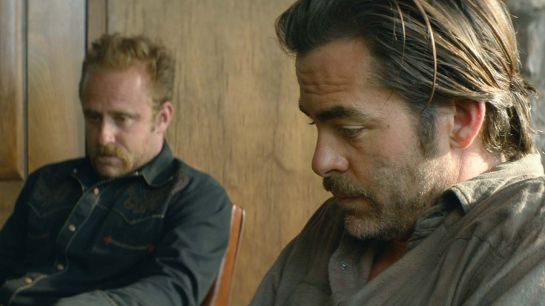
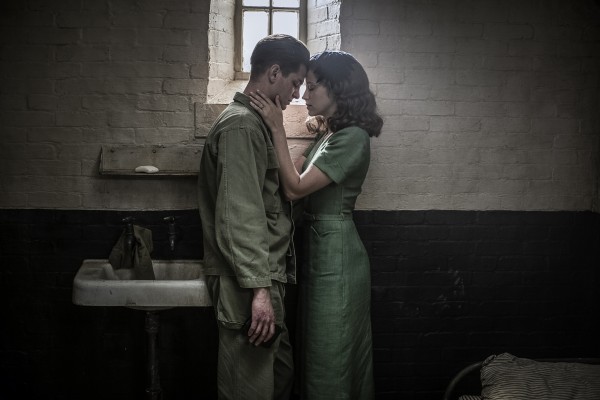
Andrew Garfield plays Doss and is tasked with carrying the bulk of the film on his shoulders. Garfield is an actor who has always flown a bit under the radar despite some strong performances. In “Hacksaw Ridge” he brings the audience through several portions of Doss’s life. We see his early life at home and his tumultuous relationship with his war-scarred, alcoholic father (played with bruising realism by Hugo Weaving in some of the year’s best supporting work). We watch his courtship with a local nurse named Dorothy (played by a radiant and warm Teresa Palmer). The next stop is boot camp where Doss’s convictions raises the ire of his unit especially his superiors Sgt. Howell (Vince Vaughn) and Capt. Glover (Sam Worthington).

And then there is the final act which is dedicated to Doss’s heroism at Okinawa where some of the most ferocious fighting of World War 2 took place. From the first shot fired, the film presents the battlefield violence vividly and in a manner reminiscent of the D-Day sequence in “Saving Private Ryan”. Mel Gibson is no stranger to depicting the brutal nature of combat and it is especially effective here considering the harsh reality it’s based on. Make no mistake, it’s bloody, unflinching, and harrowing.

hacksaw2

Some have found Gibson’s intense war violence at odds with his story of a pacifist. I couldn’t disagree more. Yes, the battle scenes are brutal and graphic but not without reason. You see, in the middle of the blood, the bullets, and the dizzying madness of war is Desmond Doss who personifies grace in the face of violence, life in a sea of death. Gibson contrasts the horrors of war with the heroism of Doss in such a way as to make his protagonist’s light shine even brighter. There is no glorification of war. These soldiers are in a picture of hell. The only light for them and the audience is Desmond Doss. It’s all incredibly effective.

“Hacksaw Ridge” was made with a fairly modest $40 million budget (quite modest compared to the $165 million price tag for the week’s other big release, Marvel’s second tier “Doctor Strange”). But as you would expect from Gibson, the movie looks like a billion bucks. The superbly shot battle scenes aside, Gibson’s traditionalist sensibilities show up in how he shoots everything else which is a perfect fit for this particular film. It’s easy to get lost in the period he visualizes.

hacksaw1

But I have to get back to Garfield whose work in this film should catch a few eyes. His accent may require an adjustment, but he fully commits to his character and his performance is full of authenticity and earnestness. The movie simply wouldn’t work without him. And it certainly helps to have great supporting work especially from Hugo Weaving (Oscar nomination perhaps). I also loved Palmer who at times seems plucked right out of a 1940’s movie. Worthington is solid and Vaughan surprised me. There are also nice performances from Luke Bracey as the unit’s alpha male and Rachel Griffiths as Doss’s mother.

The story of Desmond Doss is both incredible and inspirational. “Hacksaw Ridge” tells the story well and never wavers from its central theme of believing in and staying true to your convictions even in the face of intense adversity. It’s never preachy in its presentations of one man’s beliefs, but it also never wavers in portraying them for what they are. And that’s what you expect from Mel Gibson  – a filmmaker of great vision and conviction who may have finally found the forgiveness he deserves. I hope so. “Hacksaw Ridge” shows he still has an amazing gift and an insight into filmmaking that many in the business simply do not possess.

VERDICT – 4.5 STARS

4.5 STARS

REVIEW: “The House of the Devil”

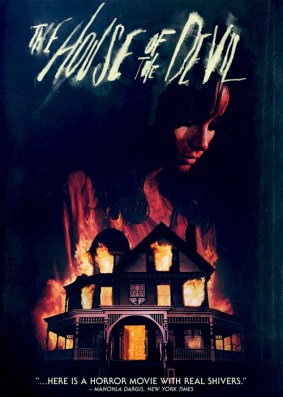
house-posterTi West has a clear grasp of the guiding principle for many classic horror films – the anticipation can be just as satisfying as the payoff. He takes that thought to heart in his 2009 film “The House of the Devil”. It’s a slow-boiling horror picture focused on building the audience’s dread and prodding their imaginations. West is deliberate with what he feeds us which is just fine since he creates a boatload of suspense in the process.
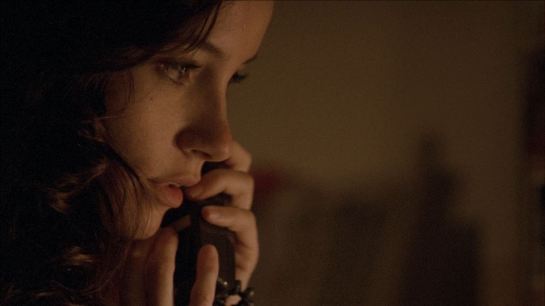
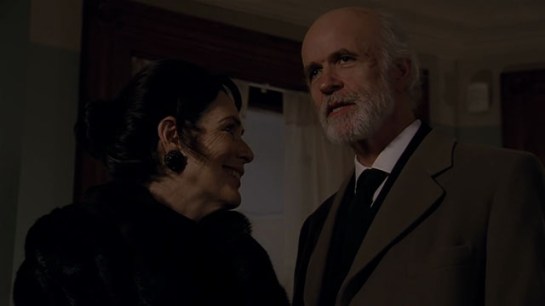
The main character is cash-strapped college sophomore named Samantha (Jocelin Donahue) who needs money for a new apartment. She responds to a flyer requesting a babysitter on the night of a rare lunar eclipse. Samantha’s best friend Megan (played by the always lively and true Greta Gerwig) drops her off at the large Victorian home of Mr. Ulman (Tom Noonan) and his wife (Mary Woronov). It so happens that the home is down an isolated wooded road AND next to a cemetery. Warning signs aglow.

The gentle voiced but creepy Mr. Ulman springs a surprise on Samantha – something he failed to mention in the flyer. I’ll let you find out what it is for yourself, but she only agrees to stay after he quadruples her pay. The Ulman’s head off to their eclipse-watching gathering leaving Samantha in charge, along with her intense curiosity and active imagination.

house1

West plants here for a bit allowing the tension to build and then slowly simmer. As Samantha begins exploring the house we gain an ominous feeling of dread. We watch knowing all along something is going to happen. Even when Samantha pops on her headphones and playfully dances around to The Fixx’s “One Thing Leads to Another” (an amusingly appropriate title) we still are waiting for something terrible to occur. That’s something the good horror pictures of the 70s and 80s did well.

West has that same knack. Even though he is often playing with familiar ideas within the horror genre, he clearly knows what makes these films work. Some examples: He spends time developing the central character. Samantha isn’t a flimsy, disposable protagonist. He also understands the effectiveness of well-managed music. Jeff Grace’s Carpenter-esque score is a perfect complement and West knows how to employ it. And then there is his selective use of gore. The corn syrup does eventually flow, but this is far from some splatter-a-minute gorefest. Again, the focus is more on getting to the payoff. But that doesn’t mean the payoff isn’t a nostalgic bit of old-school fun.

house2

Another treat is the 80s setting. My wife and I had such fun seeing who could notice the most references to the decade. Feathered hair, high-waist blue jeans, friendship bracelets, and of course a Sony Walkman as big as a brick. West even shoots with 16mm film which makes it seem even more of a movie of that time.

“The House of the Devil” features an old-fashioned quality that I love, but it’s much more than just a nostalgic piece. It’s a genuinely tense throwback to the classic horror idea of doing the basic things really well. It also plays around with several subgenres and shakes them up just enough to add a unique flavor to the movie. All of these good ingredients mix well with West’s undeniable craft making this a real treat for horror fans.

VERDICT – 4.5 STARS

4.5 STARS

REVIEW: “Hunt for the Wilderpeople”

hunt-poster

Taika Waititi has had his hand in many unique projects, but it was his hysterical vampire mockumentary “What We Do in the Shadows” that made me a fan. The film’s wacky mix of absurd and subtle humor was refreshing especially within its formulaic and gimmick-ridden genre.

His follow up is the equally hysterical and equally refreshing “Hunt for the Wilderpeople”. Much like his previous film, Waititi writes, co-produces, and directs this odd couple adventure comedy that so beautifully walks the line between silly absurdity and thoughtful, tender humor. Contrary to many modern comedy norms, “Wilderpeople” delicately explores several deeper themes underneath its unashamedly goofy exterior. Most importantly it does it all very well.

hunt2

The film tells the story of two very different but equally isolated people. Ricky Baker (Julian Dennison) is a troubled 13 year-old who has been shipped from home to home by child welfare services. After several incidents in the city Ricky is given one more chance at a home life. He is sent to the countryside and new foster parents the quirky but loving Bella (Rima Te Wiata) and the burly, gruff Hec (Sam Neill).

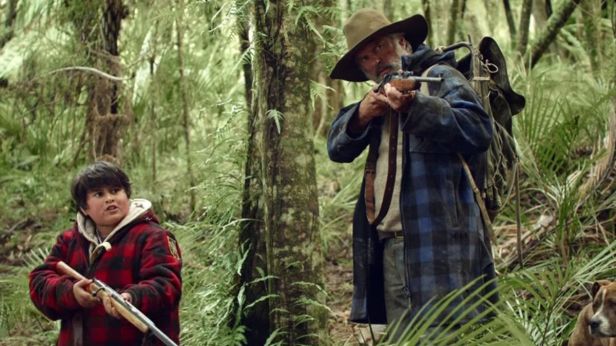
Through circumstances that I’ll let you discover for yourself Ricky runs away into the dense bush but is eventually found by Hec. Child Services, led by the dogged, overzealous Agent Paula (Rachel House), absurdly determine that Hec kidnapped Ricky and therefore set out on a manhunt to find the two. This feeds the film’s main focus – the peculiar relationship between a young boy and an elderly man both with huge needs in their lives.

hunt1

To say Waititi has fun with the whole “opposites attract” idea is an understatement. The clashing of these two drastically different personalities allow for some truly hilarious moments. Ricky’s youthful exuberance against Hec’s grumpy desire to be left alone. Ricky’s street gangster ambitions against Hec’s bushland survivalist skills. Yet they come together through one lone emotional similarity and we get to enjoy the zaniness this unlikely pairing brings.

Much should be said about the performances which are very much essential pieces. This is young Dennison’s third project and he is such a treat delivering a fabulous multi-layered character. We see it in his spontaneous pop culture references, his penchant for writing haiku, and his random child psychology quotes. Dennison exudes a certain sweetness and naïveté that melds so well with the tone Waitiki is going for.

hunt3

Sam Neill is equally vital. He could have easily been your run-of-the-mill surly old-timer, but his performance doesn’t allow for that. He, along with Waititi’s script, blow apart any surface level perceptions we may have of his character. Hec may appear familiar, but Neill takes him in several unexpected directions. In fact the same could be said for much of Waititi’s film. It’s constantly defying expectations.

Waititi’s star is clearly shining brighter and his next film should be a challenge (Marvel’s third Thor film). But “Wilderpeople” is him making movies in his comfort zone. It is a film so clearly and perfectly attuned to his humor and sensibilities. This fun little odyssey pulls from so many directions but always maintains its balance. It’s genuinely tender and sweet but never overly sentimental. The humor ranges from subtle deadpan to big broad comedy but it always works together. All of this testifies to Waititi’s brilliance as a filmmaker and storyteller. The guy knows how to make a movie, and you won’t find a 2016 comedy much funnier than this one.

VERDICT – 4.5 STARS

4.5 STARS

REVIEW: “Hitman: Agent 47”

AGENTPOSTER

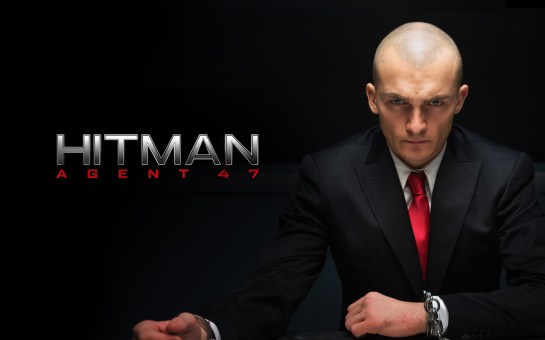
Still looking for that one great movie based on a video game? If so take my word for it, “Hitman: Agent 47” ain’t it. Let’s be honest, it’s not like expectations for this film were through the roof. It’s not like this was a ‘can’t miss’ movie. But these things still don’t excuse the film for being this tedious, this inert, and this unimaginative.

This is the second attempt at bringing the Hitman video game franchise to the big screen. The first film came along in 2007 and was universally panned by critics. This 2015 mess of a movie was deservedly met with the same reaction. The sad thing is the Hitman video games offer plenty of good source material for what could be a fun and entertaining action flick.

AGENT1

This time Rupert Friend plays Agent 47, a genetically enhanced hitman working for a mysterious shadow organization. (Interestingly the role was originally slated for Paul Walker prior to his sad and untimely death). He’s on the hunt for a Russian geneticist named Petr Litvenko (Ciaran Hinds), the creator of the Agent program. During his mission he encounters mercenaries from a sinister group called the Syndicate (aren’t all nefarious groups called that) who want Litvenko for their own criminal reasons.

47 discovers Litvenko has a daughter Katia (Hannah Ware) and sees her as the key to finding his creator. The trouble is the Syndicate has discovered her existence as well. In the meantime Katia is vigilantly working to find out who she is. She knows Litvenko’s face but has no idea he is her father. She desperately seeks him out hoping he can shed light on her identity. Obviously all of these paths eventual intersect which makes up the bulk of the story.

AGENT2

Director Aleksander Bach (in his directorial debut) attempts to add some level of uniqueness through his stylized action – slow motion, revolving cameras, bright sterile environments, even brighter blood. When put together it all looks fine, but I was amazed at how little energy it brought to the film. The action definitely has more fire than the story or its characters, but that’s a pretty low bar.

Rupert Friend is good enough as the emotionally void Agent 47 and Hannah Ware has some decent moments. Zachary Quinto shows up but never feels quite right for his role. But you can’t put too much blame on the actors. The material they are given is just so bland. That can be said for the entirety of “Agent 47”. It isn’t an offensively bad movie. It’s not close to being called good either, and that becomes evident early into the film and doesn’t change.

VERDICT – 1.5 STARS

1.5 stars

TAKE TWO: Re-Reviewing “Hail, Caesar!”

caesar-poster

As many do, I often look forward to giving specific films a second look. There are certain instances where a movie simply doesn’t click for me. It may be a movie that I originally approached with ridiculously high and unobtainable expectations. It may be from filmmakers with a track record for creating movies I truly love. Everything I just said fits perfectly with my first experience with “Hail, Caesar!”. But what a shift following a second look. For that reason I feel compelled to dust off the old review and offer up some pretty dramatic revisions.

I have to think it takes a specific sensibility to pull of a Golden Age of cinema parody especially in today’s movie climate. Modern comedies seem content with sticking to tired formulas and they rarely step outside of those boxes. And unfortunately these retreads attract big enough crowds to keep the filmmakers comfortable in the genre’s monotony.

caesar2

Enter Joel and Ethan Coen, a directing duo who has never played within the conventional or the formulaic. Over the years they have dabbled in a number of genres, never conforming to a popular norm and always putting their own special spin on them. Whether its comedy (“Raising Arizona”), action thrillers (“No Country for Old Men”), westerns (“True Grit”), gangster pictures (“Miller’s Crossing”), or even wild amalgamations of several genres (“Fargo”), the Coen brothers are always approaching things from a unique perspective.

Their latest is “Hail, Caesar!”, a comedy written, produced, edited, and directed by the Coens. The film is set in 1950s Hollywood where big studios still run every facet of moviemaking including their laborers. Josh Brolin plays Eddie Mannix, a real life studio “fixer” represented here with that expected Coen brothers twist.  As a fixer Mannix’s job at Capital Pictures is to protect the images of Hollywood stars by hiding their bad and potentially damaging behavior from the public eye.

caesar1

While the trailer shows off a star-studded cast, this is Brolin’s picture and he does a fine job. The film centers itself around the various ins and outs of his studio management. The supporting cast is mostly seen through bit parts, some of which are nothing more than glorified cameos – Scarlett Johansson, Channing Tatum, Jonah Hill, Tilda Swinton. The best appearances come from Ralph Fiennes and Frances McDormand. Fiennes is particularly great in channeling the same sharp comedic timing he showed in Wes Anderson’s “The Grand Budapest Hotel”.

The bigger of the supporting roles go to George Clooney and Alden Ehrenreich. Clooney, the Coen’s favorite numbskull, hams it up as Capital Pictures’ biggest star who ends up kidnapped by a mysterious group known only as “The Future”. Ehrenreich plays a singing cowboy (think Gene Autry) who ends up terribly miscast in a stuffy period drama. He may be the biggest highlight offering up some of the film’s biggest straight-faced laughs.

The Coens throw out so many winks and tips of the hat to the people and the system of ‘Old Hollywood’. The film is a veritable collage of homage and parody. Much of it is sure to put smiles on the faces of classic cinema fans. We get a big dance number. We see scenes shooting on big studio lots. We see the politics behind making a Ben-Hur-ish prestige film. And of course communism rears its ugly ominous head. All of these things are a ton of fun and are laced with the Coens signature off-beat humor.

CAESAR3

I think an argument can be made that this film lacks a satisfying narrative thread to bring together all of its quirky elements. Perhaps more focus on a central story would help. But the Coen brothers never restrict themselves to formulas and aren’t afraid to work with a ton of moving parts. “Hail, Caesar!” certainly has many moving parts. But unlike my first viewing which was clouded with irrationally high expectations, this time I was able to connect the dots and better define the Coens’ vision for the film.

“Hail, Caesar!” is very much an homage to classic moviemaking. It’s a wacky missing person caper. It’s a story of a man navigating personal and spiritual crises. It’s all of those things plus some. If you try to view it through a linear lens you’ll probably come away disappointed. This time my expectations were tempered, my focus was broader, and my experience was profoundly better.

VERDICT – 4.5 STARS

4.5 STARS

REVIEW: “Hail, Caesar!”

CAESAR poster

I have to think it takes a specific sensibility to pull of a Golden Age of cinema parody especially in today’s movie climate. Modern comedies seem content with sticking to tired formulas and they rarely step outside of those boxes. And unfortunately these retreads attract big enough crowds to keep the filmmakers comfortable in the genre’s monotony.

Enter Joel and Ethan Coen, a directing duo who has never played within the conventional or the formulaic. Over the years they have dabbled in a number of genres, never conforming to a popular norm and always putting their own special spin on them. Whether its comedy (“Raising Arizona”), action thrillers (“No Country for Old Men”), westerns (“True Grit”), gangster pictures (“Miller’s Crossing”), or even wild amalgamations of several genres (“Fargo”), the Coen brothers are always approaching things from a unique perspective.

Their latest is “Hail, Caesar!”, a comedy written, produced, edited, and directed by the Coens. The film is set in 1950s Hollywood where big studios still run every facet of moviemaking including their laborers. Josh Brolin plays Eddie Mannix, a real life studio “fixer” represented here with that expected Coen brothers twist.  As a fixer Mannix’s job at Capital Pictures is to protect the images of Hollywood stars by hiding their bad and potentially damaging behavior from the public eye.

CAESAR1

While the trailer shows off a star-studded cast, this is Brolin’s picture and he does a fine job. The film mainly consists of him managing the studio. The supporting cast is seen through bit parts, some of which are nothing more than glorified cameos. Take Scarlett Johansson, Channing Tatum, Jonah Hill, Tilda Swinton. None have noteworthy screen time and we are only teased with storylines involving each. The best appearances come from Ralph Fiennes and Frances McDormand. They are hilarious but we don’t get enough of them.

The bigger of the supporting roles go to George Clooney and Alden Ehrenreich. Clooney, the Coen’s favorite numbskull, hams it up as Capital Pictures’ biggest star who ends up kidnapped by a mysterious group known only as “The Future”. Ehrenreich plays a singing cowboy (think Gene Autry) who ends up terribly miscast in a stuffy period drama. These story angles, just like the many others, are promising but aren’t given much attention. It all goes back to Mannix and his professional and personal struggles. It is a far cry from the impression left by the trailer.

I don’t mean to sound like “Hail, Caesar!” is a bad movie. It’s not. There are so many winks and tips of the hat to the people and the system that made up Old Hollywood. The film is a veritable collage of homage and parody. Much of it is sure to put smiles on the faces of classic cinema fans. We get a big dance number. We shoot scenes on big studio lots. We see the politics behind making a Ben-Hur-ish prestige film. And of course communism rears its ugly head. All of these things are a lot of fun.

CAESAR2

But despite that, there’s something about “Hail, Caesar!” that just doesn’t click. There are so many components to the film that feel underplayed. The Coens have always stuck to their vision, but here their constant wandering from one potential plot point to another gives us several entertaining scenes but not a fully compelling whole. It never can keep a steady momentum and the humor seems to come in a few scattered bursts.

It’s hard to put into words what made the film hard for me to fully embrace. As I said, there are many really good scenes and several specific fun moments that stood out to me. Most feature that signature quirky Coen brothers dialogue that I love. But its hard to find a satisfying narrative thread that brings them together. I can’t help but think that a little less of these out-of-the-blue indulgences and slightly more focus on a central story thread would have helped the film immensely.

Still, a disappointing Coen brothers movie is better than most other comedies of today. That’s one way of looking at it. But that doesn’t cover the one unfortunate fact – “Hail, Caesar!” is still a disappointment. It has its moments (some of them are really great), but its flippant approach to some of the storylines it injects left me feeling a bit slighted.

VERDICT – 3 STARS

3 Stars