With this week’s release of the incredibly popular “The Hunger Games” on DVD and Blu-Ray, I had a chance to see it for a second time. I thought it would be fun to share my review of the movie again for those who may be newer to my blog. What are your thoughts on this much talked about picture? Were the odds ever in your favor as you sat down to see what all the hype was about? Here’s my take.
It’s been called the next big thing at the movies. It’s projections point to an opening weekend of around $150 million. Fans are filling theaters with anticipation. With such hype and expectations, how is it that I had never heard of “The Hunger Games” before seeing its first movie trailer? Expected to be the first in a profitable series, “The Hunger Games” is based on a series of novels written by Suzanne Collins. It’s a dystopian science fiction film that’s based on a preposterous premise yet it manages to be strikingly entertaining.
With the “Twilight” series mercifully set to end later this year, “The Hunger Games” is looked at as the next big franchise and has even drawn some misguided comparisons to the romantic vampire versus werewolf films. But there are several things that separate “The Hunger Games” from the “Twilight” series. First, this film opens itself up to a much broader audience. The movie embraces several good sci-fi and action elements that should appeal to a wider variety of moviegoers. ”Twilight” made millions but had a much more restricted target audience. Also “The Hunger Games” made a point to bring in quality performers and it really shows in the finished product. The acting is head and shoulders above the teeth gnashing performances in “Twilight”. In other words, “The Hunger Games” has more to offer than many of the other popular multi-million dollar series.
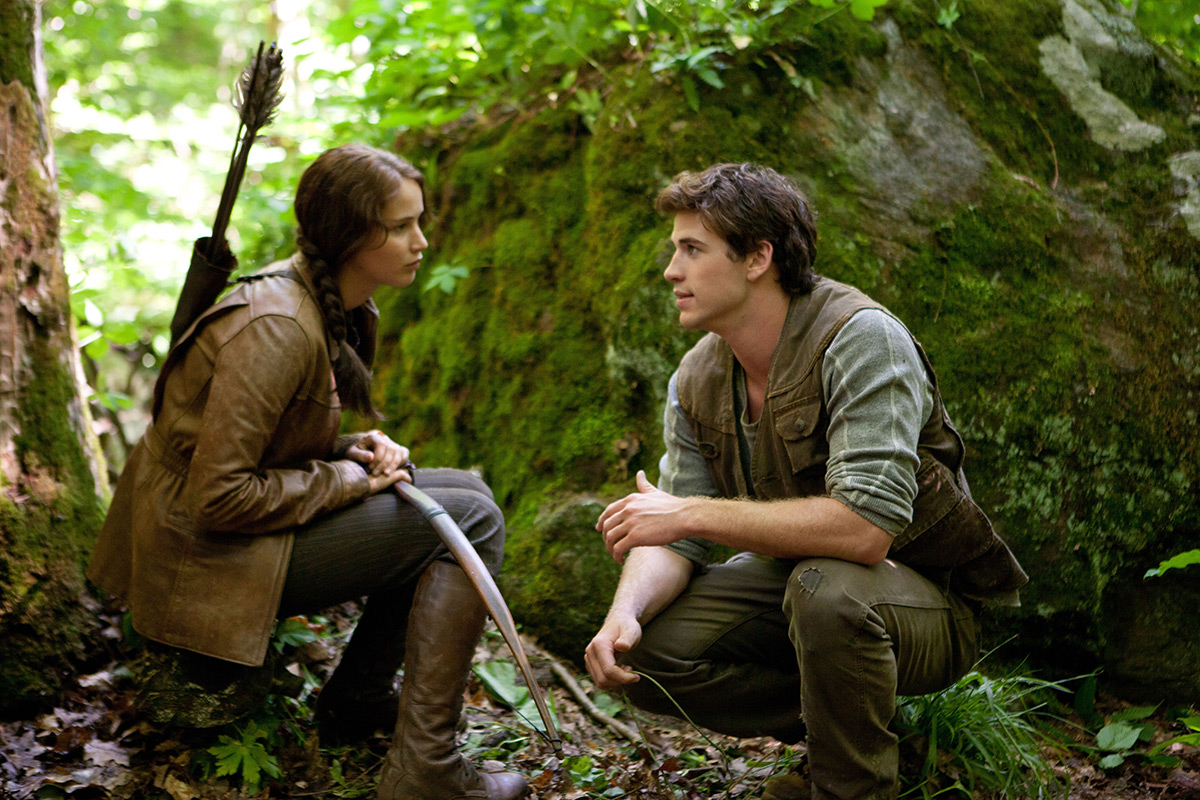
The movie takes place in Panem, a nation broken up into 12 districts. It’s a futuristic world that features a capital city filled with advanced technology surrounded by landscapes that resemble the Ozark or Smokey Mountains. The power and affluence are confined to the Capitol while the outer districts are filled with poverty-stricken villages struggling to survive. We learn that years ago there was an uprising in the districts that resulted in a strong militaristic response from the Capitol. After quenching the uprising, The Capitol instituted “The Hunger Games”, an annual competition that required each district to provide one boy and one girl between the ages of 12 and 18 to compete against each other in a survival fight to the death. There would be only one winner and that winner would receive fame and glory. The games were intended to serve as a lifelong punishment for the district’s uprising and to show the twisted view of mercy and forgiveness of the Capitol.
To add yet another warped component to the story, The Hunger Games have become a Super Bowl like event. Much like 1987′s “The Running Man”, citizen’s throughout the capital city watch and cheer the games like they would a major sporting event. Special events and talk shows centered around the participants and leading up to the games are soaked up by the heartless and blood-thirsty Capitol crowds. In contrast, those watching in the outer districts do so not out of sport but out of concern for their loved ones. The movie goes all out to show a stark economic and moral difference between the wealthy city people and the poor district citizens. It’s a contrast that looks to play a bigger role in the future films.
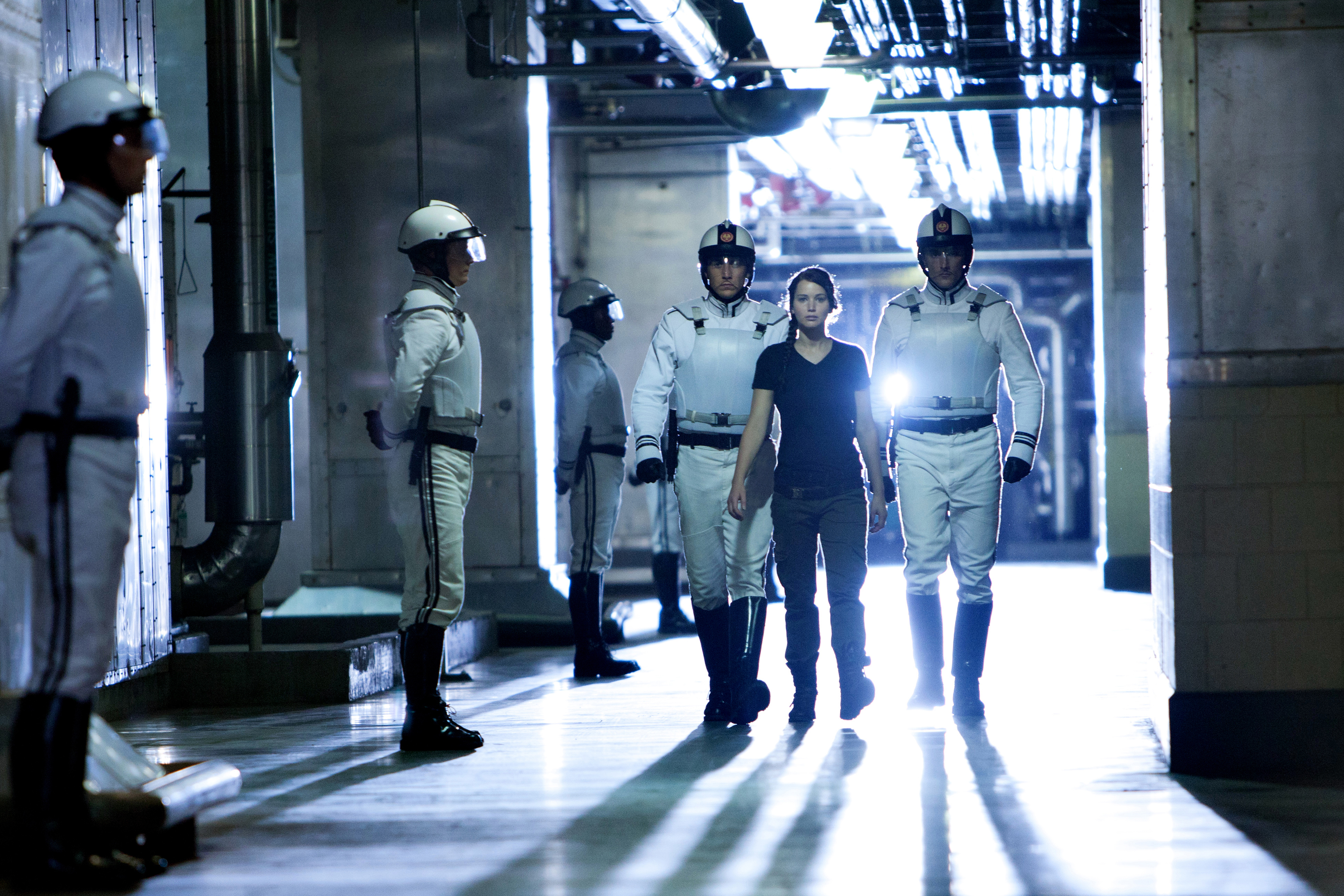
The movie starts inside the very poor District 12. Jennifer Lawrence plays Katniss Everdeen, a tough 16-year old girl forced to take care of her mother and little sister Prim (Willow Shields) after the death of her father. The sisters gather together with the other kids from their district for what’s called “The Reaping”, a random drawing to find out who will represent the district as “tribute” in the year’s games. When a terrified Prim is chosen, Katniss steps in and volunteers in her sister’s place. Joining Katniss from District 12 is a baker’s son named Peeta (Josh Hutcherson). The two are shuttled to the Capitol where they are prepped and paraded around until the day for the games is upon them.
You can’t talk about “The Hunger Games” without talking about Jennifer Lawrence’s performance. A lot of great young actresses tried out for the role including Saoirse Ronan, Chloe Moretz, Hailee Steinfeld, and Shailene Woodley. But Lawrence was chosen and she was the perfect choice. Since I first saw her in her Oscar nominated role in “Winter’s Bone”, she’s been one of my favorite young actresses. Here she gives a strong and committed performance that feels true and authentic. In fact, she often times rises above the material and when the story goes a little off-track she manages to elevate it and carry it on her shoulders. It’s a brilliant performance and she fleshes out every quality of her character that you would expect.
Lawrence is joined by a nice supporting cast including Woody Harrelson as Haymitch, a bumbling boozer who is the only survivor to ever come out of District 12. Stanley Tucci is great as Caesar, the voice of The Hunger Games. He hams it up with his wild blue hair and huge grin but he’s also a bit slimy and disturbing. Elizabeth Banks plays Effie, a Capitol liaison to District 12 and Lenny Kravitz plays a stylist who has the job of making Katniss and Peeta make a good impression. We even get Donald Sutherland delivering his signature overly dramatic but perfectly effective lines as the sinister President Snow. While these supporting performances are quite good, some of the younger actor’s work doesn’t quite measure up.

The story itself captures a lot of what makes for good science fiction. It also does a nice job building up the tension leading up to the start of the games. I also saw myself emotionally caught up in several of the movie’s more heart-felt scenes. The action sequences aren’t as plentiful as some have advertised and the violence is strategically edited to ensure the PG-13 rating. But I did find watching teenagers hack each other up, some with pretty flippant attitudes, to be a bit uncomfortable. I also felt the tributes (the Hunger Games participants) to be inconsistently written. Several are introduced in a way that makes you think they are significant but they meet their demise in fairly meaningless fashion. Better writing could have made the tributes (aside from a small handful) feel more important therefore giving the games themselves a lot more weight.
There were also a few head-scratching moments in the story. Throughout the preparation leading up to the games, everything seemed to focus on making a good impression in order to gain sponsors needed for survival. The wardrobes, the introductions, the interviews – everything was for the purpose of sponsors. But during the games, sponsorship didn’t have much of an impact at all which made all the posturing seem pointless. I also couldn’t help but wonder what a society would find entertaining about kids having a survival fight to the death. Look, I understand that they were sick and morally bankrupt people. But a 12-year old little girl in a competition to the death shouldn’t be that interesting even to the most twisted and perverse individuals.
But even with a story’s occasional clunkiness, there’s something that drew me into the world of “The Hunger Games”. From the very start, I found the film created a futuristic society and sociopolitical environment that was surprisingly realistic even though it’s science fiction. I also felt the film’s fluid pacing helped create several moments of genuine tension that had me on the proverbial edge of my seat. There are also several heart-wrenching and emotional scenes that never felt fake or manufactured. And while the ending was a little underwhelming, it puts in place several intriguing possibilities for the next film. “The Hunger Games” is a movie that could have been better with a little more polished and thought-out script. But it’s also a film that puts together a disturbing yet enthralling world that I was totally caught up in. Combine that with an amazing performance from Jennifer Lawrence and some strong supporting work and you have the groundwork for a very satisfying franchise. May the odds ever be in our favor as this series moves forward.