“The Intouchables” – 4.5 STARS

INTOUCH poster

Rarely does a movie blatantly push all of my buttons yet completely win me over. That’s the case with the French drama The Intouchables. This is an irreverent and unashamed movie that aims to be a crowd pleaser and boy was it. It was a huge box office smash after its November 2011 release in France and eventually opened in the United States in 2012. But some critics have dismissed the film for its pandering to audiences and many critics who gave it positive reviews still spoke against its aim at broad appeal. But it doesn’t stop there. In absurd attempts to malign the film some critics have even deemed the movie to be racist and utterly offensive. Well this may not be the most well written quick response to these objections but I’ll say it anyway – Give me a break!

I have absolutely no problem with a movie aiming to be a crowd pleaser if it’s a good movie. The Intouchables is a very good movie and it works because of a smart and often times hilarious script and two fantastic lead performances. While it certainly goes for the feel-good emotion it also makes no apologies for its brash and playful handling of subjects that are often treated gingerly. For me that wasn’t a point of criticism. Instead it was fresh and new and one of the film’s several strong points. And the racism accusations defy reason. I’m not going to start breaking down plot points that prove the absurdity of the argument but let’s just say the film never promotes or depicts anything that led me to believe it was the slightest bit racist.
INTOUCH2

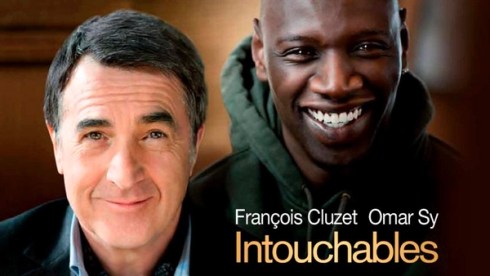
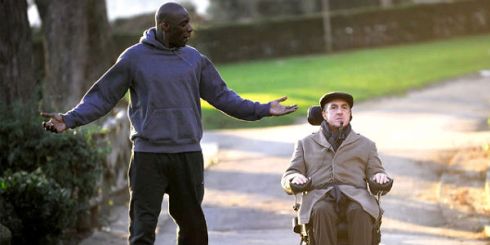
Now to the story – Olivier Nakache and Éric Toledano both wrote and directed this story of a wealthy quadriplegic man named Philippe (François Cluzet) and his new caregiver Driss (Omar Sy). The film starts with the two men speeding down a Paris street in Philippe’s Maserati. It’s obvious to us that the two have developed a bond and a friendship. From there the movie tells us their story through a one long flashback which begins with Philippe’s search for a new caregiver. A line of applicants sit in his lavish Paris mansion and among them is Driss. The other applicants are well dressed and educated in home care but all lack experience and some are just buffoons. Driss on the other hand is only there to get a signature to show he applied for the job and therefore qualify for a benefit. Fed up with waiting he barges in and gives a pretty brash “interview”.

Eventually Philippe hires him against the wishes of his staff. They find Driss to be loud and obnoxious but Philippe is looking for someone who doesn’t pity him and makes him feel alive. That’s the bond that fuels their relationship. The bulk of the film focuses on these two men and their improbable friendship. Both have their own set of issues and both find a release in the other. This is what I really responded to and not once did I find their relationship disingenuous or fabricated. I loved their playful banter and I appreciated how Philippe’s handicap was never used as a melodramatic pawn to anchor the narrative. Instead the film attempts to make him a real person to us. Yes he’s sympathetic but we also see him as experiencing life with the help of Driss.

The bigger reasons all this works are the two lead performances. Cluzet and Sy are brilliant and watching them play off each other is great entertainment. I found both performances to be full of sincerity and perfectly suited for the material. I had seen Cluzet in a handful of other French films including the more recent “Little White Lies” so his strong work here didn’t surprise me. But I was surprised at just how good Sy is. It’s really a big performance but it works very well. And I was blown away by his comedic timing, something that seems completely natural to him.

INTOUCH1

This leads me to another of The Intouchables strong points – the script. Nakache and Toledano put together a fantastic story that’s a great mix of heartwarming drama and hysterical comedy. For me it was the comedy that shined the brightest. Cluzet and Sy were great but a key reason for that was the well written screenplay. I loved the steady flow of humor and I have to say I haven’t laughed this much at a movie in a long time. But even the dramatic moments were strong and I was just as invested in them as anything else. They’re thoughtful and well conceived and aside from the occasional scene of contrived sentimentality it all comes together perfectly, just as you would hope it would.

There are several other things that I really loved about the film from the supporting work of Audrey Flouret and Anne Le Ny to the the beautiful piano driven score by Italian composer Ludovico Einaudi. But I think you get the point. Suffice it to say The Intouchables was a fantastic experience from its brilliant opening to its satisfying final scene. It’s an example of smart and capable filmmaking that can make you laugh as well as tug at your heartstrings. Yes it’s sometimes a bit showy and yes it sometimes plays to the masses, but I could care less. As long as it’s a good film I’m fine with it.

Check out my review of another solid French drama, “Girl on the Bridge“.

REVIEW: “The Impossible”

the impossible poster

Most of us remember the horrific 2004 Indian Ocean tsunami and the catastrophic devastation left in its wake. It was a tragedy on an epic scale and lives around the world were altered forever. “The Impossible” tells the incredible true story of a family who survived this terrible event against truly impossible odds. Going in I was expecting a potentially good disaster flick. But to categorize “The Impossible” as just a disaster movie would be to criminally throw aside the qualities that make this one of the best movies of 2012. You can dismiss it if you like, but I found it to be a devastating yet moving experience unlike anything I’ve ever had with a simple “disaster movie”.

“The Impossible” isn’t a film you enjoy. You endure it while at the same time realizing that you’re seeing something special – an example of skilled filmmaking from a confident and savvy director. You endure it while at the same time soaking up its powerful and committed performances. You endure it while at the same time realizing you’re not being insulted by dumbed down, clichéd material. This is an emotionally heavy movie and I did leave the theater drained. But I was also deeply moved and reminded of that great human spirit found both in the will to live and in the willingness to help others. I love it when a movie does that to me.

impossible 2

But perhaps where this movie resonated with me the most was in its depiction of a parent’s self-sacrificial love for their children. We see motherly and fatherly instincts to protect their children in the face of danger, instincts that many of us can relate to. But hey, we’ve seen this before in the movies, right? Yes we have but rarely is it depicted with such realistic emotion. Everything coming out of Ewan McGregor and Naomi Watts is authentic and completely believable. There isn’t an ounce of artificiality to these characters or how they react to their situations. It’s that genuineness that grabs us and latches us on to both of them.

For those that don’t know, McGregor and Watts play Henry and Maria Belon. They’ve brought their three sons Lucas, Thomas, and Simon along for a Christmas vacation at an beachfront resort in Thailand. Everything is great until, on a warm sunny day as the family plays by the pool, the tsunami hits. The family is splintered by the force of the waves and the rest of the movie documents their quest for survival and to be reunited. I talked about how good McGregor and Watts are but let me also share a little love for the children. The three child actors are fantastic especially newcomer Tom Holland as the oldest son Lucas. He gets the majority of the work between the three and he’s very good. He brings out a toughness and tenacity from his character while also having plenty of those moments that remind us that he’s just a child. It’s an attention-getting performance.

But again. a lot of credit has to go to director J.A. Bayona. It’s amazing that he has only a handful of credits under his belt. The way he lays out the story both narratively and visually shows a skill and technique usually reserved for more seasoned directors. I’ve talked enough about the story but I have to speak about the presentation. I loved the way Bayona uses sound in the first half of the movie. He has a very specific and strategic way of engaging your sense of hearing. He preps your ears in the pre-tsunami scenes by accentuating the sounds of the beautiful environment. Those sounds dramatically change in the post-tsunami scenes where we hear things like raging waters and far away screams. There is also the tension of every distant sound that may resemble the roar of another wave.

impossible1

The special effects are also intricate in drawing us into this disaster along with this family. The tsunami and the furious waters are shown just enough to shake us and then ground us in the situation. It’s never overused in an attempt to get more reaction from the audience. It steers clear of that which is one reason why I feel the scrutiny it’s received is misguided. Some have taken issue with the movie for depicting the catastrophe. But I think this is one of the most thoughtful and respectful treatments of a sensitive subject like this that I’ve seen. There have been movies that have exploited traumatic events but this isn’t one of them.

I loved “The Impossible” for a variety of reasons. It avoids soaking us in conventional sentimentality. Instead it tells an intensely affecting story and allows our senses to take it all in and react in our own way. And trust me, I reacted. I teared up more in this movie than in any other I’ve watched and I never once felt manipulated. This is a movie that will wear you out but then pick you back up. It shows us the resolve that lies in the heart of people and reflects how the best comes out of us during the worst of circumstances. This movie will stick with you and even though its a tough watch its a rewarding one and shouldn’t be missed.

VERDICT – 4 STARS

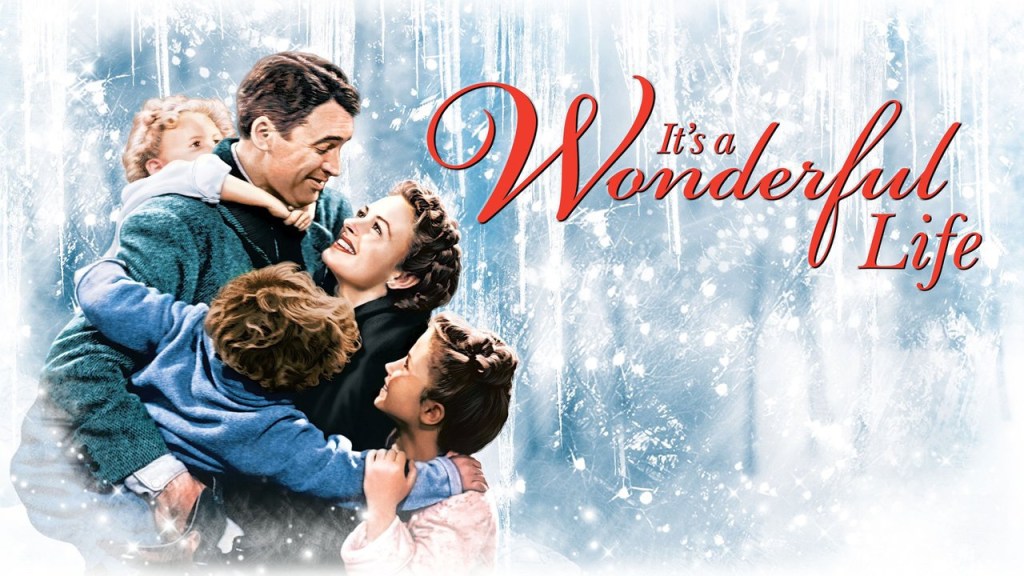
Review: “It’s A Wonderful Life” (1946)


(Originally Reviewed in 2012)

Out of all the movies we watch each Christmas season, no other holiday film hits me quite like Frank Capra’s “It’s A Wonderful Life”. Over the years this 1946 gem has become a perennial favorite. But this beloved feature can’t be easily pigeonholed as a simple Christmas movie. Its so much more. It’s a tremendous bit of filmmaking full of warmth, some really funny humor, a well-written story, a terrific ensemble, and a heartfelt ending that I still adore. It’s a true motion picture classic that shouldn’t be reserved for just the holiday season.

“It’s a Wonderful Life” is the movie that introduced me to the great Jimmy Stewart. Over the years, he would grow to be one of my favorite actors. Here he plays George Bailey, an adventure-minded young man who desires to shake off the dust of his small hometown and see the world. But in his close-knit community things don’t always go as planned. And in George’s case, circumstances would always arise that managed to keep him in Bedford Falls.

The story (co-written by Capra, Frances Goodrich, and Albert Hackett) is an adaptation of Philip Van Doren Stern’s short story “The Greatest Gift”. It begins close to its end. George as is at the end of his rope and is thinking about taking his own life. But Heaven has heard the many prayers of his family and friends and is set to intervene by sending George’s guardian angel Clarence (Henry Travers) to remind him of the wonderful life he has lived. In order for the plan to be successful, first Clarence needs to know about the man he’s saving. So he (and the audience) are shown how George’s life has unfolded.

WONDERFUL

We’re shown that at a young age George Bailey had a significant influence on Bedford Falls. That influence took off after he finished high school and went to work with his father at the Bailey Building and Loan, the only thing in town the miserly money-grubbing Mr. Potter (Lionel Barrymore) couldn’t get his hands on. It’s George’s fight with Potter that leads to his troubles. But it’s also the thing that leads to an important revelation – he truly has had a wonderful life.

The beautiful and charming Donna Reed plays Mary Hatch who first catches George’s eye at a high school dance. The spark between them is undeniable and over time they marry. Stewart and Reed have a delightful chemistry which is evident in every scene they share. Reed really impresses with her ability to convey the love-sick sweetness of young Mary as well as the motherly concern and maturity of older Mary. Together, she and Stewart are a treat.

The rest of the supporting cast are equally great. Barrymore is pitch-perfect as the story’s despicable antagonist who has he hands around the throats of everyone in town. Travers has a ton of fun playing Clarence, the most unlikely of guardian angels. His back-and-forth’s with Stewart offer some of the film’s best moments. And then there is Thomas Mitchell as the absent-minded uncle Billy. The rest of the cast wonderfully brings life and personality to George’s family and Bedford Falls.

But at the end of the day this is Stewart’s show. He brings depth and personality to George Bailey and portrays him in a way that only Stewart could. He’s the charismatic engine that drives this unforgettable and utterly timeless classic. Surprisingly “It’s a Wonderful Life” wasn’t the most well reviewed movie when it was first released. But over time, especially during the Christmas season, it has earned the high praise it has so richly deserves.

VERDICT – 5 STARS


“IN DARKNESS” – 3 1/2 STARS

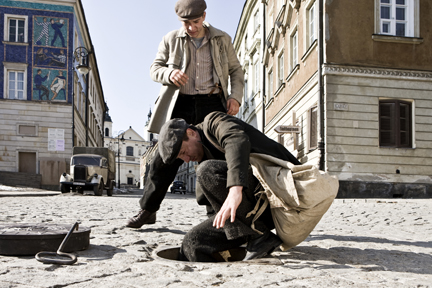
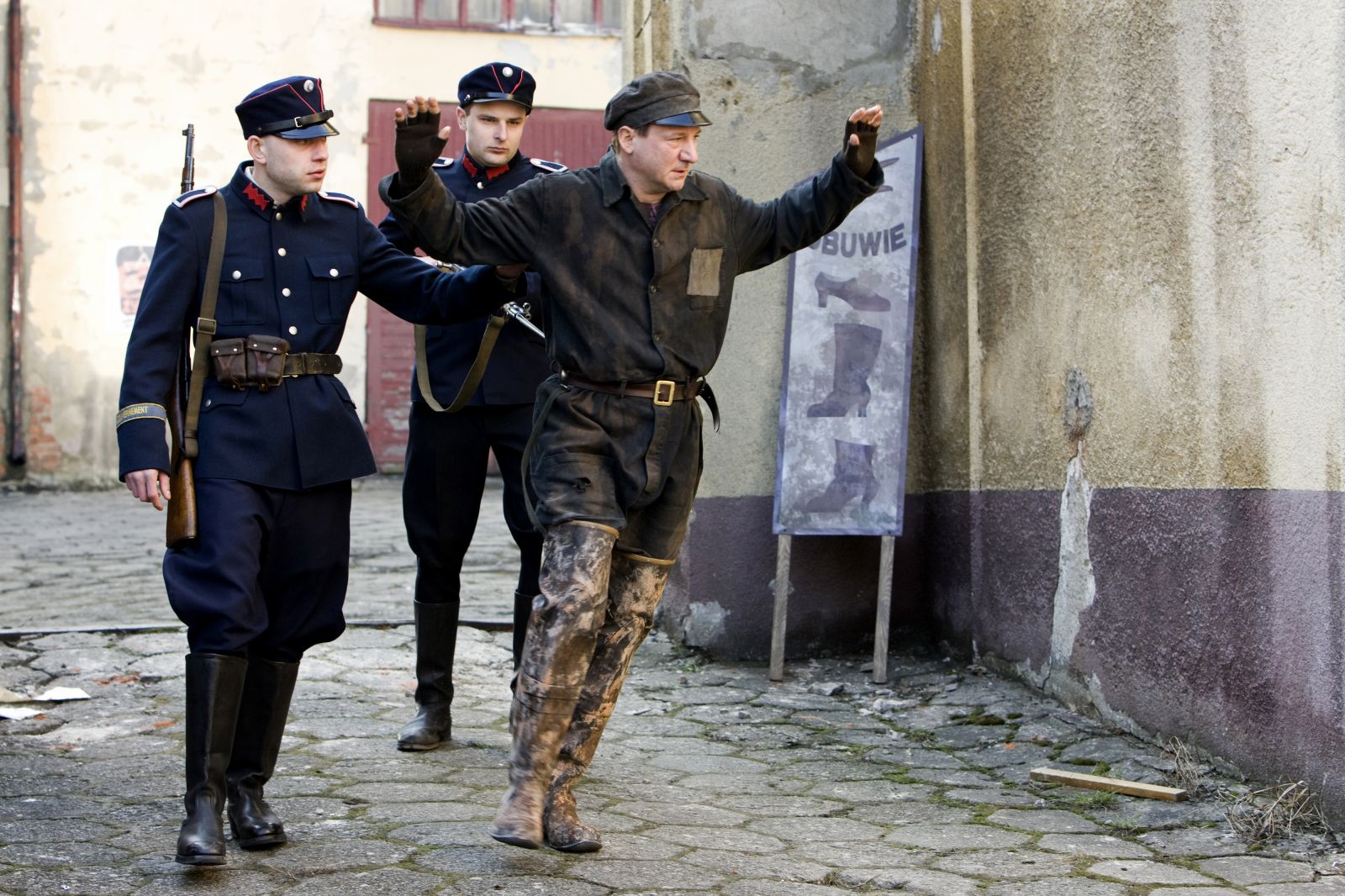
“In Darkness” is a Polish historical drama from director Agnieszka Holland and one of last year’s Oscar nominees for Best Foreign Language Film. It’s based on the novel  “In the Sewers of Lvov” by Robert Marshall which tells the true story of Leopold Socha and his efforts to shelter Jews from the Nazis and Nazi sympathizers in occupied Poland. It’s a foreign film that looks at the war from a unique perspective and at times truly conveys the horrors of the Nazi occupation. It’s can be tense and heart-wrenching and you can’t help but be effected by what you’re seeing. But it’s also a movie that spins its wheels in a some places and features a few crude and jarring scenes that seem disconnected and pointless.

Robert Wieckiewicz plays Leopold Socha, a sewer worker in the city of Lvov. We first see Leopold as a gruff and self-serving individual who will even resort to stealing to make money. He’s a husband and father and we see early that he has no use for the Jews, even though he understands the horrors being inflicted by the Nazi occupiers. While in the sewers one day, Socha comes across three Jews who have dug a hole through the floor of their home to provide an escape route should they need it. A short time later the Nazi’s sweep through the Jewish ghetto killing and capturing the entire Jewish community. A small group escapes through the floor and into the sewers where Socha agrees to hide them for a fee.

Initially Socha’s service is all about money. The Jews pay him each day and even a local market owner notices his sudden increase in income. But Socha begins to see the Jews in a different light and his gradual transformation becomes the centerpiece of the story. The Jews don’t exactly trust him either and watching the relationship between them evolve in the midst of such a harsh and dangerous set of circumstances is enthralling. Add the pull of this being based on a true story and it makes it all the more effective. Socha can’t help but sympathize with the Jew’s especially after witnessing acts of Nazi brutality and helping them through several near-miss encounters in the sewers.

Holland also does a fine job creating a visual representation of a war-torn Polland. From the ravaged neighborhoods and amazing wardrobe design to the savage and often times disturbing depictions of Nazi violence. But most of the film takes place in the dark and dirty sewers. These scenes are filled with shadows and almost no light other than from candles and quick-moving beams from flashlights. It’s effective in creating a grimy and claustrophobic environment but at times it makes it hard to decipher what is going on. The movie contrasts the darkness with some bright daytime scenes outside the sewers that sometimes show a world darker that what’s under the streets.

 “In Darkness” should be commended for it’s incredible acting. Wieckiewicz’s performance is grounded and believable and his ability to portray a conflicted man who watches his perspective change is easy to buy into. The film also does a pretty good job of developing an assortment of interesting people among the Jews in hiding. Each performance is well executed and even though several of the characters seem underwritten, the performances are nonetheless good.

David Shamoon’s script moves along pretty well but there were some bumps in the road. There are a handful of rather crude scenes that really felt completely out-of-the-blue. I couldn’t understand their purposes other than adding a different level of adult content to the film. They didn’t add anything to the bigger story and in fact pulled me out of the movie on each occasion.  The scenes were pointless and that time could have been much better spent elsewhere.

While “In Darkness” does trip over itself in a couple of places and the lighting in the sewer scenes sometimes makes things hard to see, it still captures the notion that human goodness can persevere. It’s real-life groundwork grants the movie a genuine emotional pull that I was caught up in. “In Darkness” isn’t the best World War 2 period movie or the best movie dealing with the holocaust. But it does offer many tense scenes filled with suspense. It also celebrates the will to live even in the face of the worst adversities and reminds us that even a simple sewer worker can have a monumental effect on the lives of others.

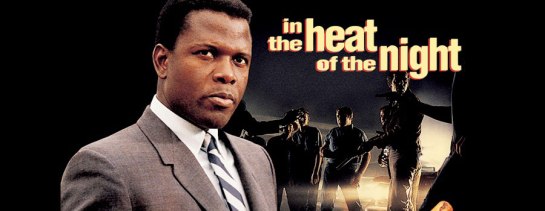
REVIEW: “In the Heat of the Night”

HEAT poster

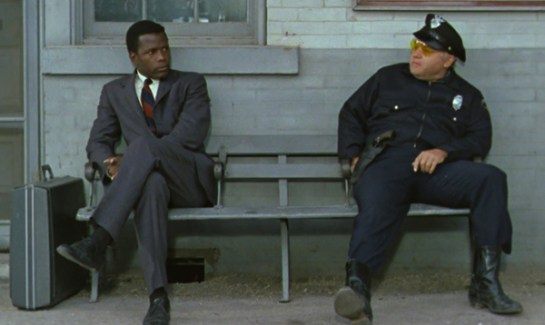
“They call me Mister Tibbs.” When Virgil utters this classic line to Chief Gillespie in 1967’s “In the Heat of the Night”, the racial tensions have already been well-defined. And while the movie is a police drama/murder mystery, it’s the racial contention between a black Philadelphia police detective and the small Mississippi town that makes the film truly memorable. “In the Heat of the Night” won five Academy Awards including Best Picture and inspired two sequels and a popular TV series. But it’s the movie’s statement on 1960’s Southern racism and it’s strong black lead character that causes it to be recognized as a ground-breaking film.

The movie takes place in the small fictional town of Sparta, Mississippi. While out on patrol a deputy comes across the body of a wealthy business man. After ruling that the man was murdered, Police Chief Bill Gillespie (Rod Steiger) sends a deputy to look around town. While checking out the train station, the deputy comes across a black man sitting inside. Unjustly assuming the man is the killer, the deputy arrests him and brings him to the station. The man informs Chief Gillespie that his name is Virgil Tibbs (Sidney Poitier) and he’s a homicide detective from Philadelphia. Virgil’s captain back in Philly recommends that he stay in Sparta and help with the murder investigation. Neither Virgil or Gillespie like the idea yet they both agree.  But the case may never be solved due the incompetence of the police department and the numerous racial barriers that keep Tibbs from accomplishing anything.

HEAT1

Even though this is a crime drama, the murder mystery itself never feels all that important. The investigation spends most of its time looking in the wrong directions and when the killer is finally revealed it feels too convenient. This is the movie’s one significant shortcoming. A tighter more engaging mystery would have added another intense dimension to the story. But it could easily be argued that the murder mystery is simply a backdrop to the greater story of a small town police chief and a big city detective breaking down the walls of racism while dealing with their own personal biases. Steiger and Poitier are great together and watching their complex and often times abrasive relationship unfold provides us with the movie’s best moments.

The great attention given to the town and its citizens is another thing that makes the movie work. The small town South is perfectly captured and there was never a time I questioned its genuineness for a second. From its assortment of main street stores to its rundown parts of town, the film succeeds in providing the perfect setting. But while we saw the current day South we also catch a glimpse of the old South during a scene in which Gillespie and Tibbs go to question a rich plantation owner named Endicott. The drive up to the main house is lined with cotton fields filled with black workers and it almost feels as though the movie has moved back in time. This also leads to the famous scene where Endicott slaps Tibbs once he realizes he is being questioned for the murder. Tibbs slaps him back, something unheard of in that day. Tibbs’ physical retaliation drew attention from around the country once the movie was released and it marked an interesting turn in the way many movies treated black characters.

“In the Heat of the Night” certainly gets points for its head-on approach to the topic of racism. It also manages to keep the audience engaged by first getting us invested in Virgil Tibbs, then showing us the racially fueled obstacles and dangers that he was up against in Sparta, Mississippi. We also get a fantastic character in Chief Gillespie and it’s fascinating to watch him evolve as he fights with the community expectations and his own inner struggles. The small town vibe permeates every single scene and the hot and humid Southern summer makes everything sweatier and grimier. It’s just unfortunate that the murder mystery never feels as serious or as threatening as it should have been. That’s the only thing holding down “In the Heat of the Night”. But it’s something that did make a difference for me.

VERDICT – 4 STARS

“IN A BETTER WORLD” – 4 STARS

“In a Better World” is a Danish film from director Susanne Bier and the surprise Oscar winner for 2010′s Best Foreign Language Film. It’s a provocative and multi-layered picture that delves into such weighty subjects as bullying, divorce, the death of a parent, suicide, and even murder and violence in Sudan. It touches on many of these subjects with care and savvy but this is also where the film seems to lose it’s identity. It’s hard to tell what ”In a Better World” wants to be.

Mikael Persbrandt plays Anton, a Swedish doctor and father of two who has recently separated from his wife Marianne (Trine Dyrholm). Anton spends a lot of time away from home working at a refugee camp in Sudan. Here he treats all sorts of injuries, many inflicted by a ruthless local war lord. At home his son Elias (Markus Rygaard)  has been the victim of incessant bullying from a bigger kid at school. Upon witnessing Elias being ridiculed by the bully, a new student named Christian (William Juels Nielsen) intervenes kindling a new friendship with Elias. But Christian has problems of his own. He’s a disturbed and disconnected boy who is still unable to come to terms with his mother’s recent death due to cancer. Christian’s anger grows and grows despite the efforts of his father Claus (Ulrich Thomsen).

As I mentioned, “In a Better World” touches on a lot of themes but the film lacks a main focus. It’s most certainly a movie about bullying. It’s also a movie about the impact losing a parent has on a child and a film about the friendship of two struggling boys. But the word “violence” kept coming back to me. One consistent undercurrent flowing throughout the picture was violence, our propensity towards it, and our reaction to it. Whether it be the more savage and bloody violence that Anton witnessed in Sudan or the subtle and often overlooked violence in our own cozy neighborhoods, “In a Better World” presents it as something internal. The bigger question is how do we deal with it.

There’s a lot in the movie about revenge versus letting go. Anton is a passive man who would rather walk away than cause things to escalate. Christian convinces Elias this is a sign of his father’s weakness. Two different individuals reacting to violence in two very different ways. But such is violence that even Anton and his passivity fall victim to the impulse for vengeance. Everything in the film seems to be used as fuel for this one underlying theme.

While that’s what I took from the film I could be dead wrong. It just lacked the clarity needed to really impress it’s message upon me. But even though it goes into all sorts of difficult but real circumstances, it does so in a responsible and cohesive way. While several things could have used more attention, Bier makes it all flow together in a way that really kept me involved. The solid performances sold me on these characters and I genuinely cared about their situations. It’s also beautifully shot and features some polished camera work and great locations. So even with it’s flaws, I couldn’t take my eyes away from the screen.

“In a Better World” isn’t the perfect film and it surprised a lot of people when it won last year’s Oscar. But this is still a thoughtful and engaging picture that had my attention throughout. It deals with some weighty subjects and does so with sometimes brutal honesty. The performances are rich and pure and even when the script falls short in spots, the actors still manage to elevate the material. “In a Better World” may not have the depth and detail that some are looking for and that’s a valid argument. But I found it to be a moving experience that not only touched me but made me think. There’s a lot of movies out there that can’t accomplish that.