REVIEW: “L’attesa” (“The Wait”)

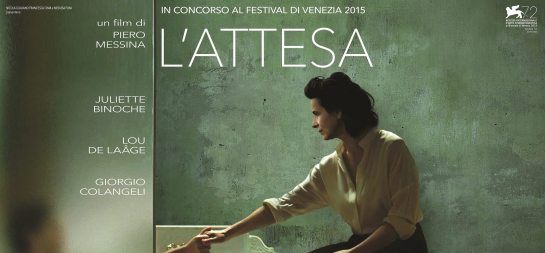
LATESSA POSTER

There is a point in Pierro Messina’s Italian drama “L’attesa” (translated in English as “The Wait”) where I realized that the film’s title spoke not only to different significant plot points but also to my personal viewing experience. One character waits for another to arrive. One character waits to share important information. And I too waited, anxious to see exactly how and if the film’s emotionally combustible pieces fit together.

I bring that up because Messina (in his directorial debut) positions us and frames our connections to his film in such a way that we must patiently watch, wait, and absorb this enigmatic story. That can be a challenge since the film’s core is lean and simple working more as an intense emotional exploration than a tightly knit narrative. This has proven to be a problem for some. For me it was an arresting exercise in potent minimalist storytelling.
LATTES1

The idea for the film came from a story told to Messina by a friend. Gleanings from two specific works of writer Luigi Pirandello helped Messina and a team of three others finish the screenplay. Add to it a bold visual style clearly influenced by his mentor Paolo Sorrentino.

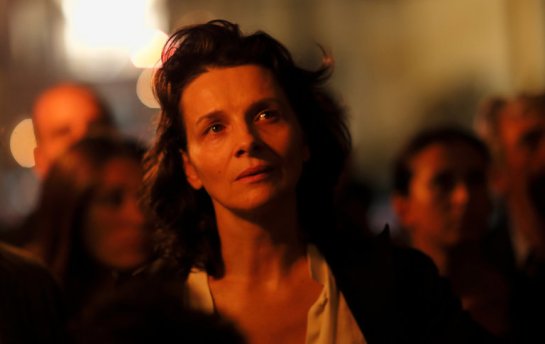
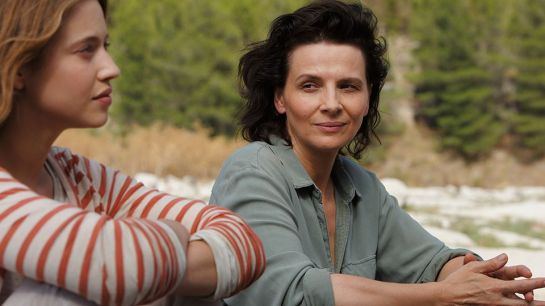
The film begins at a funeral with a mournful woman named Anna (played by Juliette Binoche) standing at the foot of a casket. We aren’t told who has died, but it’s no spoiler to say it is Anna’s son Giuseppe. Later Giuseppe’s girlfriend Jeanne (Lou de Laâge) arrives at Anna’s Sicilian villa expecting him there a few days later. Anna puts off telling Jeanne about Giuseppe’s death and the two wait for an arrival that Anna knows will never come.
LATTES22

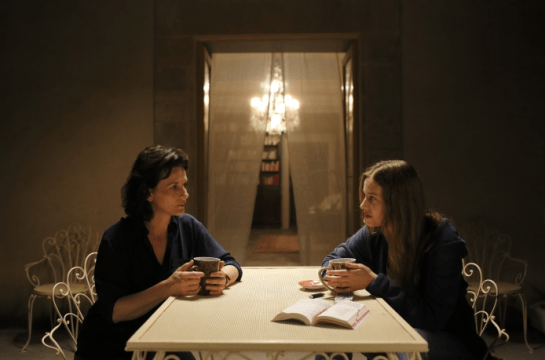
Jeanne and Anna are waiting on two very different things, but in doing so they begin to develop a relationship. Mutual slow-growing sympathy, respect, and admiration is formed over conversations at the dinner table, in a car, on the banks of a lake, or in a Turkish bath. Yet as the audience we know the lingering secret and the potential devastating effect it could have.

Anna’s motivations behind withholding the truth are never spelled out for us and they don’t need to be. Binoche’s emotionally wrought performance vividly captures sorrow and mourning which roots her character’s reasons in her crushing grief. Binoche doesn’t need pages of dialogue. She pulls so much sentiment from her character through every expression and body movement. De Laâge is equally captivating. She is tasked with giving a much different performance than Binoche but an equally vital one.
ATESSA2

I see Anna clinging to her son through Jeanne and she can’t bear the thought of letting go. But the film doesn’t have a singular conclusion. It offers other possible interpretations and even flirts with madness. Its effectiveness is helped in large part to Messina’s visual presentation. Much in the Malick vein, the visuals have a lyrical movement that flow hand-in-hand with the story rhythms. There is a subtle harmony between the pain and sorrow of the characters and the imagery we see. Each gorgeous and haunting image has purpose and are thoughtfully incorporated into what the film is conveying.

“L’attesa” is a challenge. It requires patience and a willingness to look beyond a mere surface impression. It doesn’t hold your hand or dictate how you should feel about the characters or the internal baggage they carry. What is does is lay bare these emotions in a way that draws the audience in. The effectiveness of that approach will probably determine your reaction to the film. For me, it worked in nearly every regard.

VERDICT – 4.5 STARS

4.5 STARS

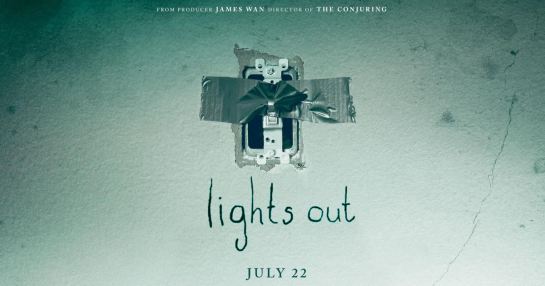
REVIEW: “Lights Out”

LIGHTSposter

2016 has already delivered a couple of exceptional horror movies. “The Witch” and “The Conjuring 2” both offered up refreshing entries into a genre that could use a little energizing. Now we can add a third quality horror picture to the conversation – director David Sandberg’s lean, focused “Light’s Out”.

The movie is Sandberg’s feature film debut and is based on his own 3 minute short film from 2013. Here he stays centered on his subject barely stepping outside of his self-defined box. But that’s not a bad thing. It keeps “Lights Out” concentrated on its characters and on telling a good story within it’s compact 80 minute running time.

lights1

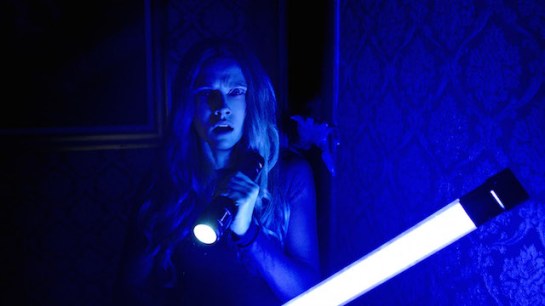
Sandberg’s film doesn’t reinvent the genre and you will quickly notice several of the usual horror movie tricks. Jump scares, creaky floors, flashlights with low batteries, temporary stupidity from the characters – it’s all here but in more measured doses. Sandberg embraces these genre devices but his film works because he is smart enough to know what is important.

So often horror movies fail because of their inability to create authentic human characters we can empathize with. “Lights Out” gets that right. At its core is a grounded story of a torn, suffering, dysfunctional family. It succeeds because the characters are given enough attention and are fleshed out through a couple of strong performances.

Teresa Palmer is really good playing a young woman named Rebecca who has been estranged from her mentally troubled mother Sophie (Maria Bello) since her father walked out years earlier. When she learns her stepbrother Martin (Gabriel Bateman) is being terrorized by something from her family’s past Rebecca is drawn back into a reluctant relationship with her mother.

lights2

The movie’s title comes from its violent creature that only appears in the dark. Light serves as the only protection and weapon which gives Sandberg a fun playground. He steers clear of CGI mostly using practical effects including true lighting and even a prosthetic suit for the creature. One reason for this may have been due to the minuscule budget, but that only makes its effectiveness more impressive.

Overall this is a tightly packaged horror thriller with a good steady pace, some decent scares, and a small interesting group of characters. Palmer and Bello are especially good and are given roles that are a fresh step above the female horror movie norm. It does employ a few all-too-familiar tricks, but they certainly don’t undercut the many things the film deserves credit for.

VERDICT – 4 STARS

4 Stars

REVIEW: “The Legend of Tarzan” (2016)

TARZANPOSTER

The story of Tarzan certainly has legs. Edgar Rice Burroughs first introduced the character in 1912. In all Burroughs wrote 26 Tarzan novels. Dating back to the silent era there have been over 50 Tarzan movies. He has been featured in eight television series, seven documentaries, several comic books, a video game, and even a 1980’s pop song (if you want to count that). As I said, Tarzan certainly has legs.

While he has had a long and impressive history, is Tarzan still a bankable property? Modern moviegoers embrace some truly wacky stuff, but an ape-man who swings on vines and communicates with animals? “The Legend of Tarzan” certainly tries to bring itself into the 21st century by including topics of genocide, slavery, etc. But early box office numbers make you question its effectiveness.

TARZAN1

“The Legend of Tarzan” is the first live action Tarzan film since 1998’s misfire “Tarzan and the Lost City”. Director David Yates of Harry Potter fame was given a $180 million budget to bring Tarzan back to the screen in this new era of visual filmmaking. From an effects perspective the film definitely brings Tarzan into a new light. Storywise it struggles to do anything significantly original or new.

Co-writers Adam Cozad and Craig Brewer take a serious approach to the Tarzan story which makes it an even tougher sell. It’s the 19th century and the Congo has been divided up between Belgium and England. Belgium’s King Leopold II decides to mine the resource-rich territory of its Opar diamonds to pay for his country’s significant debt. To oversee it Leopold sins his envoy Leon Rom (played by a fedora wearing moustached Christoph Waltz). In order the get the diamonds from a brutal tribe he must deliver Tarzan to the tribe’s leader (Djimon Hounsou).

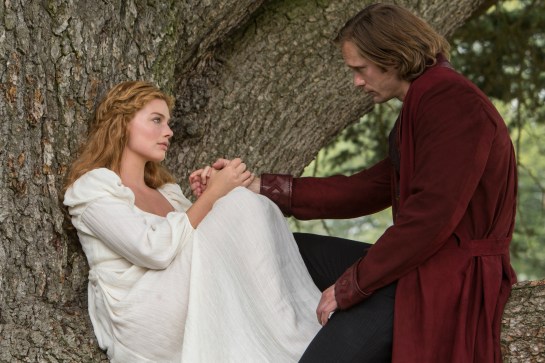
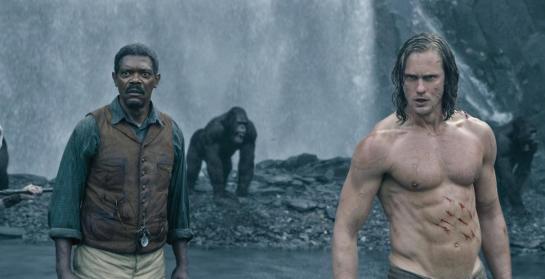
Alexander Skarsgård plays Tarzan, now going by John Clayton III. He’s a celebrity in England with his wife Jane (Margot Robbie) even though he languishes away from the jungle. He is convinced to go back to the Congo by George Washington Williams (Samuel L. Jackson as the film’s lone comic relief) who suspects the Belgians of enslaving the Congolese people. He reluctantly allows Jane to come along not knowing the turmoil that lies ahead.

TARZAN2

Skarsgård, perhaps best known for his seven seasons on HBO’s “True Blood”, looks the part – flowing blonde hair, stoic manliness, and chiseled abs. But past that his performance can best be described as emotionally dry and expressionless. Margot Robbie is a different story. She is lively, authentic, and does her best to break out of the ‘damsel in distress’ role. The script doesn’t fully allow for that. It ultimately becomes another ‘Tarzan saving Jane’ story as it hops from one set piece to the next.

Yates does a good job of giving us interesting locales and some beautiful photography. The story itself doesn’t carve new ground, but it does keep your interest especially if approached lightheartedly. Many critics have sneeringly scrutinized the film with overly cynical modern sensibilities. I don’t think those criticisms holds water. The film’s faults center more around its inability to invigorate the franchise and surprise us with something fresh and new. It is far from being a horrible movie, but it’s even farther from being a great one.

VERDICT – 2.5 STARS


2016 Blindspot Series: “La Strada”

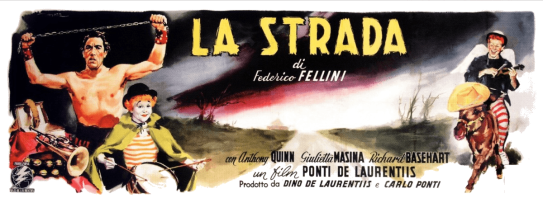
La strada poster

When venturing through Federico Fellini’s brilliant filmography you witness an unmistakable shift in his style of filmmaking and storytelling. From his roots as an Italian neo-realist to his more fantastical experimental pictures, Fellini made films that were identifiable and personal. He didn’t mind changing his style in order to make a more honest picture.

At the start of his transitional period sits “La Strada”, one of Fellini’s more strenuous and intimate projects. According to biographer Tullio Kezich, Fellini said the film was “a dangerous representation of my identity that was undertaken with no precedent whatsoever.” His internal and external struggles with making the film were significant.

Fellini had a difficult time getting the project financed and he was constantly maneuvering through various budget restraints. There were also casting conflicts. Fellini’s wife Giulietta Masina was a big part of his inspiration for the story and for him casting her was essential despite objections from the producers. Anthony Quinn passed on the role despite numerous requests from Fellini. It wasn’t until he saw “I Vitelloni” that he was convinced of Fellini’s abilities as a filmmaker. Injuries, several delays, and crew changes made things even more difficult.

la strada1

But the emotional pressures were far more taxing than the production problems. The concept sprang from memories and images from his childhood, most of them troubling and unpleasant. The production issues were stressful for Fellini leading to severe bouts with depression and an eventual nervous breakdown. With the help of his wife and medical treatment Fellini was able to finish the film.

Like many true classics the movie wasn’t initially met with universal acclaim. Several critics blistered Fellini saying he had gotten away from the strengths of neo-realism. Despite the smattering of negativity “La Strada” had its fans and it received the first ever Academy Award for a foreign language film. Over the years critics and filmmakers have grown to appreciate its vision and influence even more.

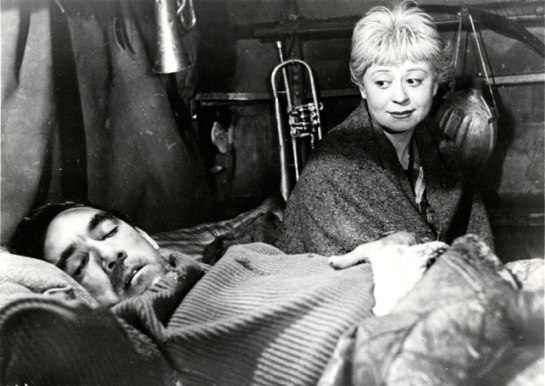
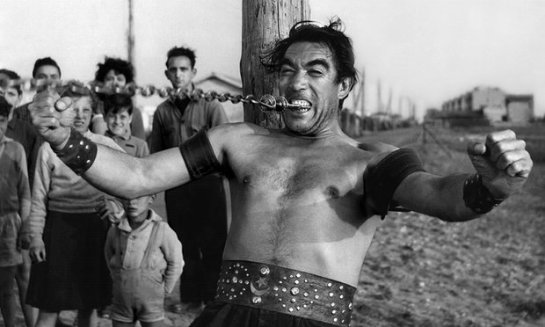
The story begins with a young woman named Gelsomina (Masina) finding out her sister has died while working for a brutish traveling street performer named Zampanò (Quinn). In the face of poverty Gelsomina’s mother sells her to Zampanò to serve as his assistant. The two take Zampanò’s strongman act from town to town with Gelsomina playing his clown and passing around his hat for money.

la strada2

For the simple and waifish Gelsomina it is a tough new world. She looks at everything through an innocent and naive lens. That’s what makes Zampanò such a despicable character. He treats her as worthless and disposable. His mental and physical abuse is abhorrent and it’s often met with confusion by Gelsomina. But she feels confined to her situation. The idea of leaving Zampanò surfaces several times in the film, but she never sees them as a viable option. Instead these two character archetypes travel on together, both bound to a situation that is certain to end poorly.

In many ways Fellini’s film is a tragedy. Others have viewed it as an inspirational piece. Regardless this is an instance where the film’s meaningful complexities serve as evidence of its greatness. It clearly shows a director branching off from his roots and exploring things foreign to the popular trends of the time. The story is beautifully poetic and painfully heartbreaking at the same time and the performances from Quinn and Masina are so good.

Fellini fans will notice techniques and visual touches from “La Strada” reused in many of his films that would come after. Its stylistic reach would stretch for decades as waves of filmmakers were inspired. And while some consider this Fellini’s greatest work, I agree with critic Roger Ebert. “La Strada” opened the creative doors to his true masterpieces that would follow. It’s a wonderful film and a turning point in one of cinema’s greatest filmmaking careers.

VERDICT – 4.5 STARS
4.5 STARS

REVIEW: “The Lazarus Effect”

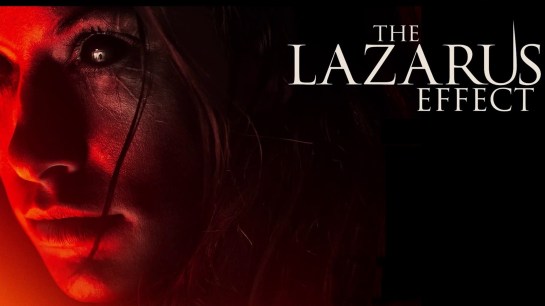
LAZ poster

There are some things we know we will get every movie year. Perhaps tops on that list are the mediocre and formulaic PG-13 horror flicks. Many of these aren’t terrible. They can be pretty entertaining despite their clichéd stories, rehashed scares and forgettable outcomes. Representing the Class of 2015 in this category is “The Lazarus Effect”. As with the majority of these films, “The Lazarus Effect” isn’t a bad movie. It simply does nothing original and leaves no real lasting effect.

The film was distributed by Relativity and it was a no-lose scenario. With a miniscule budget (overall estimates being from $3 million to $8 million tops) and an opening on over 2,600 screens, the film could have a mediocre box office run and still turn a pretty big profit. That’s what happened so financially the film was a success. But as a movie it falls right in line with so many other recent horror pictures. It follows popular trends and does nothing to differentiate itself.

LAZ1

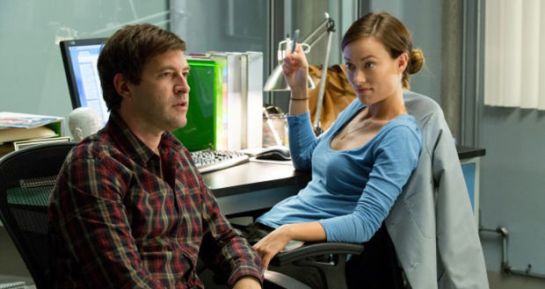
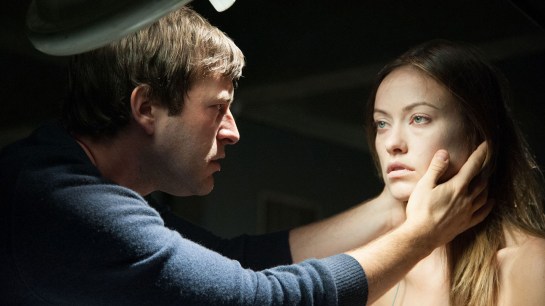
The movie is basically a twist on the familiar ‘bring them back from the dead’ story angle. Still, it starts with a fairly interesting premise. Zoe (Olivia Wilde) and her fiance Frank (Mark Duplass) lead a group of medical research students in the development of a serum meant to assist coma patients. But their experiments wander into morally questionable grounds when they bring a dog back from the dead. Frank sees this as a monumental breakthrough even after the dog begins to show erratic and troublesome behavior.

But soon things go bad for the team and they find themselves sneaking into the lab to recreate their experiment. In the process Zoe is electrocuted and killed. Against better judgement a grief-stricken Dr. Frankenstein…errr Frank uses his serum on Zoe and as you can probably guess the results aren’t as planned. This spins the movie into scenes filled with dream sequences, manufactured jump scares, and a number of other predictable horror devices.

LAZ2

What is really unfortunate is the film has some effective and genuinely creepy moments. A handful of surprises and a few visual flairs actually work. Wilde certainly sells her part well and Duplass is quite good in his dramatic role. But they really don’t have a lot to work with. For all of its good creepiness there are also attempted scares that you anticipate from a mile away. The film begins clinging to these clichés which drains the second half of the movie of any good horror.

Director David Gelb is handed a fairly interesting idea but he doesn’t do much with it. He doesn’t add a twist of originality or anything fresh. He has a good and somewhat nostalgic concept and he has a couple of interesting lead actors. Again, he doesn’t make a terrible movie, but when you’re getting this types of run-of-the-mill horror flicks on a routine basis, you begin to yearn for something fresh. Alas “The Lazarus Effect” doesn’t provide enough of the freshness the genre desperately needs.

VERDICT – 2.5 STARS

2.5 stars

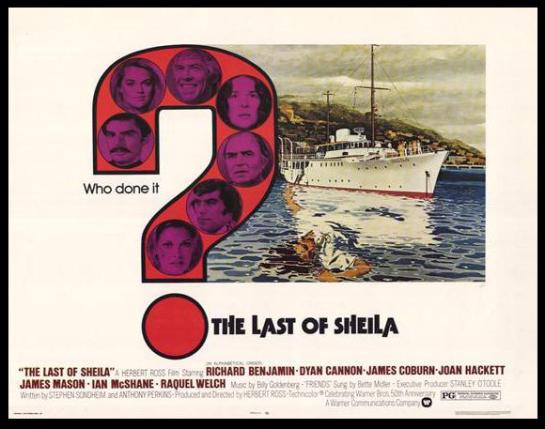
REVIEW: “The Last of Sheila”

SHEILA POSTER

Its title is as awkward and unusual as its story, but the 1973 mystery thriller “The Last of Sheila” maneuvers through its clever twists and red herrings before finishing in a much different place than where it started. Clever is a good word to describe it. It paints itself as something routine and predictable only to pull the rug out from under the audience over and over again. And the best part is it works really well.

The film was produced and directed by Broadway choreographer Herbert Ross. This was only his third time in the director’s chair and several years before his most successful movie “Steel Magnolias”. Equally intriguing is the writing team of actor Anthony Perkins and composer Stephen Sondheim. It’s a surprisingly impressive collaboration. I wasn’t expecting such an intelligent, crafty, and unpredictable picture from such a unique creative trio.

SHEILA2

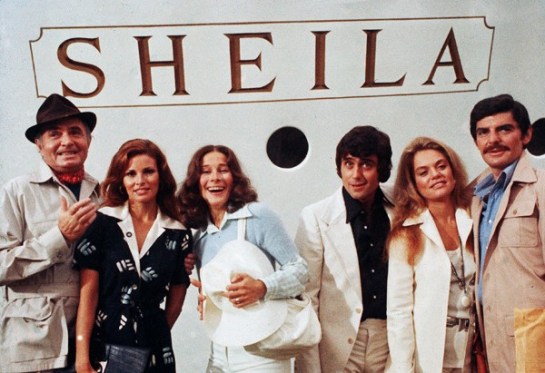
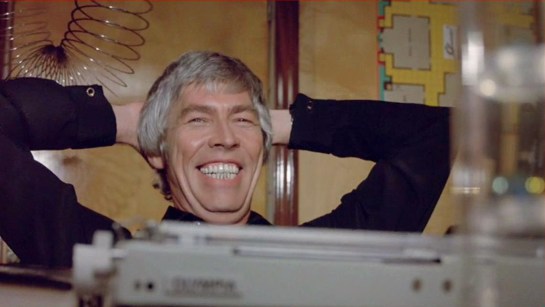
The story opens with six people in the film business receiving invitations to join wealthy movie producer Clinton Greene (James Coburn) on his yacht for a weekend on the French Riviera. The group includes screenwriter Tom Parkman (Richard Benjamin) and his wife Lee (Joan Hackett), a washed up director Philip Dexter (James Mason), talent agent Christine (Dyan Cannon), movie starlett Alice Wood (Raquel Welch) and her manager/husband Anthony (Ian McShane).

There are two common threads that link the group. One is the pungent arrogance that surrounds each of these spoiled individuals. There is a haughty sense of self-importance and entitlement that makes them feel a bit like caricatures but it’s intentional and it makes more sense as the story plays out. Another common thread is that they were all together the night Clinton’s wife was killed by a hit-and-run driver. Needless to say that plays prominently in where the story goes.

SHEILA1

To tell any more would be doing a disservice, but lets just say Sondheim and Perkins put together one heck of a parlor game involving both the characters and the audience. For the characters it is an intricate game put together by the enigmatic Clinton with his guests being his snooty and self-serving players. For the audience it becomes a dense and mesmerizing puzzle that takes one unconventional turn after another. It was hard to muster sympathy for these characters, but the slow and revealing leaks of information made each of them pretty fascinating. It also makes the story’s twisted and unexpected turns all the more satisfying.

“The Last of Sheila” will instantly strike you as a movie from the 1970s. That decade’s styles and sensibilities are all over it. But once you get to what matters – good characters, good concept, good storytelling – the movie sparkles. It does have subtle things to say particularly about the entertainment industry, but for me it was about the story and the way Ross, Perkins, and Sondheim deliver it. I’ve never heard many people speak of this film which is a shame. It is a thriller worth talking about.

VERDICT – 4.5 STARS

4.5 STARS