REVIEW: “The Last of Sheila”

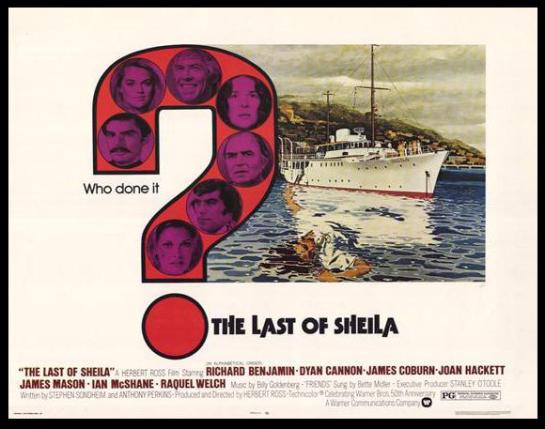
SHEILA POSTER

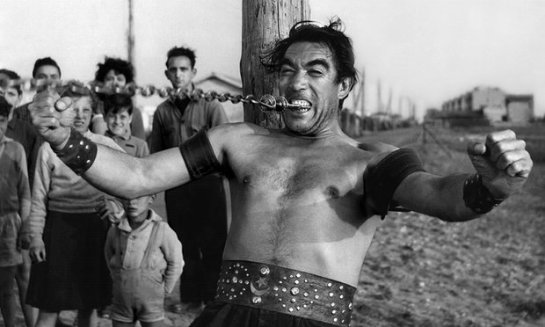
Its title is as awkward and unusual as its story, but the 1973 mystery thriller “The Last of Sheila” maneuvers through its clever twists and red herrings before finishing in a much different place than where it started. Clever is a good word to describe it. It paints itself as something routine and predictable only to pull the rug out from under the audience over and over again. And the best part is it works really well.

The film was produced and directed by Broadway choreographer Herbert Ross. This was only his third time in the director’s chair and several years before his most successful movie “Steel Magnolias”. Equally intriguing is the writing team of actor Anthony Perkins and composer Stephen Sondheim. It’s a surprisingly impressive collaboration. I wasn’t expecting such an intelligent, crafty, and unpredictable picture from such a unique creative trio.

SHEILA2

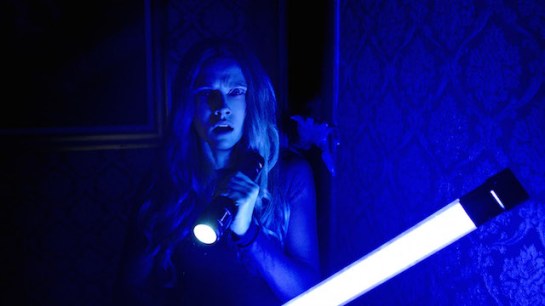
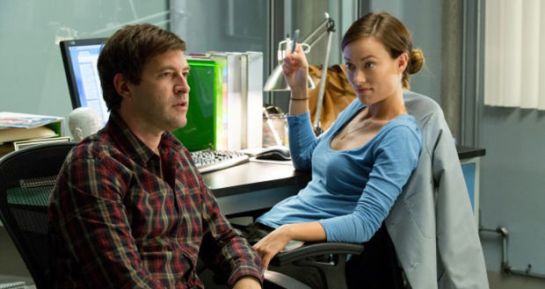
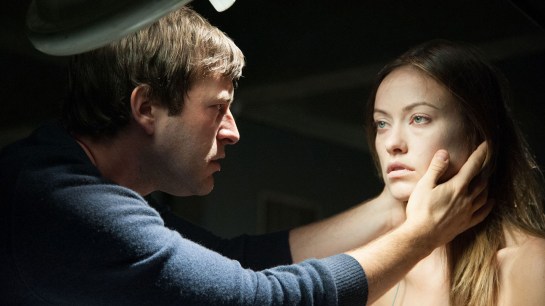
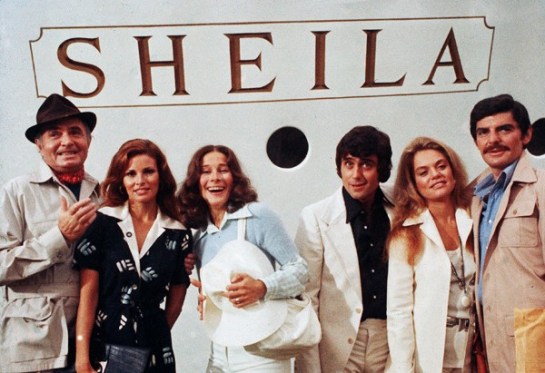
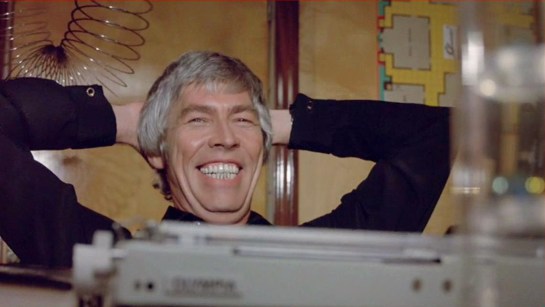
The story opens with six people in the film business receiving invitations to join wealthy movie producer Clinton Greene (James Coburn) on his yacht for a weekend on the French Riviera. The group includes screenwriter Tom Parkman (Richard Benjamin) and his wife Lee (Joan Hackett), a washed up director Philip Dexter (James Mason), talent agent Christine (Dyan Cannon), movie starlett Alice Wood (Raquel Welch) and her manager/husband Anthony (Ian McShane).

There are two common threads that link the group. One is the pungent arrogance that surrounds each of these spoiled individuals. There is a haughty sense of self-importance and entitlement that makes them feel a bit like caricatures but it’s intentional and it makes more sense as the story plays out. Another common thread is that they were all together the night Clinton’s wife was killed by a hit-and-run driver. Needless to say that plays prominently in where the story goes.

SHEILA1

To tell any more would be doing a disservice, but lets just say Sondheim and Perkins put together one heck of a parlor game involving both the characters and the audience. For the characters it is an intricate game put together by the enigmatic Clinton with his guests being his snooty and self-serving players. For the audience it becomes a dense and mesmerizing puzzle that takes one unconventional turn after another. It was hard to muster sympathy for these characters, but the slow and revealing leaks of information made each of them pretty fascinating. It also makes the story’s twisted and unexpected turns all the more satisfying.

“The Last of Sheila” will instantly strike you as a movie from the 1970s. That decade’s styles and sensibilities are all over it. But once you get to what matters – good characters, good concept, good storytelling – the movie sparkles. It does have subtle things to say particularly about the entertainment industry, but for me it was about the story and the way Ross, Perkins, and Sondheim deliver it. I’ve never heard many people speak of this film which is a shame. It is a thriller worth talking about.

VERDICT – 4.5 STARS

4.5 STARS

REVIEW: “The Lucky One”

LUCKY poster

I guess there’s something to be said for consistency. Unfortunately consistency is a killer when it comes to Nicholas Sparks adaptations. Over the years they have become as routine as day and night. We’ve gotten one each year since 2010 and each has been variable shades of terrible. Again, consistency is a killer.

“The Lucky One” was the 2012 installment and it’s one of the lamest. Trust me, that’s saying something. Based on the Sparks book of the same name, the title certainly isn’t a reference to the viewer. It’s another by-the-book adaptation that checks every corny box – sappy musical montages, weak-kneed puppy dog stares, overwrought family problems, and lots of water.

LUCKY11

An ex-Marine named Logan (Zac Efron) walks from Colorado to a small bayou town of Hamden, Louisiana mysteriously in search of a woman named Beth (Taylor Schilling). He finds her and gets hired on to work at her dog kennel. Of course she is loaded with baggage. She’s a single mom who still has a volatile relationship with her ex Keith (Jay Ferguson). She also struggles with the recent death of her brother who was also a marine serving in Iraq. See, all of the heavy dramatic pieces are in place.

What amazes me is regardless of who writes the screenplay and regardless of who directs the film, every one of these Sparks movies look and feel identical and each follow the exact same blueprint. Take the story itself. It’s chock full of cheesy, melodramatic flab. It’s never romantic, but it’s always predictable. And then there are the contrivances that you can’t help but laugh at. I mean what are the chances of having a starry blue-eyed hunk who reads philosophy, plays piano, and regurgitates lines like “You deserve better” just showing up at your door?

LUCKY1

And of course there is the corny dialogue, unintentional hilarity, and unsure performances. Efron is subdued to a fault and he is constantly shot as if posing for Tiger Beat. Schilling is the opposite. Her performance is a bit manic, constantly shifting between her spunky independence and hypnotic lusty gazing. Their chemistry is solid enough but individually neither can escape how their characters are written.

“The Lucky One” offers no unique vision and absolutely no surprises. It’s just the same tired formula that apparently works for a very specific and devoted audience. Amazingly these films manage to make money every time they come to theaters. I suppose those involved are content with that degree of success, but wouldn’t it be nice to see one of these movies actually take some chances and do something different. But can a movie do that and still be a Nicholas Sparks adaptation? I don’t know.

VERDICT – 1.5 STARS

REVIEW: “The Look of Silence”

LOOK POSTER

In 2012 Joshua Oppenheimer made a stunning and often grotesquely surreal documentary focused on the perpetrators behind the Indonesian mass killings of 1965-1966. The slaughter spawned from a military overthrow of the government. Death squads made up of community leaders but protected by the military killed nearly one million supposed ‘communists’ – men and women. In “The Act of Killing” Oppenheimer allowed the killers to stage their recollections of the state-sanctioned atrocities without an ounce of remorse.

Now Oppenheimer gives us “The Look of Silence”, a companion piece for his previous picture which offers a subtler but equally terrifying perspective. Where the first film put a spotlight on (and strategically set up) the killers, this one lends its voice to a 44 year-old man whose brother was brutally murdered in 1965 during the ‘communist’ purge. For his and his family’s protection, his identity is hidden even in the end credits since many of the killers are neighbors, local community leaders, and considered heroes by the government.

look2

We only know him as Adi, man deeply moved by Oppenheimer’s previous exposé. Born two years after his brother’s barbaric murder, Adi feels the pains through his elderly parents. His father is blind, feeble, and unable to remember his son’s death. But the 50 year-old wounds are still fresh for his mother who laments her dead son through her vivid memories. The moments between Adi as his family serve to show the genocide’s deeper lasting personal effects.

Perhaps the film’s most harrowing scenes are interviews Adi has with the perpetrators themselves while under the guise of a traveling optometrist. He strikes up conversations getting these men to speak openly of their atrocities all while fitting them for new glasses. These visceral exchanges burn with Oppenheimer’s piercing metaphor of blindness verses sight. These men are perversely blind to their crimes, their guilt, and their responsibility. Adi wants them to see.

“The Look of Silence” is rich with shocking, uncomfortable moments and memorable scenes that will stick with you. As when Adi asks his mother “How do you feel surrounded by your son’s killers? You see them every day…”. Or a school teacher indoctrinating a class of small children on the heroism of the death squads. Or scenes of Adi watching footage from “The Act of Killing” that deal specifically with how his brother was butchered. Oppenheimer moves through all of this  emotionally heavy material with the sophistication of a master storyteller but also as someone deeply connected to his subject matter.

LOOK1

Oppenheimer has developed another important piece of cinema that is as illuminating as it is shocking. I can’t tell you how many times I sat, mouth open and covered by my hand, in utter silence overwhelmed by what I was seeing. This film is far more focused and personal than “Killing” but no less potent or disturbing. It’s told with such strength and clarity whether through sympathy for powerless and helpless victims hoping for justice be dealt in the afterlife or appalling disgust at the unrepentant attitudes of the killers.

The ominous cloud of danger loomed over this entire picture. Adi, Oppenheimer, and his small film crew operated under a perpetual threat which often times showed itself in the interviews. They were constantly told that “the past is the past” and people were content to leave it there. But they would also be warned that what happened in 1965 and 1966 could easily happen again. That chilling reality kept coming to mind as I made my way through the film and it has lingered with me well after. That’s a testament to the power of the storytelling and the bravery of those willing to tell it.

VERDICT – 4.5 STARS

4.5 STARS

REVIEW: “Love & Mercy”

love poster

It was 1961 in the Southern California city of Hawthorne. Three brothers, a cousin, and a high school friend formed a group that would grow into one of the biggest American  bands in music history. They called themselves The Beach Boys, a reference to their harmonious “California Sound”. They would go on to sell over 100 million records and have 36 Top 40 hits. The creative center of the group was Brian Wilson.

“Love & Mercy” is a dual narrative biographical drama about the life of Brian Wilson. The film hops back and forth between two specific timelines. One takes place in the 60s and follows a young Brian during the band’s heyday. The second takes us to the 80s where Brian’s life is dictated by opportunistic handlers and heavy medications.

There are two important creative decisions that help distinguish this from other films of its type. First, director Bill Pohlad keeps his focus strictly on these two periods of Wilson’s life. It’s a wise move that distances the film from more conventional structures. The periods don’t always feel connected and there are times where the leaps from one period to the other are a bit clunky. Still I appreciated the nuanced approach and they both helped tell a compelling and personal story.

love1

Second, “Love & Mercy” is a very inward-looking biopic. It is much more interested in showing the inner brilliance of Brian Wilson on a creative level as well as the mental and emotional turmoil that sends his life careening out of control. We spend a lot of time inside his head surrounded by voices and swirls of sound. We also spend a lot of time examining the aftermath. This is all calculated and much more interesting than I was expecting.

Paul Dano plays Brian Wilson from the 60s. Dano is an actor who can play certain roles well, but they have to be very specific to his narrow talents. This happens to be one of those roles. Dano stares into space, makes weird faces, and relays a general awkwardness – all things that he can do very well. But I don’t want to sell him short. He is very in tune with his character and with Pohlad’s vision. I like Dano a lot here. It’s a very human portrayal. But he also keenly shows us Wilson’s creative drive. He does all of this through a cleverly understated performance.

love2

Dano takes us through Wilson’s struggle with the pressures of being in a hugely popular band. The stresses, the panic attacks, and eventually the drugs. John Cusak plays Wilson in the 1980s, a shell of a man mentally damaged by his past but also by a leech of a psychotherapist and guardian Dr. Eugene Landy (Paul Giamatti). Cusak is given a much different role than Dano and he too succeeds in showing us another phase of this complicated life.

At this point Wilson is a man on a leash with literally no life to call his own. That changes when he meets a goodhearted car saleswoman named Melinda (Elizabeth Banks). She catches glimpses of the real Brian buried inside by Landy’s mental oppression. She likes what she sees and she is willing to fight the sleazeball Landy. Banks does a really good job drawing personality out of Wilson. It is through their relationship that we see this Brian Wilson as more than a heavily sedated zombie. And Giamatti, well he is always fantastic at playing a scumbag.

As I’ve pointed out there are so many things “Love & Mercy” does well. There are some small bumps, but ultimately the biggest reason it succeeds is because it operates in human terms. It doesn’t bog itself down by adhering to the common mainstream biopic formula. Instead it shows us what made this creative genius tick. Do we ever truly understand where that drive and inspiration came from? Not exactly, other than it came from the same dark place that eventually broke him. This is compelling stuff. It is a story worth telling and “Love & Mercy” tells it really well.

VERDICT – 4 STARS

4 Stars

2015 Blind Spot Series: “L’avventura”

AVENT POSTER

One of the many interesting things about “L’avventura” was how it was initially received. Michelangelo Antonioni’s Italian drama debuted at the 1960 Cannes Film Festival and was booed by the audience. After a second screening the film was received quite differently mainly from critics and Antonioni’s peers. It went on to win the Jury Prize and despite a wide range of reactions the film would become an international hit. Furthermore within two years Sight and Sound magazine had proclaimed it to be one of the greatest movies ever made. That quite a turnaround from how it was first received.

“L’avventura” is considered the first of a trilogy of films from Antonioni which also includes “La Notte” and “L’Eclisse”. Thematically the three movies seek to examine modernity and the disaffection and alienation it brings to his characters. They also share several stylistic similarities that Antonioni began experimenting with several years prior. Actress Monica Vitti is another common thread between the three films and it was her performance in “L’avventura” that made her a star.

AVENT1

Antonioni’s approach to making movies had evolved and he had grown uninterested in filmmaking conventions. He sought to break any conventional sense of visual storytelling and narrative structure. These aims are clearly evident in “L’avventura”. The film slyly presents itself as one thing when actually it’s something quite different. We are led along by the most clever of misdirections before having the rug pulled out from under us. Even the mischievous title tempts the audience into projecting their own expectations onto the story. There is a bold dramatic shift 30 minutes into the film and Antonioni not only changes his narrative focus but it alters the very perspective from which the story is being told.

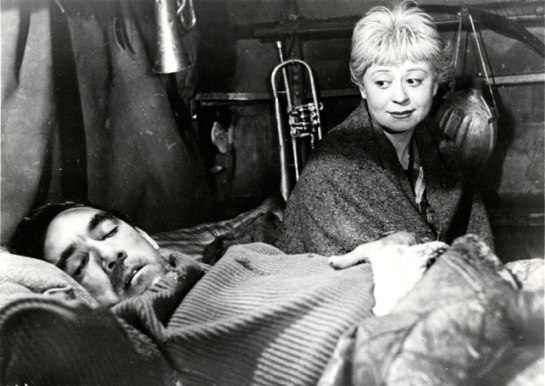
The film’s first shot introduces us to the moody and melancholy Anna (Lea Massari). From the very start we learn she has a very aloof and disinterested view of life and particularly her reunion with her boyfriend Sandro (Gabriele Ferzetti). Despite Anna’s reluctance the two meet and head off on a yacht cruise to the Aeolian Islands with a group of wealthy friends. Among them is Claudia (Vitti), Anna’s best friend and polar opposite. Claudia carries herself with a playful energy and optimism. We see it in her excitement for the cruise and in her attempts to pep up Anna. She is unquestionably unique and at first Claudia almost seems like an outsider among her bourgeois company.

AVENT3

After a swim is cut short by Anna’s shark sighting, the group stops at the small rocky island of Lisca Bianca. Once ashore they all go there own way and explore. Anna and Sandro go off to themselves and talk about their relationship. Anna tells him she wants more more time apart, but a dismissive Sandro lays down and takes a nap. A short time later the group decides to leave the island as a storm approaches. Claudia wakes Sandro but Anna is nowhere to be found. The group scour the island looking for her but there is no trace. It’s here that Antonioni subtly begins to alter his focus and give his audience an unexpected perspective.

I’ll resist going into too much detail, but let’s just say the spotlight slowly moves from Anna to her companions. They continue their search, some staying on the island while others head out to a nearby town to contact police, but slowly a growing haze of indifference can be seen around them. A younger woman is more concerned with how unsatisfied she is with her older beau. Others don’t want to cut their cruise short. Later we see some of them more worried about potential business deals than the fate of Anna. Each move along with their upper-class lives with ease and Anna almost becomes an afterthought.

But then there is Sandro and Claudia. They put out the most effort to find Anna under the pretense of concern. But even they wander off into their own self-centered worlds. Antonioni follows them as they search a number of different locations but ultimately their focuses becomes something far more ignominious. It’s here that we see the uncomfortable undercurrent at the heart of “L’avventura”. Sandro and Claudia are poster children for the film’s perspective on the social and moral disconnection in the modern world. I’m dancing around the details, but giving too much away would cut the legs out from the story.

AVENT2

“L’avventura” is a visual masterpiece. The film is full of beautifully shot locales from the jagged, threatening island where Anna goes missing to the quaint small towns that Sandro and Claudia encounter during their search. But there is more to it than eye-grabbing scenery. Antonioni’s camera is always capturing a beautiful image or employing a clever angle. His ability to still his camera and allow the action to come to him and play out. There are no gimmicks. Just intelligently staged shots that are all about the location of the camera and the subtlest of movements. With his visual approaches he is able to change perspectives and even manipulate us into thinking certain ways.

Most criticisms of “L’avventura” have centered around it’s seemingly lethargic narrative. Some have said the film drags its feet and has nothing to say. I won’t deny it’s patient and deliberate pacing. Antonioni’s film stresses contemplation. But I simply can’t go with the idea that the film has nothing to say. And I also love that it bucks the conventional trends of the time – trends that are still very popular today. “Lavventura” doesn’t seek a conventional framework. It asks the audience the observe, think, and process. It is that type of engagement that makes Antonioni’s film a true classic.

VERDICT – 4.5 STARS

REVIEW: “Listen Up Philip”

PHILLIP POSTER

It’s a good thing that you aren’t required to like or root for a main character in order to enjoy a movie. If that were the case the film “Listen Up Philip” wouldn’t have a fan in the world. This is the third movie from 30-year old independent filmmaker Alex Ross Perry and it can be a challenge. It is relentlessly unpleasant and it may feature the most detestable lead character you’ll see this year. Yet at the same time the dialogue is razor sharp, it is at times darkly funny, and it features a wickedly good lead performance from Jason Schwartzman.

The opening scene reveals to us the type of man we will be spending our time with. Philip (Schwartzman) sits in a restaurant impatiently waiting for his ex-girlfriend. She is 20 minutes late and he has already rehearsed how he’s going to belittle and confront her, not just for being late, but for never supporting him during their time together in ways he finds satisfactory. Philip is a writer who has just completed his second novel. His taste of success has fed his insatiable narcissism and he can’t wait to rub it in his ex’s face.

PHILLIP1

Philip’s haughty self-absorption isn’t just reserved for his ex-girlfriend. We see it with a stranger at a bar, with his publisher, and we mostly see it with his current girlfriend Ashley who is played wonderfully by Elizabeth Moss. Ashley is one of our few refuges. She is a likable character who loves Philip and seems to have found a way to navigate his crazy range of emotions. But relationships can only sustain so much when a toxic character like Philip is factored in.

Now throw in an accomplished but aged writer Ike Zimmerman (Jonathan Pryce). He is Philip’s literary idol and a man desperate for new inspiration. Having appreciated Philip’s first two books, Ike contacts him with an invitation to stay at his country cottage and write. Philip jumps at the chance, leaving Ashley behind and fully expecting her to wait for him. We quickly learn that Ike isn’t the blueprint Philip follows in writing only. Ike’s also shares the same miserable self-centered lifestyle. The question becomes will Philip learn from Ike’s pathetic example or emulate it?

“Listen Up Philip” can be seen as many things. For one it’s a gut punch to many of the creative elites. It shows the striking differences between the happiness they bring through their creativity and the self-inflicted misery many of them live in. The film shows the fantasy world many elites live in built upon self-importance and the idea of being better than anyone else. These acidic personalities also bleed over into relationships. We see it with Philip and Ashley and later when he meets a French professor played by Joséphine de La Baume. For Ike it’s evident by his strained relationship with his daughter Melanie (Krysten Ritter).

PHILLIP2

As I mentioned, the real challenge is in staying with these characters. I can easily see some people struggling with the film as they wait and search for at least an ounce of humanity in Philip. It seems as if Perry anticipates this problem. At one point in the film Philip vanishes for nearly 20 minutes and we follow Ashley and her struggles with Philip being gone. I’m still struggling with how I feel about the narrative shift. I like the Ashley character and there are some good moments in our time with her, but I’m not sure the divergence fully works. On the opposite end, by the films final act I did find myself worn down. I had grown tired of Philip despite the compelling nature of the character.

A part of me is thankful that people like Philip and Ike do crave some degree of solitude. This film pulls no punches in conveying these corrosive personalities, but it does so with a nice smattering of humor and with some very committed performances especially from Schwartzman who is perfectly cast. But in the end I felt exhausted and I was ready to close the book on these people. Was that the film’s desired effect? I’m not certain.

VERDICT – 3.5 STARS